Biology, grade 9 · programme 2026–2027
Biology for grade 9: every lesson of the new programme, from the cell to the biosphere
58 short lessons, each with a summary to learn, common mistakes and questions that check themselves.
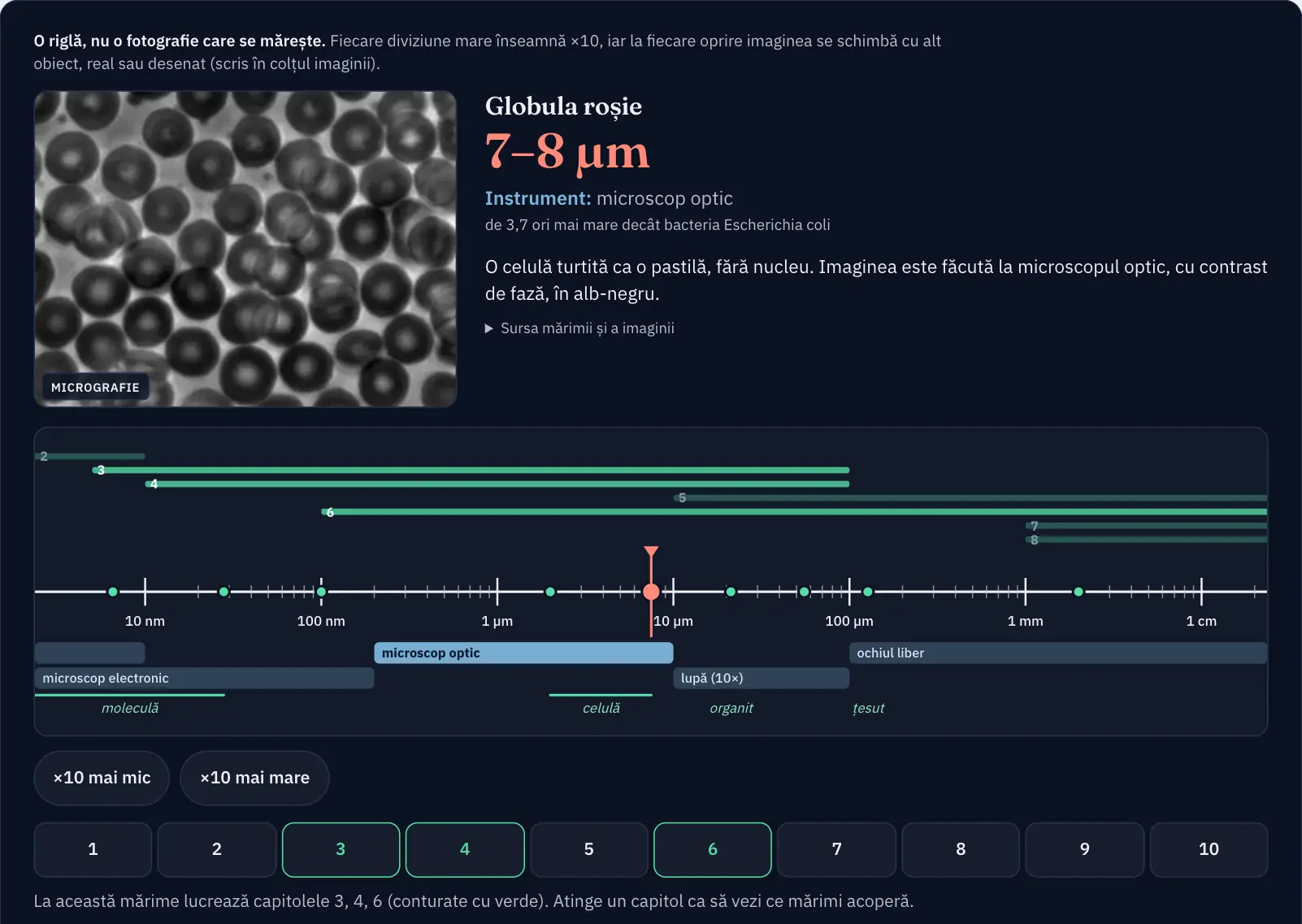
| Object | Size | Instrument | Image | Source of the size |
|---|---|---|---|---|
| An atom | about 0.1 nm | X-ray crystallography | Drawing | Order of magnitude: 1 Å = 0.1 nm (chapter 2, haemoglobin); the exact size differs from one element to another. |
| The water molecule | about 0.3 nm | X-ray crystallography | Drawing | About 3 Å, that is 0.3 nm (Wikipedia, “Properties of water”). |
| The haemoglobin molecule | about 6.5 nm | X-ray crystallography | Calculation: RCSB Protein Data Bank, 1HHO, B. Shaanan 1983, CC0 1.0 | Calculated from the coordinates of the files 1HHO and 2HHB (chapter 2). |
| The ribosome | 26–30 nm | electron microscope | Drawing | Lesson “The light microscope: parts, magnification, resolution and the wet mount”: atomic model of the human ribosome, 26–30 nm (Palade had measured 10–15 nm on sections). |
| The influenza virus | about 100 nm | electron microscope | Micrograph: Cynthia Goldsmith, CDC / Public Health Image Library #10073 (public domain), via Wikimedia Commons | Lesson “The cell, a living structure: why viruses are not considered alive” (an influenza virion is 100 nm across). |
| The bacterium Escherichia coli | about 2 µm | light microscope | Micrograph: NIAID (public domain), via Wikimedia Commons | Lessons “The cell, a living structure: why viruses are not considered alive” and “Prokaryotic and eukaryotic cells: what sets them apart” (a bacterium of 2 µm). |
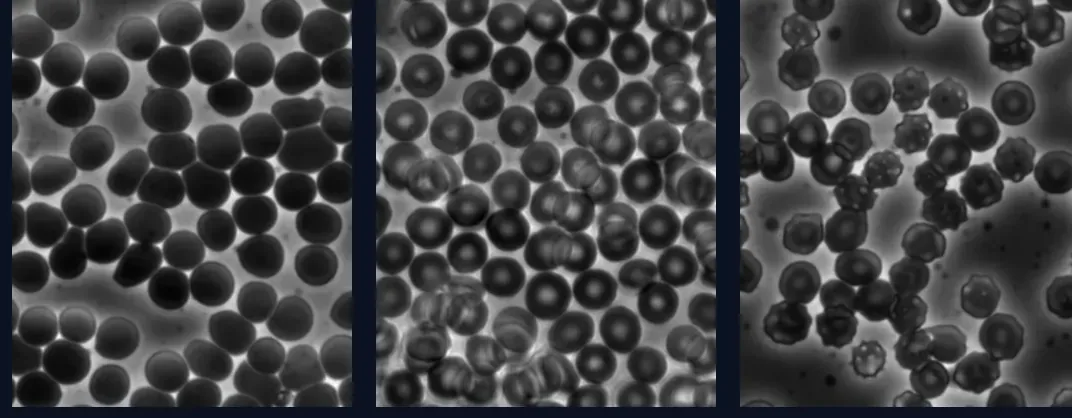
| The red blood cell | 7–8 µm | light microscope | Micrograph: Zephyris (Richard Wheeler), CC BY-SA 3.0, via Wikimedia Commons; cropped | Lesson “Cell diversity and the surface area to volume ratio: why cells have different shapes and stay small” (7–8 µm). |
| The nucleus of a HeLa cell | 21.2 µm | light microscope | Micrograph: COSEM / Janelia Research Campus, dataset jrc_hela-2, CC BY 4.0; processed | Chapter 3 (the cell): 21.2 × 13.6 µm in the widest section. |
| A strand of hair | 0.017–0.18 mm | hand lens (10×) | Micrograph: Arlo James Barnes, CC0, via Wikimedia Commons | Wikipedia, “Hair”: from 0.017 to 0.18 millimetres. |
| An onion epidermis cell | about 125 µm | light microscope | Micrograph: Adrian J. Hunter, CC BY-SA 3.0, via Wikimedia Commons; cropped | Measured on the micrograph in chapter 1, from the scale bar. |
| The head of a pin | about 2 mm | naked eye | Drawing | Lesson “The light microscope: parts, magnification, resolution and the wet mount” (“a pinhead of about 2 mm”). |
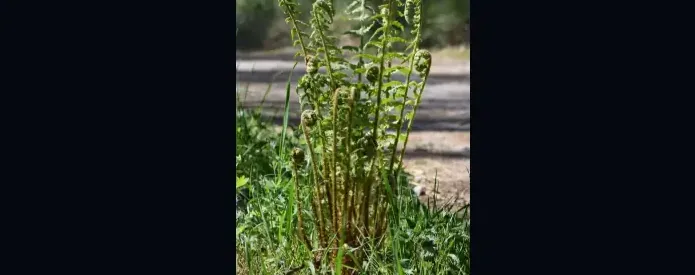
| A tuft of haircap moss | 5–10 cm | naked eye | Photograph: Hans Hillewaert, CC BY-SA 4.0, via Wikimedia Commons; cropped | Chapter 7 (plants), data of the “height” picture. |
| A pupil | 1.7 m | naked eye | Drawing | Example chosen for comparison. |
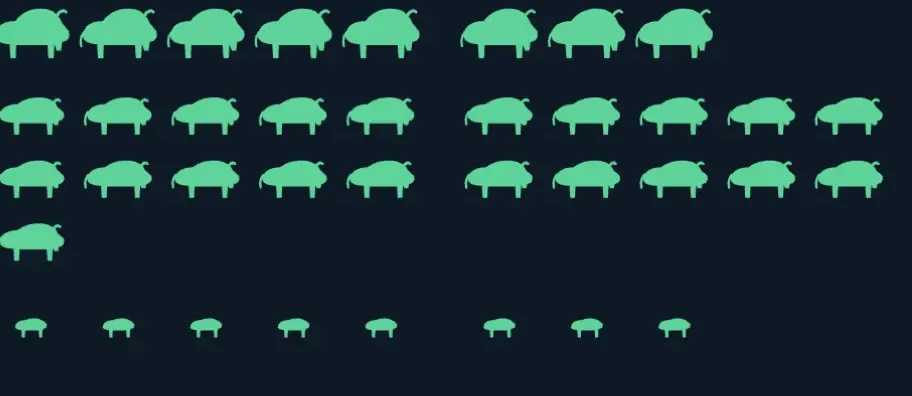
| The European bison (body length) | 2.4–3.3 m | naked eye | Photograph: Cezarika1, public domain, via Wikimedia Commons (roWikipedia) | Wikipedia, “European bison”: females 2.4–2.9 m, males 2.8–3.3 m. |
| The fir tree at Șinca Veche | 62.5 m | naked eye | Photograph: Crusier, CC BY-SA 3.0, via Wikimedia Commons (another fir, Abies alba, Poland); cropped | Lesson “Gymnosperms: plants whose seeds are not enclosed in a fruit”, after a 2013 news report. |
| Retezat National Park (as a square) | at least 19.5 km | view from above: map, satellite | Photograph and calculation: Gugalcrom123, CC BY-SA 4.0, via Wikimedia Commons; cropped | Lesson “Conserving biodiversity: protected areas, protected species and observations that can be checked” (“more than 38,000 ha”); side = √380 km² (calculation). |
| The thickness of the biosphere | about 20 km | view from above: map, satellite | Diagram | Lesson “Levels of organisation: individual, population, community, biome, biosphere”: the biosphere measures about 20 km, but almost all life lies between 500 m below the ocean surface and 6 km above sea level. |
| Romania, from west to east | about 740 km | view from above: map, satellite | Calculation: Natural Earth, first-level administrative boundaries (public domain) | Calculated on the WGS 84 ellipsoid from the Natural Earth outline (public domain). |
| The Earth | 12,742 km | view from above: map, satellite | Photograph: NASA / Apollo 17 crew, public domain, via Wikimedia Commons | NASA, Earth fact sheet: mean radius 6,371 km; 2 × 6,371 = 12,742. |
| Chapter | From | To |
|---|---|---|
| 1. Method and the microscope | 1 mm | 1 nm |
| 2. Molecules of life | 0.1 nm | 10 nm |
| 3. The cell | 5 nm | 100 µm |
| 4. Membrane, osmosis, division | 10 nm | 100 µm |
| 5. Levels of organisation | 10 µm | 20 km |
| 6. Bacteria, protists, fungi | 100 nm | 30 m |
| 7. Plants | 1 mm | 62.5 m |
| 8. Animals | 1 mm | 30 m |
| 9. Health and biodiversity | 19.5 km | 744 km |
| 10. Humans and the biosphere | 6 km | 12,741 km |
Photograph, micrograph, calculation and drawing. The ruler is logarithmic: each big division means ten times more. The image changes at each stop; it is not one photograph being enlarged. Each image says in its corner what it is: photograph, micrograph, calculation from measured coordinates or drawing.
Sources and credits. Images: CDC / Public Health Image Library, NIAID, NASA, COSEM / Janelia Research Campus, Zephyris, Adrian J. Hunter, Arlo James Barnes, Hans Hillewaert, Cezarika1, Crusier, Gugalcrom123; haemoglobin structure: RCSB Protein Data Bank; country outline: Natural Earth. The author, licence and page of each image are in the ruler table below it and on the Sources and credits page.
Ten questions, ten chapters
40 lessons of the common core, for every track and profile, and another 18 lessons for Natural Sciences (CS), marked “CS”. Each lesson has its own address and can be read on its own.
Your track
-
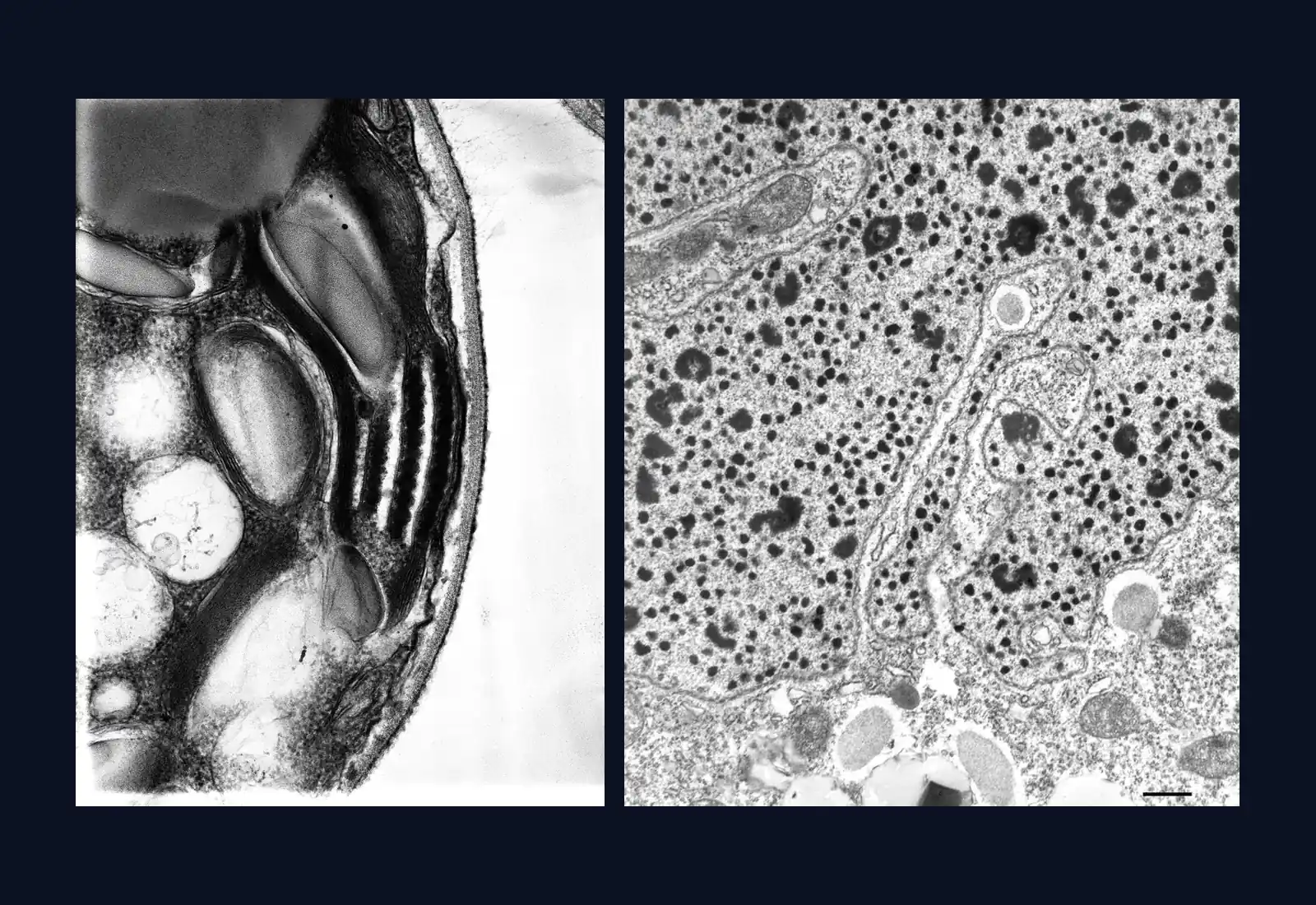 Measure the micrograph
1Investigating life
How do you find out how big something is when you cannot see it with the naked eye?
Lessons of the chapter
- 1.1The scientific method: from observation to hypothesis and conclusion
- 1.2The experiment: variables, control group and research ethics
- 1.3An investigation’s data: measurement, table, graph and conclusion
- 1.4The light microscope: parts, magnification, resolution and the wet mount
Another one lesson, for Natural Sciences (CS)
-
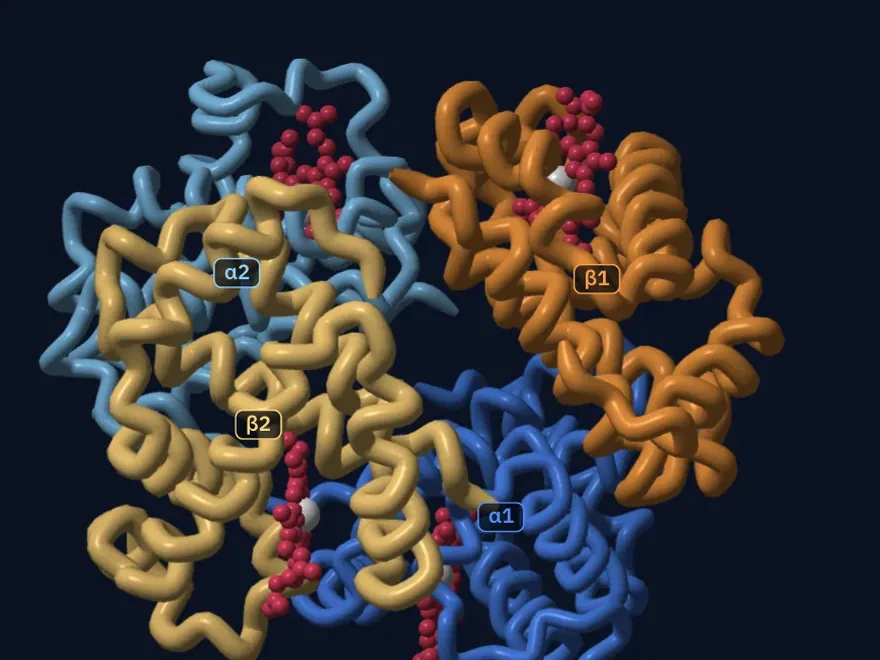 Give it oxygen
2The molecules that make life possible
What are you made of, and why does the shape of a molecule matter?
Lessons of the chapter
- 2.1Water, mineral salts and vitamins: their roles in the body
- 2.2Carbohydrates and lipids: energy, stores and structures
- 2.3Proteins, nucleic acids and ATP: building, information, energy
- 2.4Food sources and a balanced diet: what the label says
Another two lessons, for Natural Sciences (CS)
-
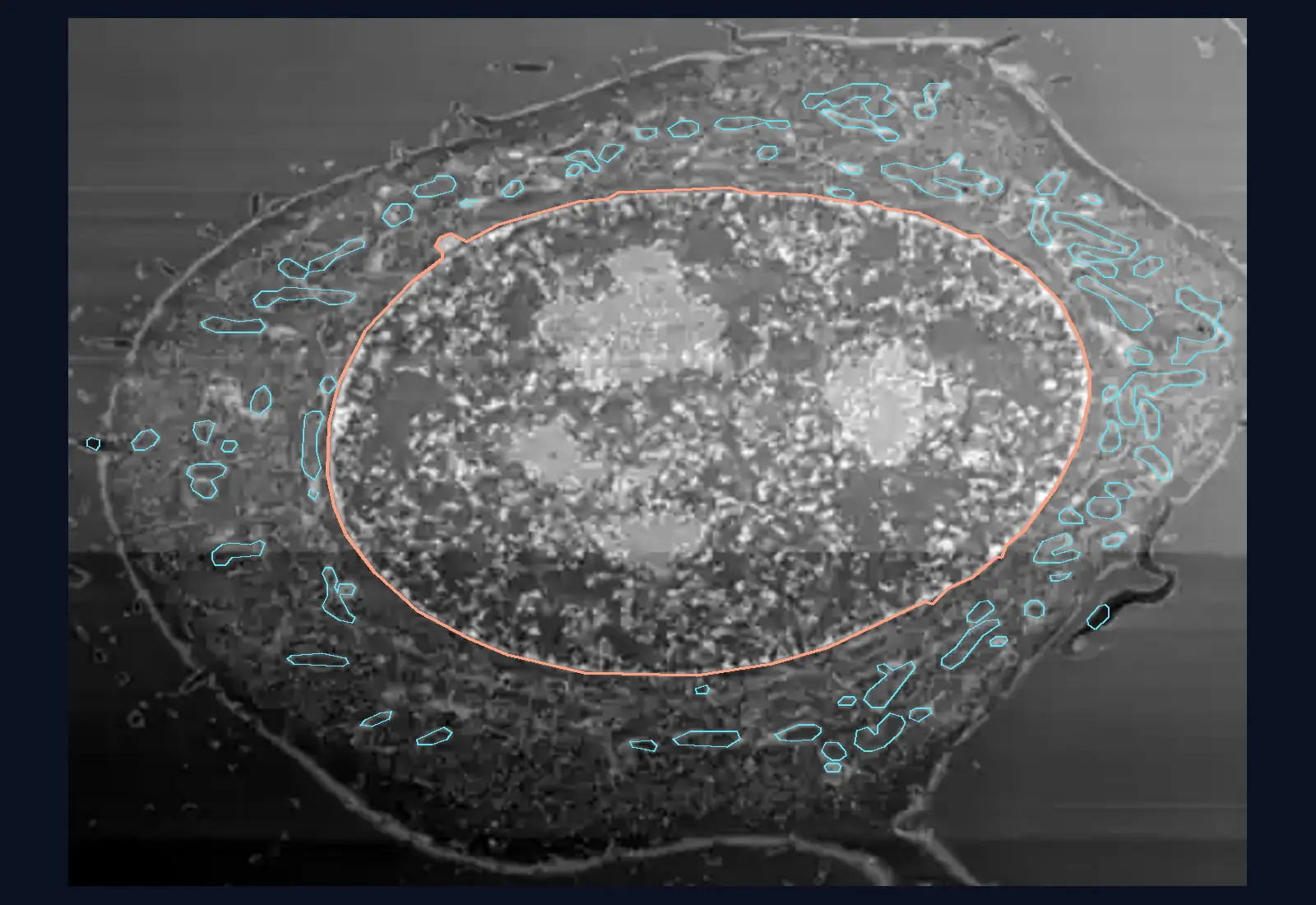 Slice the cell
3Inside the cell
What does one of your cells have that a bacterium does not?
Lessons of the chapter
- 3.1The cell, a living structure: why viruses are not considered alive
- 3.2Prokaryotic and eukaryotic cells: what sets them apart
- 3.3Membrane, cell wall, cytoplasm and nucleus: the cell’s coverings and its centre
- 3.4Cell organelles: ribosomes, reticulum, Golgi, lysosomes, mitochondria, plastids, vacuoles and centrosome
- 3.5Cell diversity and the surface area to volume ratio: why cells have different shapes and stay small
Another two lessons, for Natural Sciences (CS)
-
 Change the surroundings
4Boundaries, exchange and new cells
Why does salad go limp in salt, and how does one cell become two?
Lessons of the chapter
-
 Count a population
5From cell to biosphere
Where does an organism end and the forest begin?
Lessons of the chapter
- 5.1Levels of integration: from cell to organism, in plants and in humans
- 5.2Levels of organisation: individual, population, community, biome, biosphere
Another two lessons, for Natural Sciences (CS)
-
 Wait 20 minutes
6The worlds you discover under the microscope
How many kinds of life fit in a drop of water?
Lessons of the chapter
- 6.1Classifying organisms and the tree of life: from species to domain
- 6.2Bacteria and Archaea: the prokaryotes, the oldest and most numerous organisms
- 6.3Protozoa: amoebas, flagellates, sporozoans, ciliates
- 6.4Chromista: diatoms and brown algae
- 6.5Fungi: yeasts, moulds, cap mushrooms and parasitic fungi
-
 Make the plant taller
7Plants: built for life
What did a plant need to be able to live on land?
Lessons of the chapter
-
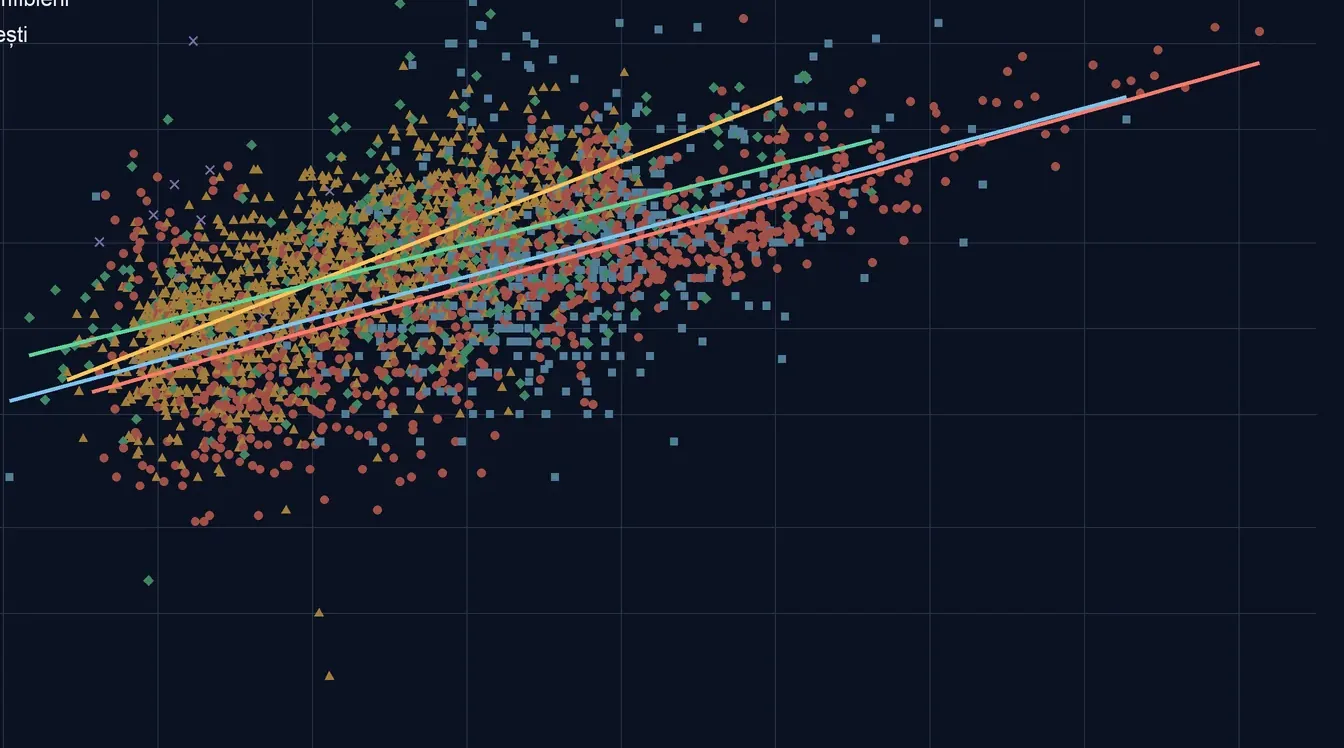 Weigh the animal
8Animals: forms, functions, environments
Why are a sea sponge, a bee and a bear all animals?
Lessons of the chapter
- 8.1Sponges and cnidarians: how an animal lives without organs
- 8.2Worms: flat, round and segmented, free-living or parasitic
- 8.3Molluscs: snails, bivalves and cephalopods, built to the same plan
- 8.4Arthropods: arachnids, crustaceans and insects, with their skeleton on the outside
- 8.5Fish, amphibians and reptiles: vertebrates with a variable body temperature
- 8.6Birds and mammals: vertebrates with a constant body temperature
Another two lessons, for Natural Sciences (CS)
-
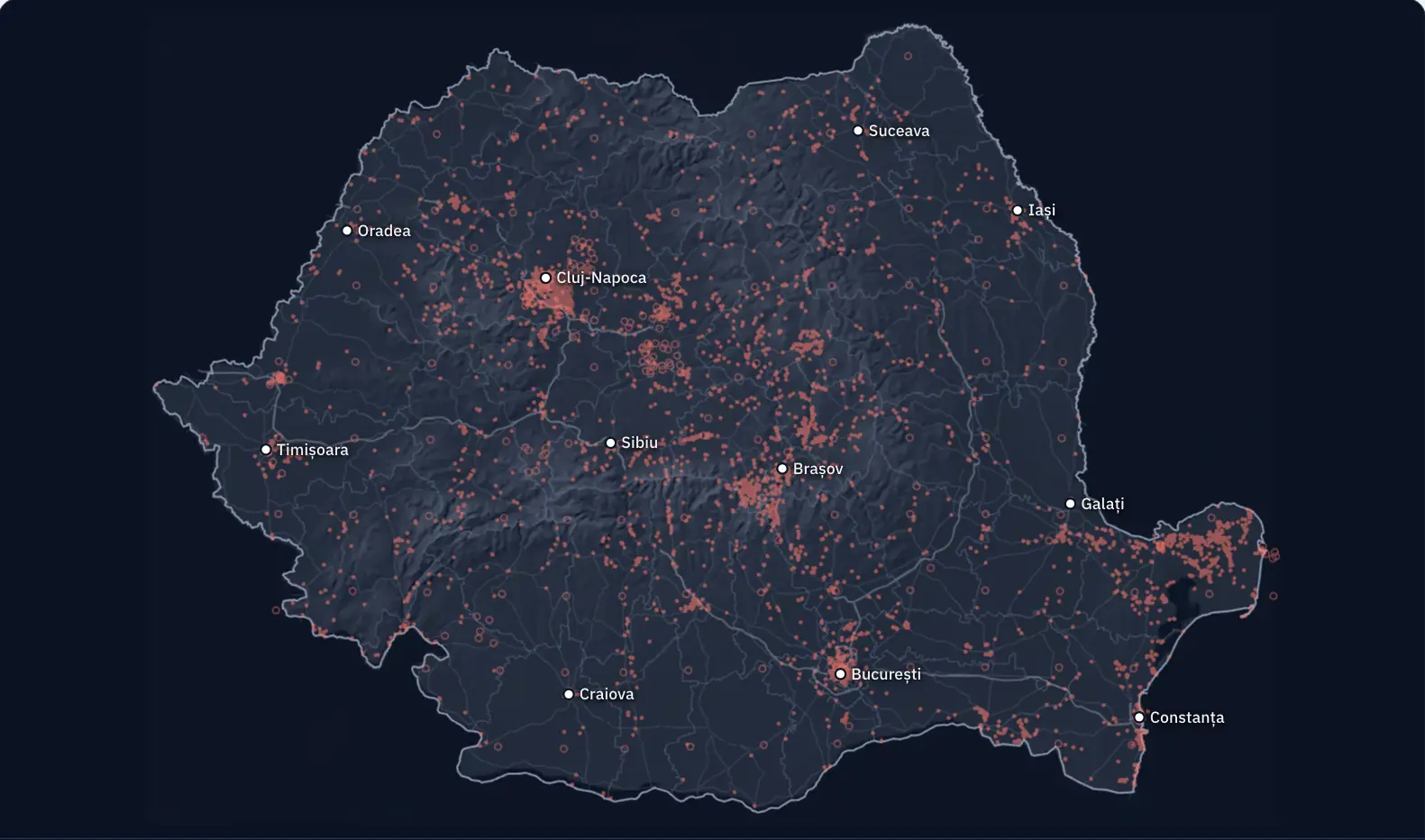 Put it on the map
9Life, health and conservation
What does a dot on a species record map prove, and what does an empty spot fail to prove?
Lessons of the chapter
- 9.1Human parasites: bacteria, protozoa, fungi and invertebrates, how they spread and how to prevent them
- 9.2Disease vectors: agent, vector, reservoir and host, from the tick to the fox
- 9.3Biodiversity: its three levels, what it is worth and what threatens it
- 9.4Conserving biodiversity: protected areas, protected species and observations that can be checked
-
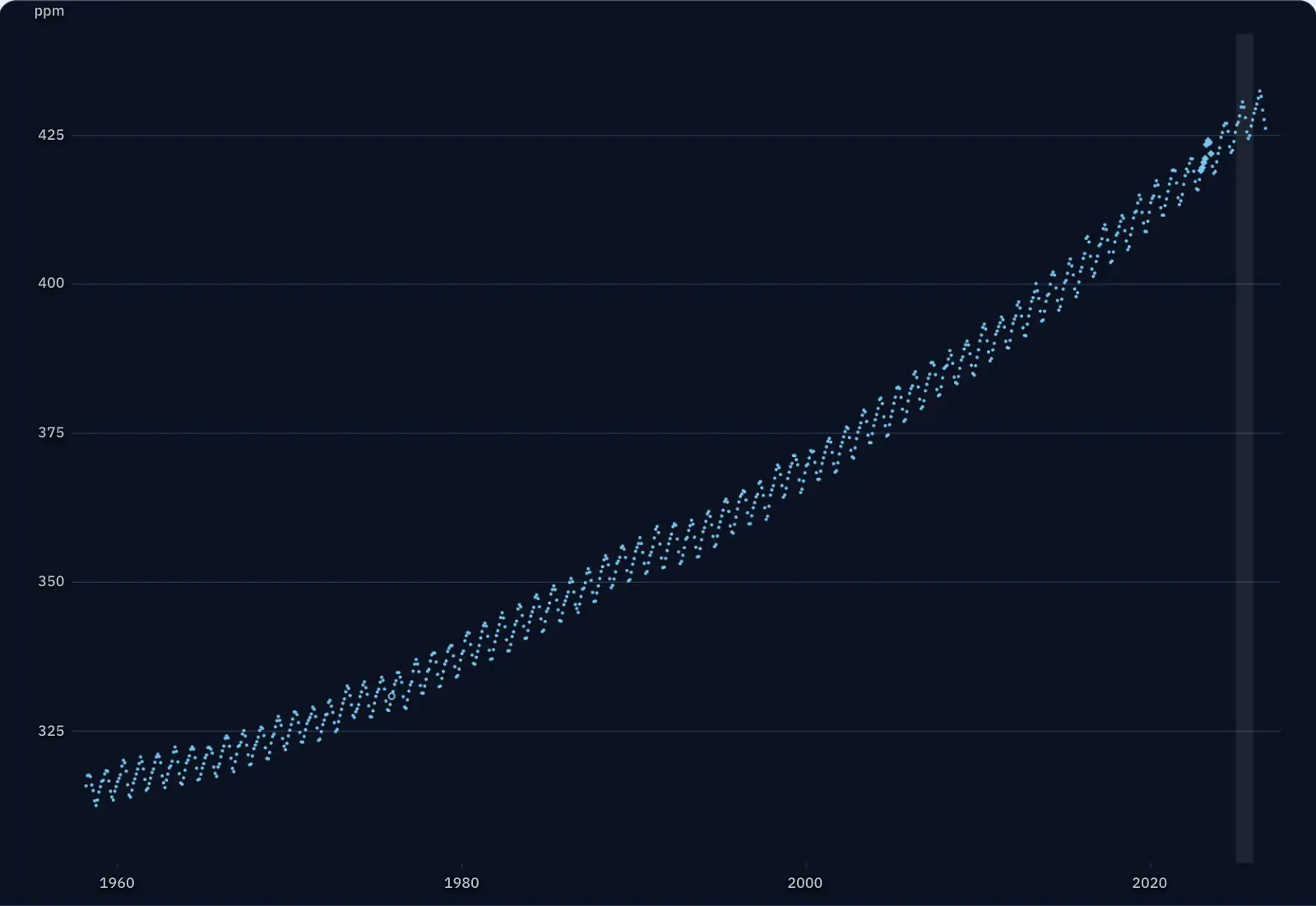 Follow the carbon
10Humans in living systems
Where does the carbon people burn end up, and how does a whole planet breathe?
Lessons of the chapter
- 10.1Humans in the environment: population, resources, waste and pollution
- 10.2Climate change and global warming: causes and effects on living things
- 10.3The ecological footprint: footprint and handprint
Another two lessons, for Natural Sciences (CS)
Ten chapters, from an atom to the planet
The chapters run from 0.1 nm (an atom) to the whole planet. The list below gives the scale of each chapter. Under each chapter title are three rulers: size, level and time.
- 1Method and the microscopefrom 1 mm to 1 nm
- 2Molecules of lifefrom 0.1 nm to 10 nm
- 3The cellfrom 5 nm to 100 µm
- 4Membrane, osmosis, divisionfrom 10 nm to 100 µm
- 5Levels of organisationfrom 10 µm to 20 km
- 6Bacteria, protists, fungifrom 100 nm to 30 m
- 7Plantsfrom 1 mm to 62.5 m
- 8Animalsfrom 1 mm to 30 m
- 9Health and biodiversityfrom 19.5 km to 744 km
- 10Humans and the biospherefrom 6 km to 12,742 km
How to use it
Before a test
Each lesson ends with “In short”, a few sentences holding all that has to be remembered, with “Common mistakes” and with questions that check themselves. The Practice page mixes the 341 questions that check themselves, by chapter or from the whole programme. The misconceptions pupils often hold are collected separately.
Your notebook
What you choose before reading and what you write for the open questions stays in your notebook, on this device, with no account. Each lesson gets the marks “opened”, “tried” and “explained”, and the notebook can be downloaded or printed.
In class
The For teachers page has everything that can be used tomorrow: the chapter pictures for the projector, a worksheet for every lesson, the 16 sheets of practical work, a test with the same questions for the whole class and the table of the programme.
Without internet
The lessons and pages you have opened stay on the device and can be read without a signal, on the bus or in class.