Chapter 2 · Molecules of lifeLesson 2.5CS
The many roles of carbohydrates, lipids and vitamins: chitin, membranes, hormones
What do a crayfish shell, your blood group and a hormone that passes straight through the cell membrane have in common?
- Size
- from 0.1 nm to 10 nm
- Level
- atoms and molecules
- Time
- an instant
Before you read: what do you think?
What makes red blood cells of group A chemically different from those of group B?
See the answer
The carbohydrates on the surface. The A and B antigens are glycolipids and glycoproteins, that is, lipids and proteins with carbohydrate chains attached. Red blood cells of group O carry neither the A antigen nor the B antigen.
A crayfish shell, the cell walls of a mushroom and a cockchafer’s wing are made of the same polysaccharide, chitin. Other carbohydrate chains, much shorter, sit on the surface of your red blood cells and set your blood group. The same family of molecules has very different roles, depending on how the units are joined and where they are.
Carbohydrates that build: chitin
Chitin is a polysaccharide that contains nitrogen. It is the main material of the exoskeleton of arthropods (insects, spiders, crayfish) and an important part of the cell wall of fungi. The chitin exoskeleton is tough, and its joints let the body move. In many aquatic crustaceans, the exoskeleton is impregnated with calcium carbonate, which makes it harder but less flexible.
A rigid exoskeleton does not grow with the animal. To grow, an arthropod sheds its exoskeleton from time to time, a process called moulting, and forms a new, larger one.
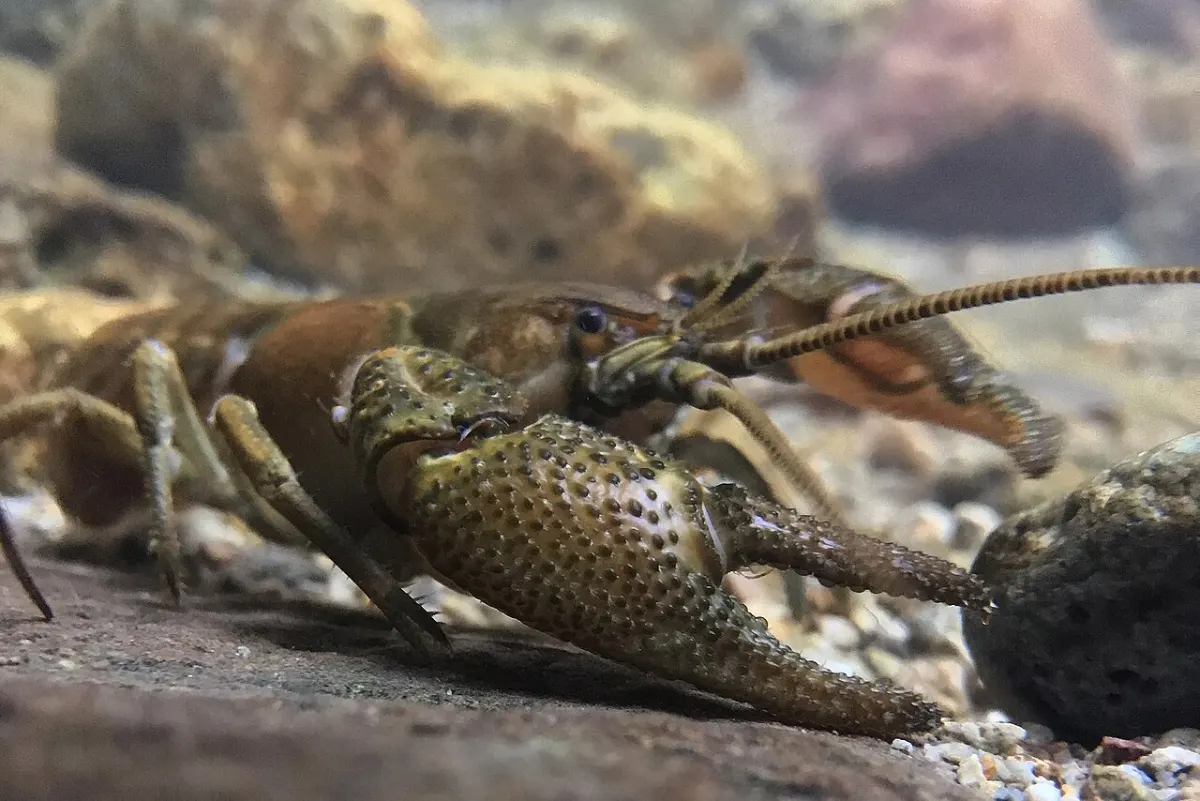
Photo: Mihaela C. Ion, CC BY-SA 4.0, source. Resized.

Carbohydrates that carry signals: the extracellular matrix and blood groups
Between the cells of animal tissues lies the extracellular matrix, a material made mostly of proteins, the most abundant of which is collagen, woven together with proteoglycans, protein molecules rich in carbohydrates. The matrix holds cells together in tissues. Its molecules also bind to receptors on the surface of cells, and this binding sends chemical signals all the way to the nucleus, where it switches certain genes on or off.
On the outer face of the membrane, many proteins and lipids carry carbohydrate chains: they are glycoproteins and glycolipids. The pattern of these carbohydrates differs from one cell type to another and from one person to another, so it is used for recognition: the immune system uses it to tell the body’s own cells from foreign ones.
The blood groups of the ABO system are an example. Red blood cells of group A carry the A antigen on their surface, those of group B the B antigen, those of group AB both, and those of group O neither. Plasma contains antibodies against the antigen the person does not have, which is why incompatible blood agglutinates.
Lipids in membranes and lipids that are signals
The structural role of lipids shows in the cell membrane: a phospholipid bilayer 5–10 nm thick, that is, 100,000–200,000 times thinner than a millimetre. Among the phospholipids sits cholesterol, which keeps the membrane fluid in the cold and stops it becoming too fluid in the heat.
The signalling role shows in steroid hormones, made from cholesterol, for example testosterone and oestradiol. Because they are fat-soluble, they cross the lipid bilayer of the membrane directly and bind to receptors in the cytoplasm or the nucleus. The hormone–receptor complex binds to DNA and changes how much a gene is used. Protein hormones, such as insulin, cannot cross the membrane; they bind to receptors on the cell surface.
Vitamins: enzyme helpers, antioxidants, hormones
Many vitamins work as coenzymes: small organic molecules without which certain enzymes do not work. Vitamin C is the coenzyme of the enzymes that build collagen. Vitamin B3 (niacin) is part of the molecules NAD⁺ and NADP⁺, which carry electrons in the reactions from which the cell gets energy.
Vitamin E is an antioxidant: it limits damage to cells by oxidation. Vitamin K is needed for blood clotting.
Vitamin D behaves like a hormone. The skin makes it when exposed to ultraviolet radiation, then the liver and kidneys convert it into calcitriol, its active form. Like steroid hormones, it is fat-soluble, enters cells and acts through receptors inside them. Calcitriol increases the absorption of calcium from the intestine, which is why a lack of vitamin D leads to rickets in children, with deformed bones.
Worked example
Who can receive blood from whom
A patient has group A. Which red blood cells can the patient receive, taking only the ABO system into account?
Step 1: group A has the A antigen on its red blood cells, so its plasma has antibodies against the B antigen.
Step 2: check each donor. Group A cells have the A antigen: compatible. Group O cells have neither A nor B: compatible. Group B cells have the B antigen: the patient’s antibodies would agglutinate them. Group AB cells also have the B antigen: incompatible.
Conclusion: a patient with group A can receive red blood cells from groups A and O. Group O is called the universal donor for red blood cells precisely because their surface lacks the A and B antigens.
In hospital, compatibility is also checked for other blood group systems, such as Rh, and a laboratory test is always done before a transfusion.
In Romania
The Bihor crayfish and its chitin exoskeleton
Four native species of crayfish live in Romania’s waters, among them the noble crayfish (Astacus astacus) and the Bihor crayfish (Austropotamobius bihariensis). The Bihor crayfish was described as a new species in 2019 by the Romanian biologist Lucian Pârvulescu, on the basis of DNA analysis and body shape. It is endemic: it lives only in the western Apuseni Mountains, in the tributaries of the Crișul Negru and Crișul Repede rivers, and rarely grows beyond 10 cm.
Like every crayfish, it has a chitin exoskeleton hardened with calcium carbonate, and it moults in order to grow. Crayfish species are told apart by details of this exoskeleton: the Bihor crayfish differs from the stone crayfish (Austropotamobius torrentium), which it closely resembles, by the toothless edge of a small plate at the base of the antenna.
In the catalogue of Romania’s crayfish, the Bihor crayfish is listed as endangered and the noble crayfish as vulnerable. The same catalogue lists two invasive crayfish species that have reached the country’s waters.
In short
- Chitin is a nitrogen-containing polysaccharide with a structural role in the exoskeleton of arthropods and the cell wall of fungi; arthropods moult in order to grow.
- The extracellular matrix (collagen and carbohydrate-rich proteoglycans) holds cells together in tissues and passes on signals through receptors on the cell surface.
- Glycoproteins and glycolipids on the outer face of the membrane are used in cell recognition; the A and B antigens of the blood groups are molecules of this kind.
- Phospholipids form the membrane bilayer, and cholesterol regulates its fluidity; steroid hormones, made from cholesterol, cross the membrane and act through receptors inside the cell.
- Vitamins can be coenzymes (vitamin C for collagen, B3 in NAD⁺), antioxidants (vitamin E), or can act as hormones (vitamin D, through calcitriol, increases calcium absorption).
Common mistakes
WrongAll hormones are proteins.
RightSteroid hormones, such as testosterone and oestradiol, are lipids made from cholesterol. Insulin is a protein hormone.
WrongCarbohydrates serve only as a source of energy.
RightChitin and cellulose have a structural role, and the carbohydrates on the surface of cells are used for recognition, as the blood groups show.
WrongYour blood group depends on the type of haemoglobin in your red blood cells.
RightThe ABO group depends on the antigens on the surface of the red blood cells, glycolipids and glycoproteins with carbohydrate chains.
Check yourself
Six questions. For the first five you see the explanation at once, with the paragraph of the lesson that supports it; for the written ones you compare with a good answer.
What is the exoskeleton of crayfish and insects mainly made of?
Answer
b) Chitin, a nitrogen-containing polysaccharide. Chitin is a nitrogen-containing polysaccharide; in crustaceans it is hardened with calcium carbonate.
Why can a steroid hormone enter a cell directly, while insulin cannot?
Answer
b) The steroid is fat-soluble and crosses the lipid bilayer; insulin is a protein. Fat-soluble molecules pass through the phospholipid bilayer. Insulin binds to receptors on the cell surface.
Which antigens do red blood cells of group O carry on their surface?
Answer
d) Neither the A nor the B antigen. Group O lacks the A and B antigens, which is why its red blood cells are compatible with every ABO group.
What role does vitamin C play in building collagen?
Answer
b) It is a coenzyme for the enzymes that build collagen. Coenzymes are small organic molecules, many of them derived from vitamins, without which certain enzymes do not work.
Choose the type of role for each example.
Answer
Structural: Chitin in a crayfish exoskeleton; Phospholipids in the membrane bilayer.
Signalling: Testosterone binding to a receptor inside the cell; Extracellular matrix molecules bound to receptors that send signals to the nucleus; The A and B antigens, recognised by antibodies.
Chitin and phospholipids build structures. Steroid hormones, matrix molecules bound to receptors and recognition carbohydrates carry information.
A patient with group B needs red blood cells. The hospital has blood of groups A, B, AB and O. Using antigens and antibodies, explain which groups are compatible in the ABO system.
A good answer
Group B has the B antigen on its red blood cells and antibodies against the A antigen in its plasma. The patient can be given cells of group B, which carry the same antigen, and of group O, which carry neither A nor B. Cells of groups A and AB carry the A antigen and would be agglutinated by the patient’s antibodies.
A complete answer names the anti-A antibodies in the plasma of group B, chooses groups B and O, and explains why A and AB are incompatible.
Terms
- chitin
- A nitrogen-containing polysaccharide found in the exoskeleton of arthropods and the cell wall of fungi.
- moulting
- The periodic shedding of the exoskeleton in arthropods, followed by the formation of a new, larger one, which allows growth.
- extracellular matrix
- The material between the cells of animal tissues, made of proteins such as collagen and of carbohydrate-rich proteoglycans.
- glycoprotein
- A protein with carbohydrate chains attached; many sit on the outer face of the membrane and are used for recognition.
- steroid hormone
- A lipid hormone made from cholesterol, which crosses the membrane and binds to receptors inside the cell.
- coenzyme
- A small organic molecule, often derived from a vitamin, without which an enzyme does not work.
- calcitriol
- The active form of vitamin D, which increases the absorption of calcium from the intestine.
Sources and link to the programme
- OpenStax – Biology 2e, 28.6 Superphylum Ecdysozoa: Arthropods – chitin exoskeleton, tough, waterproof, flexible; moulting needed for growth; calcium carbonate in aquatic crustaceans, harder but less flexible
- OpenStax – Biology 2e, 3.2 Carbohydrates – chitin, a nitrogen-containing polysaccharide, in the exoskeleton of arthropods and the cell wall of fungi
- OpenStax – Biology 2e, 4.6 Connections between Cells and Cellular Activities – the extracellular matrix: proteins, collagen the most abundant, proteoglycans with carbohydrates; binding to receptors sends signals to the nucleus and switches genes on or off
- OpenStax – Biology 2e, 5.1 Components and Structure – phospholipid bilayer of 5–10 nm; glycoproteins and glycolipids on the outer face; recognition of own and foreign cells; cholesterol and fluidity
- OpenStax – Biology 2e, 40.2 Components of the Blood – the ABO antigens are glycolipids and glycoproteins; group O without A and B antigens; antibodies in the plasma; agglutination; the universal donor
- OpenStax – Biology 2e, 3.3 Lipids – cholesterol, precursor of testosterone, oestradiol and vitamin D
- OpenStax – Biology 2e, 37.2 How Hormones Work – fat-soluble hormones (steroids, vitamin D) cross the membrane, bind to receptors in the cytoplasm or nucleus and regulate genes; polypeptide hormones bind to surface receptors
- OpenStax – Biology 2e, 6.5 Enzymes – coenzymes, most often derived from vitamins; vitamin C a coenzyme for the enzymes that build collagen
- OpenStax – Biology 2e, 34.2 Nutrition and Energy Production – vitamin B3 in NAD⁺ and NADP⁺; vitamin E limits oxidative damage; vitamin K and clotting; vitamin D and calcium absorption, rickets
- OpenStax – Biology 2e, 37.3 Regulation of Body Processes – calcitriol, the active form of vitamin D, increases the absorption of calcium from the intestine
- Pârvulescu L. – Crayfish of Romania: Austropotamobius bihariensis – the Bihor crayfish, described in 2019 on molecular and morphological grounds; endemic to the western Apuseni Mountains, in the tributaries of the Crișul Negru and Crișul Repede; rarely over 10 cm; the difference from the stone crayfish in the antennal plate
- Pârvulescu L. – Crayfish of Romania (home page) – the native species (A. bihariensis EN, A. torrentium, Astacus astacus VU, A. leptodactylus) and the invasive ones (Faxonius limosus, Procambarus virginalis) in Romania
- OpenStax – Anatomy and Physiology 2e, 5.3 Functions of the Integumentary System – the skin makes vitamin D under UV radiation; the liver and kidneys convert it into calcitriol; vitamin D and calcium absorption; rickets
From the programme: “The diversity of roles of carbohydrates: structural – chitin, signalling – the extracellular matrix”; “The diversity of roles of lipids: structural – cell membranes, signalling – hormones”; “The diversity of roles of vitamins” (specialism, Natural Sciences). Specific competences addressed: 2.1, 2.2.