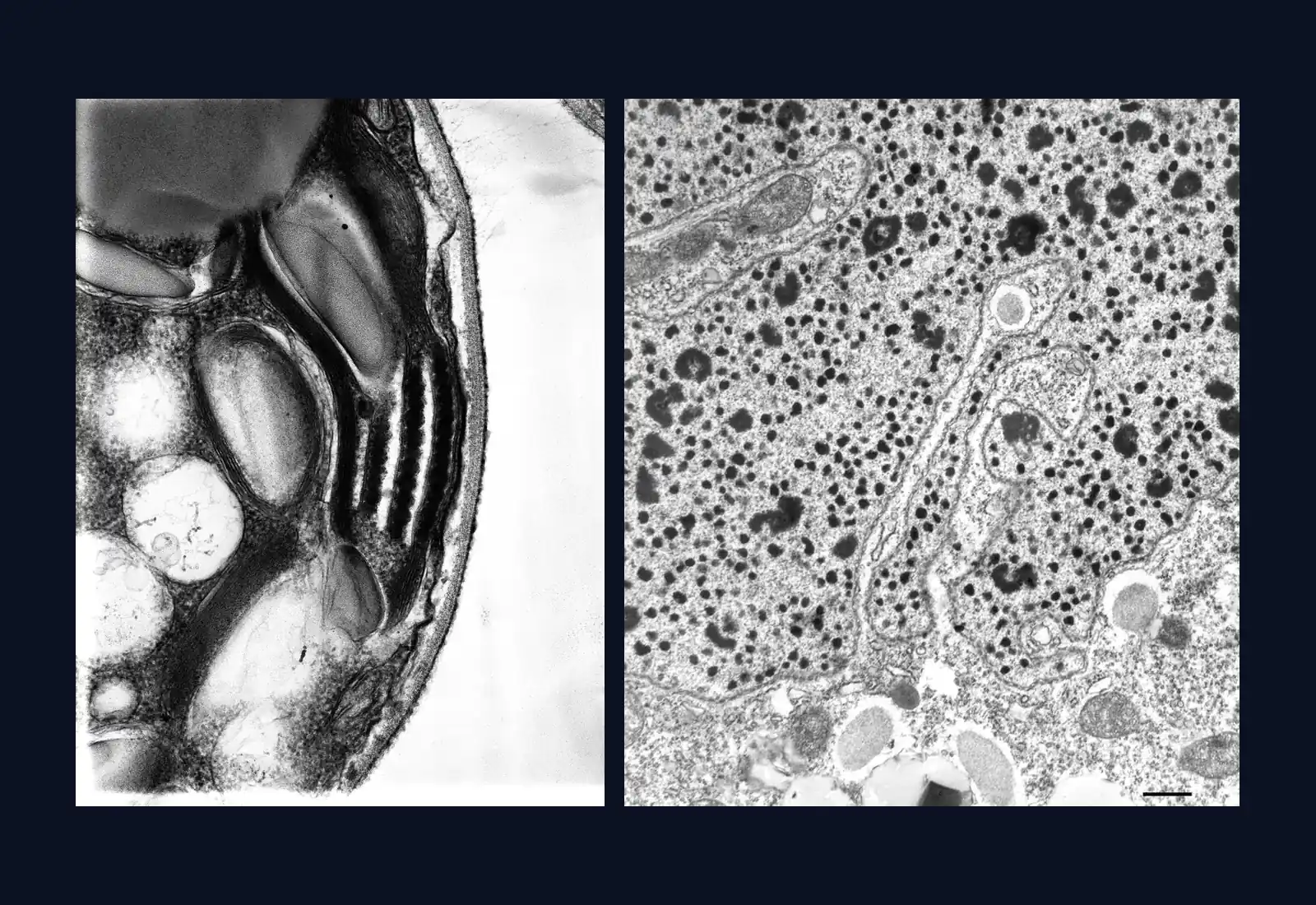
Chapter 1 · Method and the microscopeLesson 1.2
The experiment: variables, control group and research ethics
You put one pot on the windowsill and one in a cupboard, and you water the first more often. If the plant by the window grows more, have you found out what light does?
- Size
- from 1 mm to 1 nm
- Level
- cell and cell structures
- Time
- one lesson in the lab
Before you read: what do you think?
At Fundulea, in Călărași county, a plot of wheat has been grown since 1967 with no fertiliser at all, as a standard of comparison. Meanwhile ever better wheat varieties have appeared. What happened to this plot’s harvest after 48 years?
See the answer
It fell, from 1,970 kg of wheat per hectare in 1967–1971 to 1,210 kg per hectare in 2011–2015. The unfertilised soil gradually lost its fertility. Without this control plot, nobody could have measured how much of the harvest on the fertilised plots is due to fertiliser.
In May 1881, on a farm near Melun in France, Louis Pasteur vaccinated half of a group of animals against anthrax and left the other half unvaccinated. At the end of the month, all of them were given a lethal dose of anthrax bacteria. The experiment had been demanded by a vet who did not believe in Pasteur’s ideas, and the result convinced people precisely because there was an unvaccinated group to compare it with.
Three kinds of variable
A variable is any factor that can take different values in an experiment. The independent variable is the factor the researcher changes on purpose, for example the temperature at which seeds germinate. The dependent variable is the measured result, which may depend on it, for example the number of seeds germinated after five days. The controlled variables are all the other factors, kept the same in every container: the species and variety, the amount of water, the light, the containers, the duration.
In a simple comparison only one independent variable is changed, and the rest stay the same. In the example with the pots, two change at once, light and water. If the plant by the window grows more, there is no telling how much is due to the light and how much to the water.
For the curious
An experiment can also study two factors at once, if it tries every combination of them: lots of light with lots of water, lots of light with little water, little light with lots of water, and little light with little water. That way the effect of light can be separated from the effect of water.
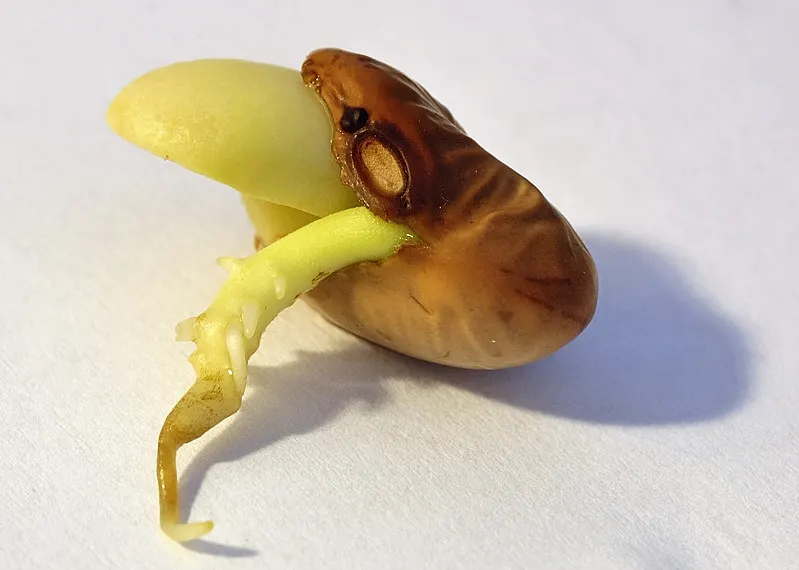
Photo: Doronenko, CC BY-SA 3.0, source. Unchanged.

The control group: the standard of comparison
The experimental group is the group that receives the factor being tested. The control group is identical to it in every respect except the factor being tested. That is why a difference between the two groups can be put down to that factor, if it is too large to be mere chance. The control does not necessarily mean “with nothing”; it can be the usual condition, for example seeds kept at room temperature.
On the farm at Pouilly-le-Fort, in 1881, Pasteur divided 50 sheep and goats into two groups of 25. The experimental group was vaccinated in May, the control group was not. On 31 May all 50 animals were given a highly virulent culture of anthrax bacteria. On 2 June the vaccinated animals were all healthy, and the unvaccinated sheep and goats had all died.
Without the control group, the result would have meant nothing: the vaccinated animals might have survived because the dose of bacteria was too weak. The death of the control group showed that the dose killed, so the survival of the others was due to the vaccine.
Several individuals and replication
Two seeds from the same packet are not identical: one may be bigger, another damaged. That is why a group has several individuals, and they are assigned to groups at random, for example by drawing lots, so that the better seeds do not all end up in one group. The more individuals there are, the less a chance difference matters.
The experiment is replicated, with several containers for each condition. Twenty seeds in the same container share the same surroundings, so they are not worth twenty separate experiments: if the container stood next to a radiator, all of them were affected in the same way. A result can be trusted when it turns up again in separate containers and, later, in other researchers’ hands.
Research ethics
Research ethics covers the rules of honest conduct in science. Three serious kinds of misconduct are: fabrication of data (making up results that were never obtained), falsification (changing or leaving out data or procedures, so that the result no longer matches reality) and plagiarism (taking someone else’s ideas, results or text without citing them). A mistake made in good faith is not misconduct; it is admitted and corrected.
A container with an unexpected result is not deleted from the table. If it was knocked over, the incident is recorded, with the reason why that container is left out of the calculation.
Research on animals follows the principle of the three Rs, set out in 1959 by William Russell and Rex Burch: replacing animals with other methods wherever possible, reducing the number of animals, and refining procedures so that pain and suffering are as small as possible. People may take part in medical research only voluntarily, after they have been given all the information and have given their informed consent.
Worked example
Temperature and bean germination
The question: do beans germinate less in the cold? The independent variable is temperature: fridge or room temperature. The dependent variable is the number of beans with a visible root after five days. Controlled variables: the same variety, the same packet, 10 beans on cotton wool moistened with the same amount of water, identical containers, darkness in both places. The control group stays at room temperature.
Each condition has three containers. A sample calculation, with numbers chosen for the exercise: at room temperature 9, 8 and 10 beans germinated, that is 27 out of 30, so 27 ÷ 30 × 100 = 90%. In the fridge 3, 2 and 4 beans germinated, that is 9 out of 30, so 30%. The difference is 90 − 30 = 60 percentage points.
The conclusion, limited to what was tested: in these conditions, fewer beans germinated in five days in the cold. You can do the experiment at home, with a packet of beans and some cotton wool.
In Romania
The control plot at Fundulea
In 1966 the agronomist Cristian Hera began long-term fertiliser trials at Fundulea, in Călărași county, at the institute known today as the National Agricultural Research and Development Institute Fundulea. The field has 25 nitrogen and phosphorus fertiliser treatments, with crops grown year after year. One of them gets no fertiliser at all: it is the control treatment.
For wheat grown after maize, the average harvest of the control plots fell from 1,970 kg per hectare in 1967–1971 to 1,210 kg per hectare in 2011–2015. On the plots that received 120 kg of nitrogen and 80 kg of P₂O₅ (phosphorus oxide) per hectare, the harvest rose over the same period from 3,380 to 4,440 kg per hectare.
The comparison shows two things that no single plot shows on its own: unfertilised soil loses its fertility, and in 2011–2015 balanced fertilisation brought an extra 3,230 kg of wheat on every hectare.
In short
- The independent variable is the factor changed on purpose, the dependent variable is the measured result, and the controlled variables are kept the same in all the groups.
- In a simple comparison only one independent variable is changed, and the rest stay the same.
- The control group is identical to the experimental group except for the factor being tested, and provides the standard of comparison.
- Individuals are assigned to groups at random, and the experiment is replicated in separate containers or groups.
- Fabrication of data, falsification and plagiarism are serious breaches of research ethics; a mistake made in good faith is admitted and corrected.
- Research on animals follows the principle of the three Rs (replacement, reduction, refinement), and people take part in research only with informed consent.
Common mistakes
WrongThe control group is the one you put nothing in.
RightThe control group is identical to the experimental group except for the factor being tested. It can also be the usual condition, for example room temperature.
WrongTwenty seeds in the same container means twenty replicates.
RightSeeds in the same container share the same surroundings. True replicates are separate containers for each condition.
WrongIf a result does not fit the hypothesis, you can take it out of the table.
RightRemoving a result just because it is inconvenient is falsification. A result is left out only for a recorded reason, such as a container that was knocked over.
Check yourself
Seven questions. For the first six you see the explanation at once, with the paragraph of the lesson that supports it; for the written ones you compare with a good answer.
In an experiment, the amount of water the seedlings get is changed, and after two weeks their height is measured. What is the height?
Answer
b) The dependent variable. The height is the measured result. The amount of water is the independent variable, and the light, the soil and the variety are controlled variables.
Why were the unvaccinated animals needed in Pasteur’s 1881 experiment?
Answer
b) To show that the dose of bacteria killed, so the survival of the vaccinated animals was due to the vaccine. The control group received the same dose of bacteria without the vaccine and died. Only in this way could the survival of the experimental group be put down to the vaccine.
A researcher reports the results of 30 containers in a paper, although the experiment was done with only 10. What kind of misconduct is this?
Answer
c) Fabrication of data. The results of the 20 containers that never existed are made up: that is fabrication. Plagiarism would have been taking someone else’s work without citing it.
What is wrong with the experiment that has one pot by the window, watered every day, and one in a cupboard, watered rarely?
Answer
b) It changes two variables at once, light and water. If light and water change together, their effects can no longer be separated. One of them has to be kept the same.
At Fundulea, in 2011–2015, the plots given 120 kg of nitrogen and 80 kg of P₂O₅ (phosphorus oxide) per hectare yielded 4,440 kg of wheat per hectare, and the control plots 1,210 kg per hectare. By how many kilograms per hectare was the harvest of the fertilised plots larger?
kg/haAnswer
3,230 kg/ha. The difference from the control: 4,440 − 1,210 = 3,230 kg per hectare. It shows how much of the harvest is due to fertilisation.
In the experiment on temperature and bean germination, sort each item.
Answer
Independent variable: Fridge or room temperature.
Dependent variable: Number of beans germinated after five days.
Controlled variable: Amount of water in the cotton wool; Bean variety; Number of beans in each container.
Only the temperature is changed; germination is measured; everything else is kept the same in every container.
A pupil wants to find out whether music makes bean plants grow faster. Describe a fair experiment: the variables, the control group and replication.
A good answer
The independent variable is music (with music or without). The dependent variable is the height of the plants after, say, three weeks. The control group is plants grown without music, identical in every other way: the same variety, the same soil, the same water, light and temperature. Each group has several pots, assigned at random, and the plants are kept in rooms that are equally warm and bright, so that the only difference is the music.
A complete answer names the three kinds of variable, describes a control group identical except for the music and calls for several pots for each condition.
Terms
- independent variable
- The factor the researcher changes on purpose in an experiment.
- dependent variable
- The measured result, which may depend on the independent variable.
- controlled variables
- The factors kept the same in all the groups, so that they do not affect the result.
- control group
- The group identical to the experimental group except for the factor being tested, used as the standard of comparison.
- experimental group
- The group that receives the factor being tested.
- replication
- Repeating the experiment, in several separate containers or groups, to see whether the result turns up again.
- plagiarism
- Taking someone else’s ideas, results or text without citing them.
- informed consent
- A person’s voluntary agreement to take part in research, given after receiving all the information about it.
Sources and link to the programme
- OpenStax – Biology 2e, 1.1 The Science of Biology – the variable; the control group contains every feature of the experimental group except the manipulation being tested
- CDC – Emerging Infectious Diseases (2002), about the cover: Pasteur and anthrax vaccination – Pouilly-le-Fort 1881: 25 animals vaccinated, 25 unvaccinated, all 50 inoculated with virulent anthrax on 31 May; the unvaccinated dead, the vaccinated healthy
- Gavi – How Louis Pasteur put the anthrax vaccine on trial – the start on 5 May 1881, the telegram of 2 June, the unvaccinated sheep and goats dead, the vaccinated animals alive; the farm of Hippolyte Rossignol, a sceptical vet; Melun, a town near Pouilly-le-Fort
- U.S. Office of Research Integrity – Definition of Research Misconduct – definitions of fabrication, falsification and plagiarism; honest error is not misconduct
- Norecopa – The Three Rs – Russell and Burch, 1959, replacement, reduction, refinement
- NC3Rs – The 3Rs – current definitions of the three Rs in animal research
- World Medical Association – Declaration of Helsinki – voluntary participation and free, informed consent in medical research
- I. Țințișan, Anale INCDA Fundulea 83 (2015) – Influența fertilizării cu azot și fosfor asupra producției de grâu pe o perioadă de 48 de ani – the trials begun by Cristian Hera in 1966; 25 fertiliser treatments; wheat after maize: unfertilised control 1,970 → 1,210 kg/ha, N120P80 3,380 → 4,440 kg/ha (1967–1971 against 2011–2015)
- NIST/SEMATECH e-Handbook of Statistical Methods – 5.3.3.3 Full factorial designs – a full factorial design tries every level of each factor with every level of the others
From the programme: “The scientific method. Research ethics. Observation and experiment in biology: formulating the hypothesis, defining the variables, choosing the methods, collecting and analysing the data, formulating conclusions, communicating the results” (common core). Specific competences addressed: 1.2, 2.2.