Chapter 9 · Health and biodiversityLesson 9.1
Human parasites: bacteria, protozoa, fungi and invertebrates, how they spread and how to prevent them
How does a tapeworm get into a person’s gut, a threadworm onto a child’s hand, or a tetanus spore into a wound, and what stops each of them?
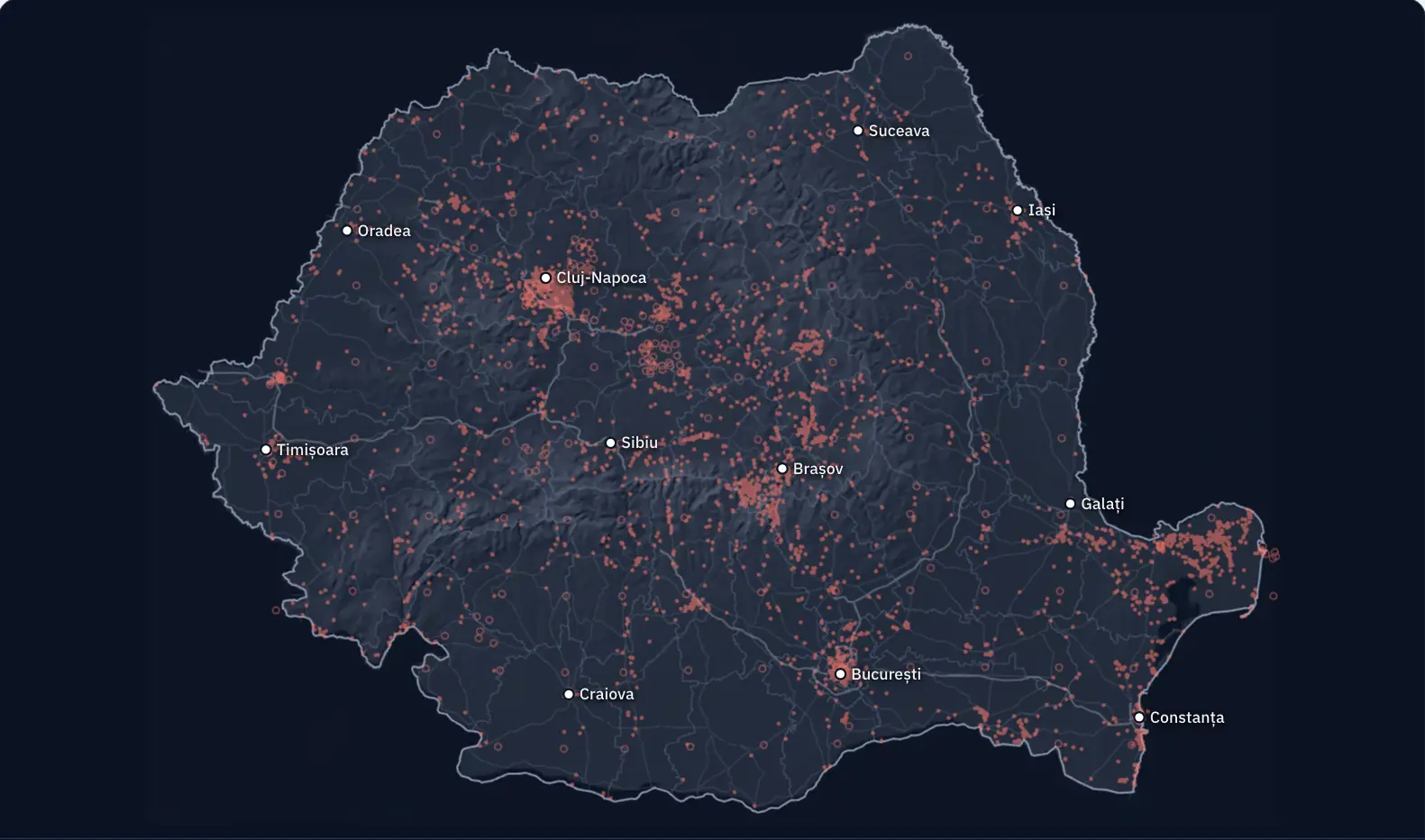
- Size
- from 19.5 km to 744 km
- Level
- population and ecosystem
- Time
- a decade of observations
Before you read: what do you think?
About a quarter of the world’s people have been infected with the tuberculosis bacterium. How many of those infected go on to develop the disease?
See the answer
Between 5 and 10 in 100, according to the World Health Organization. The rest do not go on to develop the disease: in general, a person who is infected but not ill does not feel sick and does not pass the bacterium on. Infection and disease are two different things, and the state of the host matters as much as the agent.
The spores of the bacterium that causes tetanus lie in soil, dust and manure, and survive there for years. Trichinella larvae can sit in the meat of a pig or a wild boar, and threadworm eggs stay on household objects for several weeks. Each of these organisms follows a precise route into the human body, and prevention means breaking that route.
Parasite, host and pathogen
Parasitism is a relationship in which one organism, the parasite, lives on or inside another organism, the host, feeds at its expense and harms it. Parasites that live on the surface of the body, such as lice, are called ectoparasites; those that live inside, such as the tapeworm, are called endoparasites. An organism that can cause a disease is called a pathogen.
Parasitism is a relationship. It is not a group of organisms. Most bacteria and fungi are not parasites: they break down dead matter or live in the human body without making it ill. Infection does not automatically mean disease either. About a quarter of the world’s people have been infected with the tuberculosis bacterium, yet only 5–10% of those infected go on to develop the disease.
For every parasite you need to know four things: the agent, the disease, the route of transmission (the way the agent reaches a new host) and prevention, meaning the link in the chain you can break. Only a doctor makes the diagnosis and decides the treatment.
Bacteria: tuberculosis, salmonellosis, tetanus
Tuberculosis is caused by the tuberculosis bacillus and usually affects the lungs. It spreads through the air when a sick person coughs, sneezes or spits. It can be prevented and it can be cured; in young children, the BCG vaccine prevents the severe forms.
Salmonellosis is caused by bacteria of the genus Salmonella, one of the four main causes of diarrhoeal disease in the world. People catch it mostly from contaminated foods of animal origin: eggs, poultry, meat, milk. Prevention: cooking food thoroughly, keeping raw meat separate and washing your hands.
Tetanus is caused by Clostridium tetani, whose spores lie in soil, dust and animal faeces. The spores enter through wounds, cuts or punctures. The disease does not pass from person to person and is prevented by vaccination.
Antibiotics act on bacteria. They have no effect at all on viruses, such as those that cause colds and flu.
Protozoa and fungi
Protozoa are single-celled eukaryotes; the group is a school grouping that gathers organisms from different branches of the tree of life. Giardia duodenalis causes giardiasis, a disease with diarrhoea, and is caught by swallowing water or food contaminated with faeces, or from dirty hands; prevention is handwashing and safe water (boiled, if it comes from springs or rivers). Toxoplasma gondii causes toxoplasmosis; the cat plays a key role in its life cycle, and people become infected from undercooked meat, unwashed vegetables, or contaminated soil or cat litter. Most healthy people have no symptoms, but infection during pregnancy can affect the baby. Malaria is caused by five species of Plasmodium and is transmitted mainly by the bite of an infected female Anopheles mosquito; an estimated 282 million cases occurred in 2024.
Parasitic fungi cause mycoses. Fungal infections of the skin, nails and scalp, such as “athlete’s foot”, are caused by microscopic fungi and are caught through contact with infected people or animals, from shared towels and from the floors of public showers. Prevention: clean, dry skin, flip-flops in public showers, a towel of your own. Candidiasis is caused by the yeast Candida, which normally lives on the skin and in the mouth without doing harm; the disease appears when the fungus multiplies excessively, for example after antibiotics or when the body’s defences are weakened.
For the curious
More rarely, malaria can also be transmitted through blood transfusions or contaminated needles.
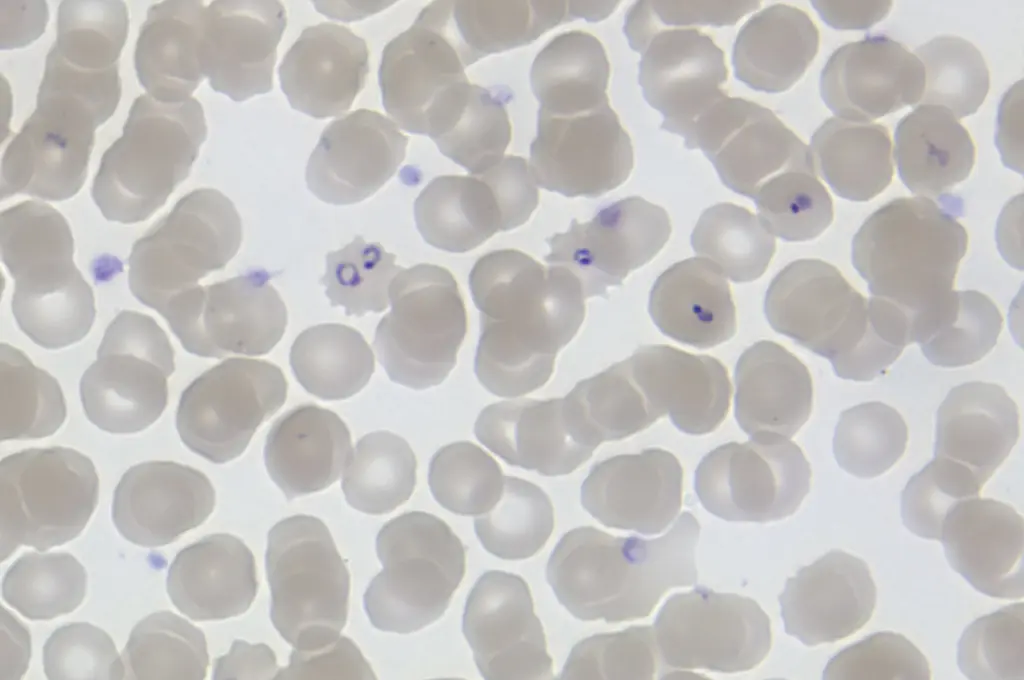
Photo: MichaelZahniser, Public domain, source. Cropped.

Parasitic worms and arthropods
The tapeworm (Taenia solium, the pork tapeworm, and Taenia saginata, the beef tapeworm) reaches the human gut from raw or undercooked meat that contains larvae. Eggs of Taenia solium swallowed with food, water or from dirty hands cause cysticercosis, with cysts in the muscles, eyes or brain. Prevention: veterinary inspection of meat, thorough cooking, handwashing.
The large roundworm (Ascaris lumbricoides) is caught by swallowing eggs from soil contaminated with faeces, from unwashed vegetables or from hands; prevention is washing hands and vegetables. The threadworm, or pinworm (Enterobius vermicularis), lays eggs on the skin around the anus, mostly at night; the eggs get onto the fingers and then into the mouth, and washing hands with soap and water is the best prevention. The trichina worm (Trichinella) lives as a larva in the meat of pigs, wild boar or bears; people become infected by eating it raw or undercooked, and the disease does not pass from person to person.
Among the arthropods, the head louse passes from one head to another by direct contact; no disease is known to be transmitted by it. Scabies is caused by the mite Sarcoptes scabiei, which digs burrows in the skin and causes itching that is worse at night; it is caught through close, skin-to-skin contact, usually between people who live in the same home.
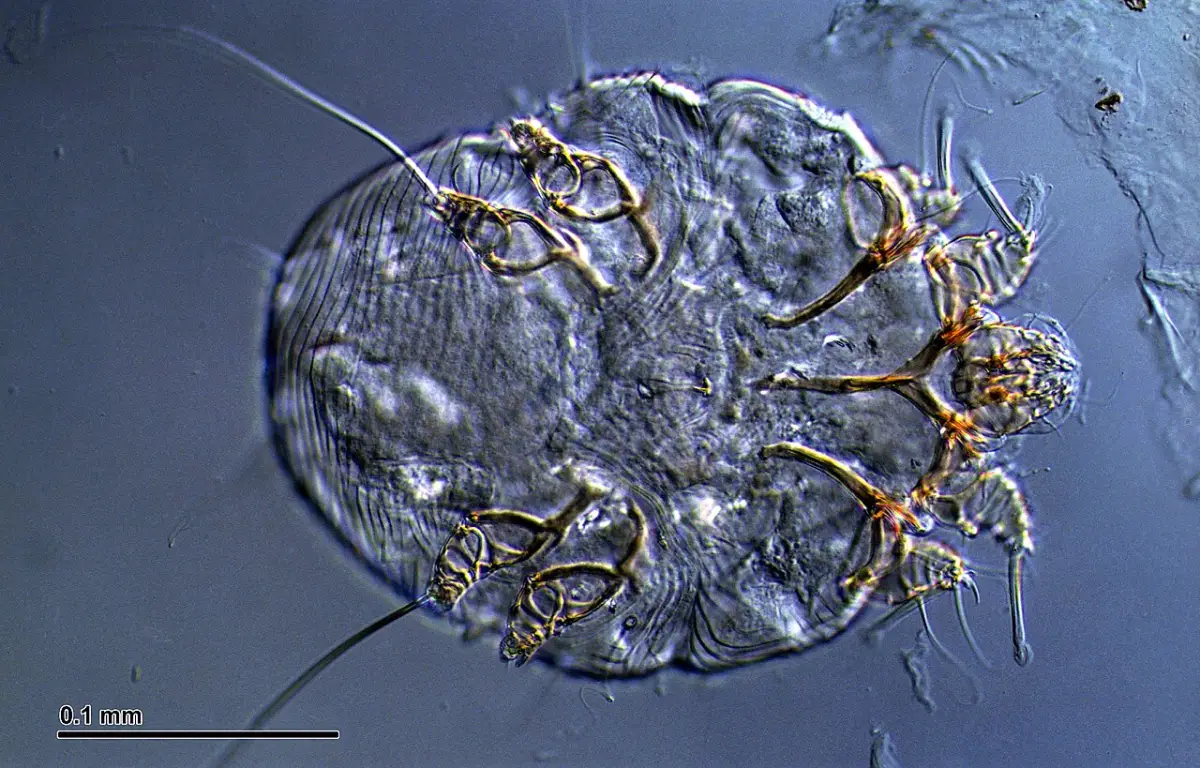
Photo: Doc. RNDr. Josef Reischig, CSc., CC BY-SA 3.0, source. Resized.

Worked example
Where to break the route of Trichinella
An invented case: after a meal of smoked sausages made from a hunted wild boar, three members of a family fall ill, and the doctor confirms trichinellosis. Which link should have been broken?
Step 1, the agent: Trichinella larvae in the boar’s muscles. Step 2, the host: the people who ate the meat. Step 3, the route of transmission: raw or undercooked meat. The disease does not pass from one person to another, so the patients do not need to be isolated.
Step 4, the link to break: game or pork goes for veterinary testing before it is eaten, and is then cooked thoroughly. Smoking, drying and salting do not reliably kill the larvae, and freezing may not kill them in game meat.
Conclusion: prevention is tied to the route of transmission. Handwashing stops threadworm, but it does not stop Trichinella.
In Romania
Victor Babeș and Ioan Cantacuzino
In 1888, the Romanian scientist Victor Babeș found microorganisms in the red blood cells of sick cattle and sheep in Romania, linked to a disease in which the animals’ urine turns red. They were single-celled parasites, and since 1893 their genus has carried the name of the man who discovered them: Babesia. Also in 1888, Babeș opened the world’s second rabies vaccination centre in Bucharest, after Pasteur’s in Paris.
In 1913, during the Second Balkan War, cholera, caused by the bacterium Vibrio cholerae, struck the Romanian army. Ioan Cantacuzino, another Romanian scientist, and his colleagues quickly prepared a vaccine from 25 strains of the bacterium and vaccinated the soldiers in the middle of the epidemic. Historians of medicine regard the campaign as an effective way of stopping a disease that was already in full swing.
In short
- A parasite lives on or inside a host, feeds at its expense and harms it; ectoparasites live on the surface of the body, endoparasites inside it.
- Parasitic bacteria: the tuberculosis bacillus (through the air), Salmonella (contaminated food), Clostridium tetani (spores from soil, through wounds); antibiotics do not act on viruses.
- Parasitic protozoa: Giardia (contaminated water and hands), Toxoplasma (raw meat, soil, cats), Plasmodium – malaria (mainly the bite of a female Anopheles).
- Parasitic fungi: the fungi that cause skin mycoses (contact, towels, showers) and Candida (excessive growth of a yeast that normally lives on the body).
- Parasitic invertebrates: the tapeworm and Trichinella (undercooked meat), the large roundworm and the threadworm (eggs swallowed from hands and vegetables), the head louse and the scabies mite (direct contact).
- Prevention breaks the route of transmission: handwashing, safe water, inspected and well-cooked meat, vaccination; only a doctor makes the diagnosis and decides the treatment.
Common mistakes
WrongAll bacteria and fungi are parasites that make people ill.
RightParasitism is a relationship. It is not a group of organisms. Most bacteria and fungi break down dead matter or live in the body without doing harm; Candida, for example, normally lives on the skin and in the mouth.
WrongI’ve got a cold, so I’ll take an antibiotic and get better faster.
RightColds and flu are caused by viruses, and antibiotics act only on bacteria. Any medicine is taken only on a doctor’s advice.
WrongHead lice only turn up on children who don’t wash.
RightHead lice pass from one head to another by direct contact, usually during play, so any child can get them. No disease is known to be transmitted by them.
Check yourself
Seven questions. For the first six you see the explanation at once, with the paragraph of the lesson that supports it; for the written ones you compare with a good answer.
How do Clostridium tetani spores get into the human body?
Answer
b) Through wounds, cuts or punctures with soil in them. The spores lie in soil, dust and animal faeces and enter through wounds. Tetanus does not pass from person to person.
Which measure breaks the route by which the pork tapeworm reaches the human gut?
Answer
c) Veterinary inspection of the meat and thorough cooking. The tapeworm reaches the gut from raw or undercooked meat that contains larvae. Inspection and thorough cooking break that link.
Why is candidiasis different from tuberculosis, malaria and scabies?
Answer
b) Its agent normally lives on the body, and the disease appears when it multiplies excessively. Candida is a yeast normally present on the skin and in the mouth. The trouble starts when it multiplies out of control, for example after antibiotics.
A person falls ill with trichinellosis. From whom could the classmate sitting next to them catch it?
Answer
c) From nobody: Trichinella is caught only from infected meat. Trichinella passes to humans only from raw or undercooked meat. The patient does not pass it on.
In a group of 200 people infected with the tuberculosis bacterium, how many would go on to develop the disease if the proportion were 10%, the upper limit given by the WHO?
peopleAnswer
20 people. 10% of 200 means 200 × 10 ÷ 100 = 20. The other 180 would not develop the disease.
Put each agent into its group.
Answer
Bacteria: Salmonella; Clostridium tetani.
Protozoa: Plasmodium; Giardia duodenalis.
Fungi: Candida.
Invertebrates: Sarcoptes scabiei; Enterobius vermicularis; Trichinella.
Salmonella and Clostridium are bacteria; Plasmodium and Giardia are protozoa; Candida is a yeast, that is, a fungus; the scabies mite, the threadworm and Trichinella are invertebrate animals.
At a summer camp, several children drink water straight from a spring and, a few days later, some have diarrhoea; the doctor confirms giardiasis. Name the agent, the route of transmission and two measures that would have broken it.
A good answer
The agent is the protozoan Giardia duodenalis. It reached the children through water contaminated with faeces, drunk straight from the spring. Boiling the spring water before drinking it, or filtering and disinfecting it, would have broken this route of transmission.
A complete answer names the agent and its group, the route (water contaminated with faeces, drunk straight from the spring) and measures tied exactly to this route, rather than general measures unrelated to it.
Terms
- parasite
- An organism that lives on or inside another organism, feeds at its expense and harms it.
- host
- The organism on or in which a parasite or a pathogen lives.
- pathogen
- An organism or virus that can cause a disease.
- ectoparasite
- A parasite that lives on the surface of the host’s body, such as lice.
- endoparasite
- A parasite that lives inside the host’s body, such as the tapeworm.
- route of transmission
- The way a pathogen reaches a new host: air, water, food, contact, wounds, the bite of an animal.
- mycosis
- A disease caused by a parasitic fungus.
Sources and link to the programme
- WHO – Tuberculosis (fact sheet) – transmission through the air; about a quarter of the world’s population infected; 5–10% of those infected develop the disease; in general, people who are infected but not ill do not feel sick and are not contagious; a disease that can be prevented and cured; the BCG vaccine protects children from the severe forms
- WHO – Salmonella (non-typhoidal) (fact sheet) – one of the four main causes of diarrhoeal disease; eggs, poultry, meat, milk; thorough cooking, handwashing
- WHO – Tetanus (fact sheet) – Clostridium tetani; spores in soil, dust and faeces, surviving for years; entry through wounds; not transmitted from person to person; prevention by vaccination
- CDC – About antibiotic use – antibiotics do not act on viruses (colds, flu)
- CDC – About Giardia – Giardia duodenalis; transmission through water, food, surfaces and contact contaminated with faeces; handwashing, boiling water from springs and rivers
- CDC – Preventing Giardia – unsafe water is boiled, or filtered and disinfected, before drinking
- CDC – About toxoplasmosis – Toxoplasma gondii; the role of the cat; undercooked meat, unwashed vegetables, soil, cat faeces, transmission from mother to unborn child; most healthy people have no symptoms
- WHO – Malaria (fact sheet) – five species of Plasmodium; transmission mainly by the bite of an infected female Anopheles, more rarely through transfusions and contaminated needles; an estimated 282 million cases in 2024
- CDC – About ringworm – fungal infections of the skin, nails and scalp are caused by fungi; athlete’s foot; transmission through contact, towels, shower floors; prevention
- CDC – About candidiasis – Candida, a yeast normally present on the skin and in the mouth; excessive growth; risk factors: recent antibiotics, weakened immunity
- WHO – Taeniasis/cysticercosis (fact sheet) – Taenia solium (pork) and T. saginata (beef) from raw or undercooked meat; cysticercosis from swallowed eggs; cysts in muscles, eyes, brain; meat inspection and hygiene
- CDC – About soil-transmitted helminths – Ascaris: eggs from soil contaminated with faeces, unwashed vegetables, hands; washing hands and vegetables
- CDC – About pinworm – Enterobius vermicularis; eggs laid at night around the anus, spread by fingers and objects, surviving 2–3 weeks; handwashing, the best prevention
- CDC – About trichinellosis – Trichinella larvae in pork, wild boar, bear meat; not transmitted from person to person; smoking and drying do not reliably kill the larvae; freezing may not kill them in game
- ECDC – Trichinellosis – reservoirs in Europe: pigs, horses, wild boar; infection from raw or undercooked meat; compulsory meat inspection in the EU
- CDC – Head lice – head lice do not transmit disease (“do not transmit any disease”); transmission by head-to-head contact
- WHO – Scabies (fact sheet) – Sarcoptes scabiei; burrows in the skin; itching worse at night; transmission by close skin-to-skin contact, within the same household
- Emerging Infectious Diseases (CDC), 2024 – Photo Quiz: Victor Babeș – Babeș, 1888: microorganisms in the red blood cells of cattle and sheep in Romania; the genus Babesia named after its discoverer in 1893; the world’s second rabies centre, 1888
- Leașu, Nemeț, Borzan, Rogozea – A novel method to combat the cholera epidemic among the Romanian army during the Balkan War, 1913 (Acta medico-historica Adriatica, 2015) – cholera vaccination of the Romanian army in 1913, during the epidemic, with a vaccine from 25 strains of Vibrio cholerae prepared by Cantacuzino and his colleagues; the method regarded as effective
From the programme: “Health education. Parasites – bacteria, protozoa, fungi, invertebrate animals; possible vectors of some diseases – arthropods (ticks, spiders, lice, bedbugs, mosquitoes), birds, mammals” (common core). Specific competences addressed: 2.2, 3.2, 5.2.