Four centuries of founders, one decade of bulldozers
The map is today's Bucharest. Orange dots are the churches of the year written in the map's corner; a hollow blue ring marks where a church stood before it was pushed on rails.
1558–1594
The oldest
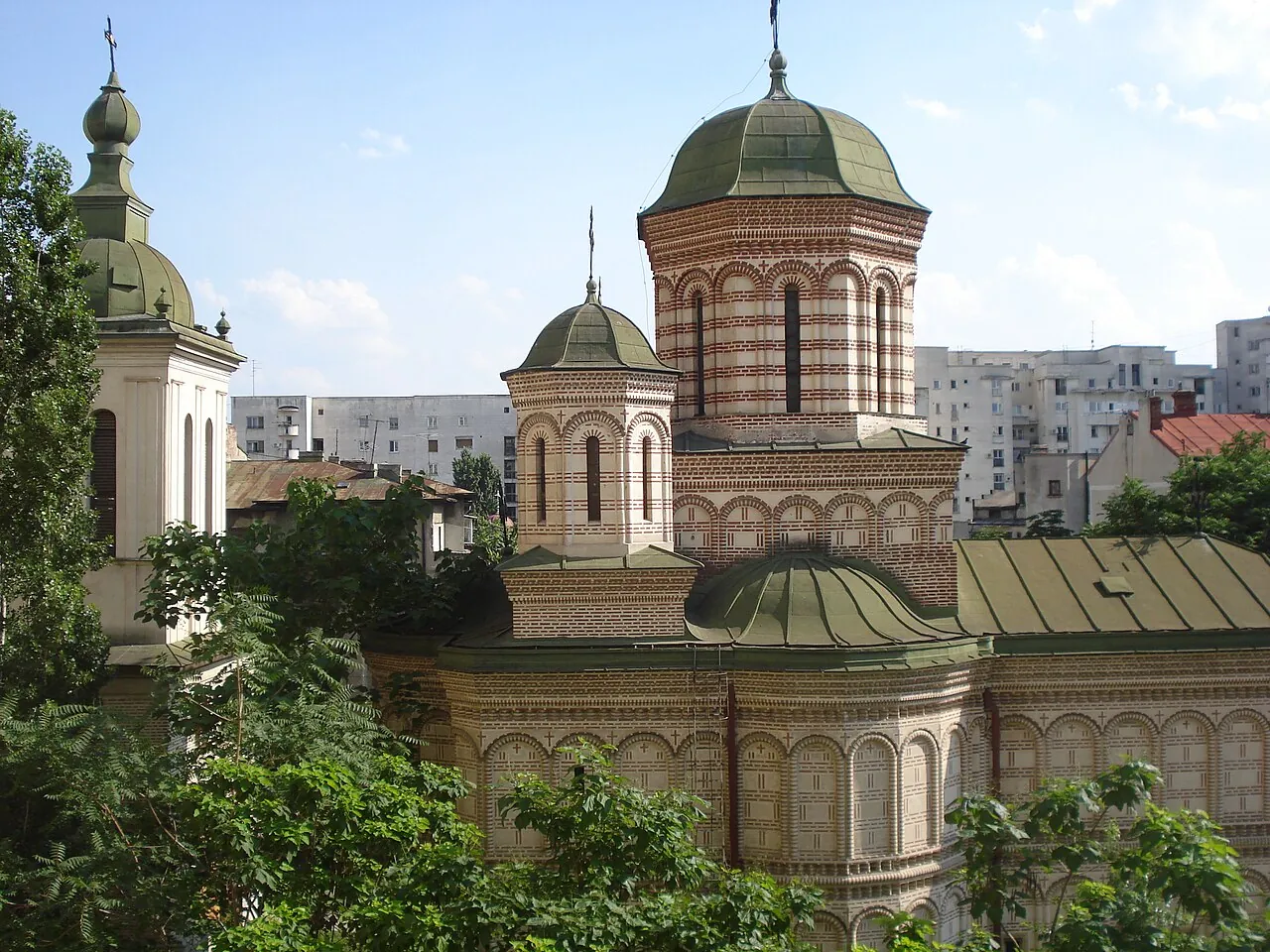
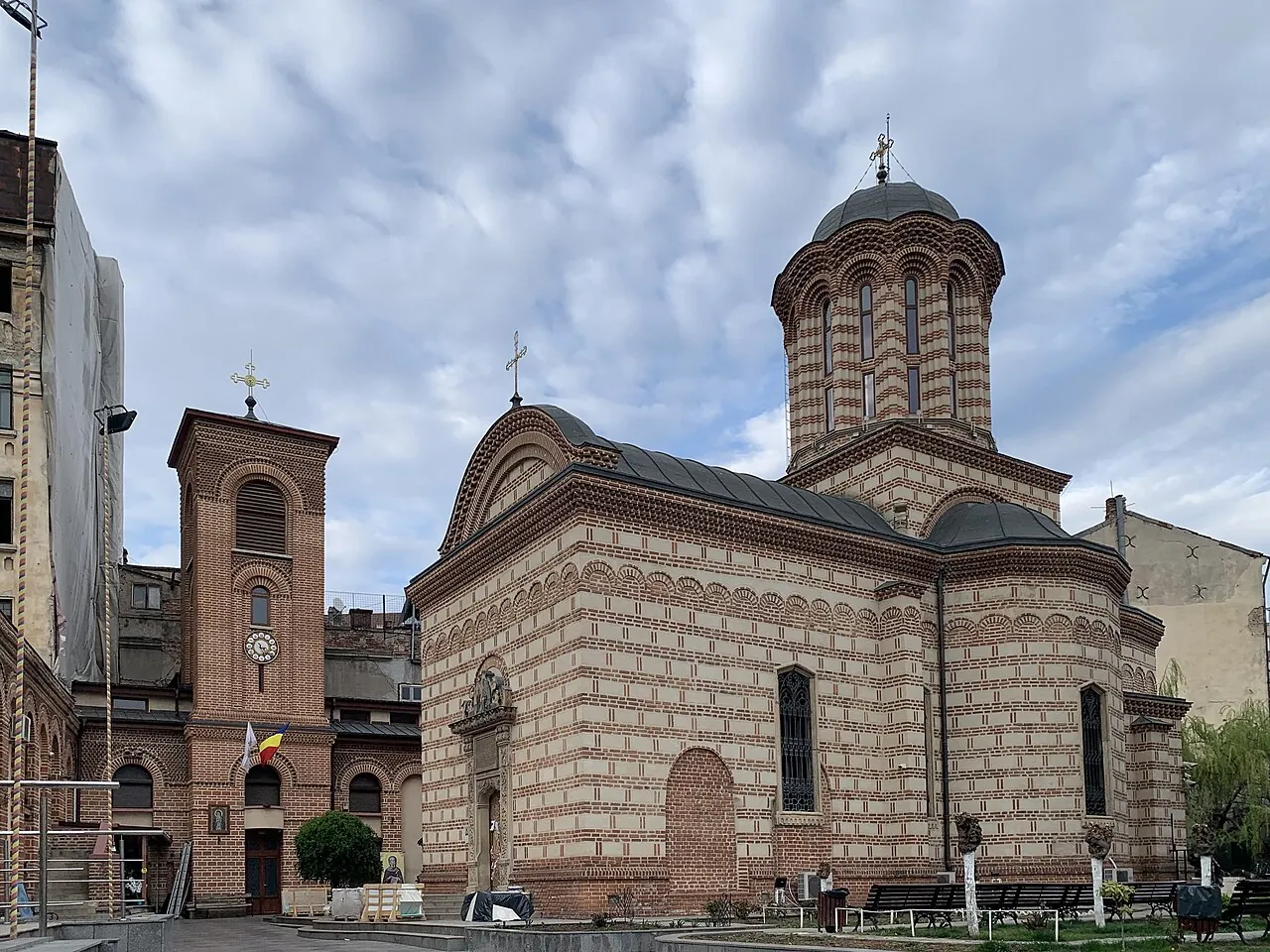
The oldest church in Bucharest still in its original form is the church of the Princely Court, built by Mircea Ciobanul between January 1558 and September 1559, according to Giurescu (Wikipedia puts it a decade earlier). Mărcuța (1586–1587) and Mihai Vodă (1591–1594) come next. Radu Vodă, Sfinții Apostoli and Plumbuita were founded as early, but their present buildings are from the 17th century.
Giurescu 1966; LMI
1770–1856
A city of a hundred churches
On the city plans, churches and monasteries together rise from 56 in 1770 to 91 in 1789, 113 in 1806 (89 churches and 24 monasteries) and 135 in 1856 (121 churches and 14 monasteries). Some travellers spoke of 300 or even 366 churches: "exaggerations", Giurescu notes. The map shows the churches built by 1856 that still stand, plus the lost ones whose site is known.
Giurescu 1966
1869–1893
The first demolitions: the boulevard, the CEC, Sărindar
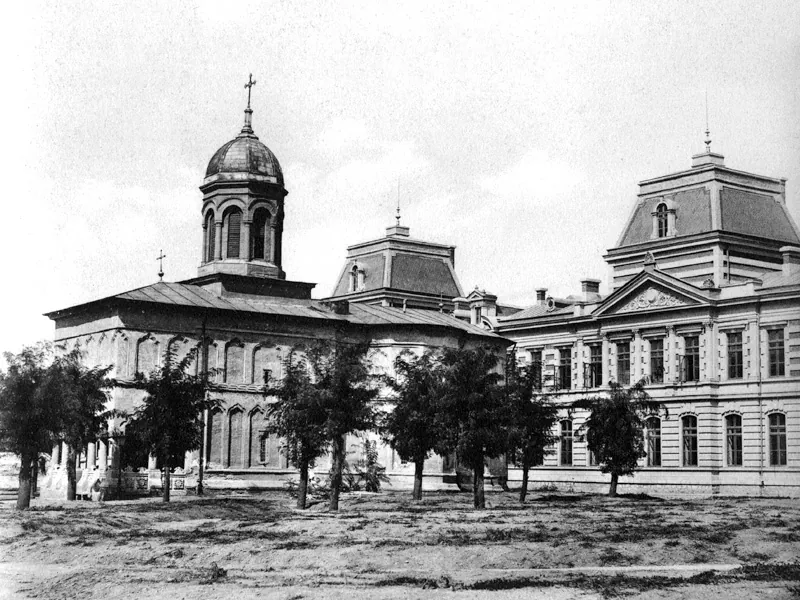
The church of Sf. Sava monastery falls in 1869 for the new boulevard: the statue of Michael the Brave stands on its site. In 1893 Sf. Ioan cel Mare monastery is pulled down for the CEC Palace, and so is the ruined church of Sărindar (Giurescu gives 1898), on whose site the Military Circle later rose, in 1911–1923.
Giurescu 1966; Buiumaci 2016
April–May 1977
Enei, the first
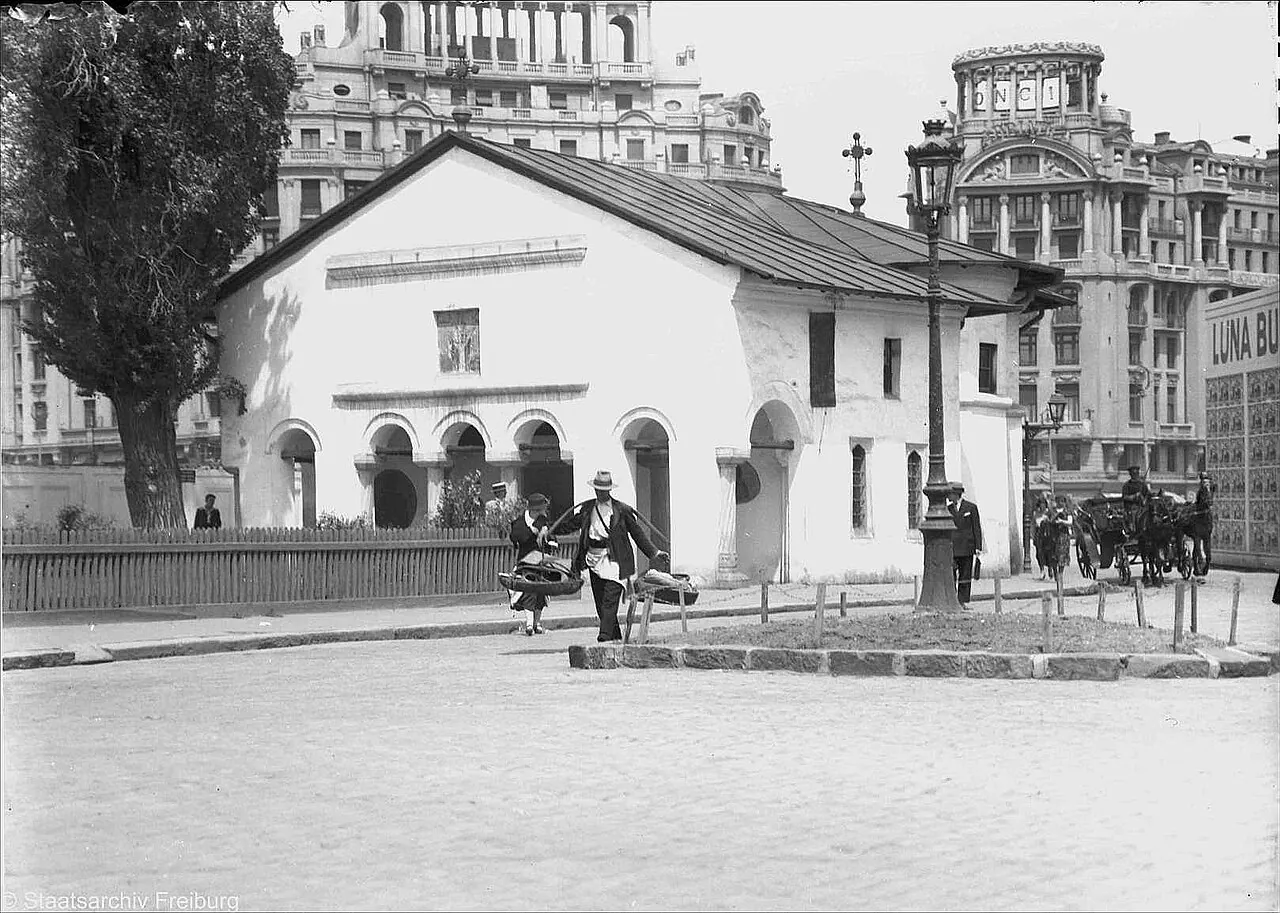
The earthquake of 4 March 1977 brings down the Dunărea block on the boulevard. Enei church, of 1720–1724, stands beside it and is "very slightly affected", Bejan writes. It is pulled down anyway, by order, at the end of April. The Dunărea 2 block was raised on its site. The precedent, Bejan says, cleared the way for the demolitions.
Giurescu 1989; Bejan 2017; Wikipedia; bucurestiivechisinoi.ro
June 1982
The first church on rails
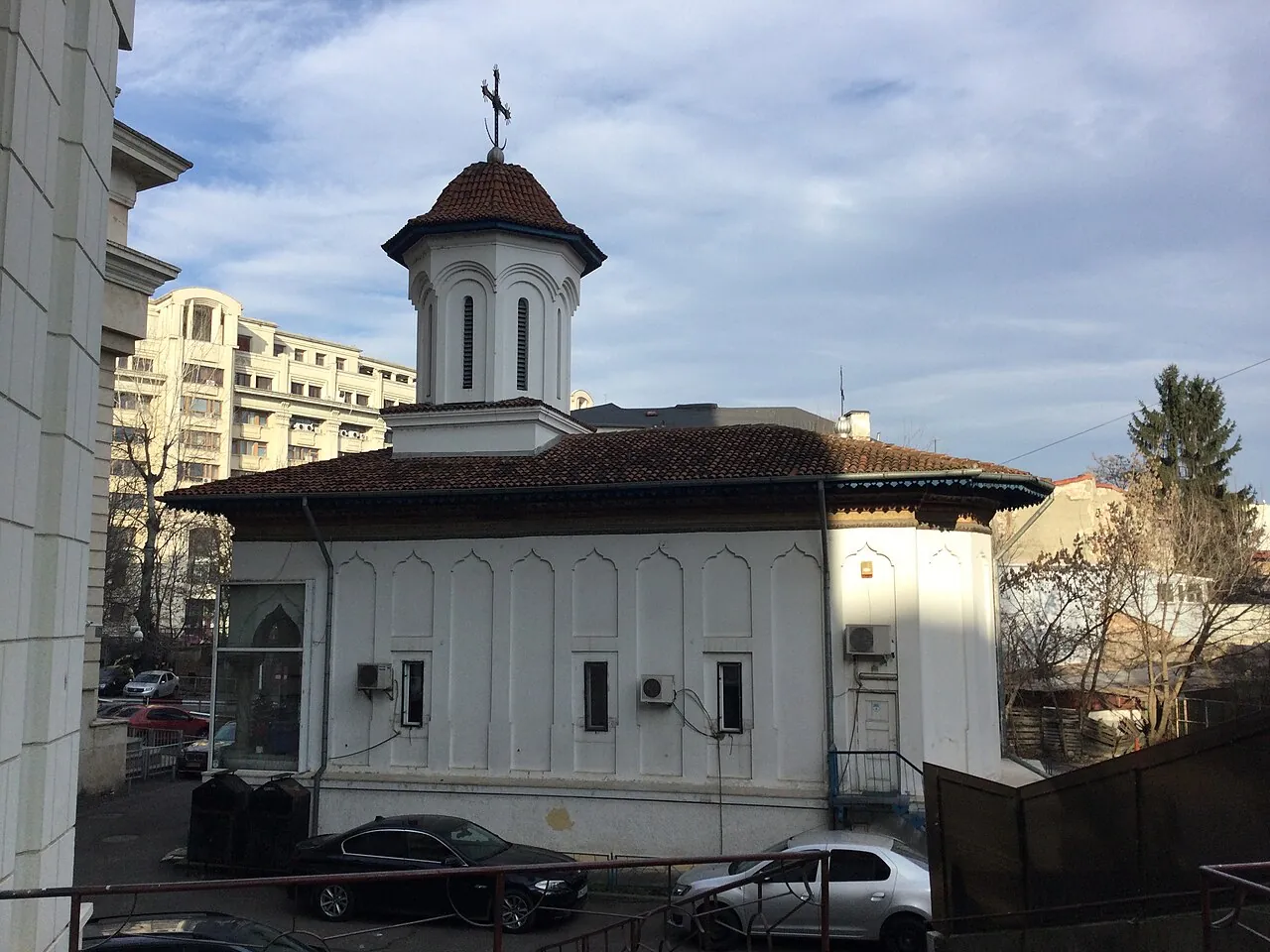
Schitul Maicilor stood in the way of the "Republic's House", as the People's House project was then called. The engineer Eugeniu Iordăchescu cuts the church of Schitul Maicilor from its foundation, sets it on a concrete frame and pushes it on rails 245 metres east: 745 tonnes, in 72 hours. The cells around it are pulled down.
Bejan 2017; Giurescu 1989; Wikipedia
1984
The year of Spirii Hill
On 18 March Alba Postăvari falls, recorded c. 1431–1436; on the night of 27 April Spirea Veche is blown up; on 4 August, Izvorul Tămăduirii at the Arsenal. Their exact sites cannot be fixed on today's map: they stood on the hills now under the Palace of Parliament. That summer the church of Cotroceni monastery, of 1679–1682, is pulled down.
Giurescu 1989; Wikipedia
October 1985
Mihai Vodă comes down the hill
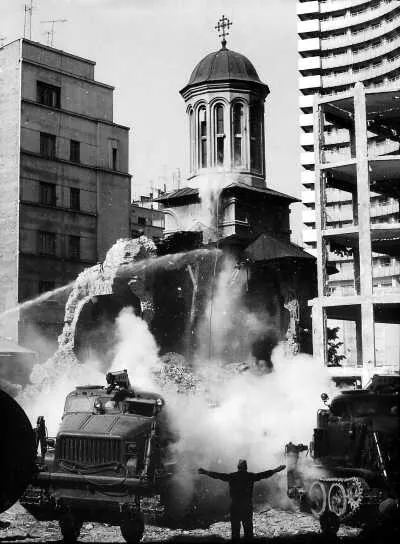
Michael the Brave's church, 3,100 tonnes, and its bell tower are lowered 6.2 metres and pushed 289 metres, by most sources, to behind the blocks on Sapienței street; the rest of the monastery is pulled down. At Antim the church stays where it was: only the Synodal Palace, 9,000 tonnes, is pulled back.
Bejan 2017; Wikipedia
1986
Văcărești
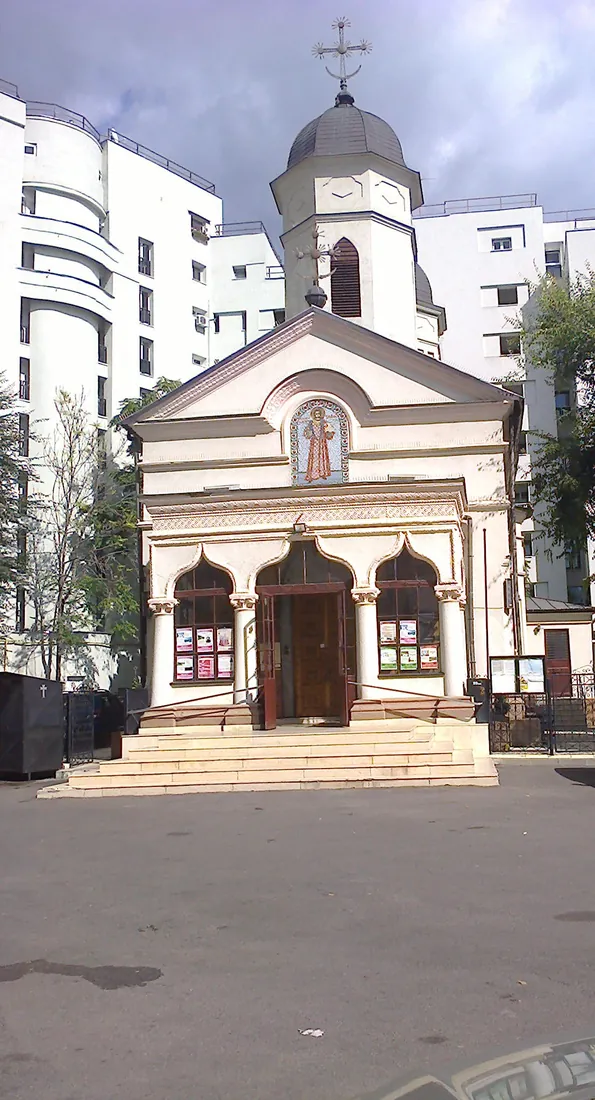
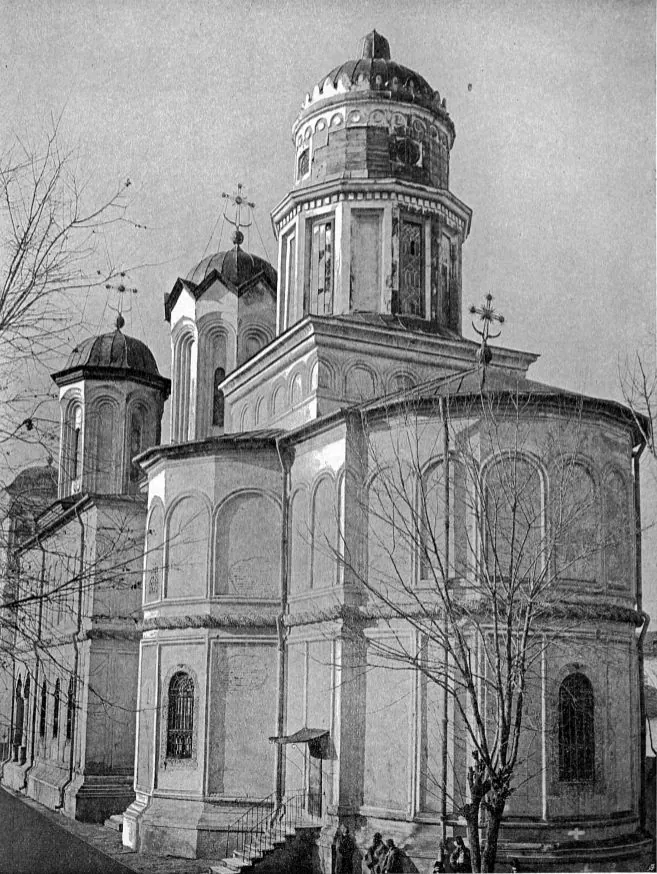
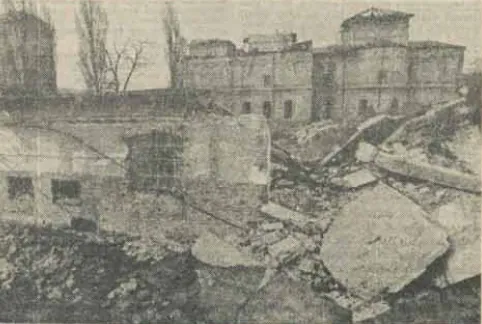
Nicolae Mavrocordat's monastery, built in 1716–1722 (his son Constantin added the chapel in 1736), had long been a prison; in 1973 its restoration as a museum had begun. Demolition starts in the autumn of 1985, and the church is brought down between 11 and 15 December 1986. At the end of May 1986 Sf. Ioan Nou is pushed 23 metres in Piața Unirii, and Capra church is pulled back towards its cemetery.
Giurescu 1989; Wikipedia; Basilica.ro
19 June 1987
Sfânta Vineri
The last service is held on 14 June, and on 19 June 1987 Sfânta Vineri-Hereasca church, built in 1645, is pulled down. Block 105B, behind the Tribunal, stands on its site. That summer Olteni and Sf. Spiridon Vechi fall too, and in October Bradu-Staicu and Sf. Treime-Dudești.
Giurescu 1989; Evenimentul Zilei; Newsweek Romania
22 February 1988
Cuibul cu Barză, 16 metres
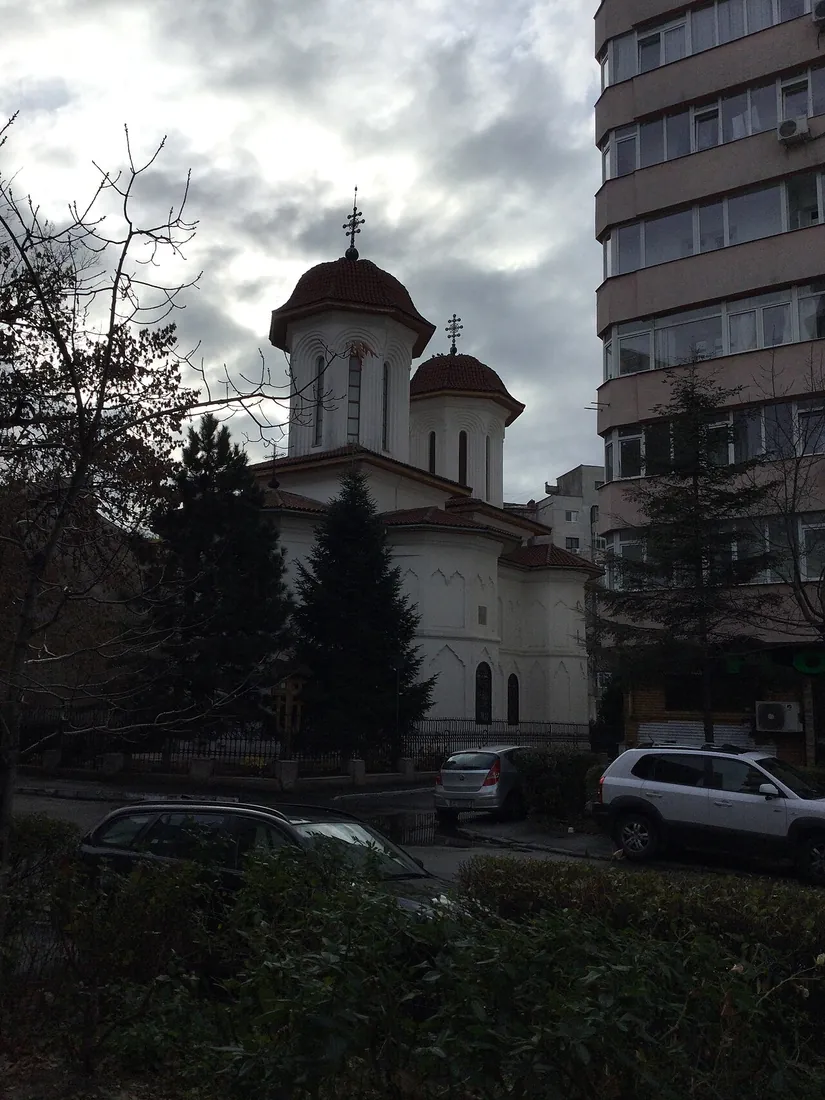
The last church moved in Bucharest is pushed only 16 metres south, to make room for a block that hides it from Știrbei Vodă street. The parish and the Agerpres photos give February 1988; Wikipedia and Giurescu, 1987.
Ziarul Lumina 2012; Bejan 2017; Giurescu 1989
today
What is left
All 7 moved churches still stand, most of them behind blocks of flats. Cotroceni church was rebuilt on its old foundation and consecrated on 11 October 2009. Of the sites of pulled-down or moved churches, only 13 can be placed on today's map, some only approximately; many lost churches stood in the eastern and southern districts, so for many addresses the nearest one is not on the map.
Find your street and see what stood near you.
Wikipedia; OpenStreetMap