1177
Hodoș-Bodrog
Zădăreni, Arad county
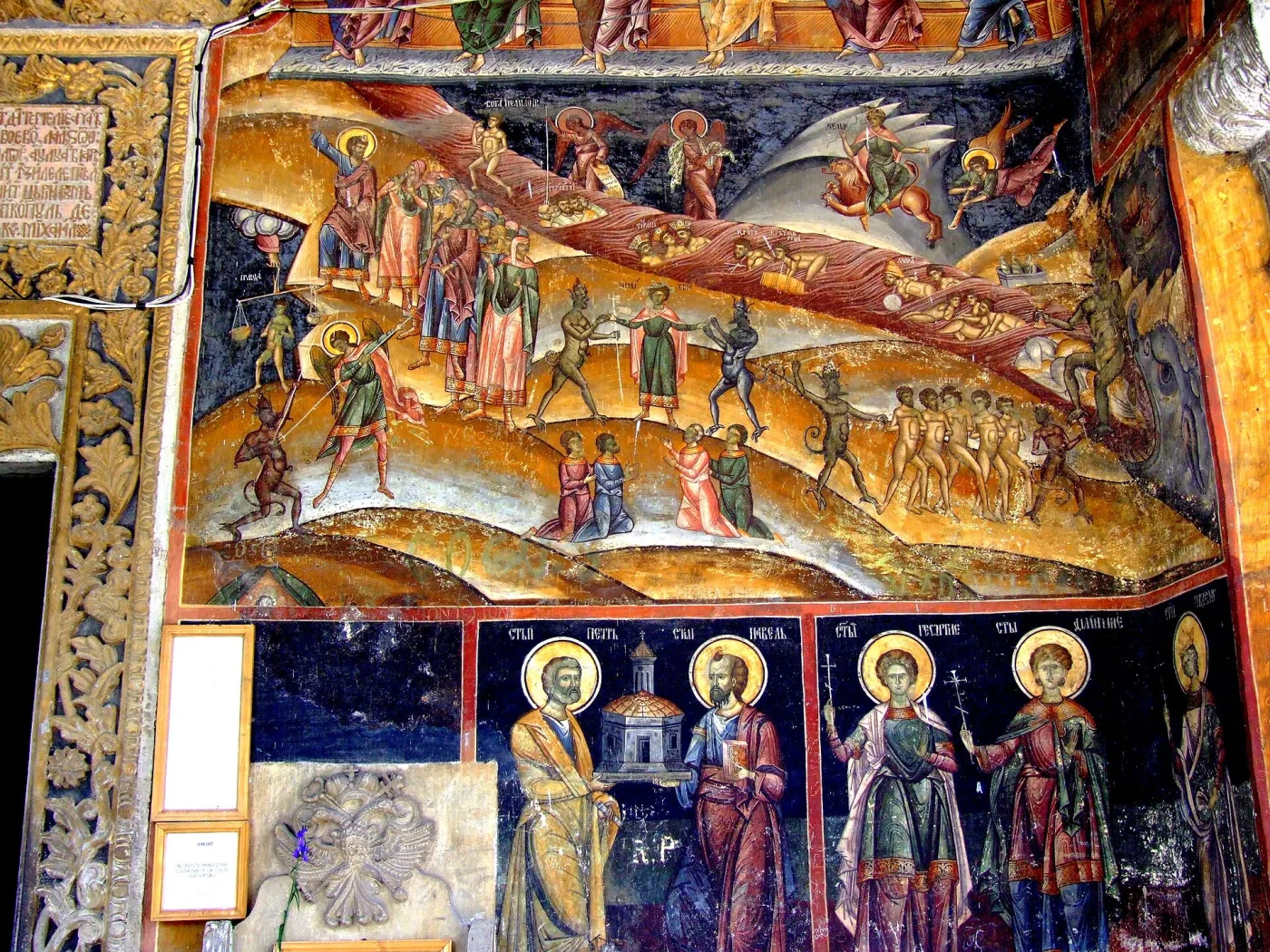
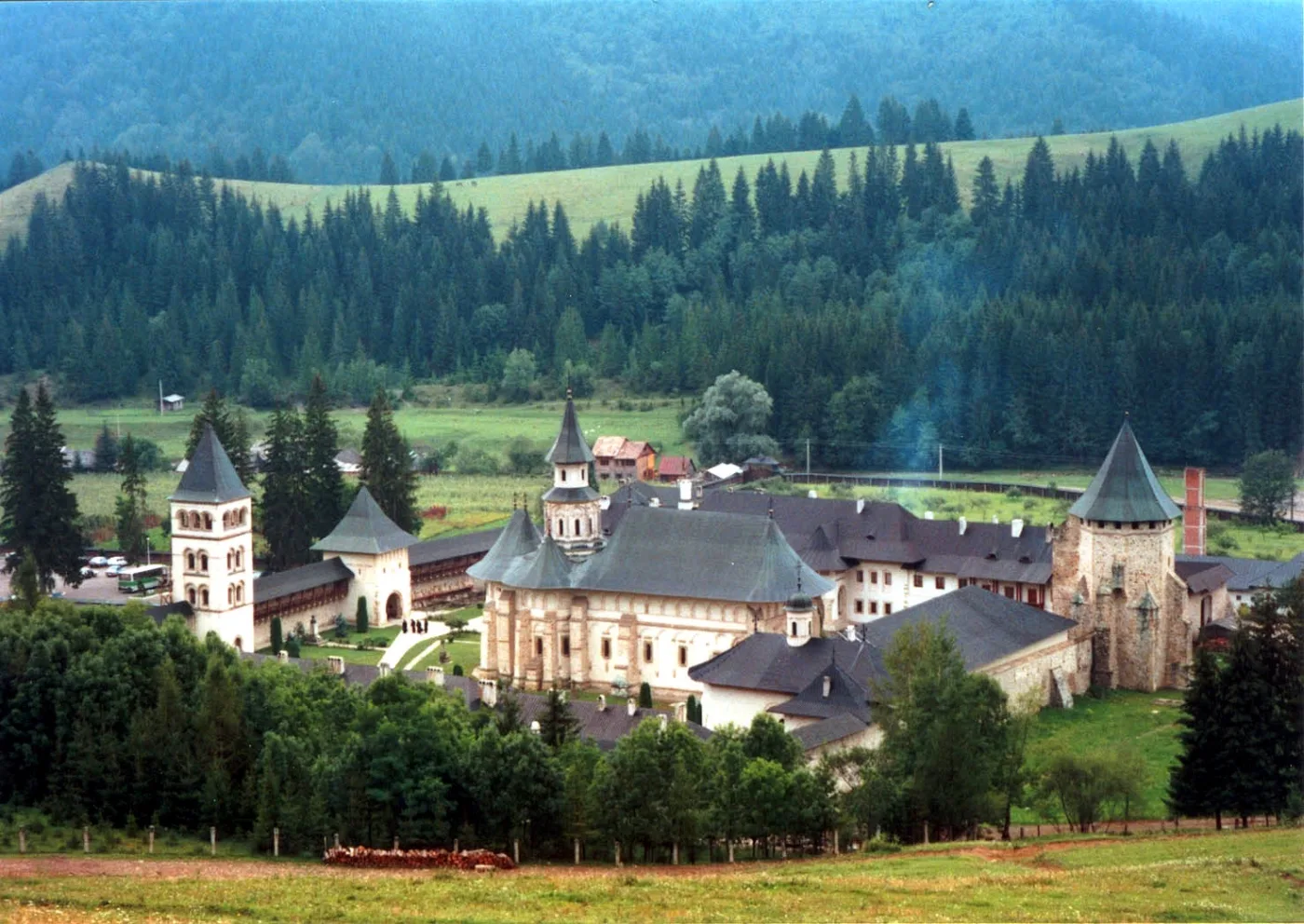
Still inhabited, and its feast day is still kept. The oldest building on the site, the bell tower, is from the sixteenth century; the church is from 1766.
a monastery todayAn atlas of monastic age
Putna, Voroneț and Neamț are the three names the list usually starts with. All three come two or three centuries after the houses on the Mureș, and the oldest monastic site in the country is a chalk hill in Dobruja, abandoned for close to a thousand years.
Along fifty-four kilometres of the Mureș, between Cenad and Arad, three monastic houses enter the written record within six years of each other. Hodoș-Bodrog appears in a diploma of King Béla III in 1177. Two years later, Cistercians from Pontigny raised the abbey at Igriș. In 1183 the Benedictine abbey of Bizere is first recorded, where an arm of the Mureș runs out.
The three are first attested in writing in one generation, under one king, on one river. Today one has monks, one has grass, and one has an archaeological trench.
Still inhabited, and its feast day is still kept. The oldest building on the site, the bell tower, is from the sixteenth century; the church is from 1766.
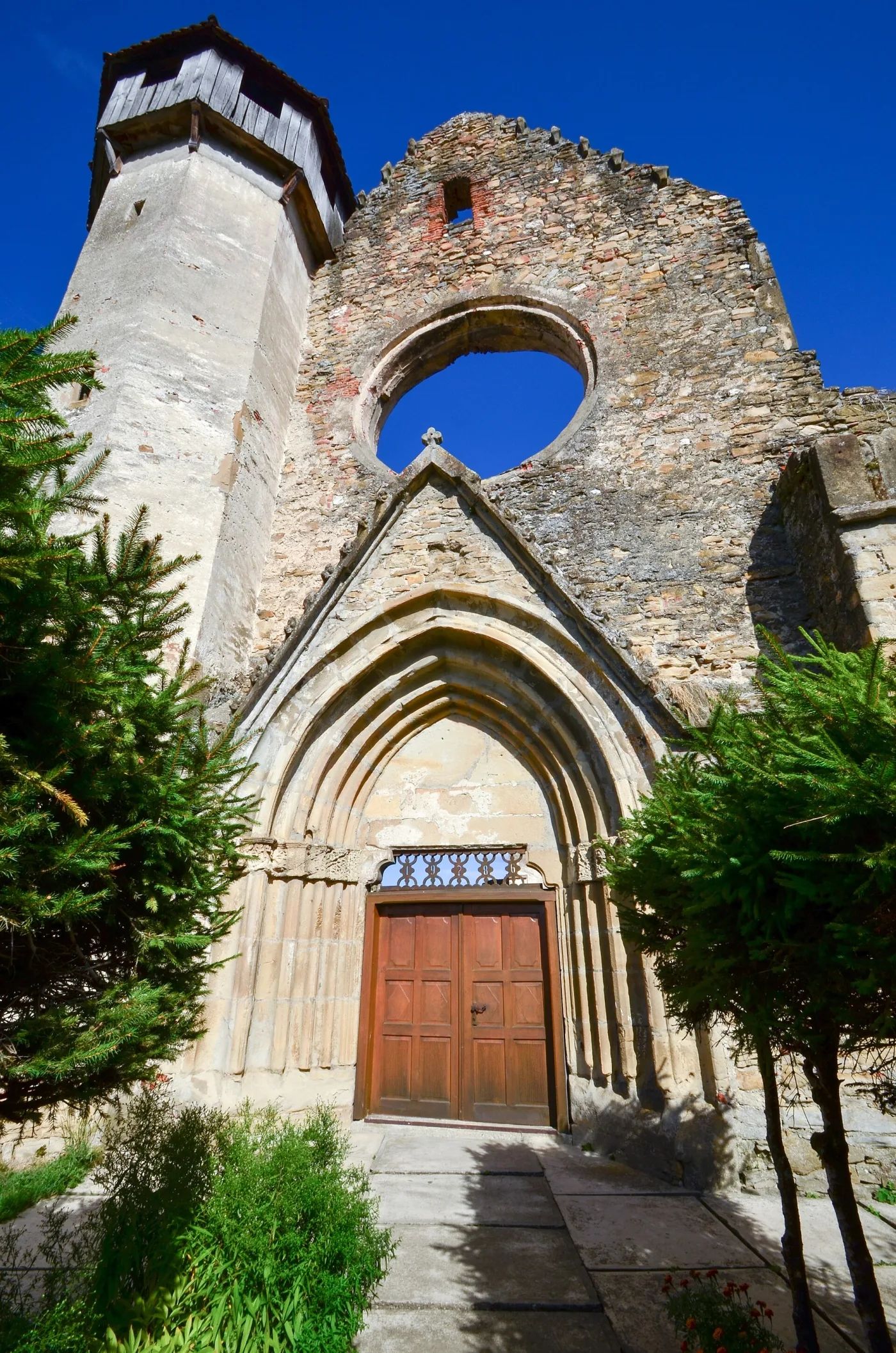
a monastery todayBurned in the invasion of 1241 and rebuilt. It was dissolved in 1526. It held the first library recorded on what is now Romanian soil. What survives is in the ground, and archaeologists are lifting it out.
ruinsA Benedictine abbey under royal patronage. The heritage list now files it as an archaeological site. Its excavated mosaic is among the oldest in the region.
ruinsWhat separates them came after the founding. Igriș and Bizere belonged to the Latin church, and the Latin houses of the kingdom were dissolved in turn: first by invasion and war, then, in 1556, by a decision of the diet. Hodoș-Bodrog was, or became, Orthodox, and the Orthodox houses of the Banat came through Ottoman rule without an act dissolving them.
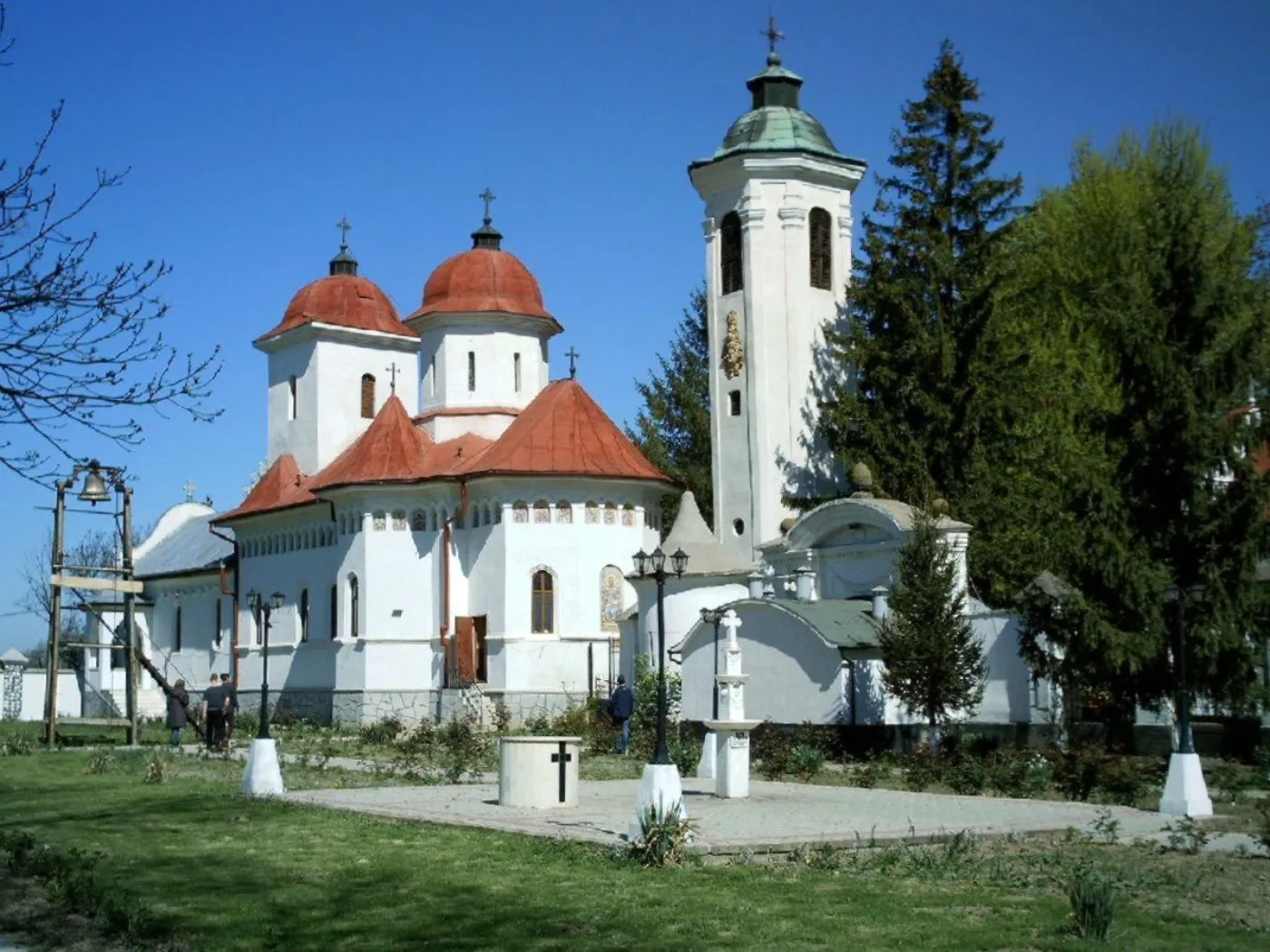
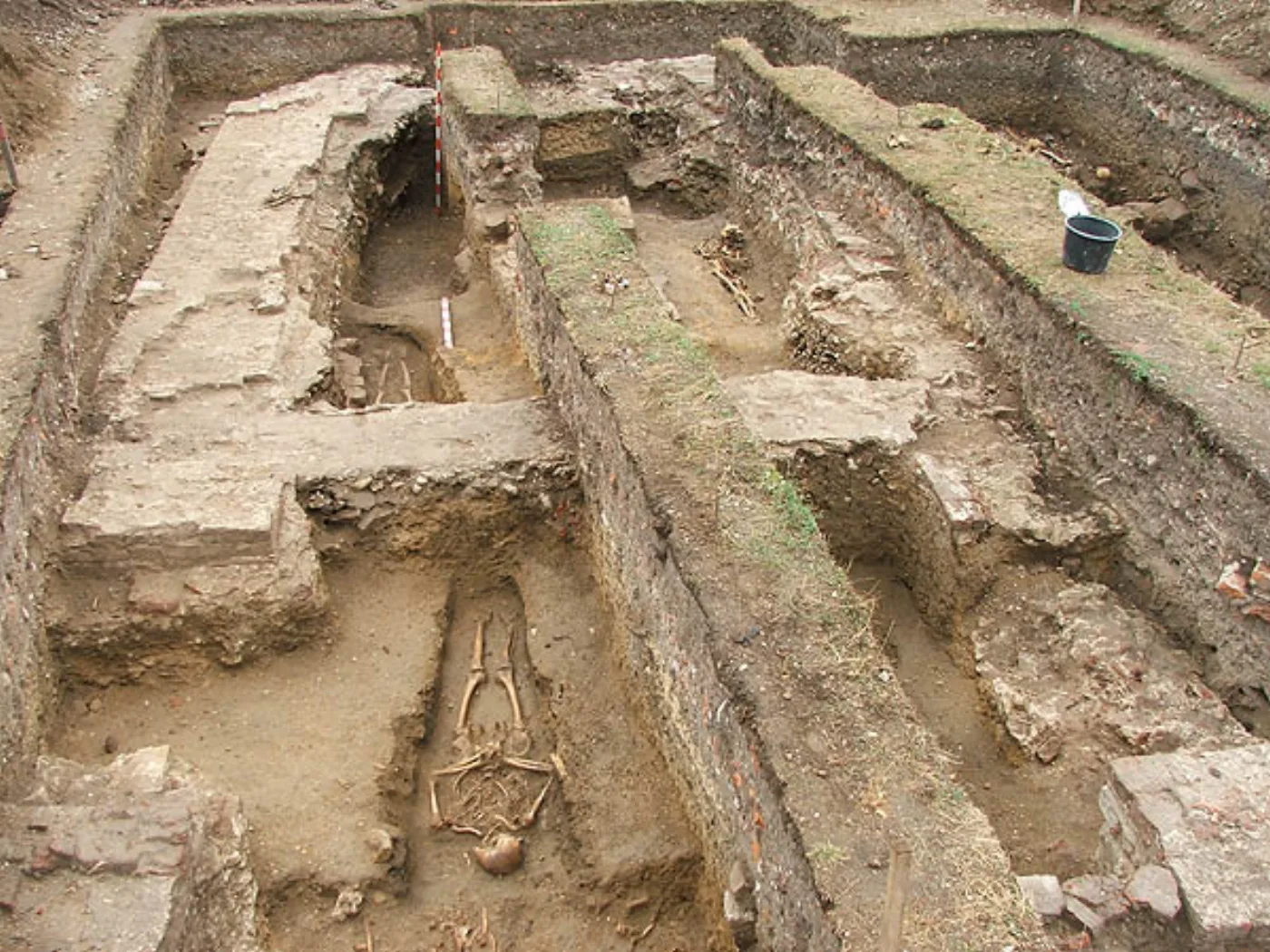
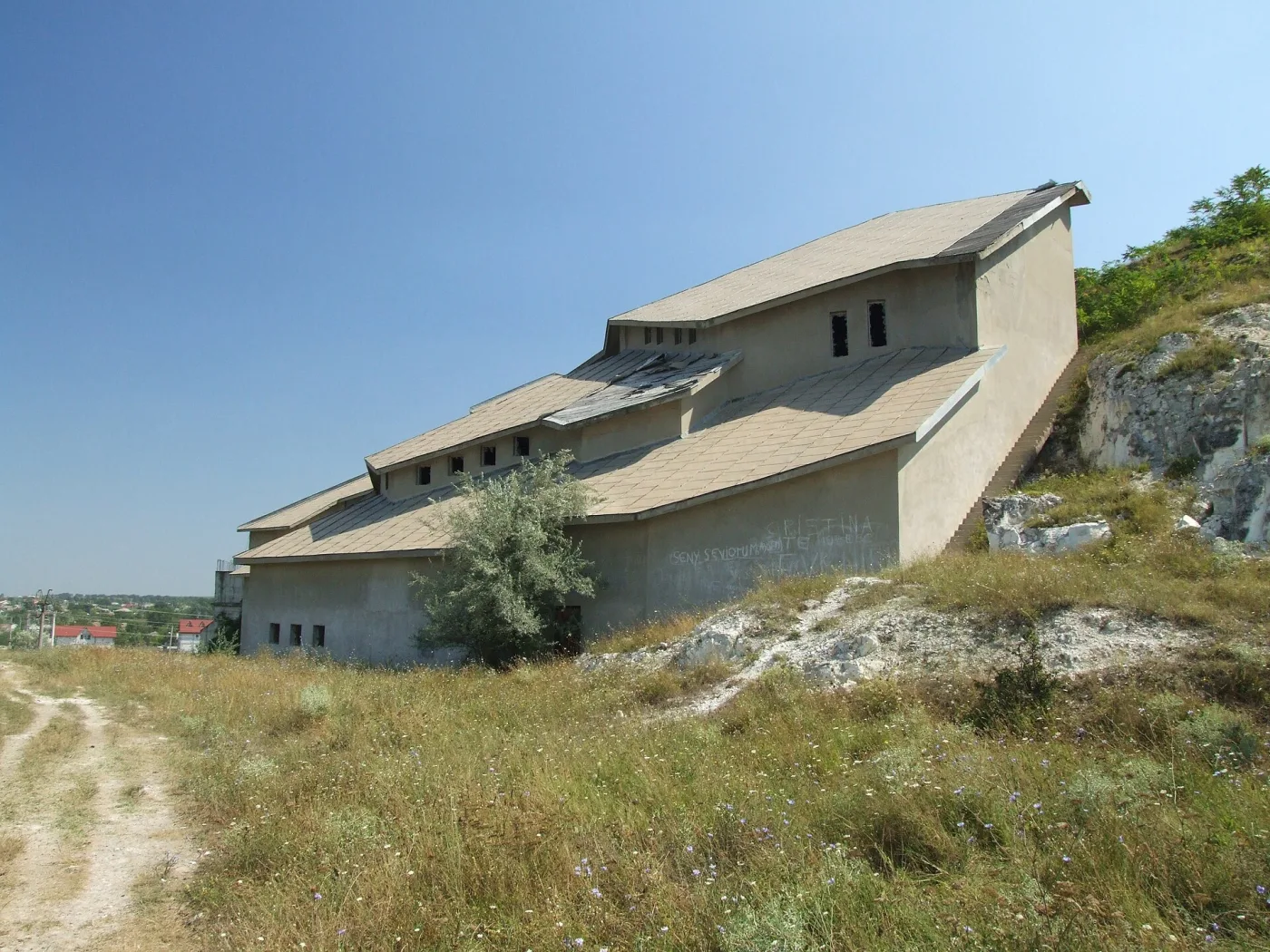
Almost two centuries before the houses on the Mureș, someone cut churches, graves, galleries and cells into a chalk hill in Dobruja. The complex at Murfatlar is dated by an inscription in the nave of one of its churches reading leat 6500 — the year 992 by our reckoning.
Its walls carry Greek, Slavonic and Glagolitic inscriptions, and a script no one has yet read. It is the oldest known monastic site on the territory of the present country, and it has had no community for close to a thousand years. Chalk does not take kindly to air: since it was uncovered, the complex has been crumbling.
Between Murfatlar and the Mureș there is one more house, at Cenad. Around the year 1002, Ahtum, who held the place, brought craftsmen from Constantinople and raised a monastery of the Byzantine rite there, with Greek monks. In 1030, after Ahtum was defeated, the Greek monks left and Benedictines took their place under Bishop Gerard. The same house passed from one rite to the other because its ruler had changed.
Start it and watch the order in which the points light. The west fills first, then the south, then northern Moldavia. Each point is a house that could be dated and placed; the colour says what is there now, not what it was.
Six sites carry a specific date before the year 1200. Five are in the Banat and Crișana; the sixth is Murfatlar, in Dobruja. Two more, at Remetea Mare and Cheud, the list dates only to the twelfth century, so they may be older or younger — both also in the west. In Moldavia and Wallachia there is not one.
The line of princely foundations in the south begins only in the 1370s. Vladislav I endows Vodița, "his foundation", in an undated charter that the editors place around 1374. Tismana appears in an act of 3 October 1385: Dan I writes that he found it unfinished, begun "from its foundations" by his father, Radu. Cozia follows in 1388. The 16 monasteries that Wallachia's acts name by 1500 have a map of their own, which asks why they stand where they do. In Moldavia, Neamț enters the records in 1393, and Putna is raised by Stephen the Great in 1466.
This is why “which is the oldest” has two answers. The houses in the west are the first on record. Those of the south and east have, instead, fourteenth-century churches still standing with communities inside them. Bucovina lodged in everyone's mind because painted churches survived standing there, rather than because they came first.
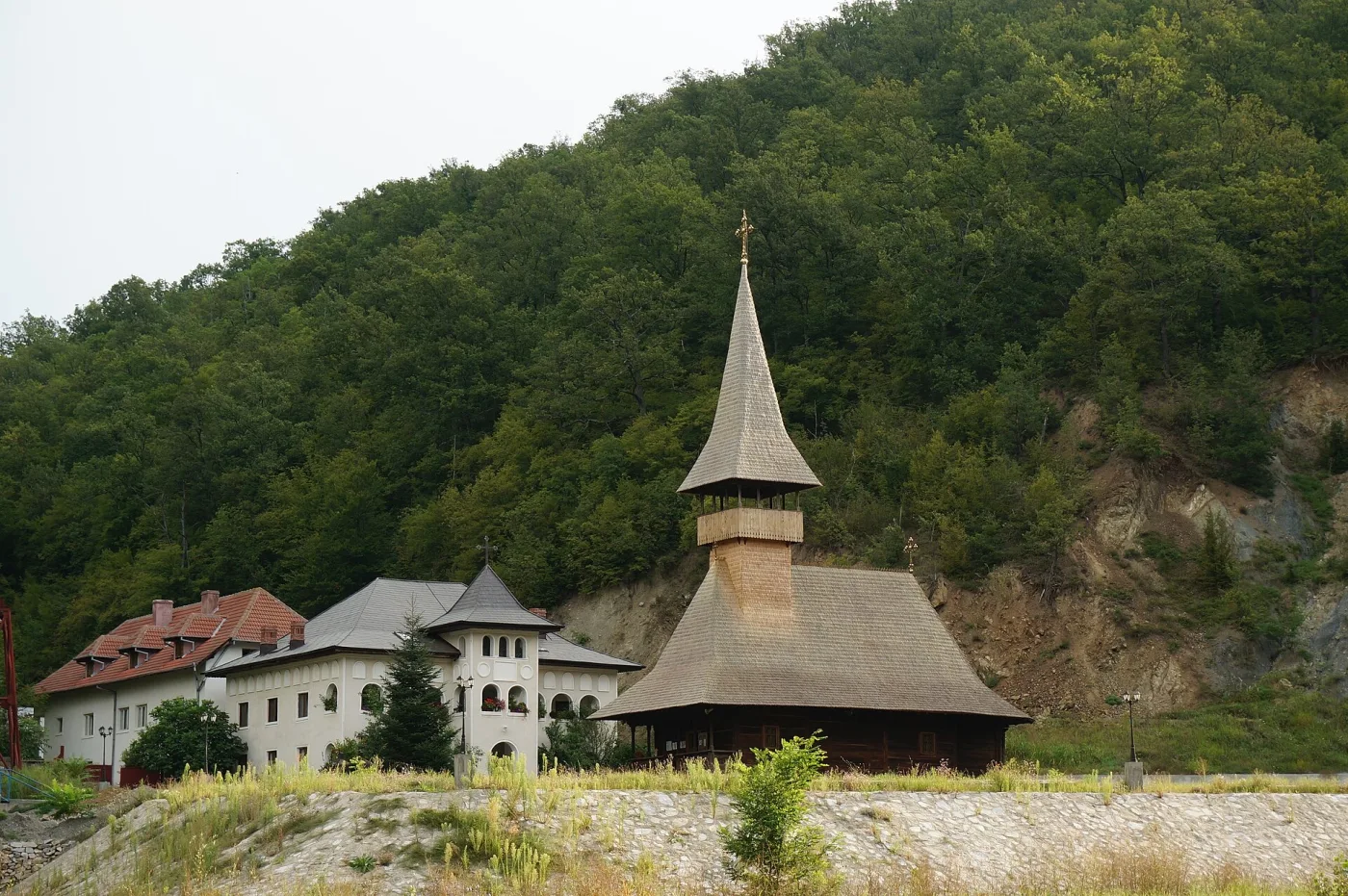
Three times on this territory, a decision of the state took their land or their people at a stroke.
1474 and 1556. Matthias Corvinus dissolved the abbey of Cârța on 27 February 1474 and gave its estate to the parish of Sibiu. Eighty years later, the diet meeting at Sebeș dissolved the Catholic bishopric of Alba Iulia and secularised the estates of the Catholic monasteries between the Tisza and the Carpathians. The Latin houses of the west, the oldest on this map, ceased to be monasteries within a few decades.
1863. On the eve of Cuza's secularisation, nearly a quarter of the arable land of the Principalities was held by monasteries, much of it through houses dedicated to Greek monasteries and the eastern patriarchates. The law voted on 13 December and promulgated on 17 December 1863 passed all of it to the state. The monasteries remained, but remained poor.
1959. Decree 410 left in the men's monasteries only those over fifty-five, and in the women's only those over fifty. Some 4,750 monks and nuns were put out of monastic life. The Securitate reckoned it had dissolved ninety-two monasteries.
Of the 407 sites that could be dated and located, 177 are recorded by the heritage list itself as ruins, former monasteries, or buildings that now do something else — a school, a museum, a parish church, a hospital. The other 230 are carried plainly, without such a note.
123 of all of them appear in today's public list of monasteries: 108 from the 230, and 15 from the 177. At Vodița, Snagov, Soveja and Berislăvești a new community has settled beside a wall the list counted as finished, and the map gives them a mark of their own.
Those 123 are a lower bound, and a low one. The public list I used does not carry Neamț, Sucevița or Râmeț, three of the best-known monasteries in the country. The figure says a house is on that list, not how many people are in it.
The same houses, ordered by the earliest date each source allows, with the ground of that date beside it. When the source gives no year, the page keeps the century it names.
| Year | House | Where | What the date rests on | What is there now |
|---|---|---|---|---|
| 992 | The rock-cut complex at Murfatlar | Constanța, Dobruja | inscription | ruins |
| c. 1002 | Morisena Monastery | Timiș, Banat | chronicle | a monastery today |
| 1084 | Monastery ruins | Bihor, Crișana | the fabric, per the list (1084, ref.1458-1555) | ruins |
| 12th c. | Monastery (ruins) | Timiș, Banat | the fabric, per the list (sec. XII–XVI) | ruins |
| 12th c. | Ruins of the Benedictine monastery church | Sălaj, Transylvania | the fabric, per the list (sec. XII - XIII) | ruins |
| 1177 * | The Monastery of the Dormition at Hodoș-Bodrog | Arad, Crișana | first attestation | a monastery today |
| 1179 | Igriș Abbey | Timiș, Banat | foundation | ruins |
| 1183 | The Bizere Monastery archaeological site | Arad, Crișana | first attestation | ruins |
| 13th c. | Abbey | Arad, Crișana | the fabric, per the list (sec. XIII, Epoca medievală timpurie) | the building stands |
| 13th c. | Church of the former Premonstratensian monastery | Bihor, Crișana | the fabric, per the list (sec. XIII-XIV) | former monastery |
| 13th c. | Cuhea Monastery | Maramureș, Maramureș | the fabric, per the list (sec. XIII-XIV) | the building stands |
| 13th c. | Ruins of the Benedictine abbey | Arad, Crișana | the fabric, per the list (sec. XIII-XVI) | ruins |
| c. 1202 | The former Cistercian abbey | Sibiu, Transylvania | foundation | former monastery |
| 1215 | Monastery ruins | Bihor, Crișana | the fabric, per the list (1215-1567) | ruins |
| 1260 | Church of the former Benedictine monastery, now a Reformed church | Sălaj, Transylvania | the fabric, per the list (1260-1300, ref. sec. XVIII) | former monastery |
| 13th c. | The Minorite (Franciscan) friary of St Andrew, now the Orthodox church of the Presentation of the Virgin | Bistrița-Năsăud, Transylvania | the fabric, per the list (sf. sec. XIII, XV, XVIII) | former monastery |
| 14th c. | The former Tânganu Monastery | Ilfov, Wallachia | the fabric, per the list (sec. XIV - XIX, Epoca medievală) | former monastery |
| 14th c. | Bistrița Monastery | Neamț, Moldavia | the fabric, per the list (sec. XIV - XIX) | a monastery today |
| 14th c. | Cotmeana Monastery | Argeș, Wallachia | the fabric, per the list (sec. XIV - XVII) | a monastery today |
| 14th c. | Negru Vodă Monastery | Argeș, Wallachia | the fabric, per the list (sec. XIV - XIX) | a monastery today |
| 14th c. | The Roman Catholic monastery of St Bartholomew | Alba, Transylvania | the fabric, per the list (sec. XIV - XVIII) | the building stands |
| 14th c. | Ruins of the monastery church at Valea Mănăstirii | Gorj, Oltenia | the fabric, per the list (sec. XIV) | ruins |
| 14th c. | Ruins of Coșuștea-Crivelnic Monastery | Mehedinți, Oltenia | the fabric, per the list (sec. XIV) | ruins |
| 14th c. | Ruins of Horodnic Monastery | Suceava, Moldavia | the fabric, per the list (Sec. XIV-XV) | ruins |
| 14th c. | Ruins of the Holy Trinity Monastery at Vișina | Gorj, Oltenia | the fabric, per the list (sec. XIV - XV, Epoca romană) | a monastery again |
| 14th c. | Negru Vodă Skete | Argeș, Wallachia | the fabric, per the list (sec. XIV - XIX) | the building stands |
| 14th c. | The walls of Eperyes Monastery | Arad, Crișana | the fabric, per the list (sec. XIV - XV) | ruins |
| 1374 | The ruins of Vodița Monastery | Mehedinți, Oltenia | first attestation | a monastery again |
| 14th c. | The former Snagov Monastery complex | Ilfov, Wallachia | the fabric, per the list (sf. sec. XIV - XVIII - XIX) | a monastery again |
| 1377 | Râmeț Monastery | Alba, Transylvania | inscription | the building stands |
| 1377 | Tismana Monastery | Gorj, Oltenia | the fabric, per the list (1377-1378, cu adăugiri ulterioare) | a monastery today |
| 1388 | Cozia Monastery | Vâlcea, Oltenia | foundation | a monastery today |
| 1393 | Neamț Monastery | Neamț, Moldavia | first attestation | the building stands |
| 15th c. | The former Monastery of St Sava complex | Iași, Moldavia | the fabric, per the list (sec. XV - XVII, Epoca medievală) | former monastery |
| 15th c. | The Dormition church of Vad Monastery | Cluj, Transylvania | the fabric, per the list (sec. XV) | the building stands |
| 15th c. | Fosta mănăstire franciscană | Sibiu, Transylvania | the fabric, per the list (sec. XV - XVIII) | former monastery |
| 15th c. | Fosta mănăstire franciscană, azi biserică romano-catolică și locuințe | Sibiu, Transylvania | the fabric, per the list (sec. XV - XVIII) | former monastery |
| 15th c. | Fostul schit Brădetu | Argeș, Wallachia | the fabric, per the list (sec. XV) | former monastery |
| 15th c. | Mănăstirea Franciscanilor | Cluj, Transylvania | the fabric, per the list (sec. XV - XVIII) | the building stands |
| 15th c. | Mănăstirea Popăuți | Botoșani, Moldavia | the fabric, per the list (sec. XV - XX) | the building stands |
Where the houses come from. The base is the national heritage list, approved by Order 2828/2015 of the Minister of Culture. From it I kept the rows where the monument itself is a monastery, skete, abbey or cloister, not the villages that merely carry the word in their name. The list numbers an ensemble once and then numbers its parts under the same code; I put the parts back together, so that a church and its cloister count as one house, and merged the codes that describe the same place. 407 sites remained with both a date and a position.
What the year on the map means. For the houses that could be dated from a document, an inscription or a chronicle, the year is that of the earliest such record. For the other 396 it is the year of the masonry as the heritage list gives it, because there is no other; each card says which of the two it stands on. The list dates the wall, not the community, and the two can be centuries apart.
Centuries are not years. For 177 houses, the source gives a period broader than a year: a century, half-century or quarter-century. The table and card show the century, while the hollow circle appears at the start of the interval. Its position helps order the sites, but it proves neither an exact year nor that one house is older than another dated within the same interval.
A wall can be younger than its house. At Râmeț the inscription of 2 July 1377, by the painter Mihu of Crișul Alb, sits on the third layer of painting in the old church, so the church is older than the year it carries; scholarship places it in the thirteenth century or the beginning of the fourteenth, without a year. The page shows it at 1377, the earliest year it can prove, and the card says what lies beneath.
The Bodrog date is contested. The 1177 diploma names a monastery at Hodoș without saying which rite it followed. The heritage list dates the Bodrog ensemble to the fifteenth century, its bell tower to the sixteenth and its church to 1766. The claim of unbroken monastic life here rests on the monastery and the Patriarchate, not on a document. This is why the title of this piece does not rest on Bodrog.
The rite is missing for 318 houses. No source I consulted names it, and the region cannot stand in for it: the west held Latin abbeys, Serbian houses and Romanian houses in the same century. These stay unattributed, and the map colours by what is there now, which the list does state for every house.
The points. Where the list gives the monument's own coordinates, that is where the point sits. For 200 houses it gives only the village's, and the point is the centre of the village; the card says so. The fifty-four kilometres between the houses on the Mureș are measured only between the monuments' own coordinates.