A map with a single question
Did Wallachia’s prince have a single capital? The places named in his charters
Drop three marks where you think the prince’s acts were dated. Then follow the places named in the charters, year by year, and test possible explanations for their distribution.
Filled: written date · hollow: editors’ dating.
Where do you think the country was governed from?#
Argeș, Târgoviște, Bucharest: a list of successive capitals can suggest that a prince left one town for the next. Charters let us ask a different question: how many places of issue do the surviving documents name?
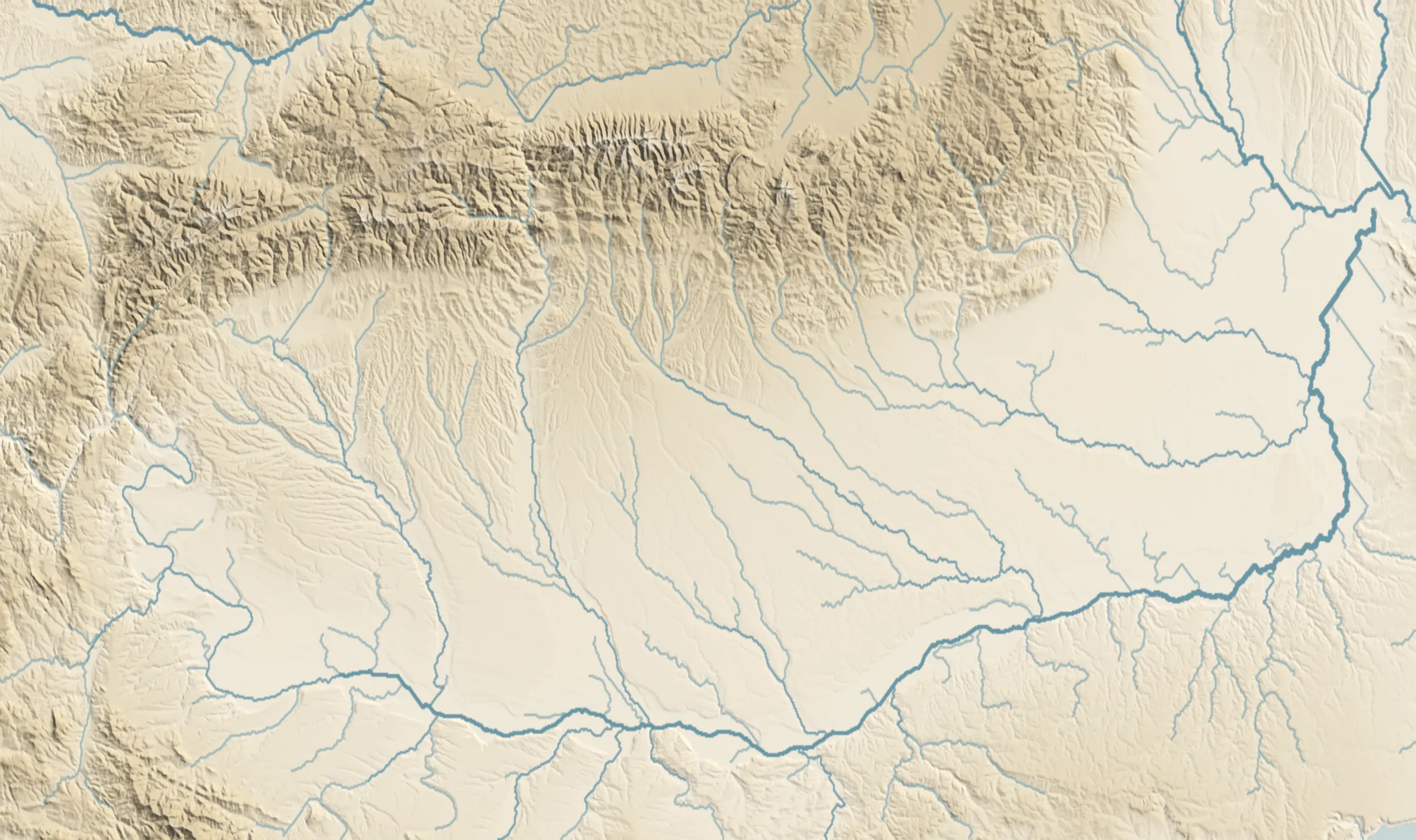
The map keeps the mountains, the plain and the rivers. It draws neither a state with fixed borders nor routes that the documents do not describe.
Drop three marks where you think princely acts were issued. You can also use a keyboard: with the map focused, arrows move the cursor and Enter places a mark.
Drop three marks.
Places enter the map with the acts#
The inventory brings together 27 places named as places of issue in princely acts checked in volumes I–IV of Documenta Romaniae Historica, series B. 20 can be mapped; 7 remain in the table without confirmed coordinates.
Each dot appears at the first inventory act naming that place. A filled dot has a date written in the act; a hollow dot marks a date proposed by the editors. For a date range, the animation uses its beginning and the detail retains the full range.
The year does not date the settlement’s foundation, the building of a court or the choice of a capital. It shows only the earliest issue included here.
Towns, monasteries and places to stop#
By 1500, 11 inventory places can be mapped. In the terrain model, 5 lie below 200 metres, 6 between 200 and 800 metres, and 0 above 800 metres. Elevations are approximate, sampled at settlement points.
Cozia, Tismana and Glavacioc show that the list extends beyond towns. Giurgiu shows that places of issue also reached the Danube. Each dot needs its own act; it does not automatically become a permanent residence.
How you guessed
A few working hypotheses, tried one by one
Did one capital replace the next?#
Argeș, Târgoviște and Bucharest feature as important residences in historical research. Radu Ștefan Vergatti (2010, pp. 43–48) describes several residences of a court that moved, and warns that travellers’ use of “capital” can bring meanings foreign to local institutions.
The three squares mark these centres. The other dots remain places of issue, without being assigned the same status.
The Bucharest act of 20 September 1459 does not close the sequence issued at Târgoviște. Their overlapping years appear in the comparison below. The dates contradict an immediate replacement of one sole centre by another.
Several centres could be used in the same period.
Do the mountains explain the places?#
Relief helps us see corridors through the mountains. Placing a site beside a river is not enough to assume that a medieval road followed today’s valley route.
The trade privilege of 1413 names the Rucăr customs, and a letter of Vladislav II, probably dated 1452, mentions the Prahova road (Papacostea, 2018, pp. 426, 430). The marks identify these corridors without claiming surveyed routes.
An act issued at Cozia does not prove that the prince had come from Transylvania or that the monastery guarded a road. Establishing a journey’s direction would require other acts close in time.
Relief suggests possibilities; the act does not describe the journey.
Did they stop where merchants passed?#
Trade privileges name customs and transit places: Câmpulung and the Brăila route in 1368, Slatina in 1369, Rucăr and Dâmbovița in 1413. Șerban Papacostea (2018, pp. 424–430) publishes and discusses the texts. Diamonds mark these places without joining the dots into a reconstructed road.
Rădvan (2009, p. 491) describes commercial connections through Câmpulung, Târgoviște, Târgșor and Gherghița towards Buzău and Brăila, and through Argeș, Pitești and Slatina. Some of these market towns also appear as places of issue.
The overlap is consistent with the use of centres of trade and administration. It does not measure how much commerce mattered in choosing each stop or reveal the prince’s route between acts.
A plausible connection, without proof of why each stop was chosen.
Was the Danube too far from power?#
Mircea issues the act of 11 May 1409 for Strugalea at Giurgiu (DRH B I, no. 35). Its place of issue lies on the Danube’s left bank, far from Argeș. One act is enough to show the place’s use on that date.
It is not enough to measure the length of a stay, control of an entire bank or the importance of a residence. Marian Coman (2003, p. 130) describes the Danube as a linear frontier whose banks were still open in demographic terms. This map does not turn dots into controlled territories.
The Danube appears in the acts; the reach of power needs other evidence.
Why do monasteries appear too?#
At Tismana, Cozia and Glavacioc, the monastery appears in the edition’s date heading as the place of issue, rather than merely as the recipient of a grant. Acts of 23 November 1406, 28 March 1415 and 23 April 1486 provide three examples (DRH B I, nos. 32, 37 and 197).
A monastery could be a place where an act of government took place. The document does not automatically establish that the whole court lived there or that the place became a capital.
Three situations must be kept separate: an act issued at a monastery, an act for a monastery and a copy preserved in its archive. Only the first puts a dot on this map.
The place of issue is checked separately from the recipient.
Does the map follow the court or the archive?#
Marian Coman (2003, pp. 139–140) notes that almost two thirds of surviving Wallachian acts concern monasteries. Preservation in their archives favours certain connections and leaves other actions without a trace.
Here we count surviving, checked acts, rather than days spent by the prince in a place. Ten acts on one day would not mean ten days of residence. A gap between acts does not prove an absence.
Acts without an identified place of issue remain unknown values in the data. They are assigned neither to the recipient’s town nor to an assumed capital.
A map of documented issues, with gaps in the record.
How well is each place documented?#
In the checked inventory, Târgoviște has at least 176 acts. For Giurgiu we have one act. The difference concerns the included documents; it does not directly measure importance or length of use.
Choose the span from first to last act or the number of acts. Each ring retains the central dot showing the dating of the first issue. Choose a place for details and open its inventory for source pages.
Spans use completed years, with conservative bounds for uncertain dates. One act does not let us calculate how long a residence lasted. Coverage of every act ever issued at a place remains unknown; these counts are verified corpus minima.
After 1459, acts continue in several places#
The first Bucharest act in the inventory is Vlad III’s, dated 20 September 1459. Later acts from Târgoviște and Argeș show that Bucharest’s appearance did not immediately remove them from the practice of issuing documents.
Below, compare first and last acts for the same places. The segments show inventory limits without filling the intervening years with an assumed stay.
Places entering the inventory after 1500#
Blue squares show places whose first issue included here is after 1500. Circles retain places already recorded by that year. The marks compare two periods of the same inventory.
A new dot does not establish a new settlement or a new practice. It may mean only that a checked act naming the place survives from that date. The inventory ends in 1550 with the volumes examined.
Acts from Târgoviște continue after 1459#
The first and last inventory acts bound a place’s documented use. They are not the dates of an uninterrupted residence. Târgoviște and Bucharest have overlapping sequences; “capital” cannot be read from a single dot.
- Argeș / Curtea de Argeș: 25 November 1369 — 20 February 1542 · Acts and sources
- Târgoviște: 22 June 1418 — 23 May 1546 · Acts and sources
- Bucharest: 20 September 1459 — 5 July 1550 · Acts and sources
- Pitești: 16 August 1481 — 11 July 1519 · Acts and sources
- Gherghița: 30 September 1454 – 30 September 1455 (editors’ dating) — 12 September 1523 · Acts and sources
- Glavacioc Monastery: 23 April 1486 — 13 July 1499 · Acts and sources
first act in the inventorylast act in the inventory
All 27 places in the inventory through 1550#
Each entry gives its first included act, issuer, edition number and minimum of checked acts. The place is the one named in the date heading, rather than an estate mentioned in the contents. Uncertain place identifications stay in the list without coordinates.
| Place of issue | First inventory act | Issued by | Edition | Surviving acts through 1550 | On the map |
|---|---|---|---|---|---|
| Argeș / Curtea de Argeș A place named in the edition’s date heading. The point represents the settlement, not the building or exact spot where the act was written. | 25 November 1369 | Vladislav | DRH B I, no. 3 | At least 22 verified acts 172 years between mentions 25 November 1369 — 20 February 1542 The span does not establish an uninterrupted stay. The total of every act ever issued here is unknown. View acts and sources | yes, approximate site |
| Râmnic (Râmnicu Vâlcea) A place named in the edition’s date heading. The point represents the settlement, not the building or exact spot where the act was written. | 4 September 1389 | Mircea | DRH B I, no. 10 | At least 4 verified acts 153 years between mentions 4 September 1389 — 25 May 1543 The span does not establish an uninterrupted stay. The total of every act ever issued here is unknown. View acts and sources | yes, approximate site |
| Tismana Monastery A place named in the edition’s date heading. The point represents the settlement, not the building or exact spot where the act was written. | 23 November 1406 | Mircea the Elder | DRH B I, no. 32 | At least 2 verified acts 51 years between mentions 23 November 1406 — 5 March 1458 The span does not establish an uninterrupted stay. The total of every act ever issued here is unknown. View acts and sources | yes, approximate site |
| Giurgiu A place named in the edition’s date heading. The point represents the settlement, not the building or exact spot where the act was written. | 11 May 1409 | Mircea | DRH B I, no. 35 | One verified act A single act 11 May 1409 The span does not establish an uninterrupted stay. The total of every act ever issued here is unknown. View acts and sources | yes, approximate site |
| Cozia Monastery A place named in the edition’s date heading. The point represents the settlement, not the building or exact spot where the act was written. | 28 March 1415 | Mircea | DRH B I, no. 37 | One verified act A single act 28 March 1415 The span does not establish an uninterrupted stay. The total of every act ever issued here is unknown. View acts and sources | yes, approximate site |
| Târgoviște A place named in the edition’s date heading. The point represents the settlement, not the building or exact spot where the act was written. | 22 June 1418 | Mihail | DRH B I, no. 42 | At least 176 verified acts 127 years between mentions 22 June 1418 — 23 May 1546 The span does not establish an uninterrupted stay. The total of every act ever issued here is unknown. View acts and sources | yes, approximate site |
| Gherghița A place named in the edition’s date heading. The point represents the settlement, not the building or exact spot where the act was written. | 30 September 1454 – 30 September 1455 (editors’ dating) | Vladislav | DRH B I, no. 112 | At least 8 verified acts 67–68 years between mentions 30 September 1454 – 30 September 1455 (editors’ dating) — 12 September 1523 The span does not establish an uninterrupted stay. The total of every act ever issued here is unknown. View acts and sources | yes, approximate site |
| Bucharest A place named in the edition’s date heading. The point represents the settlement, not the building or exact spot where the act was written. | 20 September 1459 | Vlad the Impaler | DRH B I, no. 118 | At least 161 verified acts 90 years between mentions 20 September 1459 — 5 July 1550 The span does not establish an uninterrupted stay. The total of every act ever issued here is unknown. View acts and sources | yes, approximate site |
| Florești A place named in the edition’s date heading. No confirmed coordinate is available in this inventory; the entry is retained without a map point. | 30 June 1477 | Basarab | DRH B I, no. 154 | One verified act A single act 30 June 1477 The span does not establish an uninterrupted stay. The total of every act ever issued here is unknown. View acts and sources | no: location unconfirmed |
| Pitești A place named in the edition’s date heading. The point represents the settlement, not the building or exact spot where the act was written. | 16 August 1481 | Basarab | DRH B I, no. 178 | At least 12 verified acts 37 years between mentions 16 August 1481 — 11 July 1519 The span does not establish an uninterrupted stay. The total of every act ever issued here is unknown. View acts and sources | yes, approximate site |
| Glavacioc Monastery A place named in the edition’s date heading. The point represents the settlement, not the building or exact spot where the act was written. | 23 April 1486 | Vlad the Monk | DRH B I, no. 197 | At least 4 verified acts 13 years between mentions 23 April 1486 — 13 July 1499 The span does not establish an uninterrupted stay. The total of every act ever issued here is unknown. View acts and sources | yes, approximate site |
| Cornățel A place named in the edition’s date heading. No confirmed coordinate is available in this inventory; the entry is retained without a map point. | 6 April 1496 – 6 April 1508 (editors’ dating) | Radu the Great | DRH B I, no. 265 | One verified act A single act 6 April 1496 – 6 April 1508 (editors’ dating) The span does not establish an uninterrupted stay. The total of every act ever issued here is unknown. View acts and sources | no: location unconfirmed |
| Craiova A place named in the edition’s date heading. The point represents the settlement, not the building or exact spot where the act was written. | 31 January 1496 | Radu the Great | DRH B I, no. 264 | One verified act A single act 31 January 1496 The span does not establish an uninterrupted stay. The total of every act ever issued here is unknown. View acts and sources | yes, approximate site |
| Ștefănești (Argeș) A place named in the edition’s date heading. The point represents the settlement, not the building or exact spot where the act was written. | 1 November 1508 | Mihnea the Bad | DRH B II, no. 60 | One verified act A single act 1 November 1508 The span does not establish an uninterrupted stay. The total of every act ever issued here is unknown. View acts and sources | yes, approximate site |
| Buzău A place named in the edition’s date heading. The point represents the settlement, not the building or exact spot where the act was written. | 28 November 1511 | Vlad the Younger | DRH B II, no. 91 | One verified act A single act 28 November 1511 The span does not establish an uninterrupted stay. The total of every act ever issued here is unknown. View acts and sources | yes, approximate site |
| Didrih (identification uncertain) A place named in the edition’s date heading. No confirmed coordinate is available in this inventory; the entry is retained without a map point. | 10 July 1511 | Vlad the Younger | DRH B II, no. 87 | At least 2 verified acts Mentions in the same year 10 July 1511 — 30 August 1511 (editors’ dating) The span does not establish an uninterrupted stay. The total of every act ever issued here is unknown. View acts and sources | no: location unconfirmed |
| Nanișori on the Ialomița A place named in the edition’s date heading. No confirmed coordinate is available in this inventory; the entry is retained without a map point. | 24 October 1513 | Neagoe Basarab | DRH B II, no. 120 | One verified act A single act 24 October 1513 The span does not establish an uninterrupted stay. The total of every act ever issued here is unknown. View acts and sources | no: location unconfirmed |
| Bistrița Monastery (Vâlcea) A place named in the edition’s date heading. The point represents the settlement, not the building or exact spot where the act was written. | 23 July 1514 | Neagoe Basarab | DRH B II, no. 125 | One verified act A single act 23 July 1514 The span does not establish an uninterrupted stay. The total of every act ever issued here is unknown. View acts and sources | yes, approximate site |
| Oltenița A place named in the edition’s date heading. The point represents the settlement, not the building or exact spot where the act was written. | 13 April 1515 | Neagoe Basarab | DRH B II, no. 135 | One verified act A single act 13 April 1515 The span does not establish an uninterrupted stay. The total of every act ever issued here is unknown. View acts and sources | yes, approximate site |
| Giurmeni (identification uncertain) A place named in the edition’s date heading. No confirmed coordinate is available in this inventory; the entry is retained without a map point. | 5 July 1516 | Neagoe Basarab | DRH B II, no. 145 | One verified act A single act 5 July 1516 The span does not establish an uninterrupted stay. The total of every act ever issued here is unknown. View acts and sources | no: location unconfirmed |
| Afumați A place named in the edition’s date heading. The point represents the settlement, not the building or exact spot where the act was written. | 11 September 1525 | Radu de la Afumați | DRH B II, no. 243 | One verified act A single act 11 September 1525 The span does not establish an uninterrupted stay. The total of every act ever issued here is unknown. View acts and sources | yes, approximate site |
| Greaca A place named in the edition’s date heading. The point represents the settlement, not the building or exact spot where the act was written. | 16 August 1532 | Vlad Înecatul | DRH B III, no. 132 | At least 2 verified acts Mentions in the same year 16 August 1532 — 16 August 1532 The span does not establish an uninterrupted stay. The total of every act ever issued here is unknown. View acts and sources | yes, approximate site |
| Târgșor (Târgșoru Vechi) A place named in the edition’s date heading. The point represents the settlement, not the building or exact spot where the act was written. | 22 April 1537 | Radu Paisie | DRH B IV, no. 32 | At least 6 verified acts 2 years between mentions 22 April 1537 — 4 March 1540 The span does not establish an uninterrupted stay. The total of every act ever issued here is unknown. View acts and sources | yes, approximate site |
| Mislea Monastery A place named in the edition’s date heading. The point represents the settlement, not the building or exact spot where the act was written. | May 1538 | Radu Paisie | DRH B IV, no. 58 | At least 3 verified acts 6 years between mentions May 1538 — 29 August 1544 The span does not establish an uninterrupted stay. The total of every act ever issued here is unknown. View acts and sources | yes, approximate site |
| Plăviceni (identification uncertain) A place named in the edition’s date heading. No confirmed coordinate is available in this inventory; the entry is retained without a map point. | 20 November 1542 | Radu Paisie | DRH B IV, no. 134 | One verified act A single act 20 November 1542 The span does not establish an uninterrupted stay. The total of every act ever issued here is unknown. View acts and sources | no: location unconfirmed |
| Ocnele Mari A place named in the edition’s date heading. The point represents the settlement, not the building or exact spot where the act was written. | 18 May 1543 | Radu Paisie | DRH B IV, no. 140 | One verified act A single act 18 May 1543 The span does not establish an uninterrupted stay. The total of every act ever issued here is unknown. View acts and sources | yes, approximate site |
| Târgu de Floci A place named in the edition’s date heading. No confirmed coordinate is available in this inventory; the entry is retained without a map point. | 7 November 1543 | Radu Paisie | DRH B IV, no. 153 | One verified act A single act 7 November 1543 The span does not establish an uninterrupted stay. The total of every act ever issued here is unknown. View acts and sources | no: location unconfirmed |
What we do not know#
- We do not know how long the prince stayed at each place or whether he was personally present when every act was issued. Length of stay remains unknown in the data.
- Not all acts survive, and some do not name a place of issue. These gaps are not zeros and do not establish the court’s absence.
- Uncertain identifications receive no coordinates. Even a secure settlement point may have an unknown building of issue.
- Proximity to a road, pass or river does not establish the reason for a journey. The map does not reconstruct an itinerary between two dates.
How the map was made, and the sources#
The corpus comprises volumes I–IV of the academic edition Documenta Romaniae Historica, series B, through 1550. The inventory selects princely acts whose edition names a place of issue. Each act number, scan page and date-heading excerpt is retained in the downloadable inventory.
The edition’s date heading is a critical reading of the document, sometimes supplemented by its editors. Hollow dots retain proposed datings; ranges do not become exact years. Identifying a settlement is separate from dating an act.
The inventory is a verified minimum, rather than a complete census of the edition: rows whose act number or dating could not be securely matched are excluded. The data also retain 17 examples without an identified place of issue, including Creața, a named but unlocated place. We count act identities, rather than bibliographic references or recipients. The same act enters its issue-place sequence once. The minima do not claim to recover every act issued in the Middle Ages.
Coordinates represent identified settlements or monuments at the precision stated in the data; they do not locate the chancery’s writing desk. Elevations are approximate and use the same terrain model as the map.
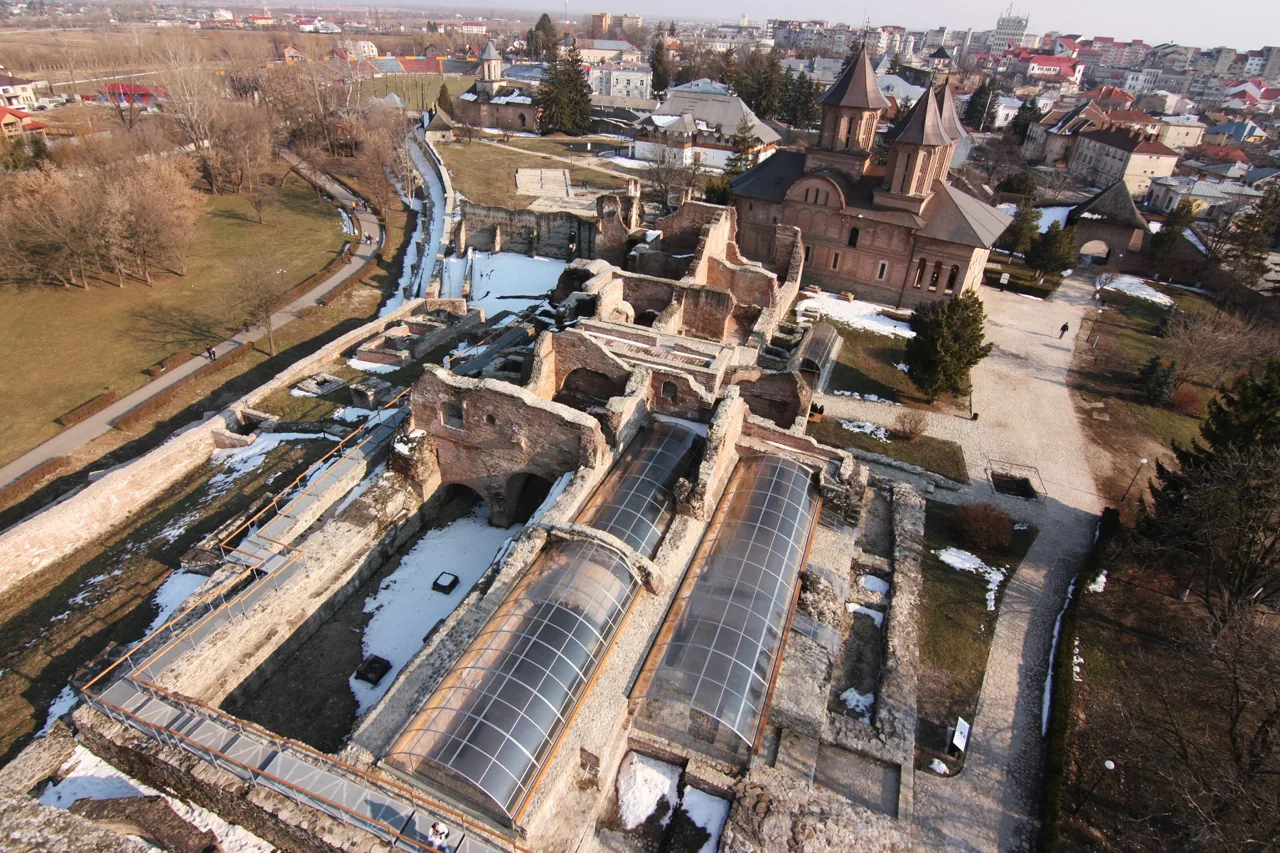
- Documenta Romaniae Historica, B. Țara Românească, I (1966), II (1972), III (1975), IV (1981). Academic editions of acts through 1550; precise pages are linked for each act. Scanurile edițiilor / Edition scans
- Radu Ștefan Vergatti, “De la rezidențele domnești la capitala Țării Românești (secolele XIV–XVII)”, Argesis XIX (2010), pp. 43–48. Studiul / Study
- Șerban Papacostea, “Trade Routes and State-Building”, Revista istorică XXIX (2018), nos. 5–6, pp. 417–473; privileges, pp. 424–430. Studiul / Study
- Laurențiu Rădvan, “On the Medieval Urban Economy in Wallachia”, Analele Științifice ale Universității “Alexandru Ioan Cuza” din Iași, 56 (2009), pp. 490–500; routes, p. 491. Studiul / Study
- Marian Coman, “From an Open to a Closed Frontier: The Wallachian–Moldavian Frontier from c. 1350 to c. 1450”, Annual of Medieval Studies at CEU 9 (2003), pp. 127–153; survival of acts, pp. 139–140. Studiul / Study
- NOAA NCEI, ETOPO Global Relief Model, 15 arc-seconds. Relief and derived rivers are inherited from the basemap of “Wallachia’s monasteries”. Modelul de teren / Terrain model