Higher means seen further ahead, each method by its own test. Tap a line or a note to open its story.Each line is a method. Tap one.
How to read the chart
Up: how far ahead a forecast reached, from a tenth of a second at the bottom to millions of years at the top; the gridlines (a second, a day, a year, a century) are spaced so that every tenfold jump takes the same height. Across: when the method was used; the scale stretches toward today, so equal widths are not equal spans of time. Each method is judged by its own test, so a higher line means it was shown to see further ahead, not that it answers any question more reliably.
- Checked against what happened
- Checked on re-runs of past cases
- Calculated ahead, not yet checkable
- If-then projection
- Said, never checked
- Barely beat chance, or only on slow, rare events
- Tested, and wrong
- Claimed, never shown: any distance
Open a method’s card
Foresight, 3000 BCE–2026
Predicting the future, from bones cracked in fire to computers: how far ahead each method can see
People have cracked bones in fire, read the livers of sheep and drawn cards to learn what comes next. Calculation now works out eclipses centuries ahead and forecasts the weather about a week ahead; the most popular methods showed nothing that held up when they were tested. Every method on one chart, with its history, its test, and the forecasts your own mind makes.
Scroll: the chart moves with the story ↓
Does your brain predict the future?#
Before any oracle, there was the body. Cricket batsmen do not follow the ball with their eyes: they jump their gaze to the spot where it will bounce and wait for it there (Land and McLeod, 2000). Your own touch hardly tickles because, on the leading explanation, the brain has already predicted what your movement will feel like and turned the sensation down (Blakemore, Wolpert and Frith, 1998). A school of neuroscience goes further and describes the whole brain as a prediction machine. The theory is influential and contested: its reviewers say the evidence has not caught up with it.
Further ahead, people imagine. An amnesic patient described by the psychologist Endel Tulving could recall no episode of his life. Asked what went on in his mind when he tried to think about tomorrow, he answered: “Blank, I guess.” Brain scans show that remembering and imagining use much of the same network. Whether the hippocampus is needed to picture the future is still argued: in one study four of five patients with hippocampal damage struggled to imagine new scenes; in another, six patients managed normally. Children of four already choose today what they will need later. Scrub-jays hide food where they will be hungry the next morning, though whether that is the same faculty is disputed.
When you picture your own future, you often see yourself from outside. In seven studies, Emily Pronin and Lee Ross found that people describe their past and future selves the way they describe other people, and picture them more from an observer’s point of view. In four experiments, from drinking an unpleasant liquid for science to tutoring in exam week, people making real decisions decided for their future selves the way they decided for others. Part of what the mind does with the future is run a model of someone who is not quite you yet.
When did people start trying to see the future?#
Divination turns up in so many societies that the anthropologist Donald Brown put it on his list of human universals, next to “dream interpretation” and “future, attempts to predict”. The oldest traces are bones. In northern China, from the fourth millennium BCE, people put the shoulder blades of animals in the fire until they cracked and read an answer in the cracks, thousands of years before anyone wrote the question beside them. Around 1250 BCE the Shang kings at Anyang had the question carved beside the crack, often twice, once each way: “Ban will have misfortune”, “Ban will have no misfortune”. Well over 100,000 fragments survive, by most estimates: the earliest large body of Chinese writing.
In Mesopotamia diviners read the livers of sacrificed sheep. The palace of Mari kept 32 clay models of livers around 1800 BCE, and in one month there between three and seven hundred lambs were slaughtered for divination. When the sky threatened an Assyrian king, a substitute was crowned to take the omen’s sentence while the real king stood aside. Babylonian scholars watched the sky for omens night after night and wrote down what they saw. Their Astronomical Diaries run from 652 BCE into the first century BCE, and, on the best reading of the evidence, that patient watching is how the sky became the first future anyone could calculate.
Greek oracles spoke in riddles. Herodotus tells how Croesus of Lydia asked Delphi whether to attack Persia and was told that he would destroy a great empire; he did, his own. It is a story, written down a century later, and it shows the device: an answer that cannot be wrong. Romans watched birds and sacred chickens. Cicero quotes Cato, who wondered how one soothsayer could look at another without laughing.
If divination cannot see the future, why has it lasted?#
A famous answer is that it works by not seeing. In 1957 Omar Khayyam Moore suggested that the Naskapi of Labrador, who chose where to hunt by reading the cracks in a burnt caribou shoulder blade, were in effect rolling dice, so the herds could not learn their habits. The idea is elegant and often retold. Revisiting it in 2025, the anthropologist Ze Hong concluded that Moore’s version is “probably wrong”, citing critics who found that caribou do not learn hunters’ routines and that the Naskapi turned to the bone mostly in hungry years.
A second answer is about people. Pascal Boyer argues that divination persuades because the diviner is visibly not the author of the verdict: the cracks, the chicken or the cards speak, so nobody’s interests seem to be talking. Among the Azande of Sudan in the late 1920s, E. E. Evans-Pritchard watched the poison oracle: poison was fed to a chicken and a question put to it, and a second chicken had to confirm the answer. When it failed, he counted eight ready explanations, among them the wrong poison, a broken taboo, witchcraft and angry ghosts. “Let the reader consider any argument that would utterly demolish all Zande claims for the power of the oracle,” he wrote. Translated into Zande ways of thinking, “it would serve to support their entire structure of belief.”
Ze Hong and Joseph Henrich call divination a technology people use to get information they believe is accurate, kept alive by strong prior belief, by misses nobody reports, and by seeing others rely on it. Magic and magical thinking seem to flourish where the stakes are high and knowledge thin. Bronisław Malinowski noticed that Trobriand islanders used no magic in the calm lagoon, where fishing was safe, and a great deal of it on the open sea. During the 1991 Gulf War, Israelis in places hit by missiles showed more magical thinking than those in places that were spared. In a 2016 experiment, people’s stress peaked when a shock was hardest to predict.
And when a prophecy fails? For seventy years psychology students learned from When Prophecy Fails (1956) that a small flying-saucer group whose world did not end on 21 December 1954 doubled down and began to preach. In 2025 Thomas Kelly published what Leon Festinger’s newly opened papers show: the leader recanted, the group dissolved and the preaching stopped; one of the researchers, posing as a spiritual authority, had helped bring the climax about. Most later studies of groups whose dates passed, Kelly notes, did not find the famous doubling-down either.
What does your star sign say about you?#
Type your birthday. The reading below is written for your sign. Read it, then say how well it describes you.
Every sign and every birthday gets the same text. It follows the sketch the psychologist Bertram Forer handed to 39 students, described in a 1949 paper, telling each one it came from a personality test they had taken a week earlier. Its statements came, in his words, “largely from a news stand astrology book”. On a scale from 0 to 5 the class rated it 4.26 on average. Statements vague enough to fit everyone feel personal; that is the hardest problem any test of astrology has to get around.
The tests that got around it found nothing. In 1985 the physicist Shawn Carlson asked 28 astrologers, who had agreed to the design, to match birth charts with personality profiles, choosing one in three. They predicted they would be right at least half the time. In 116 tries they were right 40 times; chance alone gives 38.5. Geoffrey Dean and Ivan Kelly used data from a study unconnected with astrology: 2,101 people born in London between 3 and 9 March 1958, on average 4.8 minutes apart, measured on 110 variables at 11, 16 and 23. Born under the same sky, they grew up no more alike than strangers. Their review of more than forty studies of astrologers found an average effect of 0.051, where zero means none: too small to tell from zero, and probably inflated by unpublished null results.
The signs are Babylonian: twelve equal slices of the sky, invented around the end of the fifth century BCE, with the first known horoscopes cast in 410 BCE. Ptolemy gave astrology a system in the second century CE; Kepler wrote astrological calendars; the first newspaper astrology column is generally dated to the London Sunday Express of 24 August 1930. Tarot is younger than it looks. The cards were first recorded in northern Italy in the 1440s and for three centuries were used only to play games, until Antoine Court de Gébelin claimed an Egyptian origin for them in 1781. The deck most people know was drawn by Pamela Colman Smith in 1909. The few small tests of tarot found one positive result, which its own author doubted, and then nothing; in one, believers preferred a random spread to their own.
In 2005 Eurobarometer asked Europeans how scientific astrology is. Rating it 4 or 5 out of 5: 36% in the UK, 48% in Spain, 62% in Romania, 41% across the EU. Asked about horoscopes, fewer agreed (11% in the UK). In a 2015 YouGov poll, 8% of Britons said horoscopes can predict the future. On English Wikipedia in a typical month of the past year, the article on tarot was read 65,667 times and the zodiac 52,314 times; futures studies, the discipline that studies possible futures systematically, 4,592.
English Wikipedia: readers in a typical month (median, Oct 2025 – Sep 2026). It measures curiosity, not practice. - Tarot65,667
- Zodiac52,314
- Nostradamus51,953
- I Ching41,175
- Science fiction40,996
- Astrology37,643
- Prediction market30,826
- Numerology21,461
- Horoscope16,109
- Weather forecasting6,350
- Delphi method6,193
- Futures studies4,592
- Opinion poll4,451
- Scenario planning1,635
What was the first future people could calculate?#
The sky. Babylonian astronomers, working from centuries of omen-watching, could tell a year ahead in which months an eclipse was possible, and for eclipses they could see, their predicted start times were right to within an hour or two. Many predicted eclipses were “watched for, but not seen”: they forecast possibilities, not certainties. Herodotus says Thales foretold the year of an eclipse, now dated to 585 BCE; historians of astronomy doubt that any method of his time could have done it. In 1715 Edmond Halley printed a map of a coming eclipse over England; in London it began within a minute of his time.
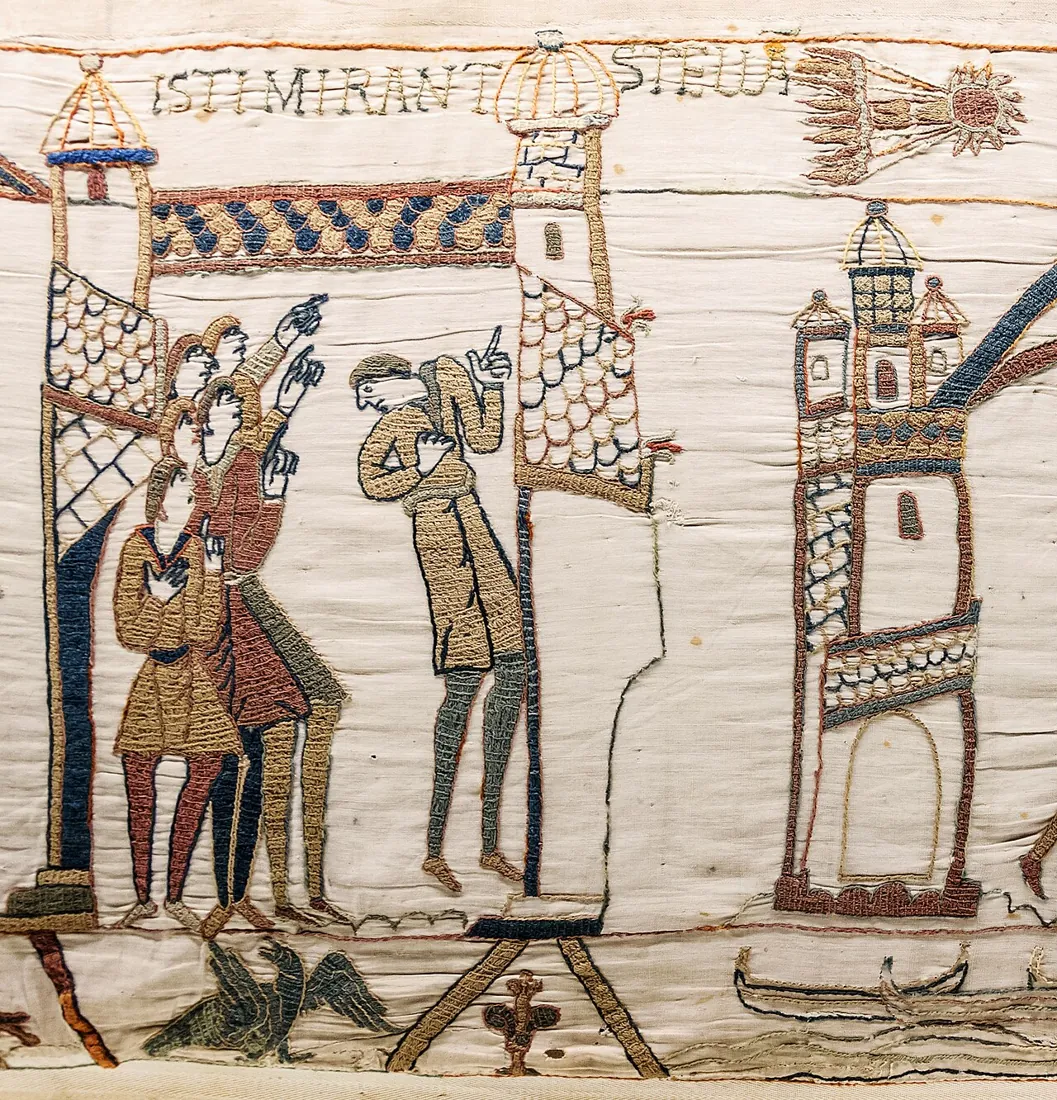
In 1066 Halley’s comet was an omen: the Bayeux Tapestry shows men pointing at it before the Norman conquest. In 1705 Edmond Halley worked out that the comets of 1531, 1607 and 1682 were one object and wrote: “I dare venture to foretell, That it will return again in the Year 1758.” It was found on Christmas night, 1758. A refinement of Halley’s prediction that allowed for Jupiter and Saturn missed its closest approach to the Sun by a month; for its 1835 return the error was four days. The next return is in July 2061 (where the comet is on its orbit now).
From 1872, the tide machine of William Thomson, later Lord Kelvin, drew a whole year of tides for a port in about four hours. NASA’s canon of eclipses runs from 2000 BCE to 3000 CE, nearly twelve thousand solar eclipses; the doubt is where on Earth the shadow falls, because the Earth’s spin slows unevenly: by the year 3000 the uncertainty grows to about 8 degrees of longitude. The orbits themselves can be computed for tens of millions of years. Beyond that, the solar system is chaotic: its exact future on that scale cannot be calculated, only its odds.
How far ahead can the weather be forecast?#
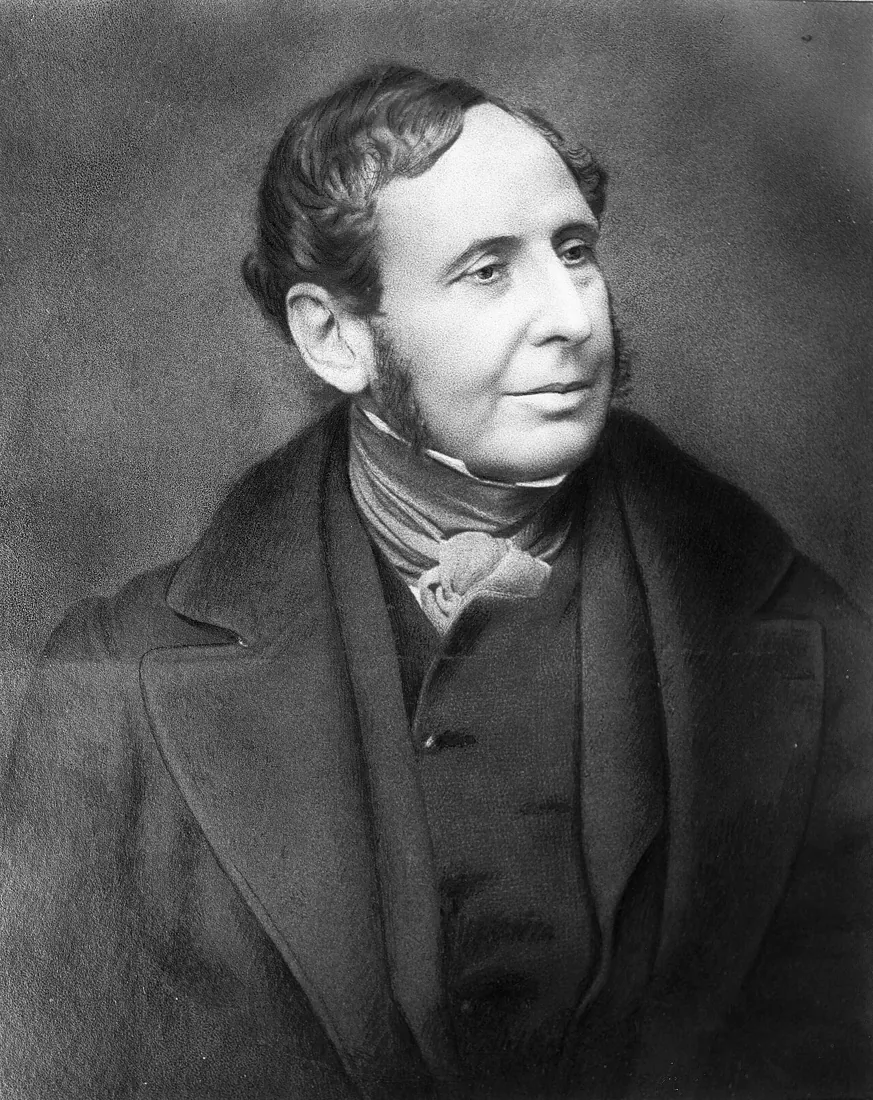
On 1 August 1861 Robert FitzRoy, a naval officer who ran the new meteorological department, published the first public weather forecast in The Times, for the next day or two. “Prophecies or predictions they are not,” he wrote in 1863: a forecast is an opinion that results from “scientific combination and calculation”. No measure of how often he was right has been found. The forecasts stopped in 1866, a year after his death, and returned in 1879; the shipping forecast followed in the 1920s. Folk forecasting kept going alongside: Old Moore’s Almanack sold 560,000 copies in 1839, by the historian Bernard Capp’s count.
In 1922 Lewis Fry Richardson tried to calculate the weather by hand, solving the physics for one place over central Europe. His forecast for six hours: a pressure change of 145 hectopascals. The barometer barely moved. In 1950 a team from Princeton ran the first computer forecasts on ENIAC, four re-runs of past days, each forecast taking about a day to compute.
Since then the horizon has moved steadily. The European centre’s forecasts of the large-scale flow stayed above a high bar of accuracy (a correlation of 0.8 between forecast and observed departures from the usual upper-air pattern, not an 80% chance that a rain forecast is right) for about 4.4 days in 1986 and about 7 days in 2024. Forecasts stay useful for about ten days, against seven thirty years earlier: roughly one day gained per decade. An Atlantic hurricane’s position three days ahead is now forecast as well as its position one day ahead was in the 1990s. Machine-learning models joined in 2023–25 and match or beat the physics models on many measures, within the same window.
That window has a limit. In 1963 Edward Lorenz found that tiny differences in a weather model’s starting state grow until the forecasts part company; in 1969 he showed that better observations cannot push that limit out forever. For day-to-day weather in the mid-latitudes, recent experiments put the limit at about two weeks.
Where does foresight stop?#
Seasons can be forecast in outline. Computer models of El Niño, the warming of the Pacific that shifts weather around the world, keep a strong correlation with what happened about eight months ahead, though most of that skill was measured on re-runs of past years, and forecasts that cross the northern spring are much weaker.
Climate models make a different kind of statement: if the world emits this much, it will warm about this much. They are projections, not forecasts. Of 17 projections published between 1970 and 2007, 10 matched the warming that followed; 14 did once differences between the emissions they assumed and those that happened were allowed for (Hausfather and colleagues, 2020).
Some futures have no horizon at all. No one can predict earthquakes, says the US Geological Survey. In 1975 a county government around Haicheng, in China, ordered an evacuation on the day of a large earthquake, after a swarm of foreshocks; the next year, at Tangshan, there was no warning, and 242,769 people died by the official count. Earthquake warning systems today detect a rupture that has already begun and send a few seconds’ notice ahead of the shaking. That is detection, not foresight.
Can experts predict politics and the economy?#
Between 1987 and 2003 Philip Tetlock collected 82,361 probability estimates from 284 experts, on about 27,450 questions. The average expert was only slightly more accurate than random guessing, and slightly less accurate than simple rules that extend the recent trend. Experts with one big idea did worst; those who borrowed from many did modestly better. Tetlock later warned that the popular summary, that experts do no better than dart-throwing chimps, overstates what he found.
Then came tournaments. From 2011, a US intelligence research agency paid teams to forecast events whose outcome was known, on average, within about 100 days. Tetlock’s team won, helped by three plain measures: less than an hour’s training in probability, teamwork, and putting the best forecasters together. Across the four years, these superforecasters looking 300 days ahead were more accurate than regular forecasters looking 100 days ahead. A claim often repeated, that they beat intelligence analysts with classified information by 30%, has no published study behind it; it appears to rest on an unpublished comparison of a team average with the analysts’ own prediction market. In 2024 superforecasters still beat the best AI model on a benchmark of live questions; by July 2026, by the benchmark’s own estimate, several AI systems were statistically level with the superforecasters’ 2024 forecasts.
Election polls have been checked most often: across more than 30,000 polls in 45 countries since 1942, their error falls from about 4 points half a year before the vote to under 2 on its eve, and it has not grown worse. Further out, the record thins. When Tetlock’s team scored 25-year forecasts made in 1988 and 1997, experts showed real skill on slow, rare events such as the spread of nuclear weapons, and no edge over non-experts on changes of borders. A 2018 study for Open Philanthropy found forecasts made ten or more years ahead came true about a third of the time, with no clear decline beyond ten years. Specific human events have been scored with real skill out to about a year; beyond that the evidence is thin and mixed.
Much of the work on long-range futures does not try to predict at all. RAND’s Delphi method (1950s) polls experts anonymously in rounds until their views converge. Herman Kahn and later Shell wrote scenarios, several coherent stories of how things could go. The Limits to Growth (1972) ran a computer model of the world under different assumptions and warned that its graphs “are not exact predictions”. Horizon scanning collects “weak signals” of change; the futures cone sorts what is possible, plausible, probable and preferable; backcasting starts from the future you want and works back to what must be done now. “Foresight is not about predicting or forecasting the future,” the European Commission says; it is “the discipline of exploring different possible futures”.
What did experts in 1964 expect by now?#
In 1964 RAND polled about 150 experts, of whom 82 answered, in six panels and four anonymous rounds, when each of dozens of developments would arrive. For each, the report printed the year by which half the panel expected it. Below are 8 of the 75 forecasts the science, automation and space panels expected by 2020, drawn at random. Has each happened by now, even if later than expected? Cases where only part of it happened are shown separately at the end.
Of the 75 forecasts due by 2020, 36 have happened as worded, 23 in part, and 16 not at all, by two separate scoring runs of an AI model against the same rule, which agreed on 69 of them; a third reading settled the rest. They got right what was already on a timetable, such as the Moon landing, and much of what computers would do, some of it decades later than they thought. They got wrong most of what needed a leap in physics, biology or spending: controlled fusion has worked only in experiments, and there is no reliable weather control, no base on the Moon and no one on Mars. A 2018 study that scored the same report on timing, counting a forecast only if it came true within a margin around its date, found 11 hits in 61, under a fifth.
All 75 forecasts and what became of them
Panel Forecast (as worded in the report) Median year What happened Science Economically useful desalination of sea water 1970 Already true by 1961Kuwait's seawater distillation plants were supplying its water by the early 1960s, at a cost worth paying where fresh water was scarce; reverse osmosis became cost-competitive in richer countries later. source Science Effective fertility control by oral contraceptive or other simple and inexpensive means 1970 Already true by 1960FDA approved Enovid for contraception in 1960, before the forecast; cheap and widely available afterwards. source Science Development of new synthetic materials for ultra-light construction 1971 Happened, 1971Kevlar (1971) and carbon-fibre composites (late 1960s) became standard ultra-light structural materials. source Science Automated language translators 1972 Happened, 1970No quality bar in the wording; SYSTRAN in operational use for the US Air Force from 1970. source Science New organs through transplanting or prosthesis 1972 Already true by 1954Kidney transplant 1954, before the forecast; heart and liver transplants followed in 1967. source Science Reliable weather forecasts 1975 Happened, 1979Taken in its most favourable sense, reliable forecasts a few days ahead: the European centre (ECMWF) began operational medium-range forecasts in 1979. Day-by-day forecasts far ahead are still not reliable. source Science Operation of a central data storage facility with wide access for general or specialized information retrieval 1980 Happened, 1971MEDLINE (1971) and DIALOG (1972) gave wide remote access to central databases; the web and search engines later made such access near-universal. source Science Reformation of physical theory, eliminating confusion in quantum-relativity and simplifying particle theoryQuantum theory describes microscopic phenomena; relativity concerns space, time and gravity. 1980 In part, 1973QCD and the Standard Model (1973) simplified particle theory; quantum gravity, the quantum-relativity half, is still unsolved. source Science Implanted artificial organs made of plastic and electronic components 1982 Happened, 1982Jarvik-7 plastic heart implanted in 1982 (driven from outside the body); fully implanted electronic AbioCor 2001. Pacemakers earlier. source Science Widespread and socially widely accepted use of nonnarcotic drugs (other than alcohol) for the purpose of producing specific changes in personality characteristics 1983 In part, 1988SSRIs (Prozac, 1988) became widely prescribed and accepted, but for disorders, not to change personality. source Science Stimulated emission ("lasers") in X and Gamma ray region of the spectrumLasers emitting X-rays or gamma rays rather than visible light. 1985 In part, 1984X-ray lasers from 1984 (Livermore), hard X-ray free-electron lasers from 2009; no gamma-ray laser. source Science Controlled thermo-nuclear powerThermonuclear power: energy from controlled nuclear fusion. 1986 In part, 2022In December 2022 the NIF laser produced more fusion energy than the laser energy delivered to its target, in an experiment that used far more energy overall; no fusion power is generated yet. source Science Creation of a primitive form of artificial life (at least in the form of self-replicating molecules)Self-replicating molecules: molecules capable of producing copies of themselves. 1989 Happened, 1986A self-replicating hexanucleotide (von Kiedrowski, 1986) meets 'at least self-replicating molecules'; synthetic-genome cell 2010. source Science Economically useful exploitation of the ocean bottom through mining (other than off-shore oil drilling) 1989 Already true by 1961Diamonds have been mined commercially from the seabed off Namibia, a form of ocean-floor mining; the first venture (Marine Diamond Corporation) began in 1961. Deep-sea nodules are still unmined. source Science Feasibility of limited weather control, in the sense of substantially affecting regional weather at acceptable cost 1990 Not yetCloud seeding changes precipitation only by small, contested amounts; there is no substantial regional weather control at acceptable cost. Science Economic feasibility of commercial generation of synthetic protein for food 1990 Happened, 1985Taken in its most favourable sense: Quorn mycoprotein, grown by fermentation, has been sold commercially since 1985. Protein made by chemical synthesis is not produced at scale. source Science Increase by an order of magnitude in the relative number of psychotic cases amenable to physical or chemical therapyPsychosis: a mental condition involving impaired contact with reality. 1992 Not yetAntipsychotics were already in wide use by 1964; no tenfold rise in the share of psychoses that respond to treatment has been shown. Science Biochemical general immunization against bacterial and viral diseases 1994 Not yetVaccines are still made disease by disease; there is no general immunisation against bacteria and viruses. Science Feasibility (not necessarily acceptance) of chemical control over some hereditary defects by modification of genes through molecular engineering 2000 Happened, 2000The forecast asked only for feasibility: a gene therapy first corrected an inherited immune defect in 2000 (SCID-X1, Paris), after a first authorised trial in 1990; approved treatments (Luxturna 2017, Casgevy 2023) came later. source Science Economically useful exploitation of the ocean through farming, with the effect of producing at least 20% of the world's foodOcean farming: cultivating marine plants or raising marine animals for food. 2000 Not yetMarine aquaculture and seaweed farming supply only a few per cent of world food, far short of 20%. Science Biochemicals to stimulate growth of new organs and limbs 2007 In part, 2022A five-drug treatment led to partial regrowth of a hind limb in adult frogs (2022), and growth factors are used in bone repair; no drug regrows a human limb or a whole organ. source Science Feasibility of using drugs to raise the level of intelligence (other than as dietary supplements and not in the sense of just temporarily raising the level of apperception)Apperception: consciously interpreting a perception in relation to prior knowledge and experience. 2012 Not yetNo drug is shown to raise intelligence lastingly; stimulants and nootropics give only temporary or no gains. Science Man-machine symbiosis, enabling man to extend his intelligence by direct electromechanical interaction between his brain and a computing machine 2020 In part, 2006BrainGate (2006) and Neuralink (2024) brain implants control computers, restoring function but not extending intelligence. source Automation Increase by a factor of 10 in capital investment in computers used for automated process control 1973 Happened, 1975Process-control computing grew far more than tenfold with minicomputers, PLCs (1968) and DCS (1975); the exact year is uncertain. source Automation Air traffic control—positive and predictive track on all aircraftPositive tracking establishes aircraft positions; predictive tracking projects their future paths. 1974 In part, 2020US en-route automation tracked all instrument flights by the mid-1970s; since 2020 US rules require most aircraft to broadcast their position (ADS-B), received by satellite over the oceans since 2019. Aircraft without it are still not tracked. source Automation Direct link from stores to banks to check credit and to record transactions 1974 Happened, 1973BankAmericard's BASE I online authorisation (1973) linked merchants to banks to check credit; EFTPOS followed. source Automation Widespread use of simple teaching machinesTeaching machines: devices that present lessons or exercises and check learners’ responses. 1974 Happened, 1978Taken in its most favourable sense: electronic learning toys (Speak & Spell 1978) and drill software became widespread; mechanical teaching machines faded. source Automation Automation of office work and services, leading to displacement of 25% of current work force“Current workforce” means the workforce when the forecast was made in 1964. 1975 Not yetOffice automation cut clerical jobs gradually, but no displacement of 25% of the workforce, certainly not by 1975. Automation Education becoming a respectable leisure pastime 1975 Happened, 1973A vague item, taken in its most favourable sense: adult and leisure learning became respectable (Open University 1971, U3A 1973, later MOOCs). source Automation Widespread use of sophisticated teaching machinesTeaching machines: devices that present lessons or exercises and check learners’ responses. 1975 Happened, 2012Adaptive software tutors (Duolingo, Khan Academy, MOOCs) have been in widespread use since about 2012; AI tutors since 2023. source Automation Automatic libraries, looking up and reproducing copy 1976 Happened, 1997Full-text digital libraries retrieve and reproduce copy automatically (JSTOR 1997, Google Books 2004). source Automation Automated looking up of legal information 1978 Happened, 1973LEXIS online full-text legal research service launched in 1973. source Automation Automatic language translator—correct grammar 1978 Happened, 2016Neural MT (Google, 2016) produces mostly grammatical output; LLM translation is near-fluent. 'Correct grammar' read as routinely grammatical. source Automation Automated rapid transitRapid transit: high-capacity urban public transport, such as metro systems. 1979 Happened, 1975Fully driverless rapid transit began with Morgantown's system in 1975, after automatic train operation with a driver aboard on London's Victoria line in 1968; Kobe (1981) and Lille's VAL (1983) followed. source Automation Widespread use of automatic decision-making at management level for industrial and national planning 1979 In part, 1992Algorithmic decisions are widespread in industry (ERP, revenue management) but national planning is not automated. source Automation Electronic prosthesis (radar for the blind, servomechanical limbs, etc)Servomechanism: a powered mechanism that automatically corrects movement according to the difference between commanded and actual positions. 1985 Happened, 1984Electronic prostheses became established: myoelectric arms (a Soviet one in 1958, the Boston Arm in 1968), and in 1984 the first cochlear implant approved in the US. Radar for the blind remains niche. source Automation Automated interpretation of medical symptoms 1985 Happened, 1987Software that suggests diagnoses from symptoms has been in clinical use since DXplain (1987); symptom-checker apps and language models came later. source Automation Construction on a production line of computers with motivation by "education"“Education” refers here to teaching or training a computer. 1986 In part, 2022Very ambiguous. Read as machines that learn from reward ('education'): models trained with human feedback (2022), though not built individually on a production line. source Automation Widespread use of robot services, for refuse collection, as household slaves, as sewer inspectors, etc. 1988 In part, 2002Narrow robots are common (robot vacuums since 2002, sewer crawlers, automated refuse arms), but general household robots are not widespread. source Automation Widespread use of computers in tax collection, with access to all business records—automatic single tax deductions 1988 In part, 2008Tax collection is computerised in most countries; real-time e-invoicing gives some (Brazil, Mexico, Italy) access to firms' transactions, but not everywhere. source Automation Availability of a machine which comprehends standard IQ tests and scores above 150 (where "comprehend" is to be interpreted behavioristically as the ability to respond to questions printed in English and possibly accompanied by diagrams)IQ: intelligence quotient. “Behavioristically” means judging observable responses without assumptions about internal mental processes. 1990 In part, 2023A language model scored about 155 on verbal subtests of an adult IQ test in 2023; no full test above 150. source Automation Evolution of a universal language from automated communication 2000 Not yetNo universal language arose from automated communication; machine translation lessened the need for one. Automation Automated voting, in the sense of legislating through automated plebiscitePlebiscite: a direct vote by the electorate on a public question. 2000 In part, 2004Geneva used internet voting in referendums from 2004 and Estonia in elections from 2005, but laws are not made mainly by automated plebiscite. source Automation Automated highways and adaptive automobile autopilots 2002 In part, 2020Driverless cars (Waymo public service 2020) and adaptive cruise exist; automated highways as infrastructure have not been built. source Automation Remote facsimile newspapers and magazines, printed in homeFacsimile transmission: sending a page’s image for reproduction elsewhere, as with fax. 2005 In part, 1980Radio-facsimile newspapers printed at home were tried from 1938 into the 1940s; from 1980 newspapers went online (the Columbus Dispatch on CompuServe), read on screens rather than printed at home. source Automation Man-machine symbiosis, enabling man to extend his intelligence by direct electromechanical interaction between his brain and a computing machine 2009 In part, 2006Brain-computer interfaces control devices (BrainGate 2006, Neuralink 2024) but do not extend intelligence. source Space S.U. orbital rendezvousS.U.: the Soviet Union. Orbital rendezvous brings spacecraft together in orbit, without necessarily docking. 1964 Happened, 1967Kosmos 186/188 automatic rendezvous and docking, Oct 1967. Vostok 3/4 (1962) passed close without manoeuvring. source Space U.S. orbital rendezvousU.S.: the United States. Orbital rendezvous brings spacecraft together in orbit, without necessarily docking. 1967 Happened, 1965Gemini 6A and 7 rendezvous, 15 Dec 1965. source Space Increased use of near-Earth satellites for weather prediction and control 1967 In part, 1966Weather satellites in operational forecasting from 1966 (ESSA/TOS), use rising steadily since; satellites cannot control weather. source Space Unmanned inspection and capability for destruction of satellites 1967 Happened, 1968Soviet IS co-orbital system approached and destroyed a target satellite, Nov 1968. source Space S.U. manned lunar fly-byS.U.: the Soviet Union. Lunar fly-by: passing close to the Moon without landing. 1967 Not yetThe Soviet Union never flew cosmonauts around the Moon; Zond 5 (1968) carried only animals. Space Establishment of global satellite communication system 1968 Happened, 1969Intelsat III satellites over all three oceans gave first global coverage in 1969. source Space U.S. manned lunar fly-byU.S.: the United States. Lunar fly-by: passing close to the Moon without landing. 1970 Happened, 1968Apollo 8 circled the Moon in Dec 1968, more than a fly-by; Apollo 13 (1970) was a true free-return fly-by. source Space Manned lunar landing and return 1970 Happened, 1969Apollo 11, July 1969. source Space Rescue of astronauts stranded in orbit 1970 Happened, 2023Taken in its most favourable sense: uncrewed Soyuz MS-23 retrieved a crew whose Soyuz leaked (2023); Starliner crew returned on Crew-9 (2025). Both crews were safe on the ISS. source Space Operational readiness of laser for space communications 1970 Happened, 2016EDRS laser relay entered operational service 2016 (SILEX 2001 was a demonstration); Starlink laser links at scale since 2021. source Space Manned co-orbital inspection of satellitesCo-orbital inspection: inspecting a satellite from a spacecraft sharing its orbit. 1970 Happened, 1966Gemini 9A crew rendezvoused with and inspected the ATDA target ('angry alligator') in 1966. source Space Manned scientific orbital station—10 men 1970 In part, 1971Space stations have flown since Salyut 1 (1971); the ISS has briefly held 10–13 people during crew handovers, but no station has had a regular crew of ten. source Space Development of reusable booster launch vehicleBooster: a rocket providing the initial thrust for a spacecraft’s launch. 1975 Happened, 1981Shuttle solid boosters were recovered and reflown from 1981; fully propulsive booster reuse (Falcon 9) from 2017. source Space Solid-core nuclear reactor propulsionA solid reactor core heats propellant, which is expelled to produce thrust. 1975 In part already by 1959KIWI-A solid-core reactor ground test 1959, before the forecast; XE-Prime flight-type engine 1969. Never flown. source Space Ionic propulsion (nuclear-generator powered)Ion propulsion: electrically accelerating charged particles to produce thrust. 1975 In part, 1965SNAPSHOT (1965) ion thruster, battery-run but recharged from the reactor, worked less than an hour; no operational nuclear-electric propulsion. source Space Temporary lunar base (2 men, 1 month) 1975 Not yetThe longest lunar stay was Apollo 17, about 75 hours; no month-long lunar base. Space Development of reusable maneuverable orbiting spacecraft 1975 Happened, 1981Space Shuttle orbiter, reusable and manoeuvrable in orbit, first flew in 1981. source Space Manned Mars and Venus fly-byFly-by: passing close to a planet without landing. 1978 Not yetNo crewed flight beyond the Moon. Space Re-execution of critical experiments in deep space (Michelson-Morley, speed of light, equality of gravitational and inertial mass, etc)Michelson–Morley: an experiment seeking to detect motion through a hypothetical light-carrying medium called ether. 1981 In part, 1976Gravity has been tested in space (Gravity Probe A's suborbital flight, 1976; Cassini in deep space, 2002), but the Michelson–Morley experiment has not been rerun in deep space. source Space Permanent base established on Moon (10 men, indefinite stay) 1982 Not yetNo permanent lunar base. Space Manufacturing of atmospheres suitable for human beings on Moon or planets (no implication of surrounding entire Moon or planet with an atmosphere is intended) 1982 In part, 2021MOXIE made breathable oxygen from Martian CO2 in 2021, a small demonstration; no manufactured habitat atmosphere. source Space Deep space laboratories and observatories for high-vacuum, zero-g, and space researchDeep space: far from Earth. High vacuum: extremely low pressure. Zero-g: weightlessness. 1982 Happened, 1973Taken in its most favourable sense, as labs and observatories in space: Skylab lab and solar observatory 1973; Hubble 1990; deep-space SOHO 1995, JWST 2022. source Space Earth weather control, in the sense of having a highly reliable ability to cause precipitation from certain types of clouds 1982 In part, 2018Schaefer seeded a supercooled cloud to snow in 1946; SNOWIE (flights 2017, published 2018) confirmed snowfall from seeding, but there is no highly reliable operational ability. source Space Manned landing on Mars and return 1985 Not yetNo crewed Mars landing. Space Probes (small instrumented unmanned payloads) out of the solar systemPayload: the instruments or other cargo carried by a spacecraft. 1986 Happened, 1983Pioneer 10 passed Neptune's orbit in 1983 on a path out of the solar system; Voyager 1 crossed into interstellar space in 2012. source Space Manufacturing of propellants and raw material on the MoonPropellants: substances used by rocket engines to produce thrust, including fuels and oxidizers. 1990 Not yetNo propellant or raw-material manufacturing on the Moon; only lab and sample studies. Space Establishment of permanent research stations on near planets 1991 Not yetNo permanent research station on any planet; robotic landers have worked on Mars and Venus, but only for single missions. Space Commercial global ballistic transport (including boost-glide techniques)Ballistic: projectile-like flight. Boost-glide: rocket acceleration followed by unpowered atmospheric gliding. 2006 Not yetNo commercial ballistic or boost-glide passenger transport. Space Establishment of a permanent Mars base (say, 10 men for an indefinite period) 2006 Not yetNo Mars base. Does science fiction predict the future?#
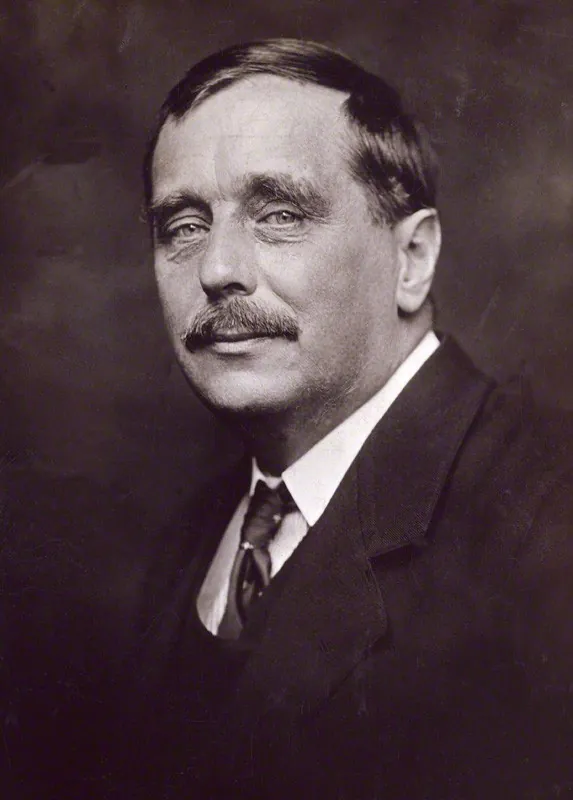
In January 1902 H. G. Wells gave a lecture at the Royal Institution called “The Discovery of the Future”. “Scientific prophecy will not be fortune-telling, whatever else it may be,” he said, and he hoped for “a systematic exploration of the future”. A year earlier his imagination had refused to see “any sort of submarine doing anything but suffocate its crew”. In 1914 he wrote of “atomic bombs” that kept on exploding.
In October 1945 Arthur C. Clarke worked out in Wireless World that three stations at about 42,000 km from the centre of the Earth, circling once a day, could cover the globe. Communications satellites now sit in that orbit. When researchers scored the non-fiction of Isaac Asimov, Clarke and Robert Heinlein, their technology predictions with a firm date were right 57%, 48% and 36% of the time; their forecasts reached about 40 years ahead.
Many writers say prediction is not their job. Ursula K. Le Guin wrote that science fiction “is not predictive; it is descriptive”: it describes the present in the costume of the future. From 2019 to 2023 the French defence ministry commissioned a team of science-fiction writers, the Red Team, to imagine threats for 2030–2060. In E. M. Forster’s “The Machine Stops” (1909), people talk through screens and are warned: “Beware of first-hand ideas!”
How well can you predict your own life?#
Worse than you think. In 1994 Roger Buehler and colleagues asked 37 students when they would finish their theses. On average they said 33.9 days; it took 55.5. Only 29.7% finished by the date they had called most likely. Observers, asked about other people’s projects, erred the other way. When students had to link their estimate to how long similar work had taken them before, the bias went away.
People also misjudge how they will feel in the future. Assistant professors expected that being denied tenure would leave them much unhappier for years; those who had been denied were happier than predicted, though only seven recently denied professors were in the comparison. Across more than 19,000 people aged 18 to 68, people at every age expected to change less in the next ten years than people ten years older said they had changed in the last ten.
That points to the plainest method: start from how long similar things took before, yours and other people’s.
Every method, card by card#
Each card gives the method’s first firm date, how it works, how far it has been shown to see, and how it fared when tested. Tap a beam on the chart to open its card.
Before any method
The forecaster in your head
Brains act ahead of the senses: batsmen look to where the ball will bounce, and your own touch is predicted and damped. The idea that the whole brain is best described as a prediction machine is influential and contested.
Said, never checked
- The test
- Lab studies of single abilities: batsmen’s eyes reach the bounce point before the ball; a delay of a tenth of a second makes your own touch tickle more. The grand theory is not settled.
- How far it sees
- A few tenths of a second for the body; for imagining, as far as you can picture.
Humans; in part, other animals
Imagining your future
Remembering and imagining share a brain network. Children of four plan for needs they do not yet feel; scrub-jays and apes store food or tools for later, though whether that is the same faculty is argued. People see their future selves partly as other people.
Checked against what happened
- The test
- Experiments on planning in children and animals; brain scans; one dispute over whether the hippocampus is needed.
- How far it sees
- Your own life, with known errors (see the last chapter).
From the 4th millennium BCE (China); Naskapi, Labrador, 20th century
Cracked shoulder blades
A shoulder blade is heated until it cracks, and the crack is read. Omar Khayyam Moore argued in 1957 that the Naskapi used it to randomise their hunting, so caribou could not learn their habits.
Testable, never tested
- The test
- Never tested in the field. Ze Hong concluded in 2025 that Moore’s randomisation idea is “probably wrong”.
- How far it sees
- Claimed: wherever the herds are.
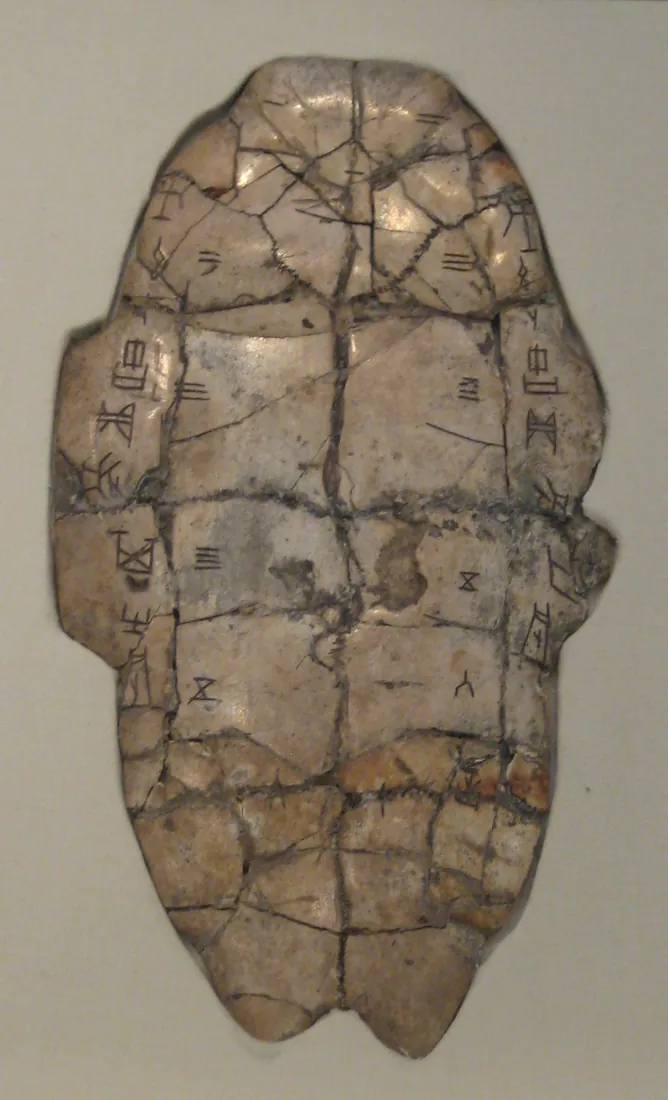
c. 1250–1050 BCE, Anyang
Shang oracle bones
Diviners for the Shang kings bored hollows into turtle shells and ox bones, applied heat and read the cracks; the question was carved beside them, often in a yes and a no version, sometimes with the king’s reading and, more rarely, what happened.
Untestable as practised
- The test
- Untestable as practised: paired questions, verdicts read by the king, outcomes recorded only sometimes.
- How far it sees
- Claimed: days to seasons (harvests, rain, war, childbirth).
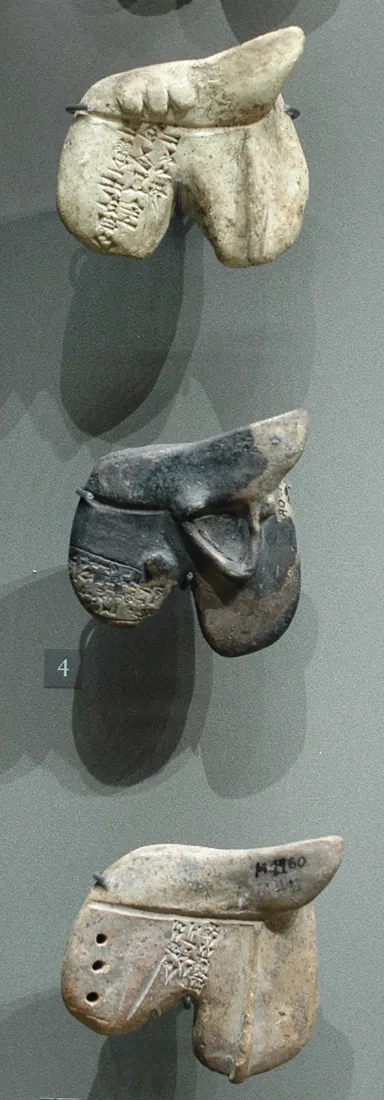
c. 1900 BCE, Mesopotamia; later Etruscans and Romans
Reading livers
A sheep was sacrificed and its liver read, mark by mark, against written omen lists. Mari kept 32 clay liver models; the bronze liver of Piacenza maps the gods onto 40 or so fields.
Testable, never tested
- The test
- Never tested.
- How far it sees
- Claimed: anything a king asked.
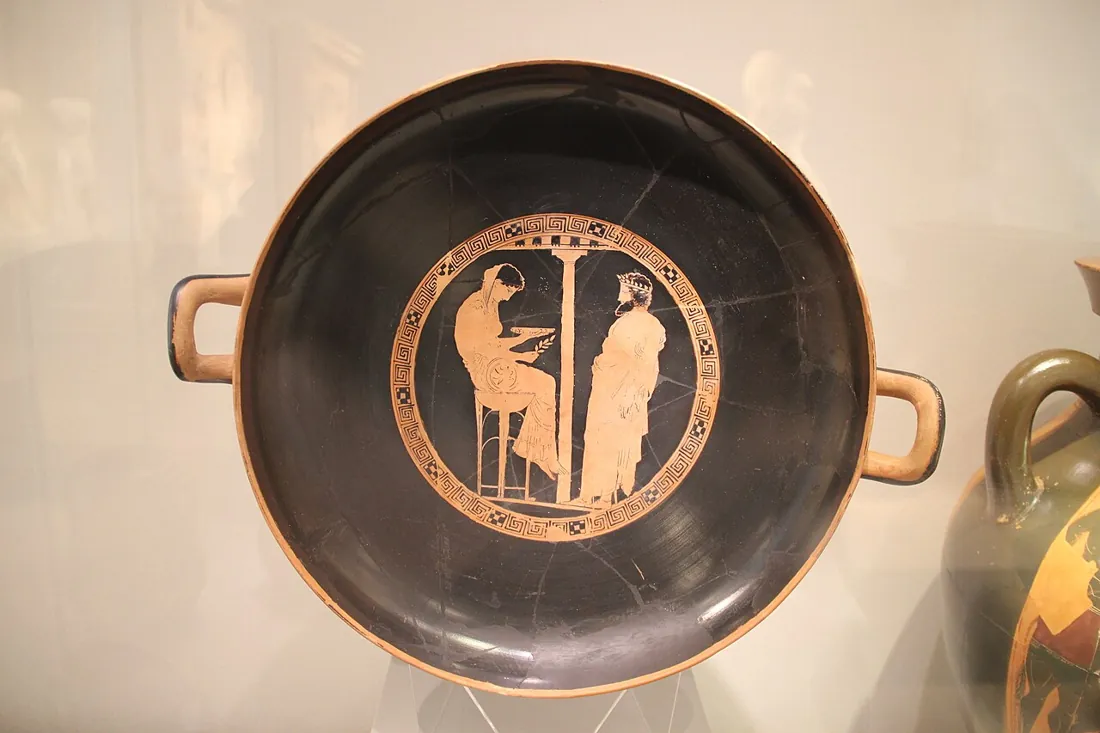
8th c. BCE to the 4th c. CE
The oracle at Delphi
A priestess, the Pythia, answered questions in the god’s name. The surviving answers come mostly from later stories, like Croesus told he would destroy a great empire. The idea that she breathed intoxicating gas from the rock is contested.
Untestable as practised
- The test
- Untestable as practised: answers known from later narratives, often ambiguous.
- How far it sees
- Claimed: any distance.
Roman Republic and Empire
Birds and sacred chickens
Roman magistrates took the auspices before assemblies and battles. In the story told by Suetonius, the consul Claudius Pulcher threw the sacred chickens into the sea when they would not eat, saying that they might drink, since they would not eat, and lost the battle of Drepana in 249 BCE.
Testable, never tested
- The test
- Never tested; the chicken story is tradition, not record.
- How far it sees
- Claimed: the outcome of the day’s business.
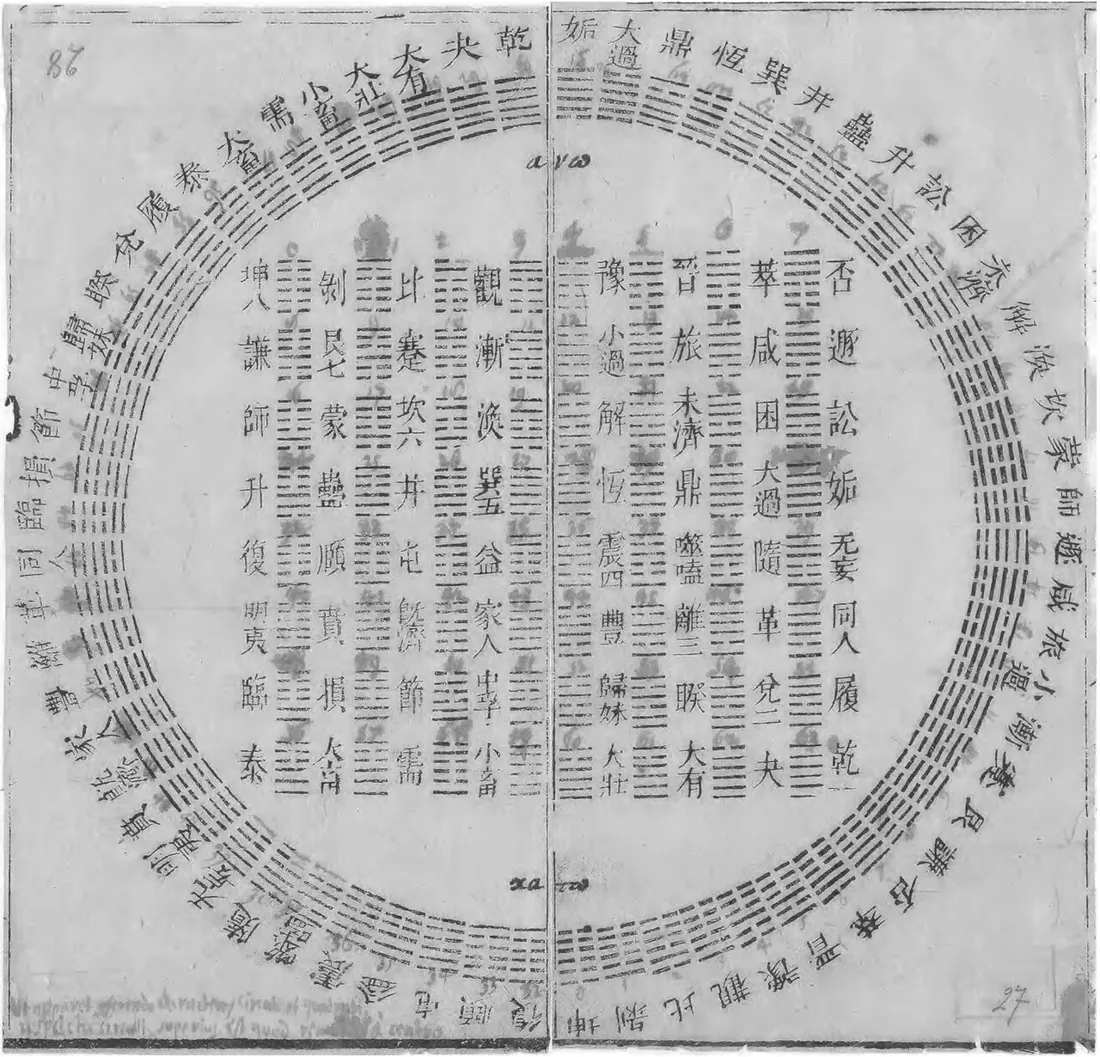
Western Zhou core, c. 9th c. BCE
I Ching
Sixty-four hexagrams of broken and whole lines, cast with yarrow stalks or coins and read with the text. The two methods give different odds: with yarrow, a changing yang line is three times as likely as a changing yin line; with coins they are equal. Leibniz read the hexagrams as binary numbers in 1703.
Untestable as practised
- The test
- Untestable as practised: the text is interpreted.
- How far it sees
- Claimed: any distance.
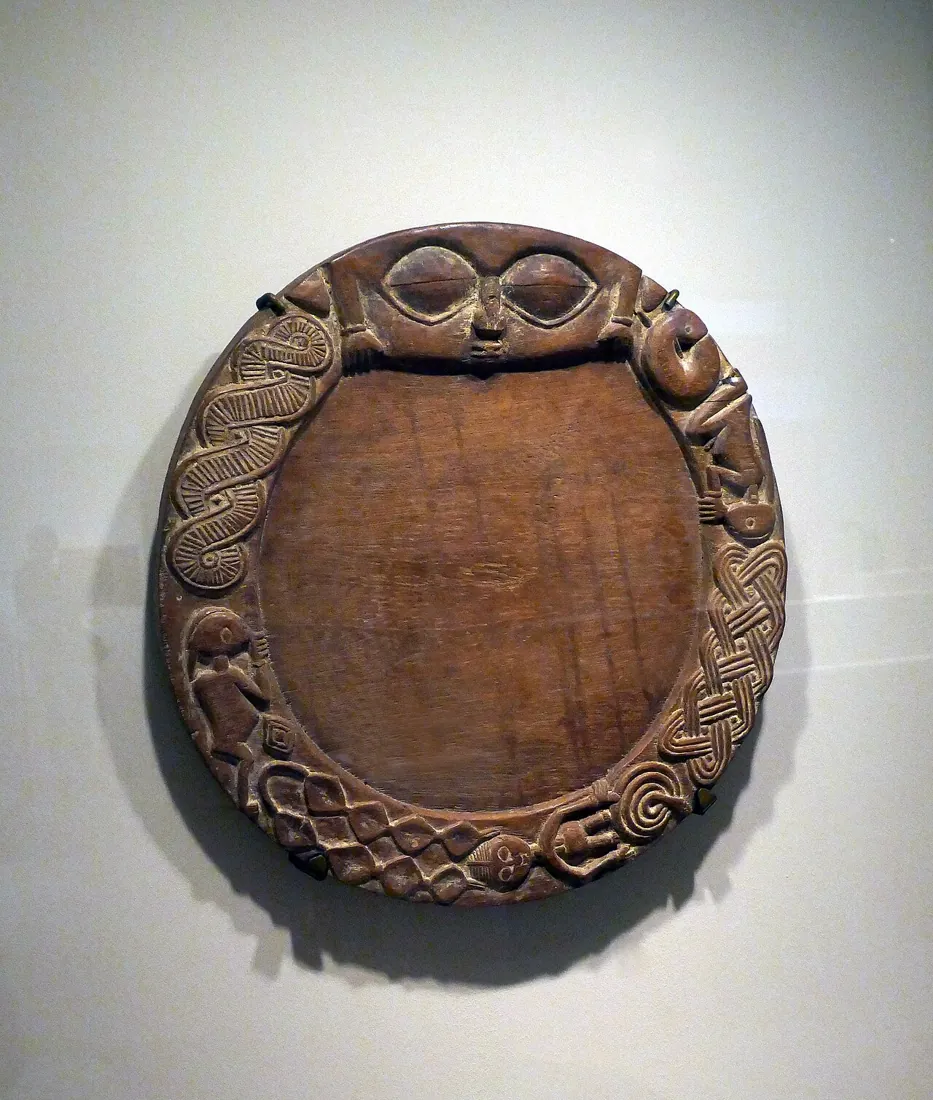
Yoruba, West Africa; recognised by UNESCO since 2005
Ifá
A diviner casts palm nuts or a chain to choose one of 256 signs, each with hundreds of verses (around 800 per sign, by UNESCO’s count), and recites the verses that fit the client’s question.
Testable, never tested
- The test
- Never tested.
- How far it sees
- Claimed: the client’s situation and what to do.
Observed 1926–1930, southern Sudan
The Azande poison oracle
Poison is fed to a chicken and a yes-or-no question put to it; a second chicken must confirm the answer. When the oracle fails there are reasons ready, eight of them by E. E. Evans-Pritchard’s count: the wrong poison, a broken taboo, witchcraft, ghosts and more. He wrote that any argument against it, translated into Zande thought, would support it.
Untestable as practised
- The test
- Untestable as practised: failures are explained away.
- How far it sees
- Claimed: who is to blame, what will happen.
From the oldest written records
Prophetic dreams
Dreams were read as messages for millennia. The Premonitions Bureau set up after the Aberfan disaster logged hundreds of warnings, and more than nine in ten matched nothing. Three attempts to repeat a laboratory test of precognition failed. A whole page on this site is about what dreams are.
Tested, and wrong
- The test
- Tested and failed.
- How far it sees
- Claimed: any distance.
Babylon, end of the 5th c. BCE; first horoscopes 410 BCE
Astrology
Twelve equal signs, the planets’ positions at birth, and rules for reading them, systematised by Ptolemy in the 2nd century CE. The newspaper column dates from 1930. The signs no longer line up with the constellations behind them; a page on this site shows the sky on your birthday.
Tested, and wrong
- The test
- Tested and failed: astrologers did no better than chance at matching charts to people (Carlson 1985: 40 of 116, chance 38.5); people born minutes apart grew up no more alike.
- How far it sees
- Claimed: a lifetime.
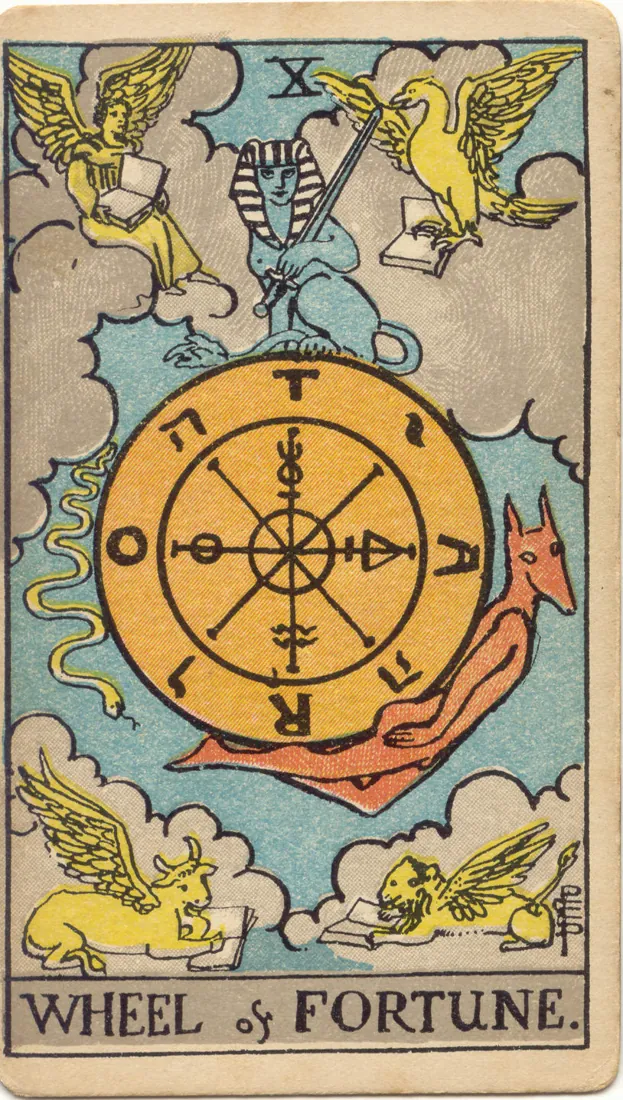
Cards: Italy, 1440s; fortune-telling: from 1781
Tarot
For three centuries tarot was a card game. In 1781 Antoine Court de Gébelin claimed the cards were an Egyptian book of wisdom; Etteilla turned them into a fortune-telling tool in the 1780s; the Waite–Smith deck, drawn by Pamela Colman Smith, came out in 1909.
Small tests, nothing that held up
- The test
- Small tests only: one positive result its own author doubted, then nothing; believers preferred a random spread to their own.
- How far it sees
- Claimed: the questioner’s near future.
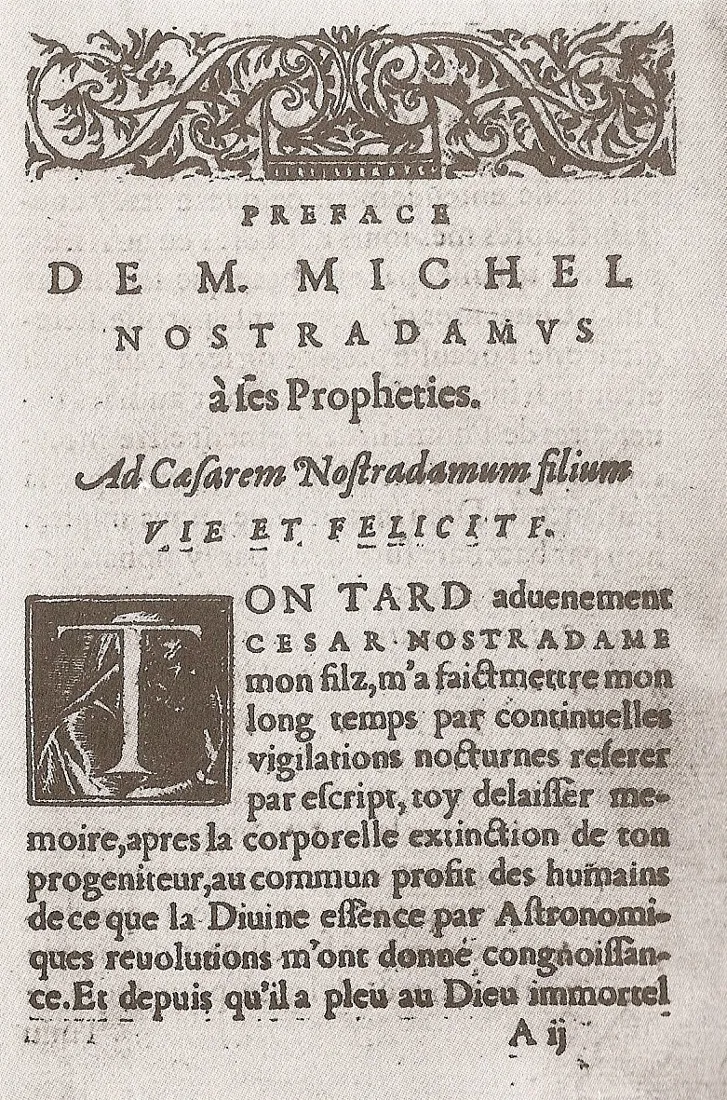
Les Prophéties, Lyon, 1555
Nostradamus
Rhymed quatrains with no dates and few names, 353 in the first edition, around a thousand in later ones. Readers have fitted them to events after the fact for nearly five centuries.
Untestable as practised
- The test
- Untestable as practised: no dates, fitted to events afterwards.
- How far it sees
- Claimed: to the end of the world.
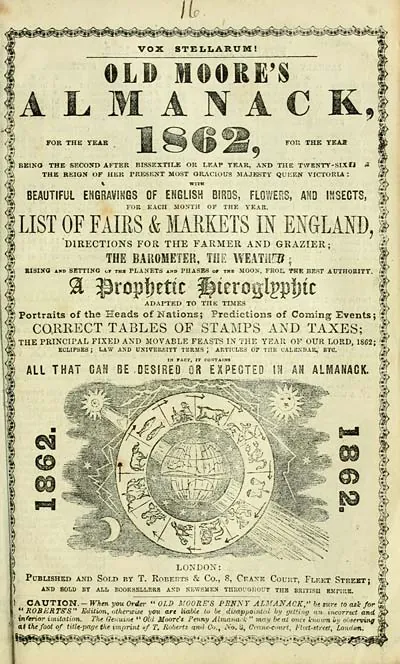
Old Moore’s, from 1700
Almanacs
Francis Moore’s Vox Stellarum, an almanac for 1701, became Old Moore’s Almanack: weather, events and the stars for the year ahead. It sold 560,000 copies in 1839, by Bernard Capp’s count.
Said, never checked
- The test
- No published test of its forecasts was found.
- How far it sees
- Claimed: the year ahead.
Wherever weather mattered
Weather lore
Rules that read the coming season from a single day or sign: the Romanian onion calendar and the Spanish cabañuelas, in the other editions of this page, are two of them. Spain’s weather agency says the cabañuelas have no scientific basis.
Testable, never tested
- The test
- No published test of the seasonal rules was found.
- How far it sees
- Claimed: a season or a year.
21 December 1954, Chicago area
A dated prophecy
Dorothy Martin’s small group expected a flood and rescue by flying saucer. Nothing happened. The famous account says they doubled down; Festinger’s own papers, newly opened and analysed by Thomas Kelly in 2025, show they recanted and dissolved.
Tested, and wrong
- The test
- Tested and failed.
- How far it sees
- Claimed: a specific date.
Babylon to NASA
Eclipses, comets, orbits
Babylonian scholars predicted eclipse possibilities a year ahead. Halley forecast in 1705 that his comet would return in 1758, and it did. Eclipse tables now run to the year 3000; Earth’s orbit can be computed for tens of millions of years, after which chaos takes over.
Checked against what happened
- The test
- Checked against what happened, for centuries; the far future is calculated, not yet checked.
- How far it sees
- 53 years shown in 1758; millennia calculated.
Harmonic analysis; Kelvin’s machine, 1872
Tide tables
Tides come from the regular pull of the Moon and the Sun, so they can be calculated ahead. Kelvin’s machine drew a year of a port’s tides in about four hours; storms push the real sea level above or below the tables.
Checked against what happened
- The test
- Checked daily against the sea.
- How far it sees
- A year in the tables; the astronomy, much further.
FitzRoy, 1861; computers, from 1950
Weather forecasts
No score of FitzRoy’s forecasts for the next day or two has been found. Since computers, every forecast is checked: highly accurate forecasts of the large-scale flow reached about 4.4 days ahead in 1986 and about 7 in 2024, useful ones about ten days. Chaos sets a limit near two weeks.
Checked against what happened
- The test
- Checked every day against what happened.
- How far it sees
- About a week; useful to about ten days.
First forecasts 1986
El Niño forecasts
The warming of the Pacific that shifts weather around the world can be forecast months ahead from the ocean’s heat. Skill falls sharply for forecasts that cross the northern spring.
Checked on re-runs of past cases
- The test
- Checked mostly on re-runs of past years; real-time forecasts have been scored since the 2000s.
- How far it sees
- About eight months, with a strong correlation.
From the 1960s
Climate projections
Models say how much the world will warm for a given amount of emissions. Of 17 projections published 1970–2007, 10 matched the warming that followed; 14 did once differences between the emissions they assumed and those that happened were allowed for.
If-then projection
- The test
- If-then statements, checked after the fact against the emissions that happened.
- How far it sees
- Decades, conditional on what people emit.
—
Earthquakes
No one can predict earthquakes. Around Haicheng an evacuation was ordered in 1975 after foreshocks; Tangshan, the next year, got no warning. Warning systems today detect a quake that has begun and send seconds of notice.
Tested, and wrong
- The test
- Predictions have failed; warnings work, after the rupture.
- How far it sees
- A few seconds, once the quake has begun.
Polls checked since 1942
Election polls
A poll measures today’s opinion; read as a forecast, its error falls from about 4 points half a year out to under 2 on the eve. Across 45 countries the final-week error has not grown since the 1940s.
Checked against what happened
- The test
- Checked at every election.
- How far it sees
- About half a year, with a few points of error.
Tetlock’s studies from the 1980s; tournaments 2011–2015
Experts and tournaments
Experts on their own barely beat chance. Trained forecasters in teams, scored on hundreds of questions settled within months, did much better, and the best of them stayed best year after year.
Checked against what happened
- The test
- Scored on resolved questions.
- How far it sees
- About 100 days on average, up to about a year.
Iowa Electronic Markets, 1988
Prediction markets
People trade contracts that pay out if an event happens; the price reads as a probability. Over five US presidential elections the Iowa market was closer to the result than the polls in 74% of comparisons.
Checked against what happened
- The test
- Checked at every resolution; how much better than well-read polls is disputed.
- How far it sees
- Months.
Benchmarks from 2024
AI forecasters
Language models now make forecasts about real events. In 2024 the best still trailed superforecasters (Brier score 0.122 against 0.096); by July 2026, by the benchmark’s estimate, several were statistically level with the superforecasters’ 2024 forecasts.
Checked against what happened
- The test
- Scored on questions that resolve after the forecast.
- How far it sees
- Days to months.
RAND, 1951; published 1963
The Delphi method
Experts answer anonymously, see the group’s answers and answer again, in rounds. In RAND’s 1964 long-range study, 82 experts said when dozens of developments would arrive.
Tested, and wrong
- The test
- The 1964 report, scored in 2018 on timing: 11 of 61 forecasts, under a fifth.
- How far it sees
- Claimed: 50 years.
Herman Kahn, 1950s–60s; Shell, from the 1970s
Scenarios
Instead of one forecast, several coherent stories of how things could go, used to test plans against each. Pierre Wack, who led Shell’s planners, wrote that management “was prepared for the eventuality—if not the timing” of the 1973 oil crisis; the 1972 scenarios placed the break around 1975.
Untestable as practised
- The test
- Not forecasts, so not scored for accuracy; their assumptions and usefulness can still be questioned. Kahn and Wiener’s 1967 list of likely innovations: about 45% judged accurate.
- How far it sees
- Decades, as possibilities.
1972, World3 model
The Limits to Growth
A computer model of population, food, industry, resources and pollution, run under different assumptions to 2100. The authors wrote that its graphs “are not exact predictions”. The standard run tracked data well to 2010; a 2020 comparison found other runs closer.
If-then projection
- The test
- If-then runs, compared with data in 2008, 2014 and 2020.
- How far it sees
- A century, as scenarios.
Weak signals: Ansoff, 1975; cone: 1990s
Horizon scanning and the futures cone
Governments collect early signs of change and sort futures into possible, plausible, probable and preferable. The UK’s toolkit says it plainly: “Scenarios are not predictions.”
Untestable as practised
- The test
- Not forecasts, so not scored for accuracy; their assumptions and usefulness can still be questioned.
- How far it sees
- Decades, as possibilities.
Term: John Robinson, 1982
Backcasting
Start from a future you want, say an energy system decades from now, and work back to the steps that must be taken today. It plans a future instead of predicting one.
Untestable as practised
- The test
- Not a forecast.
- How far it sees
- As far as the goal.
Wells, 1902 lecture; and long before
Science fiction
Wells called for “a systematic exploration of the future”; Clarke showed in 1945 that three stations in a 24-hour orbit could cover the globe. Scored on their non-fiction, Asimov, Clarke and Heinlein were right between a third and a half of the time on dated technology predictions, about 40 years ahead.
Barely beat chance, or only on slow, rare events
- The test
- Scored on non-fiction: technology predictions with a firm date right 36–57% of the time.
- How far it sees
- About 40 years.
How the chart is drawn#
Horizontally, time runs from 3000 BCE to 2026 on a scale that widens toward the present: each step to the right covers ten times less time than the one before, so the last century has room. Vertically, the reach of a forecast runs from a tenth of a second to millions of years, also on a scale of tens.
A beam rises only when a method was shown to work that far ahead, by the rule printed on its card: forecasts made beforehand and checked against what happened (solid), checks on re-runs of past cases (lighter), calculations ahead that cannot be checked yet (dashed), claims never checked (open dots) and tests that failed (crosses). Climate models are drawn as if-then projections. Divination sits above the chart, because its claims have no distance; each method carries its test status: tested and failed, small tests with nothing that held up, untestable as practised, or never tested.
The weather beam uses the European centre’s published verification (read off its chart, to a tenth of a day). The 1964 forecasts were read off RAND’s charts by program, to about a year, and scored in two separate runs of an AI model against a rule fixed in advance, with a third reading where they disagreed. No human expert checked every verdict; each verdict’s reason and source are printed beside it. Wikipedia figures are the median monthly views from October 2025 to September 2026, counting human readers only, and measure curiosity, not practice.
Sources#
- Land MF, McLeod P (2000). From eye movements to actions: how batsmen hit the ball. Nature Neuroscience 3:1340–1345. doi.org
- Blakemore S-J, Wolpert DM, Frith CD (1998). Central cancellation of self-produced tickle sensation. Nature Neuroscience 1:635–640. doi.org
- Clark A (2013). Whatever next? Predictive brains, situated agents, and the future of cognitive science. Behavioral and Brain Sciences 36:181–204. doi.org
- Walsh KS, McGovern DP, Clark A, O’Connell RG (2020). Evaluating the neurophysiological evidence for predictive processing as a model of perception. Annals of the NY Academy of Sciences 1464:242–268. doi.org
- Wheeler MA, Stuss DT, Tulving E (1997). Toward a theory of episodic memory. Psychological Bulletin 121:331–354. doi.org
- Addis DR, Wong AT, Schacter DL (2007). Remembering the past and imagining the future. Neuropsychologia 45:1363–1377. doi.org
- Hassabis D, Kumaran D, Vann SD, Maguire EA (2007). Patients with hippocampal amnesia cannot imagine new experiences. PNAS 104:1726–1731. doi.org
- Squire LR et al. (2010). Role of the hippocampus in remembering the past and imagining the future. PNAS 107:19044–19048. doi.org
- Atance CM, Meltzoff AN (2005). My future self: young children’s ability to anticipate and explain future states. Cognitive Development 20:341–361. doi.org
- Raby CR, Alexis DM, Dickinson A, Clayton NS (2007). Planning for the future by western scrub-jays. Nature 445:919–921. doi.org
- Pronin E, Ross L (2006). Temporal differences in trait self-ascription: when the self is seen as an other. JPSP 90:197–209. doi.org
- Pronin E, Olivola CY, Kennedy KA (2008). Doing unto future selves as you would do unto others. PSPB 34:224–236. doi.org
- Brown DE (1991). Human Universals. McGraw-Hill (list reproduced in Pinker, The Blank Slate, 2002). condor.depaul.edu
- Flad RK (2008). Divination and power: a multiregional view of the development of oracle bone divination in early China. Current Anthropology 49:403–437. doi.org
- Shang inscribed plastron, reign of Wu Ding (National Museum of China), Wikimedia Commons description. commons.wikimedia.org
- Centre for the Study of Manuscript Cultures, Hamburg: clay liver models from Mari; the substitute king. csmc.uni-hamburg.de
- Jones A (1992). Review of Sachs & Hunger, Astronomical Diaries and Related Texts from Babylonia. Ancient Philosophy 12:424–431. archive.nyu.edu
- Herodotus, Histories 1.53, 1.74, 1.91, tr. G. C. Macaulay. gutenberg.org
- Cicero, De divinatione 2.51, tr. W. A. Falconer (Loeb). penelope.uchicago.edu
- Hong Z (2025). Randomization, ritual, and cultural evolution: revisiting Omar Khayyam Moore’s “Divination: a new perspective”. Nature Anthropology 3:10022. doi.org
- Boyer P (2020). Why divination? Evolved psychology and strategic interaction in the production of truth. Current Anthropology 61:100–123. doi.org
- Evans-Pritchard EE (1937). Witchcraft, Oracles and Magic among the Azande, p. 319 (quoted in Palmié, Unhinged, CC BY). uchicago.cottagelabs.com
- Hong Z, Henrich J (2021). The cultural evolution of epistemic practices: the case of divination. Human Nature 32:622–651. doi.org
- Malinowski B (1948). Magic, Science and Religion and Other Essays, p. 14. archive.org
- Keinan G (1994). Effects of stress and tolerance of ambiguity on magical thinking. JPSP 67:48–55. doi.org
- de Berker AO et al. (2016). Computations of uncertainty mediate acute stress responses in humans. Nature Communications 7:10996. doi.org
- Kelly T (2025/2026). Debunking “When Prophecy Fails”. Journal of the History of the Behavioral Sciences 62:e70043. doi.org
- Forer BR (1949). The fallacy of personal validation. Journal of Abnormal and Social Psychology 44:118–123. doi.org
- Dickson DH, Kelly IW (1985). The “Barnum effect” in personality assessment: a review. Psychological Reports 57:367–382. doi.org
- Carlson S (1985). A double-blind test of astrology. Nature 318:419–425. doi.org
- Dean G, Kelly IW (2003). Is astrology relevant to consciousness and psi? Journal of Consciousness Studies 10(6–7):175–198. astrology-and-science.com
- Jones A (2000). Origins: the horoscope casters. Archaeology Odyssey 3(6). archive.nyu.edu
- Dummett M (1981). Origins of tarot. New York Review of Books, 14 May 1981. nybooks.com
- Blackmore S (1983). Divination with tarot cards: an empirical study. Journal of the Society for Psychical Research 52:97–101. susanblackmore.uk
- European Commission (2005). Special Eurobarometer 224: Europeans, Science and Technology (QA9a.5, QA9b.5). nanotech.law.asu.edu
- INSCOP Research (2025). România între magie și ezoterie. inscop.ro
- FECYT (2017). Percepción social de la ciencia y la tecnología 2016, cap. 7. fecyt.es
- YouGov (2015). 8% of Britons believe horoscopes can predict the future. yougov.com
- Wikimedia pageviews API (readers only), median month October 2025 – September 2026. wikimedia.org
- Steele JM (2000). Eclipse prediction in Mesopotamia. Archive for History of Exact Sciences 54:421–454. doi.org
- Halley E (1705). A Synopsis of the Astronomy of Comets. archive.org
- Marsden BG (1980). Comet Halley and history. NASA. ntrs.nasa.gov
- Espenak F, Meeus J (2006). Five Millennium Canon of Solar Eclipses: −1999 to +3000. NASA/TP-2006-214141. eclipse.gsfc.nasa.gov
- Laskar J et al. (2004). A long-term numerical solution for the insolation quantities of the Earth. A&A 428:261–285. doi.org
- Science Museum Group: William Thomson’s tide predicting machine, 1872. collection.sciencemuseumgroup.org.uk
- Met Office: Robert FitzRoy and the early Met Office. metoffice.gov.uk
- FitzRoy R (1863). The Weather Book, p. 171. archive.org
- Lynch P (2006). The Emergence of Numerical Weather Prediction: Richardson’s Dream, ch. 1. maths.ucd.ie
- Charney JG, Fjørtoft R, von Neumann J (1950). Numerical integration of the barotropic vorticity equation. Tellus 2:237–254. doi.org
- Haiden T et al. (2025). Evaluation of ECMWF forecasts. ECMWF Technical Memorandum 931, Fig. 3. ecmwf.int
- Bauer P, Thorpe A, Brunet G (2015). The quiet revolution of numerical weather prediction. Nature 525:47–55. doi.org
- Zhang F et al. (2019). What is the predictability limit of midlatitude weather? Journal of the Atmospheric Sciences 76:1077–1091. doi.org
- NOAA National Hurricane Center: Atlantic track forecast errors, 1970–present. nhc.noaa.gov
- Lam R et al. (2023). Learning skillful medium-range global weather forecasting. Science 382:1416–1421. doi.org
- Lorenz EN (1969). The predictability of a flow which possesses many scales of motion. Tellus 21:289–307. doi.org
- Barnston AG et al. (2019). Deterministic skill of ENSO predictions from the North American Multimodel Ensemble. Climate Dynamics 53:7215–7234. doi.org
- Hausfather Z et al. (2020). Evaluating the performance of past climate model projections. Geophysical Research Letters 47:e2019GL085378. doi.org
- Given DD et al. (2014). ShakeAlert: an earthquake early warning system for the United States West Coast. USGS Fact Sheet 2014–3083. pubs.usgs.gov
- Wang K et al. (2006). Predicting the 1975 Haicheng earthquake. BSSA 96:757–795; NOAA NCEI Significant Earthquake Database (Tangshan). doi.org
- Gardner D, Tetlock PE (2011). Overcoming our aversion to acknowledging our ignorance. Cato Unbound. cato-unbound.org
- Mellers B et al. (2014). Psychological strategies for winning a geopolitical forecasting tournament. Psychological Science 25:1106–1115. doi.org
- Leech G, Yagudin M (2022). Comparing top forecasters and domain experts. EA Forum. forum.effectivealtruism.org
- Karger E et al. (2025). ForecastBench: a dynamic benchmark of AI forecasting capabilities. ICLR 2025. arxiv.org
- Forecasting Research Institute (2026). AI models have likely reached parity with superforecasters on ForecastBench. forecastingresearch.substack.com
- Jennings W, Wlezien C (2018). Election polling errors across time and space. Nature Human Behaviour 2:276–283. doi.org
- Berg JE, Nelson FD, Rietz TA (2008). Prediction market accuracy in the long run. International Journal of Forecasting 24:285–300. doi.org
- Tetlock PE, Karvetski C, Satopää VA, Chen K (2023). Long-range subjective-probability forecasts of slow-motion variables in world politics. Futures & Foresight Science 6:e157. doi.org
- Mullins CA (2018). Retrospective Analysis of Long-Term Forecasts. Report for Open Philanthropy. web.archive.org
- Gordon TJ, Helmer O (1964). Report on a Long-Range Forecasting Study. RAND P-2982. rand.org
- Dalkey N, Helmer O (1963). An experimental application of the Delphi method to the use of experts. Management Science 9:458–467. doi.org
- Meadows DH et al. (1972). The Limits to Growth. donellameadows.org
- Herrington G (2021). Update to limits to growth: comparing the World3 model with empirical data. Journal of Industrial Ecology 25:614–626. doi.org
- HM Government (2024). The Futures Toolkit, 2nd ed. assets.publishing.service.gov.uk
- European Commission: Strategic foresight. commission.europa.eu
- Voros J (2017). The futures cone, use and history. thevoroscope.com
- Robinson JB (1982). Energy backcasting: a proposed method of policy analysis. Energy Policy 10:337–344. doi.org
- Wells HG (1902/1913). The Discovery of the Future. gutenberg.org
- Wells HG (1901). Anticipations; (1914) The World Set Free. gutenberg.org
- Clarke AC (1945). Extra-terrestrial relays. Wireless World, October 1945. lakdiva.org.lk
- Arb Research (2023). Scoring the Big 3’s predictive performance. arbresearch.com
- Red Team Défense (2019–2023), Agence de l’innovation de défense and PSL University. redteamdefense.org
- Forster EM (1909). The Machine Stops. en.wikisource.org
- Wiseman R (2022). Review of Sam Knight, The Premonitions Bureau. The Psychologist (BPS). thepsychologist.bps.org.uk
- Ritchie SJ, Wiseman R, French CC (2012). Failing the future: three unsuccessful attempts to replicate Bem’s retroactive facilitation of recall effect. PLoS ONE 7:e33423. doi.org
- Tulving E (1985). Memory and consciousness. Canadian Psychology 26:1–12 (patient N.N., p. 4). doi.org
- Blakemore S-J, Frith CD, Wolpert DM (1999). Spatio-temporal prediction modulates the perception of self-produced stimuli. Journal of Cognitive Neuroscience 11:551–559. doi.org
- Mulcahy NJ, Call J (2006). Apes save tools for future use. Science 312:1038–1040. doi.org
- Suetonius, Tiberius 2.2, tr. J. C. Rolfe (Loeb). penelope.uchicago.edu
- Foster J, Lehoux D (2007). The Delphic oracle and the ethylene-intoxication hypothesis. Clinical Toxicology 45:85–89. doi.org
- UNESCO: Ifa divination system (Representative List, 2008; proclaimed 2005). ich.unesco.org
- Leibniz GW (1703). Explication de l’arithmétique binaire. Mémoires de l’Académie royale des sciences, 85–89. commons.wikimedia.org
- Carlstedt A (2005). La poésie oraculaire de Nostradamus (353 quatrains of 1555). Stockholm University. persee.fr
- Jensen KF. The Waite/Smith Tarot, first published December 1909. The Playing-Card. arnellart.com
- Campion N (2004). Prophecy, Cosmology and the New Age Movement, ch. 7 (first newspaper horoscope, 1930). core.ac.uk
- Halley E (1715). Observations of the late total eclipse of the Sun. Philosophical Transactions 29:245–262. archive.org
- Tetlock PE, Gardner D (2015). Superforecasting: The Art and Science of Prediction, ch. 4. penguinrandomhouse.com
- Tetlock PE (2005). Expert Political Judgment, Methodological Appendix. Princeton University Press. press.princeton.edu
- Wack P (1985). Scenarios: uncharted waters ahead. Harvard Business Review, September–October. hbr.org
- Albright RE (2002). What can past technology forecasts tell us about the future? (Kahn & Wiener 1967 scored). Technological Forecasting and Social Change 69:443–464. doi.org
- Turner G (2014). Is global collapse imminent? MSSI Research Paper 4, University of Melbourne (copy). pauljorion.com
- Le Guin UK (1976). Introduction to The Left Hand of Darkness. theliterarylink.net
- Maldita.es: AEMET on the cabañuelas (no scientific basis). maldita.es
- Buehler R, Griffin D, Ross M (1994). Exploring the “planning fallacy”. JPSP 67:366–381. doi.org
- Gilbert DT et al. (1998). Immune neglect: a source of durability bias in affective forecasting. JPSP 75:617–638. doi.org
- Quoidbach J, Gilbert DT, Wilson TD (2013). The end of history illusion. Science 339:96–98. doi.org
- Moore, Francis. Dictionary of National Biography (1885–1900); Capp B (1979), Astrology and the Popular Press, p. 239 (sales, via a 2011 UAB thesis). en.wikisource.org