SEVEN WORDS, FOUR EMPIRES
How many empires fit in the market where you buy your bread?
Four, if you count the words. Piață, târg, iarmaroc and bazar are one place seen by four rulers: Rome through Italy, the Slavs, the German annual fair, Persia through Porte and Paris. Later came obor, talcioc and mezat.
- 7 WORDS
- four empires and three latecomers
- 1224 → 1368
- from Saxon autonomy to the Câmpulung toll
- TUESDAYS AND FRIDAYS
- the Obor cattle fair, after a 1934 Bucharest guide
The waking market
At the stall The latecomers 7 of 7
târg
from Slavonic trŭgŭ
recorded in the Voroneț Codex
obor
from Slavonic obora
the fence that became a cattle fair
piață
from Italian piazza
the square that sells
iarmaroc
from German Jahrmarkt, through Ukrainian
the annual fair
bazar
from Persian, through French — and straight from Turkish pazar
the covered row of shops
mezat
from Turkish mezat
the calling of the price; recorded IST. Ț. R.
talcioc
from Russian tolciok
the flea market; recorded in Călinescu
The order follows records where they exist — târg in the Voroneț Codex, mezat in IST. Ț. R., talcioc in Călinescu; elsewhere it is staging, not a proven chronology.
Dictionaries on the table
What the dictionaries say
Each word comes with its dictionary line and, where one exists, its first record. The Romanian original stays the checked quote; the translation is ours.
piață
«“From It. piazza.” (DEX '09: «Din it. piazza.»)» (DEX '09)
târg
«“From Slavonic trŭgŭ.” (DEX '09: «Din sl. trŭgŭ.»)» (DEX '09)
First record: COD. VOR. 100/15 (MDA2)
iarmaroc
«“From Ukrainian jarmarok.” (DEX '09: «Din ucr. jarmarok.»)» (DEX '09)
bazar
«“From Fr. bazar.” (DEX '09: «Din fr. bazar.»)» (DEX '09)
The Persian link is given by DER, CADE and DN: «Fr. bazar, din per. bazar.» (DER).
obor
«“obor” in Bulgarian and Serbo-Croatian, from Slavonic obora.» (DEX '09 + DER)
talcioc
«“Flea market. – From Russian tolciok.” (DEX '09: «Piață de vechituri. – Din rus. tolciok.»)» (DEX '09)
First record: CĂLINESCU, S. 42 (MDA2)
mezat
«“From Turkish mezat.” (DEX '09: «Din tc. mezat.»)» (DEX '09)
First record: IST. Ț. R. 127 (MDA2)
Every reference leads to the quoted entry, on dexonline.
Four stalls, four empires
Four stalls, four empires
Each ruler left its word on the same ground. The full chain, the sense then against the sense now, and one anchor with a date or a place.
piață
Rome through Italy- piață ← Italian piazza (DEX '09)
- partly through Modern Greek πιάτζα (DER)
- Latin platea ← Greek plateia (Scriban, 1939)
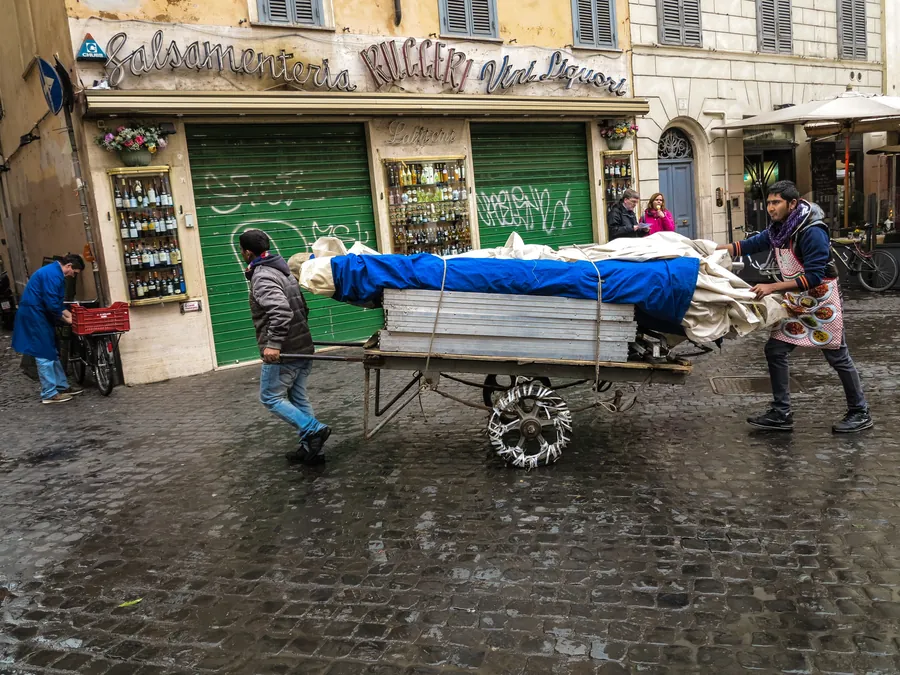
Then and now: the square that sells. The ground stayed, the goods changed.
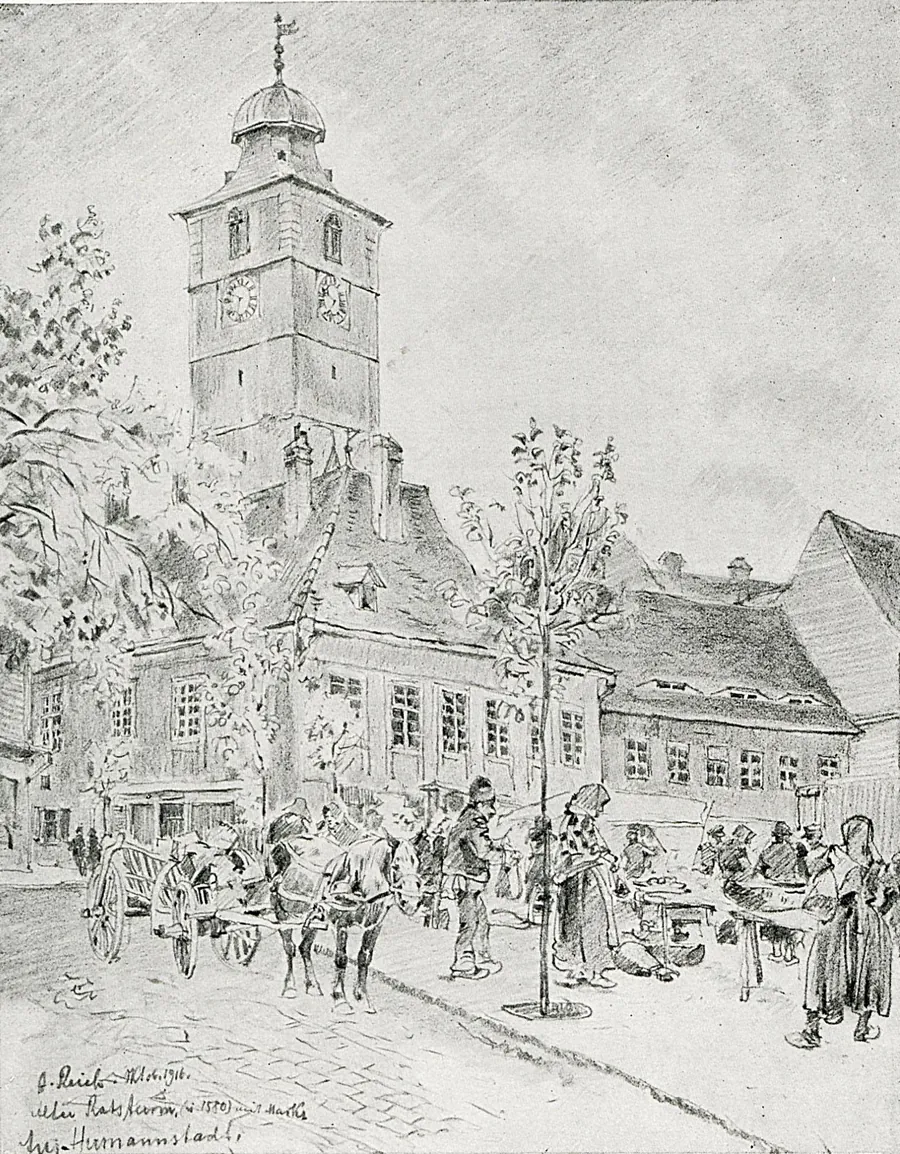
Anchor: Sibiu's Grand Square, drawn in 1916.
MDA2 also lists Hungarian piac and German Platz: related forms, not the Romanian source.


târg
The Slav world- târg ← Slavonic trŭgŭ (DEX '09; MDA2: Old Slavonic тръгъ)
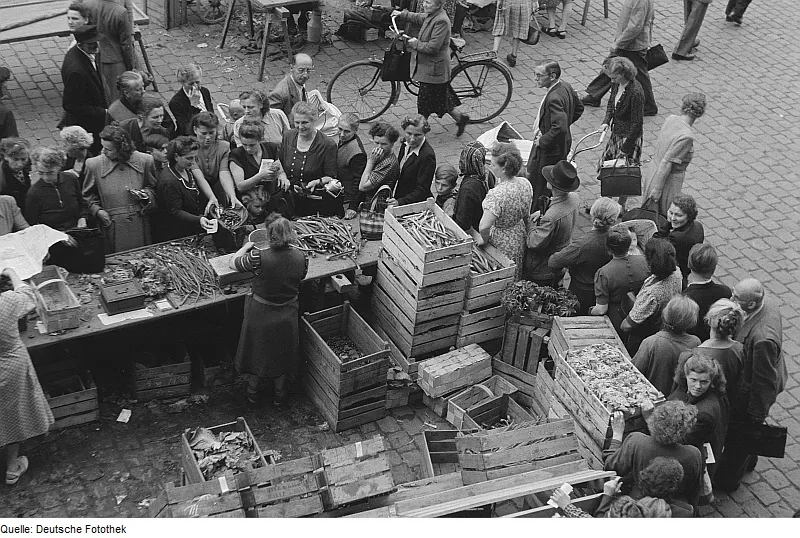
Three senses, one word: the trading place, the deal, the market town (DEX '09; DER adds «Oraș, orășel» and «Învoială, înțelegere»).
Anchor: the first administrative ordering of the fairs, Alexandru Lăpușneanu, 1561 — after DER.

iarmaroc
The German annual fair- iarmaroc ← Ukrainian jarmarok (DEX '09)
- jarmarok ← German Jahrmarkt (CADE, Scriban, DER)
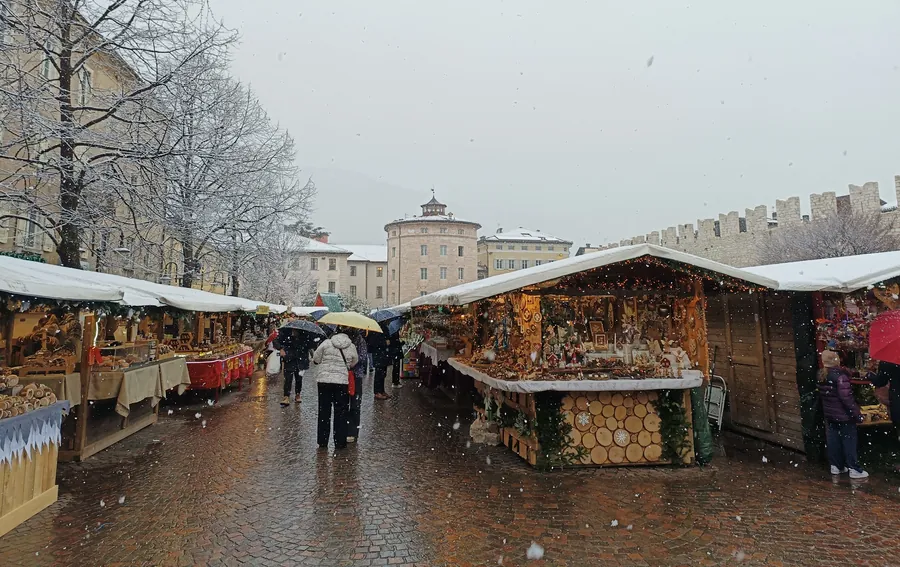
Jahr (year) + Markt (market): the annual fair. “A fair held on fixed dates” (DEX '09: «Târg ținut la date fixe; bâlci.»).
Place anchor: Moldavia (DER: «În Mold.»; CADE: «Mold. Bucov.»).

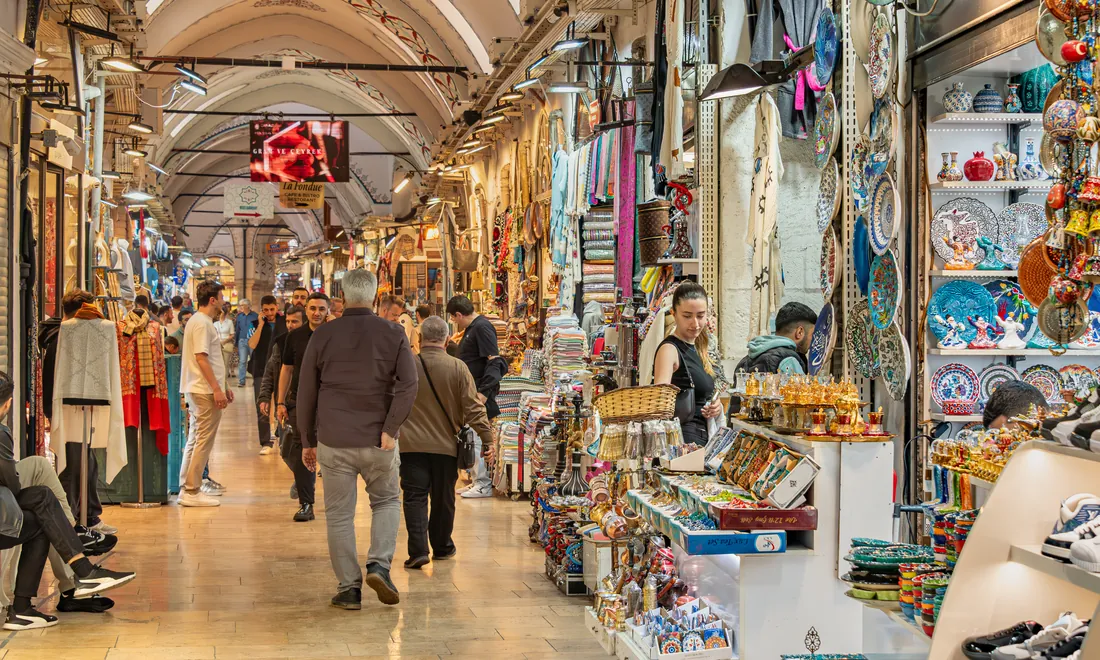
bazar
Persia, through Porte and Paris- First road: bazar ← French bazar ← Persian bazar (DER; CADE; DN)
- Second road: straight from Turkish pazar (DER); the old variant pazar
“An oriental-style commercial complex, a row of shops and stalls” (MDA2); by extension: market, fair.
Anchor: the old variant pazar — the word came in through two doors.

The latecomers
Obor, talcioc and mezat
Three words that arrived after the four: the fence, the second-hand goods, the calling. Each shows its limit beside the claim.
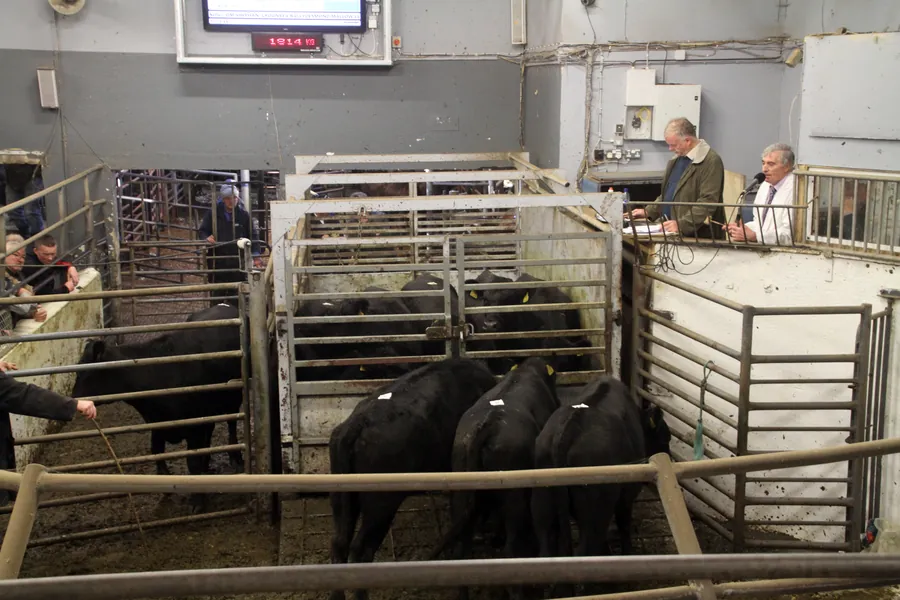
obor
The latecomers- obor ← Bulgarian and Serbian obor (DEX '09) ← Slavonic obora (DER)
“1. A fenced cattle pen. – 2. A cattle fair.” (DER: «Țarc de vite … Tîrg de vite.»)
Anchor: Bucharest's Obor stands on the Târgul Moșilor ground.
The other obor — the fishing weir, from Russian obora — is another word and stays out.

talcioc
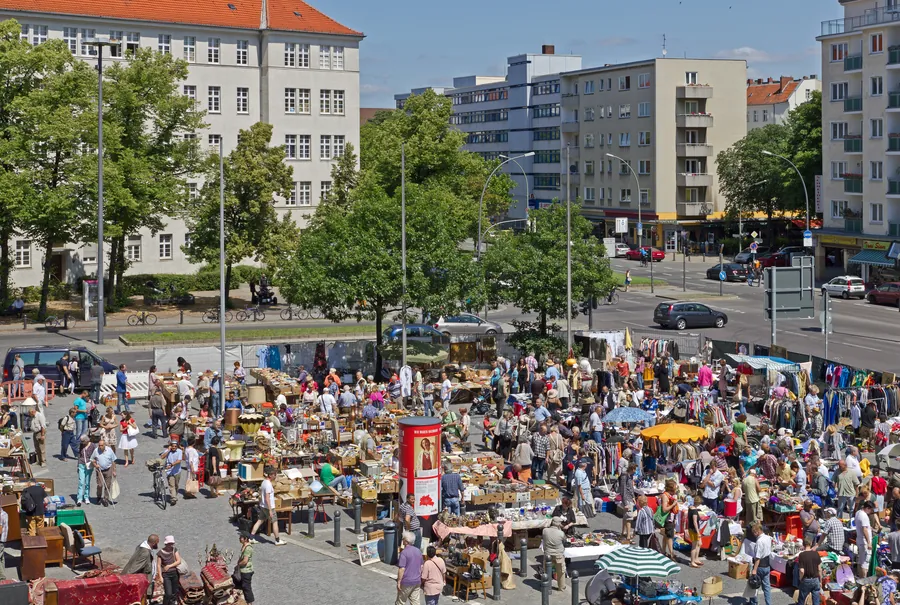
The latecomers- talcioc ← Russian tolciok (DEX '09)
“Flea market.” (DEX '09) Recorded in Călinescu — the newest of the seven words, by the records.
Anchor: the Călinescu record, S. 42 (MDA2).
The dictionary gives no more: no breakdown, no translation of Russian tolciok.

mezat
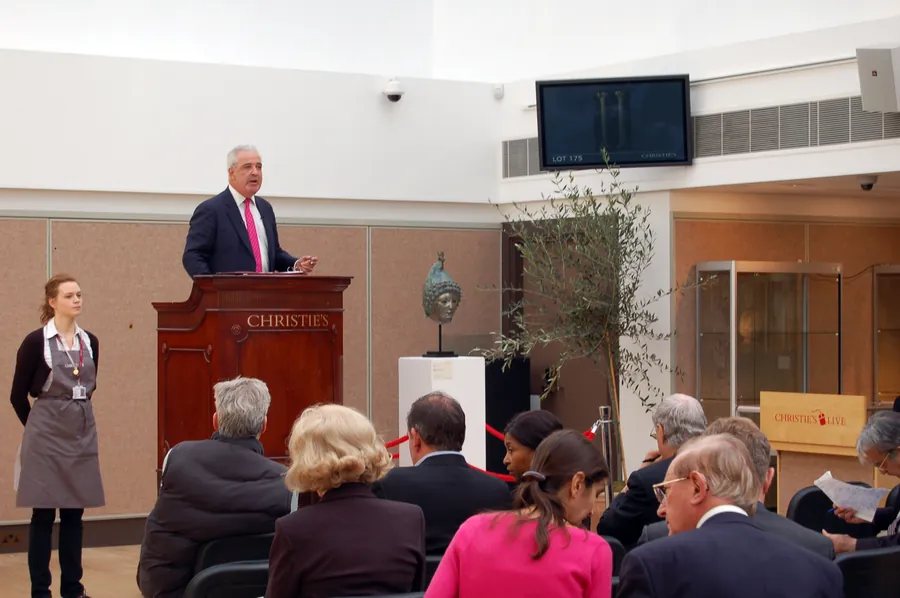
The latecomers- mezat ← Turkish mezat (DEX '09; MDA2) ← Arabic mezad (after Scriban)
“A public sale (of a debtor's goods); auction.” (DEX '09) The phrase: «A scoate la mezat» — to put up for auction.
Anchor: the IST. Ț. R. 127 record (MDA2).
Sultan-mezat: “a special auction held in the country's divan” (DEX '09).

From charter to market days
Three dates
Three dated stops: the autonomy around Sibiu, the old toll at Câmpulung, the market days at Obor. Each says what is not proven too.
Sibiu 1224
Andrew II of Hungary grants the Saxons around Sibiu provisional autonomy: the Diploma Andreanum.
CAVEAT The charter is a frame, not a fair right: no fair clause in it is verified.
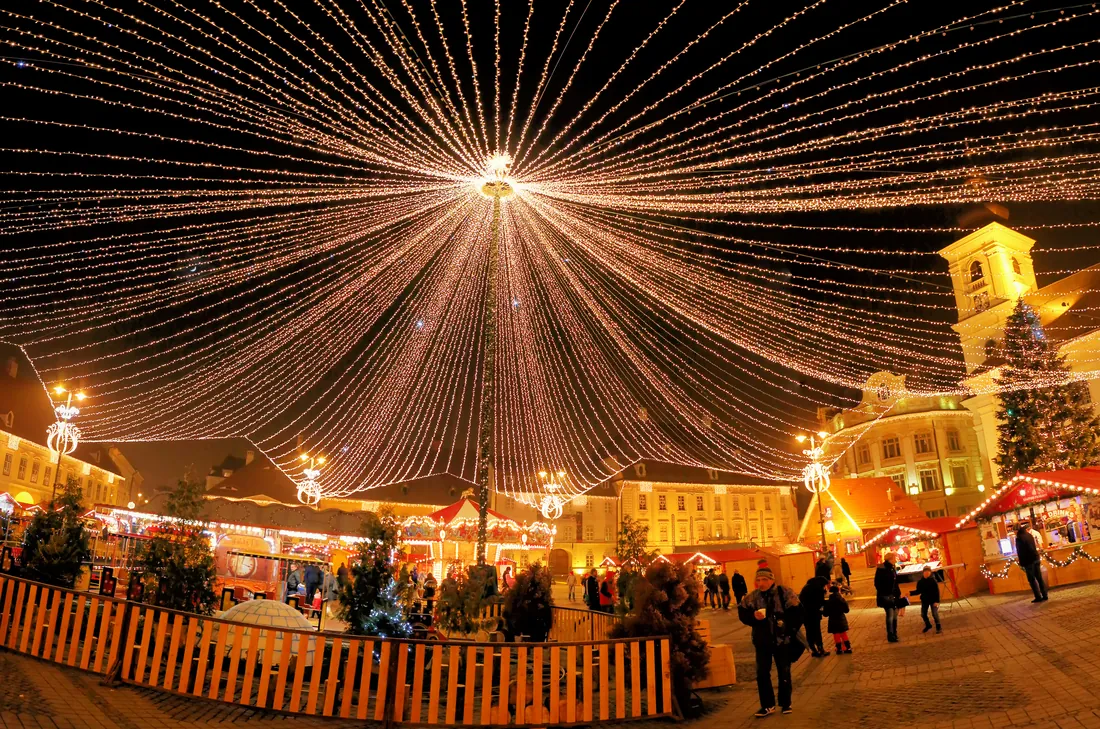
Sibiu's Grand Square, towards the Catholic church. Photo: Neighbor's goat, Wikimedia Commons, CC BY-SA 4.0 The Câmpulung toll January 1368
Vladislav I (Vlaicu) grants the Brașov merchants a commercial privilege naming the “old toll” at Câmpulung.
CAVEAT After a popularizing article, with the month, without an exact day: the day stays unverified.
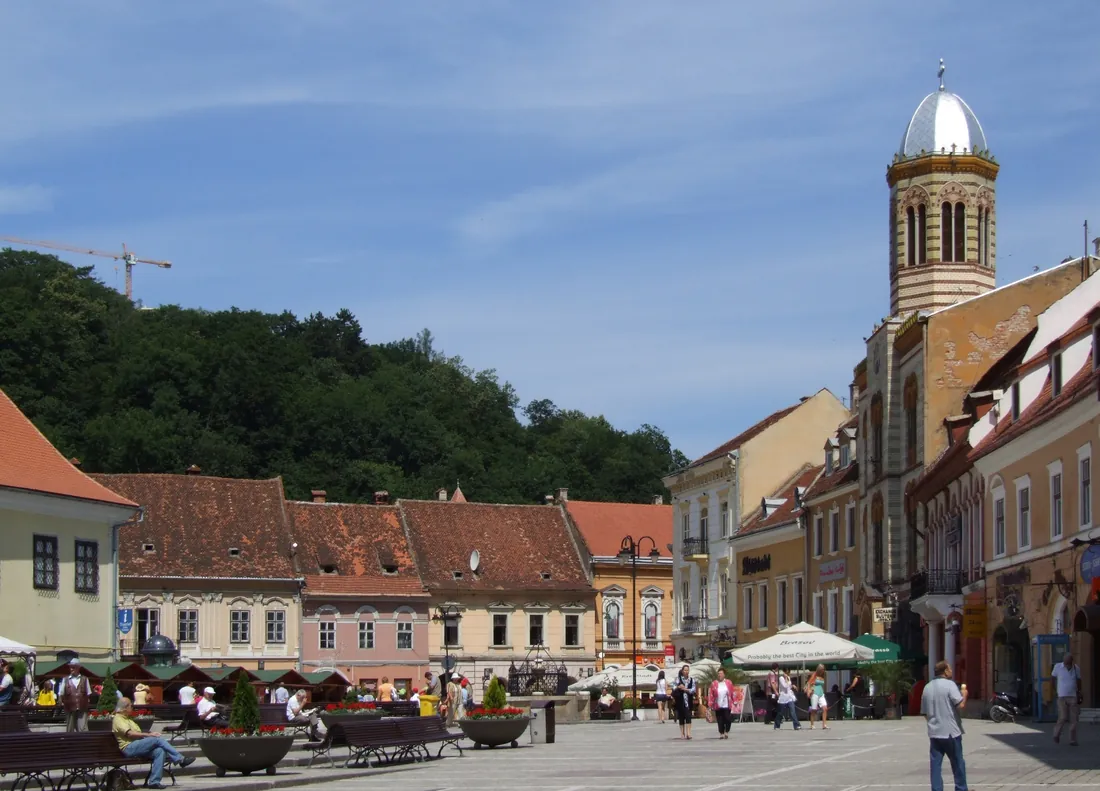
Council Square, Brașov. Photo: Pudelek (Marcin Szala), Wikimedia Commons, CC BY-SA 3.0 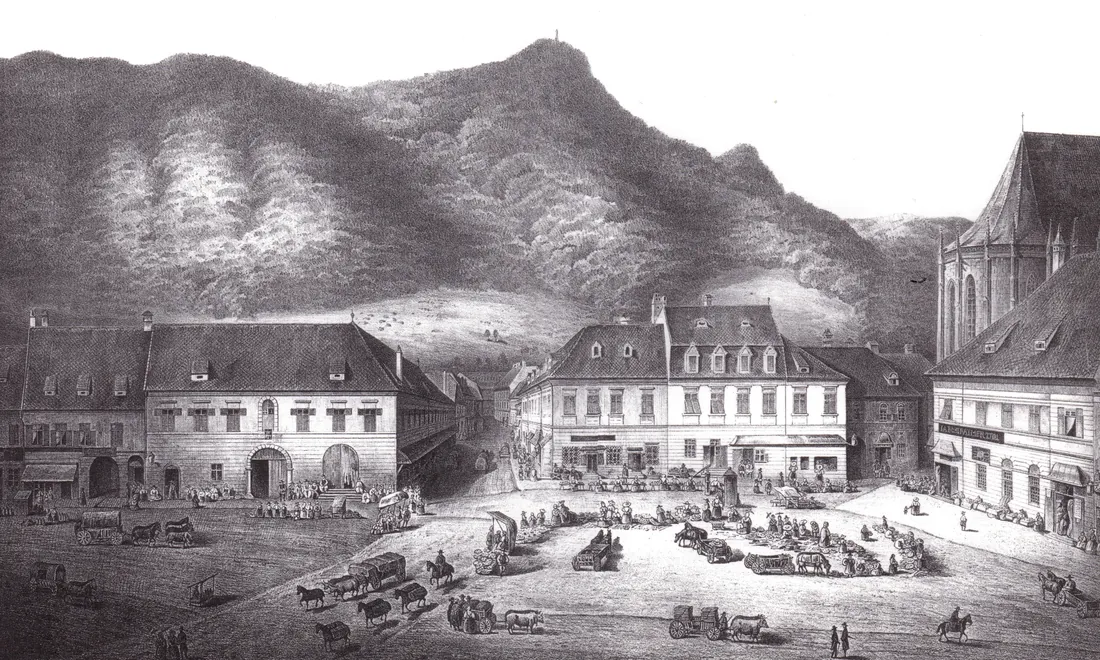
Brașov's market in 1848, a period drawing. Photo: Eduard Hüllverding, Wikimedia Commons, public domain Obor, market days Tuesdays and Fridays
Obor stands on the «Târgul Moșilor» ground, a fair famous throughout Wallachia, held twice a week.
CAVEAT The days come from a 1934 Bucharest guide, quoted in volume XIX of the Bucharest City Museum: “the Obor cattle fair, Câmpul Moșilor (for cattle and fodder, held on Tuesdays and Fridays)”.
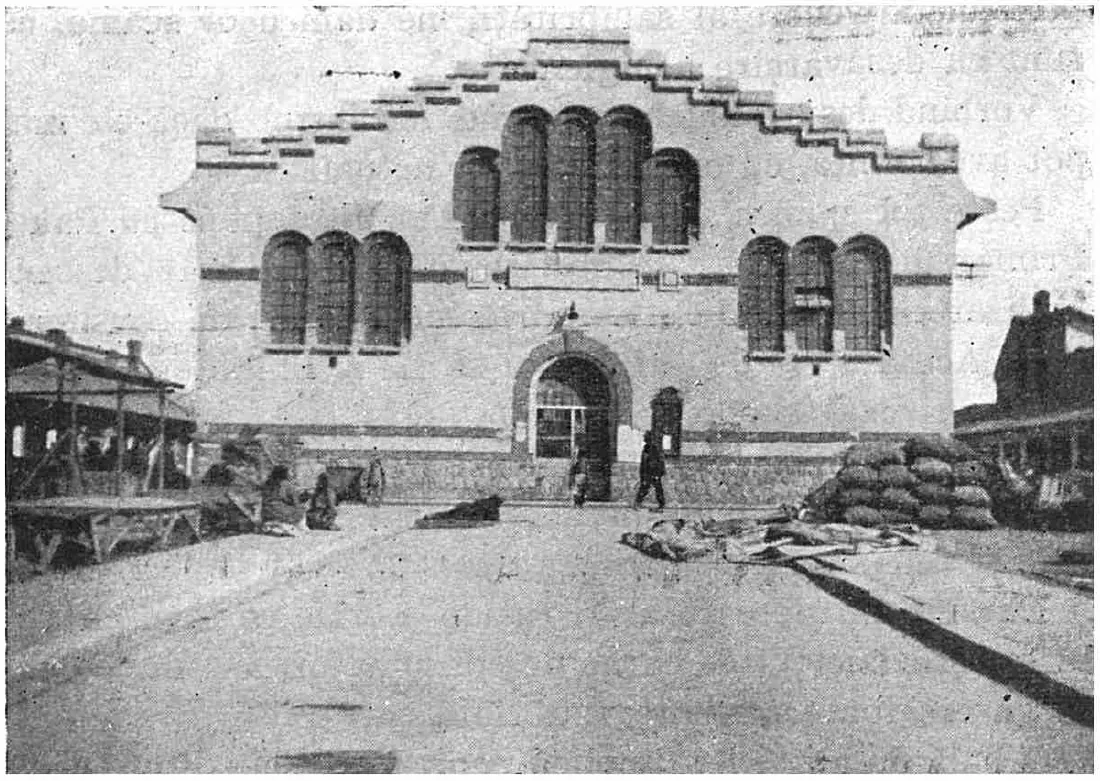
Obor Hall in 1910. Photo: Unknown author, Wikimedia Commons, public domain


The road, in short
Sibiu, 1224
the autonomy
Brașov – Câmpulung, 1368
the old toll
Obor
the market days
Three places, three dates, one trade.
The coins on the stall
What was spent in the market is another story, told in full by the Croatian ban page: the banovac, then Vlaicu's ban, then the 40 parale.
The coins, at the Croatian ban →
Neighbours
What the page leaves to others, knowingly:
- The Croatian ban the coins: banovac, ban, parale
- The transition bazaar the 1990s bazaar
- The broken bench the bench
- The 1867 leu the leu
The game
Which empire are you buying from?
Seven words, five stalls. Pick a word, then the stall of the empire that brought it. Every answer comes with the dictionary line.
Keys 1–7 pick the word; a picked word can also be dragged onto a stall.
Score: 0 of 7
Play once: the best score stays here.
Sources
Dictionaries first, then the charters and market days, then the neighbours. Every risky claim points at its source.
Dictionaries
- piață: DEX '09, DER, MDA2
- târg: DEX '09, DER, MDA2
- iarmaroc: DEX '09, CADE, DER
- bazar: DEX '09, DER, CADE, DN
- obor: DEX '09, DER
- talcioc: DEX '09, MDA2
- mezat: DEX '09, MDA2, Scriban
Charters and market days
- Diploma Andreanum: the 1224 autonomy (EN-wiki)
- Obor: Târgul Moșilor, twice a week (EN-wiki)
- Vlaicu 1368 and the Câmpulung toll (PDF, with a caveat)
- The Obor fair, Tuesdays and Fridays: BMIM XIX, p. 262 (PDF)
Neighbours
- The Croatian ban: the coins
- The transition bazaar: the 1990s bazaar
- The broken bench: the bench
- The 1867 leu: the leu
Type: Fraunces, Newsreader and Atkinson Hyperlegible, under the SIL Open Font Licence.