The Bible across languages
Moses’ horns, the camel and the needle, the wall of water: what the Hebrew, Greek, Latin and the 1688 Bucharest Bible say
Nine verses you know from sermons, paintings or lists of “translation errors”, followed word by word down to the Bucharest Bible of 1688, the first complete Bible in Romanian. Some images were born in a translation. Others were in the text from the start, and sometimes a detail nobody watched is what changed.
Each case sets the same verse side by side in several languages and editions. The followed word is highlighted in every row, and the line on the left says what happened to it compared with the first row. On the 1688 page, a frame marks where it appears. The ancient texts are quoted from named editions; the explanations under them are this page’s working translations.
- starting text the verse’s first row, which the others are compared with
- same meaning the word has the same meaning
- different word the translator used a word with another meaning
- another possible sense the translator chose another sense the starting word can have
- different reading the manuscripts do not have the same letters here
- another interpretation the words are the same, the reading differs
- image added the image comes from artists or readers, not from the text
- ambiguous form the form fits more than one reading
Case 1 of 9 · Exodus 34:29
Why does Moses have horns?#
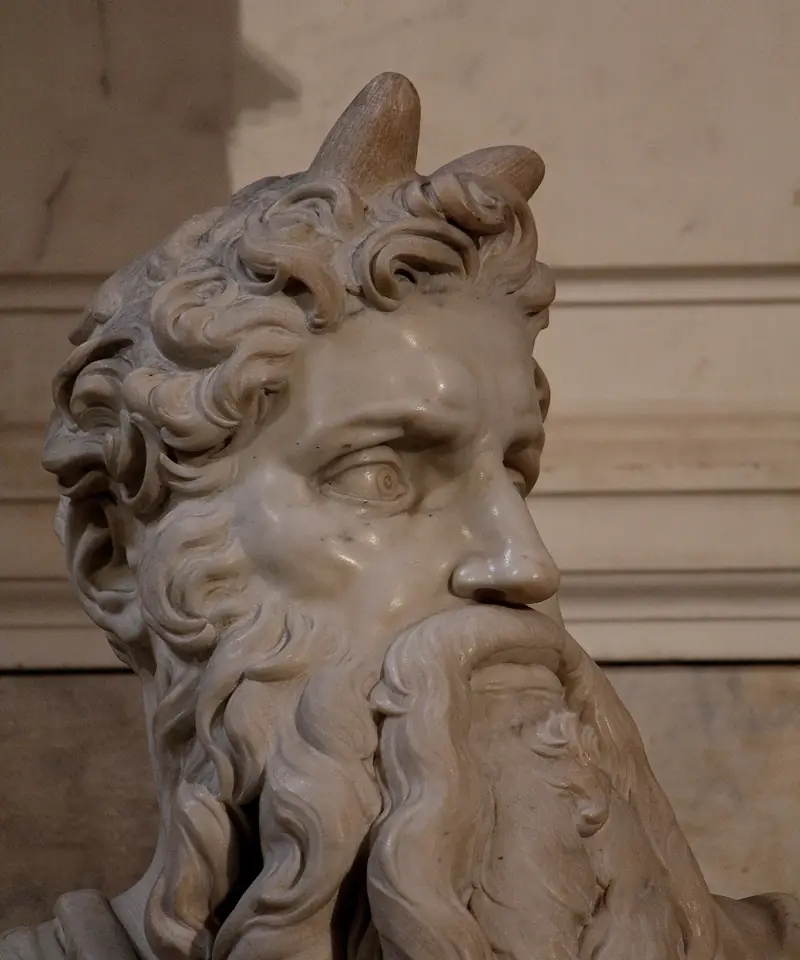
Moses comes down from Sinai with the tablets and does not know that his face has changed after speaking with God. What changed depends on the language you read the verse in. The rows below set the Hebrew text beside the ancient translations, Michelangelo’s statue and the Bucharest Bible of 1688.
- starting text
Hebrew Masoretic text, Leningrad Codex (1008–1009) · WLC/OSHB edition
וַיְהִ֗י בְּרֶ֤דֶת מֹשֶׁה֙ מֵהַ֣ר סִינַ֔י וּשְׁנֵ֨י לֻחֹ֤ת הָֽעֵדֻת֙ בְּיַד־מֹשֶׁ֔ה בְּרִדְתּ֖וֹ מִן־הָהָ֑ר וּמֹשֶׁ֣ה לֹֽא־יָדַ֗ע כִּ֥י קָרַ֛ן ע֥וֹר פָּנָ֖יו בְּדַבְּר֥וֹ אִתּֽוֹ׃
qāran: the verb has the same consonants as qeren, “horn”, which in poetry can also mean “ray”. Its subject here is “the skin of his face”.
- different word
Greek · Septuagint translated in the 3rd–2nd centuries BC · Brenton edition (1851)
Ὡς δὲ κατέβαινε Μωυσῆς ἐκ τοῦ ὄρους, καὶ αἱ δύο πλάκες ἐπὶ τῶν χειρῶν Μωυσῆ· καταβαίνοντος δὲ αὐτοῦ ἐκ τοῦ ὄρους, Μωυσῆς οὐκ ᾔδει ὅτι δεδόξασται ἡ ὄψις τοῦ χρώματος τοῦ προσώπου αὐτοῦ ἐν τῷ λαλεῖν αὐτὸν αὐτῷ.
dedoxastai: “has been glorified”. Neither horns nor rays.
- another possible sense
Greek · Aquila 2nd-century AD translation · as reported by the NET Bible note
Aquila survives only in fragments. According to the NET Bible note, his version, like the Vulgate, conveys the idea of horns, “the primary meaning of the word”.
- another possible sense
Latin · Vulgate Jerome, around AD 400 · Clementine edition
Cumque descenderet Moyses de monte Sinai, tenebat duas tabulas testimonii, et ignorabat quod cornuta esset facies sua ex consortio sermonis Domini.
cornuta esset facies sua: “his face was horned”.
- image added
Marble · Michelangelo Moses, carved around 1513–1515 · San Pietro in Vincoli, Rome
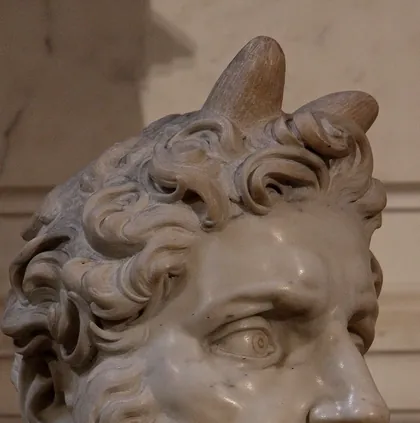
Two short horns above the brow. The Vulgate was then the Bible of the Western Church; the photograph shows the statue, not the sculptor’s intention.
- different word
Romanian · Bucharest Bible 1688 · p. 64, col. II · Austrian National Library copy
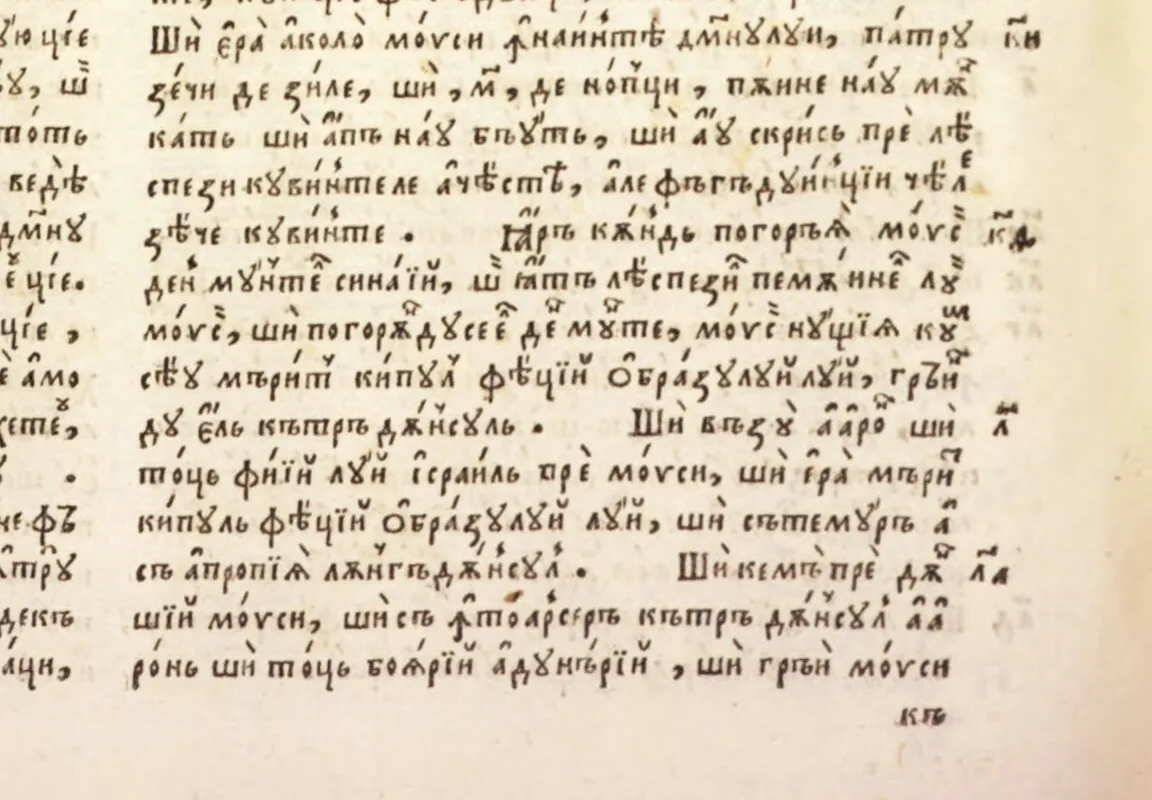
Bible, Bucharest, 1688, p. 64, col. II. Austrian National Library, 2.P.4 ALT PRUNK. Detail. Latin-script reading: Moisi nu știia cum se-au mărit chipul feții obrazului lui
“Se-au mărit” here means “was glorified”, as in Romanian preamărit. At this verse the Romanian word lines up with the Greek dedoxastai.
- another possible sense
English · Douay-Rheims translated from the Latin · 1899 edition
And when Moses came down from the mount Sinai, he held the two tables of the testimony, and he knew not that his face was horned from the conversation of the Lord.
The Catholic English translation made from the Vulgate keeps the horns: “his face was horned”.
- another possible sense
English · World English Bible modern translation from Hebrew and Greek
When Moses came down from Mount Sinai with the two tablets of the covenant in Moses’ hand, when he came down from the mountain, Moses didn’t know that the skin of his face shone by reason of his speaking with him.
A modern translation from the Hebrew chooses the ray: “the skin of his face shone”.
The horns do not come from a misread letter. The Hebrew uses a rare verb, related to a word that means both horn and ray. The Septuagint translated the idea, glory. Aquila and Jerome kept the root’s basic sense. Horns appear in Western art centuries before Michelangelo: among the earliest known examples are the illustrations of the Old English Hexateuch, a manuscript from before about 1050 now in the British Library.
In the Bucharest Bible, Moses has no horns. The Romanian translators wrote “se-au mărit”, and at this verse their wording matches the Greek.
Nine verses at a glance: where the image changes#
Each cell shows the followed word and what happens to it compared with the starting text. The grey cells matter as much as the coloured ones: they show where translation changed nothing.
| Verse | Hebrew | Greek | Latin | Romanian, 1688 |
|---|---|---|---|---|
| MosesExodus 34:29 | קָרַ֛ןstarting text | δεδόξασταιdifferent word | cornutaanother possible sense | se-au măritdifferent word |
| CamelMatthew 19:24 | written in Greek | κάμηλονstarting text | camelumsame meaning | cămilasame meaning |
| Luke 2:14Luke 2:14 | written in Greek | εὐδοκίαςstarting text | hominibus bonæ voluntatissame meaning | bună voiredifferent reading |
| The eyeMatthew 6:22–23 | written in Greek | ἁπλοῦςstarting text | simplexsame meaning | curatsame meaning |
| The seaExodus 13:18 | יַם־ס֑וּףstarting text | ἐρυθρὰν θάλασσανdifferent word | mare Rubrumdifferent word | marea Roșiedifferent word |
| Wall of waterExodus 14:21–22 | חֹמָ֔הstarting text | τεῖχοςsame meaning | murussame meaning | păretesame meaning |
| Isaiah 7:14Isaiah 7:14 | הָעַלְמָ֗הstarting text | ἡ παρθένοςdifferent word | virgodifferent word | fecioarădifferent word |
| The fruitGenesis 3:6 | מִפִּרְי֖וֹstarting text | καρποῦsame meaning | fructusame meaning | roadasame meaning |
| JuniaRomans 16:7 | written in Greek | Ἰουνίανstarting text | Juniamambiguous form | Iunieisame meaning |
Case 2 of 9 · Matthew 19:24
The camel and the needle’s eye: camel or rope?#
“It is easier for a camel to go through the eye of a needle than for a rich man to enter the kingdom of God.” An explanation has circulated for a long time: the Greeks supposedly confused kamēlos, “camel”, with kamilos, “rope”. The words really do differ by a single letter. The rows below show which texts carry each one.
- starting textstarting text
Greek · critical edition Matthew 19:24 · SBL Greek New Testament (2010)
πάλιν δὲ λέγω ὑμῖν, εὐκοπώτερόν ἐστιν κάμηλον διὰ τρυπήματος ῥαφίδος εἰσελθεῖν ἢ πλούσιον εἰς τὴν βασιλείαν τοῦ θεοῦ.
kamēlon: camel.
trypēmatos rhaphidos: the hole of a sewing needle.
- same meaningdifferent word
Greek · critical edition Mark 10:25 · SBL Greek New Testament (2010)
εὐκοπώτερόν ἐστιν κάμηλον διὰ τῆς τρυμαλιᾶς τῆς ῥαφίδος διελθεῖν ἢ πλούσιον εἰς τὴν βασιλείαν τοῦ θεοῦ εἰσελθεῖν.
The same camel.
Mark uses another word for the hole, trymalia.
- same meaningdifferent word
Greek · critical edition Luke 18:25 · SBL Greek New Testament (2010)
εὐκοπώτερον γάρ ἐστιν κάμηλον διὰ τρήματος βελόνης εἰσελθεῖν ἢ πλούσιον εἰς τὴν βασιλείαν τοῦ θεοῦ εἰσελθεῖν.
The same camel.
Luke uses other words for both hole and needle: trēmatos belonēs.
- same meaningsame meaning
Greek · Textus Receptus Matthew 19:24 · the Greek text printed from the 16th century
Πάλιν δὲ λέγω ὑμῖν, εὐκοπώτερόν ἐστι κάμηλον διὰ τρυπήματος ῥαφίδος διελθεῖν, ἢ πλούσιον εἰς τὴν βασιλείαν τοῦ Θεοῦ εἰσελθεῖν.
The camel again in the Renaissance printed text.
The same words as the critical edition.
- different reading
Greek · a few witnesses, mostly late minuscules 579 and 1424, the Armenian version, Cyril of Alexandria · as listed by the NET Bible note
κάμιλον, kamilon: “rope”. One letter differs, and by then Greek pronounced ē and i alike. The NET note says the variant came either from a misreading or from a wish to soften Jesus’ words.
- same meaningsame meaning
Latin · Vulgate Jerome, around AD 400 · Clementine edition
Et iterum dico vobis: Facilius est camelum per foramen acus transire, quam divitem intrare in regnum cælorum.
camelum: camel.
foramen acus: the needle’s hole.
- same meaningsame meaning
Romanian · Bucharest Bible 1688 · p. 764, col. II · Austrian National Library copy
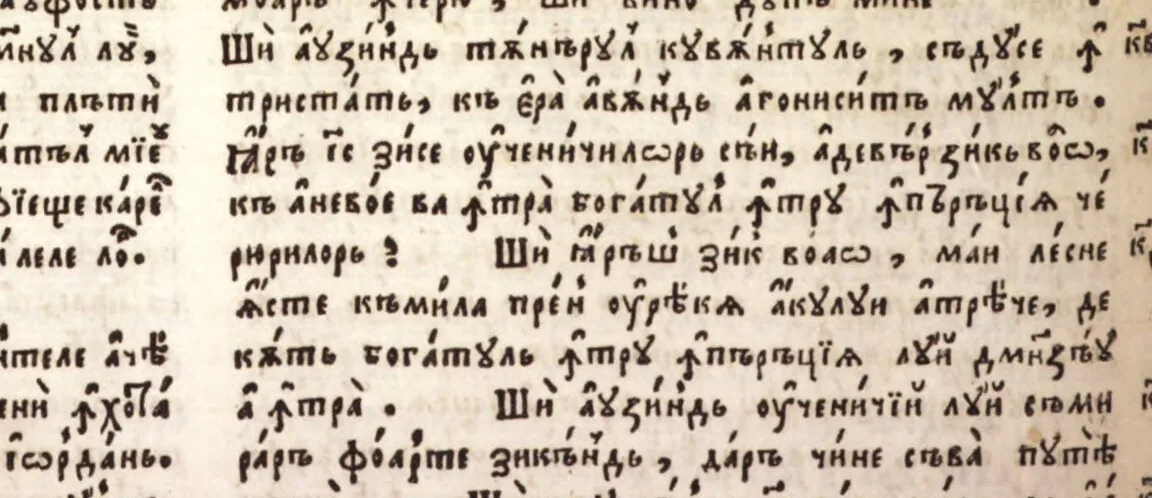
Bible, Bucharest, 1688, p. 764, col. II. Austrian National Library, 2.P.4 ALT PRUNK. Detail. Latin-script reading: Mai lesne iaste cămila pren ureachea acului a treace
The camel stays a camel.
“Ureachea acului”: the needle’s ear, the Romanian phrase still used today.
The camel appears in all three gospels, in the critical text and in the Renaissance printed text, in Latin and in the Bucharest Bible. The rope appears in a few Greek witnesses, most of them late, in the Armenian version and in Cyril of Alexandria, in the 5th century. The gospels use different words for the needle and its hole, but none of them changes the camel.
Peter Gainsford, who traced the attestations of kamilos, finds no solid independent evidence that it meant “rope” before this debate began. The story of a Jerusalem gate called “the Needle’s Eye” has even less support: the NET note says there is no evidence such a gate ever existed.
Case 3 of 9 · Luke 2:14
“Good will toward men”: what one letter changes#
The angels sing to the shepherds of Bethlehem. Many English readers know a three-part blessing: glory to God, peace on earth, good will toward men. In Greek, the difference between a blessing in three parts and one in two is a single letter, the sigma at the end of εὐδοκία.
- starting text
Greek · critical edition SBL Greek New Testament (2010)
Δόξα ἐν ὑψίστοις θεῷ καὶ ἐπὶ γῆς εἰρήνη ἐν ἀνθρώποις εὐδοκίας.
eudokias, with a final sigma: “among people of his good pleasure”, meaning people with whom God is pleased. According to the NET note this is the reading of Codex Sinaiticus as first written, Alexandrinus, Vaticanus as first written, Bezae and Washingtonianus.
- different reading
Greek · Textus Receptus the Greek text printed from the 16th century
Δόξα ἐν ὑψίστοις Θεῷ, καὶ ἐπὶ γῆς εἰρήνη· ἐν ἀνθρώποις εὐδοκία.
eudokia, without the sigma: a third wish, “good will among people”. According to the NET note most manuscripts read this way, including the correctors of Sinaiticus and Vaticanus and most Byzantine texts.
- same meaning
Latin · Vulgate Jerome, around AD 400 · Clementine edition
Gloria in altissimis Deo, et in terra pax hominibus bonæ voluntatis.
hominibus bonae voluntatis: “to men of good will”. The Latin has the construction with the sigma.
- same meaning
English · Douay-Rheims translated from the Latin · 1899 edition
Glory to God in the highest; and on earth peace to men of good will.
English translated from the Latin: “to men of good will”.
- different reading
Romanian · Bucharest Bible 1688 · p. 790, col. I · Austrian National Library copy
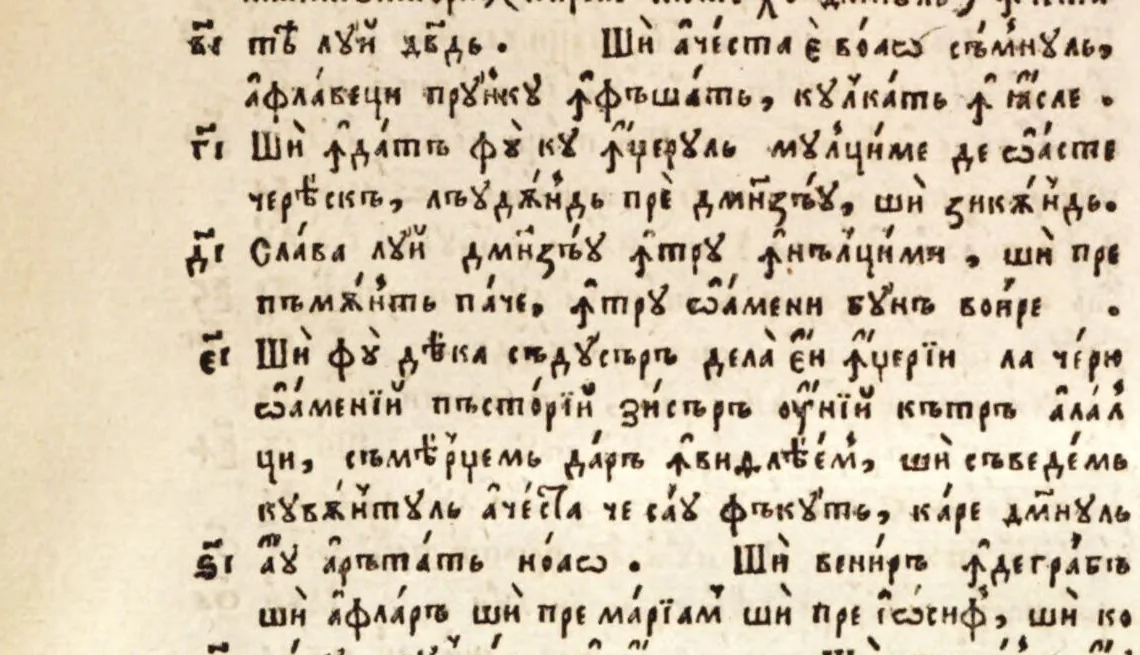
Bible, Bucharest, 1688, p. 790, col. I. Austrian National Library, 2.P.4 ALT PRUNK. Detail. Latin-script reading: și pre pământ pace, întru oameni bună voire
“Întru oameni bună voire”: three wishes, as in the text without the sigma.
- different reading
English · World English Bible modern translation from Hebrew and Greek
“Glory to God in the highest, on earth peace, good will toward men.”
A modern translation that also follows the text without the sigma: “good will toward men”.
This is not a mistranslation. The Greek manuscripts themselves disagree. With the sigma, the verse says peace comes on the people with whom God is pleased. Without it, the verse adds a third wish. The NET note judges the sigma reading better attested and more difficult, and the NET translation follows it, as does the critical edition used here.
Jerome’s Latin has the construction with the sigma. The Bucharest Bible has three wishes, like the text without it.
A test: what would you check first?#
So far you have seen three kinds of change: a word with two senses for Moses, a late reading for the camel, a manuscript letter in Luke. Here is a new verse, from the Sermon on the Mount. In short: “If your eye is evil, your whole body will be full of darkness.” What should be checked first?
A good check to make any time. Here, though, the manuscripts and translations all say “evil eye”, so the question is still open afterwards.
This is where the problem lies. The words do not change from one language to the next. The debate is about what the phrase meant to its hearers, between two sayings about money.
Tradition shows how the verse was read later. It does not say what the phrase meant when it was written.
Case 4 of 9 · Matthew 6:22–23
“If your eye is evil”: a sick eye or a stingy person?#
- starting text
Greek · critical edition SBL Greek New Testament (2010)
Ὁ λύχνος τοῦ σώματός ἐστιν ὁ ὀφθαλμός. ἐὰν οὖν ᾖ ὁ ὀφθαλμός σου ἁπλοῦς, ὅλον τὸ σῶμά σου φωτεινὸν ἔσται·
haplous: “single”, “whole”, “sound”. Related words can also mean generosity.
- same meaning
Greek · Textus Receptus the Greek text printed from the 16th century
Ὁ λύχνος τοῦ σώματός ἐστιν ὁ ὀφθαλμός· ἐὰν οὖν ὁ ὀφθαλμός σου ἁπλοῦς ᾖ, ὅλον τὸ σῶμά σου φωτεινὸν ἔσται·
The same word.
- same meaning
Latin · Vulgate Jerome, around AD 400 · Clementine edition
Lucerna corporis tui est oculus tuus. Si oculus tuus fuerit simplex, totum corpus tuum lucidum erit.
simplex: “single”.
- same meaning
Romanian · Bucharest Bible 1688 · p. 754, col. II · Austrian National Library copy
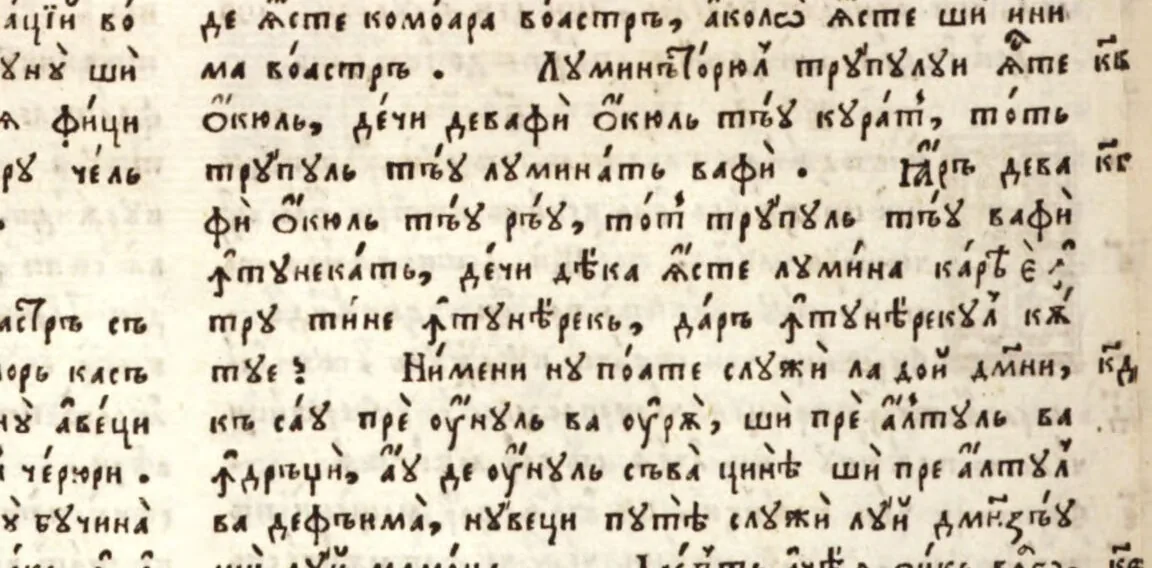
Bible, Bucharest, 1688, p. 754, col. II. Austrian National Library, 2.P.4 ALT PRUNK. Detail. Latin-script reading: deci de va fi ochiul tău curat
“Ochiul tău curat”: your eye clean.
- starting text
Greek · critical edition SBL Greek New Testament (2010)
ἐὰν δὲ ὁ ὀφθαλμός σου πονηρὸς ᾖ, ὅλον τὸ σῶμά σου σκοτεινὸν ἔσται. εἰ οὖν τὸ φῶς τὸ ἐν σοὶ σκότος ἐστίν, τὸ σκότος πόσον.
ponēros: “evil”. In Deuteronomy 15:9 and Matthew 20:15 the evil eye is the look of someone who does not want to give.
- same meaning
Greek · Textus Receptus the Greek text printed from the 16th century
ἐὰν δὲ ὁ ὀφθαλμός σου πονηρὸς ᾖ, ὅλον τὸ σῶμά σου σκοτεινὸν ἔσται. Εἰ οὖν τὸ φῶς τὸ ἐν σοὶ σκότος ἐστί, τὸ σκότος πόσον;
The same word.
- same meaning
Latin · Vulgate Jerome, around AD 400 · Clementine edition
Si autem oculus tuus fuerit nequam, totum corpus tuum tenebrosum erit. Si ergo lumen, quod in te est, tenebræ sunt: ipsæ tenebræ quantæ erunt?
nequam: “wicked”, “worthless”.
- same meaning
Romanian · Bucharest Bible 1688 · p. 754, col. II · Austrian National Library copy
Bible, Bucharest, 1688, p. 754, col. II. Austrian National Library, 2.P.4 ALT PRUNK. Detail. Latin-script reading: iară de va fi ochiul tău rău
“Ochiul tău rău”: your eye evil.
The manuscripts agree, and the translations say the same thing: evil eye, good eye. The question is what the phrase meant to those who heard it. The verses sit between the advice not to store up treasures on earth and the saying that no one can serve both God and money. The NET Bible note translates “sound”, as most scholars do, and presents as a minority reading the one in which the good eye means generosity.
Case 5 of 9 · Exodus 13:18
Red Sea or Sea of Reeds: does the name show where the crossing was?#
The Bucharest Bible, like the Greek and the Latin, says the Israelites left Egypt toward the Red Sea. In Hebrew the sea is yam sûf, and elsewhere sûf means reeds. Hence the idea that translators moved the crossing from a reedy marsh to a deep sea.
- starting textstarting text
Hebrew Masoretic text, Leningrad Codex (1008–1009) · WLC/OSHB edition
וַיַּסֵּ֨ב אֱלֹהִ֧ים ׀ אֶת־הָעָ֛ם דֶּ֥רֶךְ הַמִּדְבָּ֖ר יַם־ס֑וּף וַחֲמֻשִׁ֛ים עָל֥וּ בְנֵי־יִשְׂרָאֵ֖ל מֵאֶ֥רֶץ מִצְרָֽיִם׃
yam sûf: yam means “sea”, and sûf elsewhere names the reeds or rushes on the Nile bank.
ḥămušîm: “armed” or “in battle array”. It shares its root with ḥāmēš, “five”.
- different worddifferent word
Greek · Septuagint translated in the 3rd–2nd centuries BC · Brenton edition (1851)
Καὶ ἐκύκλωσεν ὁ Θεὸς τὸν λαὸν ὁδὸν τὴν εἰς τὴν ἔρημον, εἰς τὴν ἐρυθρὰν θάλασσαν· πέμπτῃ δὲ γενεᾷ ἀνέβησαν οἱ υἱοὶ Ἰσραὴλ ἐκ γῆς Αἰγύπτου.
erythra thalassa: “the red sea”, the Greek name for today’s Red Sea and, more widely, the waters as far as the Indian Ocean.
“In the fifth generation”: the translator probably read the number five in these consonants.
- different wordsame meaning
Latin · Vulgate Jerome, around AD 400 · Clementine edition
Sed circumduxit per viam deserti, quæ est juxta mare Rubrum: et armati ascenderunt filii Israël de terra Ægypti.
mare Rubrum: the Red Sea, as in Greek.
armati: “armed”, as in the Hebrew.
- different worddifferent word
Romanian · Bucharest Bible 1688 · p. 49, col. I · Austrian National Library copy
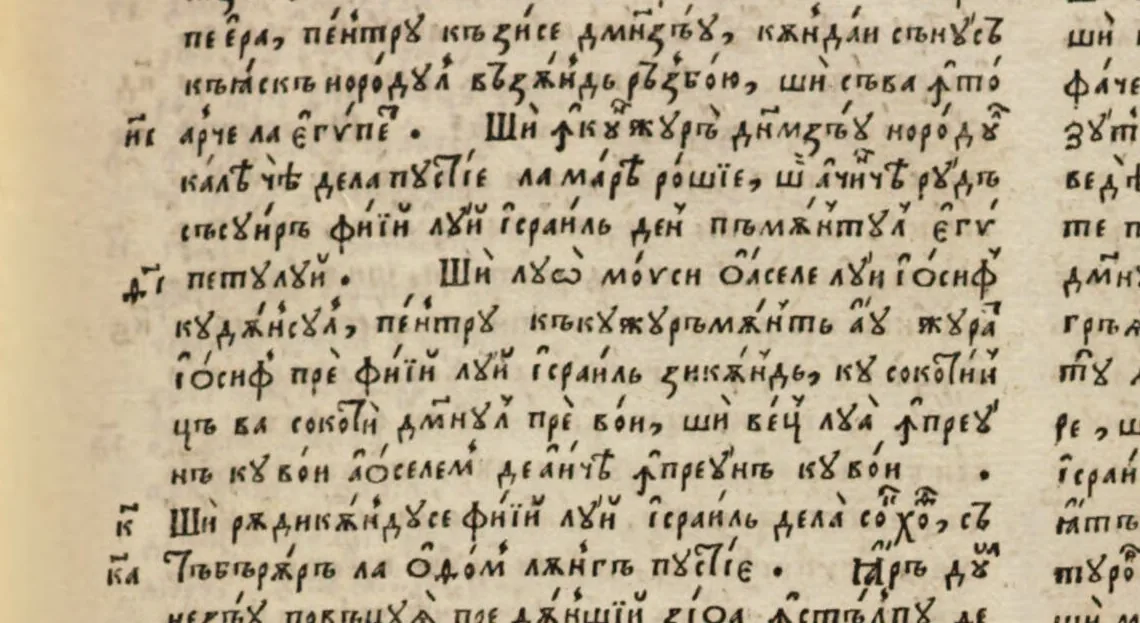
Bible, Bucharest, 1688, p. 49, col. I. Austrian National Library, 2.P.4 ALT PRUNK. Detail. Latin-script reading: la marea Roșie. Și a cincea rudă să suiră fiii lui Israil
“La marea Roșie”, the Red Sea, as in Greek and Latin.
“A cincea rudă”, the fifth generation: here the Romanian verse goes with the Greek, not the Latin.
- starting text
Hebrew Masoretic text, Leningrad Codex (1008–1009) · WLC/OSHB edition
וָאֳנִ֡י עָשָׂה֩ הַמֶּ֨לֶךְ שְׁלֹמֹ֜ה בְּעֶצְיֽוֹן־גֶּ֨בֶר אֲשֶׁ֧ר אֶת־אֵל֛וֹת עַל־שְׂפַ֥ת יַם־ס֖וּף בְּאֶ֥רֶץ אֱדֽוֹם׃
The same yam sûf, this time beside Eloth, where King Solomon builds his ships. Eloth is linked with Eilat, on the Gulf of Aqaba, on the far side of Sinai from Egypt.
- different word
Greek · Septuagint translated in the 3rd–2nd centuries BC · Brenton edition (1851)
Καὶ ναῦν ὑπὲρ οὗ ἐποίησεν ὁ βασιλεὺς Σαλωμὼν ἐν Γασίων Γαβὲρ τὴν οὖσαν ἐχομένην Αἰλὰθ ἐπὶ τοῦ χείλους τῆς ἐσχάτης θαλάσσης ἐν γῇ Ἐδώμ.
Here the Greek translator writes “the farthest sea”, eschatē thalassa.
- different word
Latin · Vulgate Jerome, around AD 400 · Clementine edition
Classem quoque fecit rex Salomon in Asiongaber, quæ est juxta Ailath in littore maris Rubri, in terra Idumææ.
The Latin returns to the Red Sea.
The gloss “sea of reeds” has support in the vocabulary. The second verse shows where that support stops: in Kings the same name, yam sûf, names the water beside Eloth on the Gulf of Aqaba, where Solomon keeps his fleet. A name that also covers the Gulf of Aqaba cannot point to one marsh in the Nile delta.
The verse’s second thread shows how the Greek translator worked. The Hebrew says the Israelites went out “armed”. The Greek, and after it the Bucharest Bible, says they went out “in the fifth generation”. The Hebrew word shares its root with the number five, and the translator probably read the number in it.
Case 6 of 9 · Exodus 14:21–22
The wall of water in Exodus: who put it in the story?#
The waters stand like two walls and the people cross on dry ground between them. The image looks made for film. Did it enter the story through a translation that took a metaphor literally? The first thread follows the wall. The second follows the wind that parted the waters one verse earlier.
- starting text
Hebrew Masoretic text, Leningrad Codex (1008–1009) · WLC/OSHB edition
וַיָּבֹ֧אוּ בְנֵֽי־יִשְׂרָאֵ֛ל בְּת֥וֹךְ הַיָּ֖ם בַּיַּבָּשָׁ֑ה וְהַמַּ֤יִם לָהֶם֙ חֹמָ֔ה מִֽימִינָ֖ם וּמִשְּׂמֹאלָֽם׃
ḥōmâ: wall, the word used for city walls. The water was a wall to them on the right and on the left.
- same meaning
Greek · Septuagint translated in the 3rd–2nd centuries BC · Brenton edition (1851)
Καὶ εἰσῆλθον οἱ υἱοὶ Ἰσραὴλ εἰς μέσον τῆς θαλάσσης κατὰ τὸ ξηρόν· καὶ τὸ ὕδωρ αὐτῆς τεῖχος ἐκ δεξιῶν, καὶ τεῖχος ἐξ εὐωνύμων.
teichos: wall, twice.
- same meaning
Latin · Vulgate Jerome, around AD 400 · Clementine edition
Et ingressi sunt filii Israël per medium sicci maris: erat enim aqua quasi murus a dextra eorum et læva.
quasi murus: “like a wall”.
- same meaning
Romanian · Bucharest Bible 1688 · p. 49, col. II · Austrian National Library copy
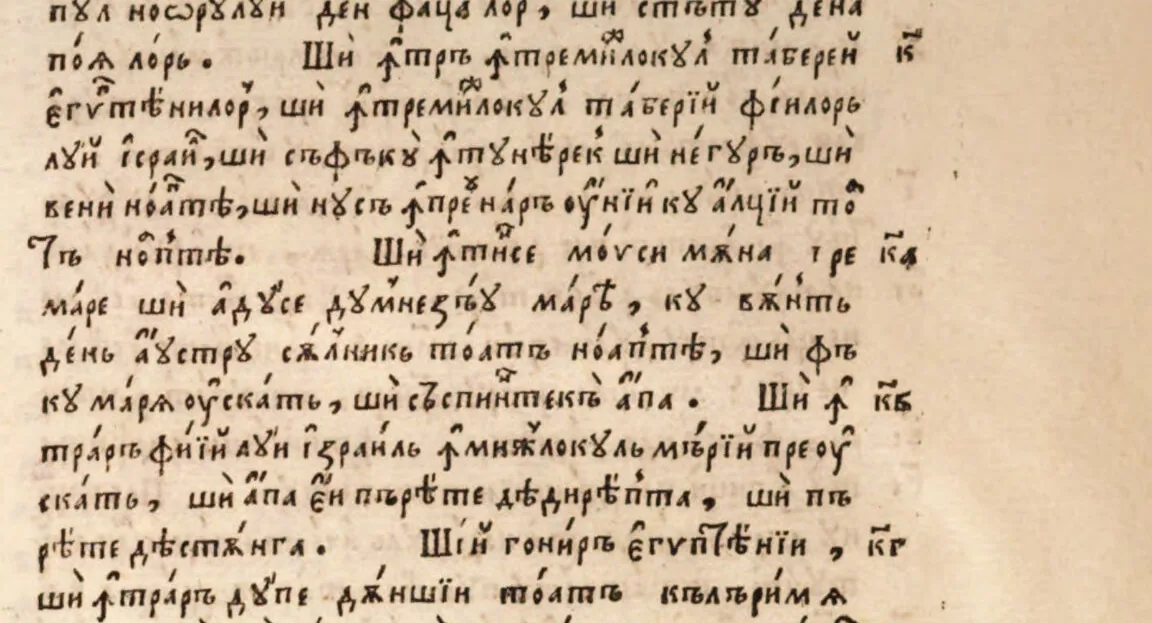
Bible, Bucharest, 1688, p. 49, col. II. Austrian National Library, 2.P.4 ALT PRUNK. Detail. Latin-script reading: și apa ei, părete de-a direapta și părete de-a stânga
“Părete de-a direapta și părete de-a stânga”: a wall on the right and a wall on the left.
- starting text
Hebrew Masoretic text, Leningrad Codex (1008–1009) · WLC/OSHB edition
וַיֵּ֨ט מֹשֶׁ֣ה אֶת־יָדוֹ֮ עַל־הַיָּם֒ וַיּ֣וֹלֶךְ יְהוָ֣ה ׀ אֶת־הַ֠יָּם בְּר֨וּחַ קָדִ֤ים עַזָּה֙ כָּל־הַלַּ֔יְלָה וַיָּ֥שֶׂם אֶת־הַיָּ֖ם לֶחָרָבָ֑ה וַיִּבָּקְע֖וּ הַמָּֽיִם׃
rûaḥ qādîm ʿazzâ: a strong east wind, all night.
- different word
Greek · Septuagint translated in the 3rd–2nd centuries BC · Brenton edition (1851)
Ἐξέτεινε δὲ Μωυσῆς τὴν χεῖρα ἐπὶ τὴν θάλασσαν· καὶ ὑπήγαγε Κύριος τὴν θάλασσαν ἐν ἀνέμῳ νότῳ βιαίῳ ὅλην τὴν νύκτα, καὶ ἐποίησε τὴν θάλασσαν ξηράν· καὶ ἐσχίσθη τὸ ὕδωρ.
anemō notō biaiō: a violent south wind.
- another possible sense
Latin · Vulgate Jerome, around AD 400 · Clementine edition
Cumque extendisset Moyses manum super mare, abstulit illud Dominus flante vento vehementi et urente tota nocte, et vertit in siccum: divisaque est aqua.
vento vehementi et urente: a strong and burning wind. This is how Jerome usually renders the desert’s east wind.
- different word
Romanian · Bucharest Bible 1688 · p. 49, col. II · Austrian National Library copy
Bible, Bucharest, 1688, p. 49, col. II. Austrian National Library, 2.P.4 ALT PRUNK. Detail. Latin-script reading: și aduse Dumnezău marea cu vânt den austru silnic toată noaptea
“Vânt den austru silnic”: the austru blows from the south. As in the Greek, word for word.
The wall was in the Hebrew from the start. The word ḥōmâ in Exodus 14:22 is the one used for city walls, and every translation keeps it. What changes is the wind. The Hebrew says it blew from the east. The Septuagint makes it a south wind. The Vulgate calls it “burning”, the way Jerome usually renders the hot east wind of the desert (at Jonah 4:8, vento calido et urenti). The Bucharest Bible says “vânt den austru silnic”, a strong south wind again, as in the Greek.
So one passage shows two things. The most spectacular image was already in the original. The detail that looks technical, the direction of the wind, changed from one language to the next.
Case 7 of 9 · Isaiah 7:14
The young woman of Isaiah 7:14: what the word says and what the context says#
Few verses have been argued over more. The prophet Isaiah speaks to King Ahaz, during an 8th-century BC war, about a child who will be born. The Gospel of Matthew reads the same words as being about the birth of Jesus.
- starting textstarting text
Hebrew Isaiah 7:14 · Masoretic text, Leningrad Codex (1008–1009) · WLC/OSHB edition
לָ֠כֵן יִתֵּ֨ן אֲדֹנָ֥י ה֛וּא לָכֶ֖ם א֑וֹת הִנֵּ֣ה הָעַלְמָ֗ה הָרָה֙ וְיֹלֶ֣דֶת בֵּ֔ן וְקָרָ֥את שְׁמ֖וֹ עִמָּ֥נוּ אֵֽל׃
hā-ʿalmâ: “the young woman”, with the article. The word names a girl or a young woman.
hārâ: “pregnant”. The clause has no verb, so it can be read “is pregnant” or “will conceive”.
- different worddifferent word
Greek · Septuagint Isaiah 7:14 · translated in the 3rd–2nd centuries BC · Brenton edition (1851)
Διατοῦτο δώσει Κύριος αὐτὸς ὑμῖν σημεῖον· ἰδοὺ ἡ παρθένος ἐν γαστρὶ λήψεται, καὶ τέξεται υἱὸν, καὶ καλέσεις τὸ ὄνομα αὐτοῦ Ἐμμανουήλ.
hē parthenos: usually the Greek word for “virgin”.
en gastri lēmpsetai: “will conceive in the womb”, future tense.
- different worddifferent word
Latin · Vulgate Isaiah 7:14 · Jerome, around AD 400 · Clementine edition
Propter hoc dabit Dominus ipse vobis signum: ecce virgo concipiet, et pariet filium, et vocabitur nomen ejus Emmanuel.
virgo: virgin.
concipiet: “will conceive”.
- different worddifferent word
Romanian · Bucharest Bible Isaiah 7:14 · 1688 · p. 461, col. I · Austrian National Library copy
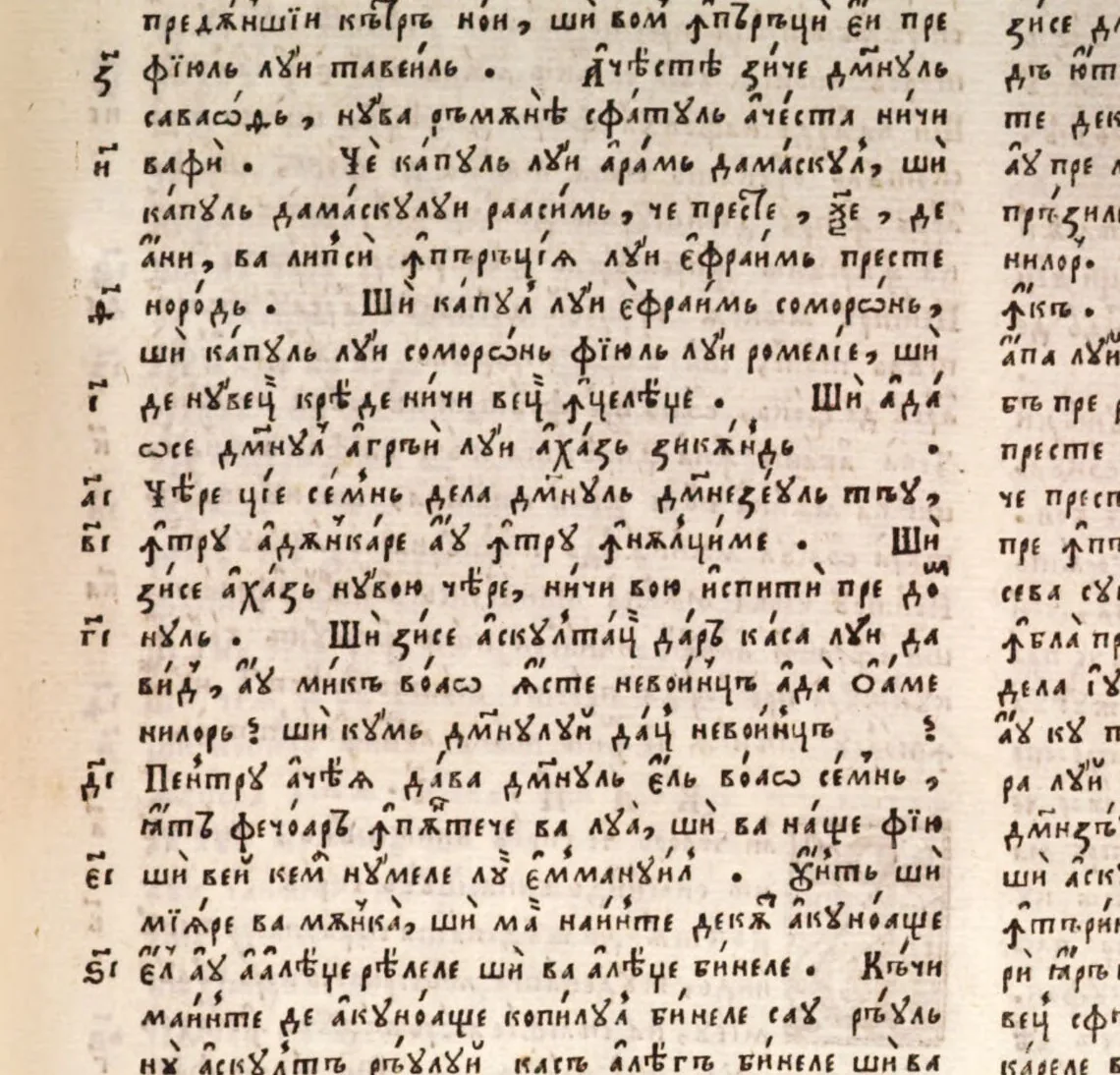
Bible, Bucharest, 1688, p. 461, col. I. Austrian National Library, 2.P.4 ALT PRUNK. Detail. Latin-script reading: iată fecioară în pântece va lua
“Fecioară”, virgin, as in Greek and Latin.
“În pântece va lua”, will take in the womb: the same construction as the Greek en gastri lēmpsetai.
- another interpretationdifferent word
Greek · critical edition Matthew 1:23 · SBL Greek New Testament (2010)
Ἰδοὺ ἡ παρθένος ἐν γαστρὶ ἕξει καὶ τέξεται υἱόν, καὶ καλέσουσιν τὸ ὄνομα αὐτοῦ Ἐμμανουήλ· ὅ ἐστιν μεθερμηνευόμενον Μεθʼ ἡμῶν ὁ θεός.
Matthew quotes the prophecy about the birth of Jesus and also uses parthenos.
en gastri hexei: “will have in the womb”. Matthew’s quotation does not reproduce the Greek Isaiah word for word.
The rows show three distinct steps. The Hebrew has ʿalmâ, “young woman”, a word that, according to the NET and USCCB notes, describes age without specifying virginity. The Greek translation chooses parthenos, the word usually used for a virgin. Matthew quotes the prophecy in Greek and links it to the birth of Jesus. Here the Bucharest Bible follows the Greek in the construction “în pântece va lua”, but writes “iată fecioară”, with no article, like the Latin virgo.
The notes of the NET Bible and of the American Catholic USCCB edition treat the meaning of the Hebrew word, the Greek translator’s choice and Matthew’s reading separately. Each is a different question.
Case 8 of 9 · Genesis 3:6
Was it an apple? What Genesis says about the forbidden fruit#
Pick the fruit you see when you think of Eve and the serpent.
- starting text
Hebrew Masoretic text, Leningrad Codex (1008–1009) · WLC/OSHB edition
וַתֵּ֣רֶא הָֽאִשָּׁ֡ה כִּ֣י טוֹב֩ הָעֵ֨ץ לְמַאֲכָ֜ל וְכִ֧י תַֽאֲוָה־ה֣וּא לָעֵינַ֗יִם וְנֶחְמָ֤ד הָעֵץ֙ לְהַשְׂכִּ֔יל וַתִּקַּ֥ח מִפִּרְי֖וֹ וַתֹּאכַ֑ל וַתִּתֵּ֧ן גַּם־לְאִישָׁ֛הּ עִמָּ֖הּ וַיֹּאכַֽל׃
mi-piryô: “of its fruit”. Perî is the general word for fruit.
- same meaning
Greek · Septuagint translated in the 3rd–2nd centuries BC · Brenton edition (1851)
Καὶ εἶδεν ἡ γυνὴ, ὅτι καλὸν τὸ ξύλον εἰς βρῶσιν, καὶ ὅτι ἀρεστὸν τοῖς ὀφθαλμοῖς ἰδεῖν, καὶ ὡραῖόν ἐστι τοῦ κατανοῆσαι· καὶ λαβοῦσα ἀπὸ τοῦ καρποῦ αὐτοῦ, ἔφαγε· καὶ ἔδωκε καὶ τῷ ἀνδρὶ αὐτῆς μετʼ αὐτῆς, καὶ ἔφαγον.
karpou: “fruit”.
- same meaning
Latin · Vulgate Jerome, around AD 400 · Clementine edition
Vidit igitur mulier quod bonum esset lignum ad vescendum, et pulchrum oculis, aspectuque delectabile: et tulit de fructu illius, et comedit: deditque viro suo, qui comedit.
de fructu illius: “of its fruit”.
- same meaning
Romanian · Bucharest Bible 1688 · p. 2, col. II · Austrian National Library copy
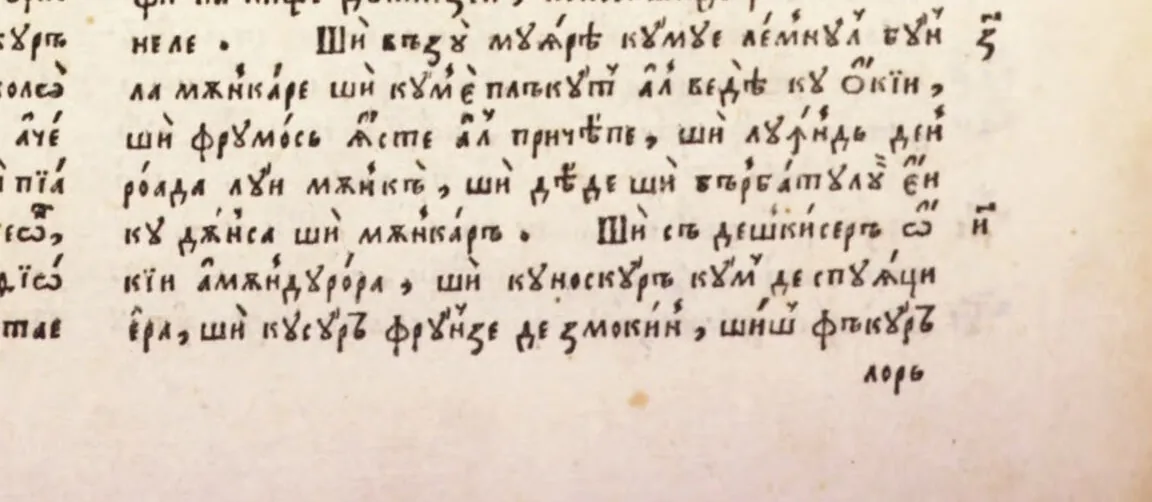
Bible, Bucharest, 1688, p. 2, col. II. Austrian National Library, 2.P.4 ALT PRUNK. Detail. Latin-script reading: și luând den roada lui mâncă
“Den roada lui”: its fruit, with no species.
None of these texts names a species. The Hebrew says “fruit”, the Greek and Latin say “fruit”, the Bucharest Bible says “roadă”, fruit. The apple comes from outside the verse, from the way readers and painters of Western Europe pictured the scene.
The most common explanation is a Latin pun: mālum means “apple” and malum, with a short vowel, means “evil”. Azzan Yadin-Israel, who traced the history of the identification, argues that the pun is not enough to explain why the apple won.
Case 9 of 9 · Romans 16:7
Junia in Romans 16:7: a woman “prominent among the apostles”?#
- starting textstarting text
Greek · critical edition SBL Greek New Testament (2010)
ἀσπάσασθε Ἀνδρόνικον καὶ Ἰουνίαν τοὺς συγγενεῖς μου καὶ συναιχμαλώτους μου, οἵτινές εἰσιν ἐπίσημοι ἐν τοῖς ἀποστόλοις, οἳ καὶ πρὸ ἐμοῦ γέγοναν ἐν Χριστῷ.
Iounian, accented on the syllable -ní-: the form of a woman’s name, Junia. With a circumflex on the last syllable, the same letters would give a man’s name, Junias.
episēmoi en tois apostolois: “prominent among the apostles” or “well known to the apostles”. The preposition en allows both.
- same meaningsame meaning
Greek · Textus Receptus the Greek text printed from the 16th century
Ἀσπάσασθε Ἀνδρόνικον καὶ Ἰουνίαν τοὺς συγγενεῖς μου καὶ συναιχμαλώτους μου, οἵτινές εἰσιν ἐπίσημοι ἐν τοῖς ἀποστόλοις, οἳ καὶ πρὸ ἐμοῦ γεγόνασιν ἐν Χριστῷ.
The same accent in this digital edition of the Textus Receptus; the accents are the editors’ choice.
The same words.
- ambiguous formsame meaning
Latin · Vulgate text of the epistles, revised around AD 400 by an unknown reviser · Clementine edition
Salutate Andronicum et Juniam, cognatos, et concaptivos meos: qui sunt nobiles in Apostolis, qui et ante me fuerunt in Christo.
Juniam: in Latin the same form can come from Junia or from a masculine Junias. The text does not decide.
nobiles in Apostolis: “noble among the apostles”.
- same meaningsame meaning
Romanian · Bucharest Bible 1688 · p. 864, col. II · Austrian National Library copy
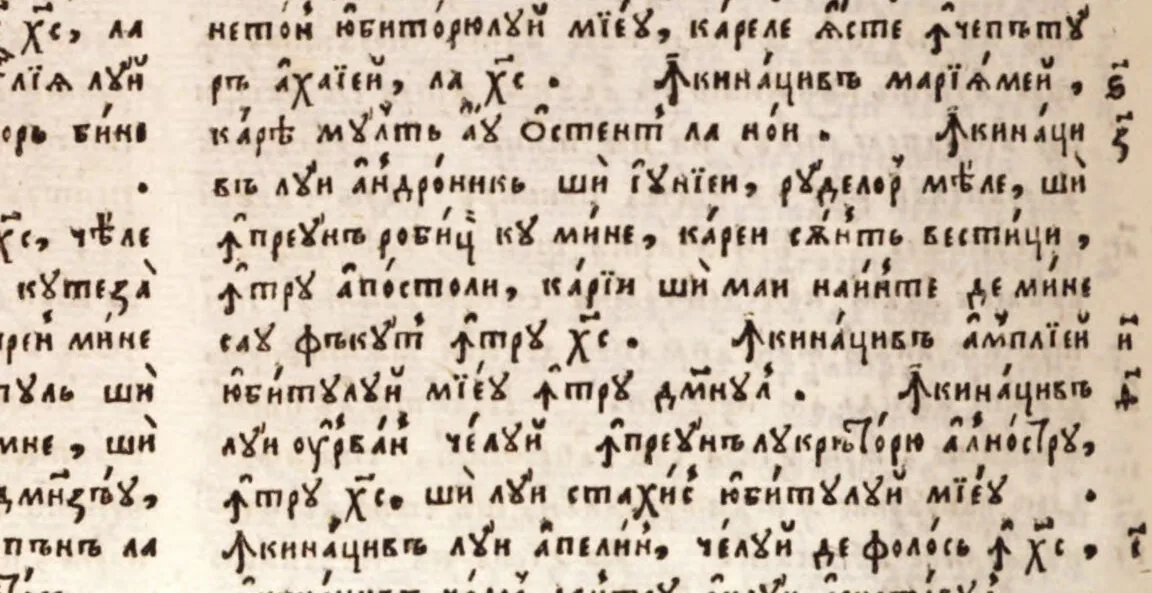
Bible, Bucharest, 1688, p. 864, col. II. Austrian National Library, 2.P.4 ALT PRUNK. Detail. Latin-script reading: Închinați-vă lui Andronic și Iuniei, rudelor mele […] carii sânt vestiți întru apostoli
“Lui Andronic și Iuniei”: the ending -ei is that of a woman’s name.
“Carii sânt vestiți întru apostoli”: who are renowned among the apostles.
- another interpretationsame meaning
English · Douay-Rheims translated from the Latin · 1899 edition
Salute Andronicus and Junias, my kinsmen and fellow prisoners: who are of note among the apostles, who also were in Christ before me.
The 1899 English edition prints the man’s name, Junias.
“Of note among the apostles”.
- same meaningsame meaning
English · World English Bible modern translation from Hebrew and Greek
Greet Andronicus and Junia, my relatives and my fellow prisoners, who are notable among the apostles, who were also in Christ before me.
A modern translation returns to Junia.
“Notable among the apostles”.
There are two separate questions here. The first is the name: the old manuscripts written in capitals did not usually mark accents, and in the accusative, the form in this verse, only the accent separates the woman’s name Junia from the man’s name Junias. The critical edition, the digital Textus Receptus and the Bucharest Bible all read a woman’s name. The man’s form appears in other translations, for example the 1899 Douay-Rheims English edition.
The second question is the phrase. “Episēmoi en tois apostolois” can mean “prominent among the apostles”, counted as apostles themselves, or “well known to the apostles”. The NET Bible note presents both readings and cites a 2001 study by Burer and Wallace for the second. The SIL guide for translators recommends the woman’s name and treats the construction separately.
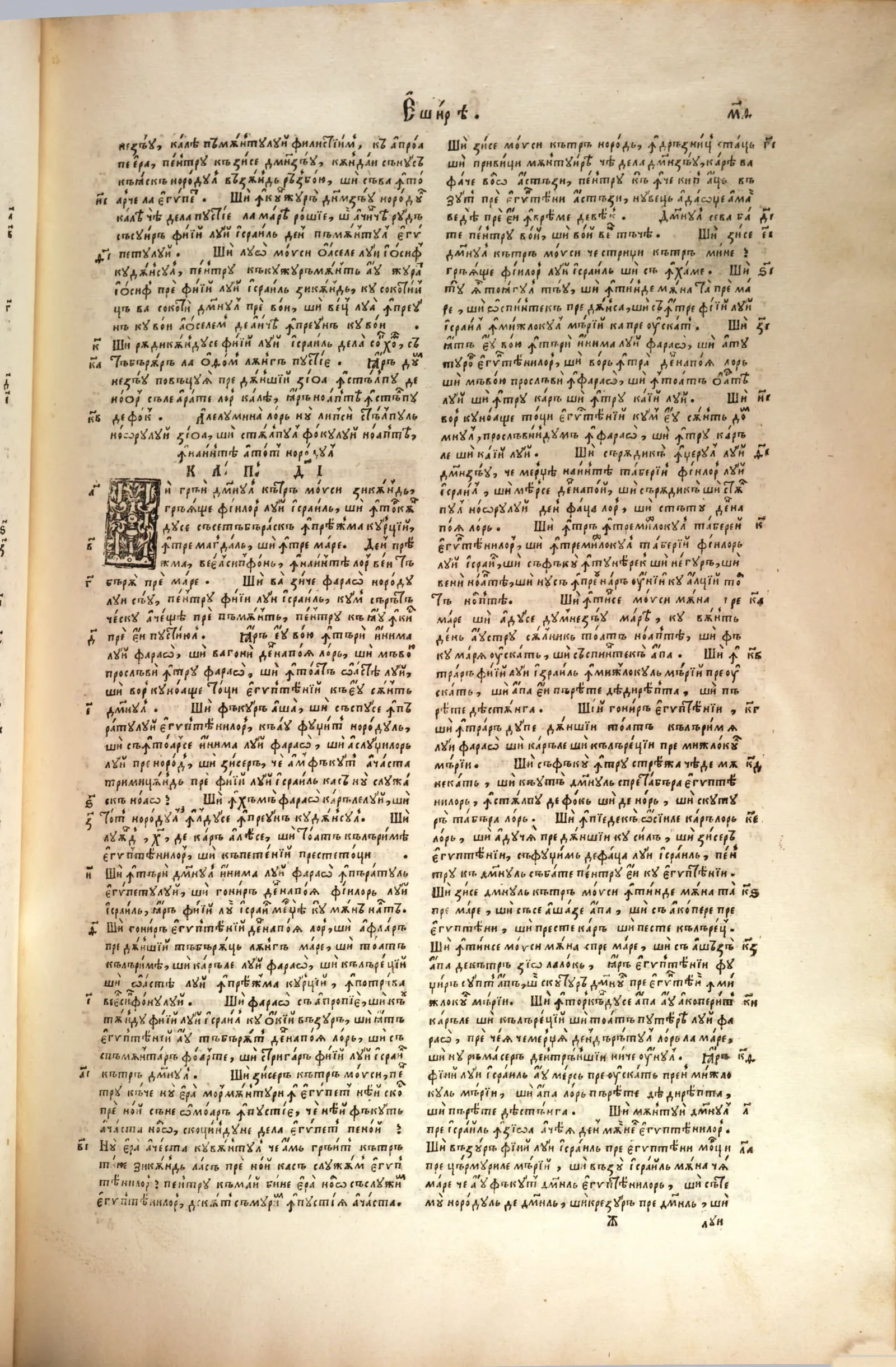
The Bucharest Bible, 1688#
The Bucharest Bible is the first complete Bible in Romanian, printed on the order of Prince Șerban Cantacuzino; its title page, dated November 1688, already names the new prince, Constantin Brâncoveanu. The pages on this site come from the Austrian National Library copy, shelfmark 2.P.4 ALT PRUNK, which the library publishes free of copyright restrictions.
The text is printed in Cyrillic letters. The Latin-script readings beside each detail are working transcriptions: abbreviations are resolved, diacritics and punctuation are brought close to modern spelling, and the decisive old forms are kept (“iaste”, “pren”, “părete”). For Exodus the readings were checked against the scholarly edition Monumenta linguae Dacoromanorum (Iași, 1991).
The 1688 Old Testament starts from Nicolae Milescu’s translation of the Septuagint, revised in Bucharest, and the New Testament largely takes over the Bălgrad text of 1648. That explains why, five times in these nine verses, the Romanian wording goes with the Greek where the Latin says something else: Moses “se-au mărit” (glorified), “the fifth generation”, the wind “den austru” (from the south), “în pântece va lua” (will take in the womb) and “întru oameni bună voire” (good will among people).
Which texts are quoted, and how#
The Hebrew comes from the digital Westminster Leningrad Codex with the Open Scriptures Hebrew Bible annotations; it is shown with the vowels and cantillation marks of the Masoretic text, which is far later than the originals. The Septuagint is quoted from the Greek text of the Brenton edition (1851), the Vulgate from the Clementine edition. The Greek New Testament comes from the SBLGNT critical edition (2010), with only its apparatus signs removed, and from the Textus Receptus. Manuscript variants and their witnesses are taken, with attribution, from the NET Bible notes; they were not collated from the manuscripts here.
Every quotation from these editions is extracted automatically from the edition files, and the page build stops if a highlighted word is not found in its verse. The explanations under each row are working translations, not quotations from a published Bible.
The page does not judge which translation is “correct” and takes no side on questions of faith. It shows, verse by verse, which word each text has and what kind of change it is: a different word, another possible sense, a different manuscript reading, another interpretation or an image added by readers.
Sources#
- Open Scriptures Hebrew Bible (WLC, annotations CC BY 4.0)
- Septuagint, Greek text of the Brenton edition (public domain, eBible.org)
- Vulgate, Clementine edition (public domain, eBible.org)
- SBL Greek New Testament (CC BY 4.0)
- Textus Receptus (public domain, eBible.org)
- Douay-Rheims, 1899 edition (public domain, eBible.org)
- World English Bible (public domain, eBible.org)
- Bible, Bucharest, 1688: Austrian National Library copy, 2.P.4 ALT PRUNK
- Monumenta linguae Dacoromanorum. Biblia 1688, Pars II: Exodus (Iași, 1991)
- NET Bible, notes on Exodus 34:29
- NET Bible, notes on Matthew 19:24
- NET Bible, notes on Luke 2:14
- NET Bible, notes on Matthew 6:22
- NET Bible, notes on Isaiah 7:14
- NET Bible, notes on Romans 16:7
- USCCB, Isaiah chapter 7, with notes
- Brent A. Strawn, “Moses’ Shining or Horned Face?”, TheTorah.com
- Horns of Moses (Wikipedia), citing Ruth Mellinkoff, The Horned Moses in Medieval Art and Thought (1970), for the Old English Hexateuch, British Library, Cotton MS Claudius B IV
- Peter Gainsford, “The camel, the rope, and the needle’s eye” (2023)
- David Ben-Gad HaCohen, “The Yam Suph in the Transjordan?”, TheTorah.com
- Carl Drews and Weiqing Han, “Dynamics of Wind Setdown at Suez and the Eastern Nile Delta”, PLOS ONE (2010)
- Azzan Yadin-Israel, “How the Forbidden Fruit Became an Apple”, TheTorah.com
- SIL translator’s notes on Romans 16:7
- Mircea Păcurariu, Dicționarul teologilor români (2002), p. 300, cited in the Romanian Wikipedia article on the Bucharest Bible
- DEX 2009: Romanian “mări”, in the sense “to glorify”
- Photograph of Moses: Jörg Bittner Unna, Wikimedia Commons, CC BY 3.0