Chapter 9 · Health and biodiversityLesson 9.3
Biodiversity: its three levels, what it is worth and what threatens it
If wild bees and butterflies disappear from a region, what do the people there lose apart from a few insects?
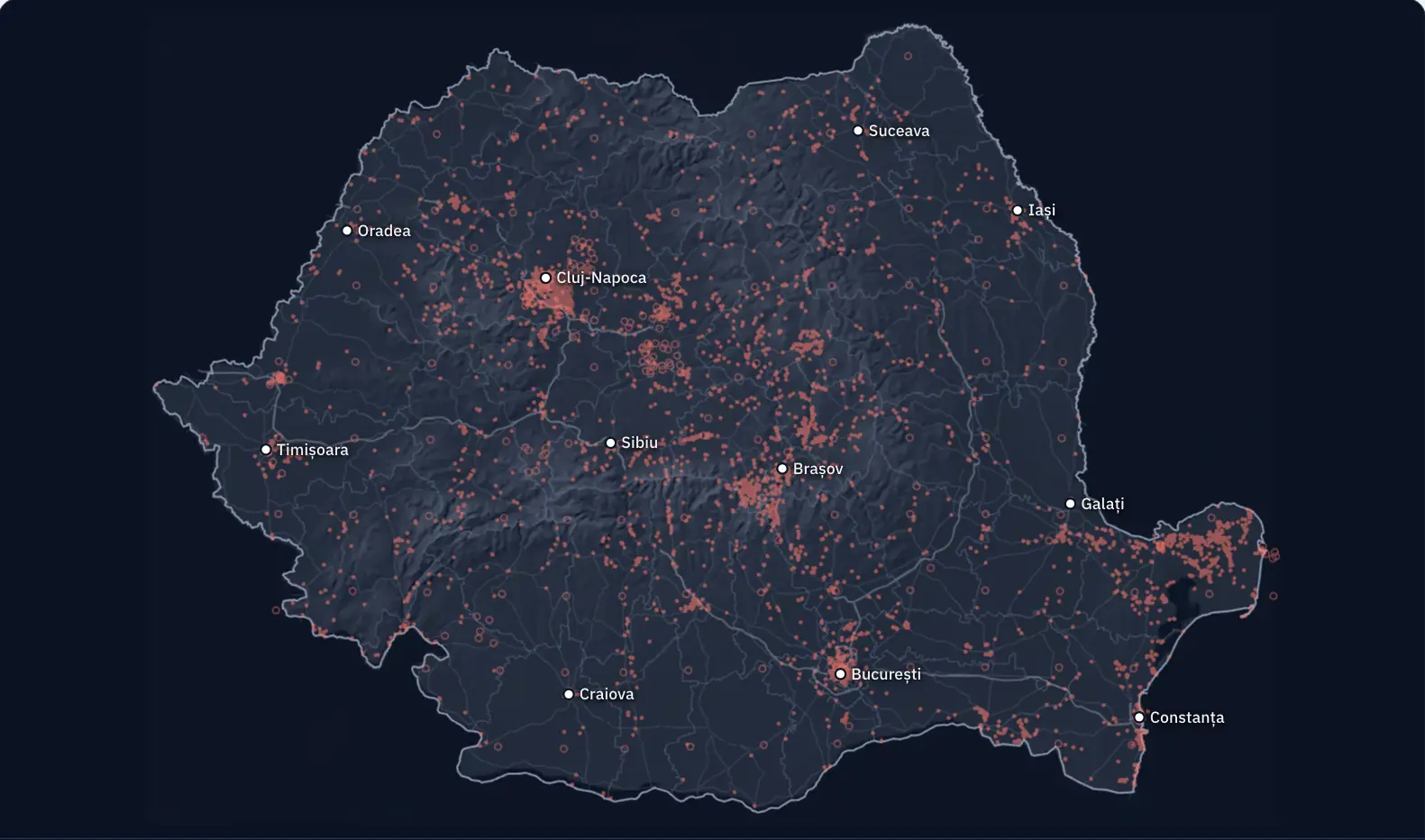
- Size
- from 19.5 km to 744 km
- Level
- population and ecosystem
- Time
- a decade of observations
Before you read: what do you think?
There are 26 species of sturgeon left in the world, the fish that black caviar comes from. How many of them are at risk of extinction, according to the 2022 Red List?
See the answer
All 26, up from 85% in 2009: 25 are threatened with extinction, and the 26th, the Yangtze sturgeon, survives only in captivity. Poaching for caviar and meat affects more than half of the species, and dams block their way to their spawning grounds.
Three quarters of the world’s most productive crops depend, at least in part, on pollinators, and 35% of crop production by volume is influenced by bees, birds, bats and other animals that carry pollen from one flower to another. The world has about 200,000 species of pollinating animals, more than 25,000 of them species of bee. When they disappear, harvests shrink too.
The three levels of biodiversity
Biodiversity, or biological diversity, is the variety of living organisms on Earth and of the ecosystems they are part of. The UN Convention on Biological Diversity divides it into three levels.
Genetic diversity is the variation within a species: apple varieties, breeds of sheep, or the differences between individuals in the same population of bears. In a population with high genetic variation, there is a better chance that some individuals will survive a new disease or a change in the environment.
Species diversity is the number and variety of species in a place. Ecosystem diversity is the variety of habitats in a region: a beech forest, an alpine meadow, a pond in the delta, a cave. A species count on its own does not tell the whole story: two forests with the same number of species can hold very different communities.
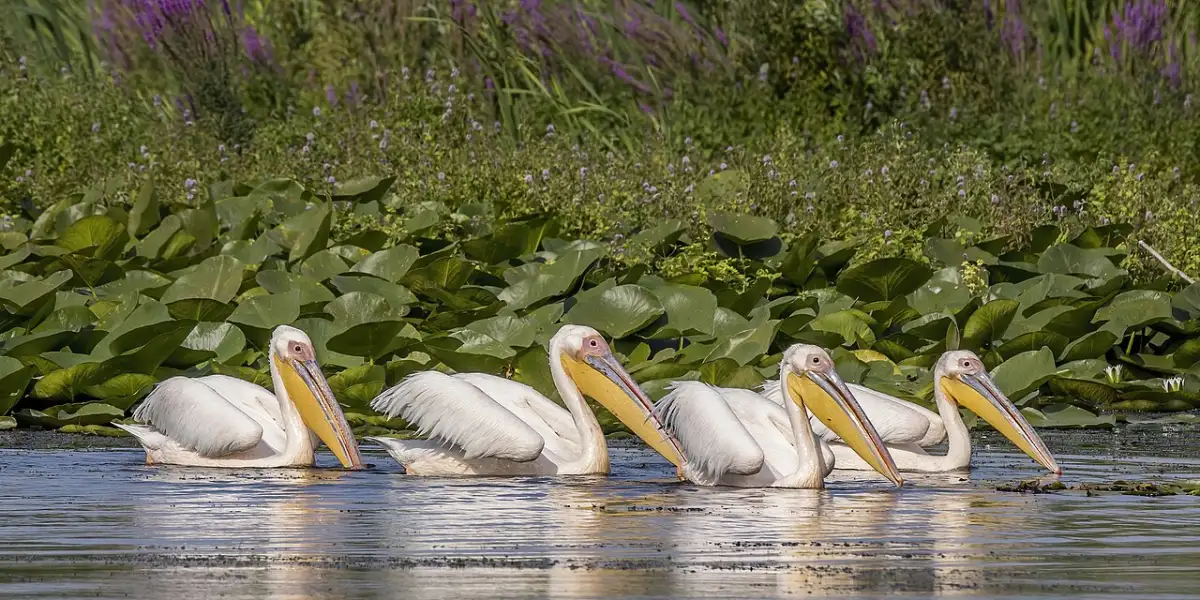
Photo: Charles J. Sharp, CC BY-SA 4.0, source. Resized.

What people get from biodiversity
The benefits people get from ecosystems are called ecosystem services. Pollination is the easiest to measure. Forests and wetlands hold rainwater and clean it; soil organisms break down dead matter and build fertile soil; forests and peat bogs store carbon and influence the climate.
Many medicines come from organisms. Streptomycin, the first practical drug against the tuberculosis bacterium, was obtained in 1943 from a soil bacterium, Streptomyces griseus. A species that disappears before it is studied can never be investigated.
Biodiversity also has a value that cannot be measured in money: a landscape, a species bound up with the history of a place, the right of other living things to exist.
Five main causes of loss
The 2019 global assessment by IPBES, the intergovernmental science panel on biodiversity, estimated that about one million species of animals and plants are threatened with extinction, many of them within the coming decades. The same assessment ranks the direct causes, starting with the one with the largest effect: changes in land and sea use, direct exploitation of organisms, climate change, pollution and invasive alien species.
A change in land use means forests cut down, grasslands ploughed up, wetlands drained. Human actions have significantly altered about 75% of the land surface and 66% of the marine environment, and more than 85% of the wetlands that existed in 1700 had been lost by 2000. A road or a field that cuts a habitat into small pieces causes habitat fragmentation: populations are left isolated and smaller.
Overexploitation means hunting, fishing or gathering faster than a population can recover. An invasive species is a species brought by humans from another region that spreads and harms local species, farming or health; an alien species that causes no damage is not invasive. The causes add up: a fragmented population has a harder time moving when the climate changes.
The IUCN Red List: how threatened a species is
The International Union for Conservation of Nature (IUCN) assesses the extinction risk of species against precise criteria, such as population decline and the size of the range, and records them in the Red List. There are nine categories: Extinct (EX), Extinct in the Wild (EW), Critically Endangered (CR), Endangered (EN), Vulnerable (VU), Near Threatened (NT), Least Concern (LC), Data Deficient (DD) and Not Evaluated (NE).
Only species in the CR, EN and VU categories are called threatened species. Of the 175,909 species assessed so far, 49,505 are threatened.
The category is global, for the whole species. A species that is common in the school grounds may be threatened elsewhere in the world, and a species that is rare in one county may not be threatened at world level.
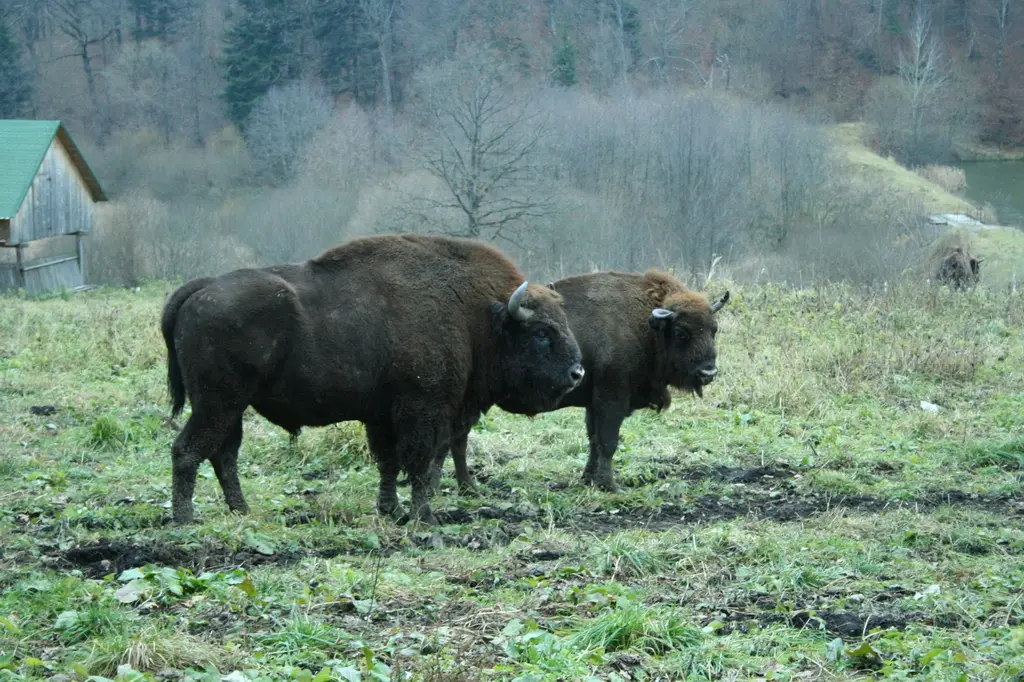
Photo: Ccezar2004, Public domain, source. Unchanged.

Worked example
Sturgeons on the Red List
IUCN data from 2022: of the sturgeon species, 17 are Critically Endangered, 3 Endangered and 5 Vulnerable, and the Yangtze sturgeon has become Extinct in the Wild. At the same time, the extinction (EX) of a close relative, the Chinese paddlefish, was confirmed. How many species are threatened with extinction, and what percentage of the 26 is that?
Step 1: the threatened species are those in CR, EN and VU, that is, 17 + 3 + 5 = 25. Step 2: 25 ÷ 26 × 100 ≈ 96.2% of the species are threatened with extinction. Step 3: the 26th species, Extinct in the Wild, survives only in captivity, so it is not safe either. That is why the IUCN announced that all 26, that is, 100%, are at risk of extinction.
Interpretation: in 2009, the proportion of sturgeon species at risk of extinction was 85%. The rise shows that the measures taken until then had not stopped the populations from declining. The causes the IUCN names are three of the five above: direct exploitation (poaching for caviar and meat), habitat change (dams that block migration to the spawning grounds) and climate change (warmer rivers disrupt reproduction).
In Romania
The European bison, lost and brought back
Wild European bison disappeared from Romania in the 19th century; the last ones lived in the north of the Carpathians, in the Călimani, Bârgău and Rodna mountains, until around 1852. The last wild bison was shot in 1927, in the Caucasus, and the species survived only in zoos. In 1958, two bison brought from Poland, Podarec and Polonka, were placed in an enclosure in Slivuț Forest, near Hațeg. On 22 March 2012, the first five bison were released in Vânători-Neamț Nature Park, in north-eastern Romania, and since 2014 they have been brought back to the Țarcu mountains, where more than 250 now live free, almost half of them born there.
In 2020, the IUCN moved the European bison from “Vulnerable” to “Near Threatened”: the wild population grew from about 1,800 animals in 2003 to more than 6,200 in 2019. Yet only eight of the 47 free-ranging herds are large enough to stay genetically viable in the long term; the rest are small and isolated from one another.
In short
- Biodiversity has three levels: genetic diversity (the variation within a species), species diversity and ecosystem diversity.
- Ecosystem services are the benefits people get from ecosystems: pollination, clean water, fertile soil, climate regulation, medicines.
- The direct causes of biodiversity loss, according to IPBES: changes in land and sea use, direct exploitation, climate change, pollution, invasive species.
- The IUCN Red List has nine categories; species that are Critically Endangered (CR), Endangered (EN) and Vulnerable (VU) are the ones threatened with extinction.
- The European bison disappeared from Romania in the 19th century and was brought back from captivity, and of the world’s 26 sturgeon species, 25 are threatened with extinction and one survives only in captivity.
Common mistakes
WrongBiodiversity means the number of species in a place.
RightThe number of species is only one of the three levels. Biodiversity also includes the genetic variation within species and the variety of ecosystems.
WrongAny species brought in from somewhere else is invasive.
RightAn alien species becomes invasive only if it spreads and causes damage to local species, farming or health.
WrongI often see this bird in the park, so it isn’t threatened anywhere.
RightThe IUCN category applies to the whole species, worldwide, and is set against precise criteria, rather than from sightings in a single place.
Check yourself
Seven questions. For the first six you see the explanation at once, with the paragraph of the lesson that supports it; for the written ones you compare with a good answer.
Which example describes genetic diversity?
Answer
c) The apple trees in Romania’s orchards belong to many different varieties. Apple varieties are variations within the same species. The other options describe species diversity, ecosystem diversity and an ecosystem service.
The IUCN lists a species as “Near Threatened” (NT). Is it a threatened species?
Answer
b) No; only species in the CR, EN and VU categories are threatened. The Red List also includes species that are not threatened. The term “threatened with extinction” is used only for CR, EN and VU; NT means the species is close to that threshold.
According to IPBES, which direct cause has the largest effect on biodiversity worldwide?
Answer
c) Changes in land and sea use. IPBES ranks the causes: changes in land and sea use, direct exploitation, climate change, pollution, invasive species.
Why does the growth in bison numbers not solve all of the species’ problems?
Answer
b) Because many herds are small and isolated, too small to stay genetically viable. The number of animals has grown, but genetic diversity has stayed low: only eight of the 47 herds are large enough for the long term. It is an example of the genetic level of biodiversity.
Of the 175,909 species assessed by the IUCN, 49,505 are threatened with extinction. What percentage is that? Round to one decimal place.
%Answer
28.1 %. 49,505 ÷ 175,909 × 100 ≈ 28.1%. The percentage refers to the species assessed, not to all the species on Earth.
Which level of biodiversity does each observation refer to?
Answer
Genetic diversity: The Țurcană and Țigaie sheep breeds; Only eight bison herds are genetically viable.
Species diversity: More than 25,000 species of bee live in the world; There are 26 species of sturgeon left.
Ecosystem diversity: The county has beech forests, meadows and a pond; The Danube Delta has open water, reed beds, sandbanks and forests.
Breeds and variation within a species belong to the genetic level; the number of species, to the species level; the variety of habitats, to the ecosystem level.
A fenced motorway is built through the middle of a large forest. Explain which cause of biodiversity loss is at work and what may happen, over time, to the populations of large animals on either side.
A good answer
This is habitat fragmentation, a form of land-use change. The forest is split into two pieces, and large animals can no longer cross from one to the other. The populations become smaller and isolated, gradually lose genetic diversity and have a harder time moving if the climate changes.
A complete answer names habitat fragmentation, explains the isolation of the populations and links the outcome to genetic diversity or to species moving.
Terms
- biodiversity
- The variety of living organisms and of the ecosystems they are part of, at genetic, species and ecosystem level.
- genetic diversity
- The variation within a species, from one population to another and from one individual to another.
- ecosystem services
- The benefits people get from ecosystems: food, pollination, clean water, fertile soil, climate regulation.
- habitat fragmentation
- The splitting of a habitat into small, isolated pieces by roads, fields or buildings.
- invasive species
- A species brought by humans from another region that spreads and harms local species, farming or health.
- Red List
- The IUCN list that places species in categories according to their risk of extinction.
- threatened species
- A species in the IUCN categories Critically Endangered (CR), Endangered (EN) or Vulnerable (VU).
Sources and link to the programme
- FAO – Pollination – three quarters of the most productive crops depend in part on pollinators; 35% of production by volume; 200,000 pollinator species, more than 25,000 species of bee
- Convention on Biological Diversity – Article 2. Use of Terms – definition of biological diversity: within species, between species and of ecosystems
- IPBES – Media release: Global Assessment (May 2019) – about one million species threatened; the five direct causes, in order; 75% of the land and 66% of the marine environment significantly altered; more than 85% of the wetlands of 1700 lost by 2000
- Rutgers University – Waksman Museum: Streptomycin – streptomycin, discovered in 1943, produced by the soil bacterium Streptomyces griseus, the first practical agent active against the tuberculosis bacterium
- IUCN – The IUCN Red List of Threatened Species – the nine categories; CR, EN and VU are considered threatened; 175,909 species assessed, 49,505 threatened (figures on the date consulted, 16 November 2026)
- IUCN – Press release: Migratory monarch butterfly now Endangered (21 July 2022) – all 26 sturgeon species “at risk of extinction” (85% in 2009); 17 CR, 3 EN, 5 VU; Yangtze sturgeon EW; Chinese paddlefish confirmed EX; warmer rivers (climate change); beluga CR; poaching affects more than half of the species; dams
- IUCN – Return of the bison to Azerbaijan (November 2024) – the Białowieża population hunted to extinction in 1921; the last bison in the Caucasus shot by poachers in 1927; a few animals kept in zoos
- IUCN – European bison recovering, 31 species declared Extinct (10 December 2020) – the European bison moved from VU to NT; 1,800 animals in 2003, more than 6,200 in 2019; 47 free-ranging herds, only eight genetically viable in the long term
- Dănilă, Cătănoiu, Simioniuc, Roșca (2022), Forests 13(6):920 – The Reintroduction Analysis of European Bison (Bison bonasus L., 1758) in the North of Romania – the bison lived in northern Romania until 1852; its last ranges: the Călimani, Bârgău and Rodna mountains; the range shrinking from the late 18th century
- Adevărul – Sărbătoare în rezervația de zimbri din pădurea Hațegului – the Slivuț–Hațeg reserve, founded in 1958 with the bison Podarec and Polonka brought from Poland
- Rewilding Europe – First wild bison in Romania after 160 years (2012) – the release of five bison in Vânători-Neamț Nature Park, 22 March 2012
- Rewilding Europe – Bison ambassadors to champion wildlife comeback in the Southern Carpathians (2026) – bison brought back to the Țarcu mountains since 2014; more than 250 living free, almost half born in the wild
From the programme: “The diversity of life on Earth: value, vulnerabilities and the responsibility of conservation” (common core). Specific competences addressed: 2.2, 3.1, 4.1.