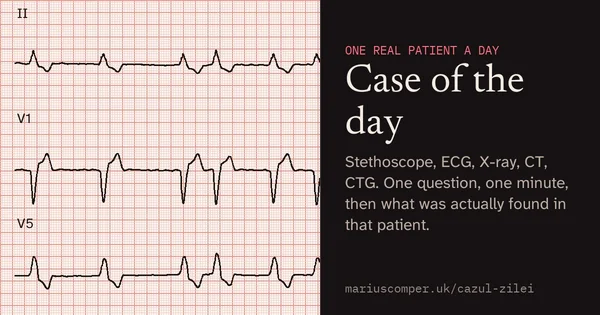
Every day, one real case from open medical datasets: a stethoscope recording, an ECG, an X-ray, a lung CT or a labour CTG. One question, one minute, then what was actually found in that patient.
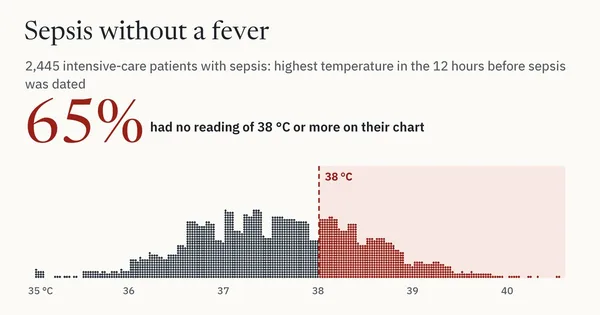
The charts of 40,335 intensive-care stays in two US hospitals. In 65% of the patients with sepsis, no temperature charted in the 12 hours before sepsis was dated reached 38 °C.
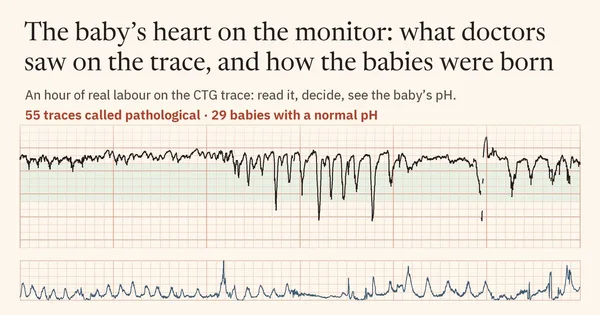
The last hour before full dilatation in 506 real births from Brno: the CTG trace, what nine obstetricians said and the baby’s pH at birth. When most called a trace pathological, 29 of 55 babies had a normal pH.
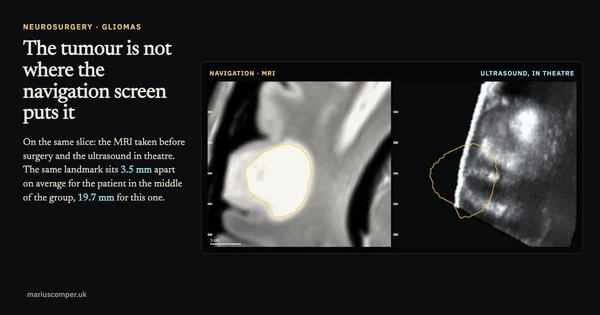
Real ultrasound volumes from glioma operations, set beside the MRI the navigation screen shows: in 22 patients, the same anatomical landmark appears on the two images 3.5 mm apart on average for the patient in the middle of the group, and up to 19.7 mm. Move the probe, decide where you would stop the resection, then compare with the MRI taken in theatre.
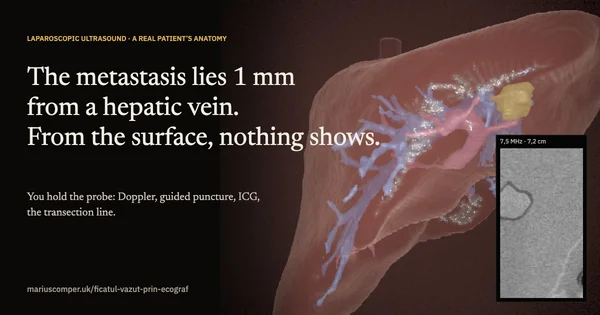
An intraoperative ultrasound simulator on the real anatomy of a patient operated on for liver metastases: the probe on the liver, Doppler, ultrasound-guided puncture with indocyanine green, a transection line compared with the real operation, and an atlas of 197 published resections.
Check the medical evidence
See how studies continue to be cited after retraction, and what registries record about trials and medicines.
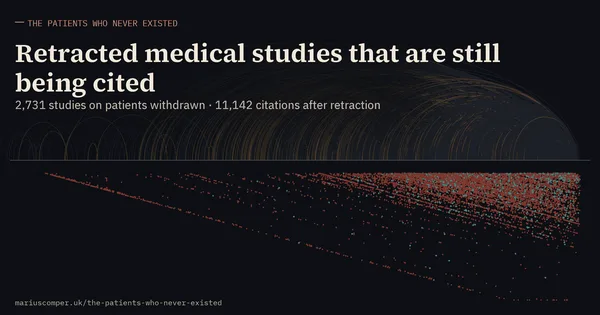
Since 1980, journals have retracted 2,731 papers classed as clinical studies, almost all on patients. Later papers cited them 11,142 times at least a year after the retraction, 1,528 of them in systematic reviews, meta-analyses and guidelines. Look up a condition, medicine or supplement, read the sentences in later guidelines and reviews that still lean on a retracted study, and follow the case of the Japanese anaesthetist Yoshitaka Fujii: a committee found fabricated data in 172 of 212 of his papers. In English and Romanian.
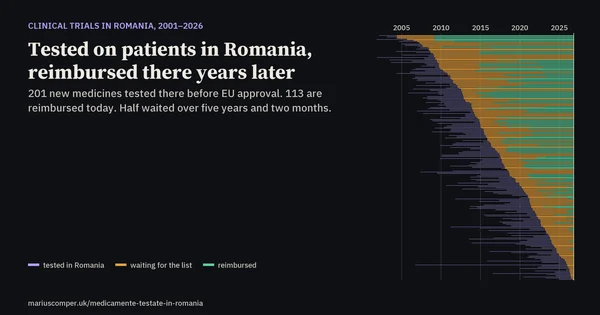
200 new medicines were tested in trials with sites in Romania before EU approval. 113 are on Romania’s reimbursed list, usually after years of waiting. Every city and every medicine, with dates.
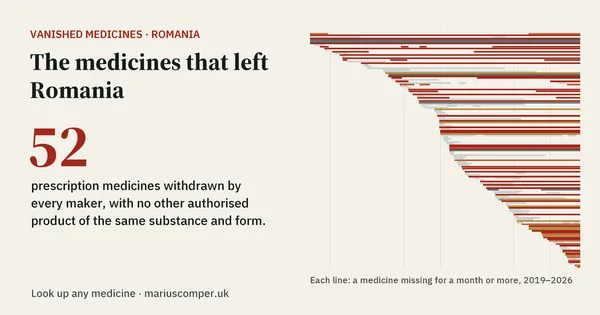
55 prescription medicines were withdrawn from Romania by every maker, with no other authorised product of the same substance and form. 3,231 shortage notices rebuilt, searchable by medicine.
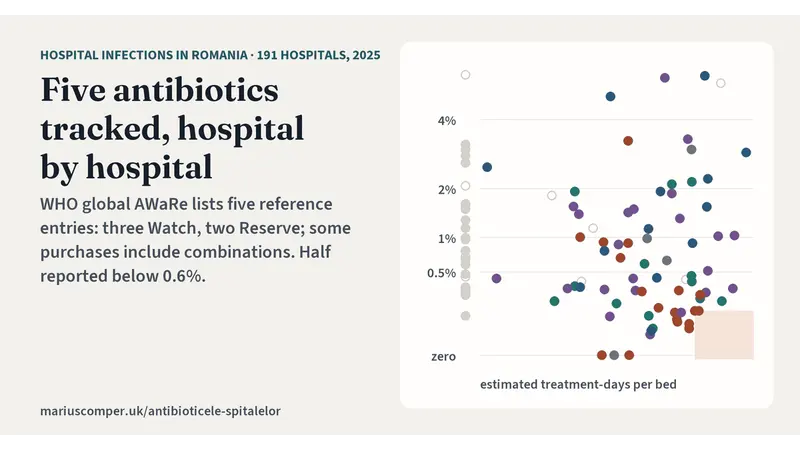
Which antibiotics did Romania’s public hospitals buy in 2025, and what infection rates did they report? The analysis tracks five names and may include combination products or multi-drug purchases; it does not cover WHO’s full Reserve category.
Explore staffing and access to care
Maps and registers about staffing, hospitals and access to care in Romania.
Doctors, family doctors, dentists, pharmacies and hospital beds per 10,000 residents, for each of Romania's 3,181 localities, today and twenty years ago. Doctors per 10,000 residents rose from 21.2 in 2004 to 34.0 in 2024, but towns have 56.4 and communes only 5.8; 315 localities lost their last doctor, and 566 have never had a pharmacy or a hospital.
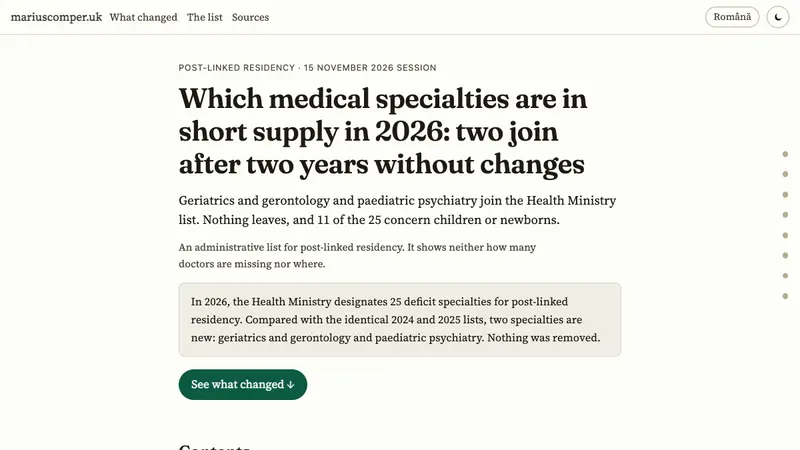
The official 2026 list names 25 shortage specialties, up from 23 in 2024–2025: geriatrics and child psychiatry join, nothing leaves, and 11 of the 25 concern children or newborns. What the label means for patients, parents and residents — in Romanian and English.
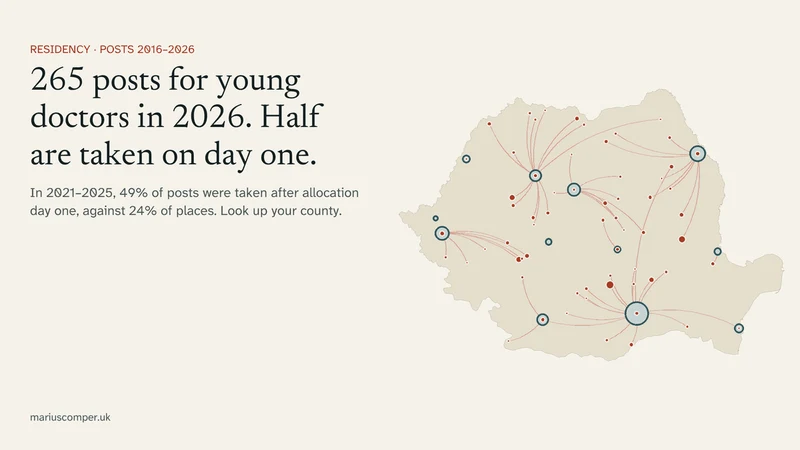
Every list of resident posts from the Ministry of Health, 2016 to 2026, on a map, with the day each post was taken in 2020–2025. A post is an open-ended employment contract with the unit that advertises it; in 2021–2025, 49% of posts were taken after allocation day one, against 24% of places. Look up a county, town or specialty.