HOSTIS · OST · OASTE
When did the enemy start fighting for us?
Our oastea was, at Rome, the enemy: Latin hostis, “the stranger, then the enemy”. In Medieval Latin, hostis becomes “exercitus” — army, camp, expedition — and the French, Italians and English take it along: ost, oste, host. The desertion, exhibit by exhibit.
- 2 sides
- hostis the enemy vs oastea our army
- 1550
- “multe oști birui” — the oldest dated use
- 1 bridge
- Șăineanu: “armed enemy → armed man”
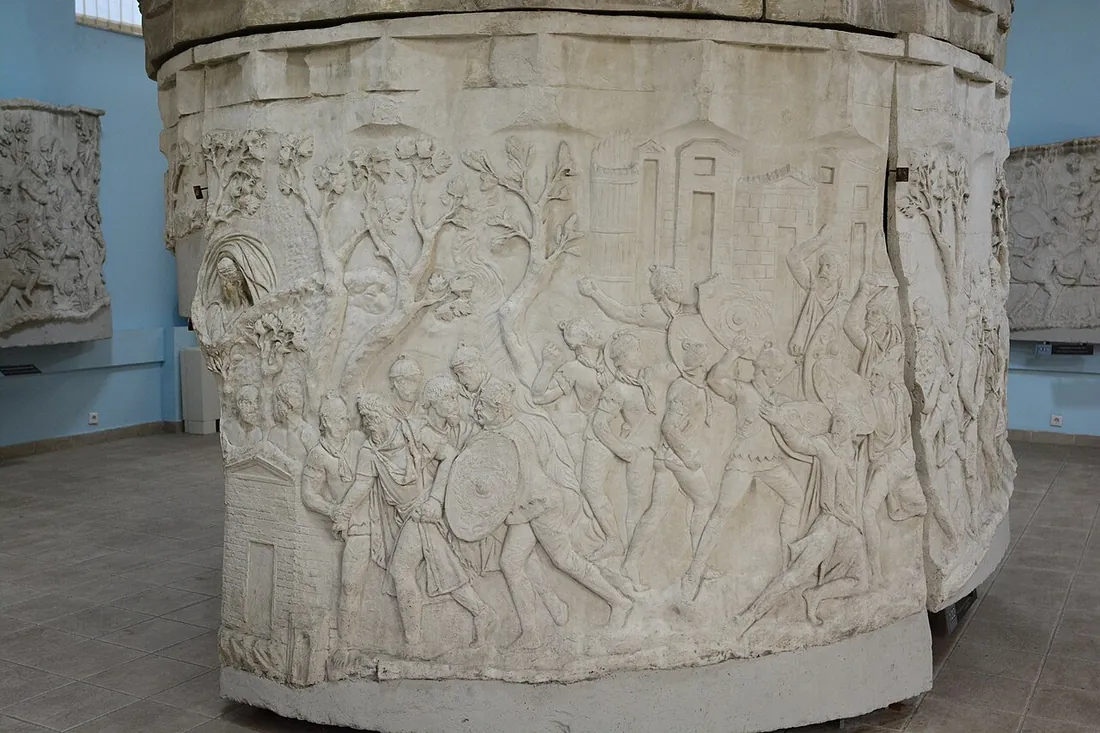

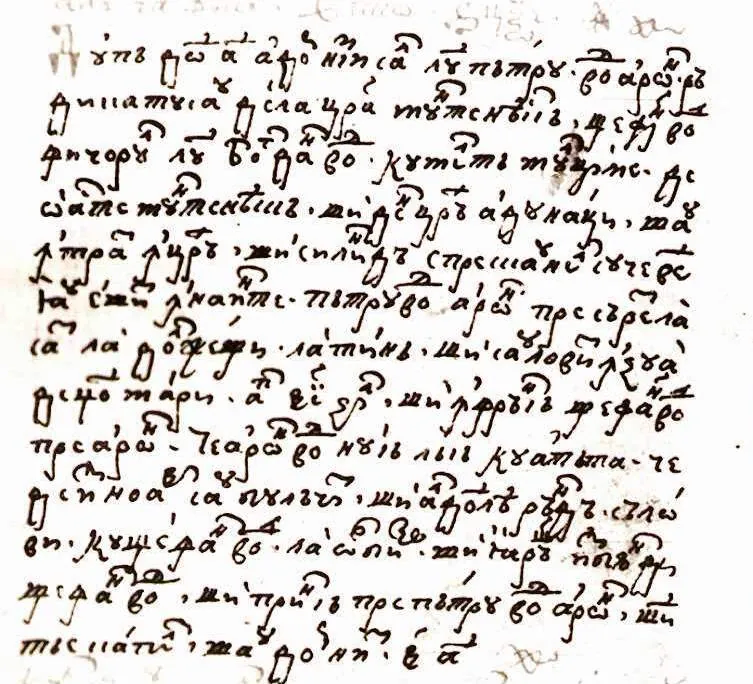
The page's machine
The flip, exhibit by exhibit
Seven exhibits, two sides. Tap each piece: see which side of the front it stands on and which dictionary keeps it there. The LA/FR/IT/EN/RO tags name the language; where the exhibit is disputed, the tag says so.
hostis classical Latin LA
L&S: “a stranger, foreigner; afterwards transf., an enemy” — plus Cicero: once hostis was whom we now call peregrinus.
hospes the other father LA
L&S: “He who entertains a stranger, a host” — from hostis + the root of pasco. The father of hôte, NOT of ost.
HOSTIS Medieval Latin LA
Du Cange: “Exercitus, castra, expeditio bellica” — army, camp, expedition. And the feminine gender, “interdum” — like Romanian.
ost Old French FR
“Du latin hostis… (Militaire) Armée, corps de troupe” — with variants host, os, oz. After Godefroy and TLFi. (dictionary)
oste Italian IT
Treccani: “[lat. hŏstis “nemico”]… esercito nemico, o anche semplicem. esercito” — first the enemy, then the army.
host English EN
Etymonline: “an army organized for war, mid-13c., from Old French ost” — from PIE *ghos-ti-. Lord of Hosts, the heavenly oastea.
oaste Romanian RO
DEX '09: “– Lat. hostis, -em „dușman”” — (Înv. și pop.) Armată. Plural oști. The desertion is complete.
Hôte does NOT enter the machine: French hôte comes from hospes (“the one received”), not from hostis — lookalike sons, different fathers.
How it sounds with us
At home: labels, kin, chronicles
Oastea behaved Romanian from the day it entered: feminine, -i plural, a regiment of derivatives — and three chronicler witnesses.
Labels: (Înv. și pop.)
Sense 1: (Înv. și pop.) Armată; sense 2: (Înv.) Război, luptă. Oastea is a chronicle-and-village word, not a barracks word. (DEX)
Stress and plural: OASTE, oști
Oaste on the A, plural oști; regionally also oaste, oște; variants oastă, oáște. The old graiuri mind their own. (DEX; DLR)
Derivatives: a regiment
DER: ostaș, oștire, oștean, oști (a verb!), oștitor, oștitură… — from soldier to battle order. (DER)
Chroniclers: Ureche and Neculce
Ureche: “au purces craiul cu oastea pănă la Liov”. Neculce: “cu oastea turcească” and “la oaste, la viziriul”. With the sources' labels, no invented years. (Wikisource)
Holes: oșteam and oșteni
oșteam does not exist on the page — zero hits. oșteni appears only as a gloss plural (“Oșteni, soldați”), never as a derivative headword. Shown, not filled.
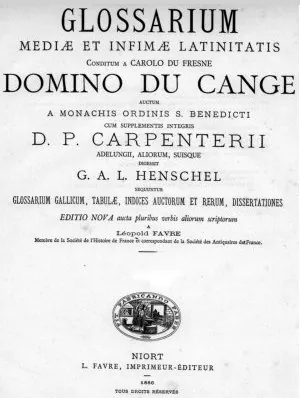

The same desertion, other armies
Cousins: hueste, hoste, guest
From Spain to England, the same hostis deserted in every tongue — while the guest stayed home.
Spanish hueste: from the same place
Du Cange: “Hispanis Hueste” — the Spanish took the same hostis and made it an army. DER cites it too: sp. hueste. (Du Cange; DER)
Portuguese hoste: h- kept
DER: port. hoste — the Portuguese kept the Latin h- that the French lost and the English took back. (DER)
The innkeeper oste: another word
Italian oste “innkeeper” comes from hospes, not hostis — the lookalike from Etymology 1. Two words, two fathers, one shape. (dictionary)
Guest, the English twin
Wiktionary: host “Doublet of guest” — the guest and the English host are brothers from PIE *gʰóstis. The fed stranger vs the armed stranger. (dictionary)

Who saw the desertion
Four witnesses
From DEX to Du Cange and Etymonline: four dictionaries each seeing one stretch of the flight.
DEX '09
“OASTE, oști, s. f. … – Lat. hostis, -em „dușman”.”
The Explanatory Dictionary, s.v. oaste
The Romanian gate: from Latin, with “enemy” printed beside it. Identical in DEX '98.
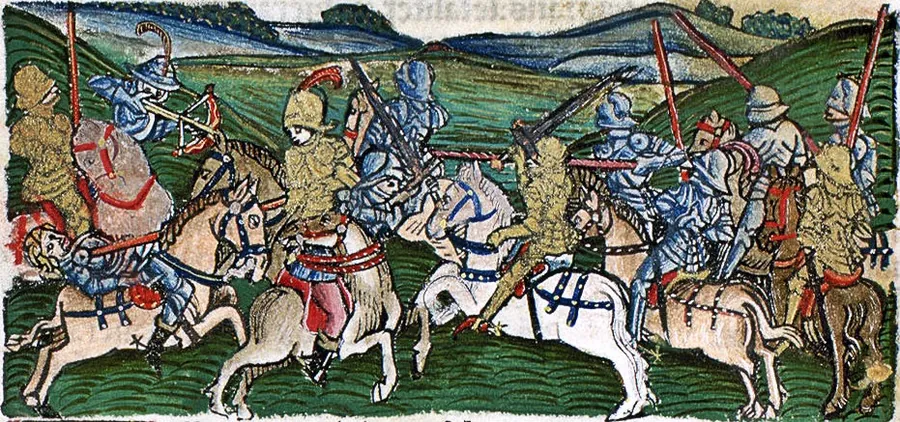
Du Cange
“2. HOSTIS, Exercitus, castra, expeditio bellica… Sed et feminino interdum genere usurpatur.”
Glossarium, Niort 1883–87, vol. 4
The documented flip: army, camp, expedition — and the feminine gender, like ours.
Etymonline
“an army organized for war, mid-13c., from Old French ost, host “army” (10c.), from Medieval Latin hostis…”
Etymonline, s.v. host
The dated English link: 13th century, from French ost, from medieval hostis.
DER
“Lat. hostem … cf. it. oste, prov., v. fr. ost, sp. hueste, port. hoste.”
Ciorănescu, DER, s.v. oaste
The whole Romania gathered: Italian, Provençal, Old French, Spanish, Portuguese.
Where we stand
What we know and what we reconstruct
Four drawers for the whole page: the flight, the root, why it holds, and what stays open.
What we know
Oaste ← Latin hostis “enemy”; medieval hostis = exercitus (Du Cange); the ost/oste/host/hueste/hoste cousins on the same root.
What we reconstruct
PIE *ghos-ti- / *gʰóstis “stranger, guest, host” (Etymonline + dictionary) — the stranger everything starts from.
Why it holds
L&S + Du Cange + DEX + DER + Etymonline tell the same chain; Șăineanu's bridge (“armed enemy → armed man”) explains it.
What stays open
The exact moment of the flip (undated); the replacement by armată (untold); oșteam (nonexistent).
Three stops
Three dates
The whole road on one rail: the old victory, the scholarly inventory, the seal.
Sisin
1550
DLR: “Sisin… multe oști birui (a. 1550–1580)” — the oldest dated Romanian use: a range, not a year.
stop 1 of 3
Du Cange
1883
Glossarium, Niort 1883–87: HOSTIS = “Exercitus, castra, expeditio bellica” — the flip, inventoried.
stop 2 of 3
DEX '09
2009
The seal: “– Lat. hostis, -em „dușman”” — with oști for plural and Oștire instead of “(Rar) Oșteni” against '98.
stop 3 of 3
1645 Herodotus (translation) · 1958–66 DER · 1998 DEX '98 · 2021 DOOM 3.
The road of the army
hostis
the enemy, in Latin
ost
the army, in Old French
oastea
the army, with us
Where shots are still fired
Three question marks, no winner
The chain is solid — the fine chronology is not. The page's verdict: DISPUTED
When did it desert?
Du Cange documents the result (with Gregory the Great: “Hostem collectum habet”) and Șăineanu the bridge — but the moment of the flip has no date. Result through books, moment undated.
DEX '98 vs '09: who fell?
In '98, sense 1 had “(Rar) Oșteni, soldați”; in '09 it has “Oștire”. The rare soldiers fell out of the definition — the dictionary does not say why.
Who replaced it: armata?
Oastea carries (Înv. și pop.); armata does the duty today. The replacement story is not in the dictionaries — the hole stays visible.
No disputed exhibit gets a single truth on this page: mechanisms stand with their source beside them, and the alternatives stay on the table.
What is NOT disputed: oaste ← hostis, the medieval army sense, the ost/oste/host cousins — every source agrees on those.
Test yourself
Which is older?
Six landmarks from the page, shuffled. Put them from oldest to newest.
Move each card to its position, 1 to 6. Keys 1–6 move the chosen card; cards drag with a finger too.
- 1958
DER begins: Lat. hostem
Position - 1550–80
Sisin: “multe oști birui”
Position - 2009
DEX '09: “Lat. hostis, -em”
Position - 1883–87
Du Cange: HOSTIS = exercitus
Position - 1998
DEX '98: with Oșteni (Rar)
Position - 1645
Herodotus: oastea (translation)
Position
Score: 0 of 6
The right order, oldest first:
- 1550–80 — Sisin: “multe oști birui”
- 1645 — Herodotus: oastea (translation)
- 1883–87 — Du Cange: HOSTIS = exercitus
- 1958 — DER begins: Lat. hostem
- 1998 — DEX '98: with Oșteni (Rar)
- 2009 — DEX '09: “Lat. hostis, -em”
The settled row: every landmark in its place.
Sources
Latin first, then Romanian, then the cousins; neighbours last. Every risky claim points at its source.
Latin
- L&S: hostis, stranger → enemy (dictionary)
- L&S: hospes, the other father (dictionary)
- Du Cange: HOSTIS = exercitus (dictionary)
Romanian
- DEX '09: “Lat. hostis, -em” (dictionary)
- DER: Lat. hostem + the cousins (dictionary)
- Ureche: “cu oastea pănă la Liov” (text)
- Neculce I: “oastea turcească” (text)
- Neculce II: “la oaste” (text)
Cousins
- ost ← hostis (dictionary)
- Treccani: oste (dictionary)
- host, mid-13c. (dictionary)
- host = guest doublet (dictionary)
- hôte ← hospes, the fence (dictionary)
Catalogue neighbours
- articolul-de-la-coada: the tail machine
- verbul-a-fi: the melt machine
- dusmanul-gand-rau: the word autopsy
- gagiu: the two-dock trial
- bogatul: the Slavic scales
Type: Fraunces and Source Serif 4, under the SIL Open Font Licence.