Resident count tells you how many people are recorded in a neighbourhood, not how crowded it is or how many people visit. Choose two neighbourhoods to compare the same measure.
Barcelona · 73 neighbourhoods
Compare two neighbourhoods
Choose A or B, then click a neighbourhood. You can also use the lists below; type to search within a selector.
Each shade groups about 15 neighbourhoods by resident count. The range gives the lowest and highest count; select an area to see its exact total.
Both bars use the same scale, ending at the largest neighbourhood count in the set.
el Raval has 19,925 more residents than la Verneda i la Pau.
Choose A or B, then click a neighbourhood. You can also use the lists below; type to search within a selector.
01 The city changes from one street to the next
A number cannot describe a neighbourhood on its own.
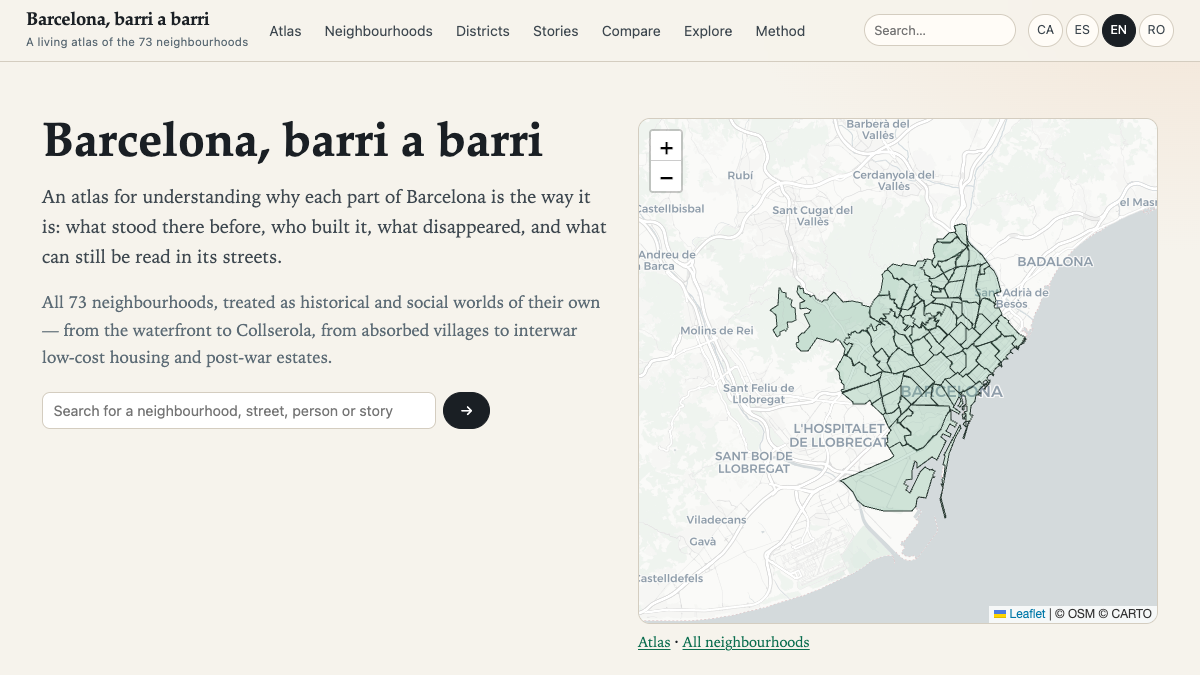
This map compares residents recorded on the same date. Each coloured shape is an official neighbourhood; its shade shows where its count sits among the 73. For street plans, routes and the history of each area, open the neighbourhood atlas.
A living atlas of Barcelona's 73 official neighbourhoods, with maps, profiles, comparisons, stories and routes through the city's layers.
02 The city changes from one street to the next
Eixample has a story in its inner courtyards too.
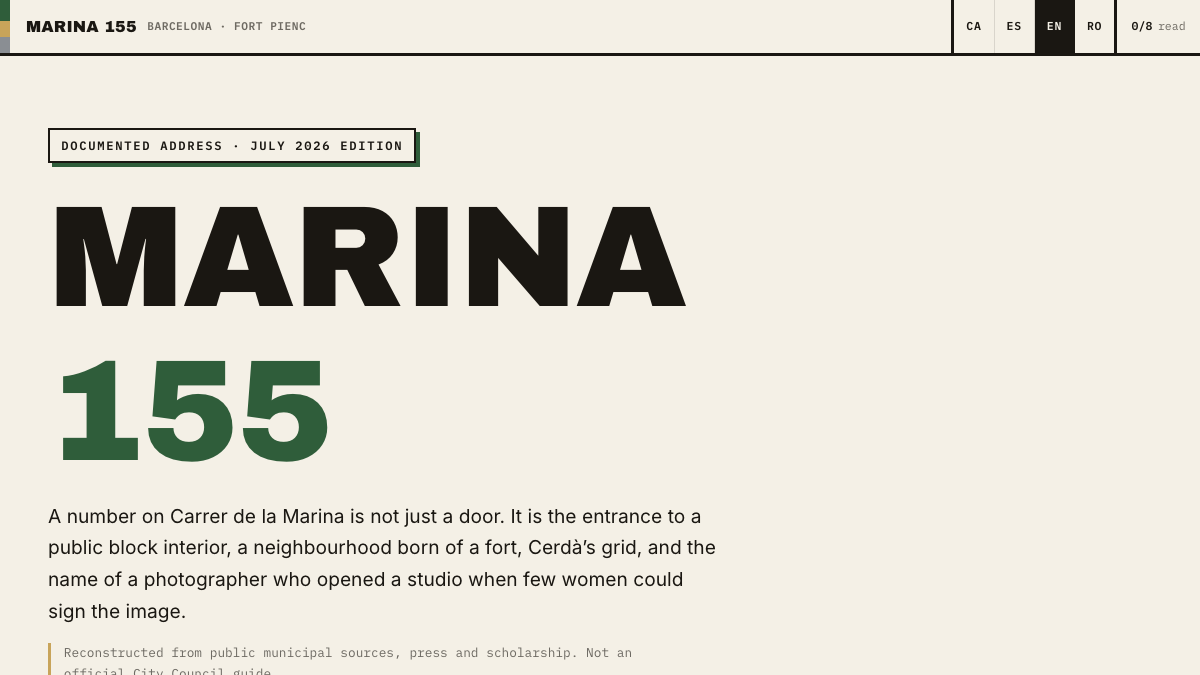
Cerdà’s plan drew blocks built around open centres. The cadastre shows what was built later, building by building. An address in Fort Pienc connects the plan with a garden and the history of photography; Barcelona also appears in the history of the metre.
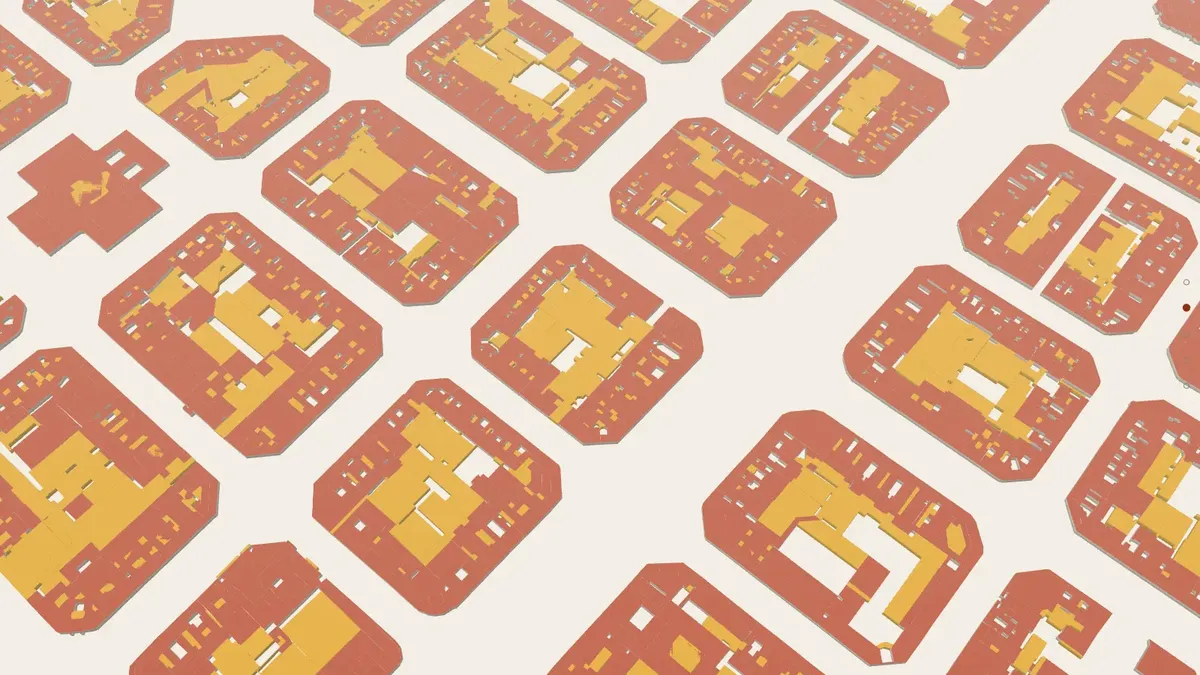
In 1859 Cerdà drew blocks built along their edges with open middles. Spain's cadastre, building by building: across 470 blocks, 73.8% of the ground is built at street level and only 54.7% from the first floor up. The Eixample in three dimensions, cut at any floor, and the rules that roofed the courtyards, from 1859 to today.
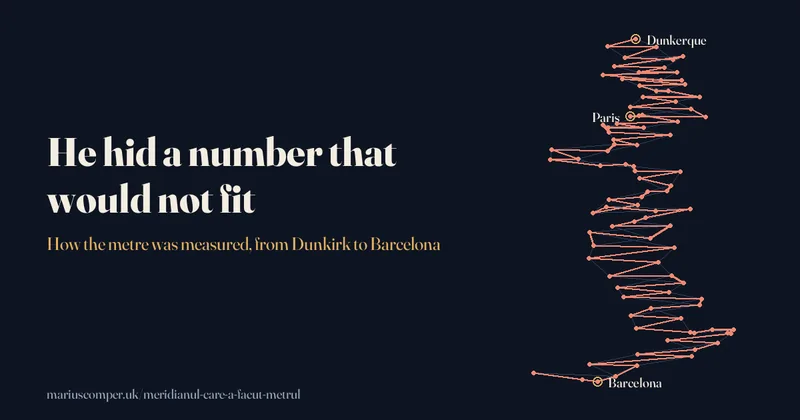
The metre came out of a 1,075-kilometre line measured tower by tower between Dunkirk and Barcelona, through the years of war and the Terror. At the southern end Pierre Méchain read the latitude from two places less than two kilometres apart and got two different answers. Follow the chain of 96 stations, drawn from Delambre's own printed table.
03 The city changes from one street to the next
The city carries the stone used to build it.
Montjuïc, beside the port, supplied sandstone for buildings in Barcelona. Follow where the stone is attested and where an attribution remains uncertain. At Colònia Güell, outside central Barcelona, another story shows how Gaudí used a hanging model to design a church.
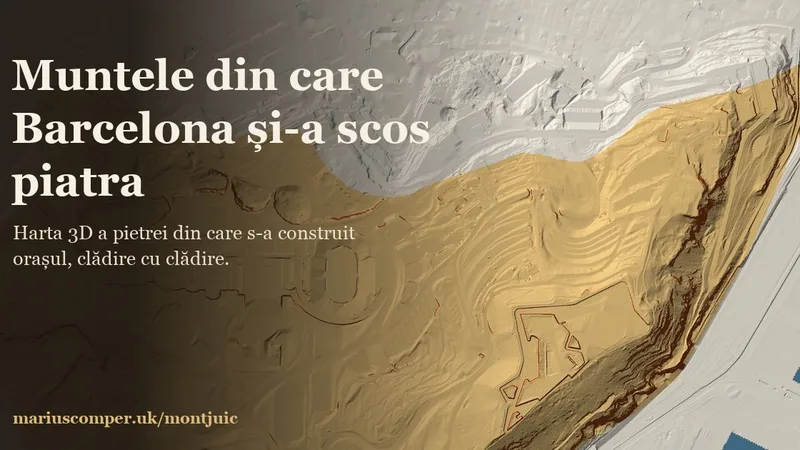
The Roman wall, the Cathedral and Gaudí's houses used sandstone from Montjuïc, the hill by the port. The LiDAR relief in 3D, a Roman quarry possibly older than Barcino and, building by building, how the link is known. Under the microscope, two of six Roman carvings "in Montjuïc stone" were another rock. In Romanian, English, Spanish and Catalan.
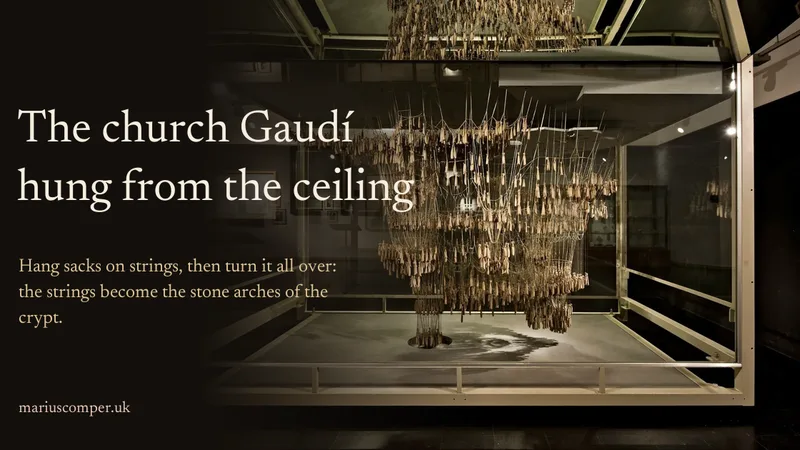
Gaudí designed the Colònia Güell church upside down, from string and sacks of shot. Hang the weights, turn the model over and walk into the crypt that gravity drew. In Romanian, English, Spanish and Catalan.
04 The city changes from one street to the next
Squares keep traces and bring people together.
The shrapnel marks on the Sant Felip Neri church wall are linked to the bombing of 30 January 1938. During La Mercè, castellers build human towers in city squares. These are different histories of the same public space.
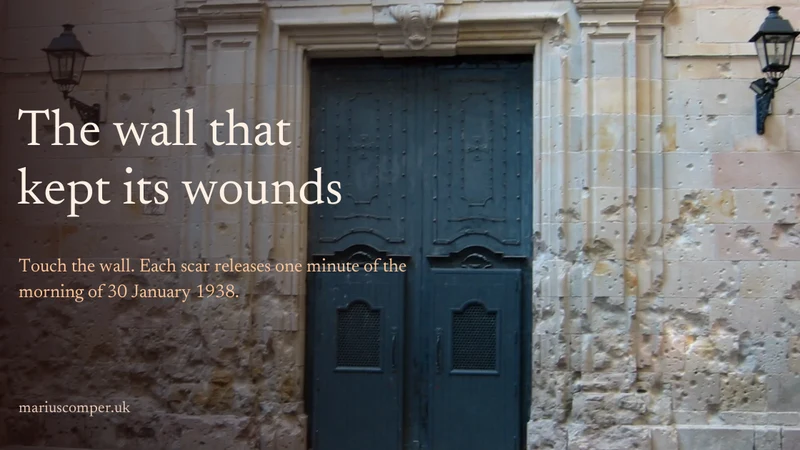
In Barcelona's quietest square, a church wall is full of small holes: shrapnel from 30 January 1938. You touch each scar and the morning comes back, minute by minute — down to the name the regime tried to give it. In Romanian, English, Spanish and Catalan.
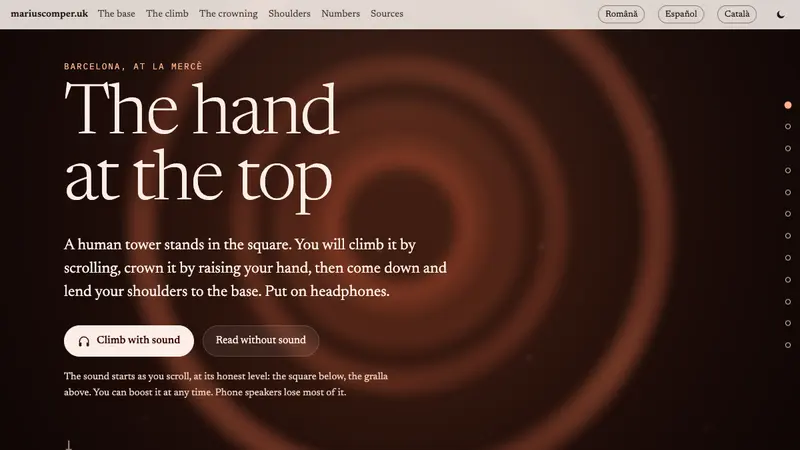
A human tower stands in the square, at La Mercè in Barcelona. You climb it by scrolling, crown it by raising your hand — like the enxaneta — then come down and lend your shoulders to the base, to the pinya. In Romanian, English, Spanish and Catalan.
05 The city changes from one street to the next
The story does not stop at the city boundary.
In nearby Granollers, a local story became a Festa Major that inspired celebrations in other Catalan towns. In Barcelona, the debate over tourist homes asks a different question. The resident count on this map measures neither short-term rentals nor visitors.
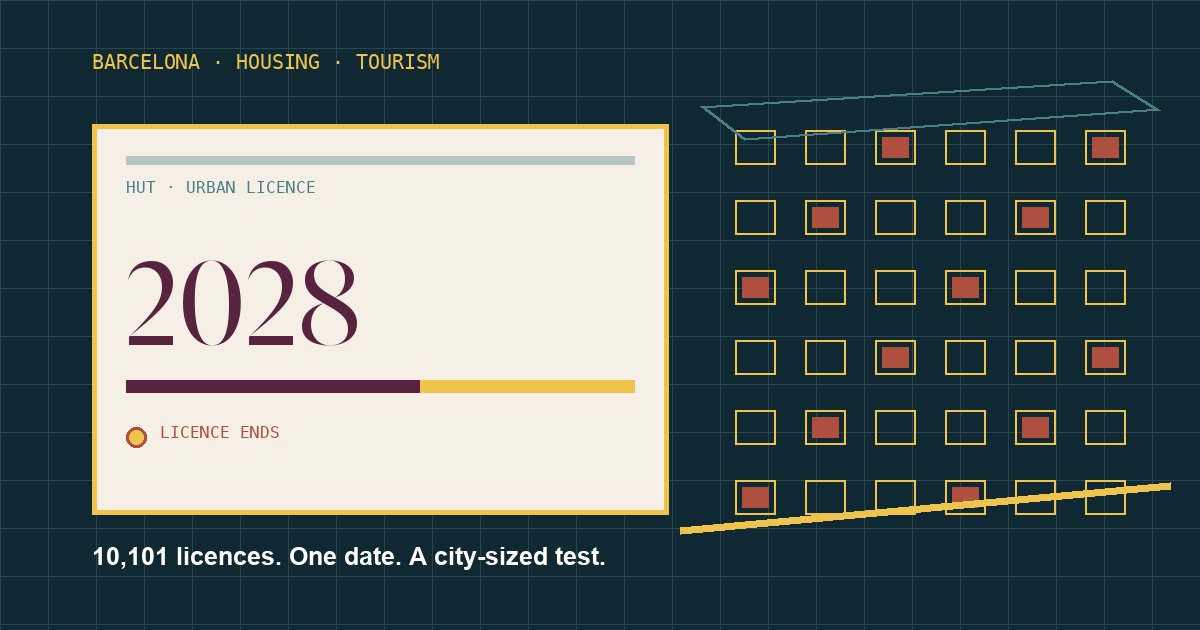
Barcelona plans to end its current HUT licences in 2028. This guide examines the housing conversion, event capacity, law, evidence and the case for both regulated Airbnb and phase-out.
Projects
Search project stories for a neighbourhood name
Search checks whether a neighbourhood name appears in the titles, summaries, descriptions or search terms for the ten projects. It does not check addresses or show where each project took place.
Type a neighbourhood name or use the button beside a selected neighbourhood.
Gaudí designed the Colònia Güell church upside down, from string and sacks of shot. Hang the weights, turn the model over and walk into the crypt that gravity drew. In Romanian, English, Spanish and Catalan.
The Roman wall, the Cathedral and Gaudí's houses used sandstone from Montjuïc, the hill by the port. The LiDAR relief in 3D, a Roman quarry possibly older than Barcino and, building by building, how the link is known. Under the microscope, two of six Roman carvings "in Montjuïc stone" were another rock. In Romanian, English, Spanish and Catalan.
In Barcelona's quietest square, a church wall is full of small holes: shrapnel from 30 January 1938. You touch each scar and the morning comes back, minute by minute — down to the name the regime tried to give it. In Romanian, English, Spanish and Catalan.
A human tower stands in the square, at La Mercè in Barcelona. You climb it by scrolling, crown it by raising your hand — like the enxaneta — then come down and lend your shoulders to the base, to the pinya. In Romanian, English, Spanish and Catalan.
In 1859 Cerdà drew blocks built along their edges with open middles. Spain's cadastre, building by building: across 470 blocks, 73.8% of the ground is built at street level and only 54.7% from the first floor up. The Eixample in three dimensions, cut at any floor, and the rules that roofed the courtyards, from 1859 to today.
The metre came out of a 1,075-kilometre line measured tower by tower between Dunkirk and Barcelona, through the years of war and the Terror. At the southern end Pierre Méchain read the latitude from two places less than two kilometres apart and got two different answers. Follow the chain of 96 stations, drawn from Delambre's own printed table.
Barcelona plans to end its current HUT licences in 2028. This guide examines the housing conversion, event capacity, law, evidence and the case for both regulated Airbnb and phase-out.
How Granollers turned a brickmakers’ wager into a participatory Festa Major, and how other Catalan towns adapted the form.
About the collection
The outlines of Barcelona’s 73 official neighbourhoods come from the city’s open data. Population is the count recorded on 1 January 2026. The map compares resident counts, not density or visitor numbers. Searching a name checks collection titles, summaries and terms; it does not prove that every project set there has been found.