HOTAR · HATÁR · TERMINUS
How did the boundary learn to decide?
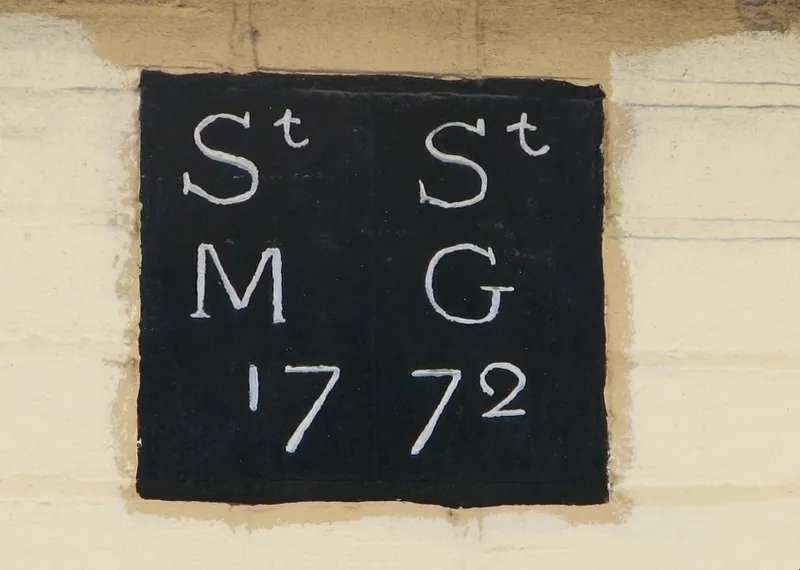
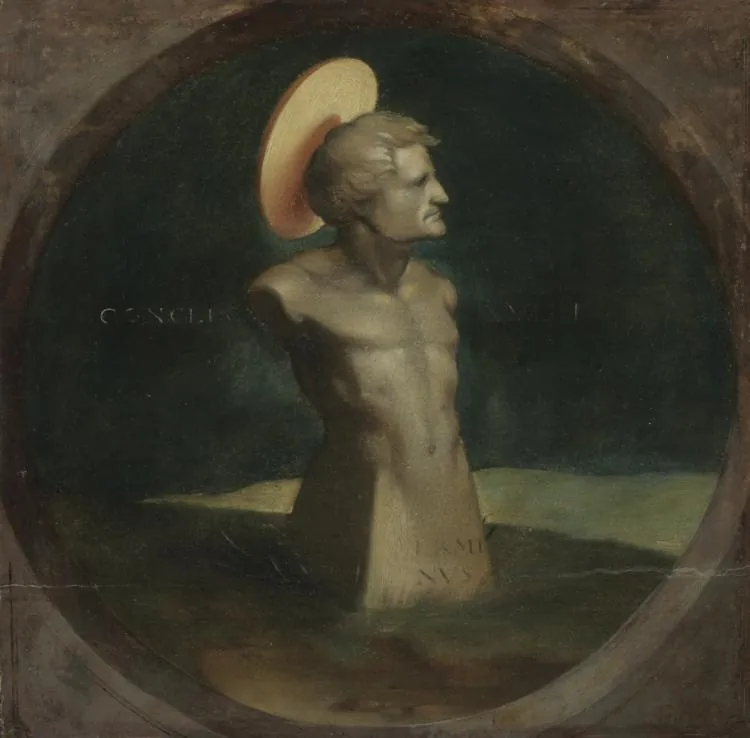
Hotar comes from Hungarian határ — the stone and the line, documented since 1095. From it, Romanian made the verb hotărî: to bound, to delimit, to decide — a leap attested at every rung. And Latin walked the same road alone: terminus → determinare.
- 1095
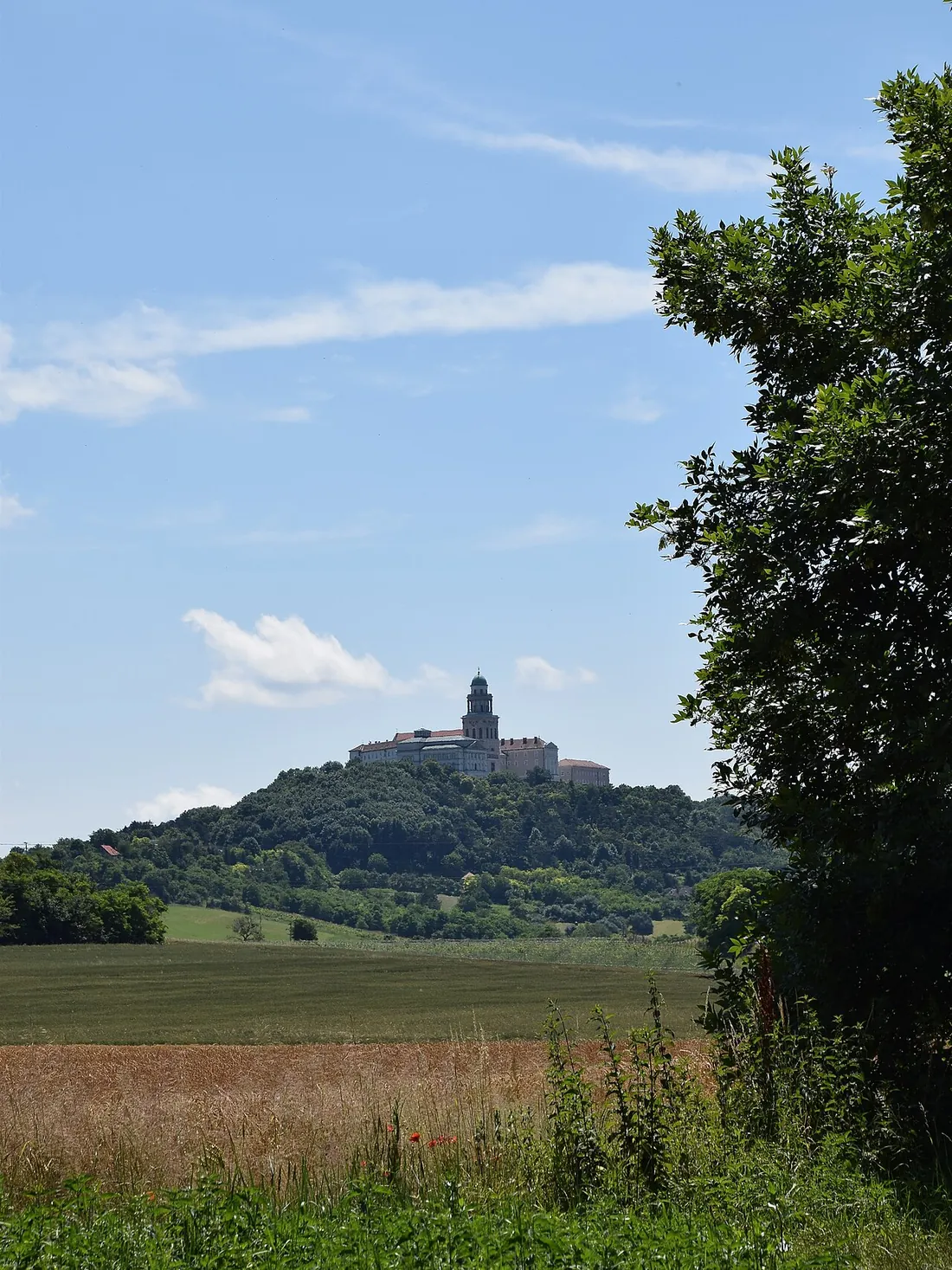
- “quod uulgo dicitur hotar”, at Pannonhalma
- 1646
- “hotarul vecinului său”, in the Pravila
- 1779
- Hungarians decide late: elhatároz
The page machine
The line, stone by stone
Seven stones, three languages. Press each piece: see which language it comes from and which dictionary holds it. The RO/LA/HU labels show the language; the stone is the line itself.
hotar today's Romanian RO
DEX '09: “– Din magh. határ” — line, stone, estate. (DEX)
hotărî the verb RO
DEX '09: “– Din hotar” — II old “a pune hotar”, I “a decide”. (DEX)
határ Hungarian HU
OklSz, p. 356: “1095: Itur ad signum quod uulgo dicitur hotar” — mound and line. (OklSz)
határoz to trace, Hungarian-style HU
ÚESz: “1519 k. hataroza 'határul kitűz… megállapít'” — to trace, to settle. (ÚESz)
hat to push forward HU
ÚESz: “Örökség az uráli korból” — kattɜ- “to press on, to go”. With a “probably”. (ÚESz)
terminus Latin LA
L&S: “a boundary-line, boundary, bound, limit” — the god and the line. (L&S)
determinare the twin LA
L&S: “to bound… II. Transf., to fix, settle, determine” — the same metaphor, another kin. (L&S)
hotter does NOT enter the machine: “germ. dial. hotter” is Scriban's outdated curiosity — it stands in the stamp, not on the thread.
At home
Ploughmen, chroniclers, surveyors: 1646–1776
The 17th century ploughs and writes — the Pravila punishes, the chroniclers border; from 1646, hotar flows: ploughmen, Silesias, Dacias, surveyors.
1646: the Pravila
Eustratie, “Pentru plugari”: “…să nu cumva îndrăznească a eși den hotarul său… căci au călcat hotarul altuia”. Gaster I, p. 119. (Pravila)
1645–1675: the chroniclers
Ureche: “hotarul cel bătrân lăsatu”. Costin: Silesia “se hotăresce cu dênșii acea țéră” — it borders. Kogălniceanu 1872, t. I, pp. 181, 253. (Chronicles)
1717–23: Cantemir
The Hronic: “după hotărârea a tuturor… gheografi iaste hotarul Dachiii” — hotărâre as boundary-fixing. Unpaginated transcription. (Cantemir)
Family: surveyors and waverers
hotarnic (1776, Uricariul); hotărnicie (Prav. Ipsilanti); hotăraș ← Hu. határos (DER); nehotărât (Budai-Deleanu); hotărît, old “delimitat”. (MDA2, DEX, DER)
Custom: beaten at the boundary
Zanne, VI, pp. 151–152: the young witnesses “eraŭ bătuți în lege chiar acolo”, villagers “se lovesc cu capetele” against the mark and curse its breakers. (Zanne)

The same line, other words
The other boundaries: graniță, frontieră, margine
Four words for the same line: Slavic gives graniță, French gives frontieră, Latin gives margine — and hotar is their elder brother.
The Slavic graniță
DEX: “Din bg., sb. granica”. DER: “Sl. granica” (Miklosich…). MDA2: first at Neculce; Moldavian variant “hra~”. (DEX, DER)
The French frontieră
DEX: “Din fr. frontière”, old var. fruntarie. MDA2: first at Maiorescu; CADE prints it asterisked. The hurried neologism. (DEX)
The Latin margine
DEX: “Lat. margo, -inis” — where a surface ends; the border sense is secondary, MDA2 marks it “(Îvp)”. The old inheritance. (DEX)
The double limită
DEX: “Din fr. limite, lat. limes” — a border only inside “limită teritorială”. MDA2: first at Barițiu. French + Latin, bundled. (DEX)

Who saw the line
Four witnesses
From DEX to OklSz and Scriban: four dictionaries, each seeing one stone.
DEX: hotar
“HOTÁR… 1. Linie de demarcație… ◊ Piatră de hotar… – Din magh. határ.”
The explanatory dictionary, s.v. hotar
The Romanian sheet: line, stone, estate. The most cited seal.
DER: the Slavic reservation
“Mag. határ… Nu este sigur că mag. a dat sl. chotarŭ… însă și cuvîntul rom. poate proveni din sl., cf. sb. atar “regiune”.”
Ciorănescu, DER, s.v. hotar
The etymological reservation: the Hungarian–Slavic direction, disputed. Shown, not hidden.
OklSz: 1095
“1095: Itur ad signum quod uulgo dicitur hotar (Pannh. 15/Oo)…”
OklSz, pp. 356–357
Hungarian with documents: mound and line, at Pannonhalma.
Scriban: the leap in one line
“Limitez, pun hotar. Fig. Decid, pronunț o sentență. Precizez, determin, fixez…”
Scriban, s.v. hotărăsc
The whole leap in one line: hotar → determination → decision.
Where we stand
What we know and what we reconstruct
Four drawers for the whole page: the line, the stars, why it holds, and what stays open.
What we know
hotar ← határ (DEX, MDA2, DER, ÚESz agree); hotărî ← hotar (DEX), with “cf határozni” (MDA2, DER); the leap attested at every rung, 1646–1776.
What we reconstruct
hat ← kattɜ- Uralic (ÚESz, “probably”); -ár with assumed morphological difficulties. Little starred, much documented.
Why it holds
ÉrtSz senses 1/4/6 overlap DEX 1/2/Trs.12; OklSz gives 1095; the Latin twin determinare walks the same road alone.
What stays open
hotărî ← hotar or cf határozni?; the Slavic reservation (DER vs ÚESz); the “decide” sense — first attested when?; any hotar before 1632.
Three stops
Three dates
The whole road on one line: the old stone, the ploughmen, the neighbours.
OklSz
1095
“Itur ad signum quod uulgo dicitur hotar” — the same spelling as today, in 1095.
stop at 1 of 3
Pravila
1646
“hotarul vecinului său” — ploughmen and boundaries, at Iași.
stop at 2 of 3
Costin
c. 1675
“se hotăresce cu dênșii acea țéră” — Silesia borders. (conventional date)
stop at 3 of 3
1776 hotarnic · 1779 elhatároz · 1796 határozat · Budai-Deleanu nehotărât · 1901 Zanne.
The road of the boundary
határ
the boundary, in Hungarian
hotar
the boundary, at home
hotărî
to decide
Where the line tangles
Three question marks, no winner
The line is solid — the derivations are not. The page verdict: DISPUTED
hotar + -î or cf határozni?
DEX: “Din hotar”. MDA2 and DER add “cf mg határozni”. Calque or clean derivation? The page follows DEX, with the “cf” in view.
Hungarian or Slavic?
DER: “…și cuvîntul rom. poate proveni din sl., cf. sb. atar”. ÚESz (newer): from Slovak “kevésbé valószínű”. The dispute leans Hungarian — the page shows both papers.
When did it first decide?
MDA2 dates the verb at Costin 1675 — but in the border sense, not the decision sense. The “decide” sense: first attestation unknown. The hole stays visible.
No disputed stone gets a single uncited truth on this page: the derivations stand side by side, the reservations stay visible, the missing datings confess.
What is NOT disputed: hotar ← határ; the hotar → hotărî leap; the Latin twin — on these all sources agree.
Test yourself
Which is older?
Six landmarks from the page, shuffled. Set them from the oldest to the newest.
Move each card to its place, 1 to 6. Keys 1–6 move the chosen card; cards also drag by finger.
- c. 1675
Costin: “se hotăresce cu Leșii”
Place - 1095
OklSz: “quod uulgo dicitur hotar”
Place - 1779
ÚESz: elhatároz “dönt”
Place - 1646
Pravila: “hotarul vecinului său”
Place - 1776
Uricariul: hotarnic
Place - 1717–23
Cantemir: hotărârea Dachiii
Place
Score: 0 of 6
The right order, oldest first:
- 1095 — OklSz: “quod uulgo dicitur hotar”
- 1646 — Pravila: “hotarul vecinului său”
- c. 1675 — Costin: “se hotăresce cu Leșii”
- 1717–23 — Cantemir: hotărârea Dachiii
- 1776 — Uricariul: hotarnic
- 1779 — ÚESz: elhatároz “dönt”
The settled row: 1095 OklSz, 1646 Pravila, c. 1675 Costin, 1717–23 Cantemir, 1776 hotarnic, 1779 elhatároz. Composition years are conventional.
Sources
First the Hungarian thread, then the Romanian years and the Latin twin; the neighbours last. Every risky claim points at its source.
The Hungarian thread
The Romanian years
- Gaster, p. 119: the Pravila (scan)
- Kogălniceanu, t. I: Costin (scan)
- Zanne, VI: the custom (scan)
- DEX '09: hotar (dictionary)
- DEX '09: hotărî (dictionary)
- Costin, transcription (Wikisource)
- Neculce, transcription (Wikisource)
The Latin twin and the rivals
- L&S: determinare (dictionary)
- L&S: terminus (dictionary)
- DEX: graniță (dictionary)
- DEX: frontieră (dictionary)
- DEX: margine (dictionary)
- DEX: limită (dictionary)
Catalogue neighbours
- articolul-de-la-coada: the tail machine
- verbul-a-fi: the melting machine
- dușmanul-gând-rău: the autopsy
- gagiu: the two-box trial
- bogatul: the Slavic scales
- oastea: the Latin reversal
- sufletul-și-duhul: the bellows
- prietenul: the scale
- dragostea: the thread
Type: Fraunces and Source Serif 4, under the SIL Open Font Licence.