ȘURUB · ȘURUP · SCHRAUBE
Why Iași says șurub and Transylvania says șurup?
One German word with two doors: in the east it enters via Polish and Ukrainian and keeps its b — șurub; in the west it enters via Hungarian and turns to p — șurup. DEX says direct borrowing from German dialect; MDA2 lists all three roads and dates the first sighting to Dosoftei, in the 1680s. And Creangă's mother twists șuruburi through children's hair.
- 1680s?
- first sighting, per MDA: Dosoftei
- 2 doors
- east with b, west with p
- 0×
- the Turkish route: falsified


The page machine
The thread, turn by turn
Seven turns, six languages. Press each turn: see which language the form comes from and which dictionary holds it. The labels show the language; the sow carries a question mark.
șurub today's Romanian RO
DEX '09: “– Din germ. dial. Schrube” — a threaded rod, with the șurup variant. No middleman. (DEX)
Schraube German DE
Pfeifer: “spätmhd. schrūbe (1361)”; Kluge: Swabian schrauf — the key to șraf. Origin: “obscure”. (Pfeifer, Kluge)
śruba Polish, 1562 PL
WDLP: “ab 1562” at Rej — “szroba, szruba”. Etymon: “mhd. Schrûbe”. (WDLP)
шруб Ukrainian UK
MDA2 lists it among the etymons: “ucr шруб”. The Ukrainian dictionary: unchecked — it stands as a quote from MDA. (MDA2)
sróf Hungarian HU
MDA2: “mg sróf (dal soróf stróf)”. TESz: unchecked. The western door. (MDA2)
șurup the west RO
Scriban: “șurúb (est) și șurúp (vest)”; Șăineanu and Damé seal the east: “șurub n. Mold.”, “[Mold.]”. The split. (Scriban)
scrōfa the sow? LA DISPUTED
Pfeifer and Vasmer derive it from Latin scrōfa, the sow — the thread curled like a piglet's tail. Kluge: “Origin obscure”. Shown, not followed. (Pfeifer)
One precision: DEX '09 says direct borrowing, no middleman — the Polish-Ukrainian chain is Scriban's, Cihac's and MDA2's. The machine shows both doors and picks neither.
At home
From Dosoftei to Damé: the 1680s?–1898
Three centuries of paper, with a hole at the start: the Dosoftei dating comes from a single voice, MDA2. From Cihac on, everything is scan and page.
The 1680s: Dosoftei, a single voice
MDA2: “At: DOSOFTEI, V. S. octombrie 73v/21” — the Lives of the Saints, Iași, 1682–1686. Passage text: unseen; Dacoromanica: unreached. If true, the word is 17th century. (MDA2)
1879: Cihac, page 397
The cloud of cognates — Russian, Polish, Czech, Hungarian — filed under “Slavs” yet derived “du mhall. schrûbe”. DER cites it as “II, 394”: the entry sits at 397. (Cihac)
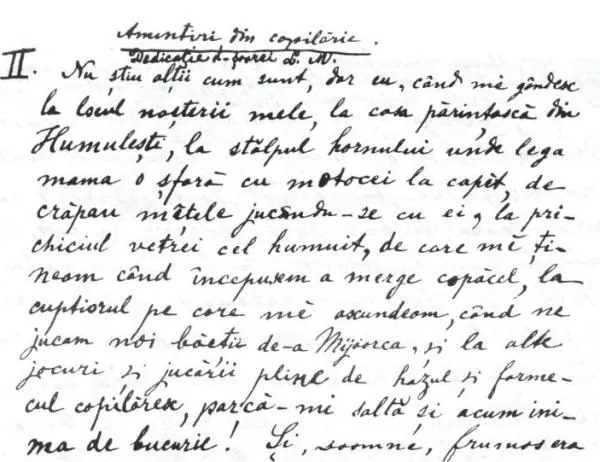
1881–1892: Creangă, the mother and the șuruburi
Serialization in Convorbiri (1881–82), then the book: p. 41 “să ne facă musai cite-un șurub, două prin cap”, p. 98 “s-o întoarcă la șurub”. Both pages verified in the scan. (Creangă)
1895–1898: Damé, in two books
Damé: “ŞURUB… [Mold.] V. şurup” — the Moldavian seal; plus “şurupul vioarei”. The same Damé, in Terminologie, p. 113: the first șurubelniță — scan unfound. (Damé, Dame)
What was not found
Pontbriant 1862: no scan. The Buda Lexicon: bot-walled, human-checkable in minutes. Tiktin, tariffs, catalogues: nothing. Alecsandri and Caragiale: works unidentified. (holes)

Toolbox neighbours
The toolbox: who else fastens beside the screw
Four neighbours with dictionary seals: the Latin one, the Slavic one, the home-grown one, and the iron guests.
The nail, the Latin in the box
DEX: “– Lat. cuneus” — the sharp-tipped piece you hammer. The nail is the incumbent; the screw is the newcomer you twist. (DEX)
Piron, the great Slav
DEX: “– Din sl. pironŭ” — “p. gener. cui mare”, first seen at Coresi, per MDA2. Construction timber, not fine mechanics. (DEX)
Piuliță, the home-grown nut
DEX: “Piuă + suf. -uliță” — the mortar's diminutive, no borrowing. The screw's mate is Romanian born and bred. (DEX)
The iron guests: nit, diblu, șaibă
Nit from German Niet (1875, per MDA); diblu from German Dübel; șaibă from German Scheibe; holțșurub straight from holzschraube — the last one is only in dexonline, not in DEX. French vis never competed, per the dictionaries. (DEX)

Who saw the screw
Four witnesses
From DEX to MDA2 and Cihac: four dictionaries, each with its bit of the thread.
DEX '09: direct
“…[Var.: șurup s. n.] – Din germ. dial. Schrube.”
The explanatory dictionary, s.v. șurub
No middleman: German dialect, direct. The most cited seal.
MDA2: three roads
“[At: DOSOFTEI, V. S. octombrie 73v/21 / E: ger dal Schrūbe, ucr шруб, mg sróf…]”
MDA2 (2010), s.v. șurub
Three etymons and dozens of variants: every door at once.
Scriban: east and west
“șurúb (est) și șurúp (vest)… (rut. šruba, rus. ščurúp, pol. szrub…)”
Scriban (1939), s.v. șurub
The -b/-p split, with the Slavic chain in brackets.
Cihac: the 1879 cloud
“Șurúb, șurúp, s., vis…; russ. šturupŭ…; pol. szrub…; magy. csavar, sróf…; du mhall. schrûbe…”
Cihac, vol. II, p. 397 (scan)
Filed under “Slavs”, derived from Middle High German: the filing paradox.
Where we stand
What we know and what we reconstruct
Four drawers for the whole page: the doors, the stars, why it holds, and what stays open.
What we know
The German route, two doors: east șurub via Polish and Ukrainian, west șurup via Hungarian. DEX says direct, MDA2 lists three roads. Turkish: falsified; the Balkans: bypassed.
What we reconstruct
Nothing starred: *skrofa is quoted from Brückner, the sow is Pfeifer's and Vasmer's quote. Forms are shown, not asserted.
Why it holds
The -b/-p split fits the two doors; șurubelniță is a Romanian formation attested in 1898, per MDA; holțșurub comes straight from holzschraube (dexonline).
What stays open
The Dosoftei text — unseen. The Buda Lexicon — unchecked. Tiktin, tariffs, catalogues — unfound. The dating of шруб — unknown.
Three stops
Three dates
The whole road on one thread: the form, the neighbour, the mother.
Pfeifer
1361
“spätmhd. schrūbe (1361)” — the German form's date, per the dictionary. The deed behind it: unchecked.
stop at 1 of 3
Rej
1562
“ab 1562” — Polish śruba at Rej, with the “mhd. Schrûbe” etymon. The first dated link of the eastern door.
stop at 2 of 3
Creangă
1892
“cite-un șurub, două prin cap” — p. 41 of the first edition. The word, in the mother's hand.
stop at 3 of 3
1680s Dosoftei? · 1771 Reșița · 1879 Cihac · 1881 Creangă · 1895 Damé · 1898 Damé.
The road of the screw
schrūbe
the form, in Middle High German
śruba
the neighbour, in Polish
șurub
the fastening, at home
Where the thread creaks
Three question marks, two verdicts
The doors hold — the dating does not. The page verdict: DISPUTED
Dosoftei, the 1680s? — a single voice
Only MDA2 dates it; the passage: unseen; Dacoromanica: unreached. If true, the word is 17th century, not a recent loan. The page cites the dating; the passage stays unfound.
Direct or via the Slavs?
DEX '09: straight from German dialect. Scriban and Cihac: via Ruthenian, Russian, Polish. MDA2: all three. The page verdict: two doors, one German house.
Turkish and the Balkans?
Turkish: vida is the screw, şurup is the syrup — a false friend, a dead route. The Balkans: Serbo-Croatian šaraf looks like a parallel loan from Hungarian (tertiary source), not the donor; in RBE, Bulgarian lacks the word. Verdict: bypassed.
No disputed route gets an uncited truth on this page: datings stand with their holes beside them, doors with witnesses, and dead routes with their papers.
What is NOT disputed: the word's German house; the east-west split; Creangă's mother — on these all sources agree.
Test yourself
Which is older?
Six landmarks from the page, shuffled. Set them from the oldest to the newest.
Move each card to its place, 1 to 6. Keys 1–6 move the chosen card; cards also drag by finger.
- 1879
Cihac: the cloud at page 397
Place - 1361
Pfeifer: schrūbe
Place - 1892
Creangă: the mother's șuruburi
Place - 1562
Rej: śruba
Place - 1881
Creangă: Amintiri in the magazine
Place - 1771
Wikipedia: the Reșița furnaces
Place
Score: 0 of 6
The right order, oldest first:
- 1361 — Pfeifer: schrūbe
- 1562 — Rej: śruba
- 1771 — Wikipedia: the Reșița furnaces
- 1879 — Cihac: the cloud at page 397
- 1881 — Creangă: Amintiri in the magazine
- 1892 — Creangă: the mother's șuruburi
The settled row: 1361 schrūbe, 1562 śruba, 1771 Reșița, 1879 Cihac, 1881 Creangă in the magazine, 1892 Creangă in the book. 1771 comes from a tertiary source; Dosoftei is missing — a single voice.
Sources
First the German thread, then the Romanian years and the toolbox; the neighbours last. Every risky claim points at its source.
The German thread
- DWDS: Schraube (dictionary)
- WDLP: śruba (PDF)
- Kluge: Schraube (dictionary)
- Brückner: śruba (dictionary)
- Vasmer quoted at Graz (PDF)
- TDK: vida — the Turkish fence (dictionary)
- RBE: винт — the Bulgarian fence (dictionary)
The Romanian years
- DEX '09: șurub (dictionary)
- Cihac, vol. II (scan)
- Creangă 1892 (scan)
- Damé, vol. 4 (scan)
- Creangă: Amintiri (Wikisource)
The toolbox
- DEX: cui (dictionary)
- DEX: piron (dictionary)
- DEX: piuliță (dictionary)
- DEX: nit (dictionary)
- DEX: șurubelniță (dictionary)
- dexonline: holțșurub — not in DEX (dictionary)
Catalogue neighbours
- articolul-de-la-coada: the tail machine
- verbul-a-fi: the melting machine
- dușmanul-gând-rău: the autopsy
- gagiu: the two-box trial
- bogatul: the Slavic scales
- oastea: the Latin reversal
- sufletul-și-duhul: the bellows
- prietenul: the scale
- dragostea: the thread
- hotarul: the line
- geamul: the pane and the goblet
Type: Fraunces and Source Serif 4, under the SIL Open Font Licence.