FEMEIE · FAMILIA · HOUSEHOLD
Why was the woman a household?
Femeie is a Latin household narrowed to a single person. DEX derives it from Lat. familia, with no sound steps shown; DER says the sense change appears only in Daco-Romanian. The four Romance cousins kept their household — in none did it become a woman — and the proof sits in dated attestations, from Coresi's fămeaia to Floarea Darurilor.
- Lat. familia
- all DEX '09 gives: the household, no steps
- 1579–80
- Coresi: wife and whole house in one line
- only in Daco-Romanian
- DER's verdict — with its parallels beside it


The page machine
The pipe, joint by joint
Seven joints, two languages, three grades of tightness. Each joint wears its language on a tag, and the seals show how tight the link is: attested, etymology, hypothesis. The false friend carries a question mark.
familia Latin LA ETYMOLOGY
Lewis & Short: “the slaves in a household, a household establishment” — the slaves of the house, then the estate, the kin, rarely the members. Mark this: not the wife with the children. The pipe starts here. (L&S, via Perseus)
fămeaia Coresi, 1579–80 RO ATTESTED
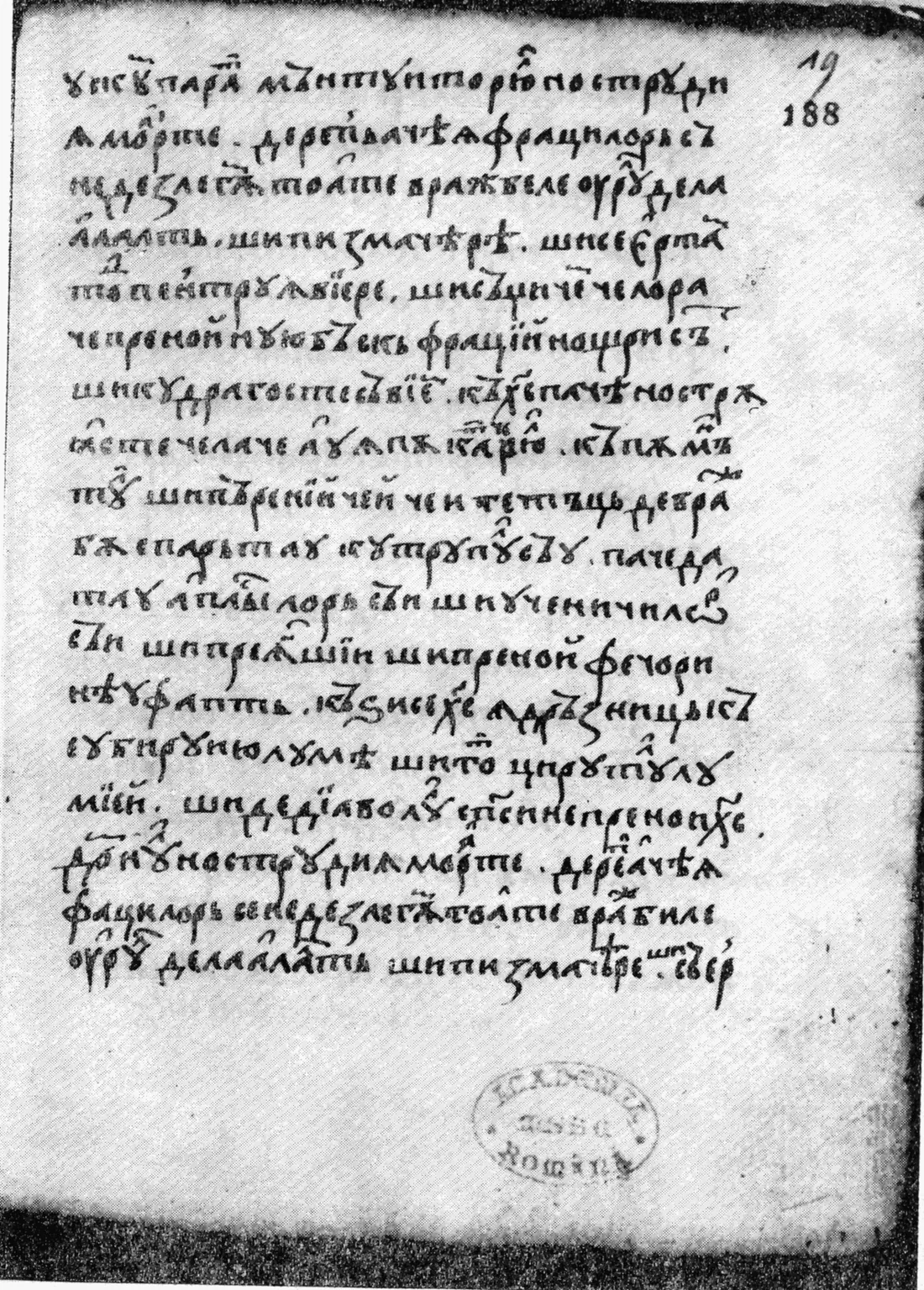
“Și cu muiarea ta și cu toată fămeaia ta pasă la besearecă” — wife and whole house, told apart in one line. The print reads фъмѣа; DLR transcribes fămeaia and cites CORESI, ap. GCR I, 24/31. (DLR, after Gaster)
fomeaea The Legend, c. 1600 RO ATTESTED
“să meargă la besearecă cu toată fomeaea” — after Șăineanu, who takes it from the Legenda Duminecei. The papers passed through Măhaciu around 1600, after Hasdeu. (Șăineanu, after Hasdeu)
fămeaie The Antologhion, 1646 RO ATTESTED
“Și împărțea pre fămeaie bucate” — AP. 1646, 5v, after DLRLV: the family receives the dishes. A dictionary transcription, no facsimile seen. (DLRLV)
fămeaia Floarea Darurilor, 1693 RO ATTESTED
“Lot, ieși tu și muiarea ta și fămeaia ta afară din cetate” — FL. D 1693, 32r, after DLRLV: both words again, told apart. (DLRLV)
femeie Romanian today RO ETYMOLOGY
DEX '09: “FEMEIE, femei, s. f.” — “Lat. familia.” That is all: no sound steps, no middle forms. A dictionary etymology, not a proven chain. (DEX)
femina the false friend? LA HYPOTHESIS DISPUTED
French femme comes from femina, another Latin word — not from familia. None of the consulted entries mentions it; it stands here as a fence, not a link. (Wiktionary, fence)
How to read the seals: attested means found in a dated text; etymology, a route a dictionary proposes; hypothesis, a link set with a question mark. The pipe is tight on attestations and on the dictionary; when the sense narrowed stays this page's hole.
At home
From Coresi to DEX: 1579–2009
Four hundred years of the written house, in four stops. Every quotation brings its paper: the press, the manuscript, the century, or the dictionary.
The press
The golden line sits with Coresi: “Și cu muiarea ta și cu toată fămeaia ta pasă la besearecă” — wife and whole house, told apart. Gaster's page wears the 1579–1580 header, and DLR cites CORESI, ap. GCR I, 24/31. The print reads фъмѣа; the quotation here follows DLR's transcription.
The papers
The Legenda Duminecei says “să meargă la besearecă cu toată fomeaea” — after Șăineanu, who dates it 1600. Hasdeu shows them written between 1580 and 1619, with popa Grigorie noting the title around 1600.
The century in books
The 1646 Antologhion shares “pre fămeaie bucate”, and the 1693 Floarea Darurilor leads Lot out “cu muiarea ta și fămeaia ta” — both after DLRLV, from dictionary transcriptions. The seventeenth century still says family.
The dictionaries
CADE puts family first; Șăineanu 1929 writes flatly that the sense narrowed to its female representative; Scriban divides the centuries — “Sec. 16-17. Familie. Azĭ. Soție, nevastă”; DER says “numai în dacorom”; DEX '09 closes with Lat. familia.

The Romance neighbours
The cousins who kept their household
Four great cousins, one inheritance, another road: each kept its house, and none made a woman of it. The proof sits in their dictionaries, not in our say-so.
The Italian
Treccani gives famiglia as the community of those living under one roof — from lat. famĭlia. Treccani also recalls that at first they were “the slaves and servants under the same roof”. For woman, the Italian says donna — from domina, the mistress. The household kept. (Treccani)
The Frenchman
Famille is the family, the group of kin — after Wiktionary, since CNRTL would not let machines read it. And for woman French has another word, femme, from femina: this page's false friend. (Wiktionary)
The Spaniard and the Portuguese
RAE derives familia from lat. familia — the group bound by marriage, kinship, or living together; sense 10 keeps even the servants, “criados”. Priberam gives família as the host of kin, above all those living together. For woman, the Spaniard says mujer, the Portuguese says mulher — both from mulier, the same root as our muiere. (RAE, Priberam)
Muierea
While femeie meant the house, the woman-woman was called muiere — from lat. mulier, says DEX. DLR keeps her from the psalters to the Bible: “Muiarea ta, ca o viță rodită”, “Numele muierii lui Avram, Sara”; the Palia de la Orăștie says “Şi dzise de Sara, muiarea lui”, after Vieru 2010. The rival, not the kin. (DLR, DEX)
The doublet
When femeie narrowed to its representative, the language brought its house back on another train: familie. DER says it plainly: “Este dublet de la familie.” (DER)
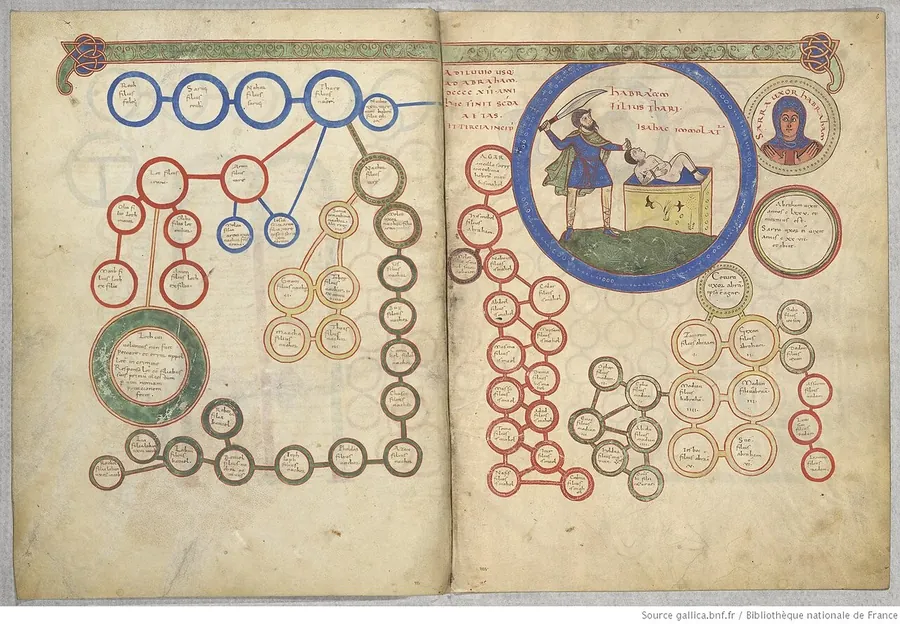

In their own words
Six witnesses
The dictionaries tell the story themselves — each with its quotation, its source, and its measure.
DEX '09
“FEMEIE, femei, s. f. 1. Persoană adultă de sex feminin; muiere. 2. Persoană de sex feminin căsătorită. … – Lat. familia „familie”.”
DEX '09 (2009), via dexonline
The household is the father, quotes and all — with no sound steps shown.
DER
“1. (Înv.) Familie. … Lat. fămĭlia … Schimbarea semantică apare numai în dacorom. … Este dublet de la familie.”
DER (Ciorănescu), via dexonline
The hard verdict, the parallels, and the doublet: the whole story in one entry.
MDA2
“femeie sf [At: CUV. D. BĂTR. II, 52 / … / E: ml familia „familie”] 1-2 (Înv) Familie. 3 (Înv) Femeia și copiii. 4 (Înv) Copiii…”
MDA2, via dexonline
The narrowing ladder, rung by rung; ml stays unexpanded.
Șăineanu 1929
“[Vechiu-rom. fămeaie, familie … = lat. FAMILIA: în limba modernă s'a restrâns sensul la reprezentantul ei femeiesc]”
Șăineanu, 6th ed. (1929), via dexonline
The sentence that names the narrowing, with the Legend as witness.
Scriban 1939
“(lat. familia, familie…) Sec. 16-17. Familie. Azĭ. Soție, nevastă.”
Scriban (1939), via dexonline
The division of the centuries: family then, wife today.
Lewis & Short
“fămĭlĭa … the slaves in a household, a household establishment, family servants, domestics (not = family, i.e. wife and children…)”
L&S, via Perseus
The starting point: the slaves of the house, anything but the wife.
The reckoning
What we know and what we do not
Four cards on the table: two hold, one quarrels, one is missing.
We know
The father is familia — so give all five Romanian dictionaries on the page. And in the sixteenth and seventeenth centuries the word meant the house: Coresi, the Legend, the Antologhion, and Floarea Darurilor witness it.
The narrowing
The MDA2 ladder shows the road: family, the woman and children, the children, the kin — down to the female adult. Șăineanu names it: the sense narrowed to its female representative.
The dispute
DER says “numai în dacorom”, yet DER itself strings its parallels: alb. fëmiljë “copil”, v. lomb. fameja, gal., port. femia. What they did with the sense lies beyond the quotation — the tension stays in the same entry, unresolved.
The hole
None of the dated texts checked here shows the moment of narrowing: in 1693 it is still family, and today's sense has no birth certificate. When the woman became the woman stays this page's question.
The dates that hold
Four dates
Four stops hold the whole pipe: one press, one legend, and two seventeenth-century books — each with its paper.
Coresi: fămeaia
1579–80
“Și cu muiarea ta și cu toată fămeaia ta” — after DLR, which cites CORESI, ap. GCR I, 24/31. The date sits on Gaster's page.
Witness 1 of four
The Legend: fomeaea
c. 1600
“să meargă la besearecă cu toată fomeaea” — after Șăineanu. The Măhaciu papers were written between 1580 and 1619, after Hasdeu.
Witness 2 of four
The Antologhion: fămeaie
1646
“Și împărțea pre fămeaie bucate” — AP. 1646, 5v, after DLRLV. A dictionary transcription.
Witness 3 of four
Floarea Darurilor: fămeaia
1693
“Lot, ieși tu și muiarea ta și fămeaia ta” — FL. D 1693, 32r, after DLRLV. Both words again.
Witness 4 of four
Four dates, four papers: Gaster 1891 for Coresi, Șăineanu for the Legend, DLRLV for the seventeenth century.
The ladder of forms
familia
Latin: the slaves of the house, the household
fămeaia
Coresi, 1579–80
fomeaea
The Legend, c. 1600
fămeaie
The Antologhion, 1646
fămeaia
Floarea Darurilor, 1693
femeie
DEX '09: Lat. familia
The quarrel
Only here? DER's parallels
One dictionary says two things that clash — and the century of narrowing has no paper. We set them face to face. DISPUTED
DER: the narrowing is ours alone
“Schimbarea semantică apare numai în dacorom.” Stated flatly and with heavy bibliography: Pușcariu, Candrea-Densușianu, REW, DAR, Wagner, Rohlfs. Nobody else narrowed to the woman — after DER.
DER again: the parallels
“cf. alb. fëmiljë «copil», v. lomb. fameja, gal., port. femia.” What they did with the sense, the quotation does not say — yet they stand in the same entry as the verdict, like witnesses unheard. (DER)
The faceless century
Scriban divides the centuries — “Sec. 16-17. Familie. Azĭ. Soție” — but no dated text shows the moment of crossing. In 1693 it is still family. When the woman became the woman, none of the checked papers says.
This page does not settle it: DER with its parallels, the century with no paper. What stands: the father familia, four attestations with the house sense, and four cousins who kept their household.
What is NOT disputed: the Latin father familia; the 1579–80, c. 1600, 1646, 1693 attestations with the house sense; the rival muiere; the four cousins with their household kept. These are not disputed.
Test yourself
Which is older?
Six stops from the page, from press to dictionary. Set them from the oldest to the newest.
On each card press the number of its place in the row, then check the order.
- 1693
Floarea Darurilor: fămeaia
Place - 1579–80
Coresi: fămeaia
Place - 2009
DEX '09: Lat. familia
Place - 1646
The Antologhion: fămeaie
Place - 1929
Șăineanu: narrowed sense
Place - c. 1600
The Legend: fomeaea
Place
Score: 0 of 6
The right order, oldest first
- 1579–80 — Coresi: fămeaia
- c. 1600 — The Legend: fomeaea
- 1646 — The Antologhion: fămeaie
- 1693 — Floarea Darurilor: fămeaia
- 1929 — Șăineanu: narrowed sense
- 2009 — DEX '09: Lat. familia
The stops stand in the order of their opening years.
Sources
Every quotation on the page points at one of the addresses below: dictionaries through dexonline, texts through scans and editions.
The Latin pipe
The Romanian years
- DEX '09: femeie (dictionary)
- DER: femeie (dictionary)
- MDA2: femeie (dictionary)
- Șăineanu: femeie (dictionary)
- Scriban: femeie (dictionary)
- DLRLV: femeie = familie (dictionary)
- DLR: muiere (dictionary)
- Gaster 1891: the Chrestomathy (scan)
- Hasdeu: Cuvente den bătrâni (scan)
- Vieru 2010: Palia (PDF)
The cousins
- Treccani: famiglia (dictionary)
- Wiktionary: famille (dictionary)
- RAE: familia (dictionary)
- Priberam: família (dictionary)
- Treccani: donna (dictionary)
- Wiktionary: femme (dictionary)
- RAE: mujer (dictionary)
- Priberam: mulher (dictionary)
Catalogue neighbours
- articolul-de-la-coada: the tail machine
- verbul-a-fi: the Latin melt
- dusmanul-gand-rau: the ill mind
- gagiu: the civilian trial
- bogatul: the god scales
- oastea: the old army
- sufletul-și-duhul: the two breaths
- prietenul: the friendship ladder
- dragostea: the love tree
- hotarul: the Hungarian line
- geamul: the Turkish pane
- surubul: the two doors
- inima: the soul in the chest
The companion list
Type: Fraunces and Source Serif 4, under the SIL Open Font Licence.