Vitanthe story of a neighbourhood on the edge of Bucharest
The mahala of the 1928–1934 photographs, the monastery next door, then a “hunger circus” left unfinished in 1989, in which Romania’s first mall, as its owners describe it, opened in 1999. On the map, the eleven hunger circuses of the published lists: only two are documented as working in 1989, and the four malls that opened on their sites all rose on circuses left unfinished.
Go straight to the map of the circuses ↓
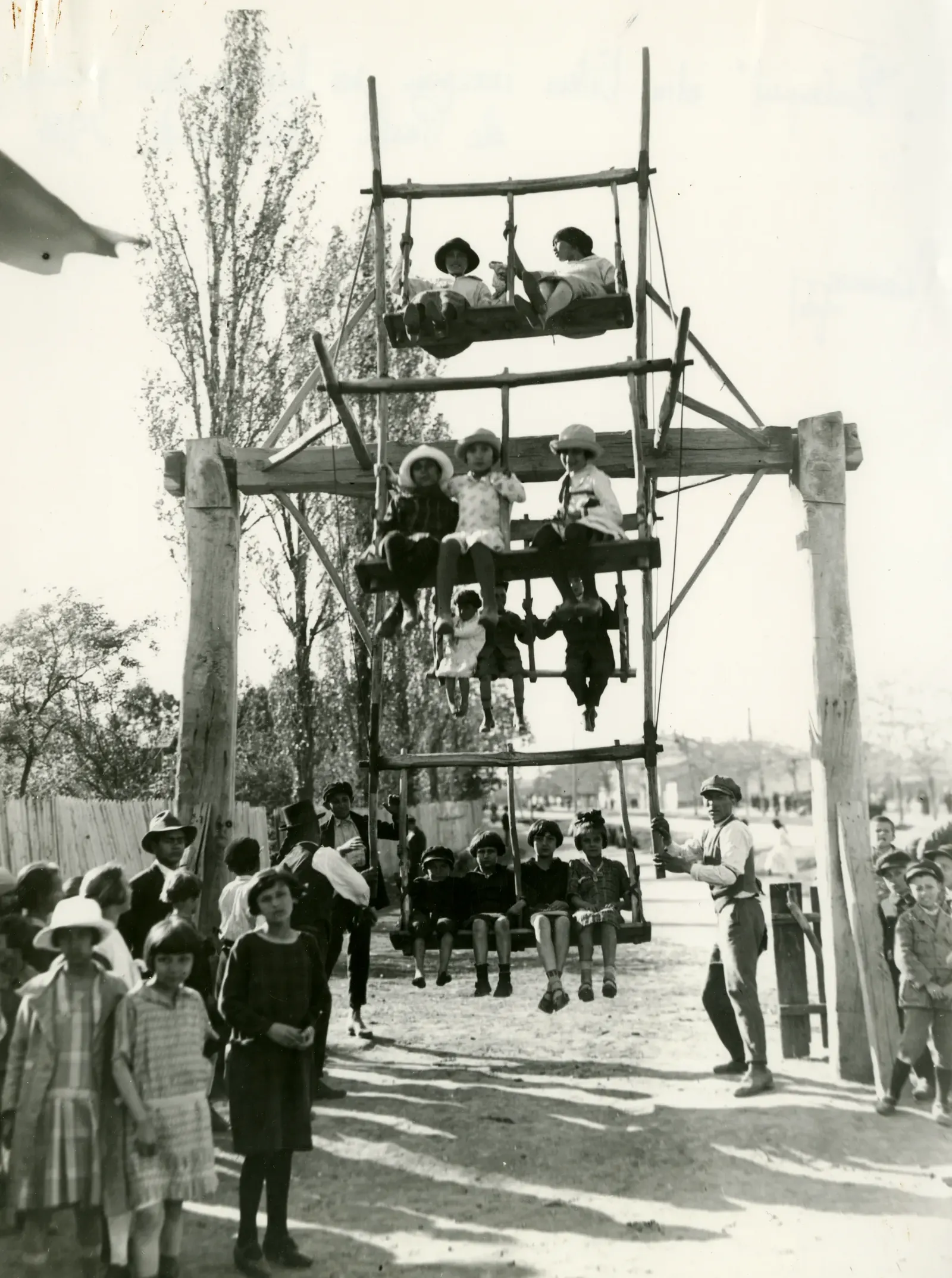
Nicolae Ionescu · Muzeul Național al Satului „Dimitrie Gusti” · 1934
Vitan in Nicolae Ionescu’s photographs #
Vitan is a neighbourhood of Sector 3, one of Bucharest’s six districts, stretched along the Dâmbovița river south-east of the centre. Calea Vitan, Vitan Road, runs through it end to end.
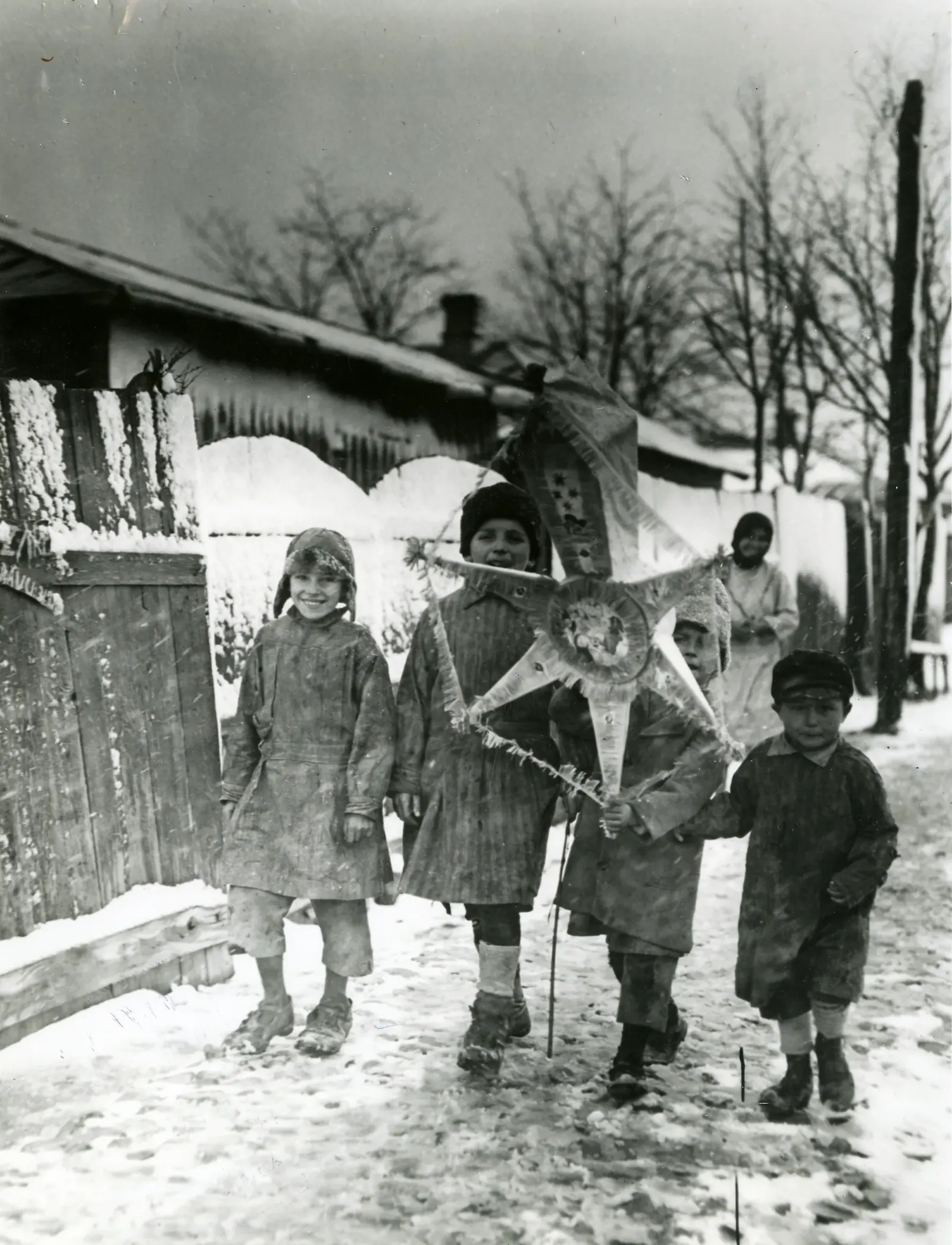
Nicolae Ionescu’s photographs, now held by the National Village Museum, show it between 1928 and 1934: dirt streets, plank fences, low houses, snow in the lanes. A mahala, as Romanians called such old quarters on the edge of town. At Christmas the children go round with the star, a carol custom. At Easter, on a patch of waste ground, the “dulap” turns: a wooden wheel with swings, two to a seat.
The monastery next to Vitan #
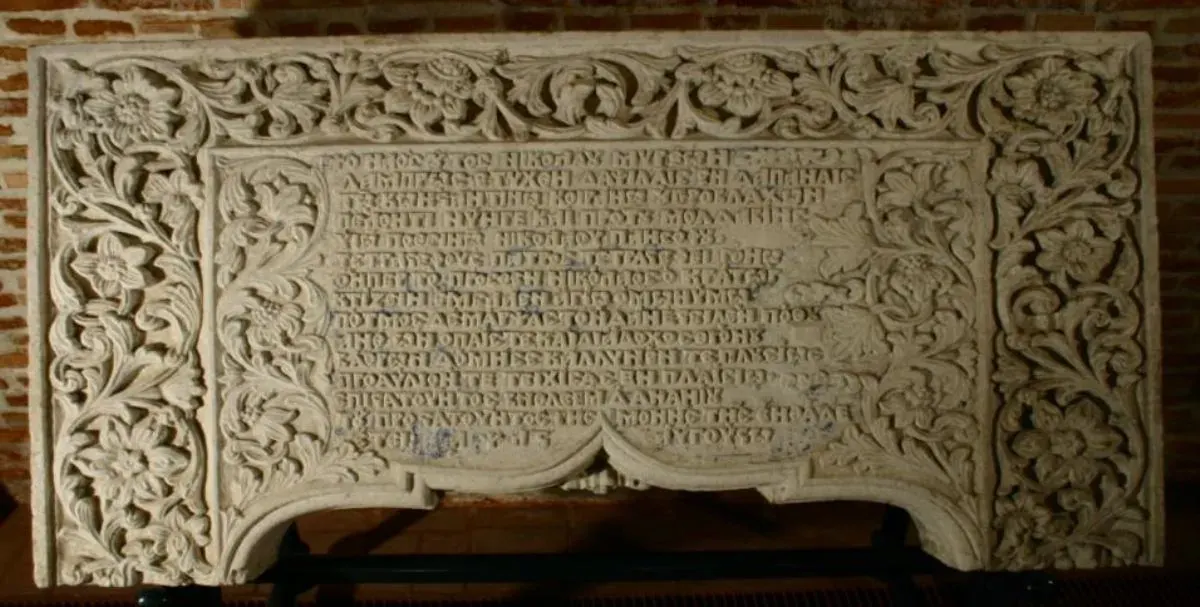
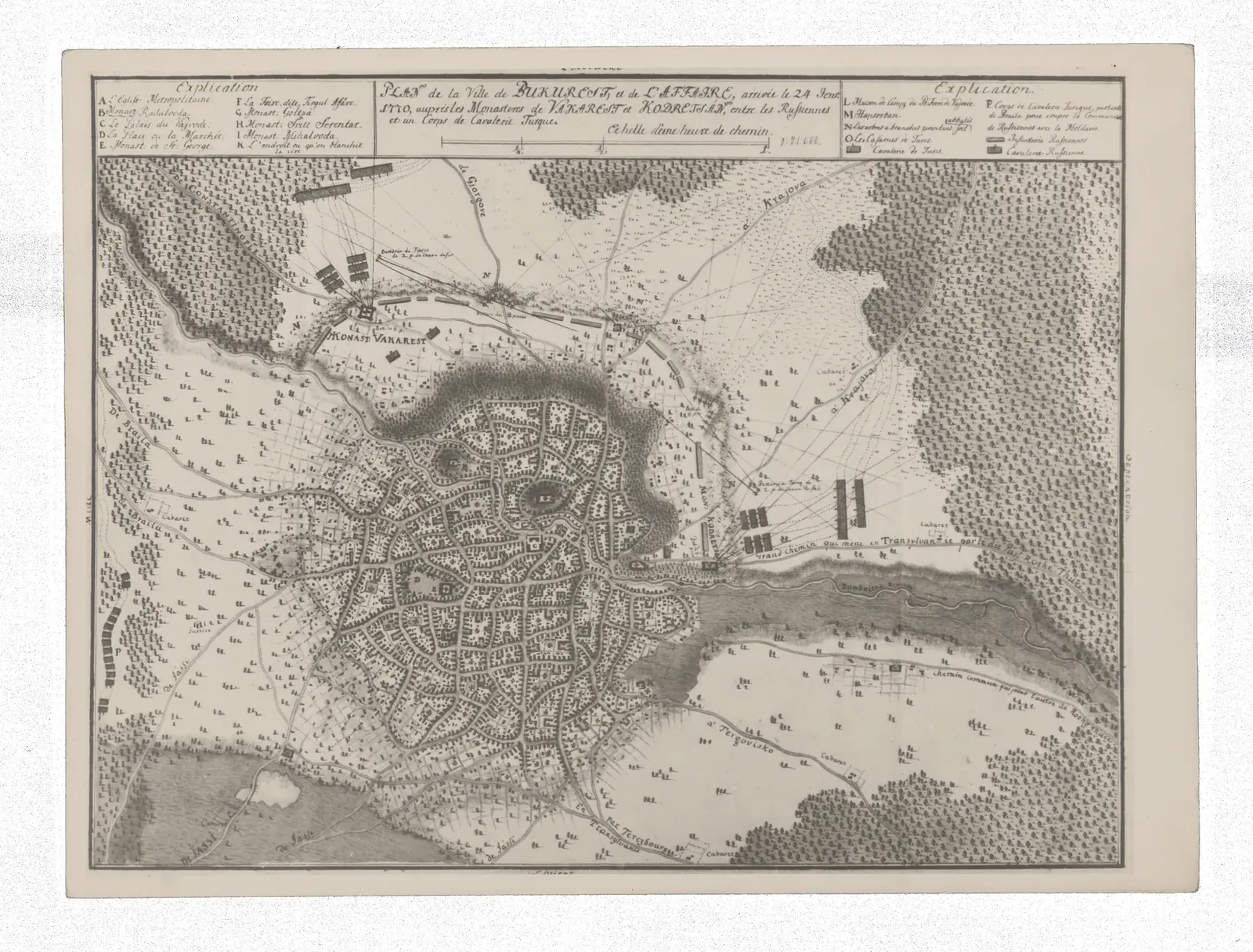
To the south, Vitan bordered Văcărești Monastery. Nicholas Mavrocordatos, the first Phanariot (Istanbul Greek) prince of Wallachia, began it in 1716; his son Constantine finished the work by 1739.
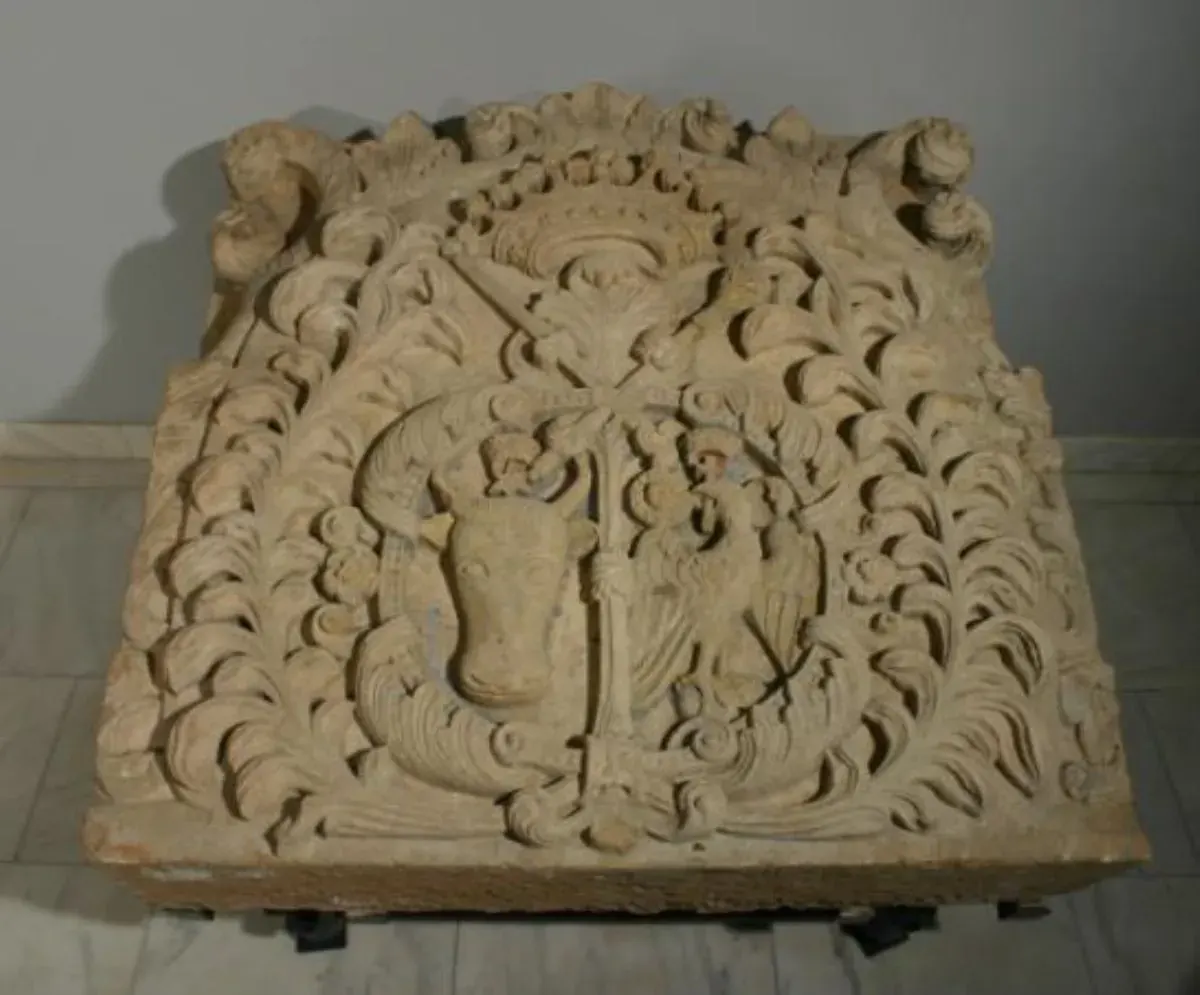
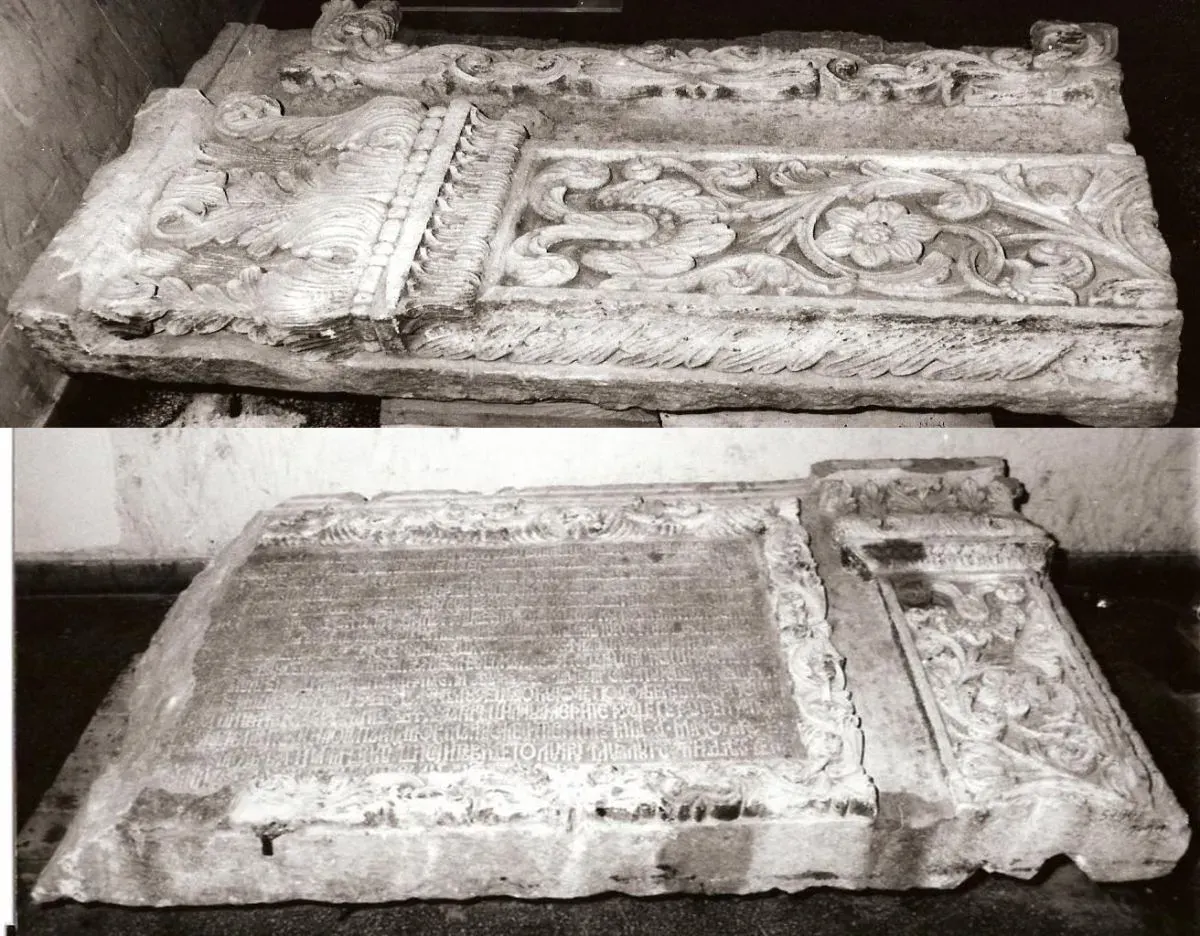
Mavrocordatos had also ruled Moldavia, and the arms over the church portal join Moldavia’s aurochs head with Wallachia’s eagle. From 1865 the monastery was a prison, until it was cleared in 1973. Ceaușescu’s regime demolished the great church in December 1986, as it did other churches in the city. The carved stones that were saved are in museums, and another mall, Sun Plaza, was later built on the monastery’s site.
The Dâmbovița before the canal #
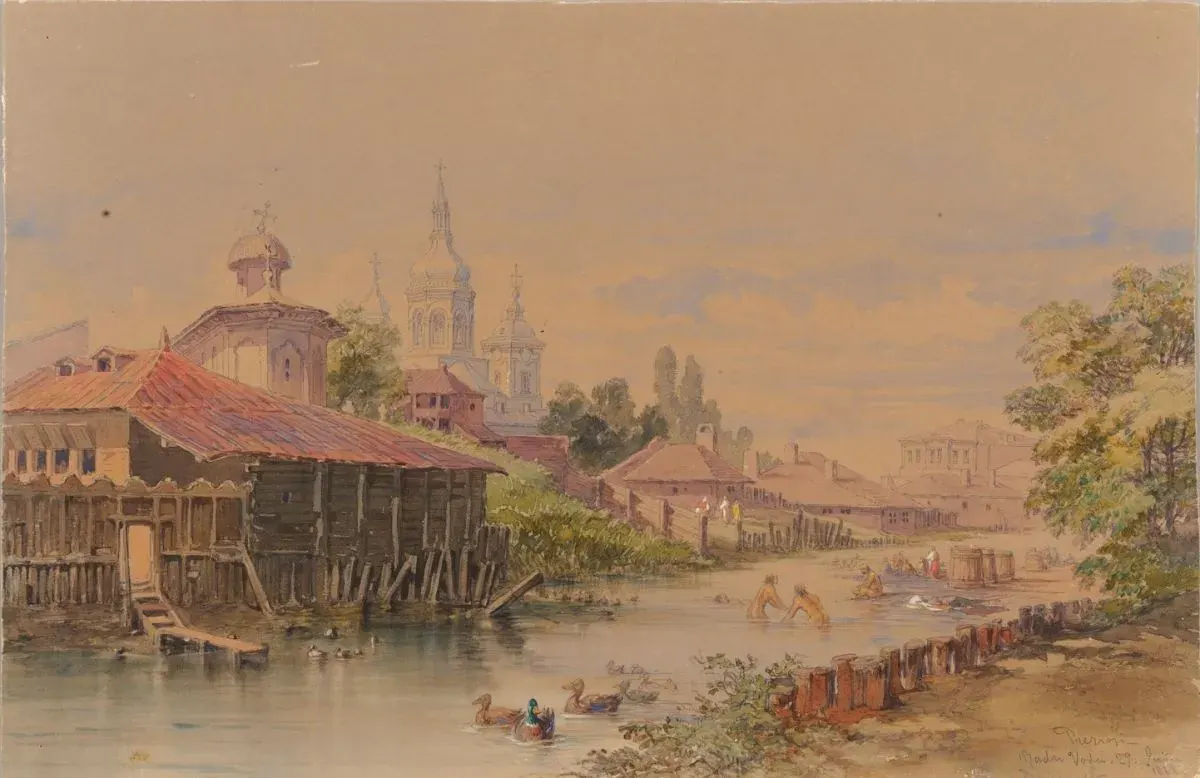
Amedeo Preziosi painted the Dâmbovița in 1868 at Radu Vodă, upstream of Vitan: a river with earth banks, houses on stilts and churches on the hills. His works went into the collection of King Carol I.
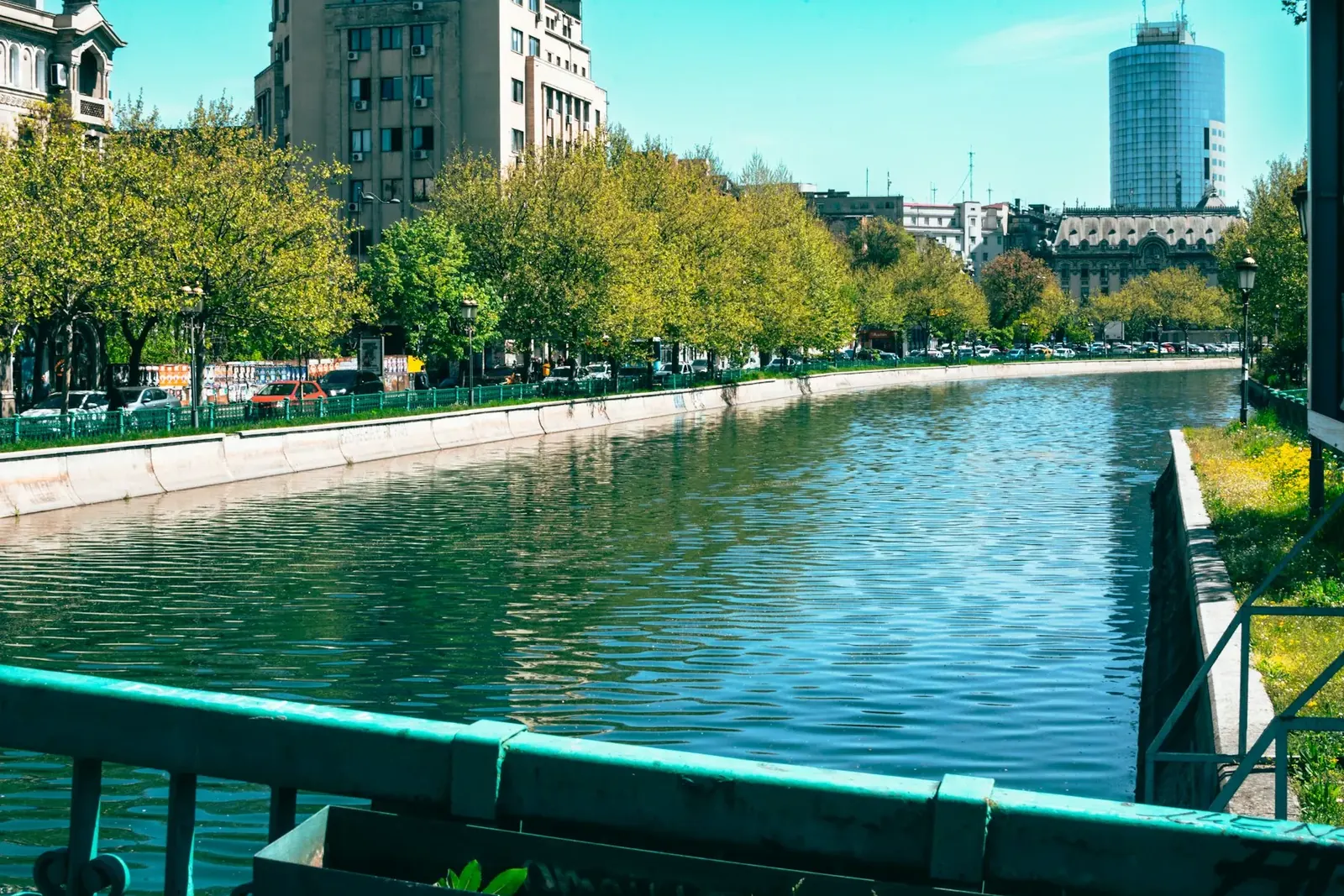
It was straightened into a canal in 1880–1883, then enclosed in the double concrete channel of 1985–1988 that Vitan looks out on today.
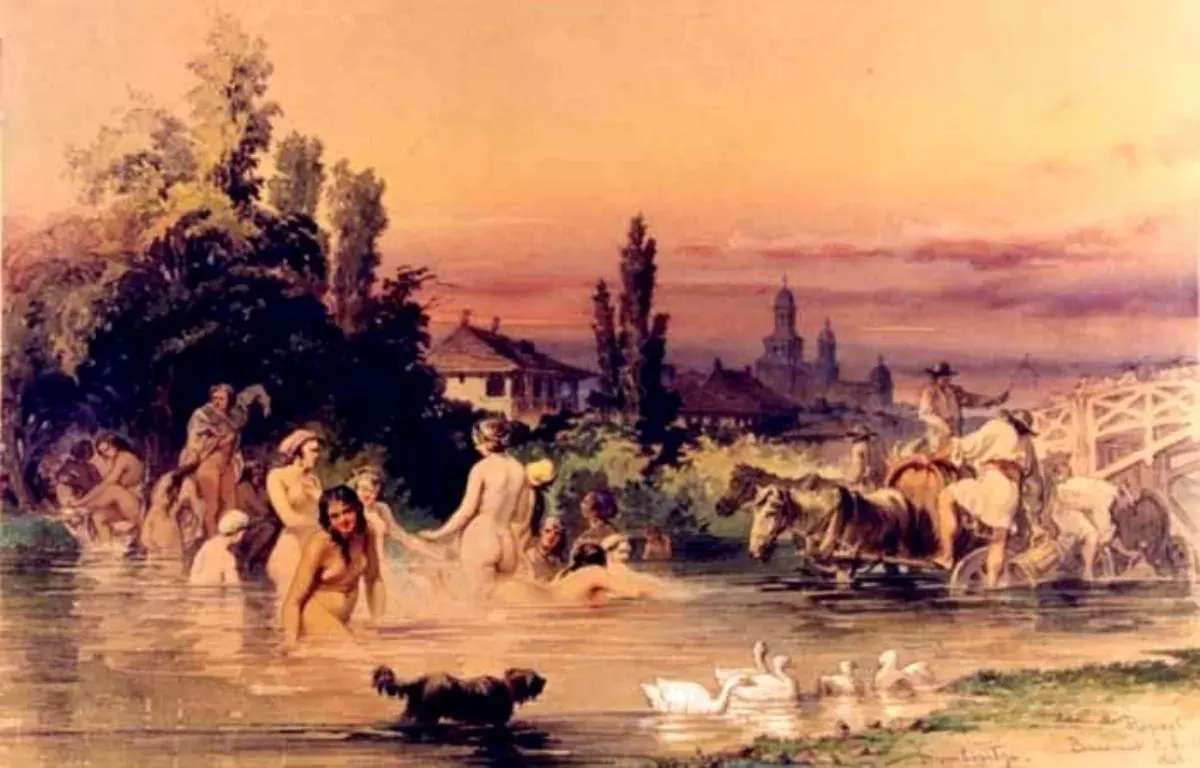
Then and now
The Dâmbovița, from meanders to canal
Drag the gold line. On the left, the river painted in 1868; on the right, the Dâmbovița today, between concrete banks. The viewpoints differ; the river is the same, a century and a half apart.
 1868Today
The road to the monastery #
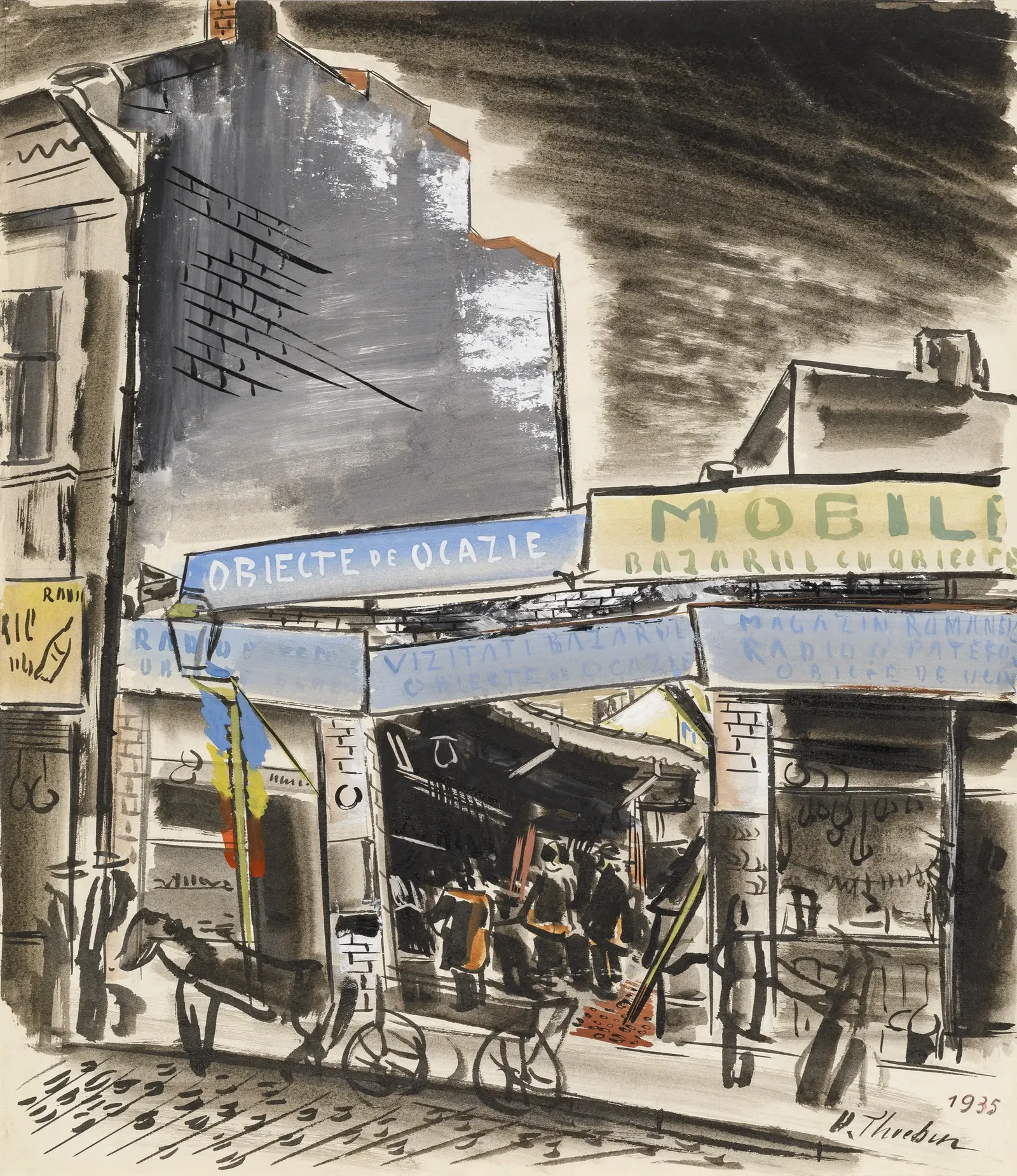
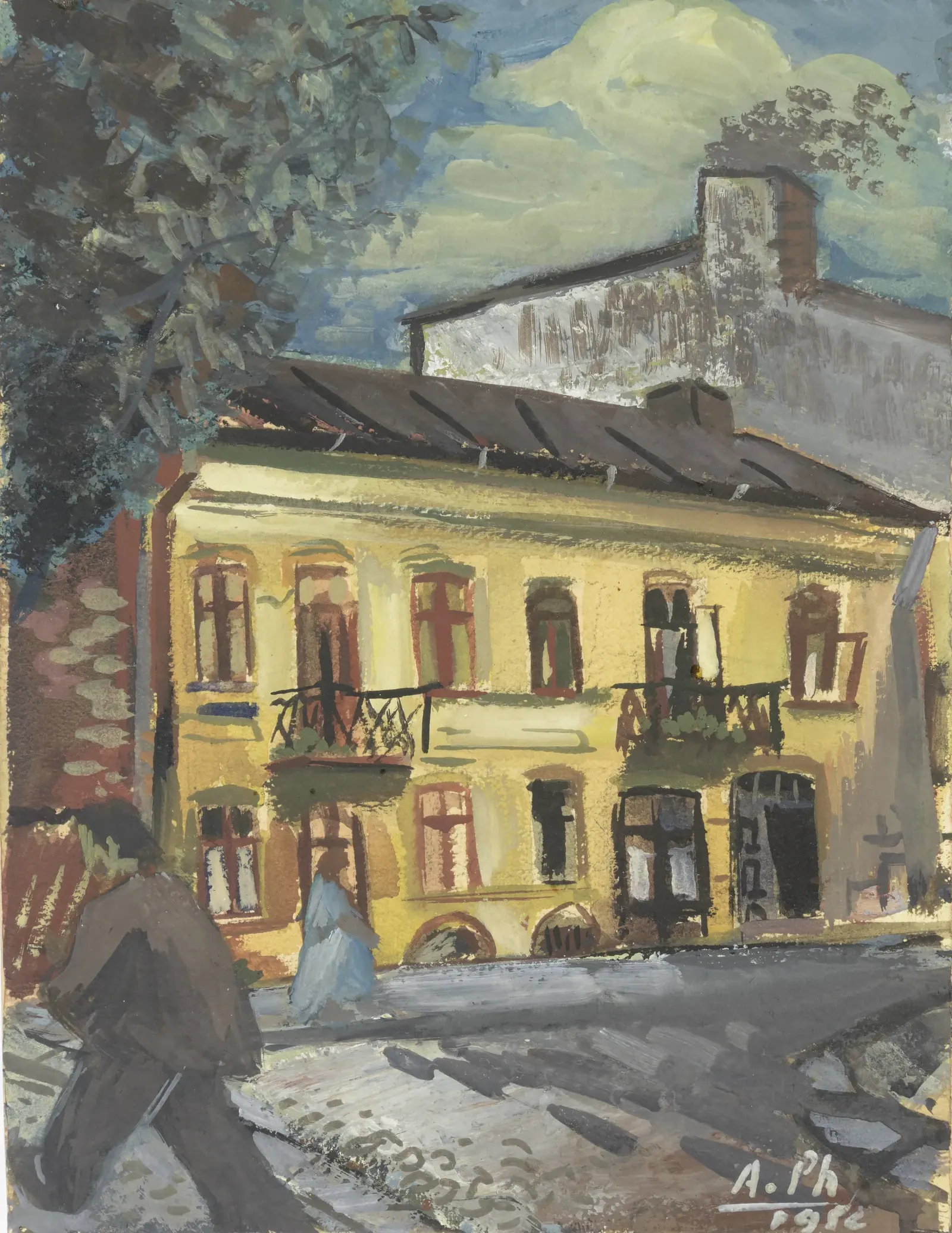
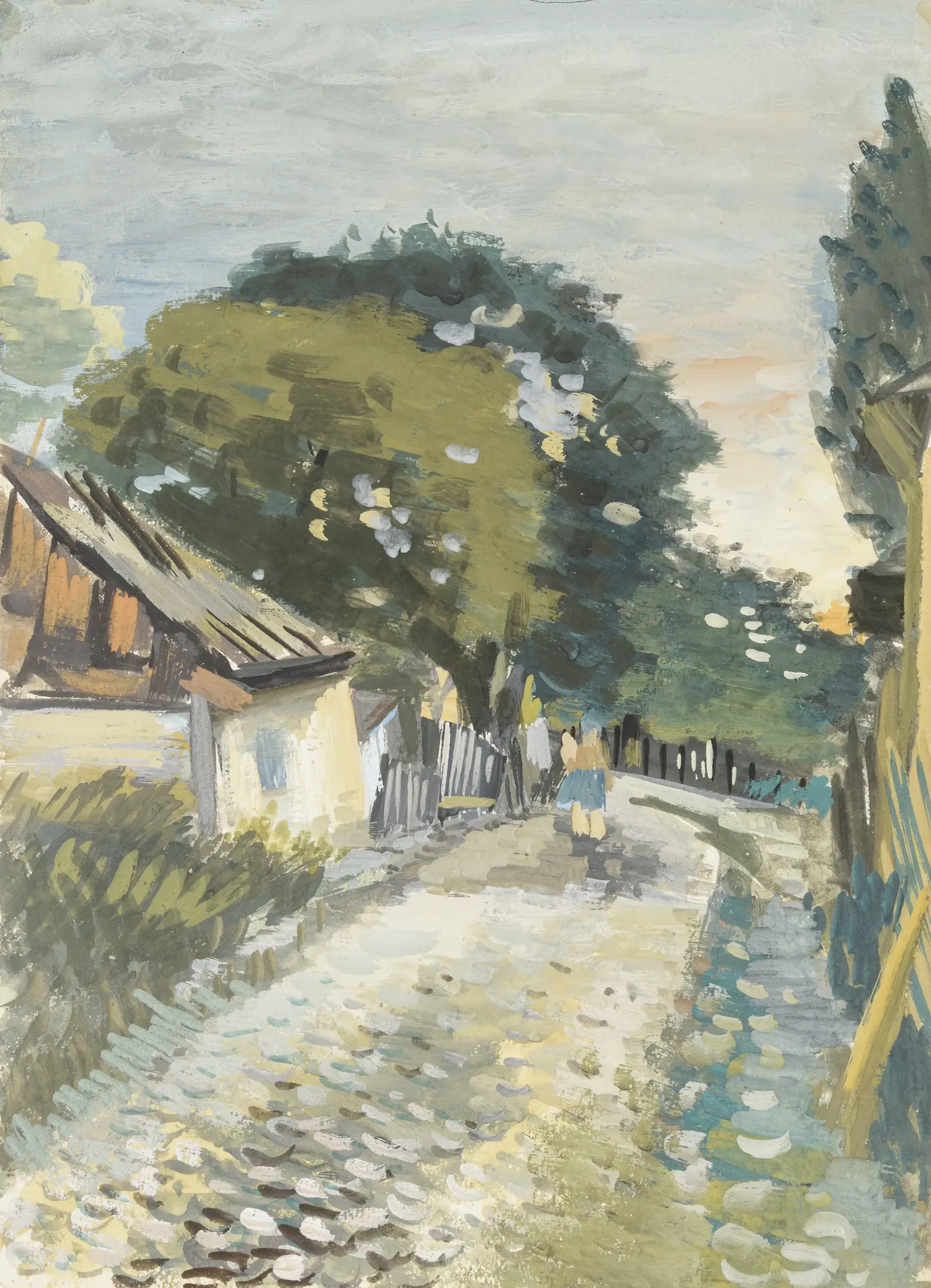
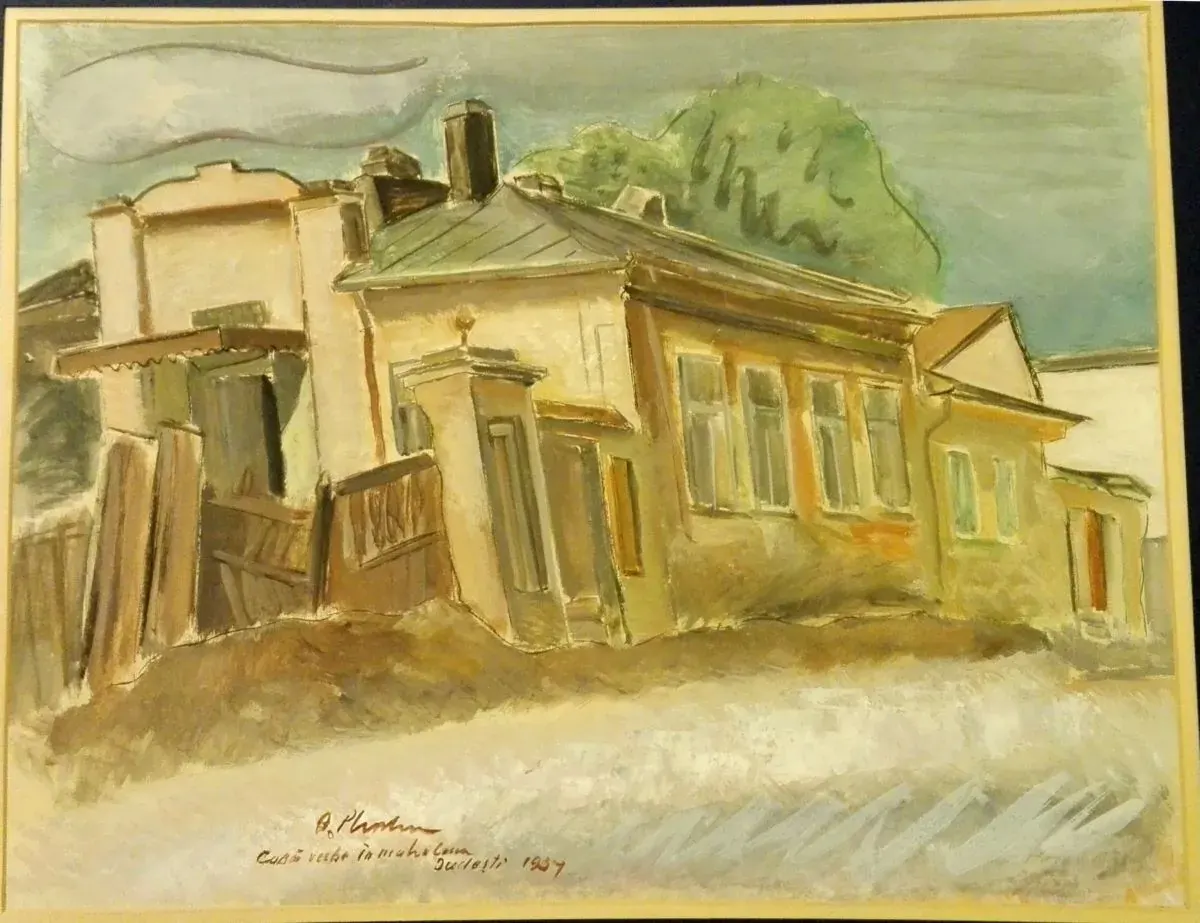
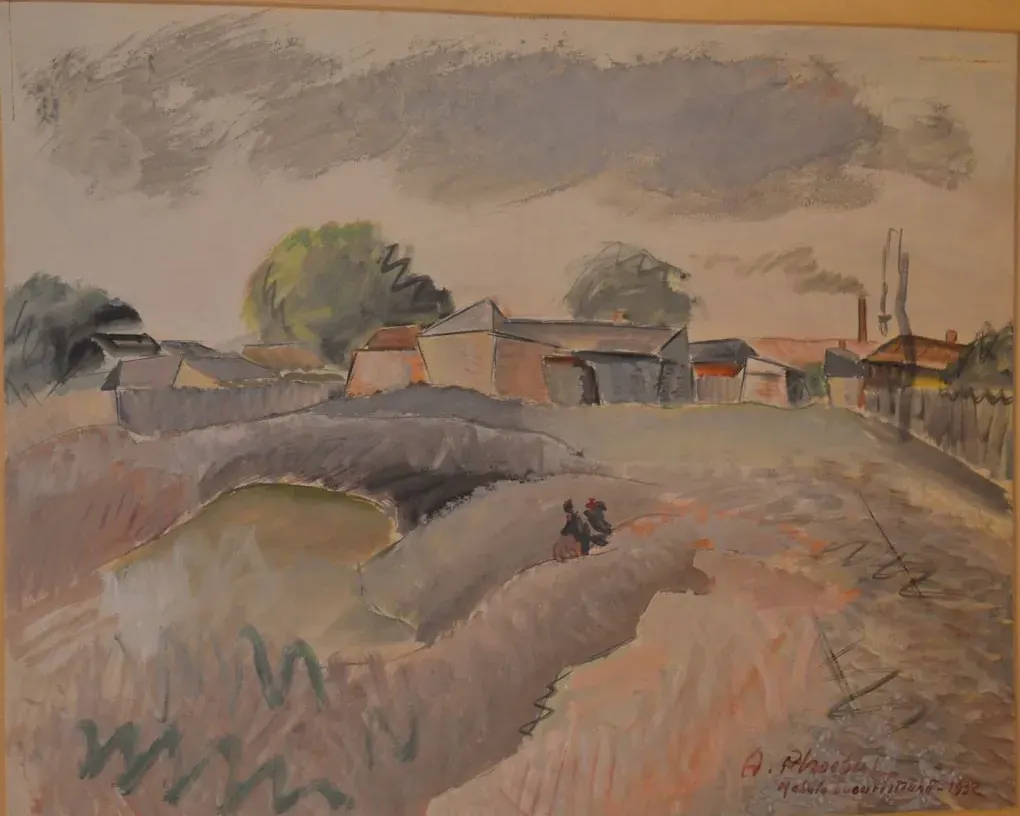
West of Vitan, Calea Văcărești ran from the centre to the monastery. Alexandru Phoebus painted it and the mahalas around it between 1934 and 1952: hand-lettered shop signs, one-storey houses, waste ground with a factory chimney on the horizon.
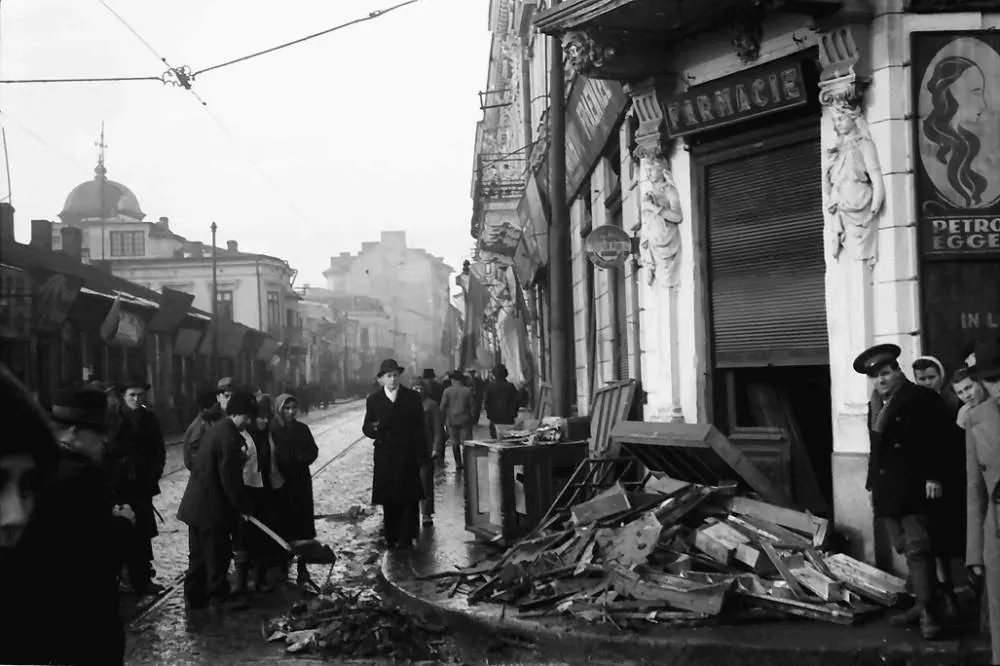
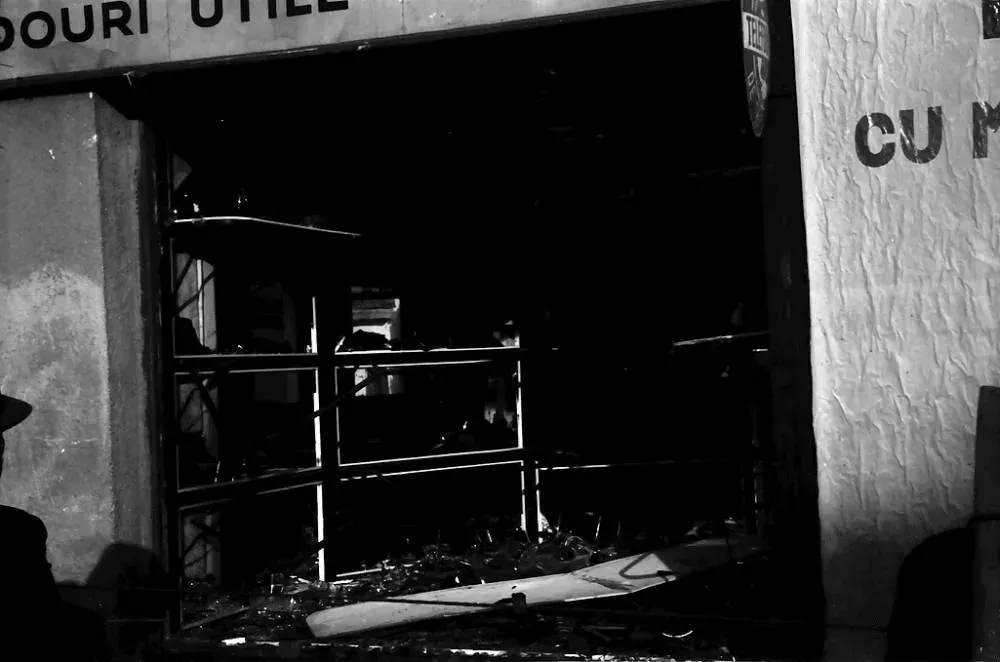
Many of Bucharest’s Jews lived on Calea Văcărești and Calea Dudești. In the Bucharest pogrom, during the Iron Guard rebellion of 21–24 January 1941, Iron Guard members, together with police, prefecture staff and many civilians, wrecked Jewish homes and shops along several kilometres of these two streets, and 125 Jews were killed in the pogrom, according to the Final Report of the International Commission on the Holocaust in Romania.
The German photographer Willy Pragher photographed looted shops on Calea Văcărești at the time. The Baden-Württemberg archive records date the photographs to 21–24 January 1941.
Eleven hunger circuses: the malls opened on the sites of the unfinished ones #
In the 1980s, while it was razing whole districts for the Civic Centre, Nicolae Ceaușescu’s communist regime put up huge buildings across Bucharest, Romania’s capital, officially “agro-industrial commercial complexes”. They were meant as big markets and canteens, where people would collect ready-cooked meals to take home, at a time of food shortages. Bucharest called them “hunger circuses”: the halls were “permanently empty” and “equipped” with a huge dome, as the magazine Capital put it in 1999.
The lists published since 2009 count eleven; Jurnalul Național wrote in 2009 that the plan provided for “one agro-food complex per sector”. By 1989, the daily Jurnalul Național wrote in 2005 and 2009, only two had been finished and put, at least partly, into service: at Unirii and at Delfinului. A 2025 article on the bucuresti.ro portal says the same and adds that the rest were “at various stages of construction, from foundations to structures that were almost finished”.
The sources consulted record no mall at either of the two that were working in 1989. Hala Unirii had a Carrefour on its ground floor in 2008; its conversion into a mall reportedly stalled in the 2010s for lack of money, and in 2023 RFE/RL described it as an unfinished hulk; a Carrefour hypermarket trades at the same address today. In 2023 Delfinului was a shopping complex, with a clothes market and gyms.
The circuses on all four sites where malls opened were unfinished in 1989: Vitan in 1999, Lujerului in 2004 (Plaza România), Șura Mare in 2005 (City Mall) and Rahova in 2008 (Liberty Center). Vitan’s was the first.
The Vitan and Lujerului malls were built on the old structure. At Rahova the circus was demolished and Liberty Center went up on its site. For City Mall the sources disagree: Jurnalul Național says it rose “on the old concrete”, a comment on a blog says the circus was demolished. For Cotroceni, Băneasa, Floreasca and Titan the sources disagree even about 1989, no independent source says what became of the building, and their places on the map are approximate.
All 11, one by one
Writing in 1999, Capital reported that in 1990 most of the circuses had only their load-bearing frames, and work stood still for eight years. București Mall opened here on 10 September 1999, “on the load-bearing structure of the old halls”.
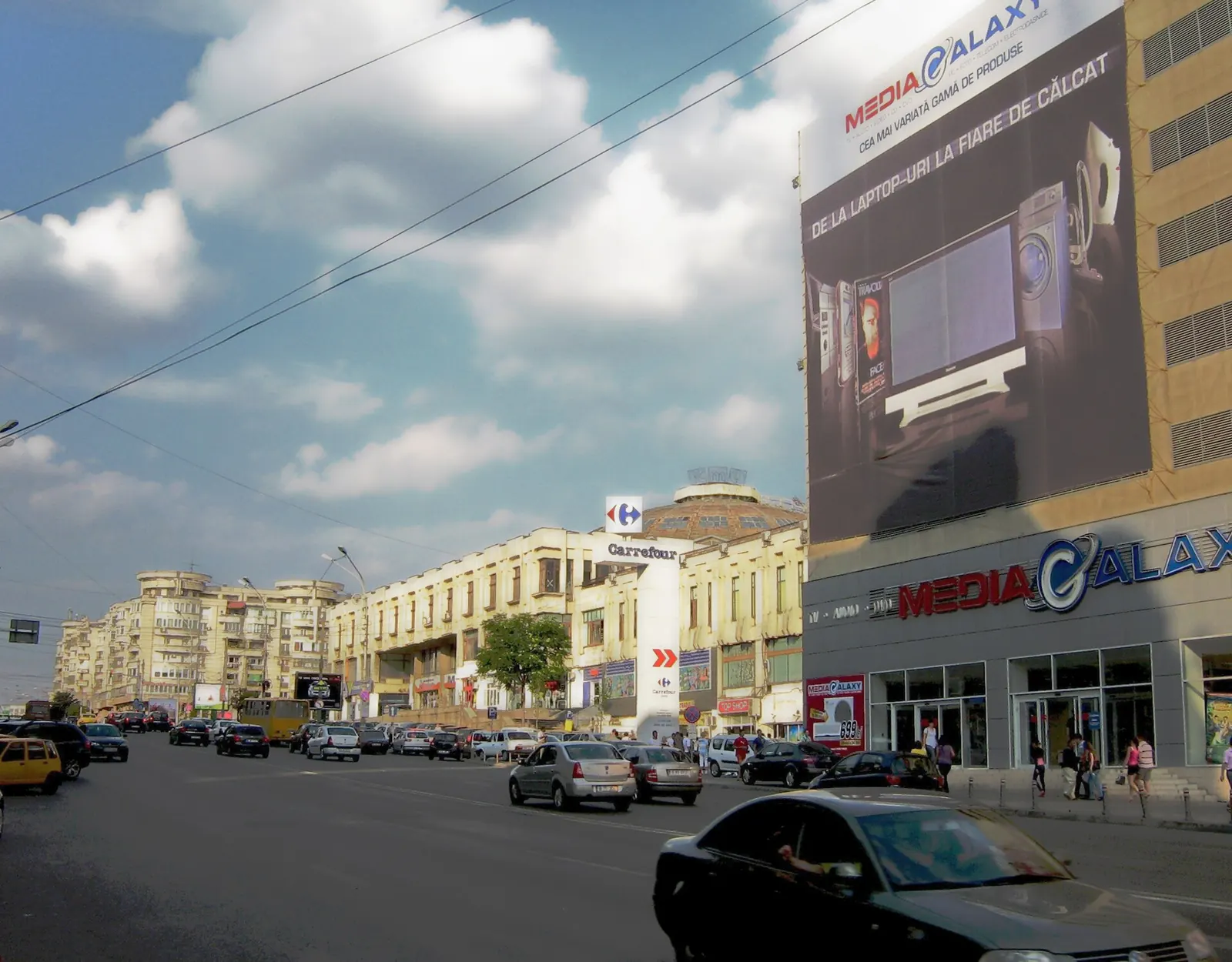
One of the two put at least partly into service by 1989 (Jurnalul Național). In 2008 it had a Carrefour on the ground floor. A conversion into a mall reportedly stalled in the 2010s; in 2023, an unfinished hulk (RFE/RL). A Carrefour hypermarket trades in an adjoining building at the same address today (OSM, 2026).
The other circus finished by 1989: “a squarish concrete building with a giant dome” on the lake shore (Jurnalul Național, 2009). In 2023, a shopping complex with a clothes market and gyms (RFE/RL); in 2025 bucuresti.ro described it as “in an advanced state of decay”. The years 1999, 2004, 2005 and 2008 are not separately documented.
In February 1989 România liberă reported that the site board promised an opening on 23 August 1989 for “the biggest agro-industrial complex in the country” (summarised by Radio Free Europe, 2019). It was still unfinished in December 1989. Plaza România opened on 28 October 2004, keeping the metal dome (bucuresti.ro).
Unfinished in 1989 (Jurnalul Național). City Mall opened in autumn 2005 (Wall-Street, 2010), “on the concrete” of the circus according to Jurnalul Național; a comment on a blog says it was demolished. The building is now called City Offices.
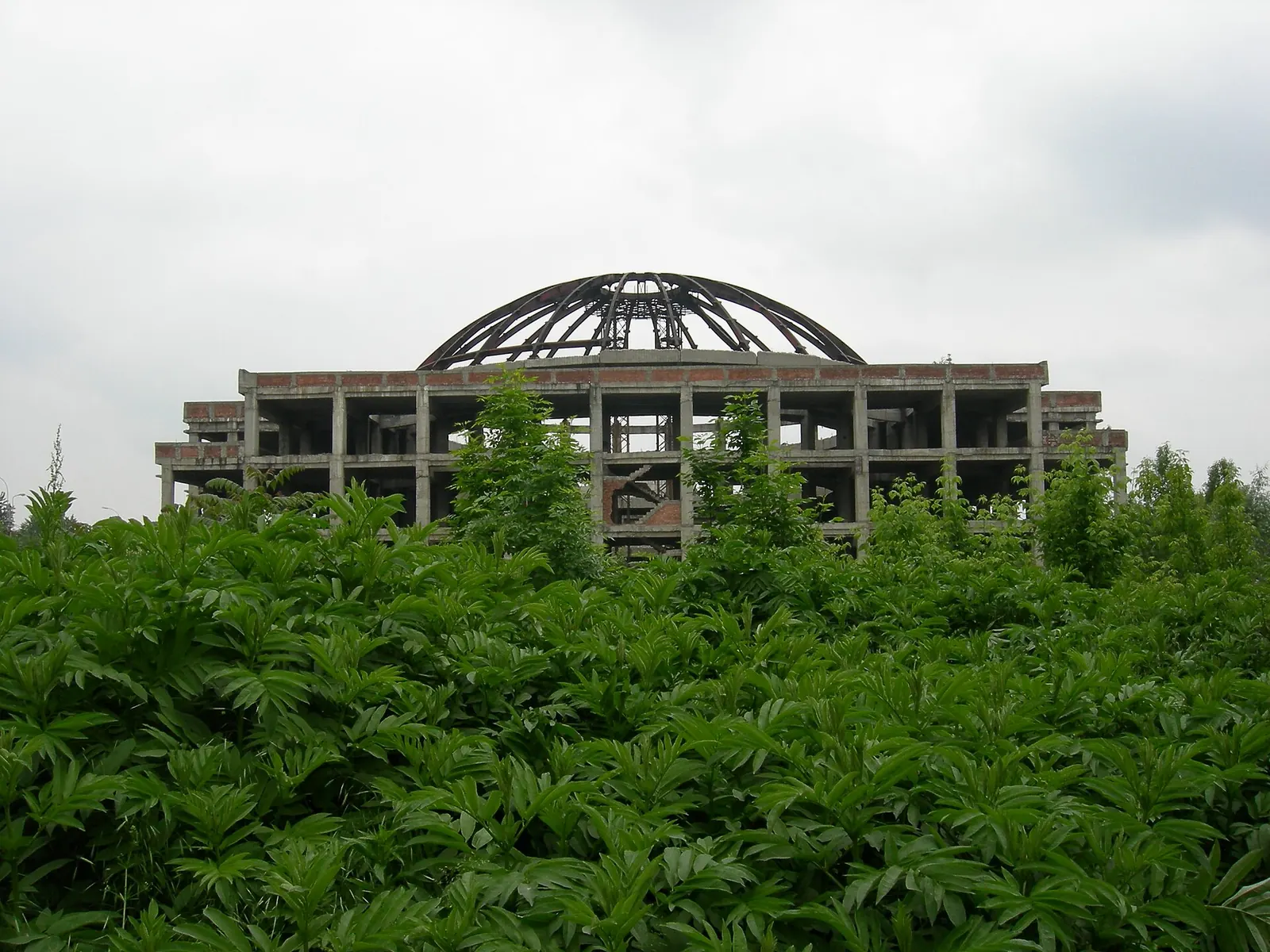
Still a shell with a steel dome in 2006 (the May 2006 photograph), then demolished (RFE/RL, 2023; Jurnalul Național wrote in 2009 “demolished to build, I think, a supermarket”). Liberty Center opened on the site at the end of October 2008; it is now Jumbo Center, reopening in stages (Economica, 2026).
In June 1989, according to România liberă, the frame was up to the roof in parts, with a total area of six hectares (summarised by Radio Free Europe, 2019). Today the site holds private universities; the year of the conversion is not documented.
Its 1989 state is disputed: a 2025 article on bucuresti.ro does not count it among the two that worked, while the 2009 blog lists it among the finished ones. The Wikipedia list identifies it with Piața Cotroceni, without a source; the dot marks the market as an approximate landmark.
Its 1989 state is disputed: a 2025 article on bucuresti.ro does not count it among the two that worked, while the 2009 blog lists it among the finished ones. A comment on the blog puts it where Bulevardul Aerogării meets Strada Ficusului; the Wikipedia list calls it the Băneasa shopping complex, without a source.
Its 1989 state is disputed: a 2025 article on bucuresti.ro does not count it among the two that worked, while the 2009 blog lists it among the finished ones. A comment on the blog puts it on Calea Floreasca, between the Emergency Hospital and Automatica; the location is approximate.
Its 1989 state is disputed: a 2025 article on bucuresti.ro does not count it among the two that worked, while the 2009 blog lists it among the finished ones. The blog puts it “at Republica, by Titan station”; the dot marks Titan Sud station as an approximate landmark, and no source consulted says what became of it.
Why some sources count two finished circuses and others six #
The Romanian Wikipedia article on the hunger circus said from its first version, in June 2006, that only two circuses were finished when Ceaușescu fell.
That first version was translated from the English article. On 2 May 2022, an anonymous IP and one account added a list of the eleven complexes in several edits; a later edit the same day changed “only two” to “only 6”, with no source. The same split, five finished besides Unirii (Delfinului, Titan, Cotroceni, Băneasa, Floreasca), appears on a blog from November 2009, also without a source.
The blog and the Wikipedia list count among the finished ones four complexes without domes, which the only other source consulted, an article on bucuresti.ro, says were unfinished in 1989. Jurnalul Național wrote in January 2005 that only two had been “partly put into service”, at Pantelimon and Unirea, and in 2009 that “by ’89 only two were built”. A Radio Free Europe retrospective of 11 October 1989 shows Ceaușescu visiting “the commercial complexes at Unirea and Delfinului”. The map shows those two as finished and the other four as “unclear whether finished”.
On the Vitan shell, a mall #
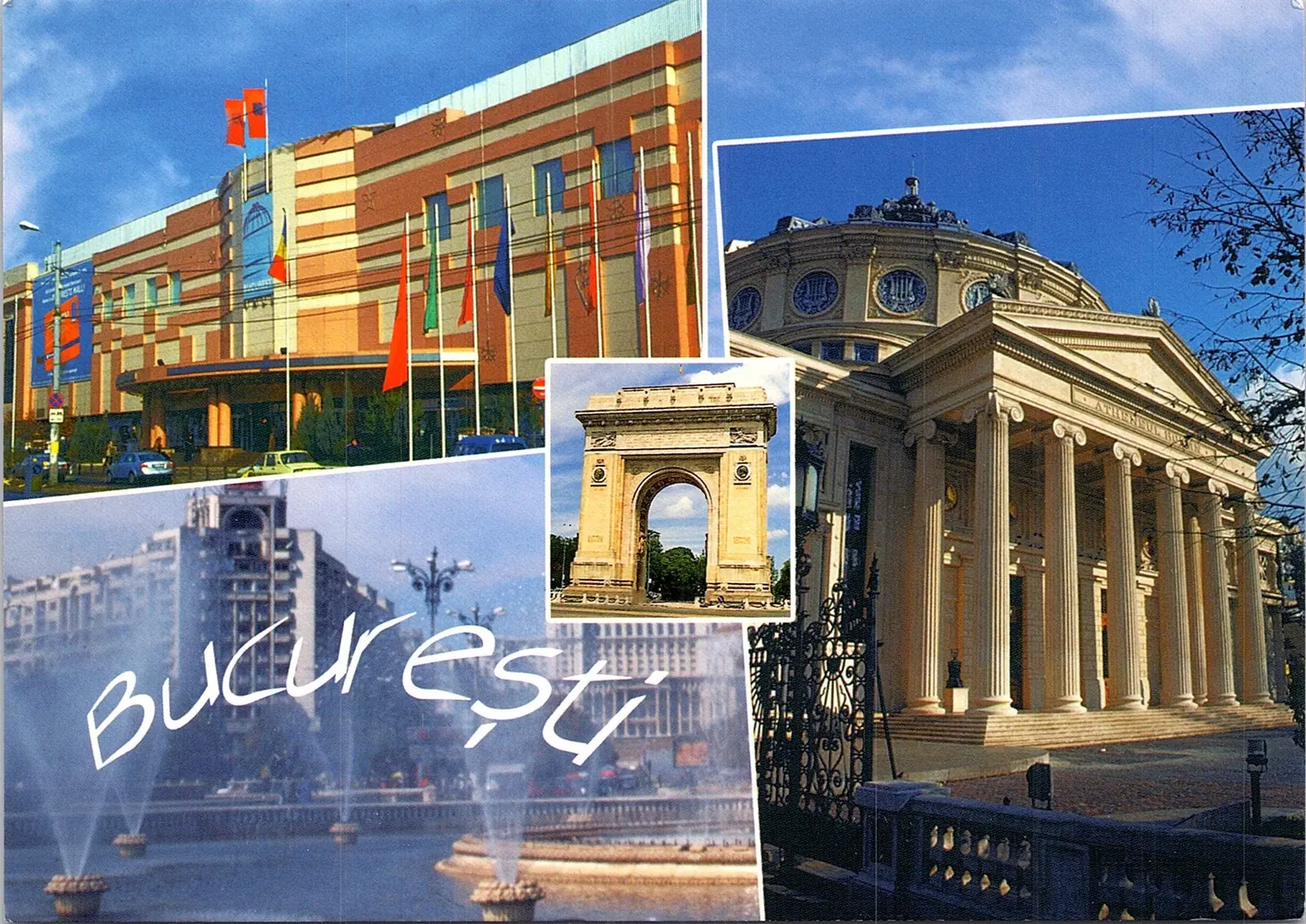
After 1989, work stopped. “By 1990 most of them had only their load-bearing structures finished, and for eight years the work stayed at that stage,” the magazine Capital wrote on 9 September 1999, the day before the Vitan mall opened, “built on the load-bearing structure of the old halls”.
The Turkish firms Bayındır and Fiba invested $40 million, according to Capital (Ziarul Financiar gave $35–45 million). Of 47,500 square metres built, 26,500 were for rent. Under the dome, a fountain sent water 25 metres up every six minutes. Fiba bought the Vitan shell together with the one at Lujerului for $6 million, Ziarul Financiar reported.
The mall now calls itself “the first modern shopping mall in Romania, opened in September 1999”. An article on bucuresti.ro likewise calls it “the first of its kind in Romania”.
The marsh in the lake basin #
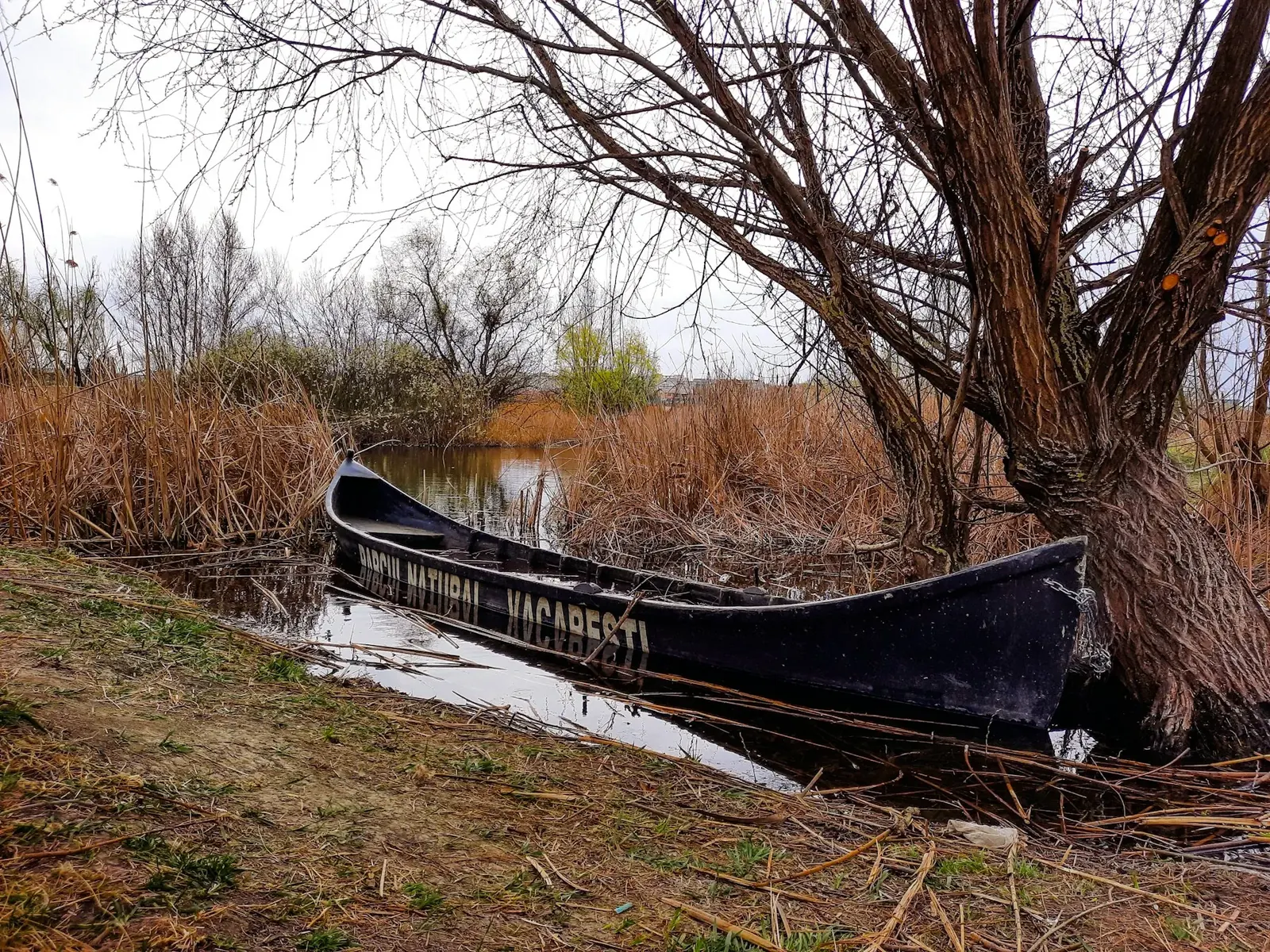
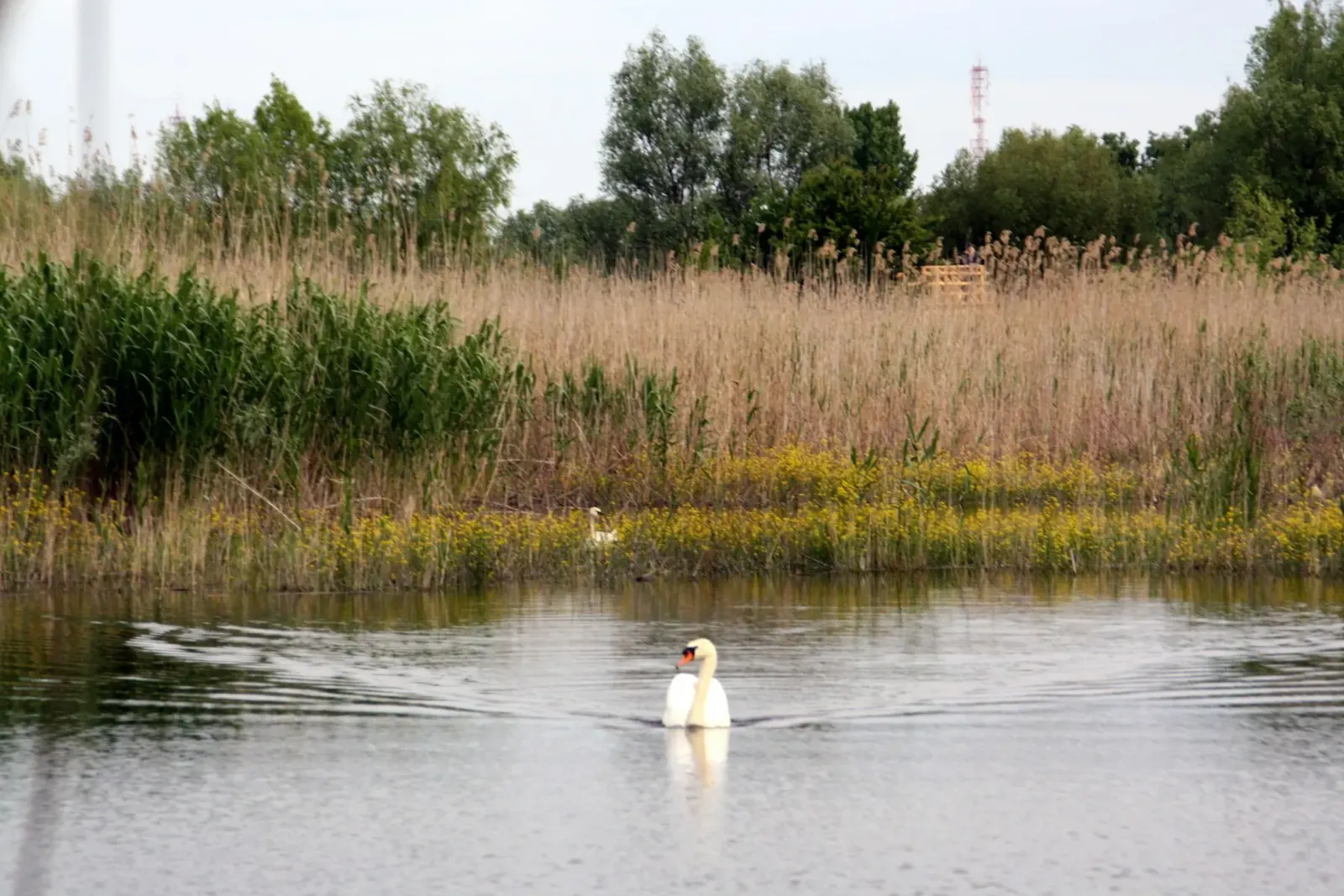
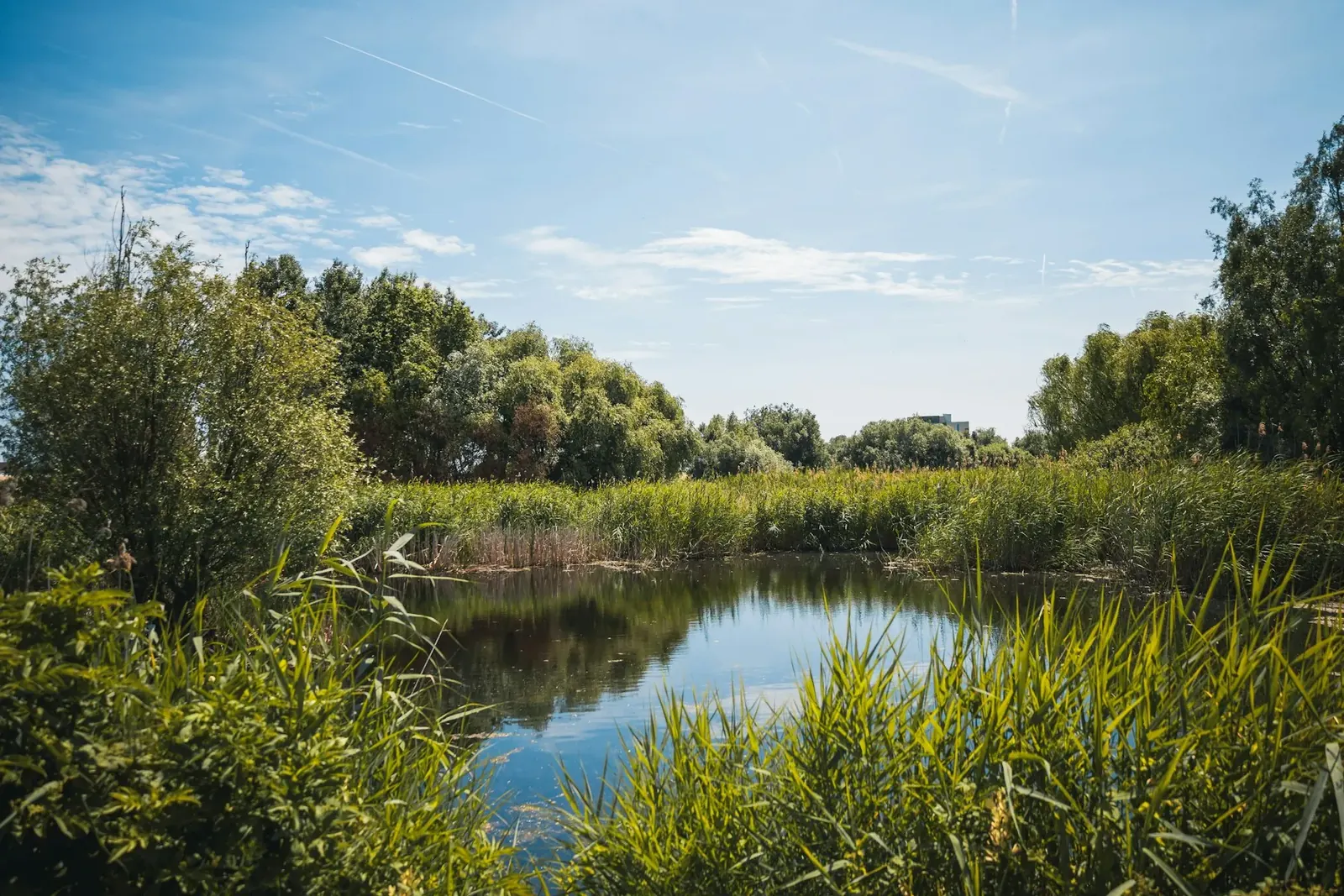
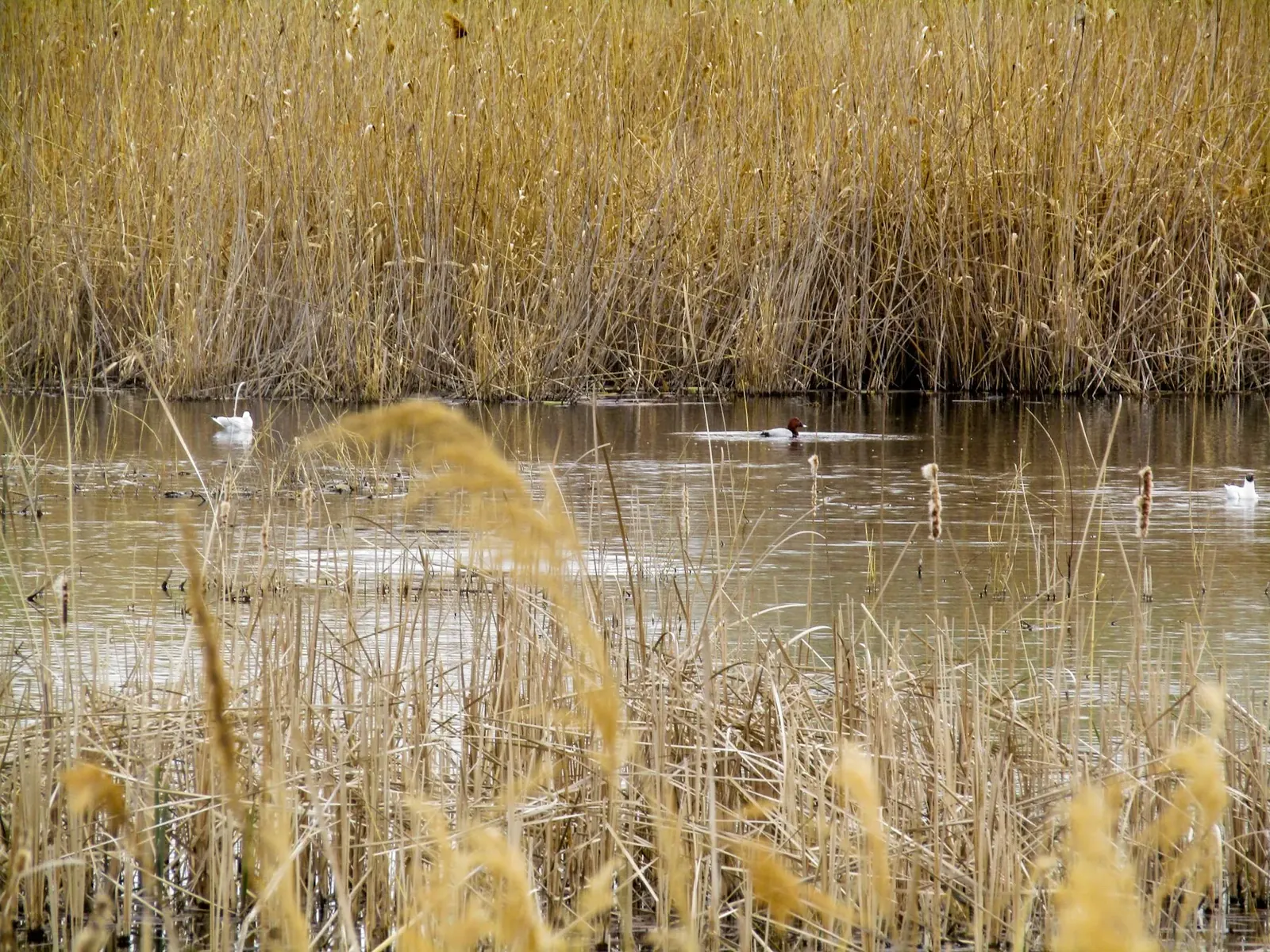
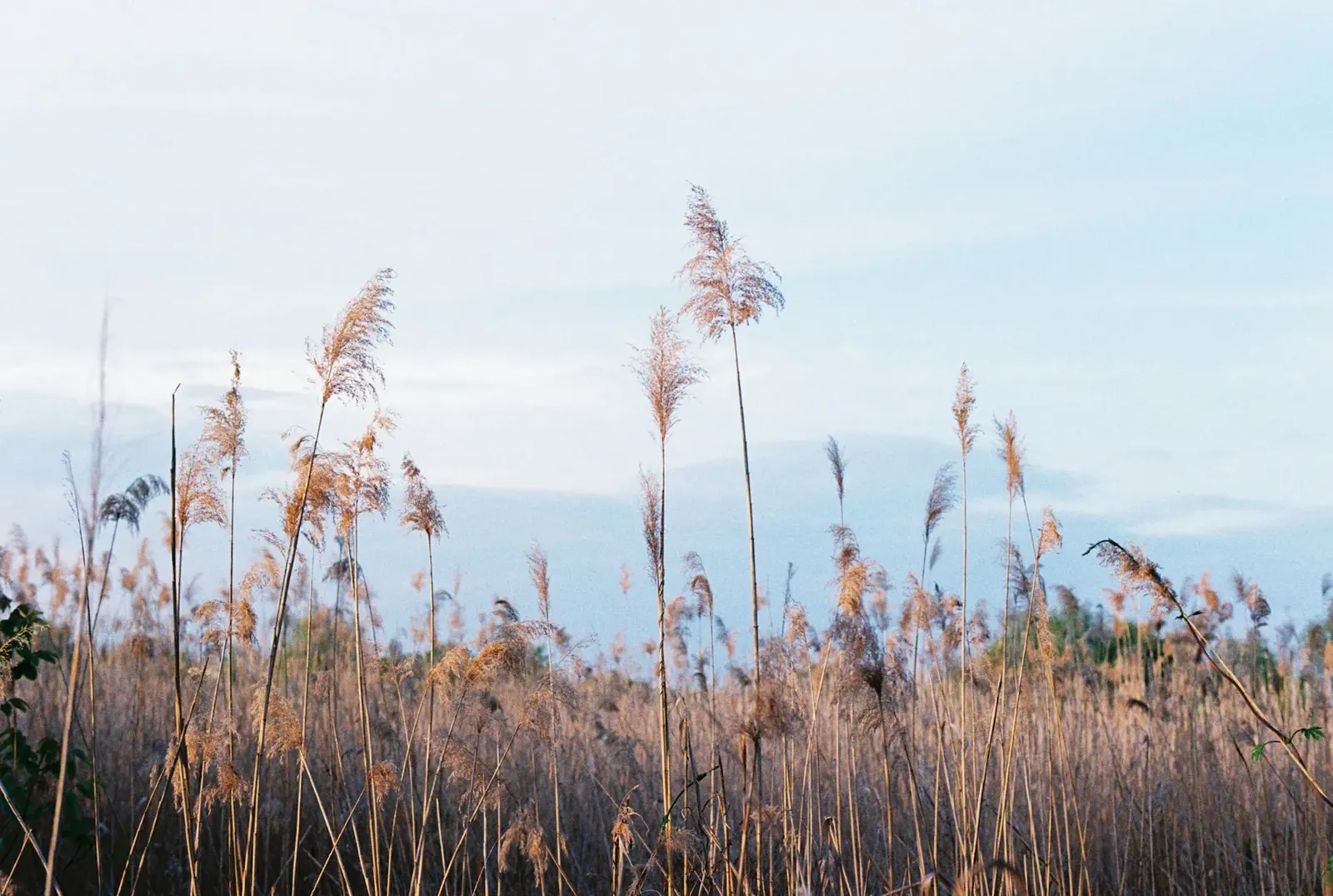
Next to the site of the demolished monastery, a basin was dug in the late 1980s for the Văcărești reservoir, abandoned after 1989. The lake was never made. Reeds and willows grew in the basin and pools formed, and in May 2016 the government declared it Văcărești Natural Park, 186 hectares.
Which birds you hear in the Văcărești wetland, month by month →
The edge that grew
Vitan has been, in turn, the neighbour of a princely monastery, a mahala of dirt streets, a district of panel blocks with an unfinished building site in the middle, then the neighbourhood where București Mall opened. Malls then opened on the sites of three more circuses left unfinished.
Sources and images #
Every year on the map has its own sources, listed in each circus’s card. A later source supports an earlier year only when it shows the same building in the same state, like the Rahova shell photographed in 2006. A year with no source shows as not documented. Coordinates are the OpenStreetMap buildings, read on 22 October 2026.
The hunger circuses
- Andreea Bisinicu, bucuresti.ro, “Circurile foamei, proiectul grandoman al dictatorului Nicolae Ceaușescu”, 9 Oct 2025
- Sorin Șerb, Europa Liberă, „Istoria trăită” (on 11 Oct 1989), “Buletin de știri, 11 octombrie 1989”, 10 Oct 2019
- Sorin Șerb, Europa Liberă, „Istoria trăită” (on 3 Feb 1989), “Buletin de știri, 3 februarie 1989”, 2 Feb 2019
- Sorin Șerb, Europa Liberă, „Istoria trăită” (on 5 Jun 1989), “Buletin de știri, 5 iunie 1989”, 4 Jun 2019
- Ilarion Țiu, Jurnalul Național, “Circurile foamei”, 23 Jan 2005
- Jurnalul Național, “De la Fabrica de mâncare la Circul foamei”, 18 Feb 2009
- Capital, “Stil de viață american între blocurile din Vitan”, 9 Sep 1999
- Ziarul Financiar, “Every story must have a sequel: Plaza Romania follows Bucharest Mall”, 7 May 2003
- Curentul, “Circul foamei de la Lujerului își schimbă înfățișarea”, 7 May 2003
- Ziarul Financiar, “Mall de 20 mil. dolari în sudul Bucureștiului”, 16 Apr 2004
- Ziarul Financiar, “Românii fac shopping occidental în „circurile” lui Ceaușescu”, 21 Apr 2004
- Andreea Bisinicu, portalul bucuresti.ro, “Plaza România: scurt istoric, de la circul foamei de la Lujerului”, 15 Jul 2026
- Wall-Street.ro, “Cum se pregătește City Mall pentru concurența vecinului Sun Plaza?”, 25 Jan 2010
- România Liberă, “Circul foamei din Rahova, înlocuit cu un mall”, 10 Nov 2006
- Wall-Street.ro, “Barbu, Liberty Center: vânzările vor crește cu 30–40% în decembrie”, 16 Dec 2008
- Economica.net, “Mall-ul fantomă cumpărat de Jumbo în București revine la viață”, 1 Oct 2026
- RFE/RL (Amos Chapple), “The Strange Fate Of Romania's 'Hunger Circuses'”, 18 Jan 2023
- București Mall, “Despre noi”, accessed 22 Oct 2026
- Gabriel, Flickr, prin Wikimedia Commons, “Hala Unirii (fotografie)”, 30 Jun 2008
- Joe Mabel, Wikimedia Commons, “Hunger Circus 2 (Rahova, fotografie)”, 18 May 2006
- OpenStreetMap, “Clădirile și piețele de pe amplasamente (© contribuitorii OSM, ODbL)”, read 22 Oct 2026
- Simply Bucharest (blog), “Cîte Circu-foamei au fost?”, 12 Nov 2009
- Wikipedia în română, articolul „Circ al foamei”, “prima versiune”, 20 Jun 2006
- Wikipedia în română, articolul „Circ al foamei”, “lista adăugată și modificarea din „două” în „6””, 2 May 2022
History
- Alexandru Panaitescu, “Văcărești Monastery, a wasted treasure”, Arhitectura, 2018
- Dan Mohanu, Caietele ARA 14, 2023
- International Commission on the Holocaust in Romania, Final Report, 2004
- Government of Romania, Decision 349/2016 and its explanatory note
- The meandering Dâmbovița: the 1880–1883 canal and the 1985–1988 double channel, with their sources
- Europeana, the records of the images above
Images
- The “dulap”, Vitan’s wooden Easter wheel, running from the first day of Easter, 1934. Nicolae Ionescu · Muzeul Național al Satului „Dimitrie Gusti”, CC BY-SA 4.0.
- Boys from Vitan carrying the star at Christmas, 1928. Nicolae Ionescu · Muzeul Național al Satului „Dimitrie Gusti”, CC BY-SA 4.0.
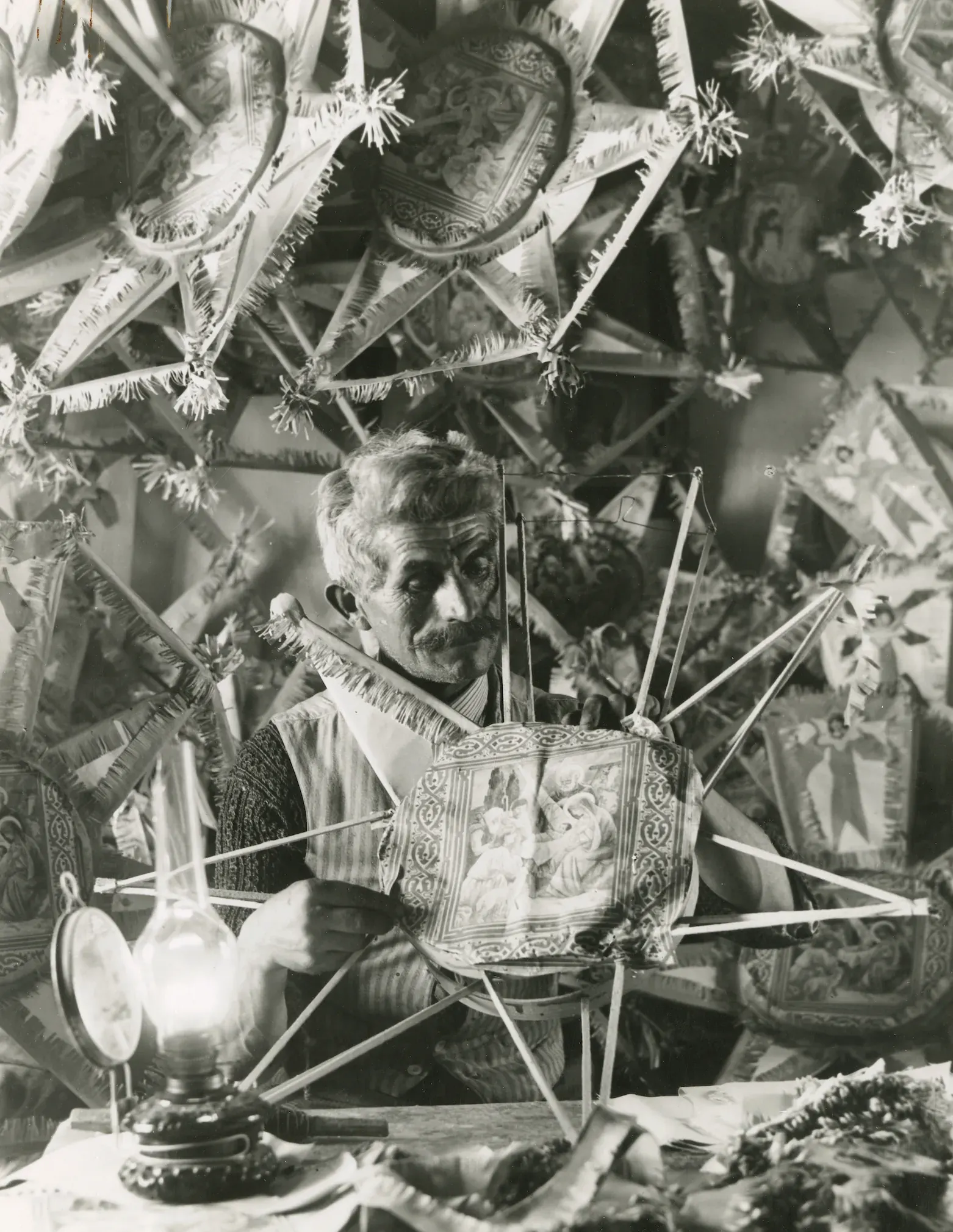
- “Nea Anghel the star-maker” in his workshop at Bariera Vergului, 1929. Nicolae Ionescu · Muzeul Național al Satului „Dimitrie Gusti”, CC BY-SA 4.0.
- The coat of arms over the portal of the great church of Văcărești Monastery. Muzeul Național de Artă al României, CC BY-SA 4.0.
- The chapel’s dedication stone, in Greek, 1736. Muzeul Național de Artă al României, CC BY-SA 4.0.
- A 1770 plan of Bucharest showing Russian troops at Văcărești and Cotroceni. Muzeul Municipiului București, CC BY-SA 4.0.
- The Dâmbovița at Radu Vodă, with the Bucur church and the monastery, 1868. Amedeo Preziosi · Muzeul Național de Artă al României, CC BY-SA 4.0.
- The Dâmbovița in Bucharest, 1868. Amedeo Preziosi · Muzeul Național de Artă al României, CC BY-SA 4.0.
- A bazaar on Calea Văcărești, 1935. Alexandru Phoebus · Muzeul Național de Artă al României, CC BY-SA 4.0.
- Mahala on Calea Văcărești, 1952. Alexandru Phoebus · Muzeul Național de Artă al României, CC BY-SA 4.0.
- An old house in the Dudești mahala, 1934. Alexandru Phoebus · Muzeul Municipiului București, CC BY-SA 4.0.
- A Bucharest mahala: waste ground, low houses and a factory chimney. Alexandru Phoebus · Muzeul Municipiului București, CC BY-SA 4.0.
- Calea Văcărești: a looted pharmacy, 24 January 1941. Willy Pragher · Landesarchiv Baden-Württemberg, CC BY 3.0.
- Calea Văcărești: a looted glass and china shop, 21–23 January 1941. Willy Pragher · Landesarchiv Baden-Württemberg, CC BY 3.0.
- The unfinished hunger circus at Rahova in May 2006: a concrete frame and a steel dome. Liberty Center opened on the site in 2008. Joe Mabel · Wikimedia Commons, CC BY-SA 3.0.
- Hala Unirii in 2008, its dome behind the façade and a Carrefour on the ground floor. Gabriel · Flickr, via Wikimedia Commons, CC BY 2.0.
- București Mall on a city postcard, next to the Athenaeum and the Arch of Triumph. Institutul Național al Patrimoniului, CC BY-SA 4.0.
- The great church’s dedication stone, in Church Slavonic. Muzeul Național de Artă al României, CC BY-SA 4.0.
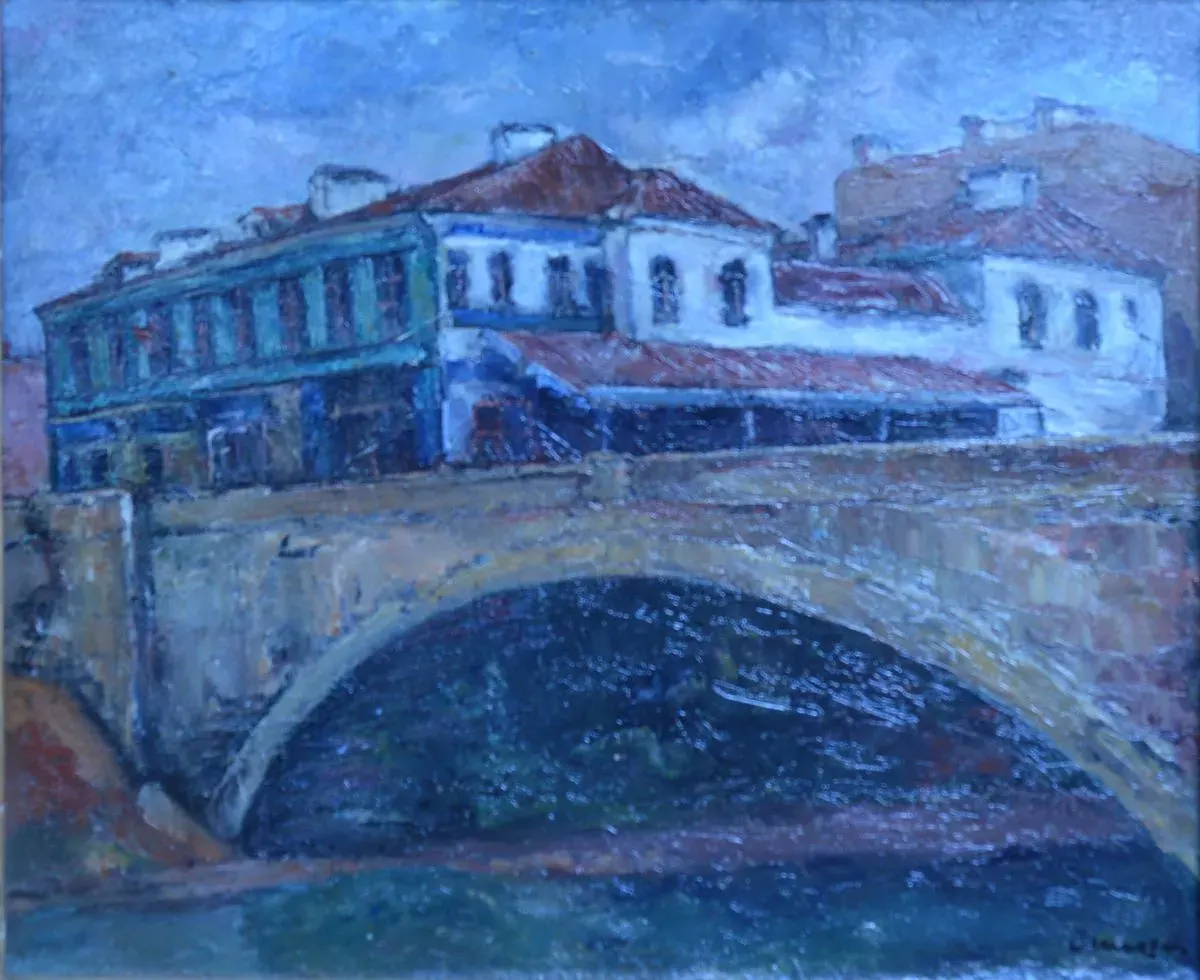
- A stone bridge over the Dâmbovița. Marius Bunescu · Muzeul Municipiului București, CC BY-SA 4.0.
- The Dâmbovița today, between concrete banks. Marian Mirea · Unsplash, Unsplash License.
- A cobbled mahala street. Alexandru Phoebus · Muzeul Național de Artă al României, CC BY-SA 4.0.
- Birds on the water, among the reeds. Roxana Pitis · Unsplash, Unsplash License.
- Reeds in autumn. Lawrence Chismorie · Unsplash, Unsplash License.
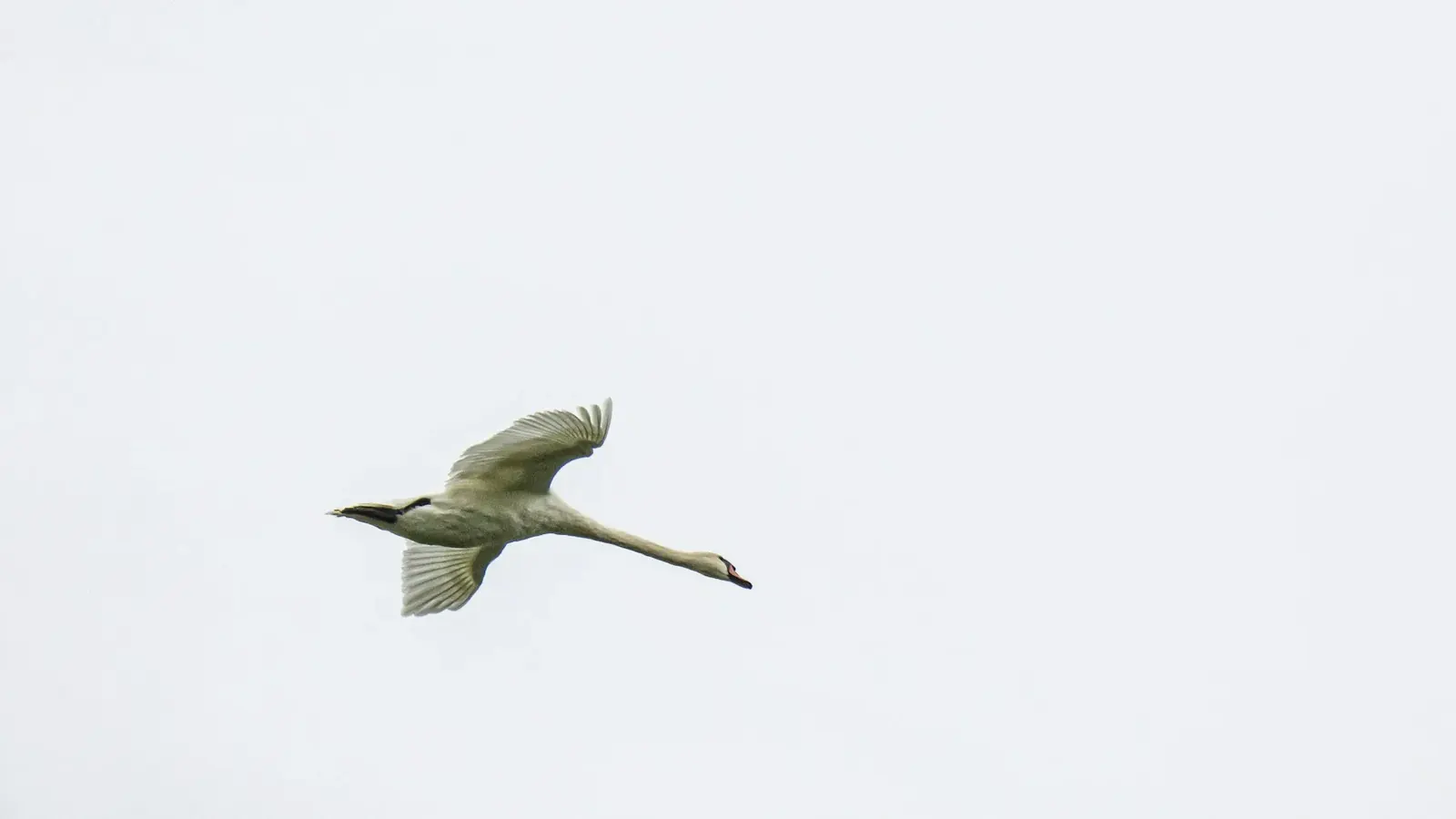
- A swan in flight. Georgian Constantin · Unsplash, Unsplash License.
- A boat pulled up on the bank, with “Văcărești” painted on its side. Roxana Pitis · Unsplash, Unsplash License.
- A swan in the reeds. Rebecca Hausner · Unsplash, Unsplash License.
- Pools and reeds, in a photograph its author tagged “Văcărești”. Adrian Mihai Iana · Unsplash, Unsplash License.