A small listening laboratory
What makes two notes sound different?
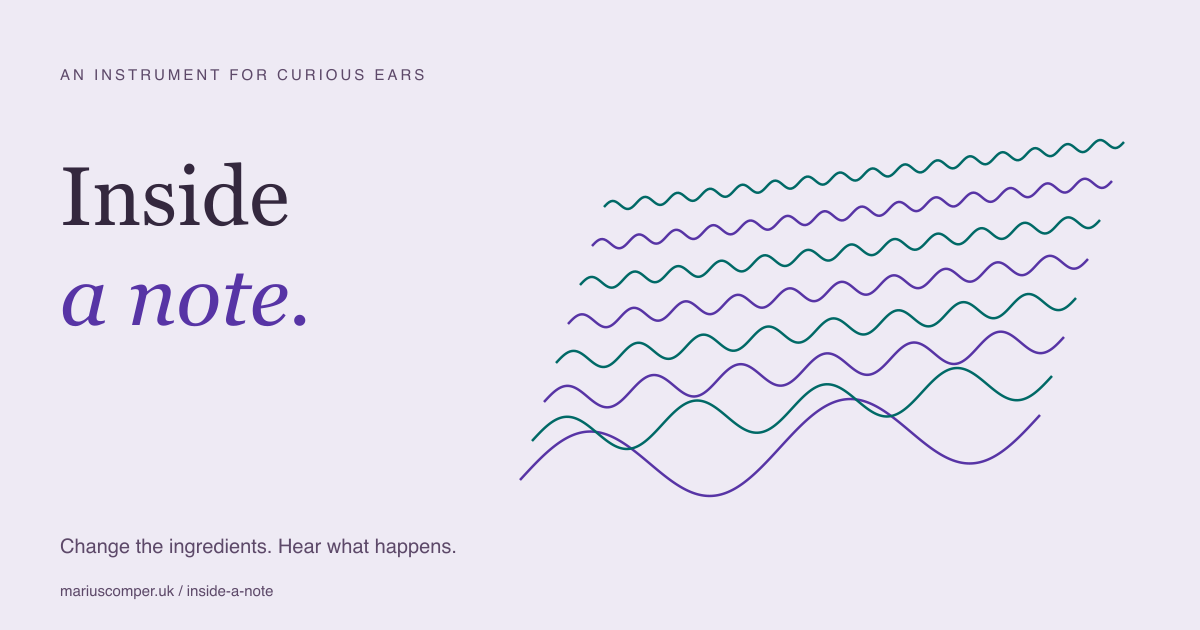
Keep the same note. Add harmonics one by one. Hear the change and watch what happens to the waveform.
The 69 waves behind this text are the same note, drawn 69 times. Adjust the harmonics and every one of them changes shape. Drag across them to send ripples through the field.
69 projects on music, voices and sound
This is a simple synthetic tone, not a recording of an instrument. Press “Play” when you want to hear it.
The collection as an instrument
Every string is a project.
All 69 projects, grouped by the collection’s 5 themes. Touch a string to hear it and see its project. Drag across the strings to pluck them in turn. Each string uses the harmonic mix you set above.
The physics of sound 15
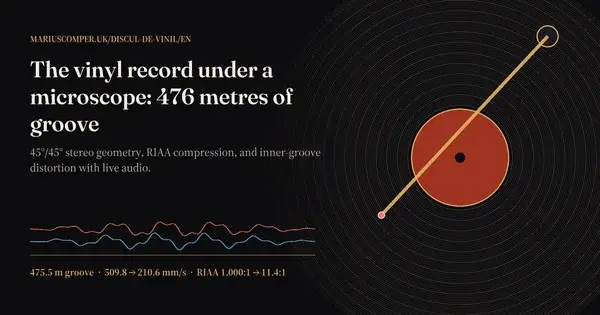
- The vinyl record under a microscope: 476 metres of groove, 45°/45° stereo, RIAA and inner-groove distortion
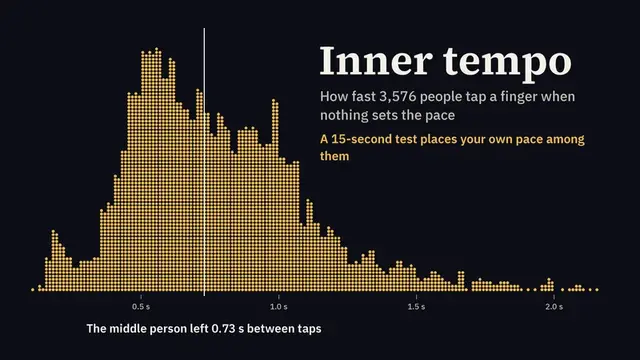
- Inner tempo: how fast 3,576 people tap a finger when nothing sets the pace
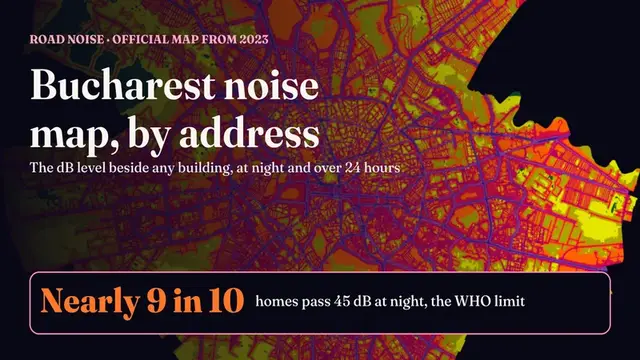
- Bucharest noise map by address: modelled road-noise levels around every building, school and park
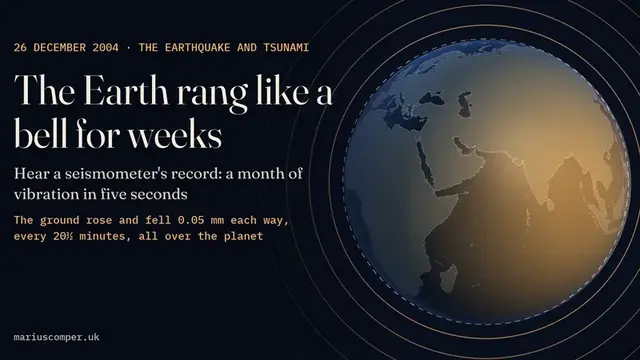
- The Earth rang like a bell for weeks
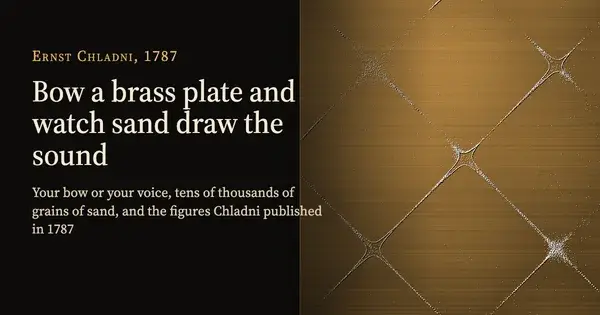
- What a sound looks like
- Inside a note — An instrument for curious ears
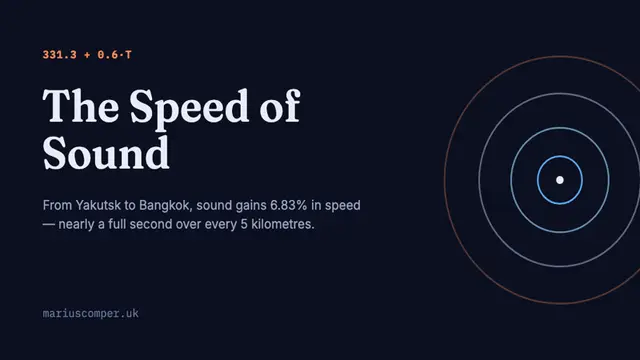
- The Speed of Sound
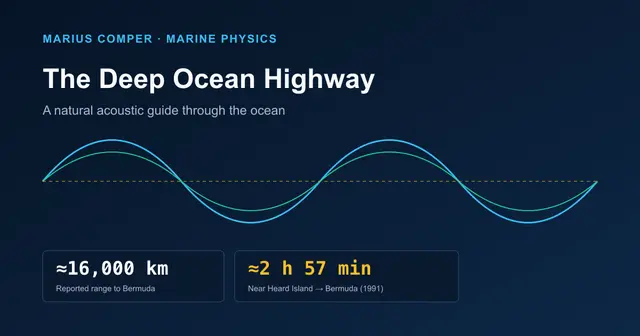
- The Deep Ocean Highway
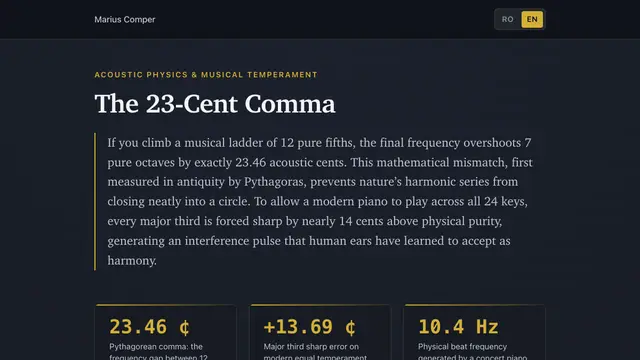
- The 23-Cent Comma
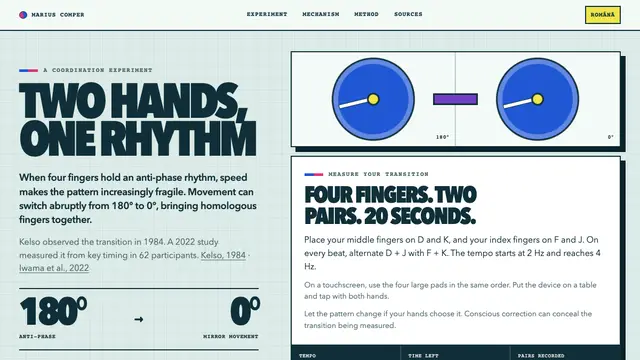
- Two Hands, One Rhythm
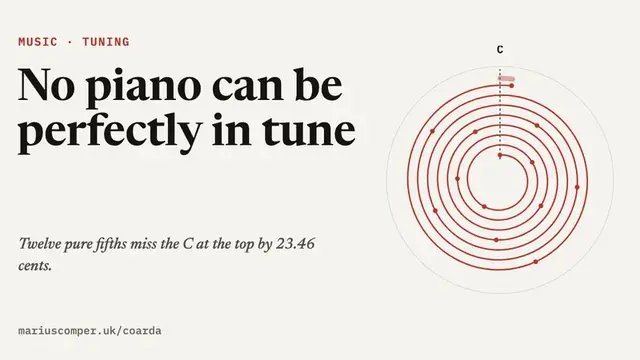
- Why no piano can be perfectly in tune
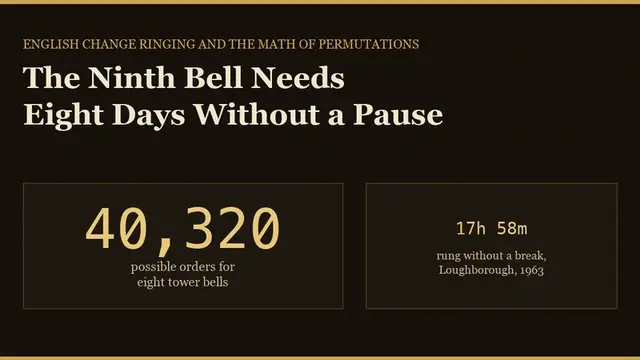
- The Ninth Bell Needs Eight Days Without a Pause
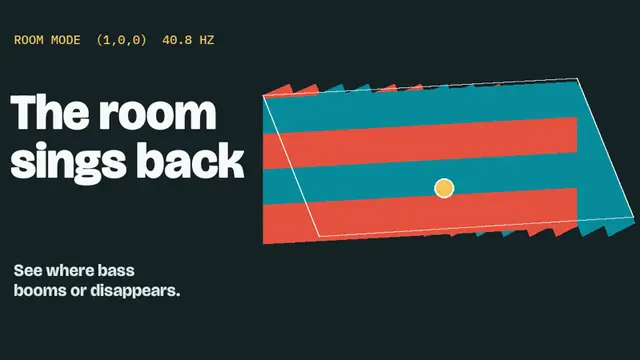
- The room sings back
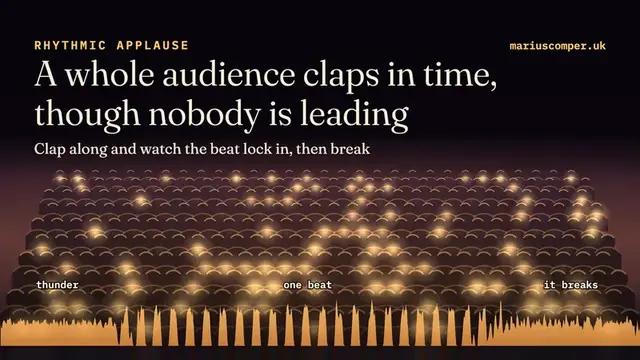
- Rhythmic applause: why an audience claps in unison, and why the beat falls apart
- The fibre beside the Romania–Georgia cable: what it could hear in the Black Sea, and in whose waters
Ears and listening 11
- Nothing: how close anyone has come to silence, darkness, absolute zero and empty space
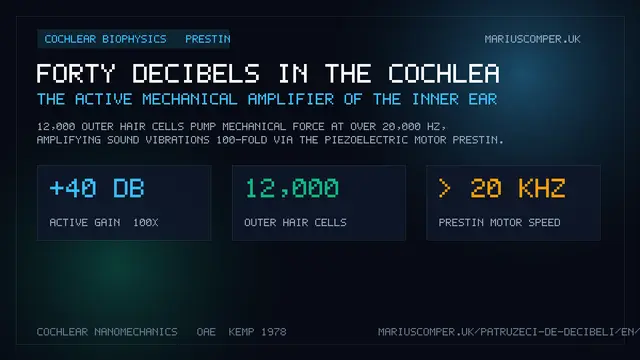
- Your Ear Has Its Own Amplifier
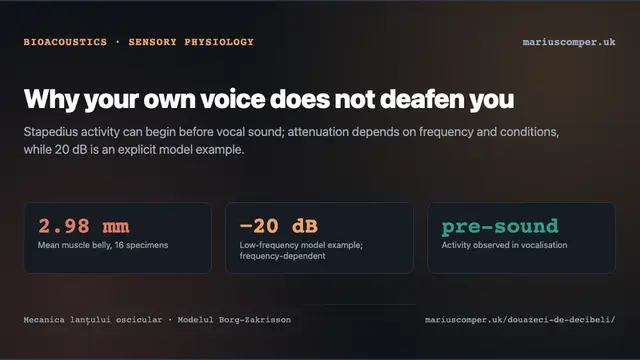
- Why You Don't Deafen Yourself Talking
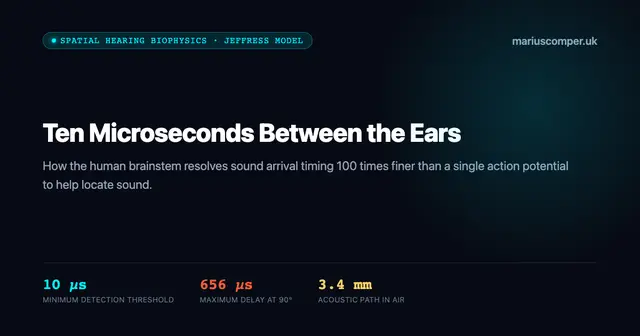
- Ten Microseconds Between the Ears: How the Brain Computes Sound Location
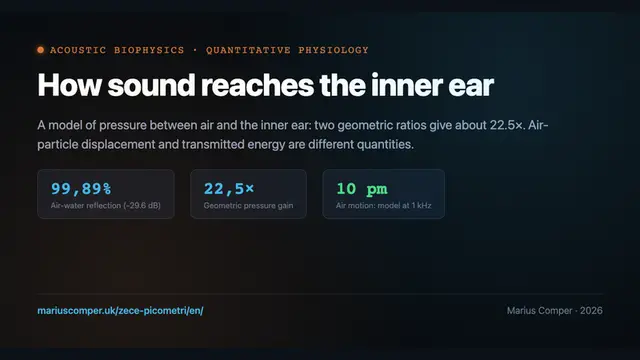
- Ten picometres: how sound reaches the inner ear
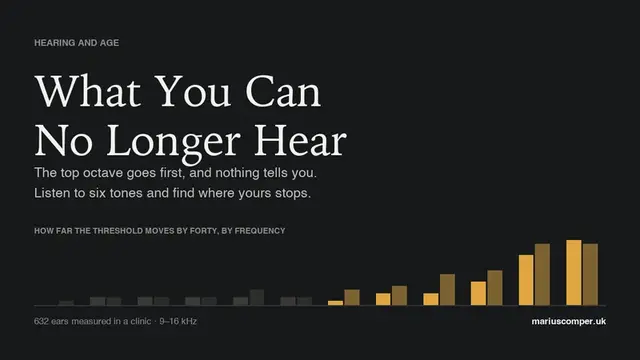
- What You Can No Longer Hear
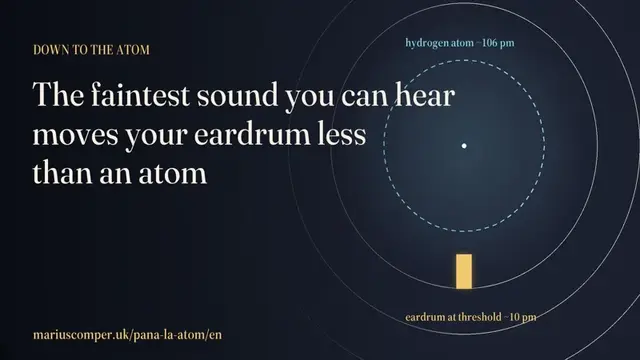
- The faintest sound you can hear moves your eardrum less than an atom
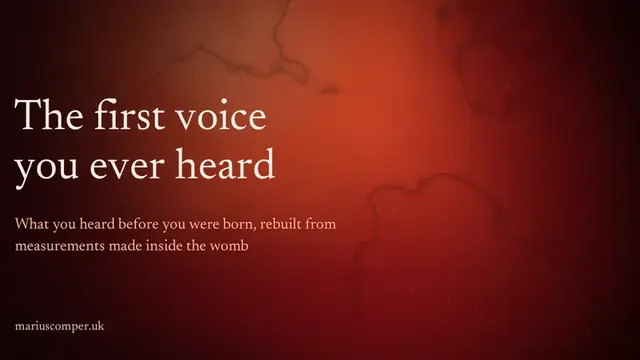
- What a baby hears in the womb: your mother's voice as you first heard it
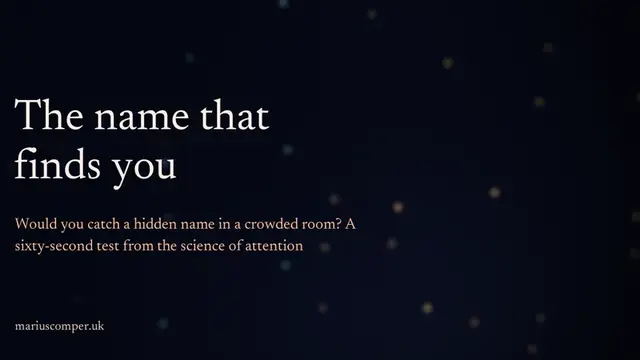
- Would you catch a hidden name in a crowded room? Take the 1959 test
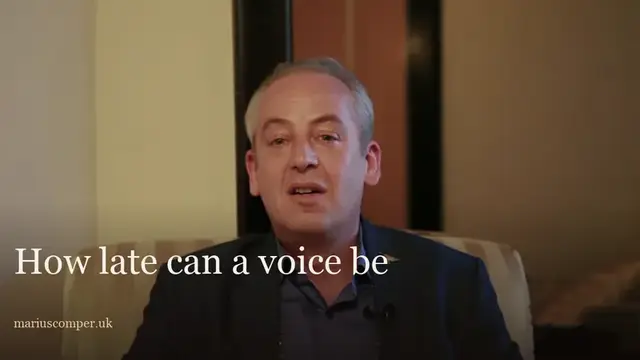
- The voice arrives late
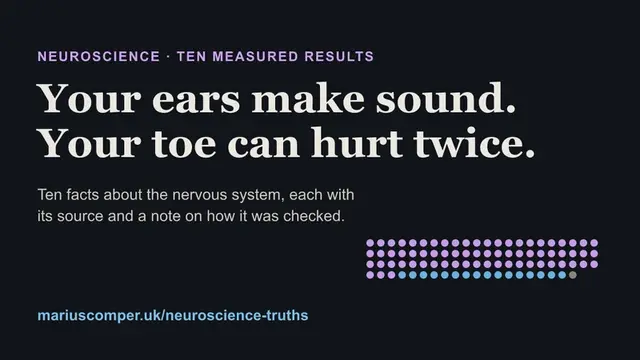
- Your ears make sound: ten measured facts about the nervous system
Voice and language 12
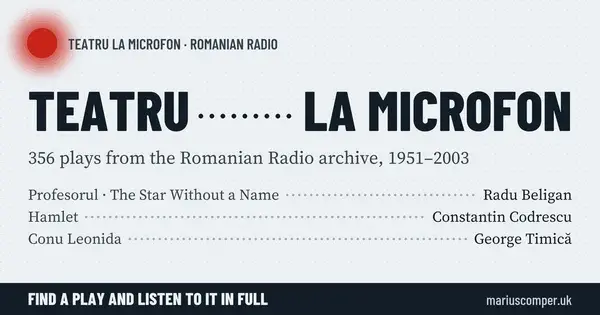
- Teatru la microfon: the plays in the Romanian Radio archive, to listen to in full
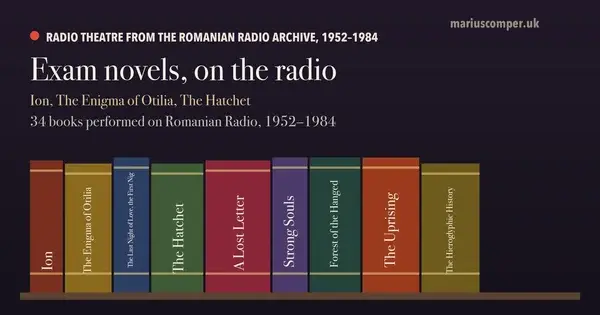
- Romania's exam novels on the radio: Ion, The Enigma of Otilia, The Hatchet and The Last Night of Love as radio plays
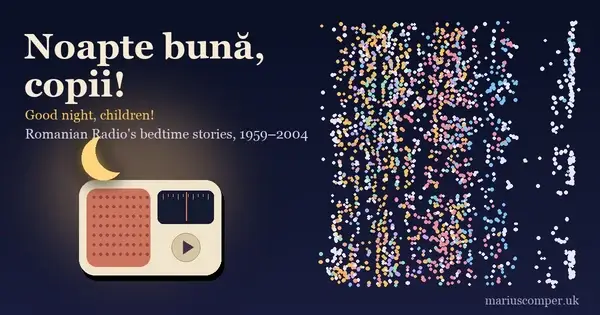
- "Noapte bună, copii!": Romanian Radio's bedtime stories, 2,151 recordings (1959–2004)
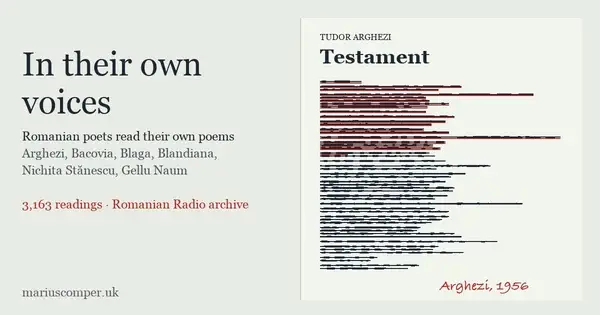
- In their own voices: Romanian poets read their poems, 3,163 readings from the Romanian Radio archive
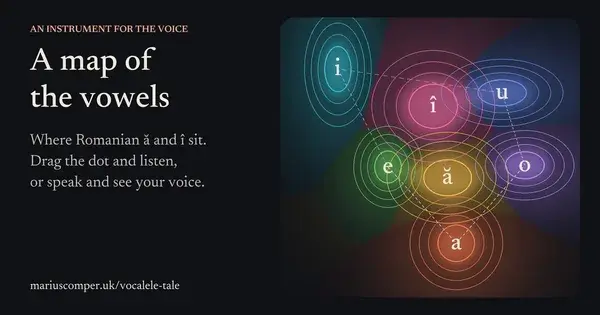
- The vowel map: Romanian ă and î, English vowels, and your own voice
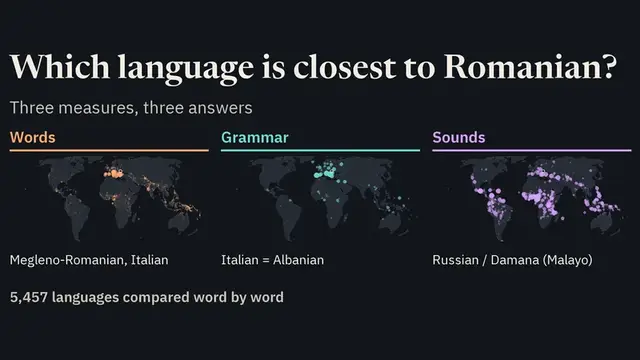
- Which language is closest to Romanian? Three measures, three answers
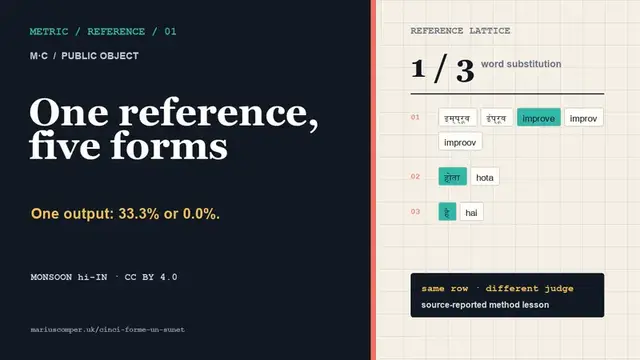
- One sound, five accepted forms
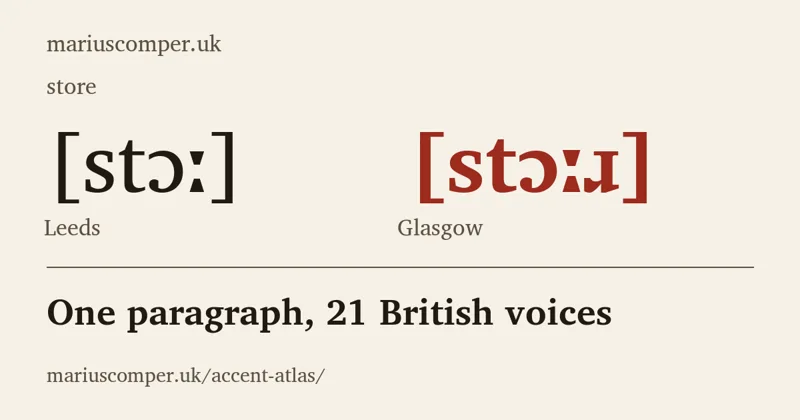
- One paragraph, 21 British voices
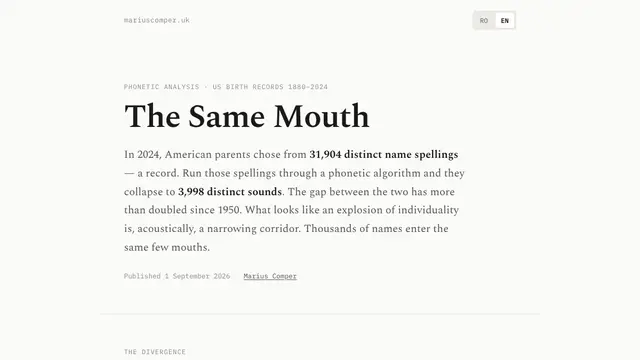
- The Same Mouth — How 32,000 Baby Name Spellings Collapsed Into 4,000 Sounds
- Hear the Difference: A Romanian Perception Pilot — Six Contrasts
- Italian dialects that sound like Romanian: the AIS atlas, village by village
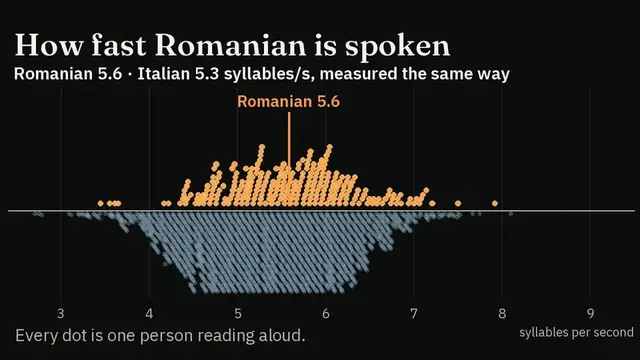
- How fast Romanian is spoken: the measured pace of speech, in syllables and bits per second
Music and memory 23
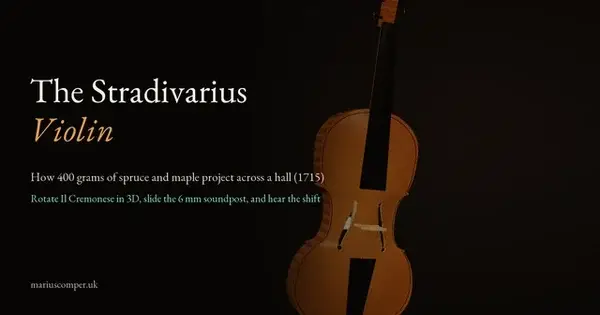
- The Stradivarius Violin (1715): how 400 grams of spruce and maple project across a hall
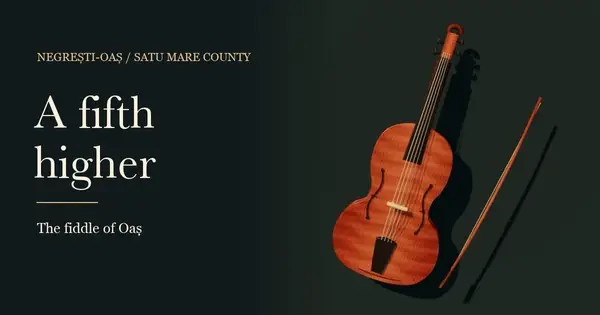
- A fifth higher: the fiddle of Oaș
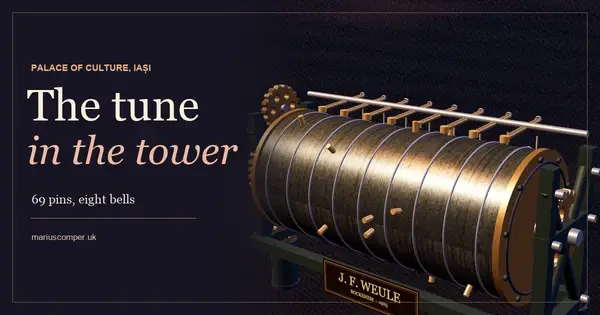
- The tune in the tower. How the clock at Iași’s Palace of Culture sings
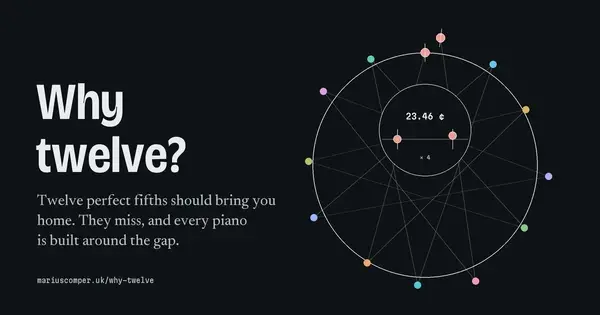
- Why twelve? The circle of fifths, and the gap that made the piano
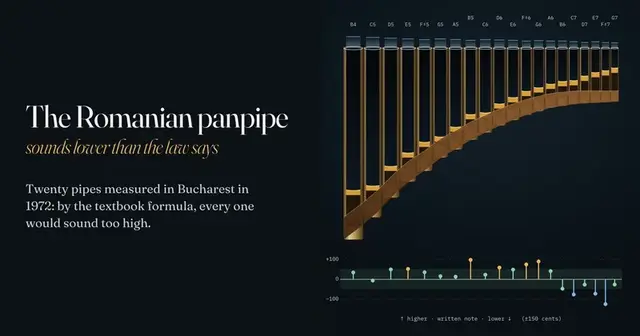
- The Romanian panpipe sounds lower than the law says
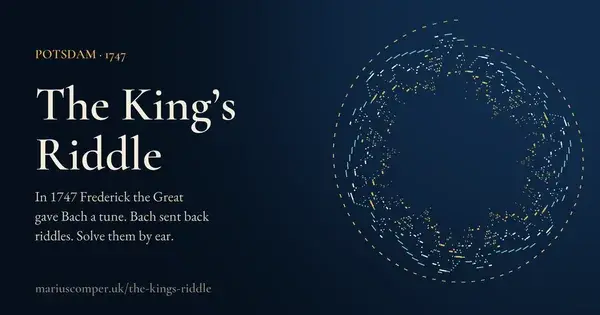
- The King's Riddle: solve Bach's canons by ear
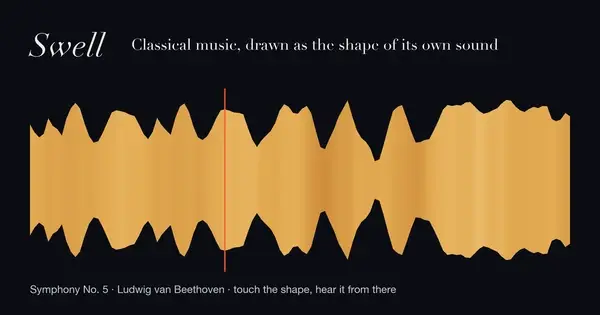
- Swell — classical music, drawn as the shape of its own sound
- Romanian Radio's archive, 1927–2019: 15,062 recordings on a radio dial
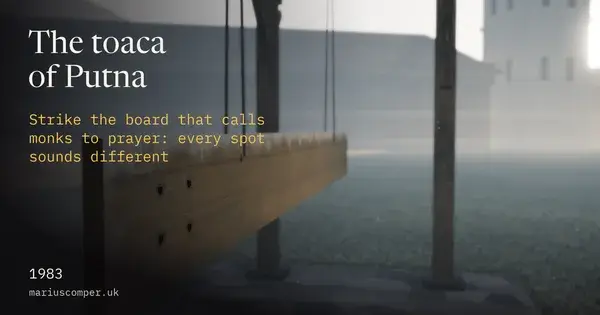
- The toaca of Putna: the board that calls monks to prayer, in 3D and in sound
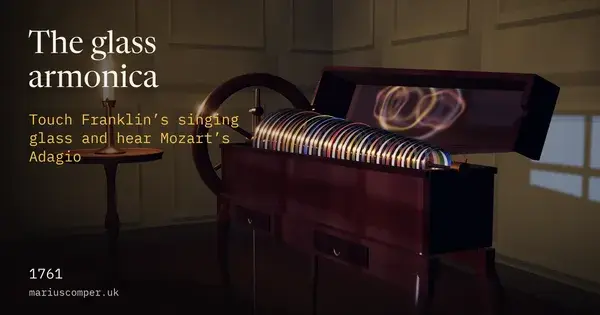
- The glass armonica: Franklin’s instrument, in 3D and in sound
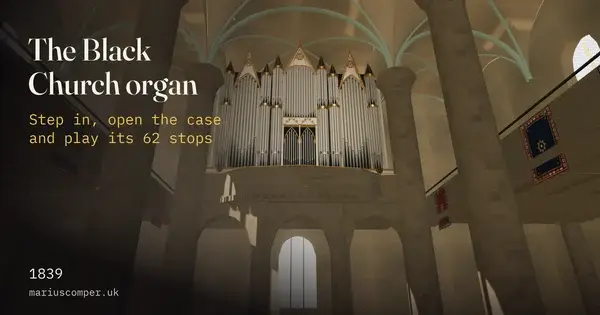
- The Black Church organ in Brașov: 62 stops, in 3D and in sound
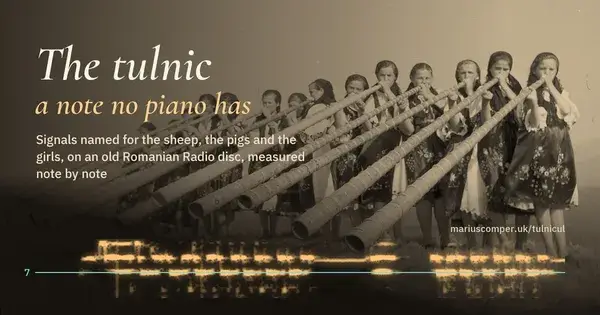
- Signals named for the sheep, the pigs and the girls: the tulnic, a Romanian wooden horn with a note no piano has
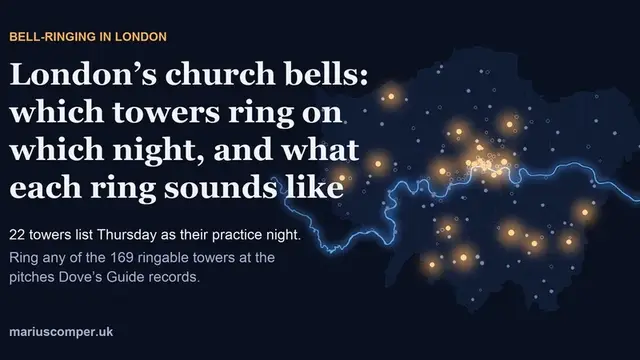
- London church bells: 178 towers, their practice nights, and what the bells sound like
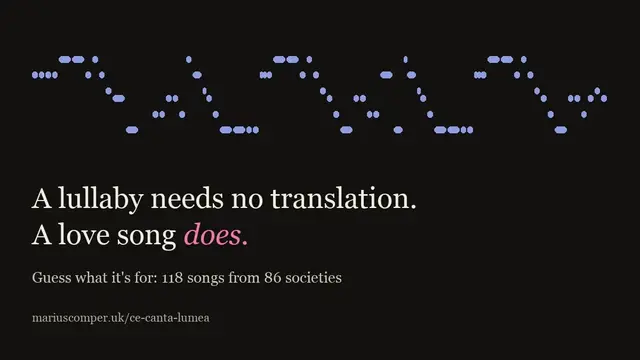
- Guess what a song is for: 118 recordings from 86 societies, heard by 29,357 people
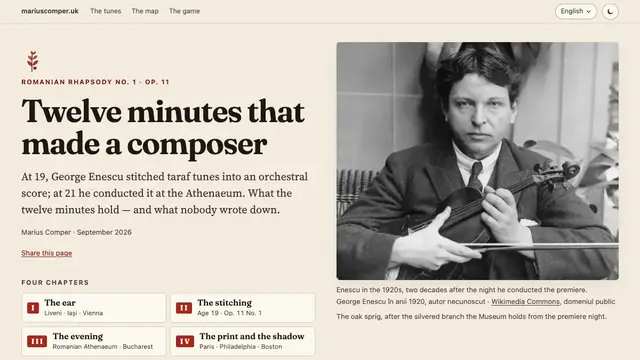
- Twelve minutes that made a composer
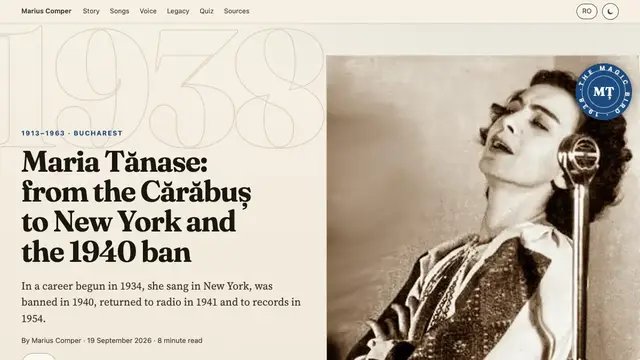
- Maria Tănase (1913–1963): life, songs, the ban
- The conductor who avoided commercial records — Sergiu Celibidache
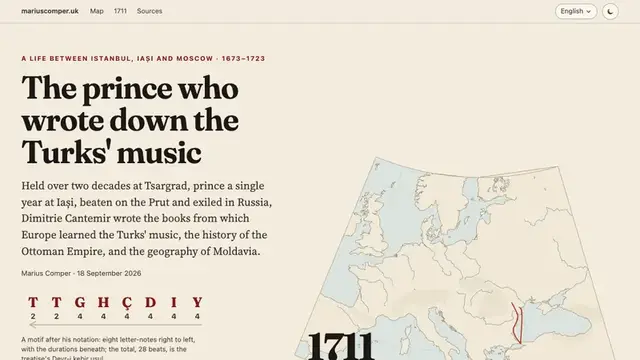
- Dimitrie Cantemir: the prince who wrote down the Turks' music (1673–1723)
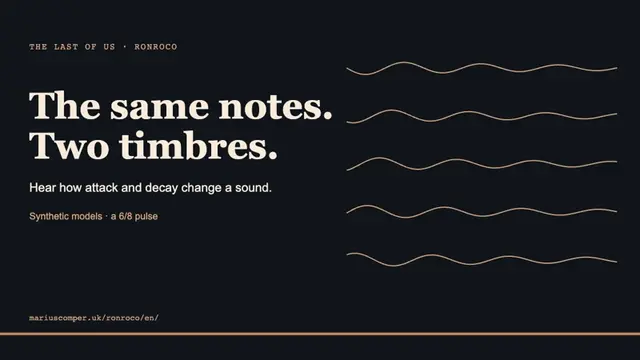
- How the ronroco changes the way you hear The Last of Us
- Why do the bells ring at noon? Belgrade, 1456
- How did our anthem wait 142 years? 1848–1990
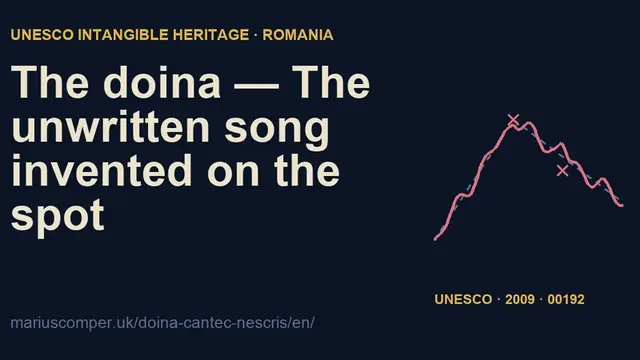
- The doina — The unwritten song invented on the spot
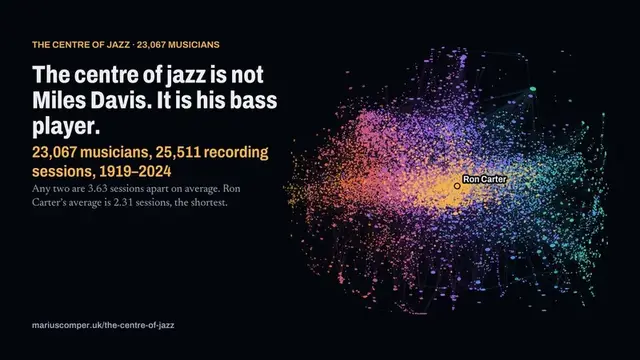
- The centre of jazz is not Miles Davis. It is his bass player.
Sounds of other species 8
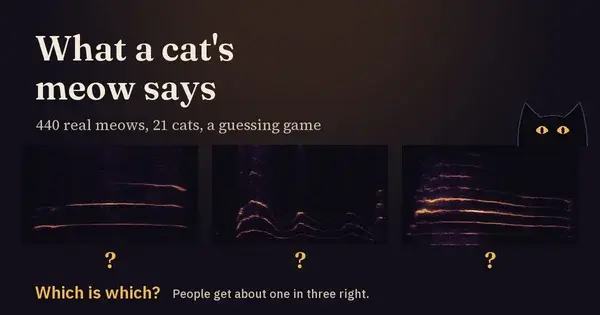
- What does my cat's meow mean? A game with 440 real meows
- Who sings first? The dawn chorus, bird by bird, for your own town
- Yellowhammer song dialects: a map of Europe drawn from the birds’ own song endings
- The woodpeckers of Băneasa Forest: seven species on the edge of Bucharest, each with its own sound
- Elephants may call each other by name
- The 52 Hz whale, ‘the loneliest in the world’, and the blue whales singing ever deeper since 1963
- Bats aren't blind, but they hunt by ear. Find the moth by its echo
- Listen to the wetland that grew in Ceaușescu's lake
Music and memory
The Black Church organ in Brașov: 62 stops, in 3D and in sound
The 1839 Buchholz organ of Brașov, Romania, in 3D: the case as photographed, the pipes inside at the length their pitch requires, and the 62 stops of the parish sheet, which the reader can draw and hear.
01 Harmonics
A note has a fundamental frequency and may have others above it.
Each component here is a sine wave at a whole-number multiple of 220 Hz. Change their levels; the graph and sound use the same values. Real instruments have attacks, resonances and variations this simple demonstration does not reproduce.
02 Listening
The ear selects, measures and recognises.
A voice can be understood in a crowded room. A syllable changes pace from one language to another. Other projects explore hearing thresholds, direction and timbre without treating one short test as a full portrait of any listener.
03 Instruments
Instruments you play yourself.
An organ of 1839, with all 62 stops, and Franklin’s glass armonica, rebuilt in 3D from their sources. You play them right on the page. Then tune a string by ear and take a single note apart into its harmonics.
04 Music
The same note belongs to different histories.
Improvisation, a rhapsody, a tuning system and a recording preserve different ways of making music. Hear what remains and see who wrote, performed or passed on each example.
05 The radio archive
Romanian Radio, free to hear.
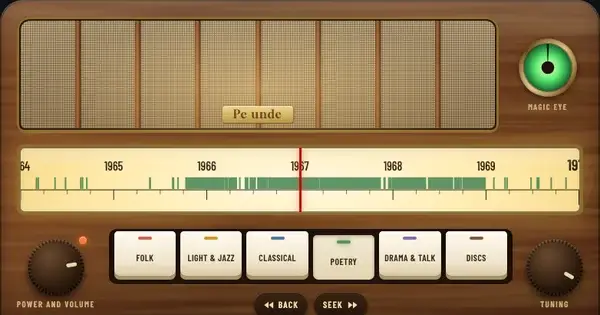
The Romanian Radio Broadcasting Company has published 15,062 recordings from its archive. On the dial of a valve radio you can tune into all of them, year by year. In 3,163 of them, the authors read their own work: Arghezi, Bacovia, Blaga, Nichita Stănescu, Ana Blandiana.
06 Soundscapes
Forests, wetlands and animals have their own sounds.
Some pages preserve real recordings; others model waves or show spectrograms. Each project description says what you hear and where its material comes from.
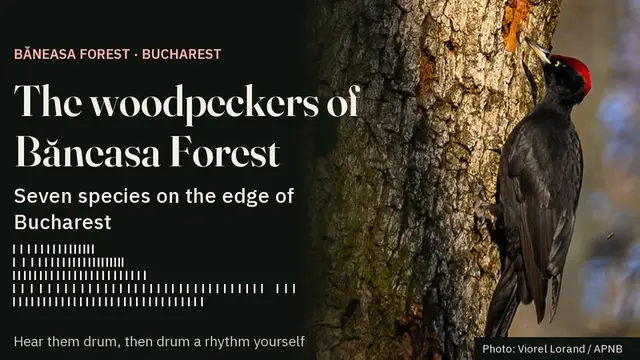 The woodpeckers of Băneasa Forest: seven species on the edge of Bucharest, each with its own sound
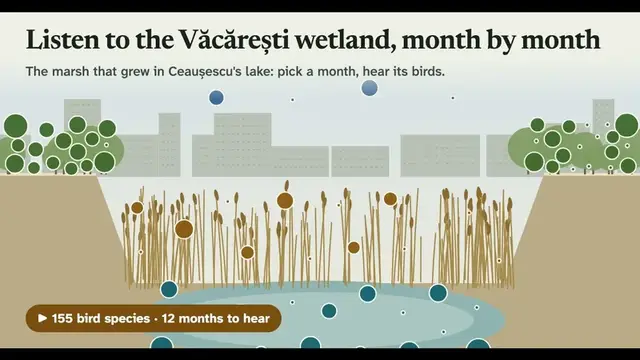 Listen to the wetland that grew in Ceaușescu's lake
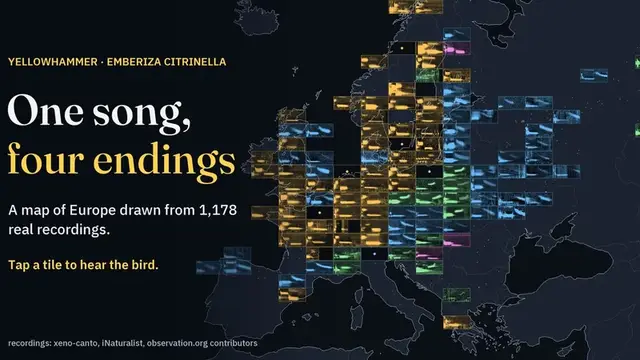 Yellowhammer song dialects: a map of Europe drawn from the birds’ own song endings
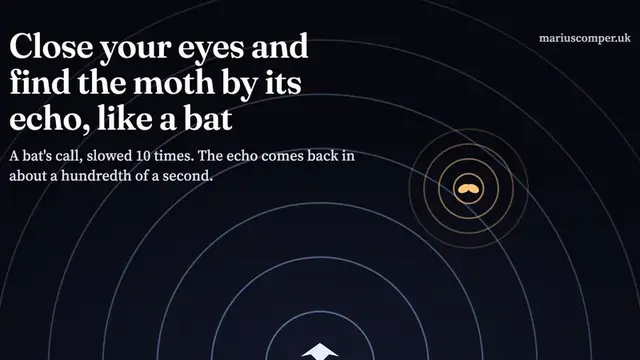 Bats aren't blind, but they hunt by ear. Find the moth by its echo
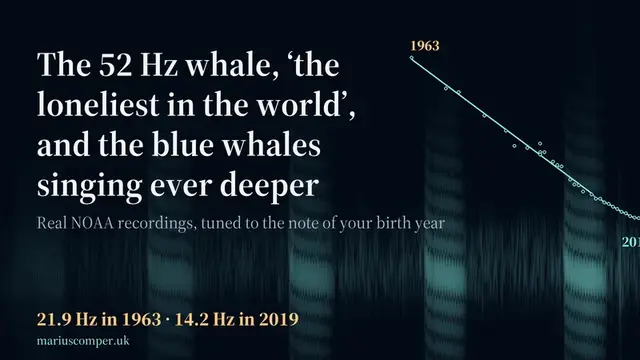 The 52 Hz whale, ‘the loneliest in the world’, and the blue whales singing ever deeper since 1963
Audio starts only when you press a button or touch a string. Playback stays quiet, and you can stop it at any time.