Geography, grade 9 · the new programme, 2026–2027
Tilt the Earth’s axis, go down beneath Vrancea, follow a raindrop to the Black Sea
Each chapter opens with a picture that you change yourself. Below it, 48 lessons, each short, with examples from Romania, a summary to learn and questions that check themselves.
Eight questions, eight chapters
32 lessons of the common core, for all schools, and 16 for the humanities track, marked as such. Each lesson has its own address and can be read on its own.
-
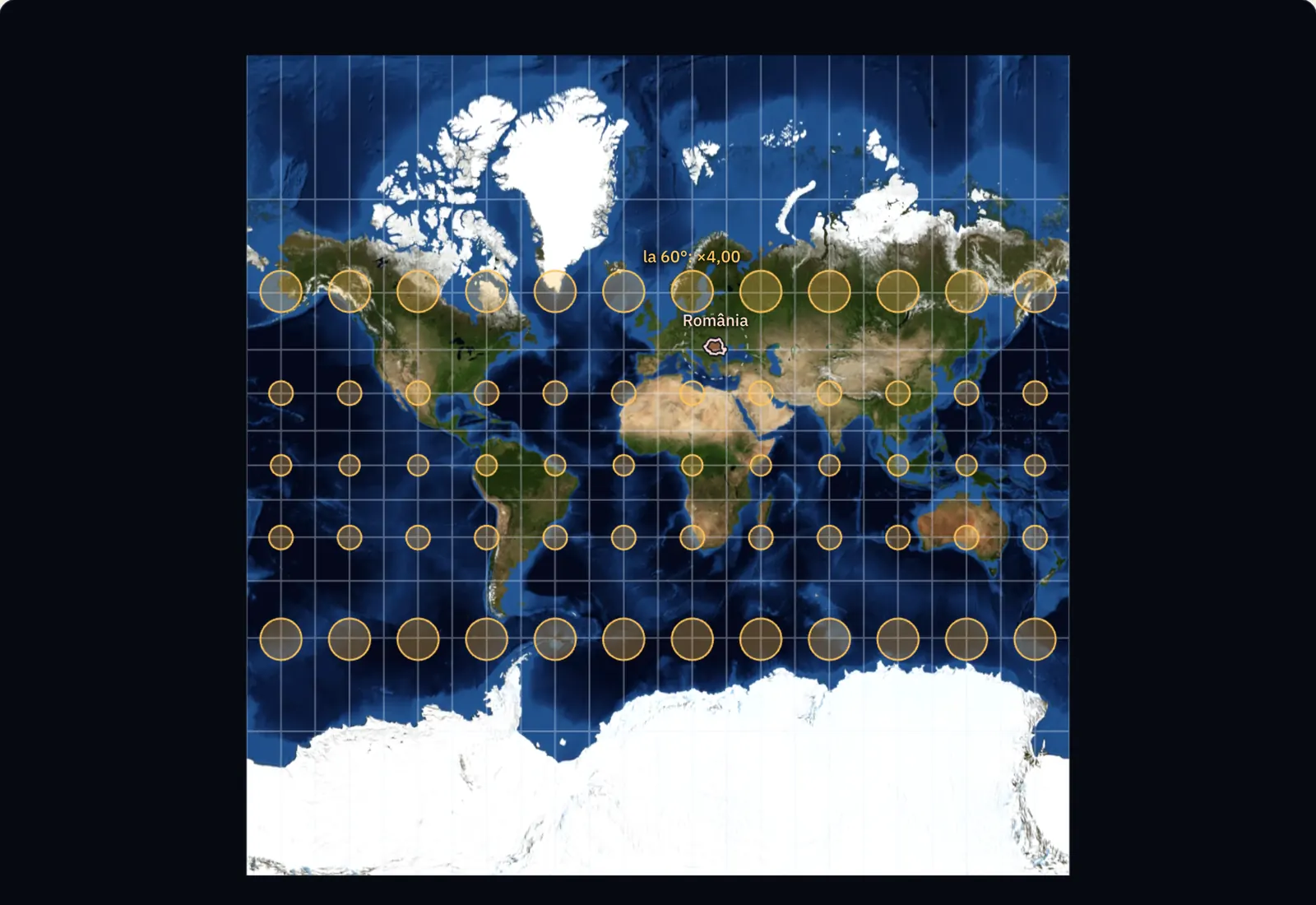 Stretch the globe
1Geography: the science of terrestrial space
How does a round planet end up on a flat sheet, and what is lost on the way?
Lessons in this chapter
- 1.1Maps, plans and globes: scale, map projections and conventional symbols
- 1.2Geographical coordinates: latitude, longitude and measuring distances on the globe
- 1.3Geographic information systems (GIS): maps built from layers of data
- 1.4Global positioning systems: how a GPS receiver calculates its position
- 1.5The evolution of geography and its importance today humanities
- 1.6Satellite images: remote sensing, spectral bands and false colour humanities
-
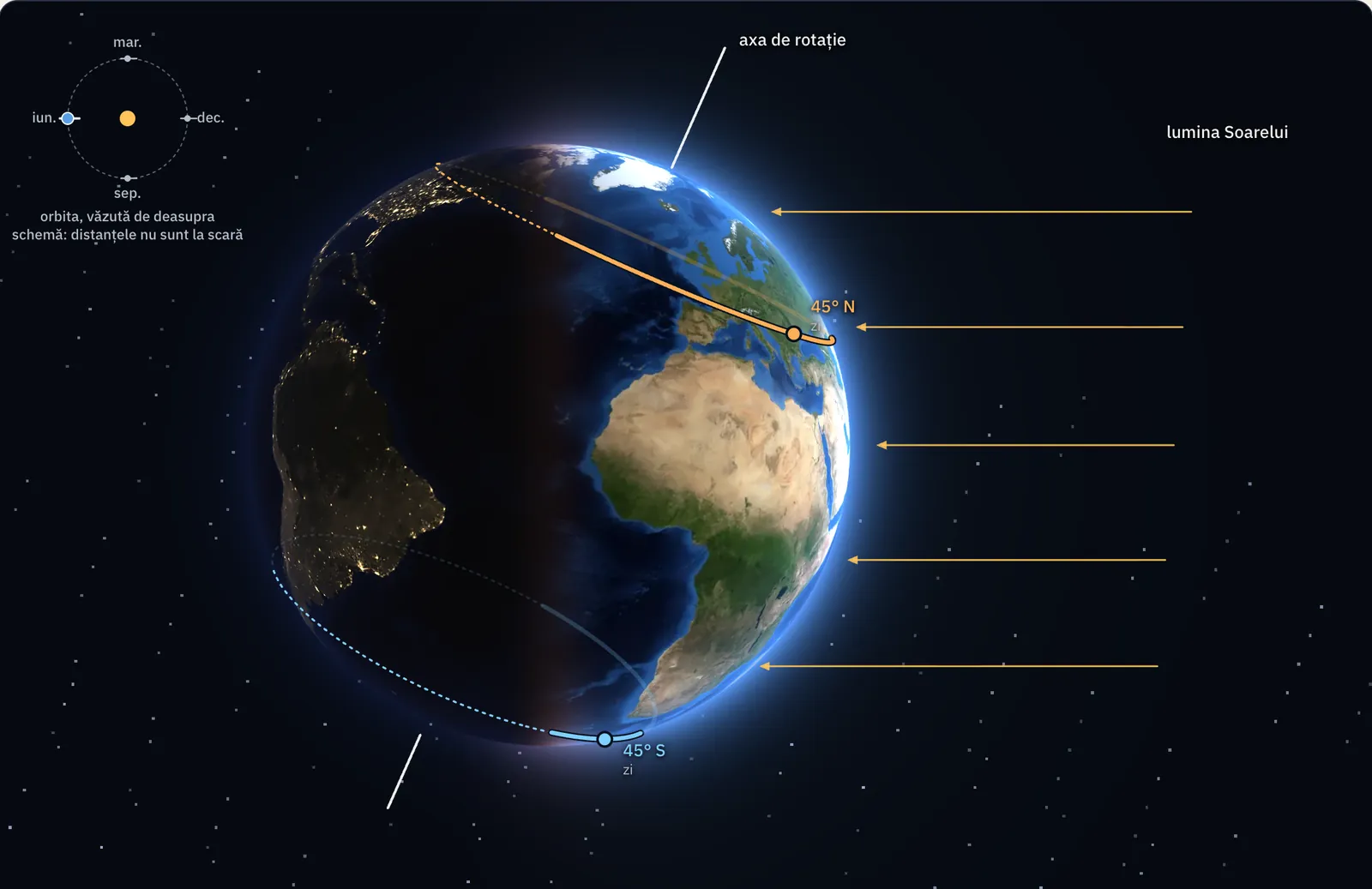 Tilt the axis
2The Earth as a body in space
Why do day and night, different clock times and opposite seasons exist on one planet?
Lessons in this chapter
- 2.1Earth in the Universe: the Sun–Earth–Moon system at its true scale
- 2.2Earth’s shape and physical properties: why life can exist on Earth
- 2.3Earth’s rotation: day and night, local time and time zones
- 2.4The seasons: why June brings summer to Bucharest and winter to Buenos Aires
- 2.5Exploring the universe: what space missions have brought to geography humanities
- 2.6Spectacular astronomical phenomena: eclipses, meteor showers, comets and auroras humanities
-
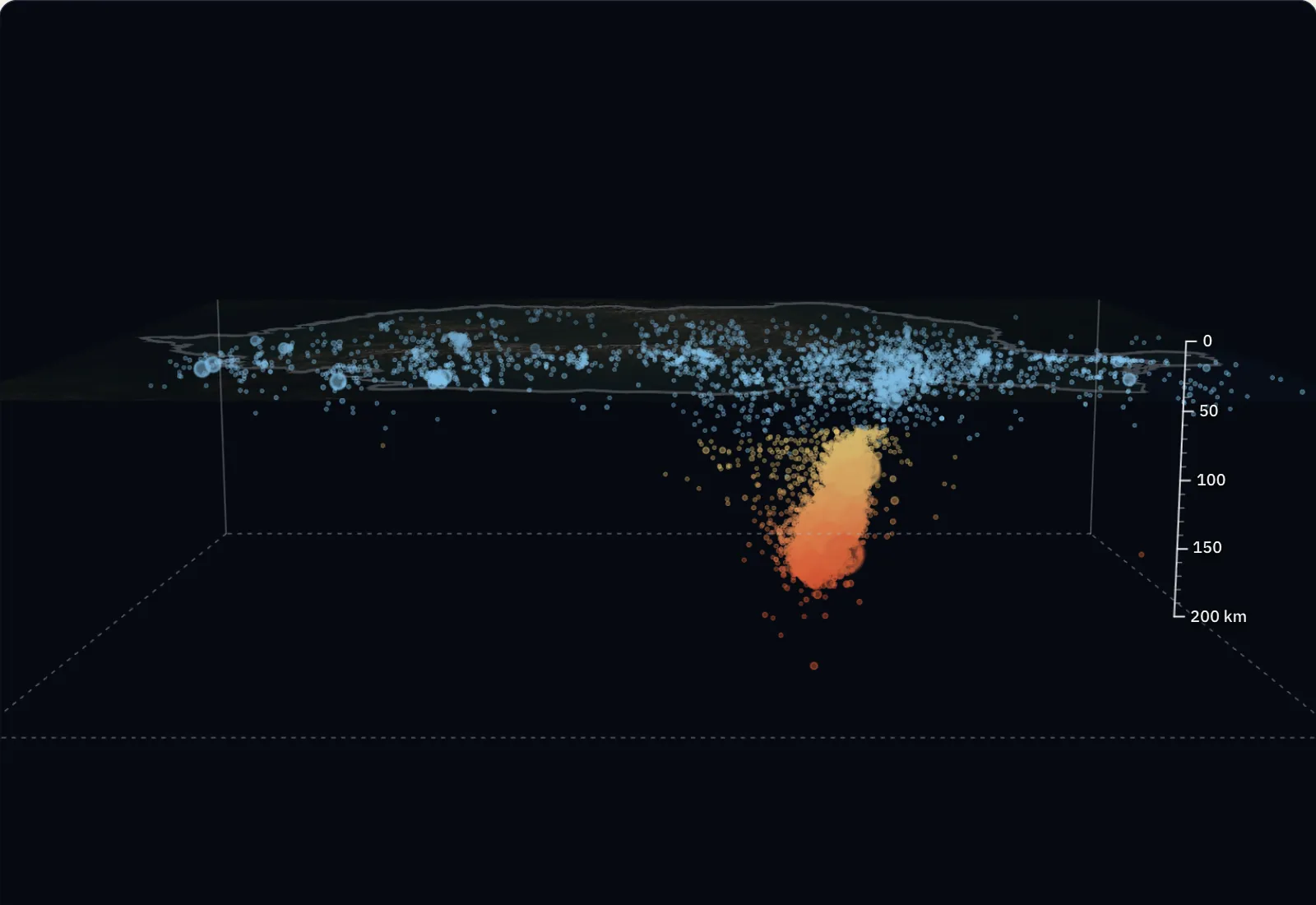 Go down beneath Vrancea
3Elements of geology: internal dynamics, resources and hazards
What lies beneath Romania, and why does Vrancea have earthquakes?
Lessons in this chapter
- 3.1Earth’s internal structure: crust, mantle and core
- 3.2Minerals and rocks: igneous, sedimentary and metamorphic
- 3.3Earth’s internal dynamics: plate tectonics and mountain building
- 3.4Endogenous hazards: earthquakes and volcanoes
- 3.5Mineral resources and the environmental problems of extraction humanities
- 3.6The geological time scale and palaeogeographic change humanities
-
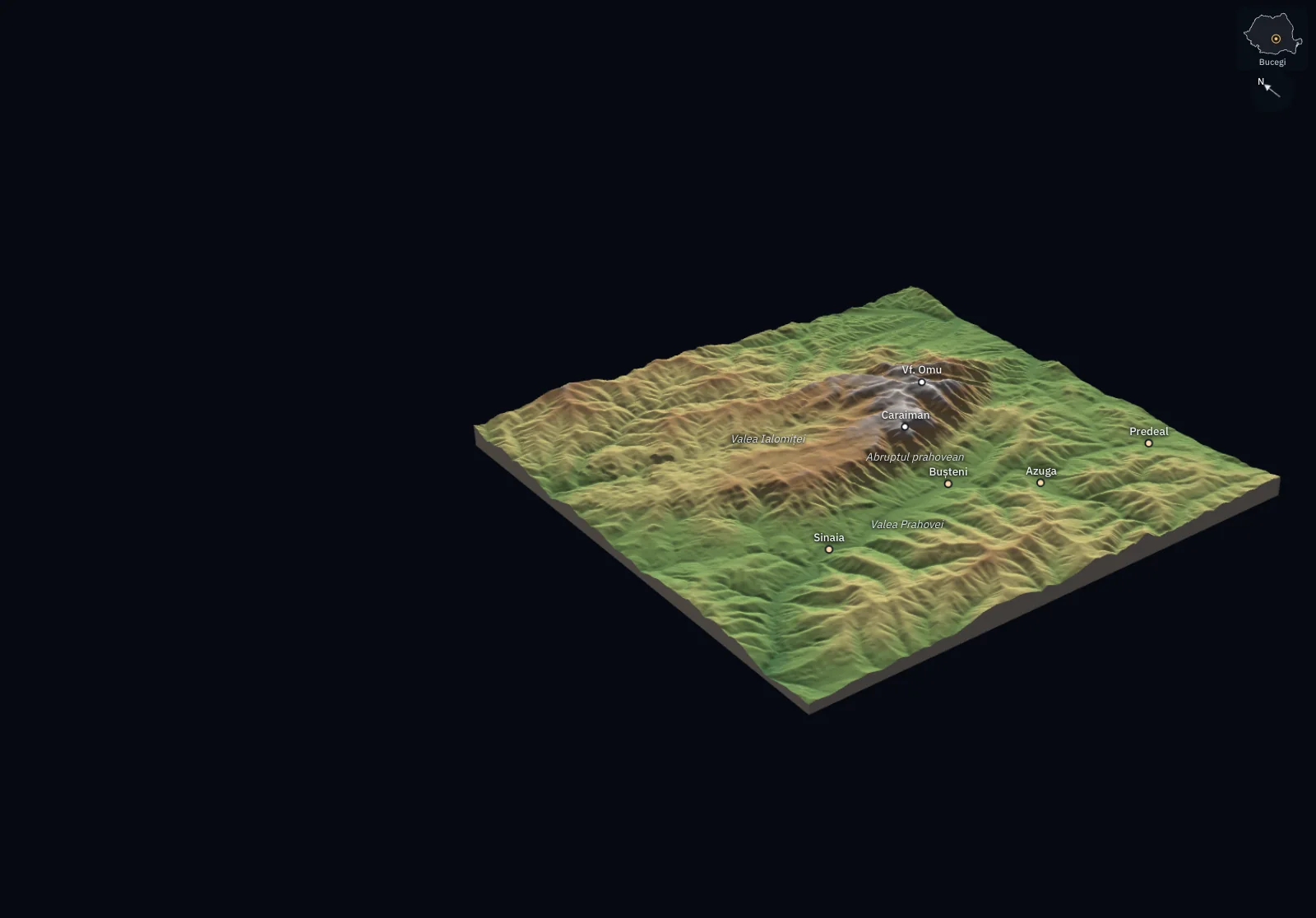 Slice the mountain
4Landforms: the base on which human society develops
How do you read a mountain on a map, and what gave it its shape?
Lessons in this chapter
- 4.1Major landforms of Earth: from Everest to the Mariana Trench
- 4.2Landform processes: weathering, erosion and landslides
- 4.3River, coastal and karst landforms: where is it easy or hard to live?
- 4.4Local relief: reading the land on a map and in the field
- 4.5Glacial and desert landforms: traces of ice and wind humanities
- 4.6Human-made landforms: quarries, spoil heaps, dams, canals and mountain roads humanities
-
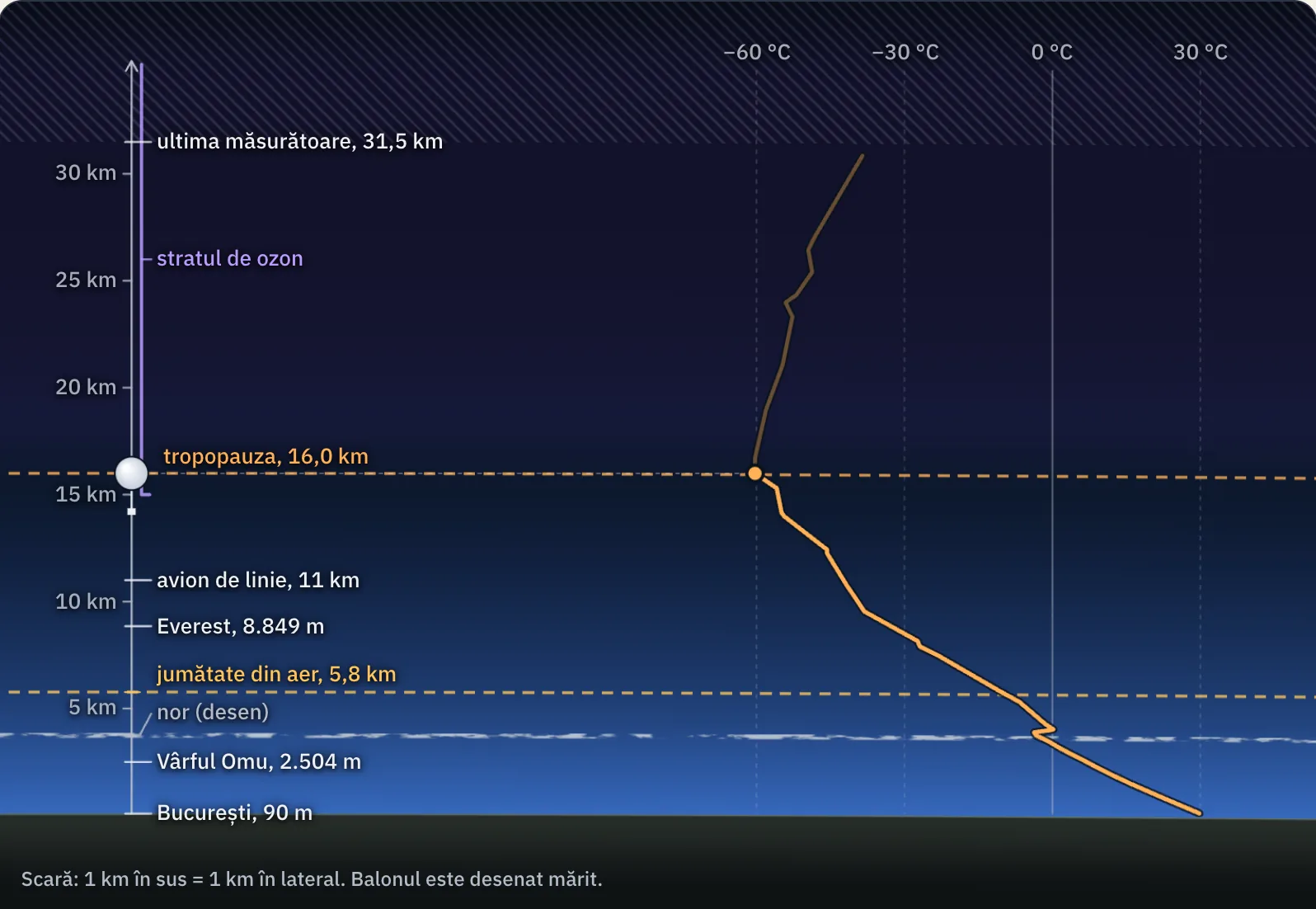 Climb through the air
5The atmosphere and climate change
How thin is the layer of air that people live in, and how is the climate changing?
Lessons in this chapter
- 5.1Earth’s atmosphere: what air is made of and how its layers are arranged
- 5.2Climate factors and elements: why two places at the same latitude have different climates
- 5.3Climate zones and types: from equatorial to polar, and how to recognise them on a climate graph
- 5.4Climate change: the greenhouse effect, the evidence and what can be done
- 5.5Synoptic charts and weather forecasts: reading isobars, fronts and warning codes humanities
- 5.6Climate hazards: tropical cyclones, tornadoes, droughts, heatwaves, blizzards and what to do during a red warning humanities
-
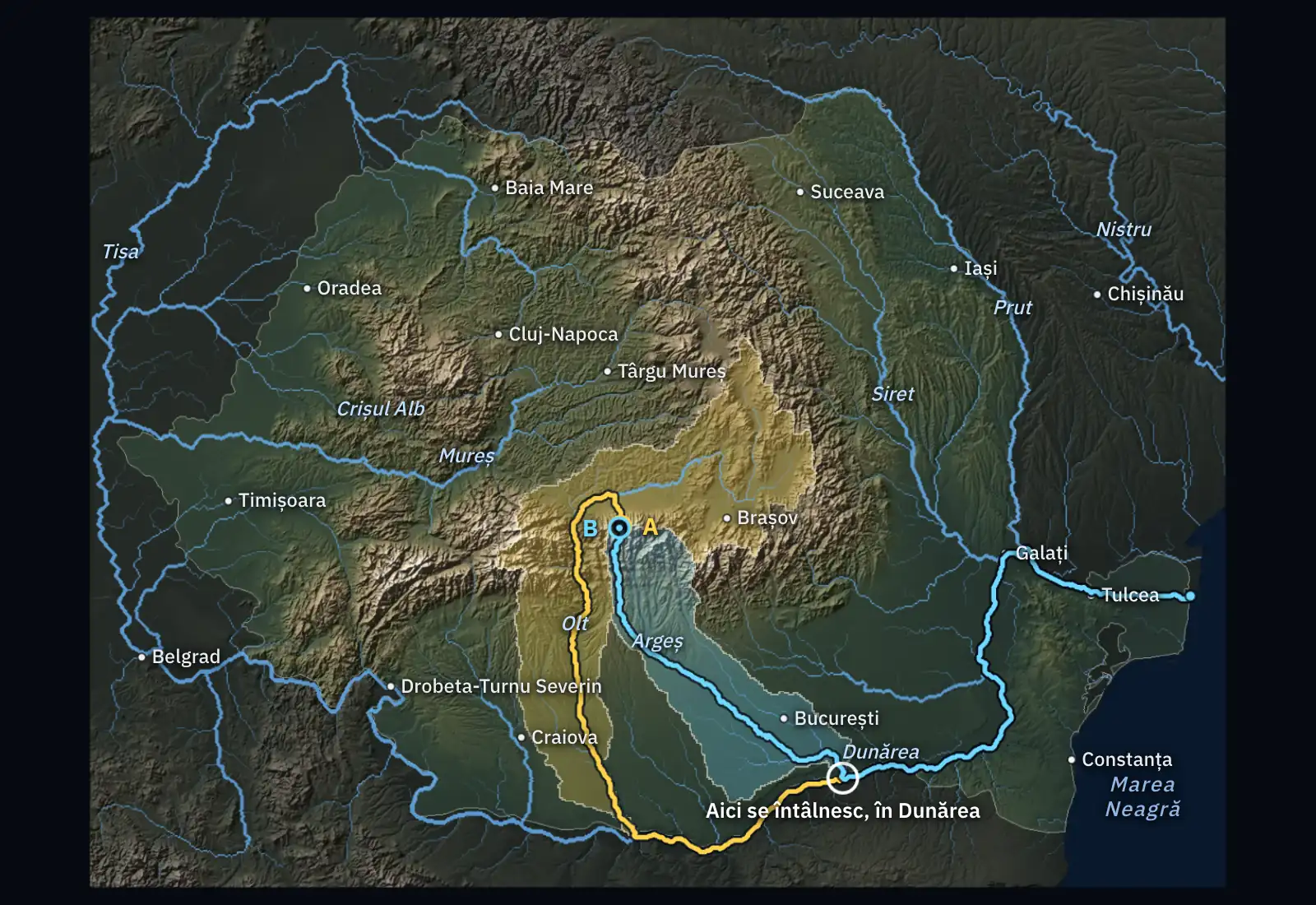 Follow a raindrop
6The hydrosphere: a dynamic system
Where does the rain that falls on your street end up?
Lessons in this chapter
- 6.1The world ocean: why the sea is salty and what sets its water in motion
- 6.2Inland waters: groundwater, rivers, lakes and glaciers
- 6.3Managing inland waters: who uses a river’s water and who shares it out
- 6.4Hydrological hazards: river floods, flooding and drought
- 6.5The water cycle: how the hydrosphere connects the atmosphere, lithosphere and biosphere humanities
- 6.6People and the hydrosphere: how fertilisers, plastic and dams on land change the sea humanities
-
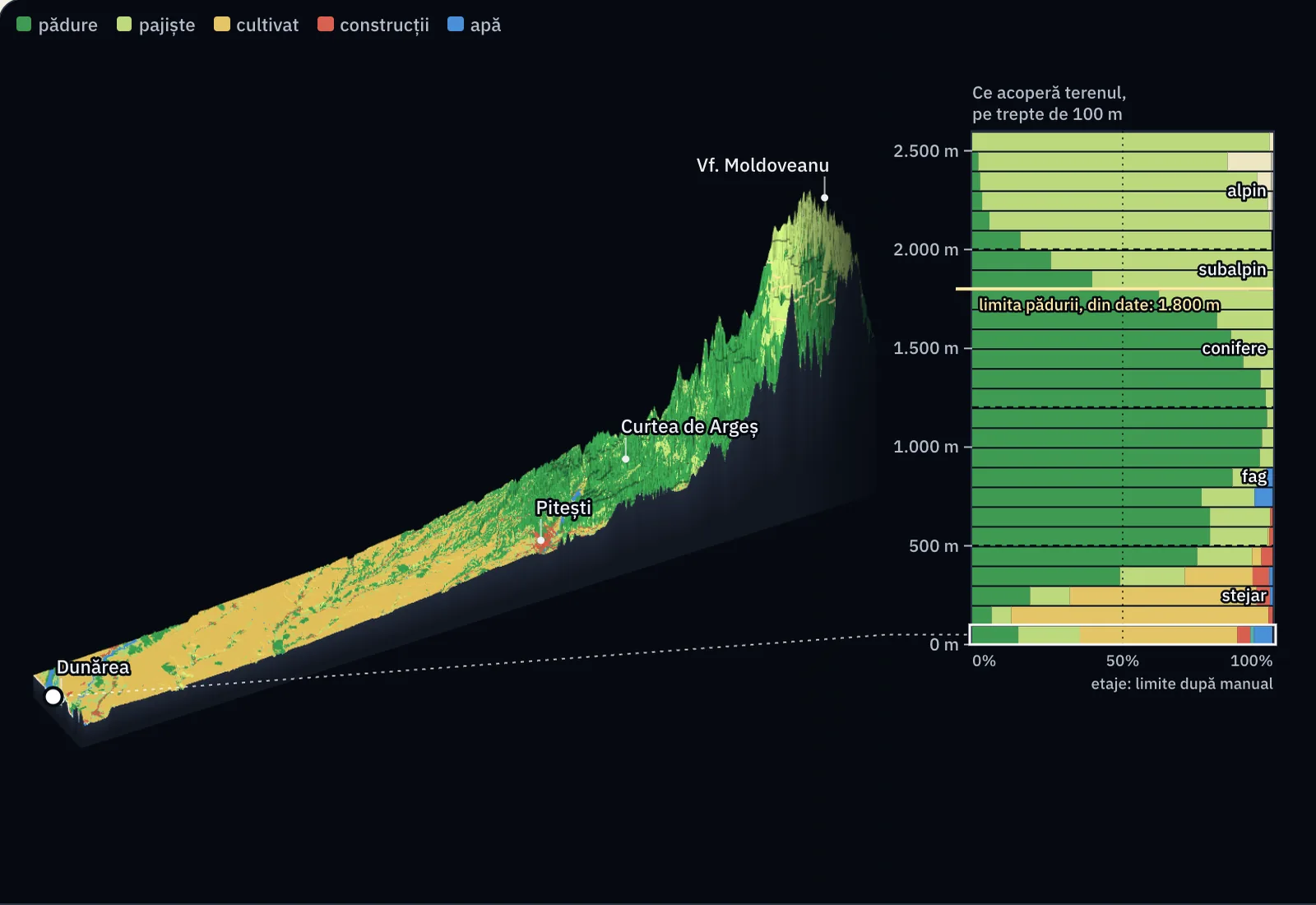 Climb the vegetation belts
7The biosphere and soils: geographical diversity
Why does the forest change as you climb a mountain, and what does one metre of soil hold?
Lessons in this chapter
- 7.1The biosphere: where life exists on Earth and why it is unevenly distributed
- 7.2Earth’s biogeographic zones and mountain vegetation belts
- 7.3Soil: what it contains, how it forms and its types
- 7.4Soil as a resource: erosion, other forms of degradation and protection
- 7.5Biodiversity management and biological hazards: protected areas, invasive species and epidemics humanities
- 7.6Local biodiversity and soils: your own investigation humanities
-
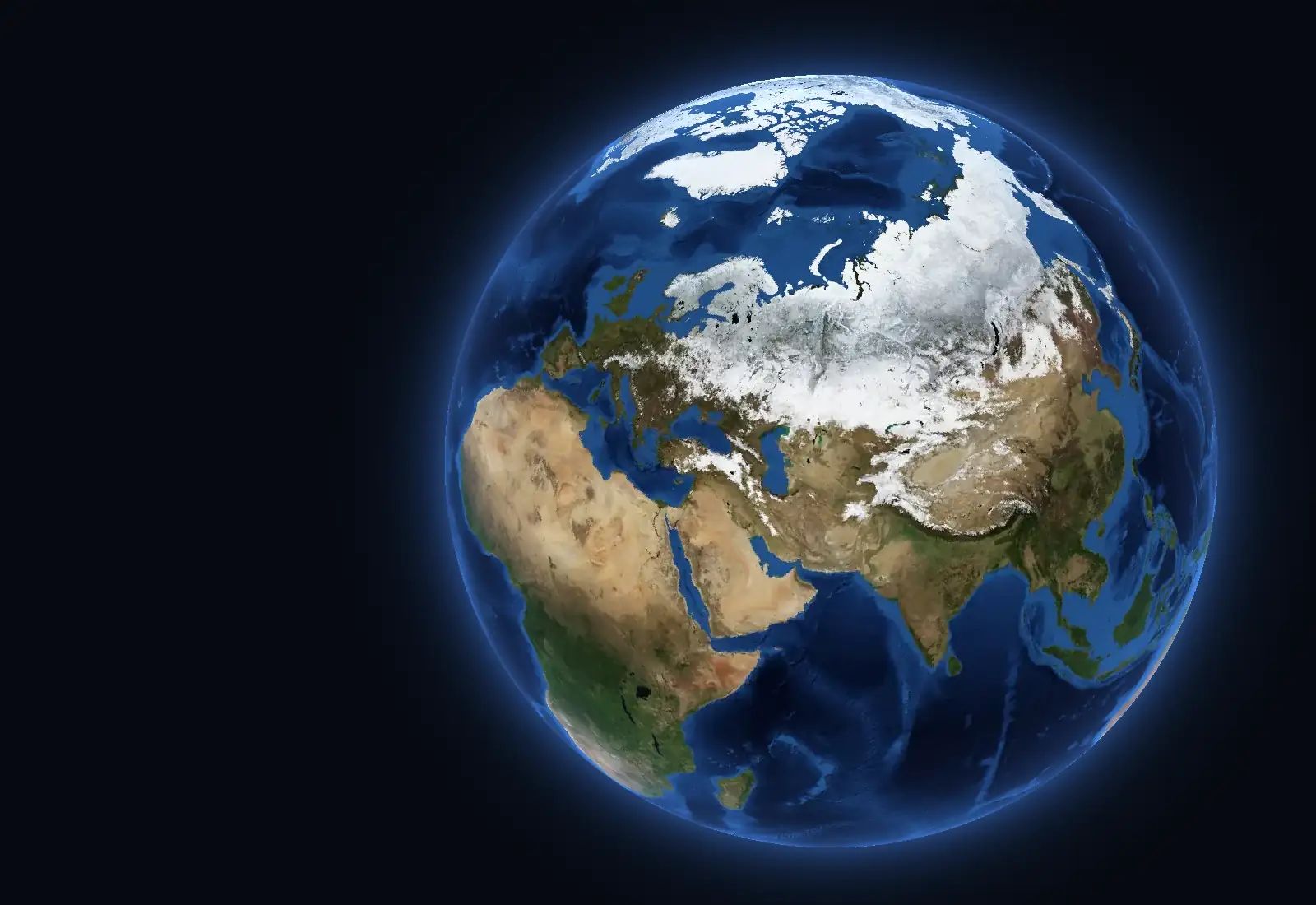 Watch a year
8The natural environments of the Earth
Why does the planet look so different from the Equator to the poles?
Lessons in this chapter
- 8.1Environmental components and their relationships: what changed when Balta Brăilei was embanked
- 8.2Natural environments of the warm zone: equatorial forest, savanna, monsoon environment and tropical desert
- 8.3Temperate terrestrial environments: Mediterranean, oceanic, continental and coniferous forest
- 8.4Cold terrestrial environments and mountain environments: tundra, polar regions and mountain belts
- 8.5Ocean environments: coastal, shelf, pelagic and abyssal humanities
- 8.6Environmental degradation: deforestation, desertification and the impact of human activity on natural environments humanities
Geography runs on four clocks
One planet changes at very different rhythms. Each chapter says which clock it watches.
How to use it
Before a test
Each lesson ends with “In brief”, a few sentences that hold everything to remember, with “Common mistakes” and five or six questions. The Practice page mixes the 240 questions that check themselves, by chapter or from the whole programme.
With your own place
If you choose your city, commune or village (the button at top right), the lessons add the example from home: how long the day lasts, when true noon falls, how far the Vrancea earthquake zone is. The choice stays on your phone.
In class
The For teachers page has everything that can be used tomorrow: the pictures on the projector, a worksheet for every lesson, one test with the same questions for the whole class, and the table of the programme.
Without internet
The lessons and pages you have opened stay on the device and can be read without a signal, on the bus or in class.