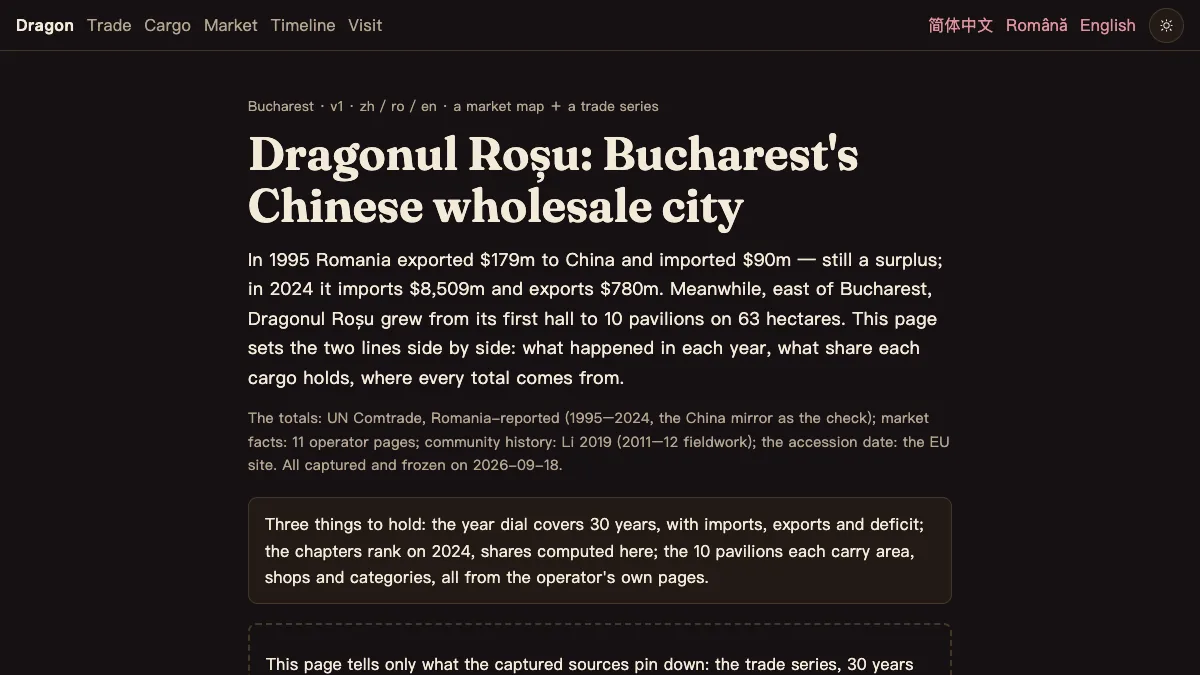
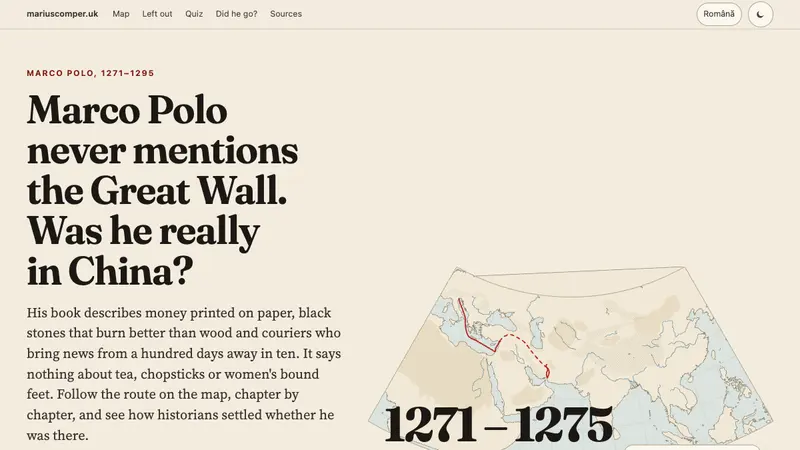
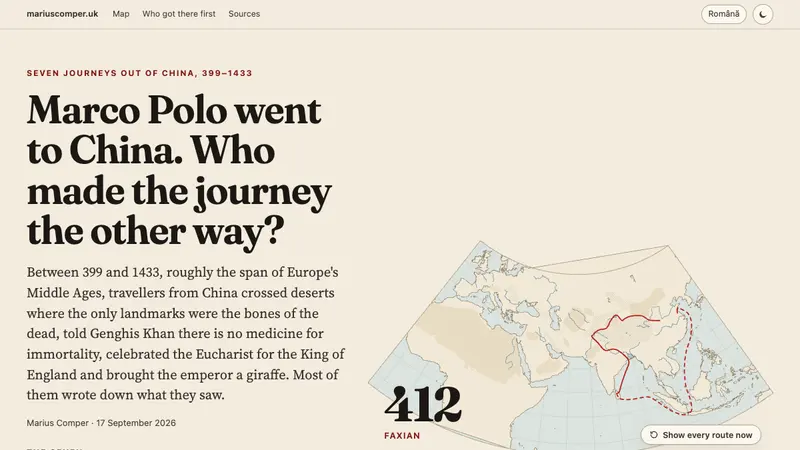
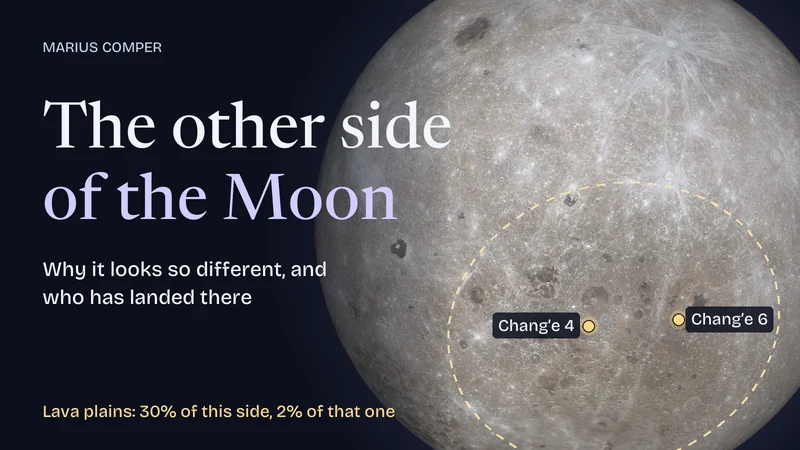
Films, books, games, food and words leave different records. Some projects verify an edition or a screening date; others compare forms without treating China as a uniform culture.
Open the source project
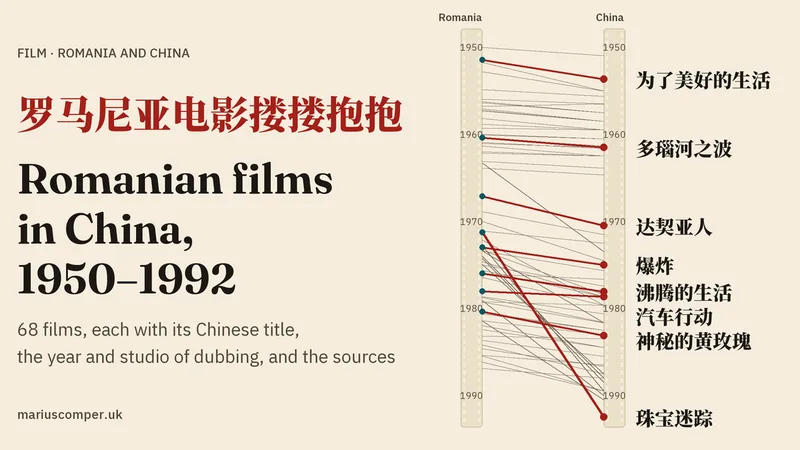
Between 1950 and 1992 at least 68 Romanian feature films were dubbed or shown in China. Each is listed with its Chinese and Romanian titles, the year it opened in Romania, the year and studio of its Chinese dubbing, and its sources. One 1955 spy film had six million admissions in China by 1958, according to the People's Daily. In Romanian, English and Chinese.
Open the source project
Browse 28 verified Chinese-language editions of books by writers connected with Romania, with publishers, years, ISBNs and catalogue links. Five more records still need translation details confirmed.
Open the source project
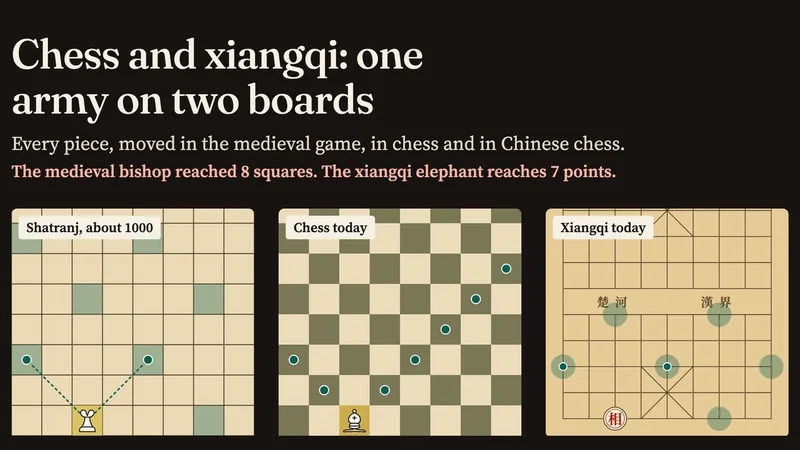
Chess and xiangqi set out the same army: chariot, horse, elephant, counsellor, king. Pick a piece and see its move on three boards: shatranj, the medieval game, chess today and xiangqi. The medieval bishop reached 8 of 64 squares; the xiangqi elephant reaches 7 of 90 points. With the names of the pieces in 31 languages and a ten-move quiz. In Romanian, English and Chinese.
Open the source project
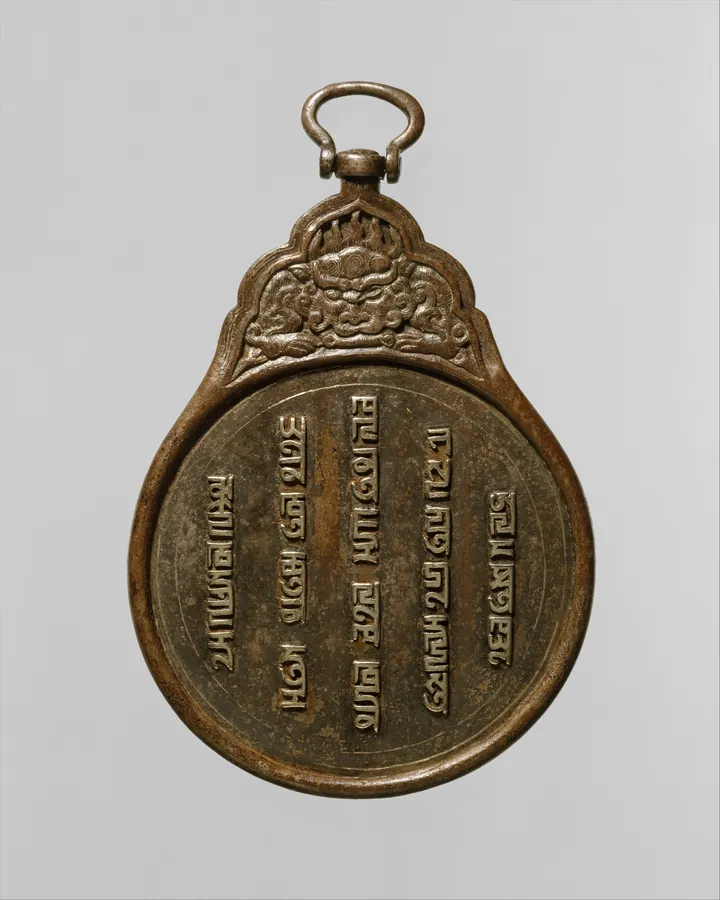
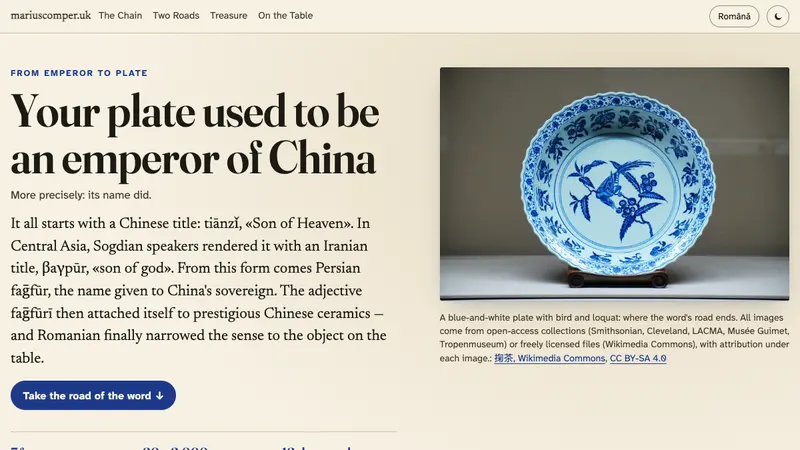
Where Romanian farfurie, “plate”, comes from: Ottoman farfuri, “porcelain”, and before it Persian faghfūr, the title given to the emperor of China. Turn a Ming dish to see the word’s seven forms, from 天子 to farfurie, each with its source. With the Chinese province that dictionaries invented, the map of the routes and the Topkapı collection.
Open the source project
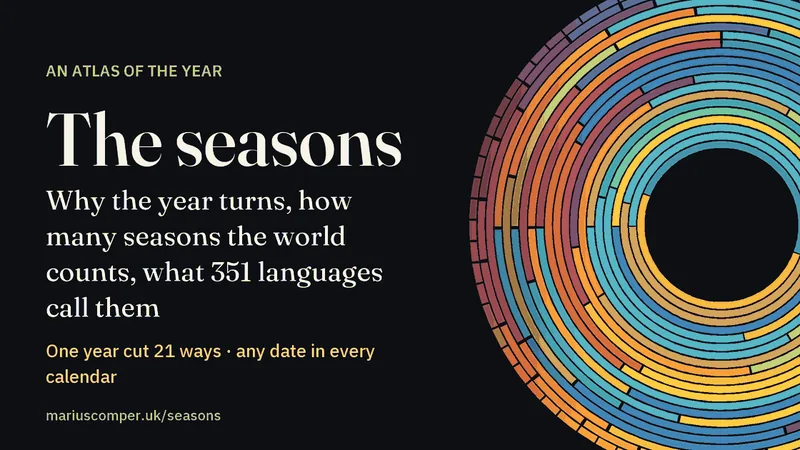
The sky gives the year four fixed points: two solstices and two equinoxes. People decided the rest: two seasons in Iceland’s old calendar, three in ancient Egypt, six in India, 24 solar terms in China and 72 in Japan’s old almanac. The page draws 21 calendars as rings of one year, shows why there are seasons at all, where the four words come from in 64 languages, and what the oldest text found says for eighteen stories about the turning year.