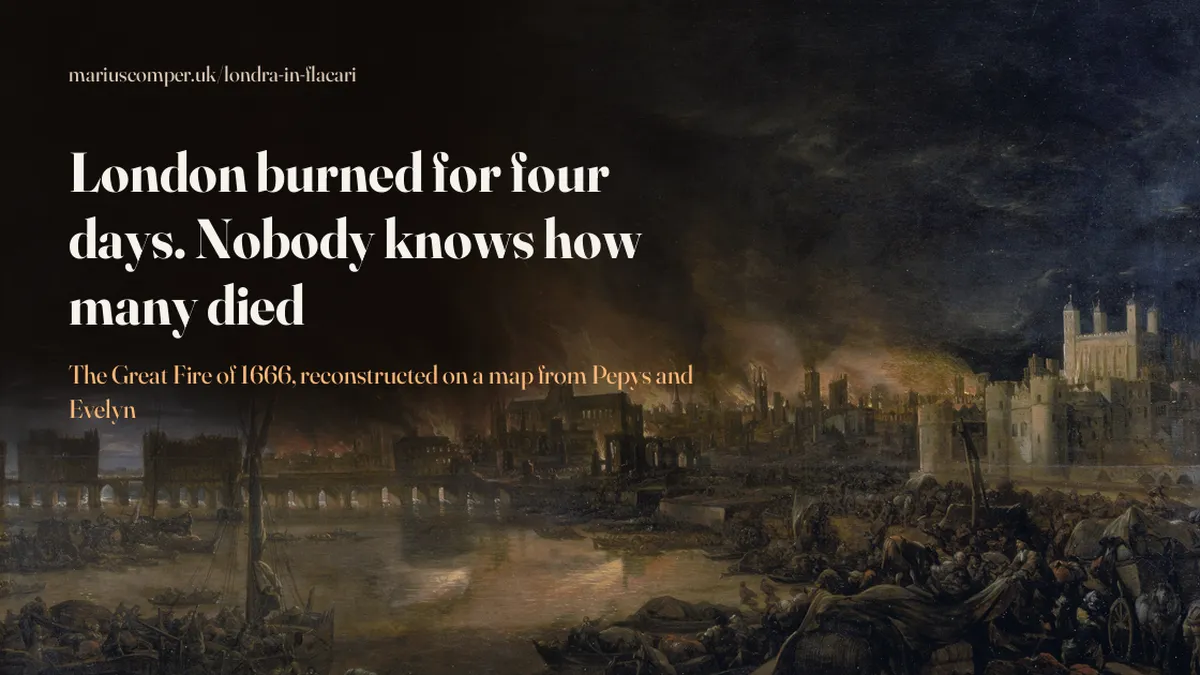
The Great Fire of London, 1666, hour by hour on a map
The 1666 fire spreads across today's City, day by day, from the diaries of Pepys and Evelyn. The losses were counted carefully; the dead were not.
Marius Comper · London
Fire and cholera, ice and fog, Persian journals and clay. Few works, each followed through to the end.
Start here
The Great Fire of 1666, hour by hour on a map: how the city burned and how it stopped. If you open a single work about London, open this one.
The 1666 fire spreads across today's City, day by day, from the diaries of Pepys and Evelyn. The losses were counted carefully; the dead were not.
Masterpieces
4 works chosen for visual power, depth and finish: maps, atlases and stories showing everything this page can do.
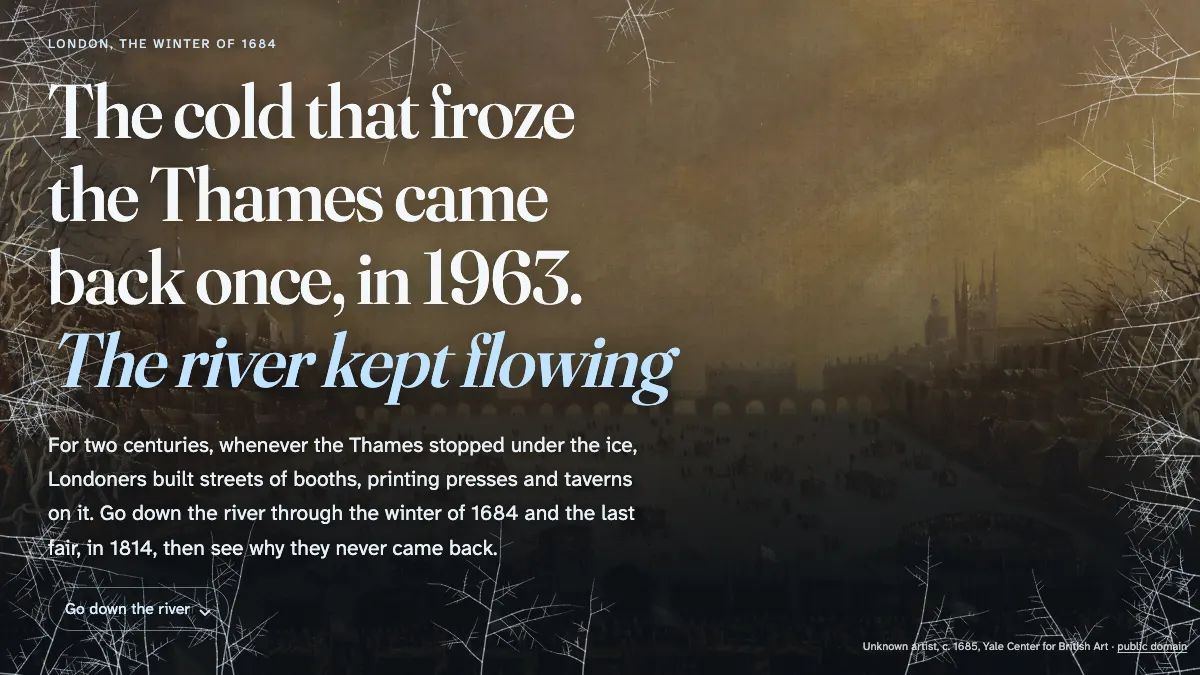
Streets of booths, printing presses and taverns on the frozen river, from Evelyn's diary and the accounts of 1814. The cold that froze the Thames came back once, in 1963; with the old bridge gone, the river kept flowing.
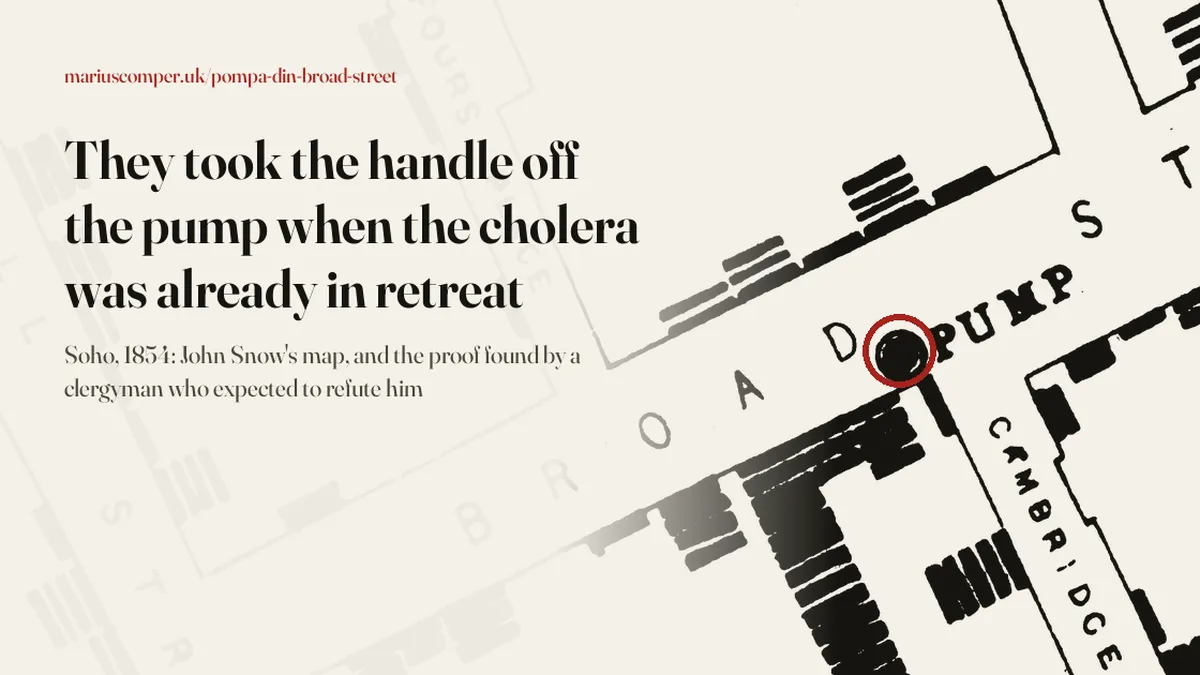
Soho, 1854: 616 cholera deaths around one pump. The handle came off when new cases had fallen from 143 a day to 12; the proof came from a clergyman who expected to prove Snow wrong.
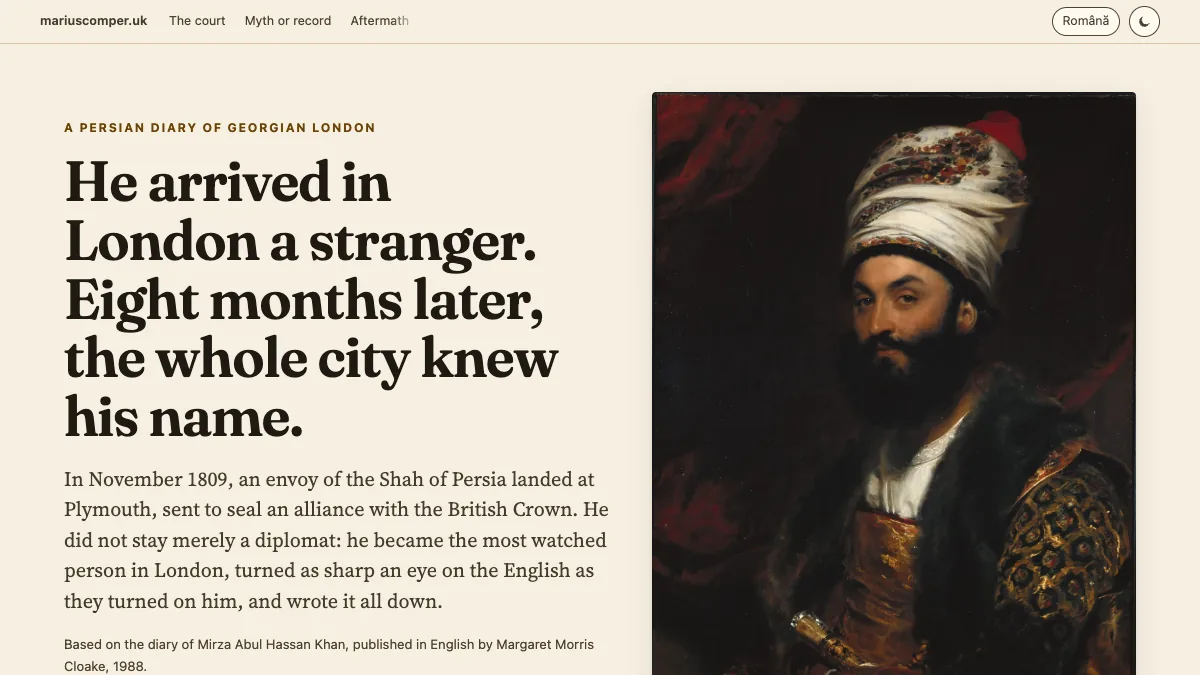
The diary of Mirza Abul Hassan Khan, the Persian envoy who conquered — and sharply judged — London in 1810.

In 1900, the Tube was 14°C. After 125 years of braking, 500 GWh of annual heat have saturated the clay mantle, turning the earth into a 30°C radiator.
All
The complete list in publication order, 25 at a time.
Streets of booths, printing presses and taverns on the frozen river, from Evelyn's diary and the accounts of 1814. The cold that froze the Thames came back once, in 1963; with the old bridge gone, the river kept flowing.
Soho, 1854: 616 cholera deaths around one pump. The handle came off when new cases had fallen from 143 a day to 12; the proof came from a clergyman who expected to prove Snow wrong.
The 1666 fire spreads across today's City, day by day, from the diaries of Pepys and Evelyn. The losses were counted carefully; the dead were not.
The diary of Mirza Abul Hassan Khan, the Persian envoy who conquered — and sharply judged — London in 1810.

For the same official mapped access points in London, the result is 87.61% by straight line and 50.66% on the walking network.
In 1900, the Tube was 14°C. After 125 years of braking, 500 GWh of annual heat have saturated the clay mantle, turning the earth into a 30°C radiator.