Religion and belief · the Roman world
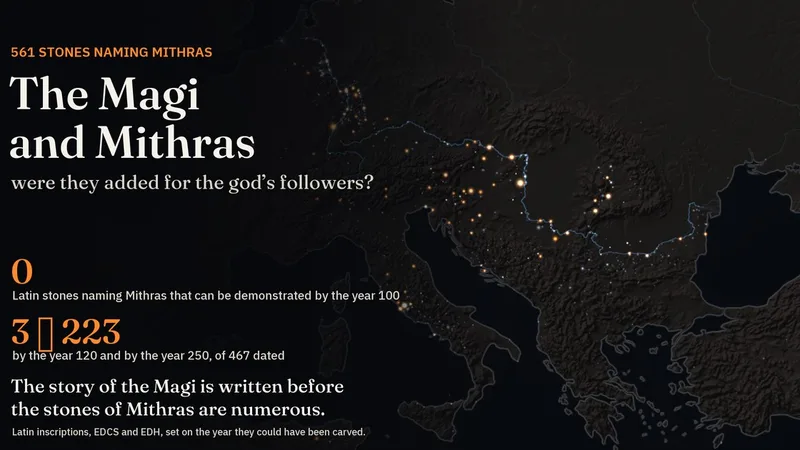
Religion and belief in the Roman world: what do 561 Mithras inscriptions preserve?
The stones preserve names and dedications, not the thoughts of everyone who passed them. Choose a year to see how many of 442 dating ranges include it.
561 selected records · 550 with mapped places
All religion and belief projects ↓LIST v1.2 · EDCS + EDH
How many date ranges include the year?
Heddernheim (Nida) · 51 CE–200 CE · EDCS-11001465
51 to 200
Caute Caelum Deo Invicto Mithrae petram genetricem Senilius Carantinus civis Mediomatricus votum solvit libens laetus merito sive Cracissius Cautopate Oceanum
The count includes dated records whose ranges contain the selected year; both endpoints are inclusive. A broad range does not give an exact year. Coordinates reproduce places reported in the corpus and may mark a settlement rather than the exact findspot. The corpus counts selected Latin inscriptions; it does not include every object, Greek texts or every religion in the Roman world.
01 / Trace and testimony
A stone preserves a text, not a crowd
An inscription can record a dedication, a name or a vow. The 561 entries are a selected corpus of Latin texts naming Mithras or his torchbearers. They do not count all worshippers or represent every religious practice in the Empire.
02 / Trace and testimony
A date may span two centuries
Catalogues often give a start and end date rather than one year. The instrument counts a record when its date range includes the year you select. Very broad or missing dates are outside the 442 ranges used here; that does not show an object was absent at the time.
03 / Trace and testimony
A reported place is not always the exact spot
The points reproduce coordinates and places recorded in the corpus. Some catalogues geolocate a town or site rather than the exact spot where a stone was found. The land outline gives geographic context; it shows neither Roman borders nor a route of expansion.
04 / Trace and testimony
Traditions have their own sources
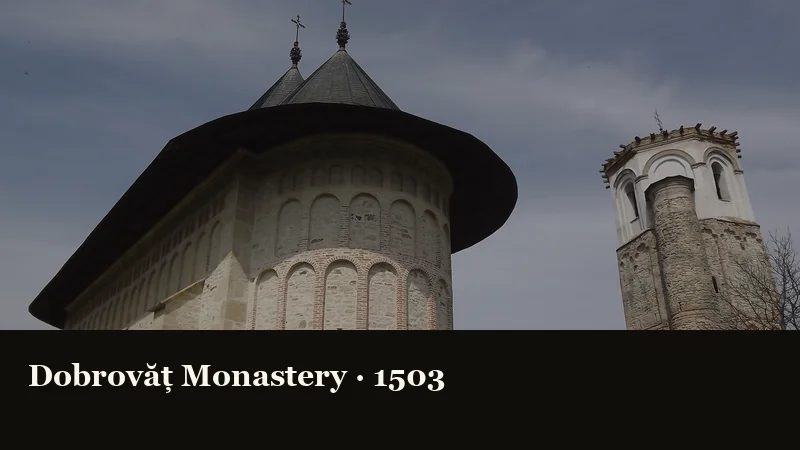
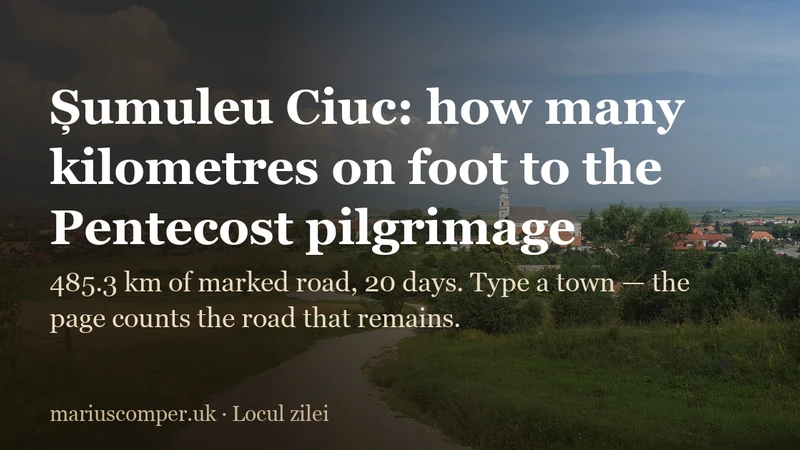
An ancient inscription and a custom recorded by a modern collector are different kinds of evidence. The collection also includes religious buildings, pilgrimages, calendars and Romanian customs, each with its own place, period and source. Read every project within the limits of what its records preserve.
Texts, places and practices
Continue through the collection
Choose a calendar, pilgrimage, church or folk custom, then read what its sources establish.