Chemistry, grade 9 · 2026–2027 programme
Chemistry for grade 9: every lesson of the new programme, from the atom to the reaction
Which profile are you on?
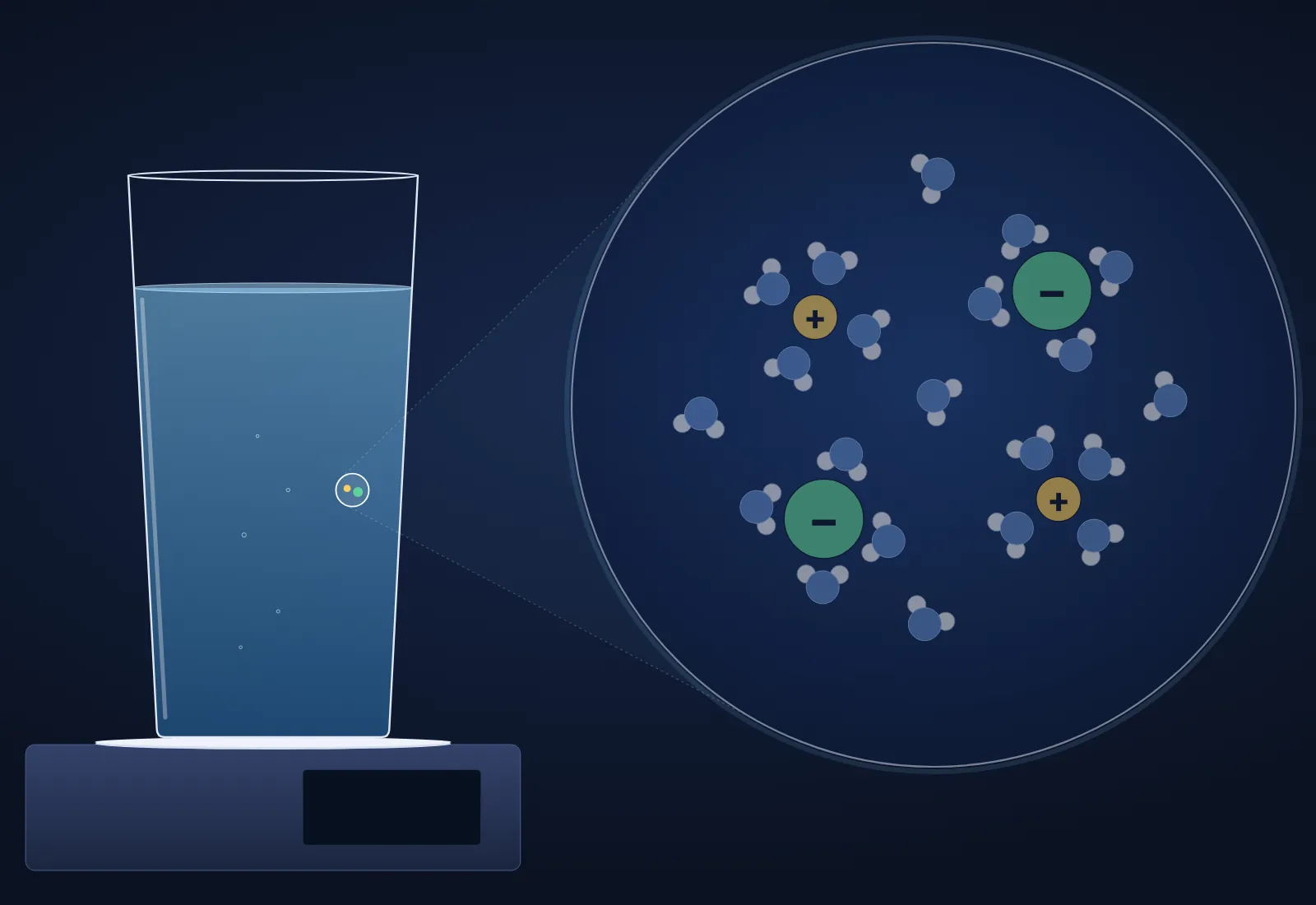
69 lessons, short, each with a summary to learn, common mistakes and questions that check themselves.
Three levels, the same labels everywhere
- What you seethe glass, the flame, the balance: what the eyes see
- What the particles doatoms, ions, molecules: what happens where nothing can be seen
- How it is writtenthe formula, the equation, the calculation: how it is written
12 chapters, from the mole to the problems
Lessons by profile: 39 lessons TC, 20 lessons MI, 10 lessons SN. Every lesson has its own address and can be read on its own.
-
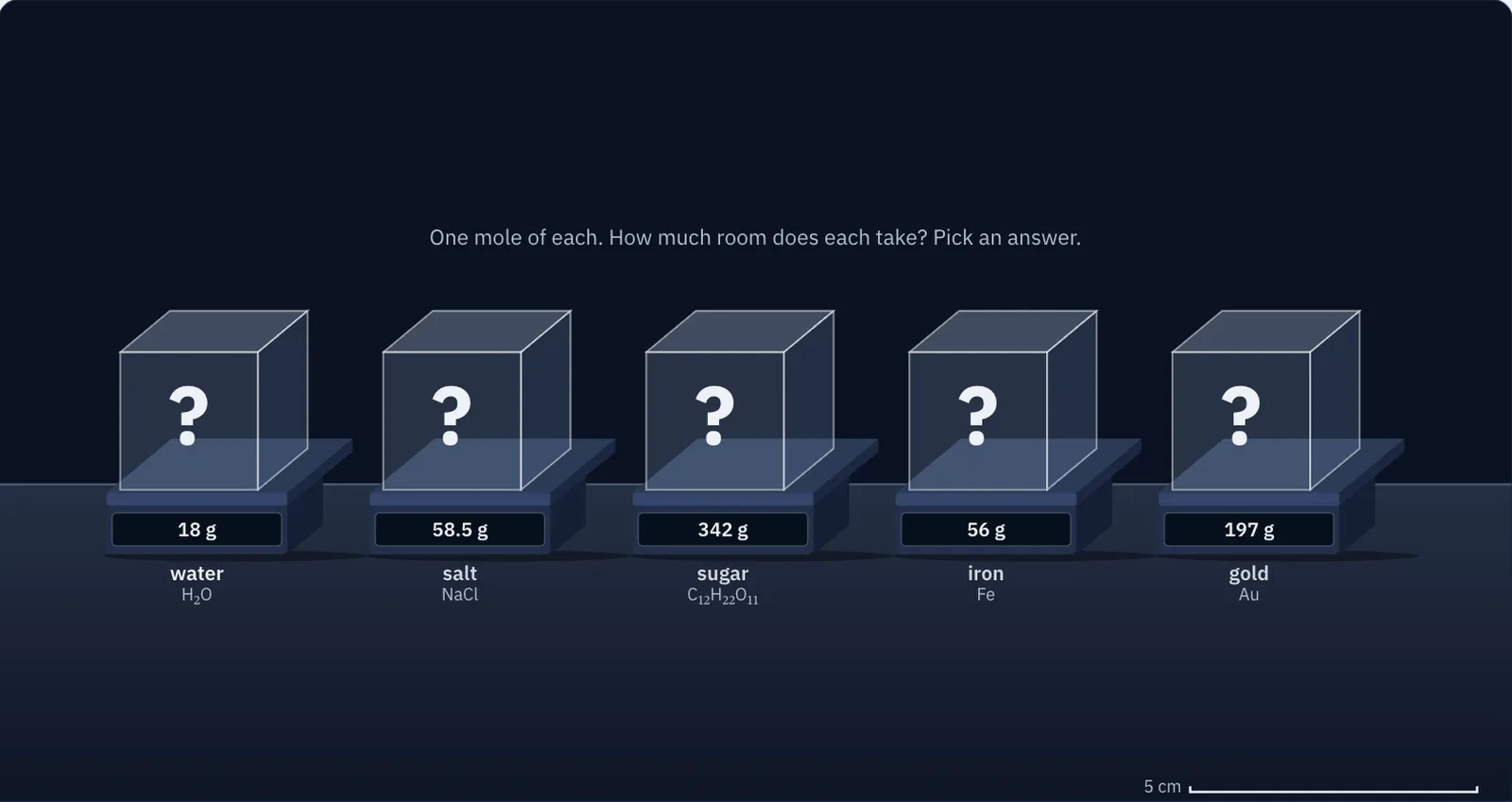 Weigh it
Stoichiometric calculations1The language of chemistry and the mole – how to count what you cannot see
How do you count what you cannot see?
Lessons of the chapter
- 1.1What a formula tells you and how a substance is namedTC · beyond your profileUsing models/algorithms to represent the formation of ions/molecules and to name substances
- 1.2How do you count particles you cannot see? The moleTC · beyond your profileStoichiometric calculations will be carried out using the chemical formula and the equation of a chemical reaction, with purity, yield, excess of a reactant, percentage concentration by mass and molar concentration of solutions
- 1.3How much useful substance is in a sack? Percentage composition from a formulaTC · beyond your profileStoichiometric calculations will be carried out using the chemical formula and the equation of a chemical reaction, with purity, yield, excess of a reactant, percentage concentration by mass and molar concentration of solutions
- 1.4How much lime comes from a tonne of limestone? Calculations from equationsTC · beyond your profileStoichiometric calculations will be carried out using the chemical formula and the equation of a chemical reaction, with purity, yield, excess of a reactant, percentage concentration by mass and molar concentration of solutions
-
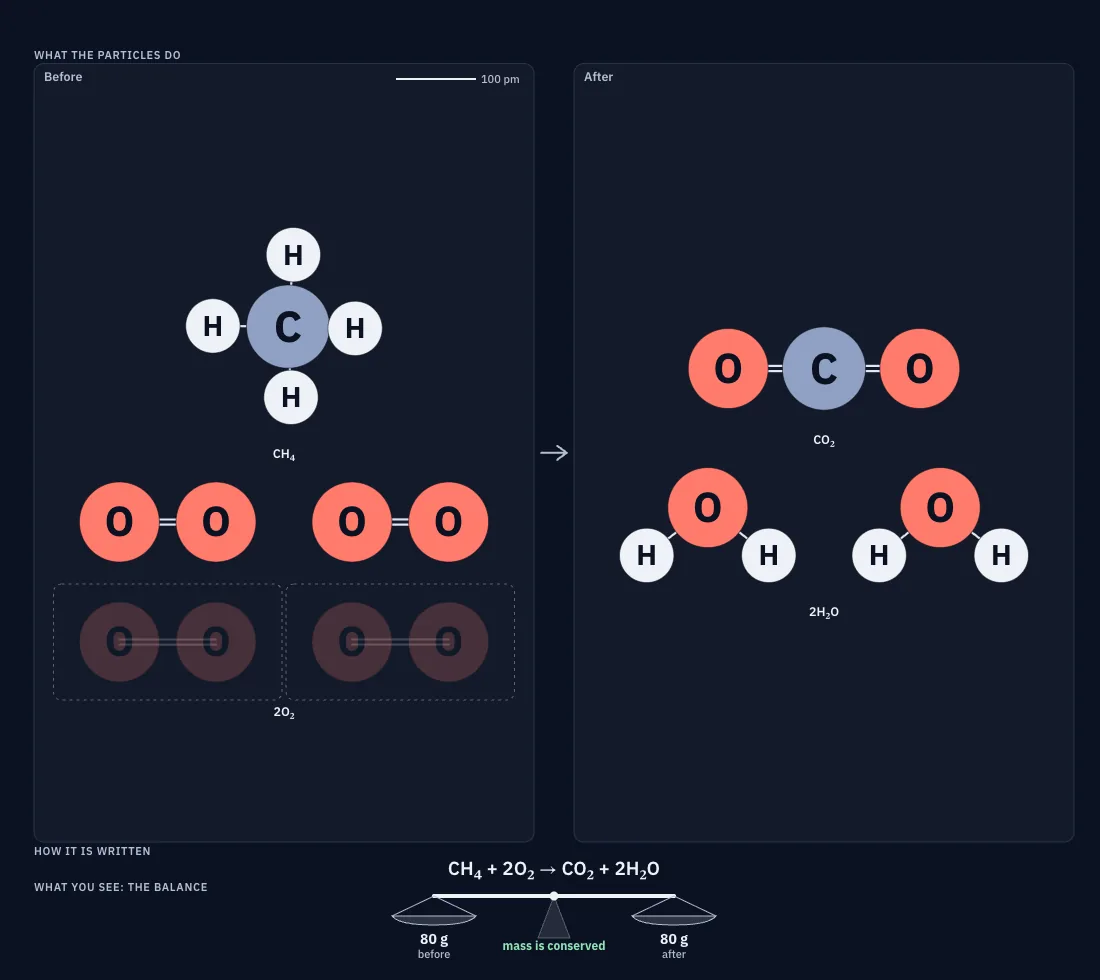 Balance it
Classification of reactions in inorganic chemistry2Chemical reactions – what changes and what stays the same
What changes and what stays the same when two substances react?
Lessons of the chapter
- 2.1What stays the same when one substance becomes anotherTC · beyond your profileFor the content area Classification of reactions in inorganic chemistry, reactions will be classified according to the given criteria, and different examples of chemical reactions will be presented for each type. For Exothermic and endothermic reactions, examples will also include the decomposition of some nitrates and carbonates
- 2.2What number does sulfur have in sulfuric acid?TC · beyond your profileOxidation number
- 2.3How to tell whether a reaction changes oxidation numbersTC · beyond your profileReactions without / with a change in oxidation number
- 2.4When a reaction warms its surroundings and when it cools themTC · beyond your profileExothermic and endothermic reactions
- 2.5Why some reactions take months and others a momentTC · beyond your profileSlow reactions, fast reactions; catalysts
- 2.6Why mineral water bubbles when you open the bottleTC · beyond your profileIrreversible reactions, reversible reactions
-
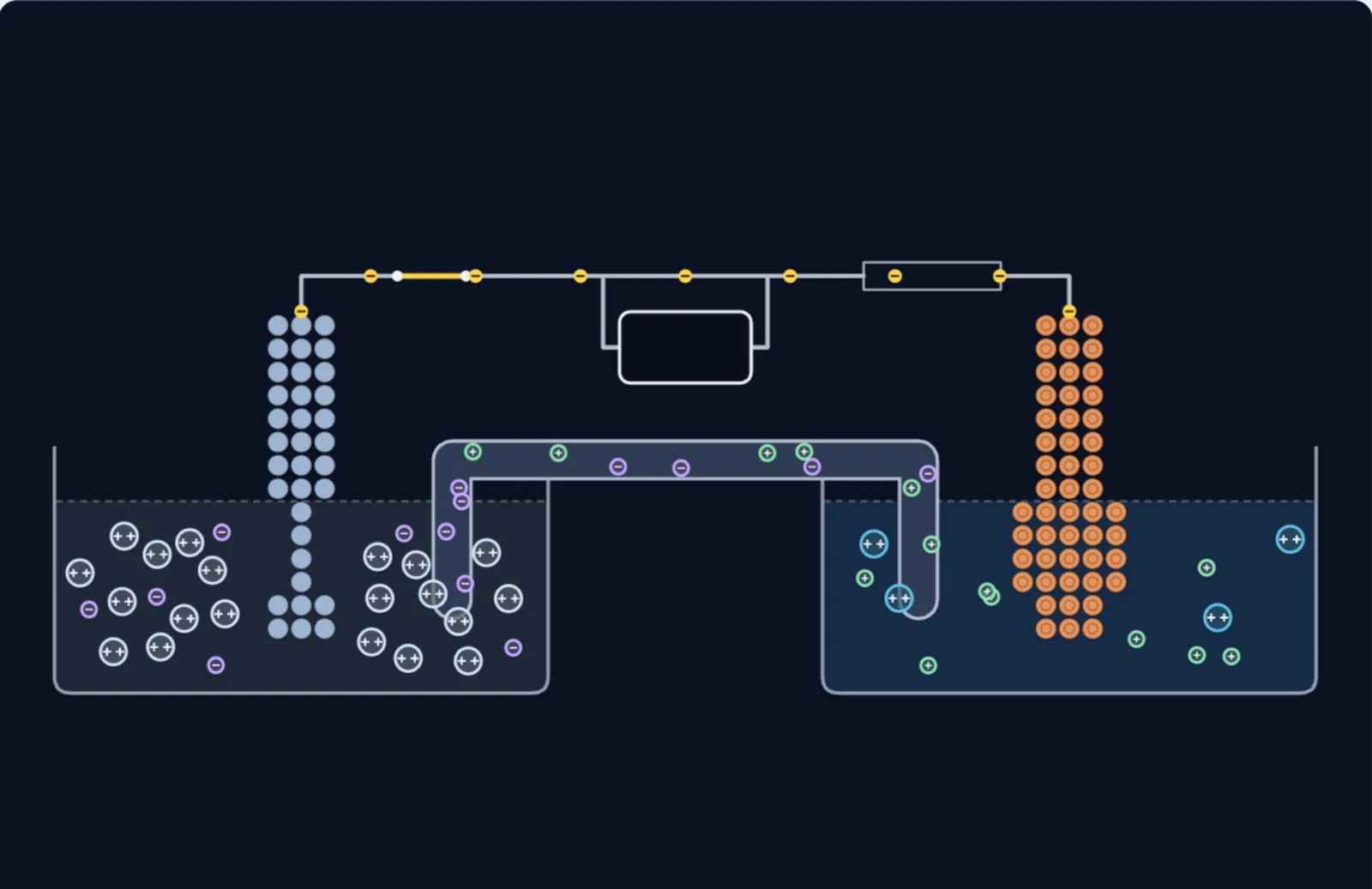 Connect
Reactions with a change in oxidation number3Redox reactions and electrochemical cells – who loses electrons and who gains them
Who loses electrons and who gains them, and how do you get a current out of that?
Lessons of the chapter
- 3.1What happens to iron when it rusts: oxidation and reductionTC · beyond your profileOxidation, reduction
- 3.2Zinc displaces copper from solution, but copper cannot displace zinc: the activity series of metalsTC · beyond your profileRecognising reactions with a change in oxidation number found in natural or technological/industrial processes
- 3.3Hydrogen peroxide restores a painting’s white, but decolourises permanganate: oxidising and reducing agentsMI · beyond your profileOxidation, reduction; reducing agent, oxidising agent
- 3.4Why 3Cu + 8HNO₃ and not Cu + HNO₃: how to balance a redox equationMI · beyond your profileBalancing the equation of a redox reaction
- 3.5Why purple disappears: permanganate and dichromate as oxidising agentsSN · beyond your profileThe oxidising character of potassium permanganate and potassium dichromate
- 3.6How to get iron from rock: carbon, hydrogen and carbon monoxideSN · beyond your profileThe reducing character of carbon, hydrogen and carbon monoxide
- 3.7How to draw current from a reaction across two beakersTC · beyond your profileApplications: electrochemical cells (the Daniell cell, lead–acid battery, lithium-ion battery) – construction and operation; conventional representation of the Daniell cell
- 3.8What happens inside the battery that starts a carTC · beyond your profileApplications: electrochemical cells (the Daniell cell, lead–acid battery, lithium-ion battery) – construction and operation; conventional representation of the Daniell cell
- 3.9What moves in your phone as the battery runs downTC · beyond your profileApplications: electrochemical cells (the Daniell cell, lead–acid battery, lithium-ion battery) – construction and operation; conventional representation of the Daniell cell
- 3.10Molten salt and electric current: how sodium is madeMI · beyond your profileElectrolysis of molten sodium chloride
-
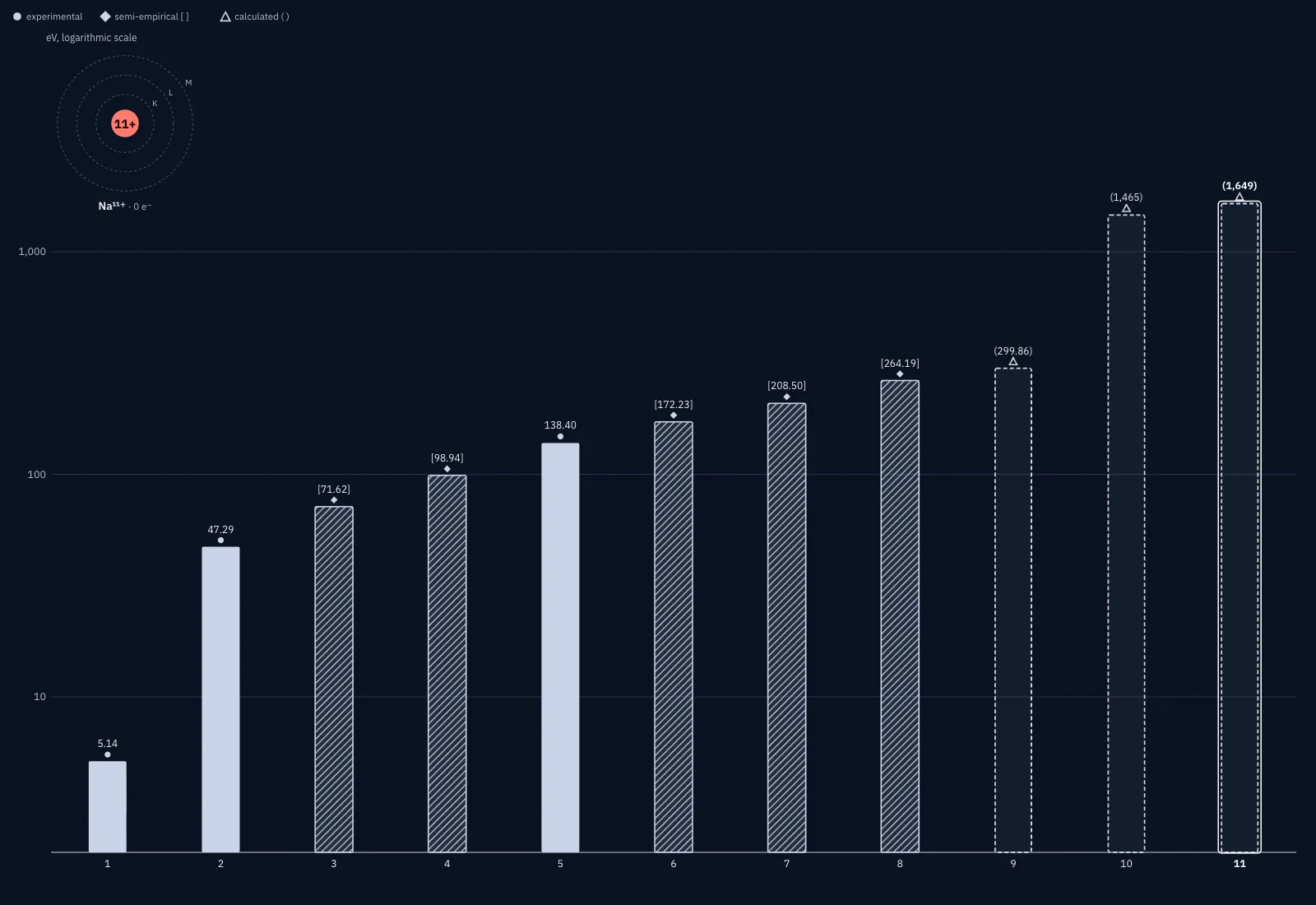 Remove an electron
The electron structure of the atom. Metallic character. Non-metallic character4The atom – where the electrons sit
Where do the electrons sit in an atom?
Lessons of the chapter
- 4.1What changes when you add or remove a particle from an atomTC · beyond your profileElectron configuration by shells for the first 20 chemical elements in the periodic table
- 4.2How many electrons fit in a shell: the first 20 elementsTC · beyond your profileElectron configuration by shells for the first 20 chemical elements in the periodic table
- 4.3Where are you likely to find the electron: orbitals and subshellsMI · beyond your profileOrbitals, subshells; electron occupation of shells and subshells
- 4.4How to write the configuration of any element from hydrogen to argonMI · beyond your profileElectron configurations of chemical elements in periods 1, 2 and 3 of the periodic table
- 4.5Why 4s fills before 3d, and chromium and copper are exceptionsSN · beyond your profileElectron configurations of chemical elements in periods 1, 2, 3 and 4 of the periodic table
-
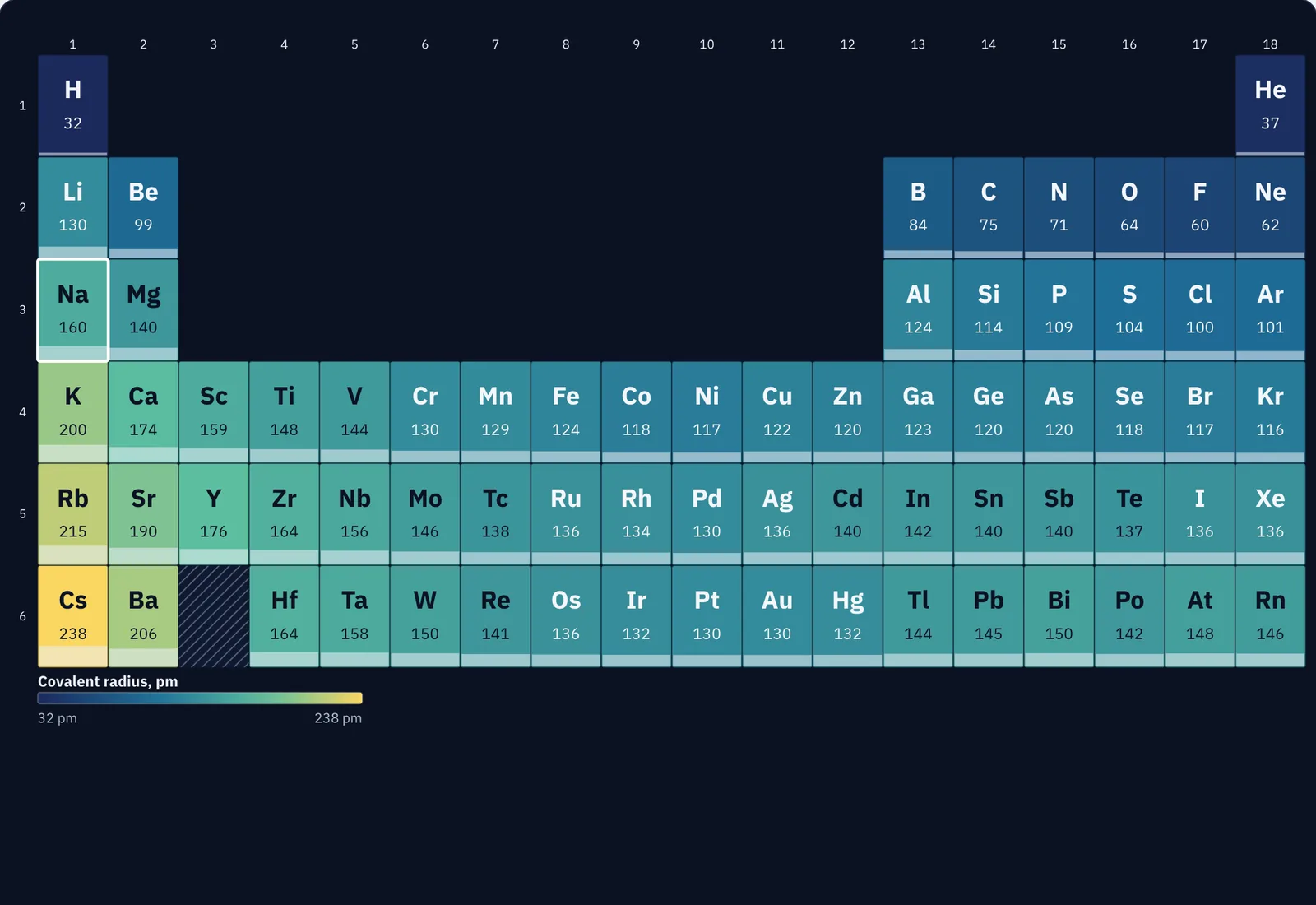 Guess
The electron structure of the atom. Metallic character. Non-metallic character5The periodic table – what the place of an element tells you
What does the place of an element in the table tell you?
Lessons of the chapter
- 5.1How Mendeleev predicted an element no one had seenTC · beyond your profileCorrelations between the electron configurations of chemical elements in periods 1, 2, 3 and 4 and their positions in the periodic table
- 5.2Why atoms shrink across a period and ions differ in size from their atomsMI · beyond your profileAtomic radius; variation of atomic radius for elements in the main groups
- 5.3Why sodium reacts with water but an aluminium pan does notTC · beyond your profileMetallic character; variation in metallic character (sodium, magnesium, aluminium)
- 5.4Why chlorine displaces bromine from a salt, but iodine cannot displace chlorineTC · beyond your profileNon-metallic character; variation in non-metallic character across a group and a period (for chlorine, bromine, iodine and for nitrogen, oxygen, fluorine)
-
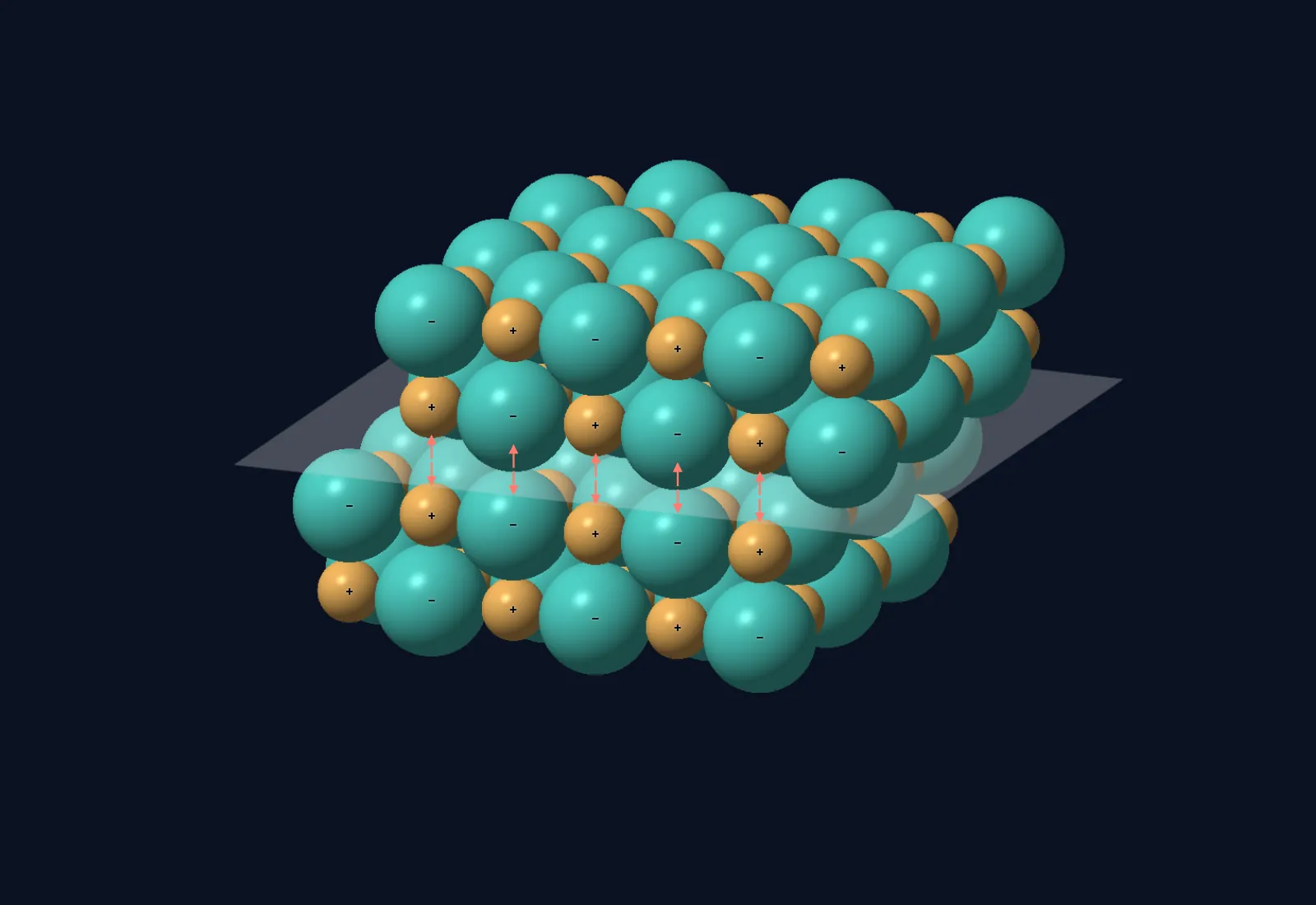 Push
Chemical bonds6Ionic and metallic bonds – why salt shatters and copper bends
Why does salt shatter while copper bends?
Lessons of the chapter
- 6.1What holds the ions in a salt crystal togetherTC · beyond your profileClassification of chemical bonds
- 6.2Why the formulas are NaF, CaF₂ and Na₂OTC · beyond your profileIonic compounds – formation of compounds: sodium fluoride, calcium fluoride, sodium chloride, sodium oxide, calcium oxide
- 6.3Why salt is hard but brittleTC · beyond your profileThe sodium chloride crystal: characterisation
- 6.4Why magnesium oxide melts above 2,800 °C and salt at 801 °CMI · beyond your profileProperties of ionic substances: state of matter, melting point, variation of melting points for: - sodium fluoride, sodium chloride - sodium fluoride, potassium fluoride - sodium fluoride, magnesium oxide - sodium fluoride, magnesium fluoride, aluminium fluoride
- 6.5Why copper conducts electricity and bends, while salt breaksMI · beyond your profileMetallic bonding
-
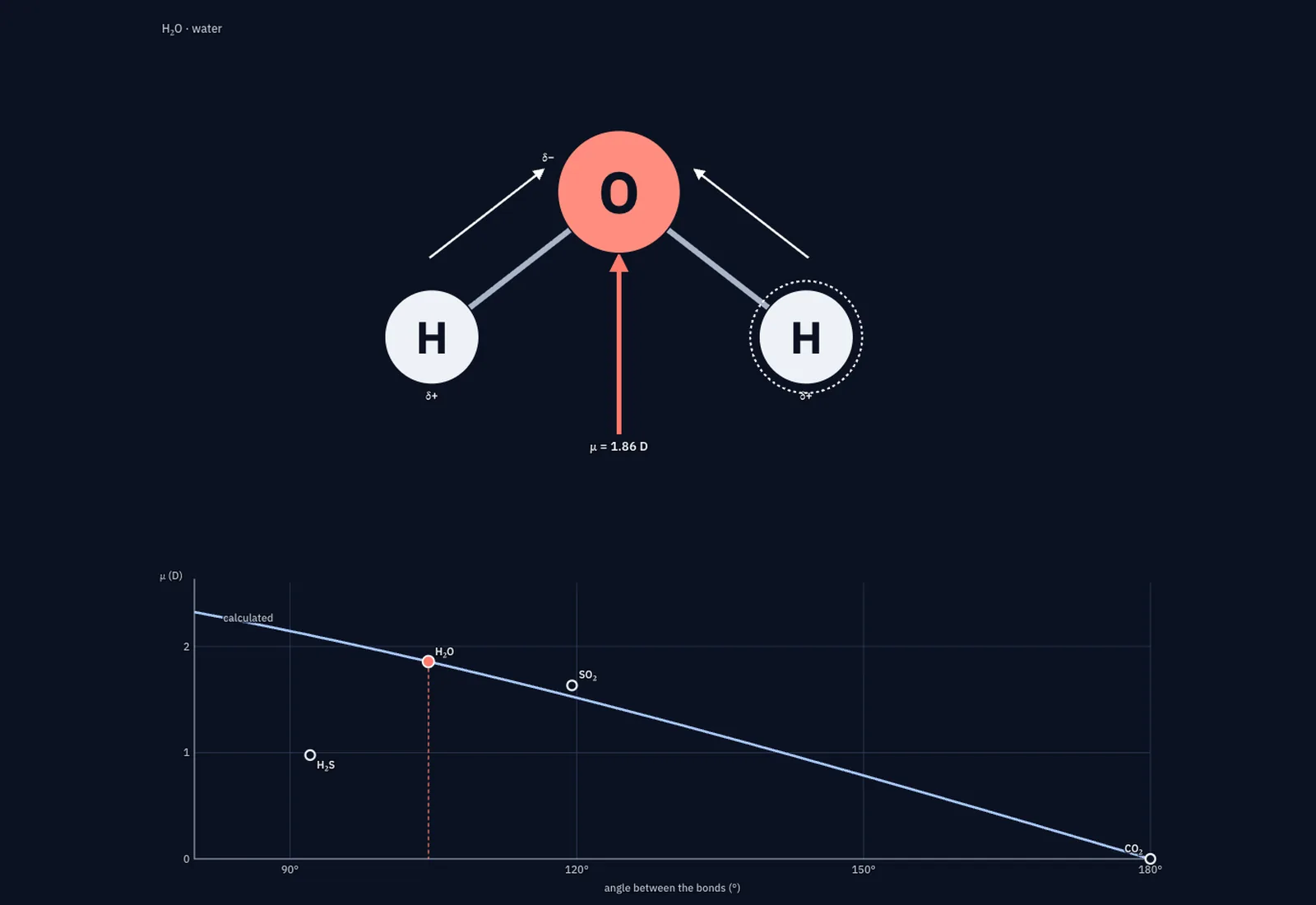 Bend
Chemical bonds7The covalent bond – why molecules have a shape
Why do molecules have a shape, and what changes it?
Lessons of the chapter
- 7.1Why nitrogen in the air is so hard to make reactTC · beyond your profileCovalent bonding
- 7.2Why water is bent and carbon dioxide is straightTC · beyond your profileMolecules of hydrochloric acid, water, ammonia, methane and carbon dioxide
- 7.3Which atom pulls harder on the shared pair of electronsMI · beyond your profileElectronegativity
- 7.4Why water is polar and carbon dioxide is not, though both have polar bondsMI · beyond your profilePolar covalent bonding; molecules of hydrochloric acid, water, ammonia, methane, carbon dioxide, chloromethane, methylamine and methanol
- 7.5How to find a molecule’s shape without seeing it: count electron regionsSN · beyond your profileNotions of stereochemistry; the valence-shell electron-pair repulsion (VSEPR) model: BX3, CX4, water, ammonia and carbon dioxide
- 7.6Why a triple bond between carbon atoms is shorter than a single bondSN · beyond your profileSingle, double and triple covalent bonds; the lengths of these bonds
- 7.7Why carbon makes four equal bonds with only two unpaired electronsSN · beyond your profileHybridisation of the carbon atom; types of hybridisation
- 7.8How a proton joins water and ammonia: hydronium and ammonium ionsMI · beyond your profileCoordinate (dative) covalent bonding: formation of the hydronium and ammonium ions
- 7.9Why a precipitate disappears when you add excess ammonia or baseMI · beyond your profileComplexes (coordination compounds): Tollens’ reagent, Schweizer’s reagent, sodium tetrahydroxozincate (structure, naming and preparation)
-
 Predict
Intermolecular interactions8Between molecules – why water boils at 100 °C
Why does water boil at 100 °C when its molecules are so small?
Lessons of the chapter
- 8.1Why chlorine is a gas, bromine a liquid and iodine a solidMI · beyond your profileDipole–dipole attraction, hydrogen bond, London (dispersion) forces
- 8.2Why a snowflake has six pointsMI · beyond your profileDipole–dipole attraction, hydrogen bond, London (dispersion) forces
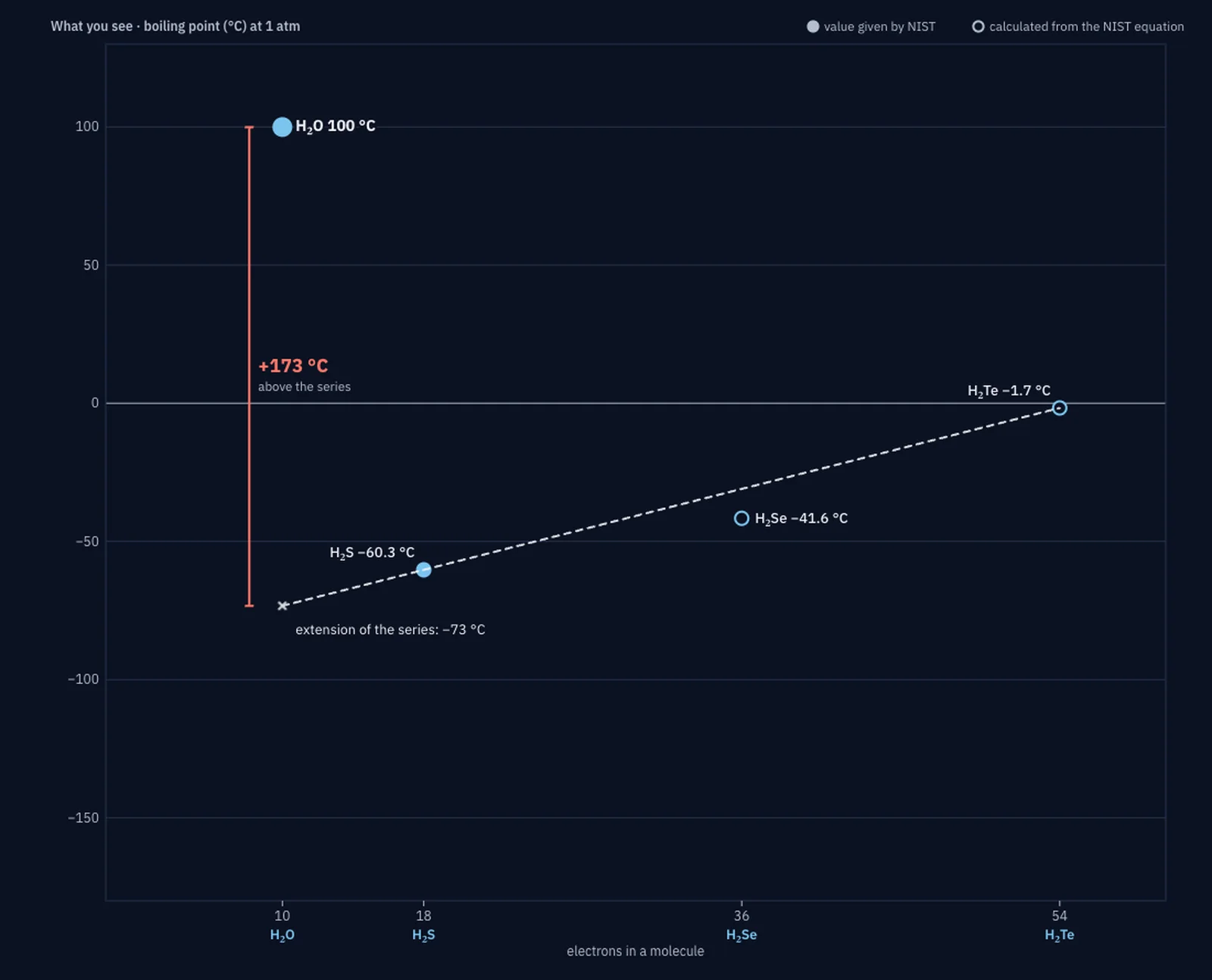
- 8.3Why water boils at 100 °C and H₂S at −60 °CMI · beyond your profileThe influence of intermolecular interactions on melting point, boiling point and solubility
- 8.4Why ice floats and lakes freeze from the topTC · beyond your profilePhysical properties of water
- 8.5Why 50 mL of ethanol and 50 mL of water make less than 100 mLSN · beyond your profileSolubility of methanol, ethanol and sucrose in water; physical properties of water
-
 Add salt
Solutions9Solutions – where the salt goes
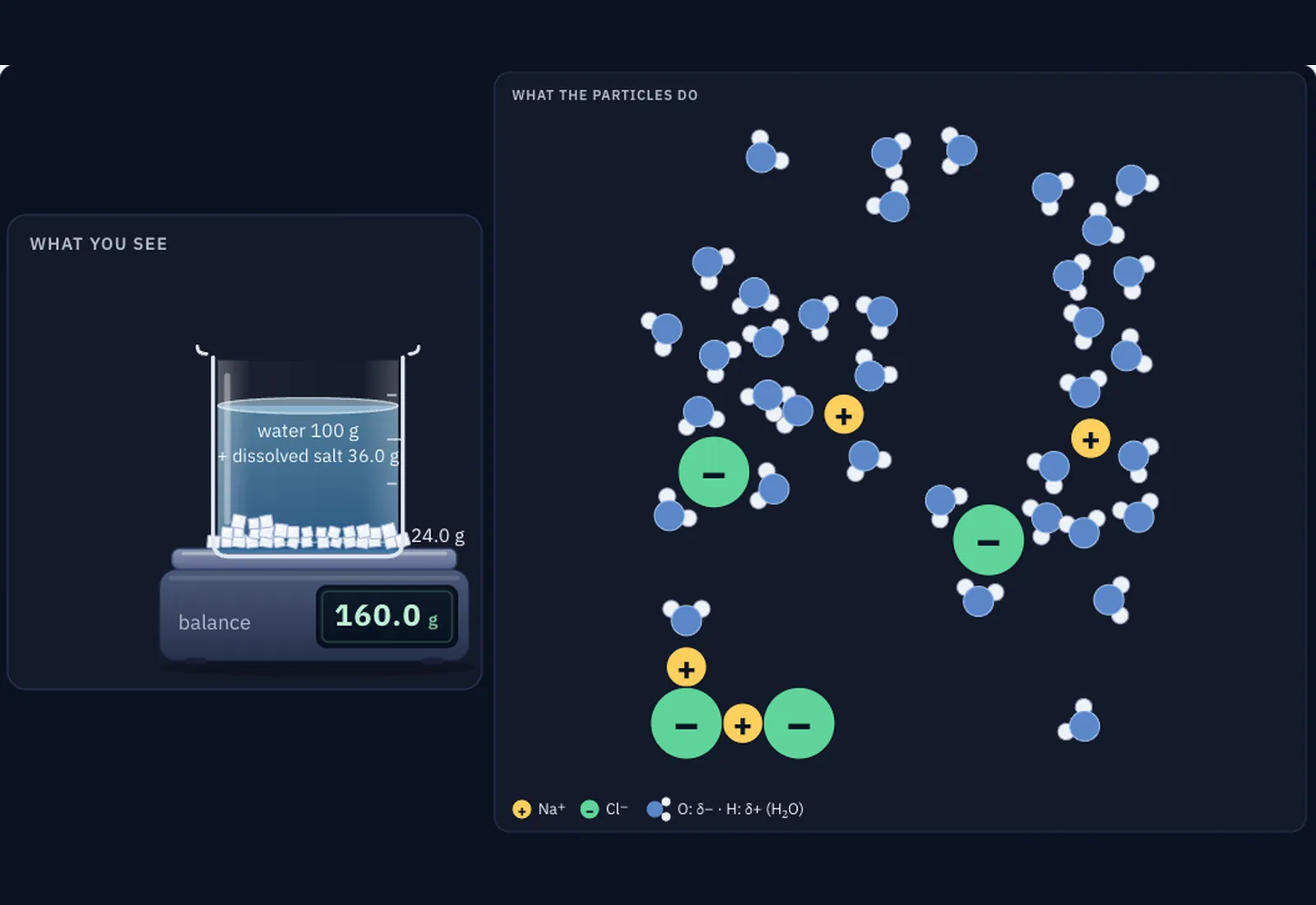
Where does the salt go when you put it in water?
Lessons of the chapter
- 9.1Where does salt go when it dissolves?TC · beyond your profileDissolving ionic substances in water
- 9.2Why iodine dissolves in alcohol but oil does not dissolve in waterMI · beyond your profileDissolving ionic substances in water
- 9.3Why one solution warms and another cools as substances dissolveTC · beyond your profileHeat effects of dissolving in water
- 9.4How much can dissolve in a glass, and what changes the limitTC · beyond your profileSolubility of a substance
- 9.5What 0.9% means on a bag of salineTC · beyond your profilePreparing aqueous solutions of given percentage and molar concentrations, including from hydrates (crystal hydrates)
- 9.6How many moles are in a litre of solutionTC · beyond your profilePreparing aqueous solutions of given percentage and molar concentrations, including from hydrates (crystal hydrates)
- 9.7From calculation to volumetric flask: preparing and diluting a solutionTC · beyond your profilePreparing aqueous solutions of given percentage and molar concentrations, including from hydrates (crystal hydrates)
- 9.8Why blue vitriol has water in its formulaSN · beyond your profilePreparing aqueous solutions of given percentage and molar concentrations, including from hydrates (crystal hydrates)
-
 Dilute
Solutions10Acids, bases and pH – what a number from 0 to 14 measures
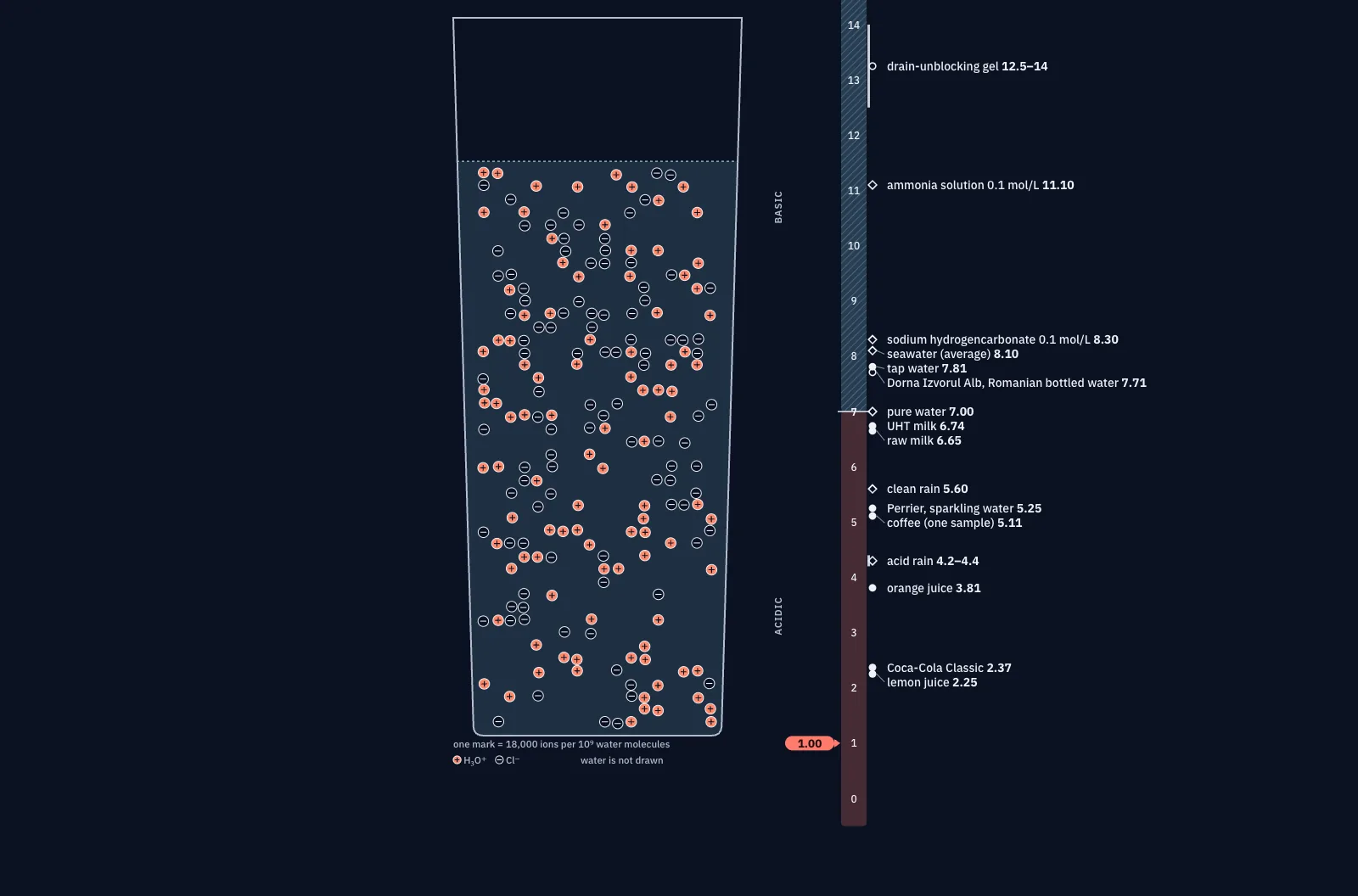
What does a number from 0 to 14 measure?
Lessons of the chapter
- 10.1What water does to a strong acid and a strong baseTC · beyond your profileIonisation of strong monoprotic acids and strong monoprotic bases in aqueous solution; the ionic product of water
- 10.2Why three pH units mean a thousand times more ionsTC · beyond your profileCalculating the pH of aqueous solutions of strong monoprotic acids and strong monoprotic bases
- 10.3What remains in the glass when a strong acid meets a strong baseSN · beyond your profileThe neutralisation reaction between a strong monoprotic acid and a strong monoprotic base
- 10.4What label pictograms mean and what never to mixTC · beyond your profileEvaluating the risks associated with the improper use of some chemical products
-
 Press
The gaseous state11Gases – what presses on the walls of a balloon
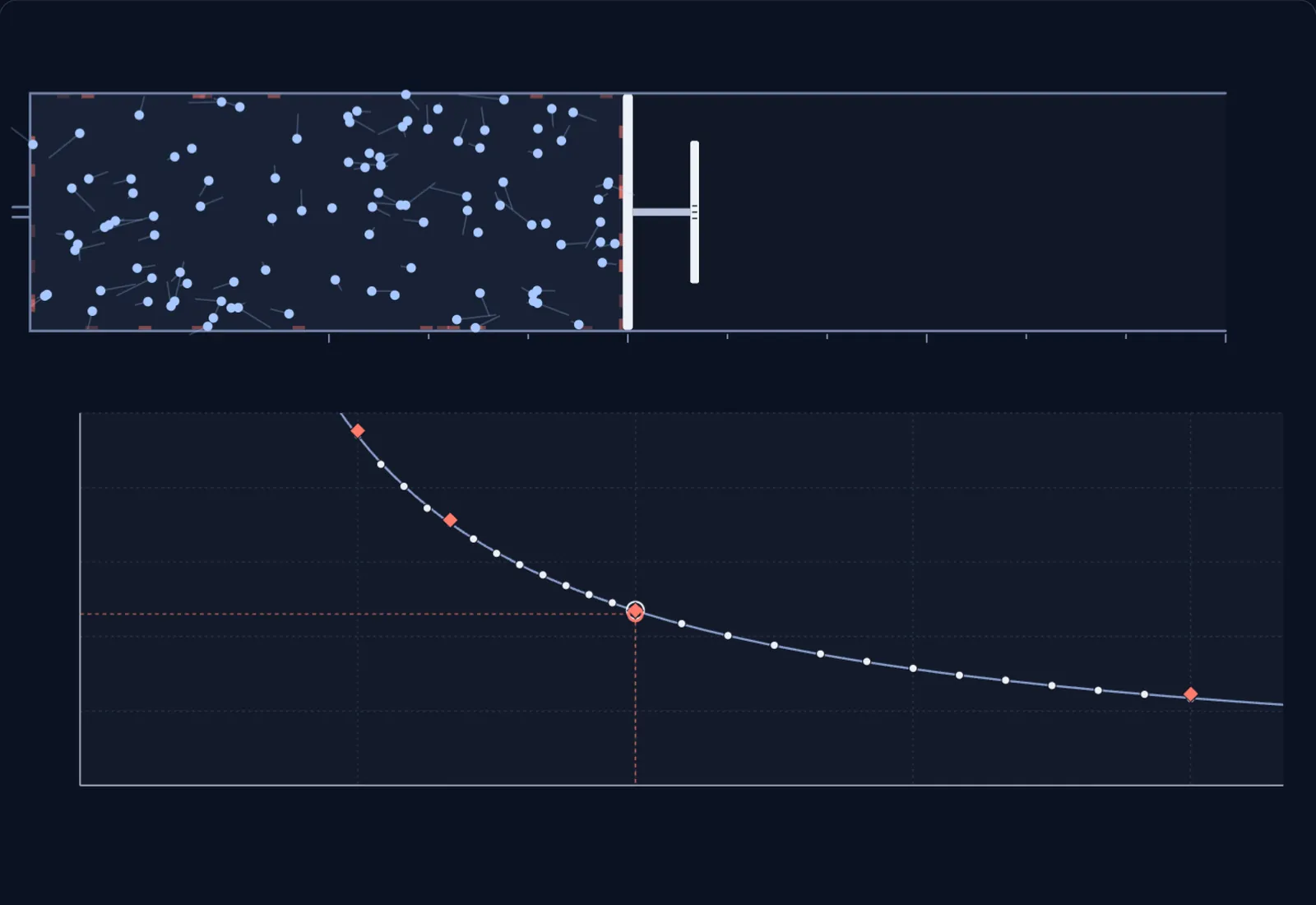
What presses on the walls of a balloon?
Lessons of the chapter
- 11.1What pushes against a balloon, and what to do if you smell gasTC · beyond your profileCharacterising the gaseous state
- 11.2From Boyle’s tube to pV = nRTTC · beyond your profileThe ideal gas equation of state; calculations
- 11.3How much does a mole of air weigh?MI · beyond your profileMole fraction, mean molar mass
- 11.4Why helium rises and carbon dioxide stays lowMI · beyond your profileDensity of gases: absolute density and relative density; calculations
- 11.5Why a breath brings less oxygen on Vârful OmuSN · beyond your profileState variables; the law of partial pressures
-
 Pour
Stoichiometric calculations12Chemistry problems – how much really reacts and how much you get
How much really reacts, and how much do you get?
Lessons of the chapter
- 12.1How much limestone reacts and how much product do you get?TC · beyond your profileStoichiometric calculations will be carried out using the chemical formula and the equation of a chemical reaction, with purity, yield, excess of a reactant, percentage concentration by mass and molar concentration of solutions
- 12.2Which runs out first when the mixture does not match the equationMI · beyond your profileStoichiometric calculations will be carried out using the chemical formula and the equation of a chemical reaction, with purity, yield, excess of a reactant, percentage concentration by mass and molar concentration of solutions
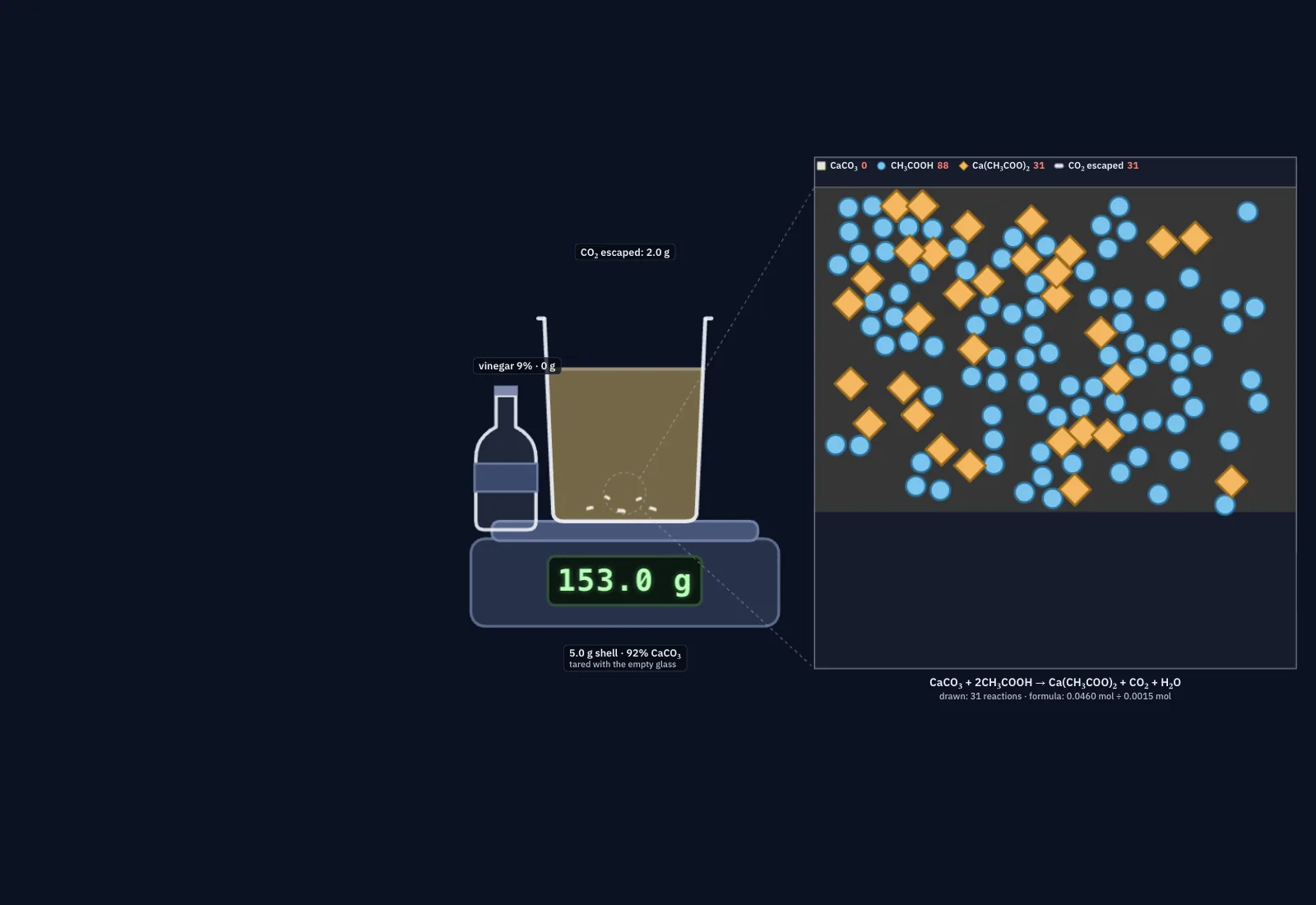
- 12.3From vinegar in a glass to gas in a balloon: the multi-step problemTC · beyond your profileStoichiometric calculations will be carried out using the chemical formula and the equation of a chemical reaction, with purity, yield, excess of a reactant, percentage concentration by mass and molar concentration of solutions
- 12.4From electrons to grams: redox equation problemsMI · beyond your profileSolving stoichiometric calculation problems from the equation of a redox reaction
How to use it
Before a test
Each lesson ends with “In short”, “Common mistakes” and questions that check themselves. The Practise page mixes the 428 questions that check themselves, by chapter or from everything, from the lessons of your profile.
Your notebook
What you choose before reading and what you write in the open questions stays in your notebook, on this device, with no account. Each lesson gets the marks “opened”, “tried” and “explained”.
In class
The For teachers page has everything that can be used tomorrow: the pictures on the projector, a worksheet for every lesson, a test with the same questions for the whole class, printable tests with a key and the programme table, by profile.
Without internet
The lessons and pages you have opened stay on the device and can be read without a signal, on the bus or in class.