170 projects · experiments and explanations
Physics and mathematics in motion
A point moves left–right and up–down at the same time. Change the ratio between their rhythms and watch an equation become a drawing. Then continue into light, gravity, geometry and probability.
The complete collection ↓Ideal harmonic motions without friction; the axes show relative displacement, from −1 to +1. The figure is not a planetary orbit.
Horizontal frequency: 0.25 Hz. Vertical frequency: 0.375 Hz. The motion repeats after eight seconds.
01 / Physics and mathematics
A circle and a line can have the same frequencies.
At a 1:1 ratio, with equal amplitudes, a 90° phase difference gives a circle. At 0°, it gives a line. What changes is when each motion reaches its extreme. The shape tells us about the relationship between two signals.
02 / Physics and mathematics
Some ratios close the curve.
When the frequency ratio is rational, the two motions return together to their initial state. At 1:√2, there is no finite common period. Here you see only the first 32 seconds of that curve, calculated at screen precision.
1 : √2
03 / Physics and mathematics
Light can preserve the trace of a motion.
The photograph preserves a light trace based on Lissajous figures. In an oscilloscope, two signals can control the two axes of one point. An instrument displays measured signals; the model above displays the chosen equations.

04 / Physics and mathematics
From an equation to things you can try.
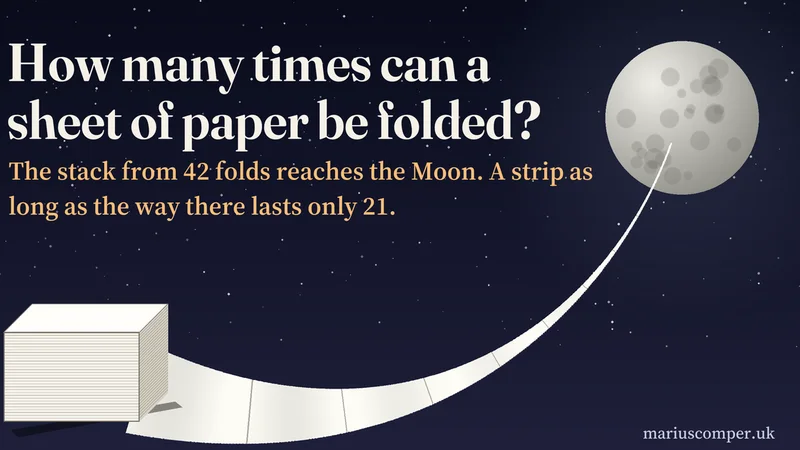
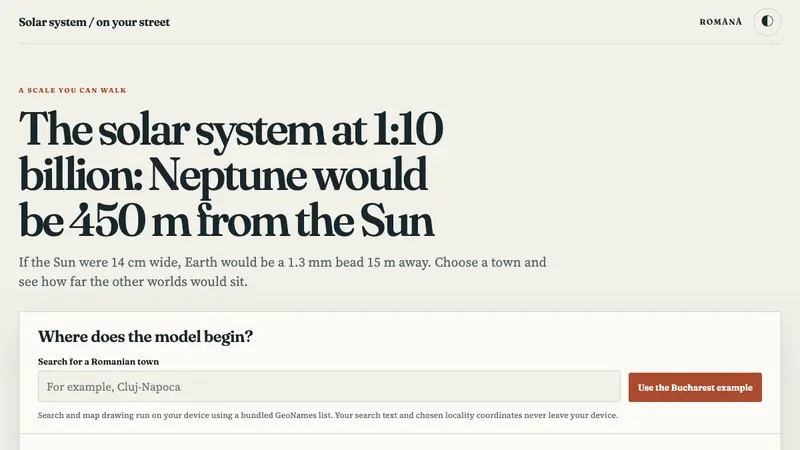
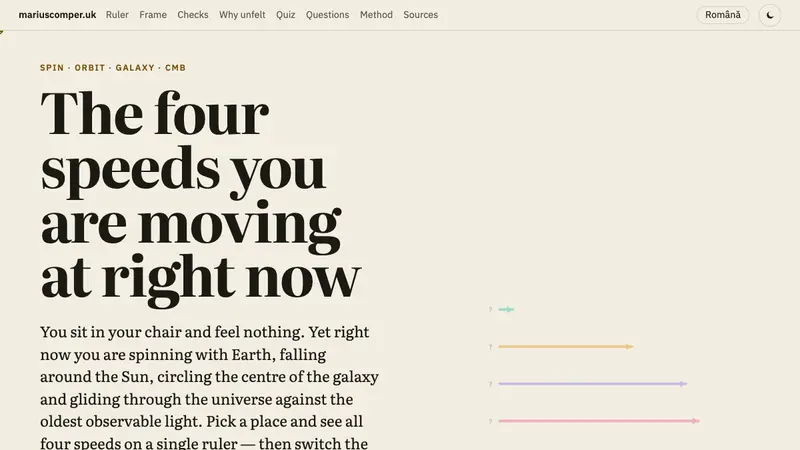
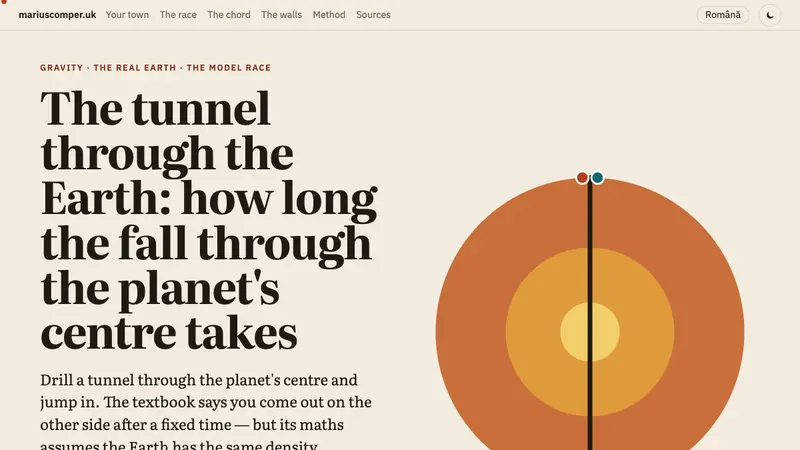
An equation can describe a sound, a fall or the odds in a game. The experiments below show the assumptions behind a calculation and where it can be compared with a measurement. The collection also covers geometry, exponential growth, cryptography and statistics.