Marius Comper · Nature

The outdoors, measured.
Rivers and mountains, animals and eclipses, earthquakes and waterfalls. Each work starts from one question about nature and follows it through the data to the end.
Start with the most beautiful.
Six works chosen for visual power, depth and finish: maps, atlases and stories showing everything this page can do.

Five shelves through nature.

Each shelf shows the theme's four finest works, hand-picked. Open any shelf to see the full list in the library.

All 141 works, newest first.

The complete list in publication order, 25 at a time.

  1. Nine seconds between the flash and the thunder. How far away was it?

    Divide the seconds by three for kilometres, and heard thunder means the storm can strike. With a map of your town.

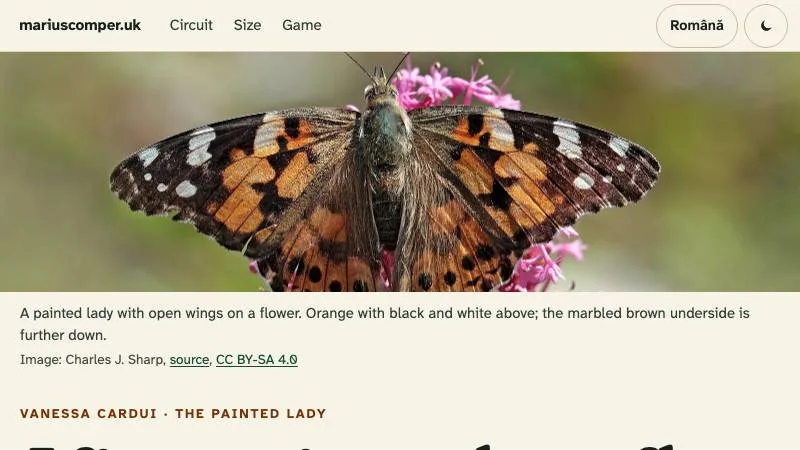
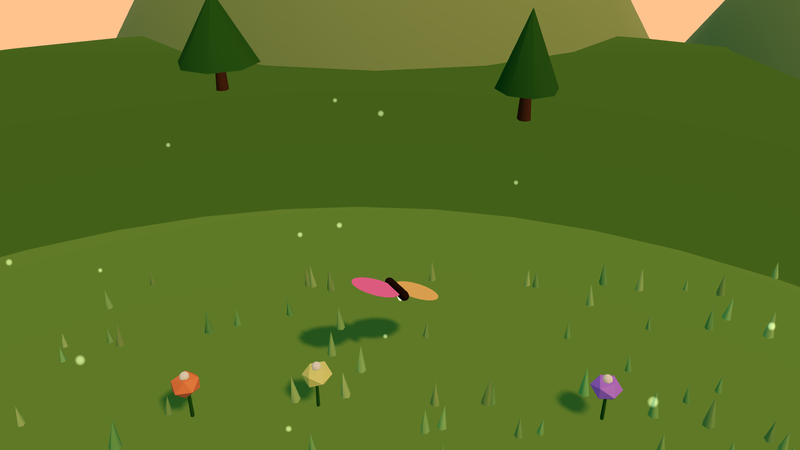
  2. A five-centimetre butterfly. A migration of up to 15,000 kilometres. No generation sees the whole journey.

    The painted lady links Europe to Africa in a relay of 8–10 generations: the month-by-month yearly map, the Atlantic crossing, true-size calibration and the Romanian data.

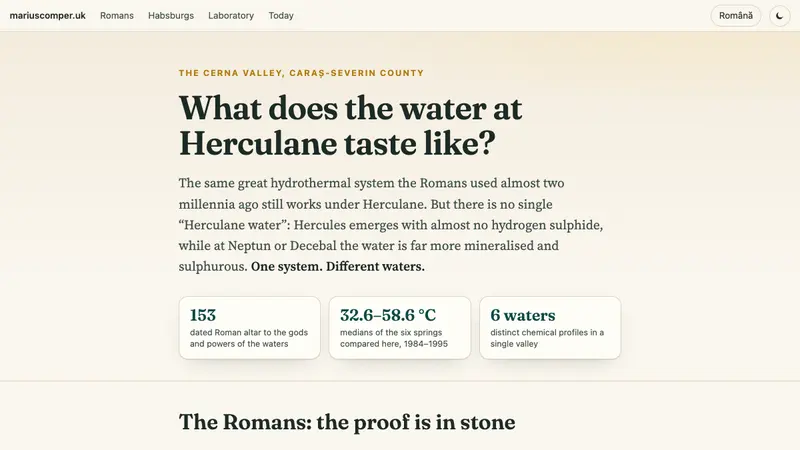
  3. What does the water at Herculane taste like?

    The same hydrothermal system for two millennia — but different waters spring by spring: Hercules without hydrogen sulphide, Neptun and Decebal strongly sulphurous. Two Roman stones, a 1773 analysis, and the modern lab.

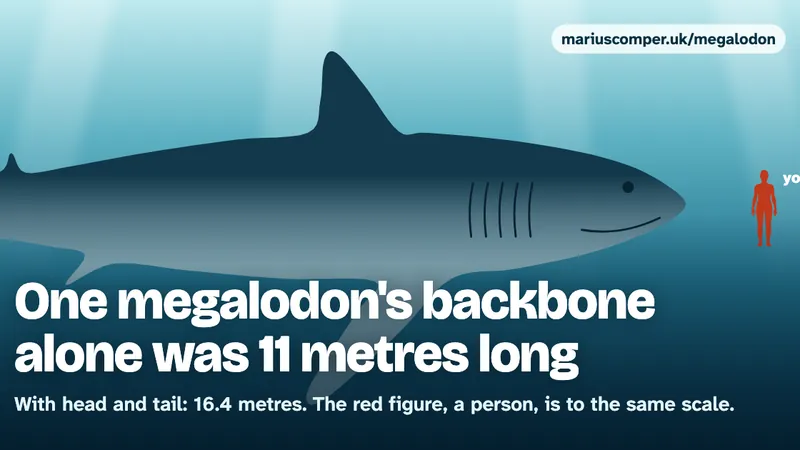
  4. Megalodon: how big the biggest shark really was

    A megalodon backbone found in Belgium is about 11 metres long on its own. With head and tail the shark was 16.4 metres, and slimmer than a giant great white. Let it swim past you at true scale, see its tooth at real size, and the teeth found in Transylvania.

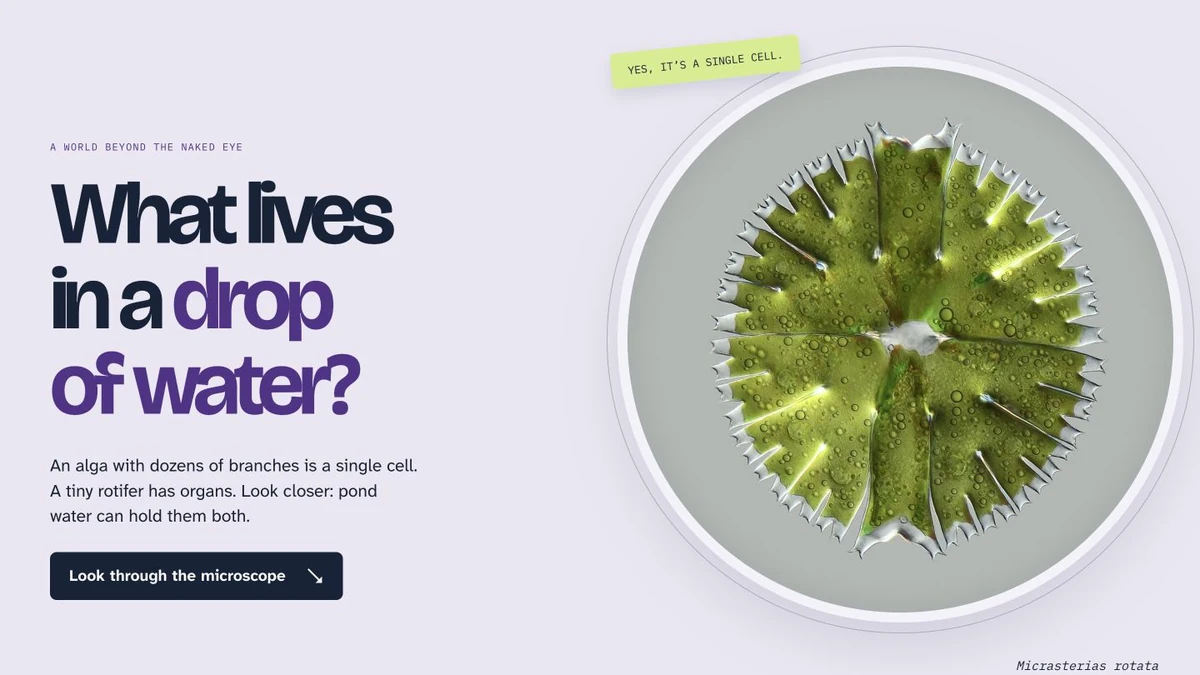
  5. What lives in a drop of water?

    Zoom into five microscope photographs and try to tell a single cell from a colony or an animal. Discover branching algae and an almost transparent rotifer.

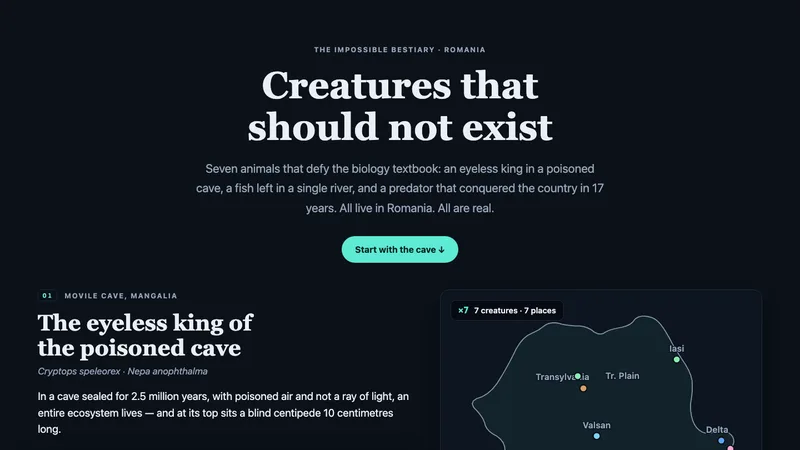
  6. Creatures that should not exist

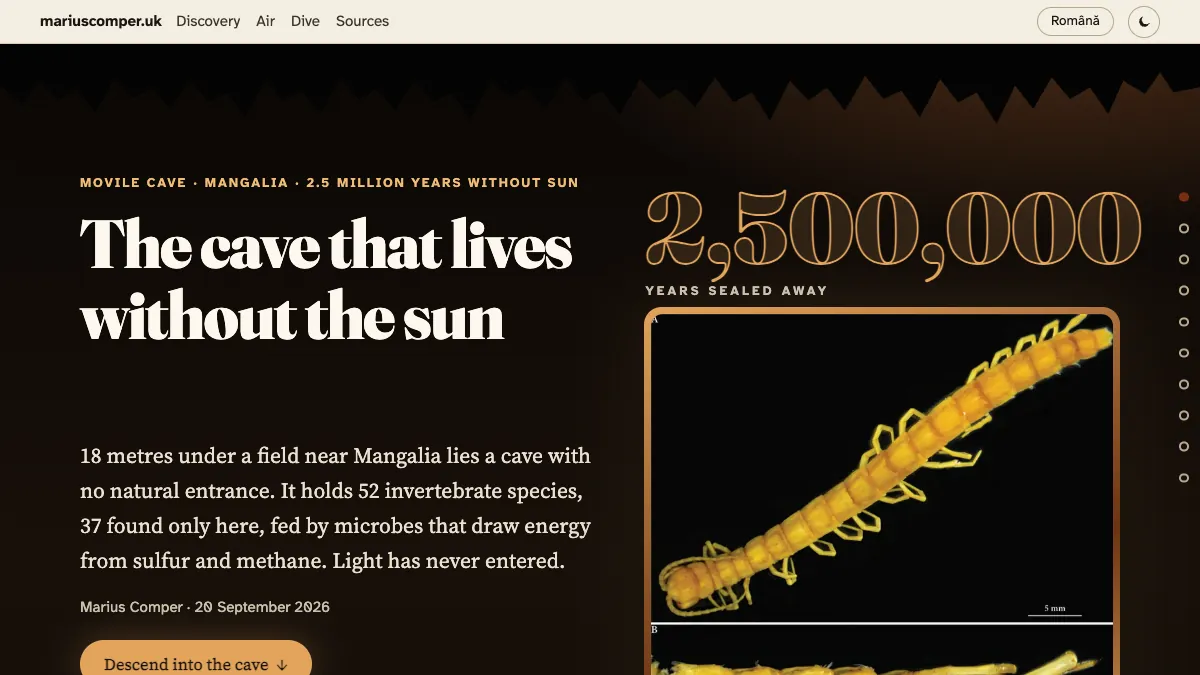
    Seven Romanian animals that defy biology — from the eyeless king of Movile Cave to the predator that grew 15-fold in 17 years — on a living map, with a quiz.

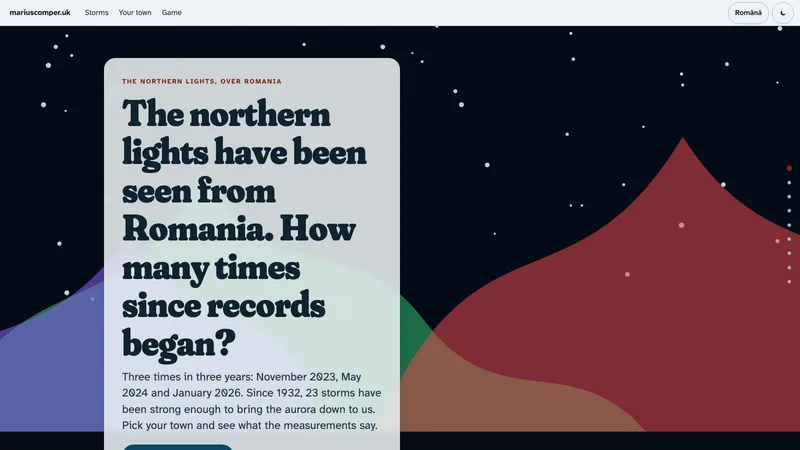
  7. The northern lights have been seen from Romania. How many times since records began?

    Three times in three years: November 2023, May 2024, January 2026. Since 1932, 23 storms have reached Kp 9.

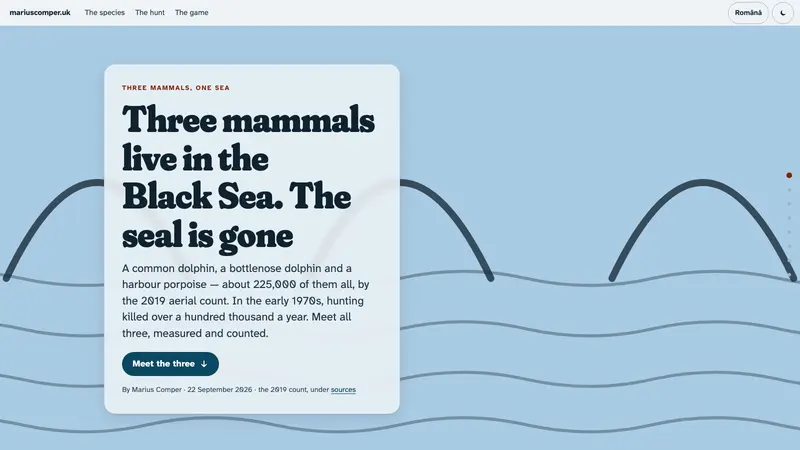
  8. Three mammals live in the Black Sea. The seal is gone

    The common dolphin, the bottlenose dolphin and the porpoise — about 225,000 of them all, by the 2019 aerial count. Hunting killed millions.

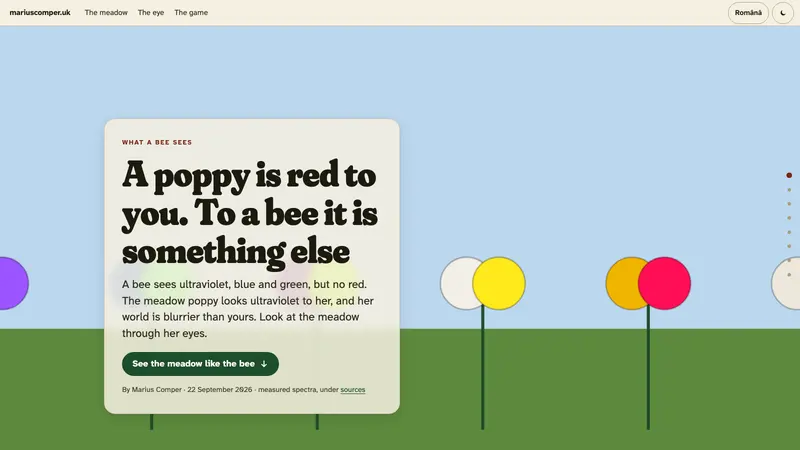
  9. A poppy is red to you. To a bee it is something else

    A bee sees ultraviolet, blue and green, but no red. The red poppy looks ultraviolet to her. Look at six flowers through her eyes.

  10. The Black Sea has two floors. Nothing downstairs breathes oxygen

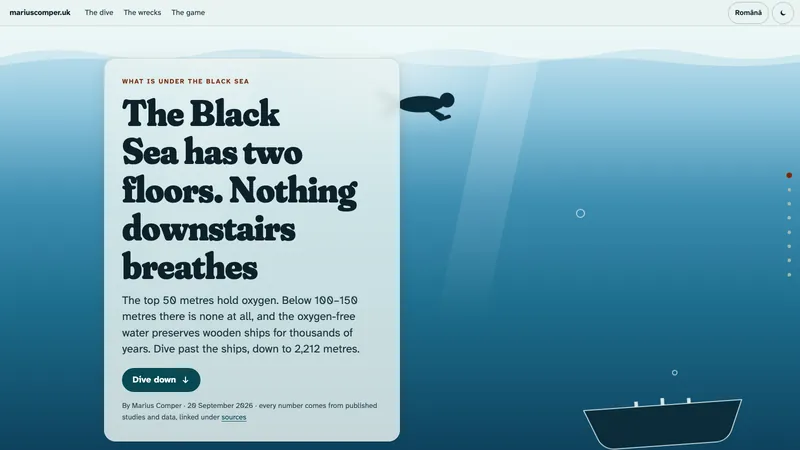
    The top 50 metres hold oxygen. Below 100–150 metres there is none at all, and the oxygen-free water preserves wooden ships for thousands of years. Dive past the ships, down to 2,212 metres.

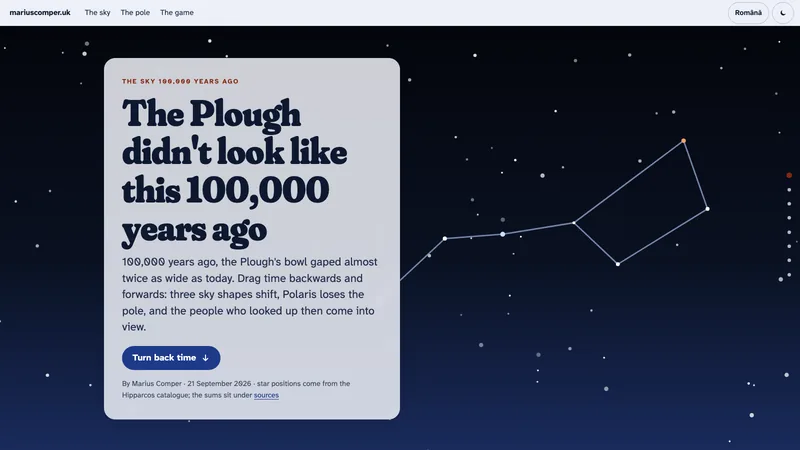
  11. The Plough didn't look like this 100,000 years ago

    100,000 years ago the Plough's bowl gaped almost twice as wide. Drag time across the sky, watch Polaris lose the pole, and meet the people who looked up then.

  12. The cloud above you weighs as much as 80 elephants

    An ordinary summer cloud gathers about 500 tonnes of water, as much as 80 bull elephants, and still does not fall. Weigh your own cloud, with your own weight on the scales, and learn what holds it up.

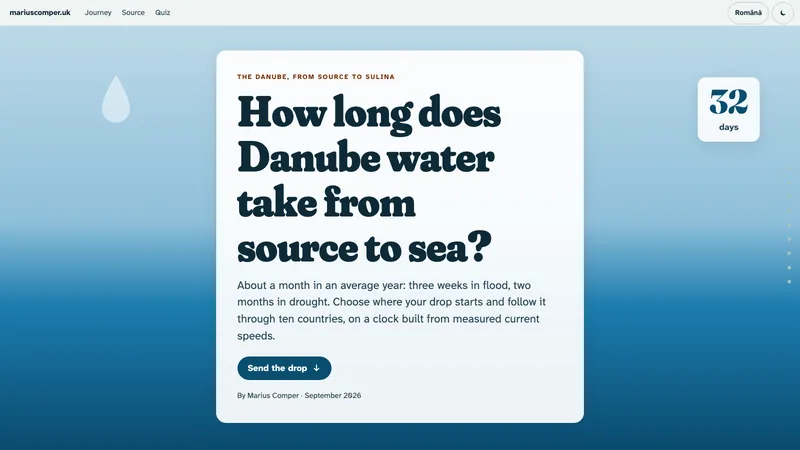
  13. A drop in the Danube: source to Black Sea in about 32 days

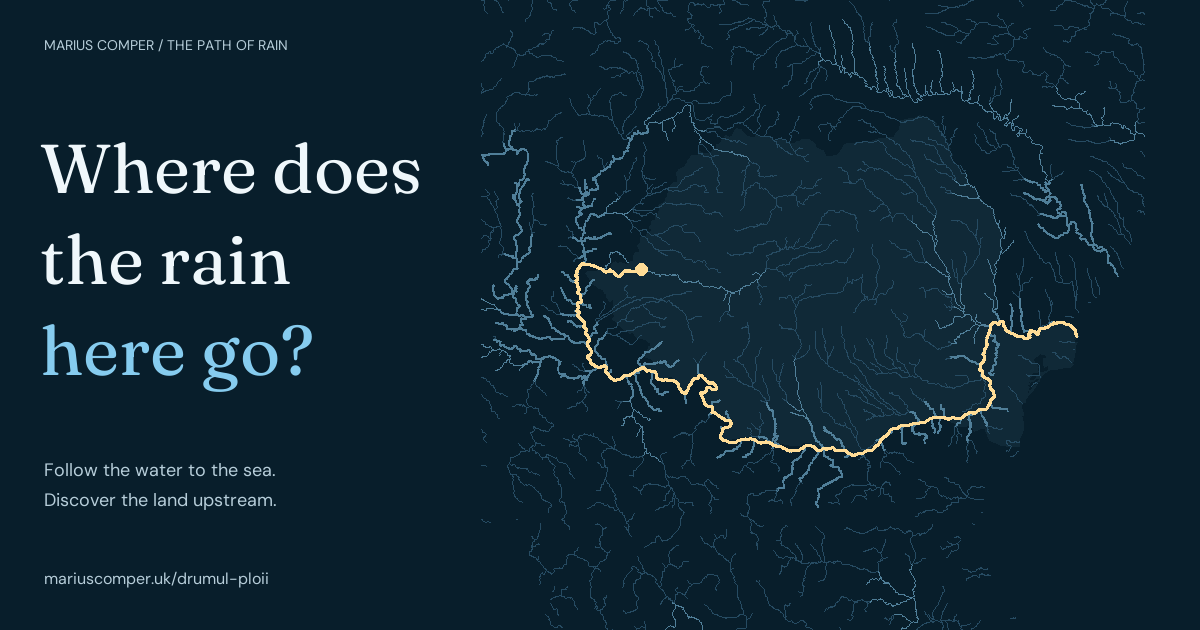
    About a month in an average year: three weeks in flood, two months in drought. Send a drop down the Danube, from the Black Forest to Sulina, on a clock built from measured current speeds.

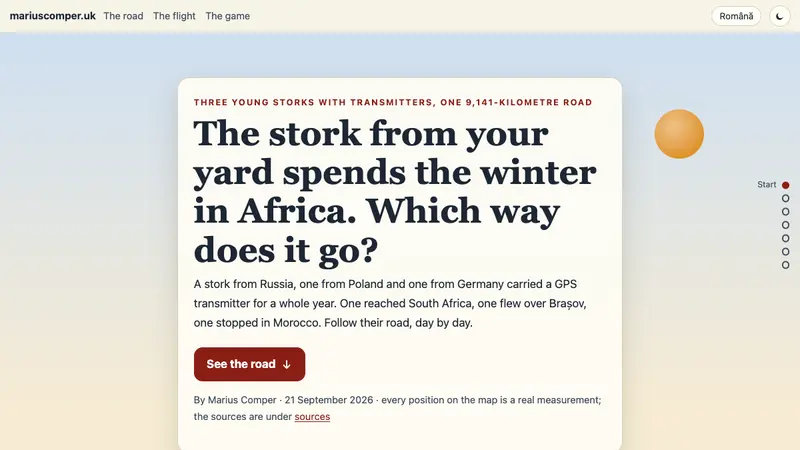
  14. The storks that leave: how Romania's storks reach Africa

    A stork from Russia, one from Poland and one from Germany carried a GPS transmitter for a whole year. One reached South Africa, one flew over Brașov, one stopped in Morocco. Follow their road on the map, day by day, then play true-or-false.

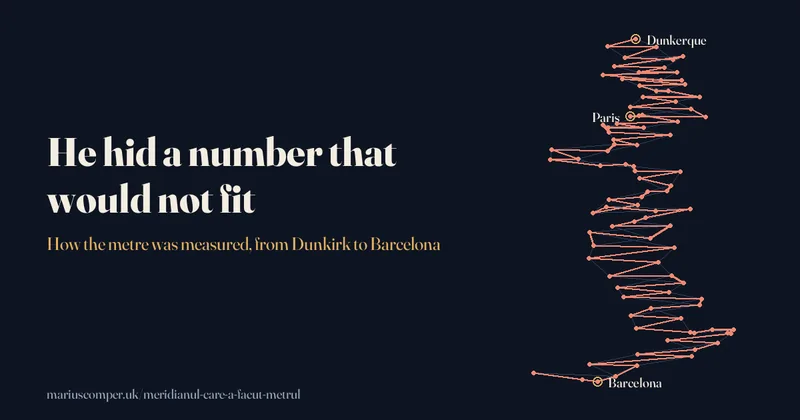
  15. He hid a number that would not fit

    The metre came out of a 1,075-kilometre line measured tower by tower between Dunkirk and Barcelona, through the years of war and the Terror. At the southern end Pierre Méchain read the latitude from two places less than two kilometres apart and got two different answers. Follow the chain of 96 stations, drawn from Delambre's own printed table.

  16. When will the sky go dark at noon over your town?

    Pick the nearest town and see every solar eclipse it gets from 1900 to 2100: which were total, how much Sun was left each time, and when the next shadow comes.

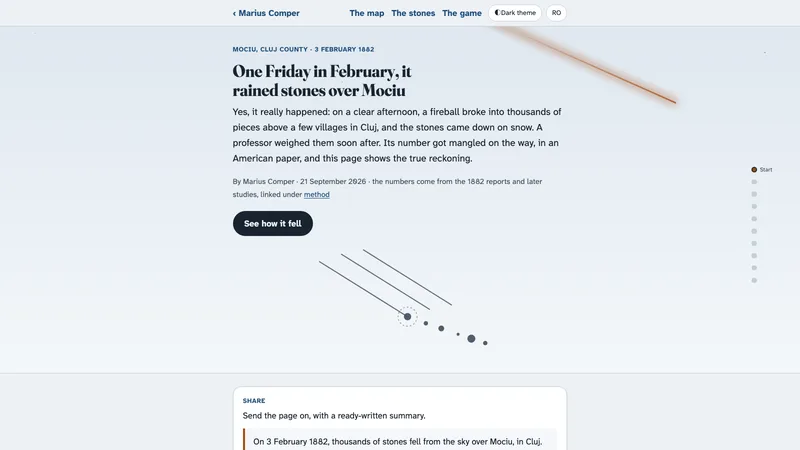
  17. The Mociu stone rain, 3 February 1882: the map, the stones, the museums

    One Friday in February 1882, a fireball broke into thousands of pieces above a few villages in Cluj, and the stones came down on snow. The fall map drawn in 1882, the stones set to scale beside your hand and the museums where they sit today, plus the true reckoning of the biggest stone.

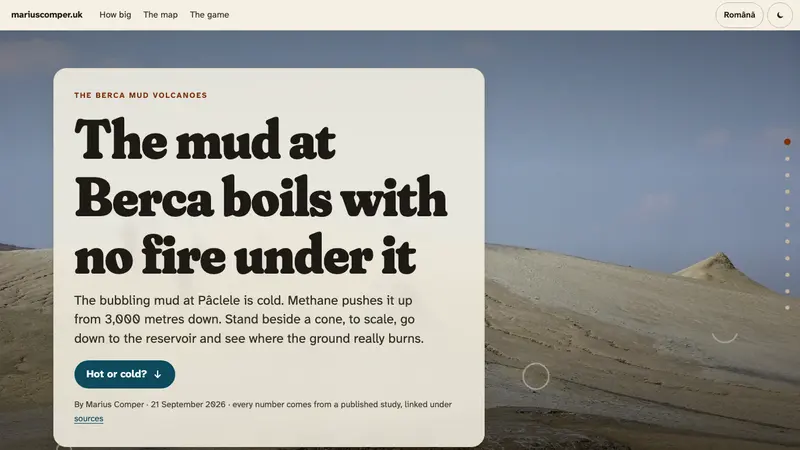
  18. The Berca mud volcanoes: why they are not volcanoes

    At Pâclele, cones a few metres high spit cold mud pushed by methane from 3,000 metres down. No magma, no lava. Stand beside a cone, to scale, and see where the ground really burns.

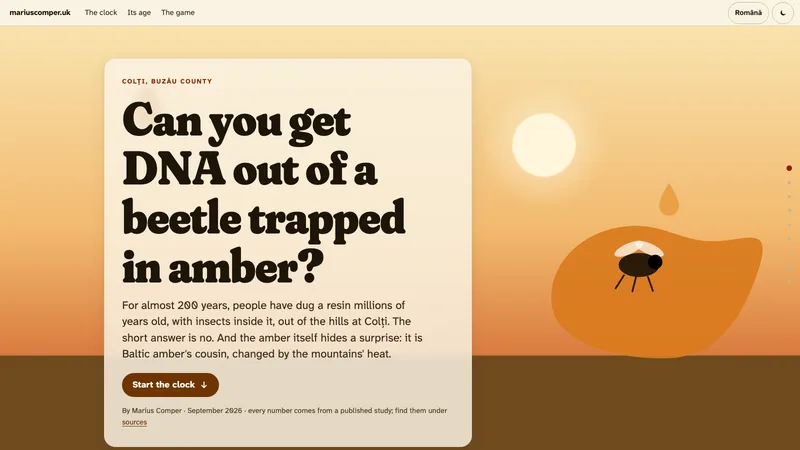
  19. Can you get DNA out of a beetle trapped in amber?

    At Colți, in Buzău, people dig amber with insects millions of years old out of the ground. Their DNA has long been gone, and the amber itself is Baltic amber's cousin. Drag the clock back and play eight questions.

  20. The cave bear: the half-tonne giant that ate only plants

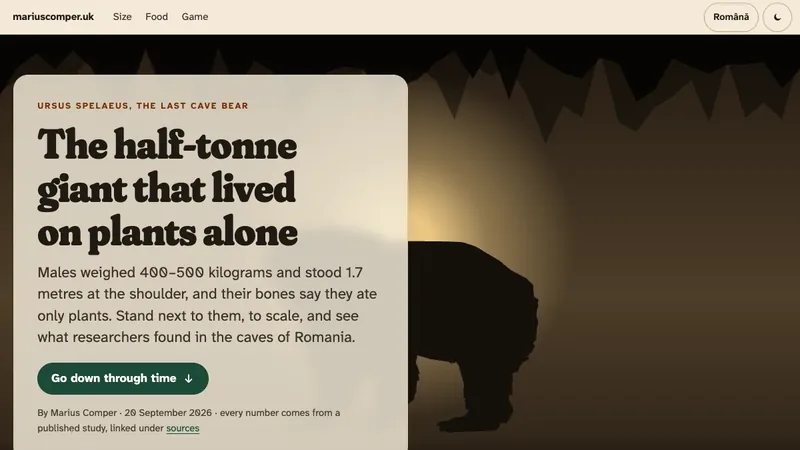
    Males weighed 400–500 kilograms and stood 1.7 metres at the shoulder, and their bones say they ate only plants. Stand next to them, to scale, and see what researchers found in Bears' Cave and three other Romanian caves.

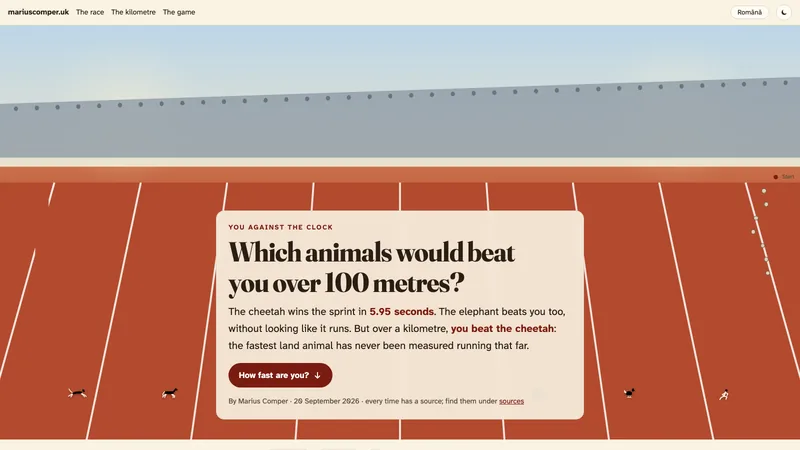
  21. Which animals would beat you over 100 metres?

    Pick your age and race 100 metres against the cheetah, horse, dog, ostrich, pronghorn, elephant and hen. The times come from measured races and studies, and over a kilometre you beat the cheetah.

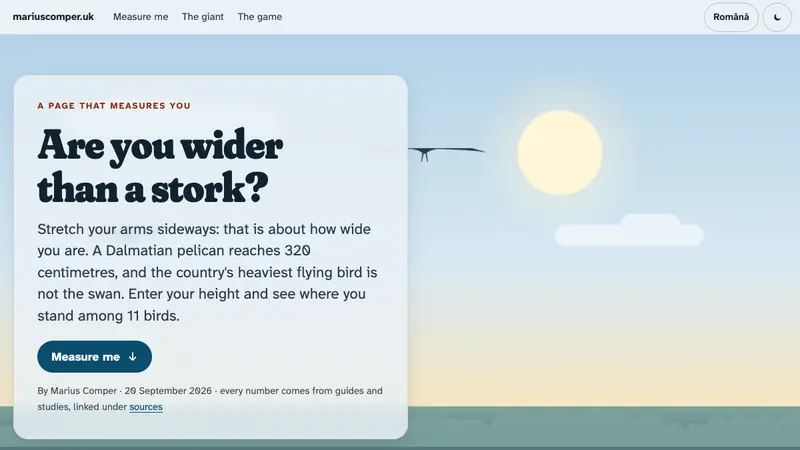
  22. Are you wider than a stork?

    Stretch your arms sideways: that is about how wide you are. Compare yourself, to scale, with 11 birds of Romania, from sparrow to Dalmatian pelican, and learn why the heaviest flier is the bustard, not the swan.

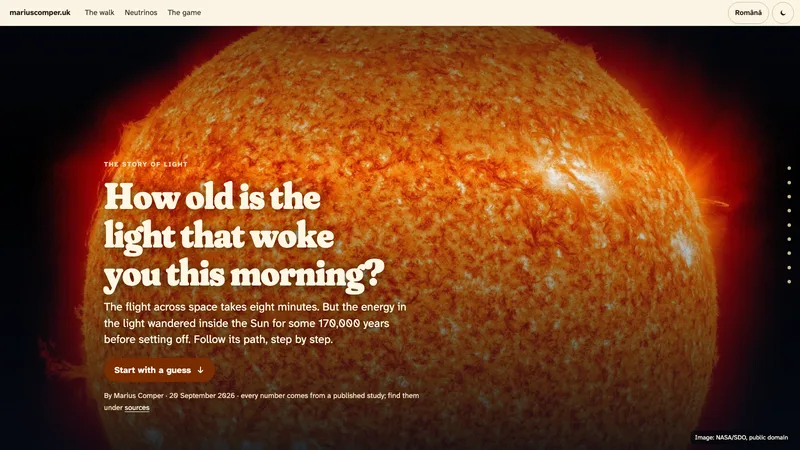
  23. How old is sunlight: 8 minutes across space, 170,000 years inside the Sun

    Light flies eight minutes to reach you, but its energy wandered inside the Sun for 170,000 years. A random-walk simulation, a race with a neutrino, and eight true-or-false sentences.

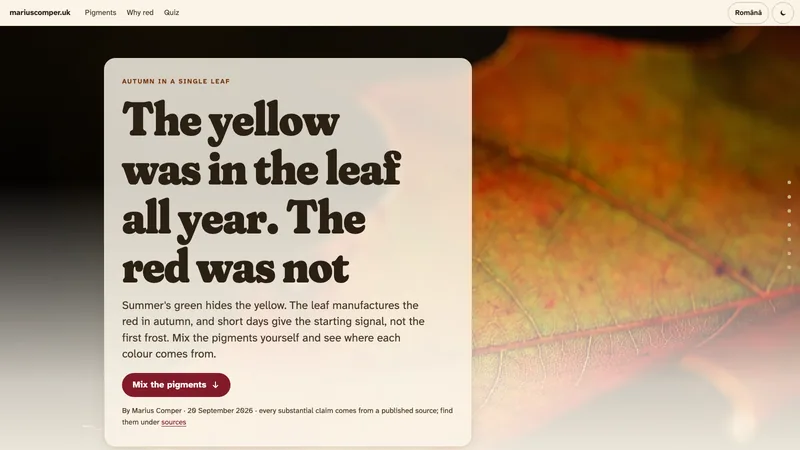
  24. Why the leaf turns red: three pigments, one short day

    The leaf's yellow was there all year, hidden under green. The leaf manufactures the red in autumn, and short days give the starting signal, not the first frost. Mix the pigments yourself, see how much light Bucharest loses, and play eight true-or-false statements.

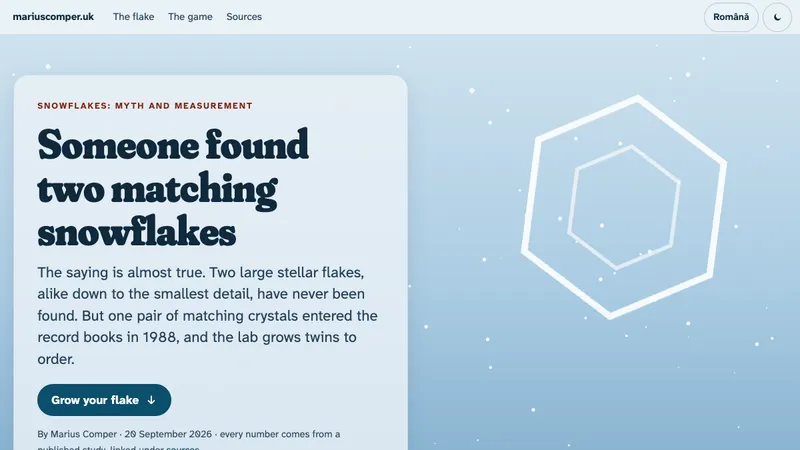
  25. No two snowflakes alike? The 1988 pair and how a flake grows

    The saying is almost true: two large stellar flakes, alike down to the smallest detail, have never been found. But one pair entered the record books in 1988. Grow your own flake from two settings and count how many fall on your street.