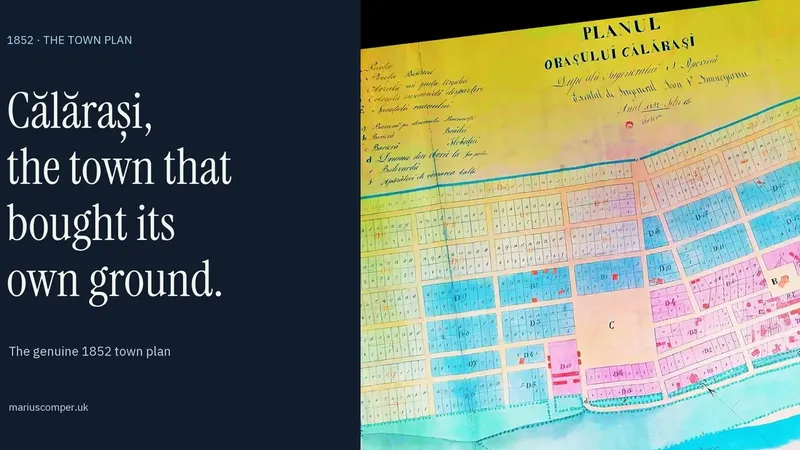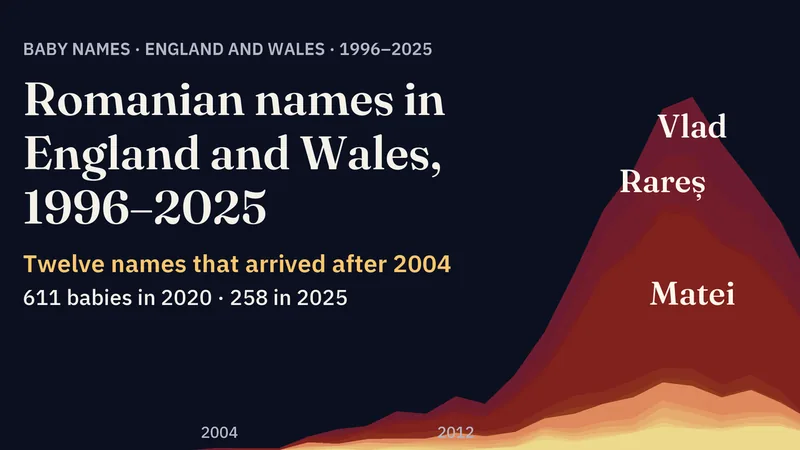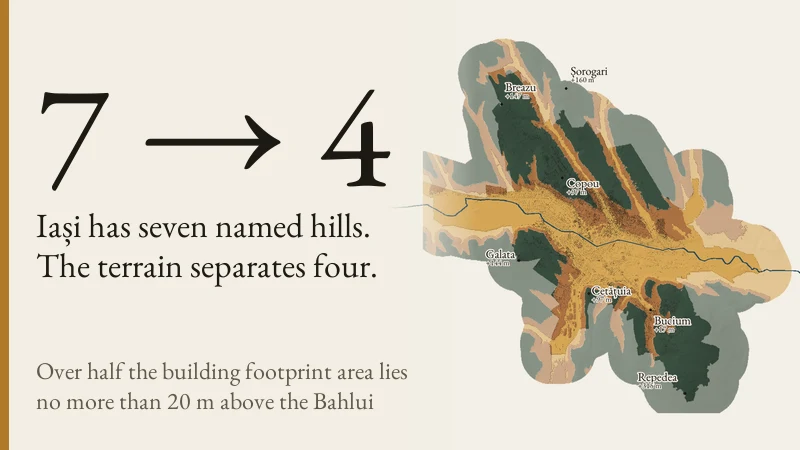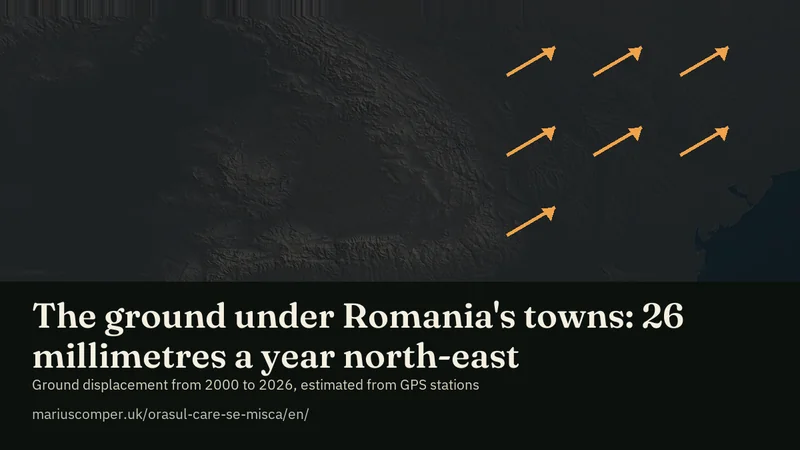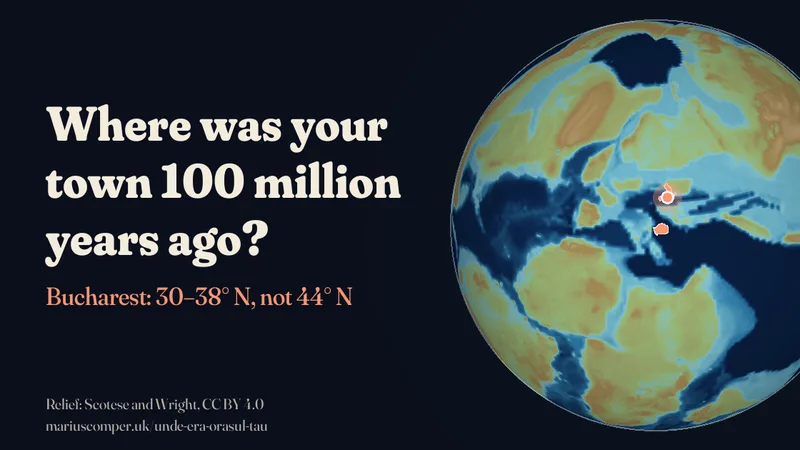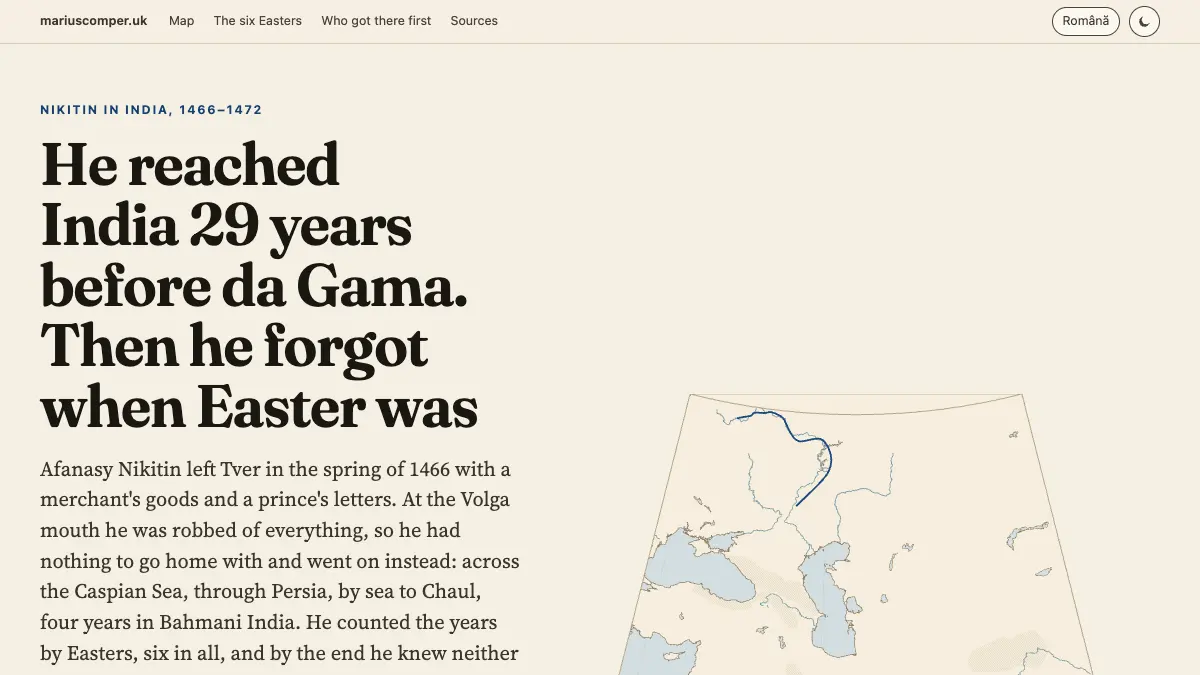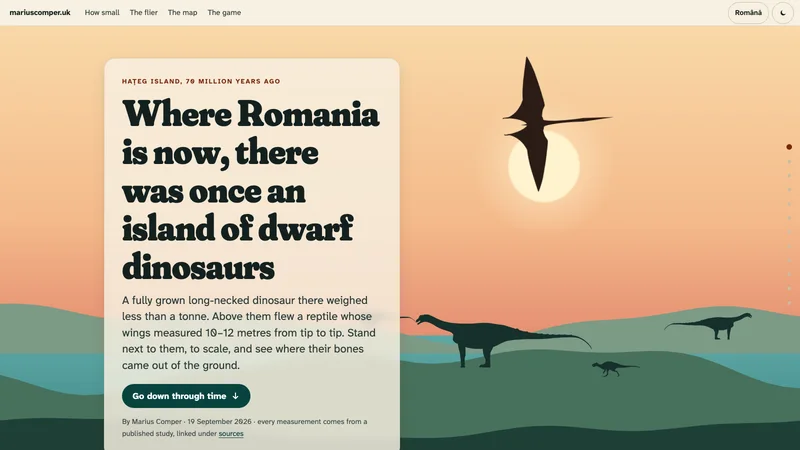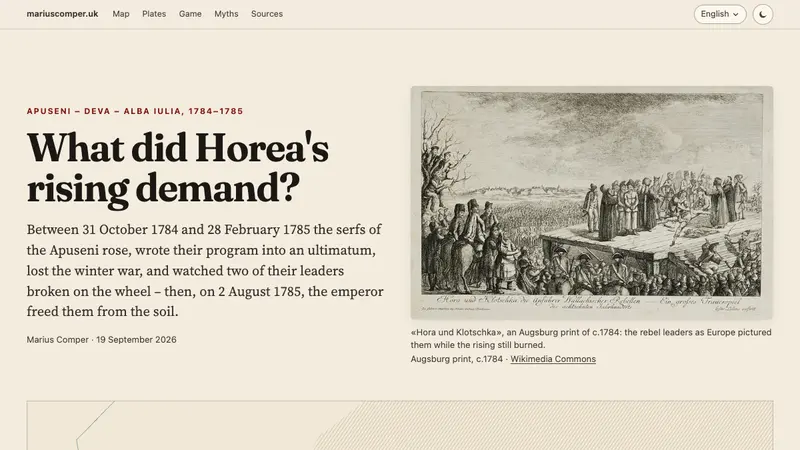
The complete library

Every project, in one place.

1259 projects. Choose a subject, a format, a language, or search directly.

All projects

1259 projects

Physics & mathematicsSimulations & models

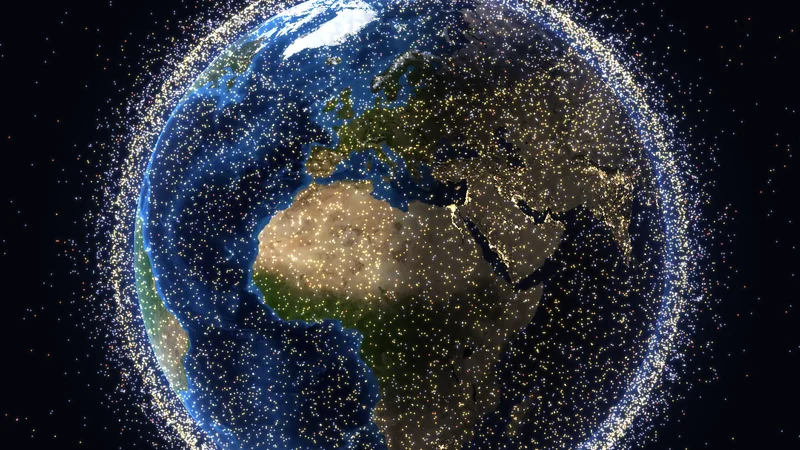
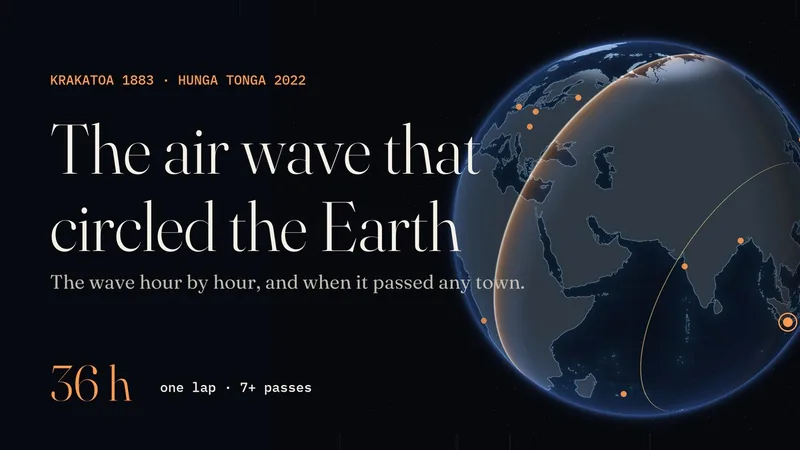
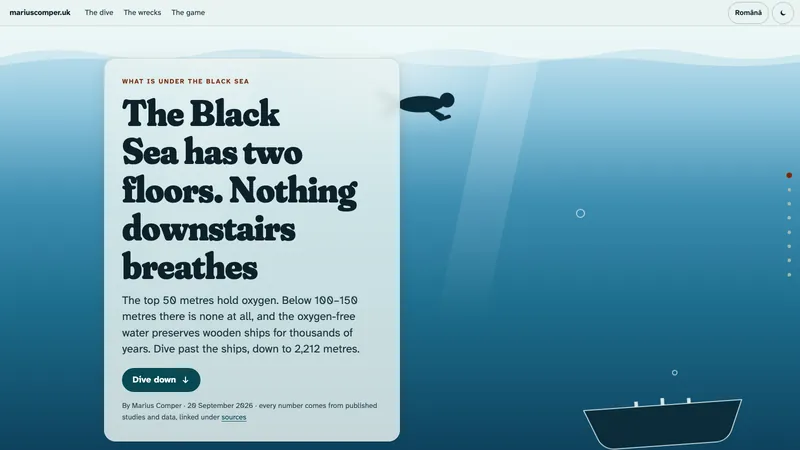
Everything still up there: the 35,036 tracked objects circling the Earth, and when they come down

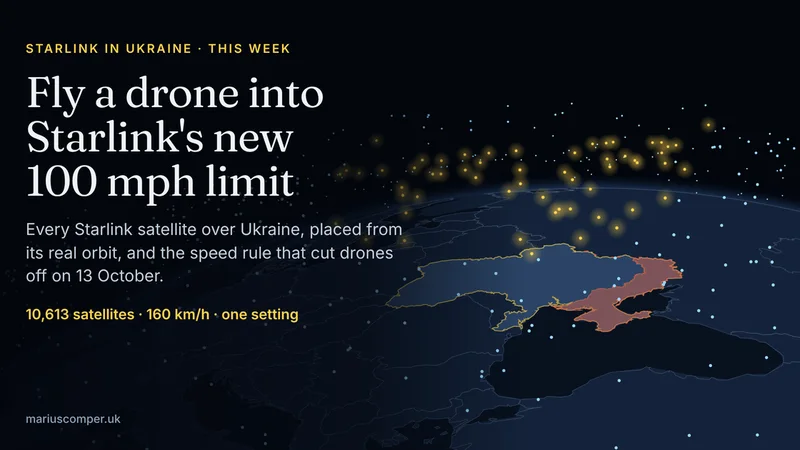
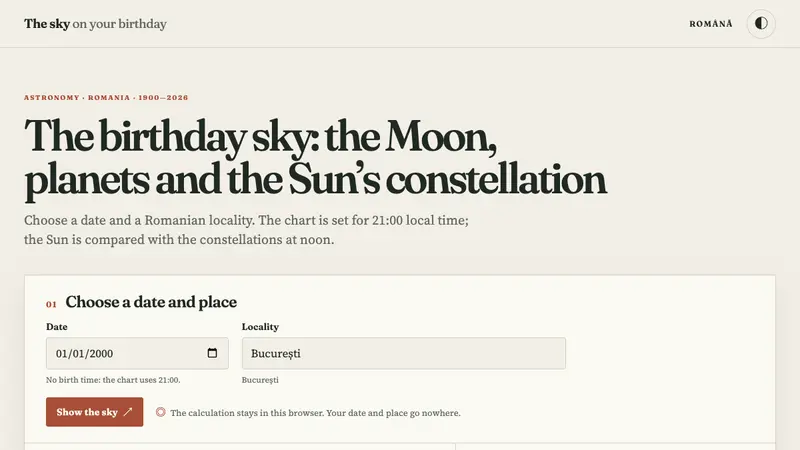
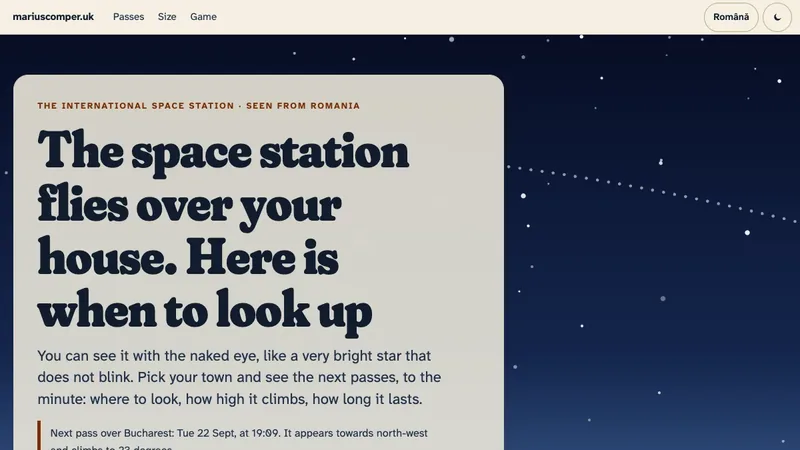
The public catalogue downloaded on 18 October 2026 contains 35,036 objects in orbit, including 17,243 working satellites. The globe is an illustrative projection, not a live observation. Explore how the number of objects in orbit has grown since Sputnik and see the sky in your birth year. A model of orbital lifetime, built from 69 years of re-entries, is compared with eleven debris clouds. Overhead estimates are hidden when the data are too old.

Editions: EN RO

Security & geopoliticsSimulations & models

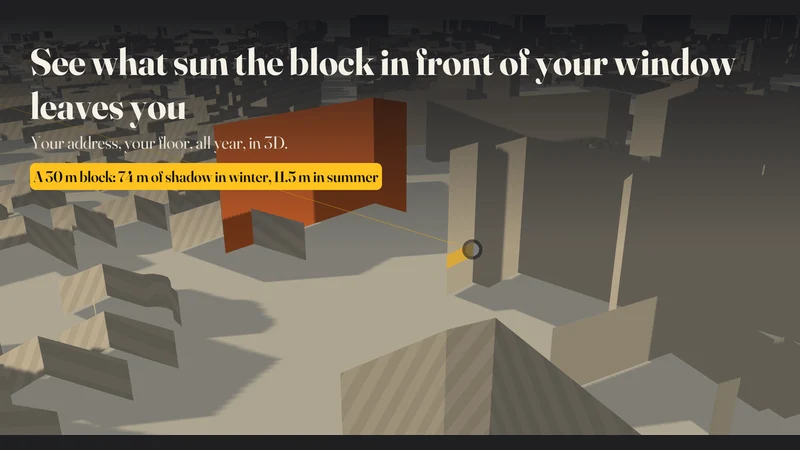
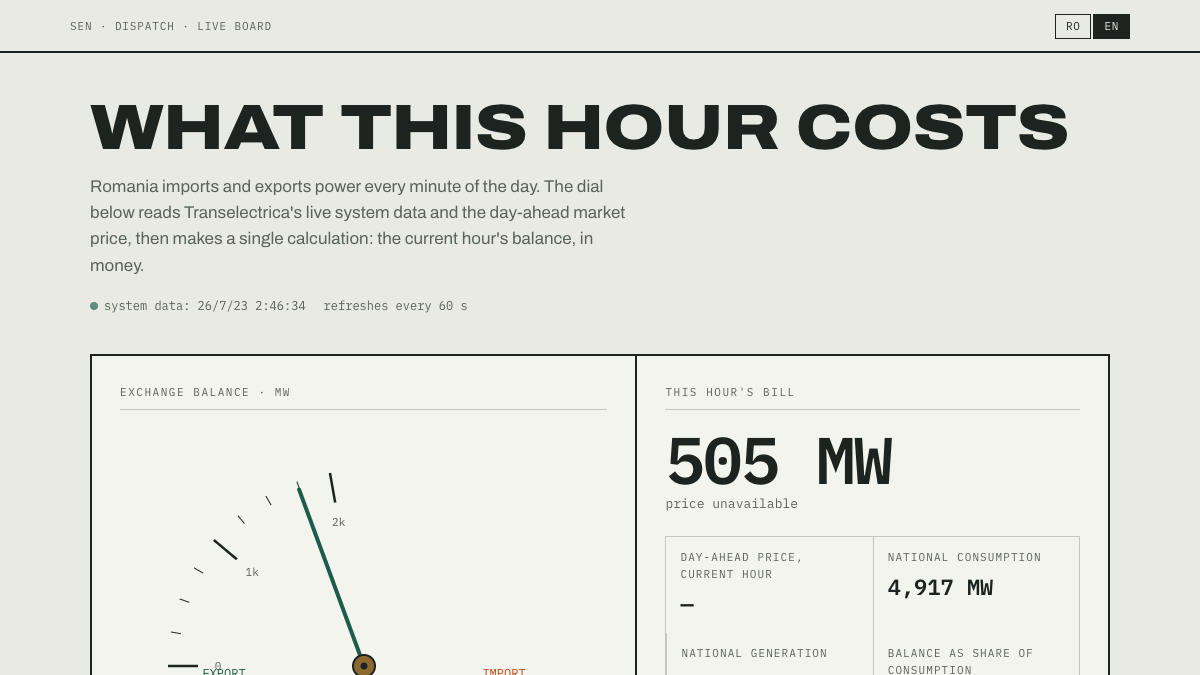
Keyless car theft explained: how relay attacks work, and why police in England and Wales recorded 119,165 vehicle-taking offences in a year

Police in England and Wales recorded 119,165 offences of theft or unauthorised taking of a motor vehicle in the year to June 2026, about one every 4 minutes 25 seconds. This combined total covers several vehicle-taking offence categories, not keyless theft alone. See how relay attacks work and what can reduce the risk.

Anthropology & societyInvestigations & audits

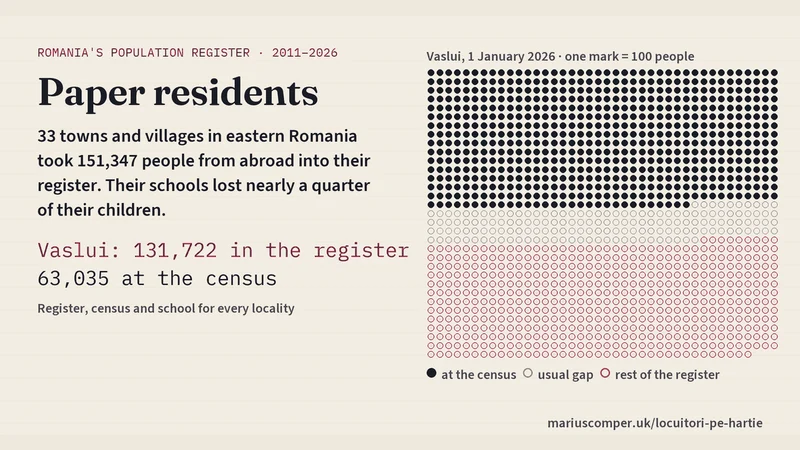
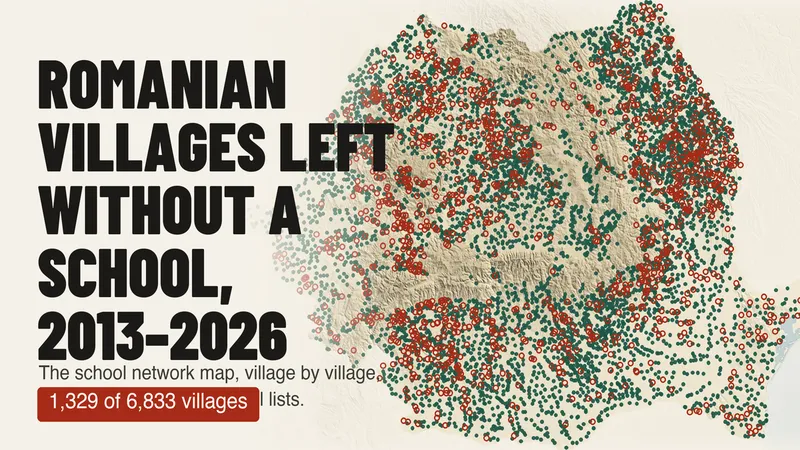
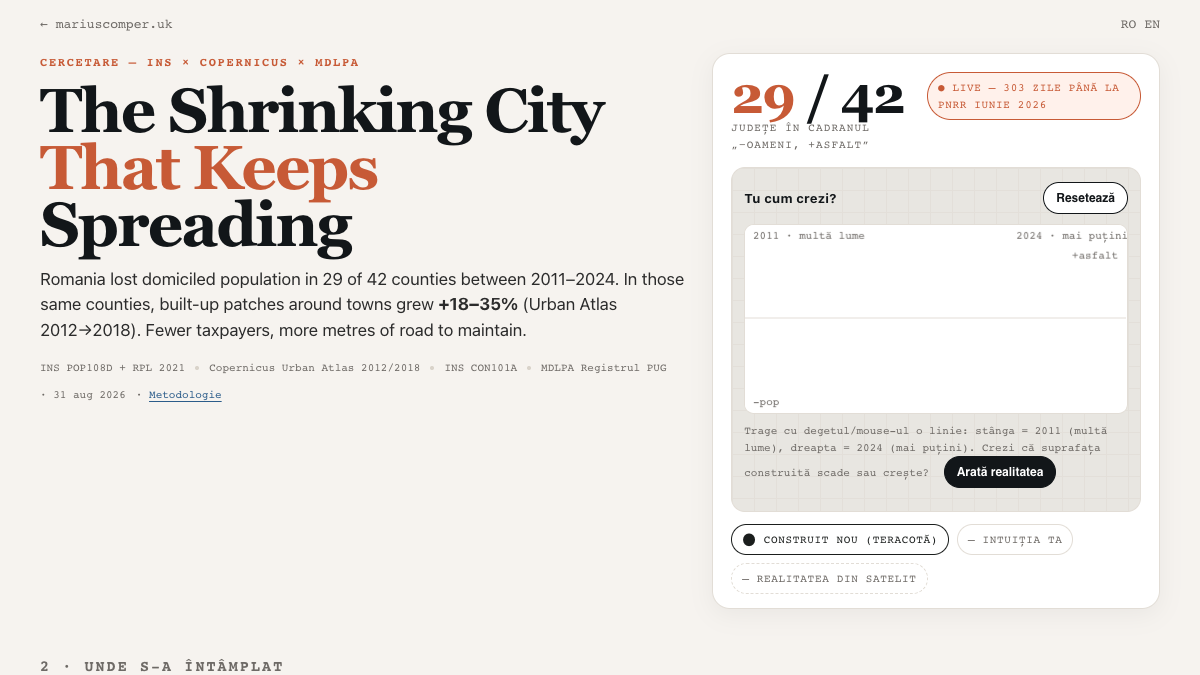
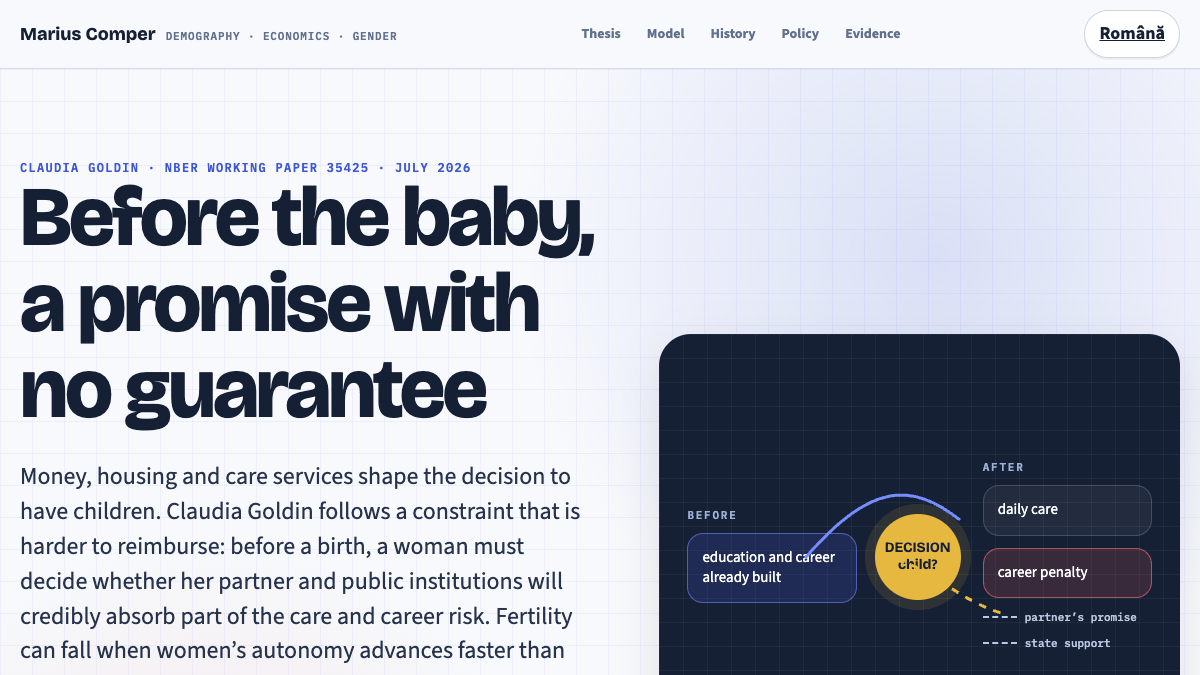
Paper residents: 33 places in eastern Romania where the population register grew and schools lost nearly a quarter of their children

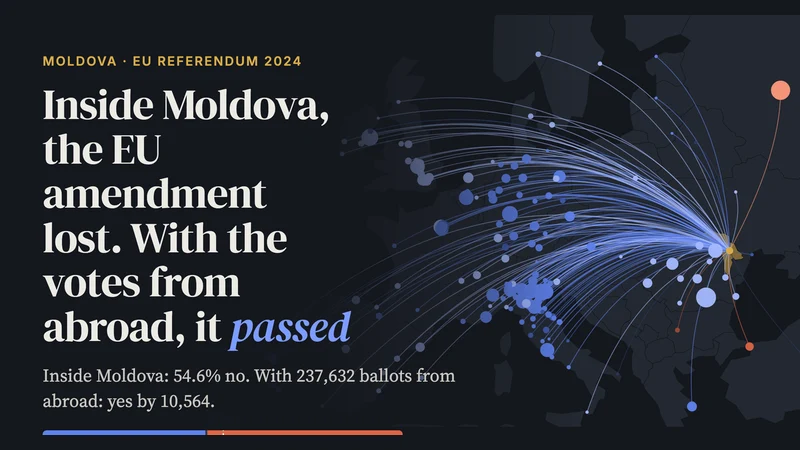
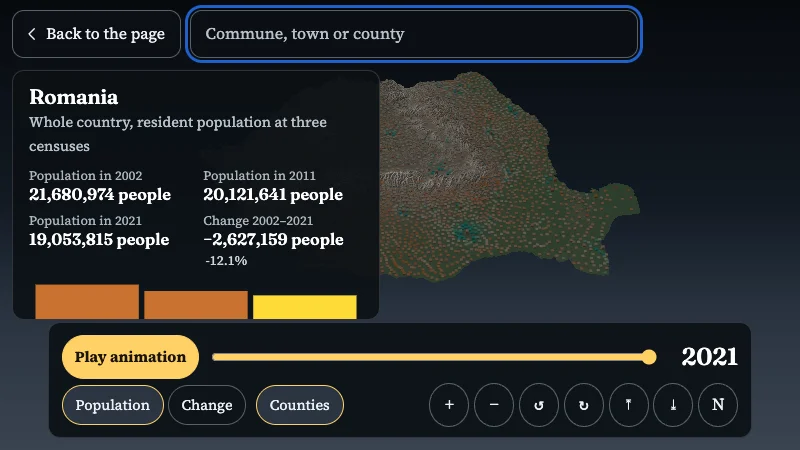
From 2011 to 2025, 543,831 Romanian citizens officially moved their registered address from abroad to Romania, 56% of them from the Republic of Moldova. 151,347 registered in 33 towns and villages in eastern Romania, home to 1% of the population, where pupil numbers fell. Official data for every locality.

Editions: RO EN

Government, money & public lifeInvestigations & audits

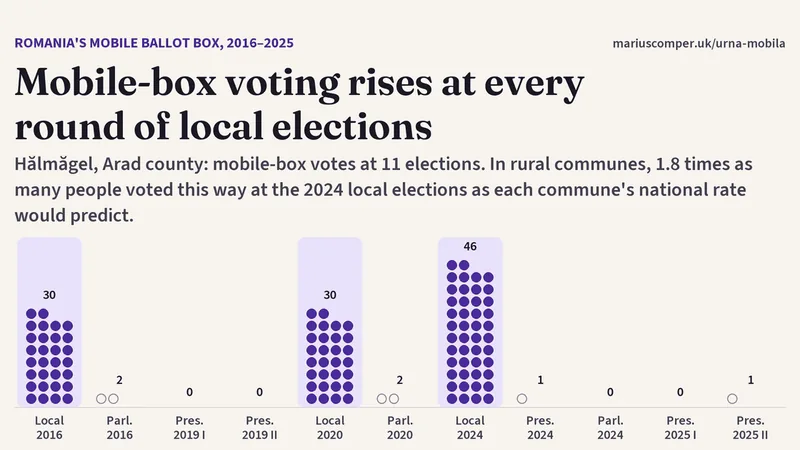
Romania's mobile ballot box and its mayors: in rural communes, mobile-box voting rises at every round of local elections (2016–2025)

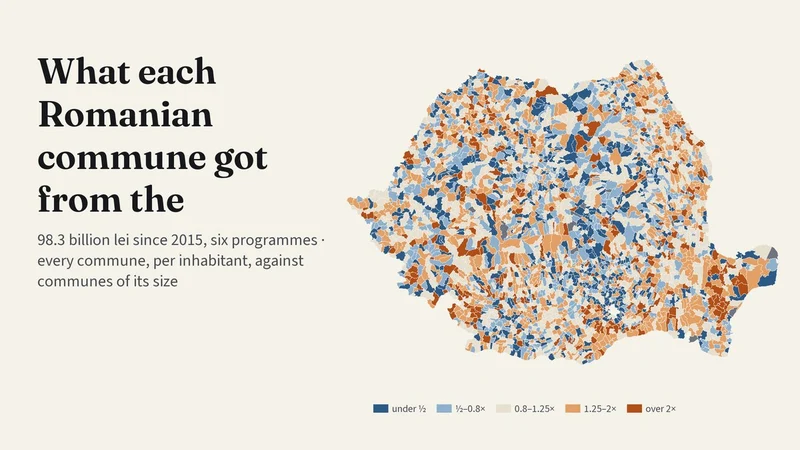
How many people voted at the mobile ballot box in every Romanian commune and town at 11 elections from 2016 to 2025. At the 2024 local elections, rural communes had 1.8 times as many as their national rate would predict; in 130 communes and towns the box collected more votes than the mayor's winning margin.

Editions: RO EN

Nature & planetSimulations & models

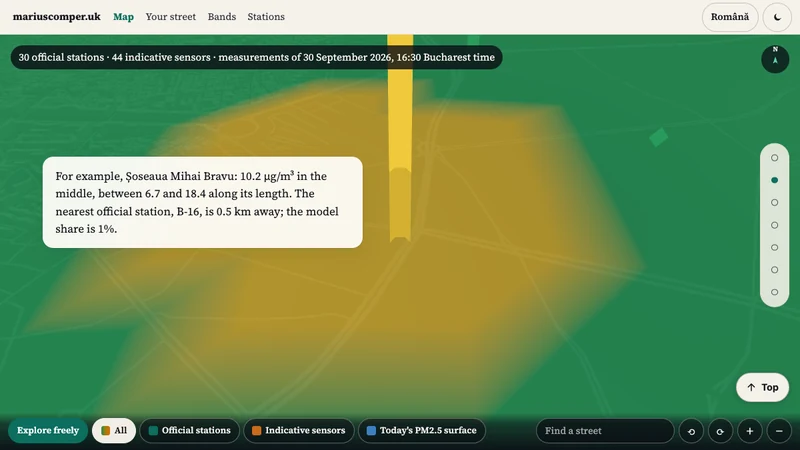
When to open the window in winter: the air is dirtiest in the evening, not at rush hour

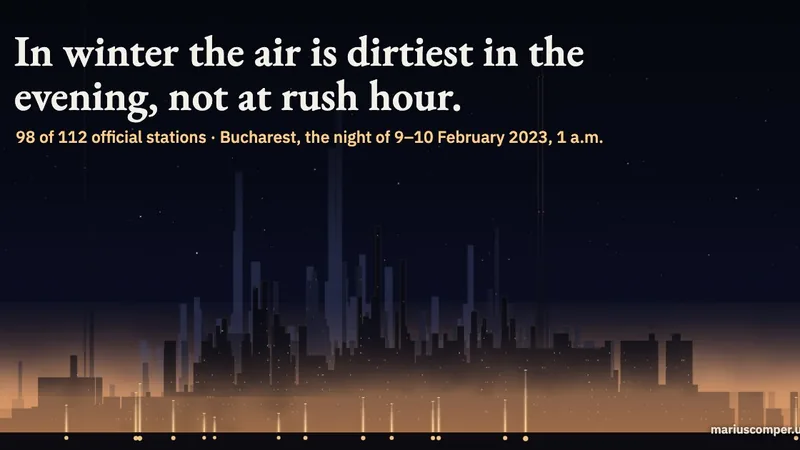
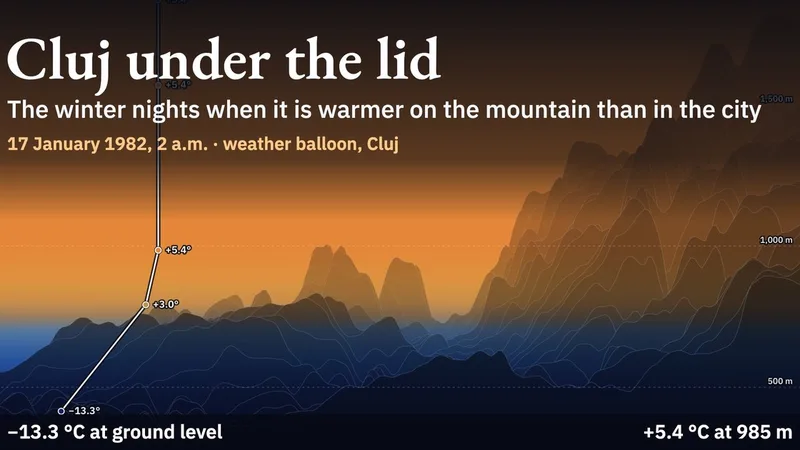
In winter, 98 of 112 official Romanian stations measure their dirtiest air between 7 and 11 p.m., and during the day 106 are cleanest between 1 and 4 p.m. The night of 9 February 2023 in Bucharest, hour by hour, on a section through the city with its real buildings: the warm lid measured by the Băneasa weather balloon and the smoke held in the lowest tens of metres. On Sundays, in similar weather, exhaust gas falls while evening particles show no clear difference. The share of homes heated with wood shows no clear link to the evening rise; the shape of the land is more closely linked. For every station: the best hour to air a room.

Editions: RO EN

Mind & perceptionGames & tests

When anxiety passes for conscientiousness: perfectionism, control and worry that never switches off

Ten portraits of the conscientious person, written in the words of someone who would never call themselves anxious, then the seven GAD-7 questions in their official wording. At the end each portrait sits beside the question it was written from, with both your answers. In the WHO surveys only 41.3% of people with an anxiety disorder in the past year felt they needed help. Nothing leaves your device.

Editions: RO EN

Language & wordsArticles & explanations

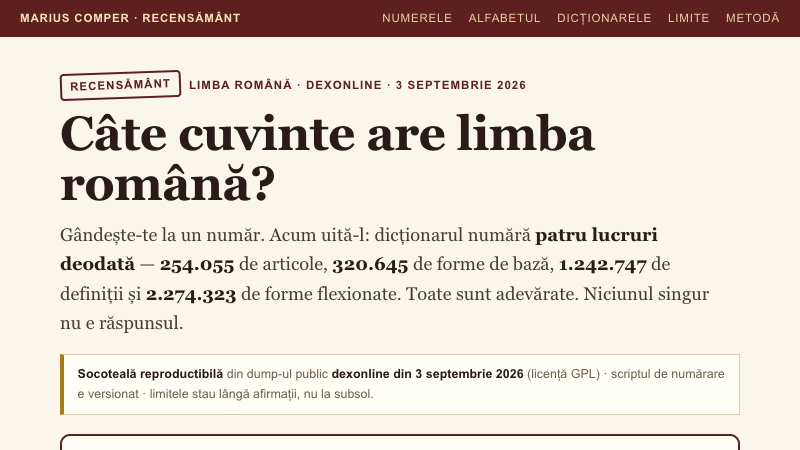
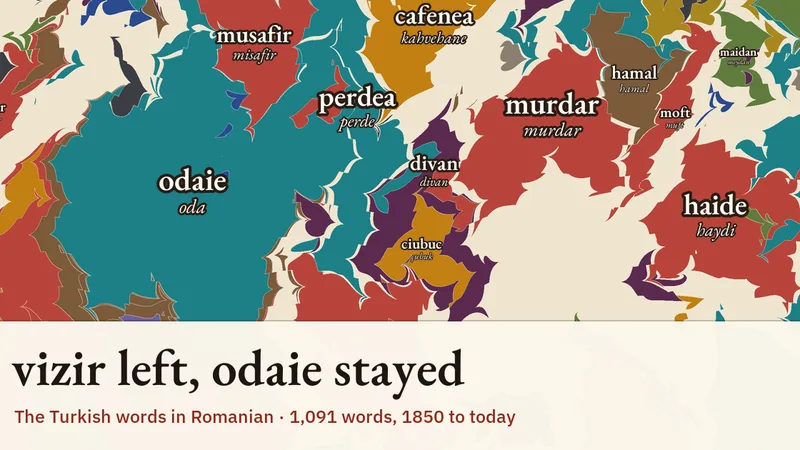
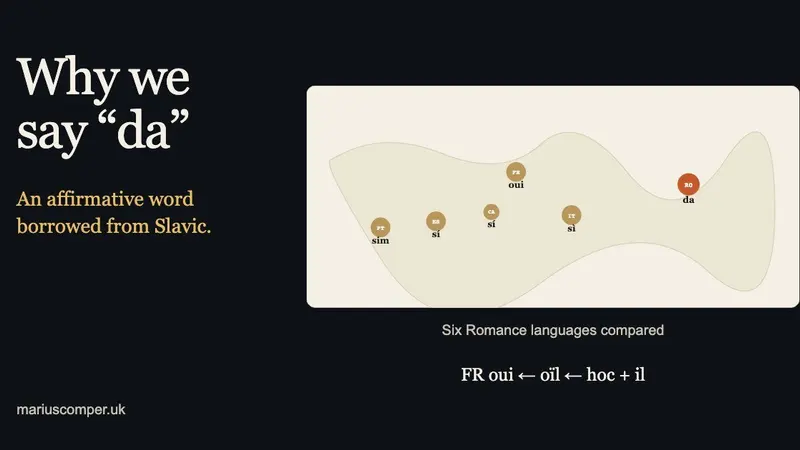
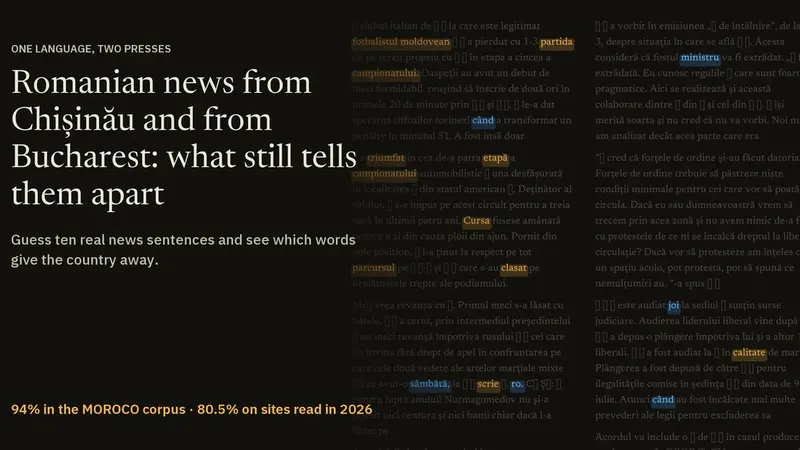
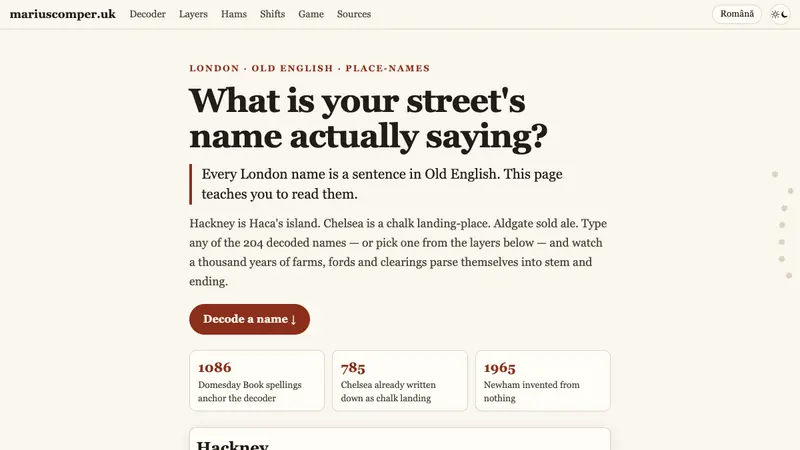
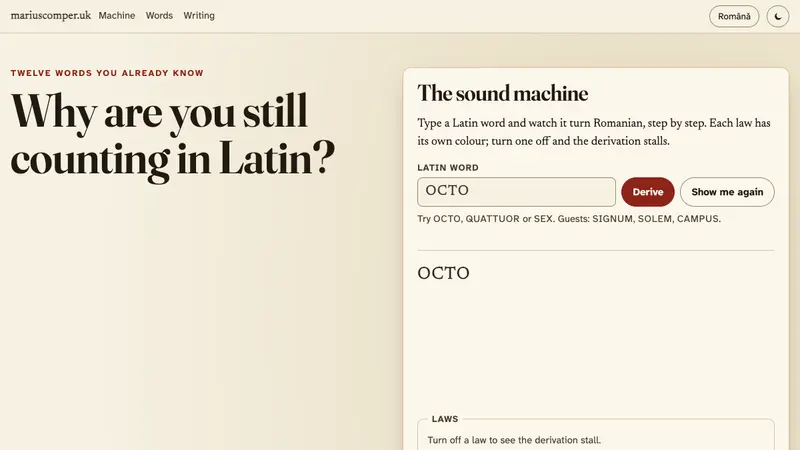
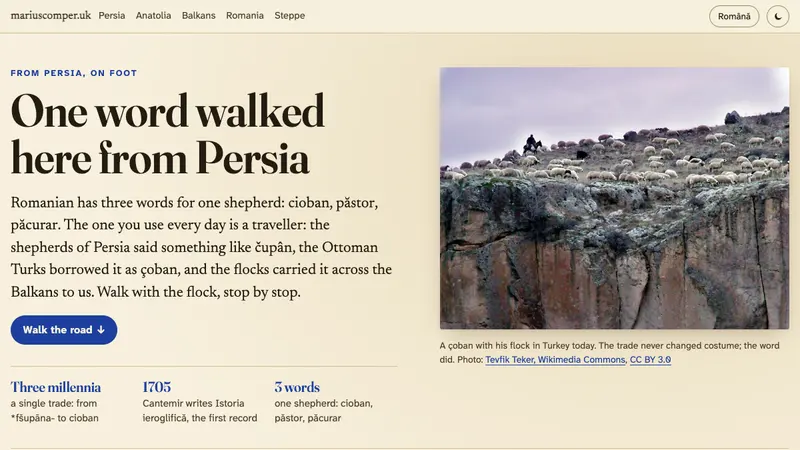
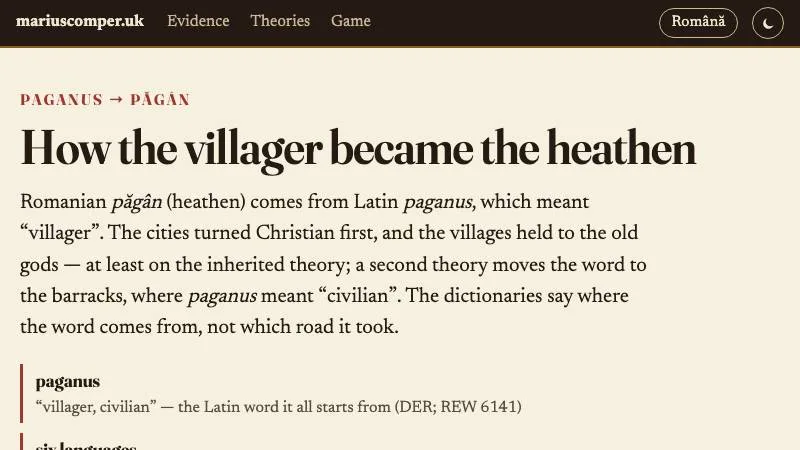
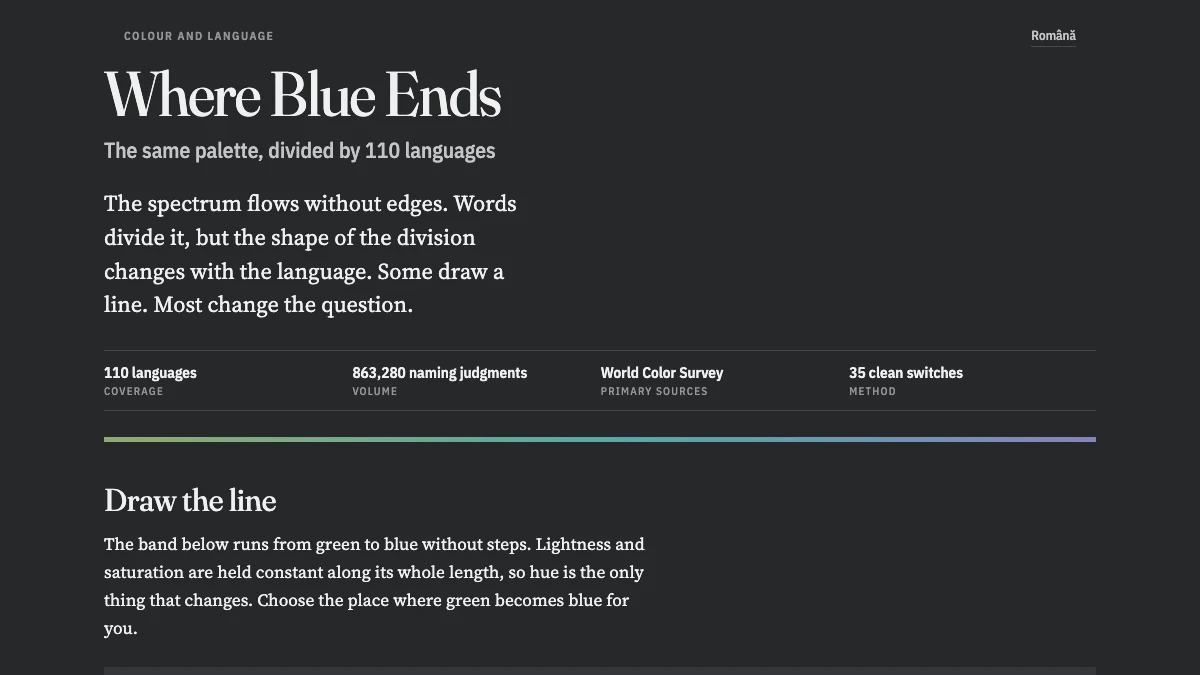
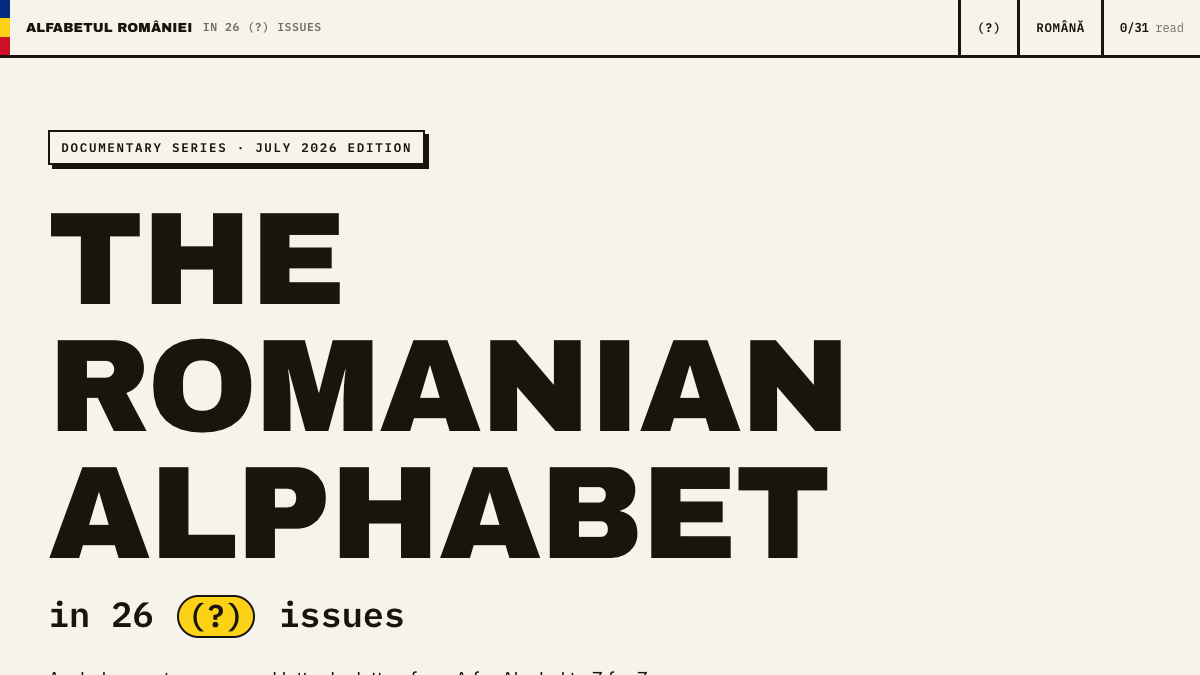
The Turkish words in Romanian: which left the books, which stayed in the house

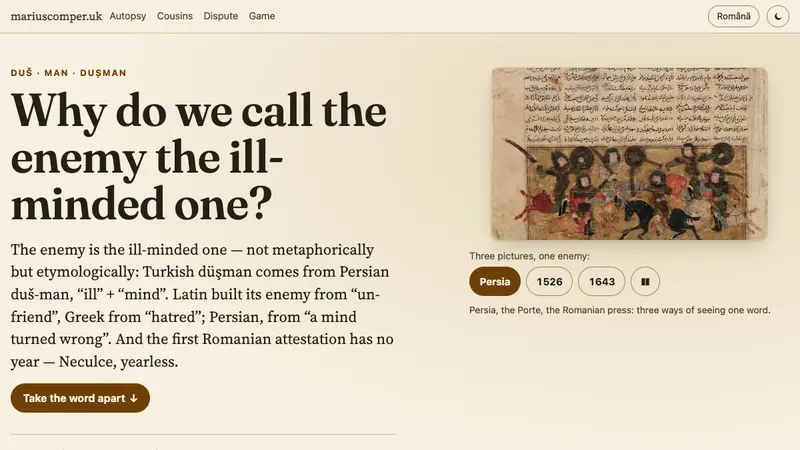
All 1,091 Romanian words that came from Turkish and Tatar, on a sheet of live ebru marbled paper: each blot of ink is a word, sized by how often it appears in Romanian books of 1850–1949 and in today's films. Between 1850 and 1925 the words of the state fell in Romanian books by 60–74%, whatever their language, Turkish, Greek, Hungarian or Slavic; the words of the house and the table stayed. With a false-friends game between Turkish and Romanian, the Turks and Tatars of Dobruja commune by commune, and five centuries of history. In Romanian, English and Turkish.

Editions: RO EN TR

Language & wordsGames & tests

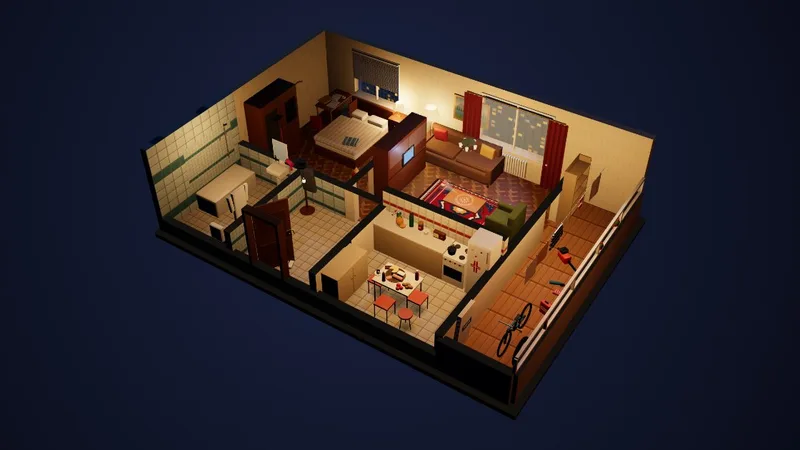
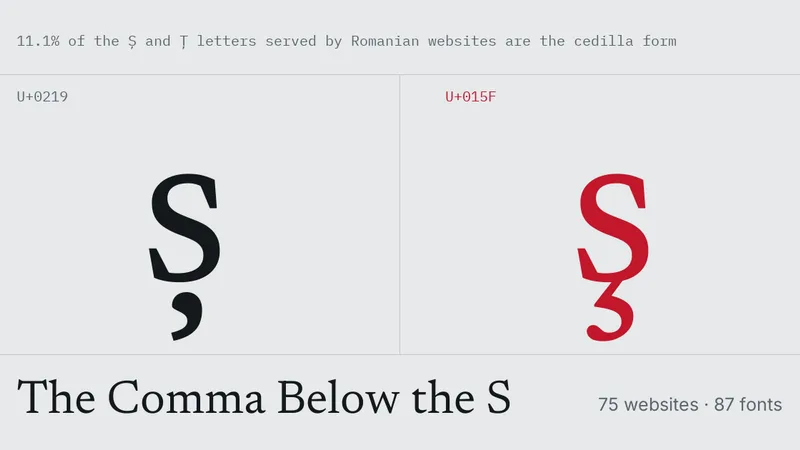
Romanian words with strange origins: the sofa is a mosquito net, the bulb a beak, the plasterboard hides a city

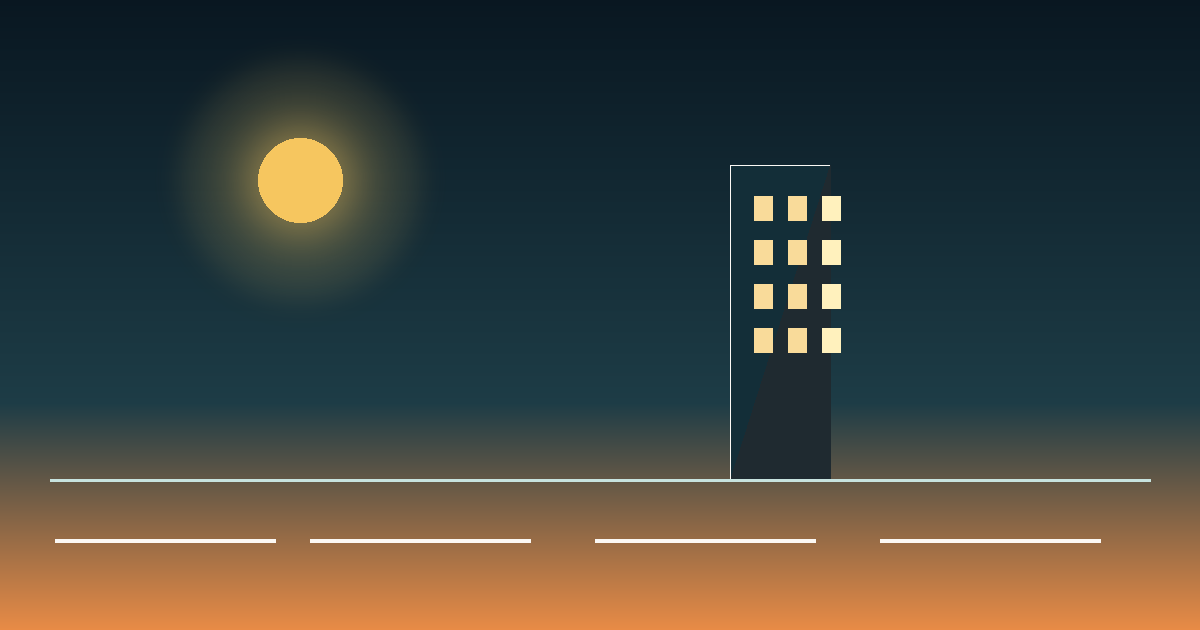
A drawn Romanian block flat at night, lamps lit, in which you tap the objects to see where their names came from: 73 words born of people (a French hatter in Bucharest), places (Faenza, Genoa, Riga), brands (a Soviet chainsaw called Friendship), mistakes and very distant languages, each checked in Romanian dictionaries and, for each foreign step, in a reference work. With the count from DEX ’98: 42 words that are the very name of a person or a place, 15 of them from Romania itself. In Romanian and English.

Editions: RO EN

Body & healthInvestigations & audits

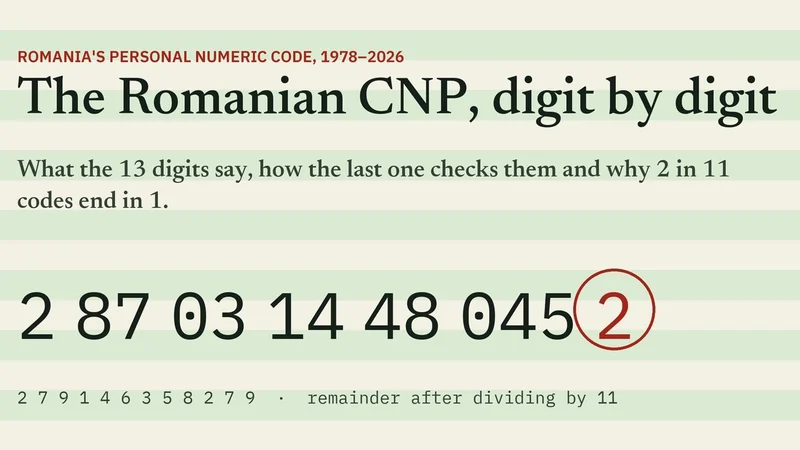
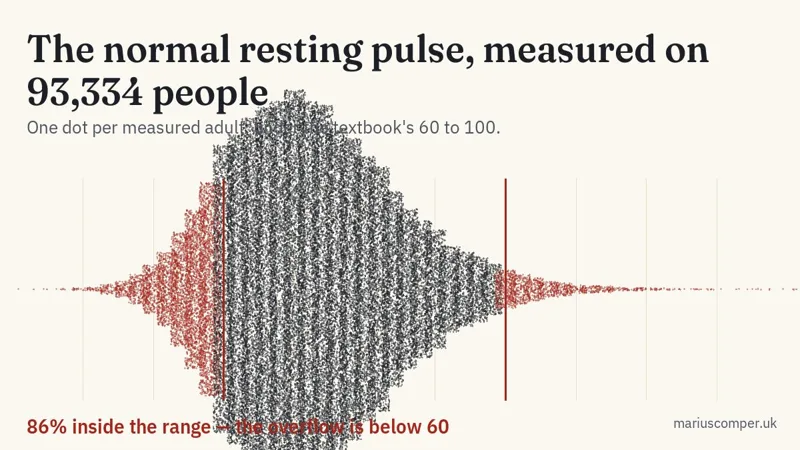
The normal resting pulse: 50,249 measured adults against the 60 and 100 limits

The United States health examination survey measured 93,334 people's pulses by hand, seated, between 1999 and 2018. Plotted one dot per adult, 86% fall inside the conventional 60–100 range, and about four of every five outside it are below 60: 15.3% of men rest under the 'slow' fence, and the middle of the crowd sits at 70 (men) and 74 (women). The 50–90 range proposed by cardiologist David Spodick in 1996 and never adopted holds about 92% of adults. Measure your own pulse on the page and see it among people your age.

Editions: RO EN

HistoryArticles & explanations

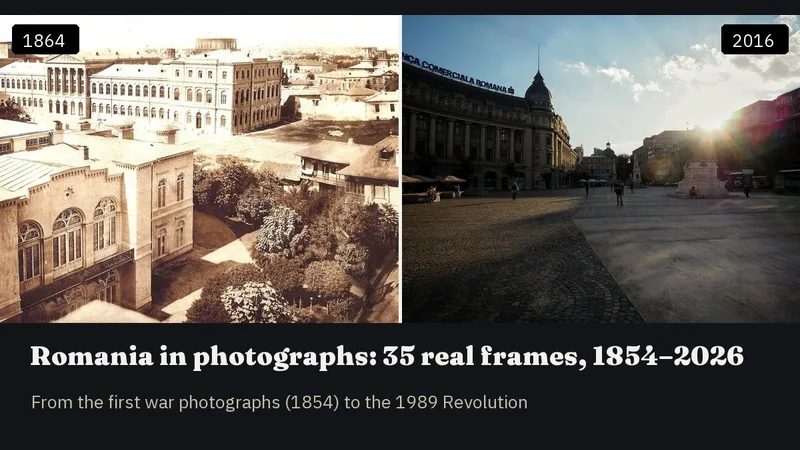
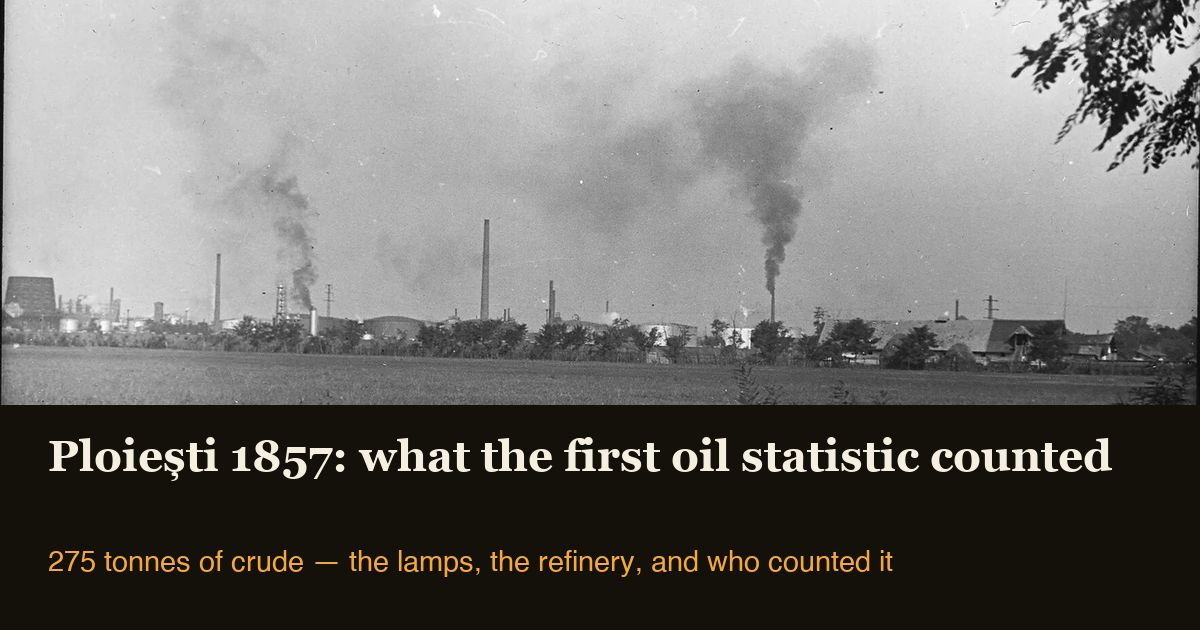
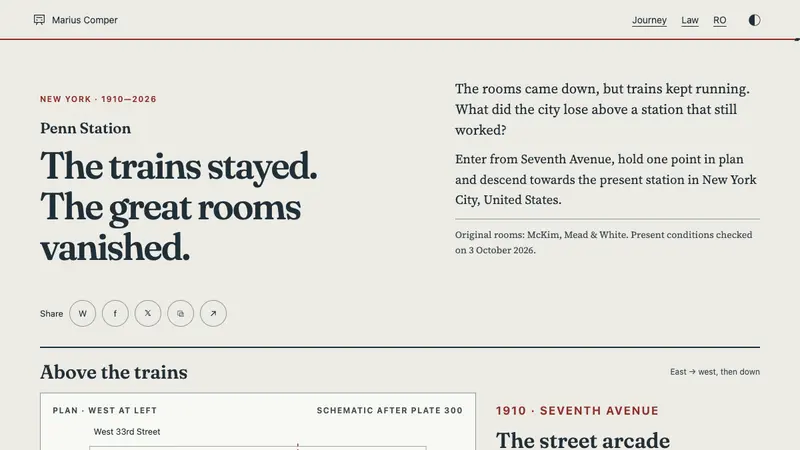
Romania in photographs: 35 real frames, 1854–2026

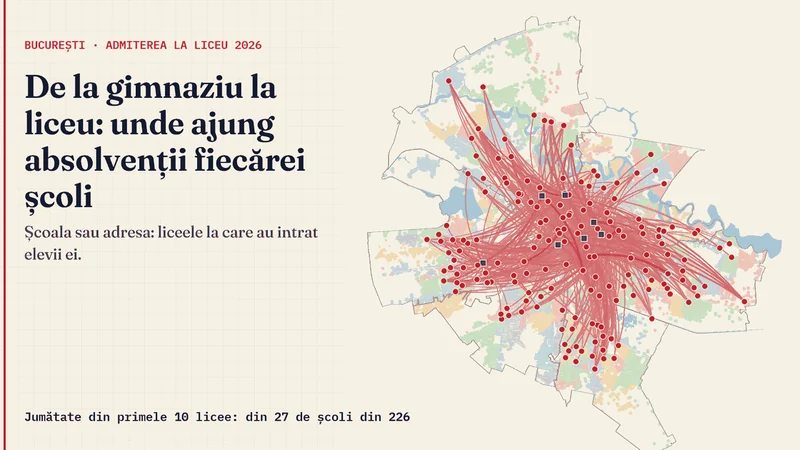
Scroll, and 172 years run past: pioneering war photographs from Oltenița in 1854, the only photographer of the Great Union, Berman's Bucharest, Ploiești seen from the bombers, Ada Kaleh before it drowned and Timișoara in December 1989. University Square appears in 1864 and 2016, face to face. All 35 photographs are real and freely reusable, with maker and licence under each. In Romanian and English.

Editions: RO EN

Language & wordsGames & tests

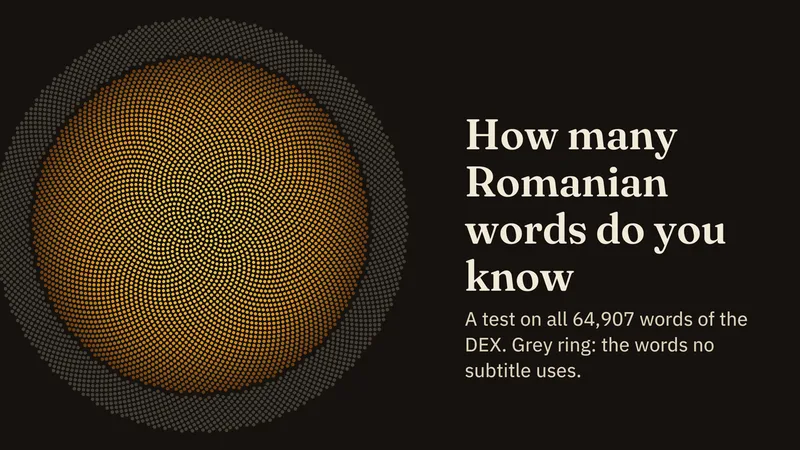
How many Romanian words do you know

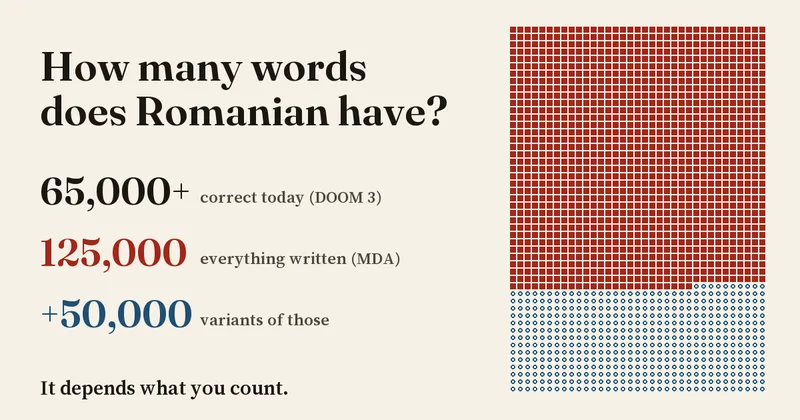
A two-minute Romanian vocabulary test: of 125 words (100 drawn at random from the DEX, 25 invented) you tap the ones you could explain and learn how many of the dictionary's 64,907 words you know, with a margin of error. The dictionary is drawn as a sunflower: the commonest words at the centre, and at the rim the 20,825 that never occur in 332 million words of subtitles. Creangă, Eminescu, Rebreanu and the Constitution sit on the same flower. For native speakers, heritage speakers and learners.

Editions: RO EN

Language & wordsGames & tests

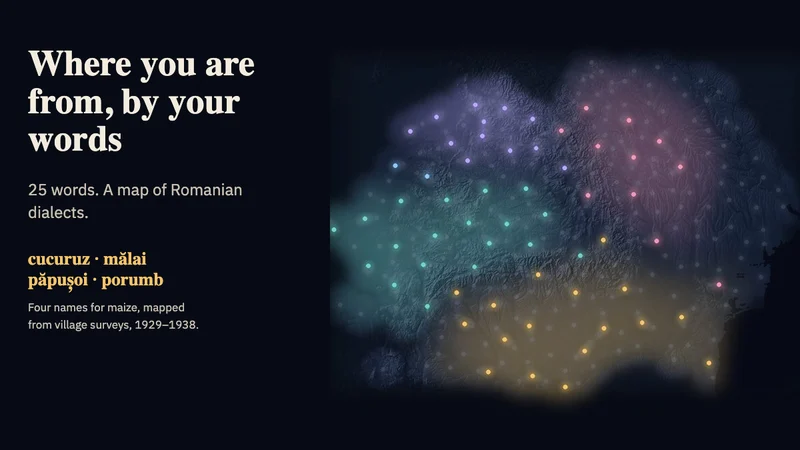
Where you are from, by your words

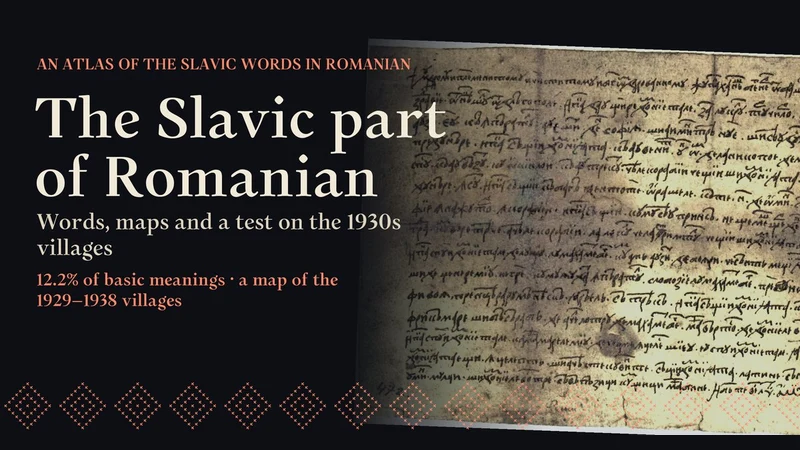
What do you call corn, a bucket, a grandfather? Answer 25 questions and the quiz places you on the Romanian linguistic atlas, surveyed village by village in 1929–1938, and says how sure that can be. Its error is measured: a median 32 km on village pairs hidden from the model, 70 km on 28 Bukovina speakers recorded in 2016–2017 (ALAB). Old words have not died, but many speakers now give only the school word. The quiz needs Romanian; the English edition explains the method.

Editions: RO EN

Nature & planetMaps & data atlases

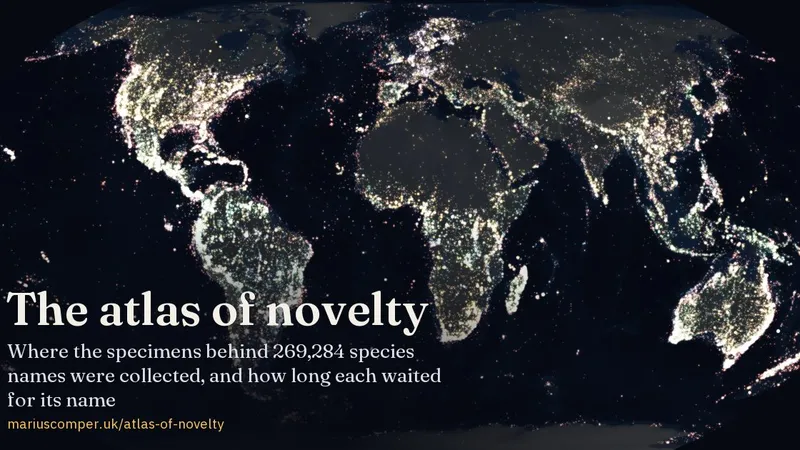
The atlas of novelty: where the specimens behind 269,284 species names were collected, and how long each waited for its name

Each light marks the recorded collection place of a holotype in GBIF, the specimen its species name rests on. The atlas maps 269,284 names from the holotype sample, from 1753 to today; syntypes and other categories of name-bearing type material are not included. The years run across the map, and specimens light up only when their species gets a name. Half waited at least 8 years, and the typical wait grew from 4 years for names published in 1900–1909 to 10 for those of 2000–2009. Pick any place to see what was named from there.

Editions: EN RO

Anthropology & societyInvestigations & audits

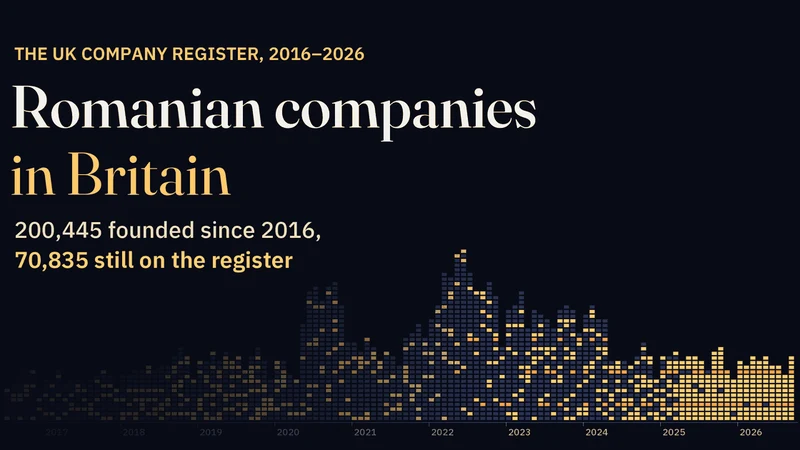
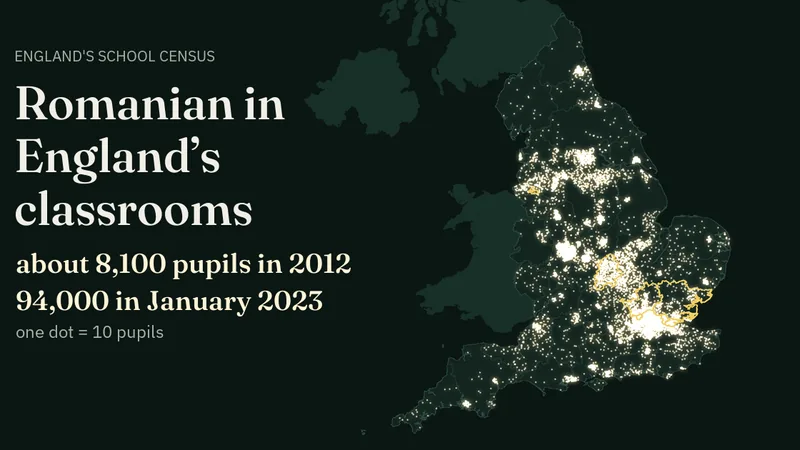
Romanian companies in the UK: 200,445 founded since 2016, and how many are left

Each window on a street of lights is a group of companies formed in Britain since mid-2016 with an owner of Romanian nationality, lit while the company is still on the register: 200,445 companies, 70,835 still there. Two waves, in 2020 and 2021–22, bring about a quarter of them, and only 16.2% of those remain, against 32–37% of all companies formed in the same months. The cause is not known. Pick your council to see its own street.

Editions: EN RO

Nature & planetMaps & data atlases

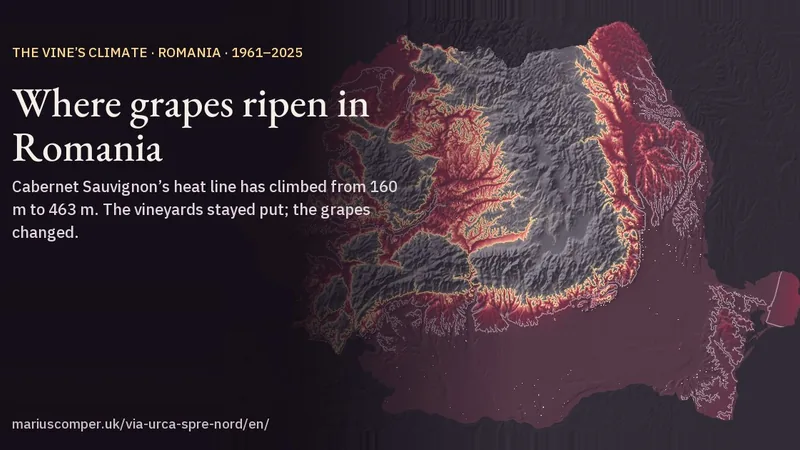
Romania’s vineyards and the heat: where each grape can ripen, 1961 to today

The height up to which Cabernet Sauvignon gets the heat it needs in 8 summers out of 10 has climbed on Romania’s hills from 160 m to 463 m. On the country’s real relief, the heat line of each grape climbs year by year from 1961 to 2025. The vineyards stayed where they were; in the young vines the varieties changed, towards reds. Find any Romanian commune and see which grapes ripen there now and which ripened in the 1960s.

Editions: RO EN

Nature & planetMaps & data atlases

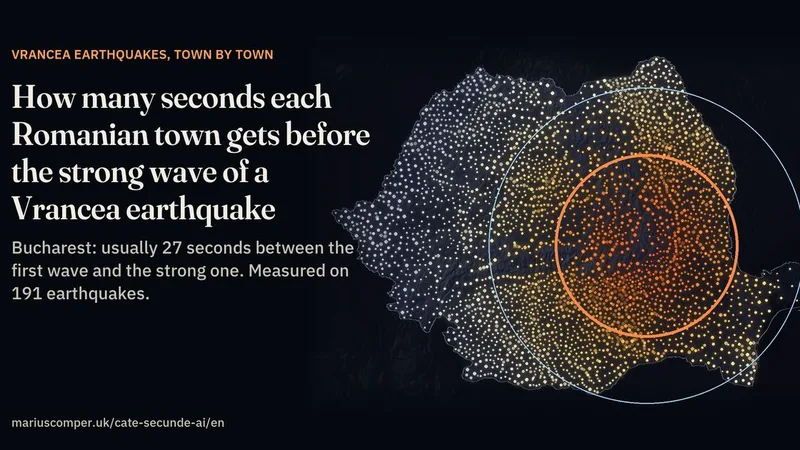
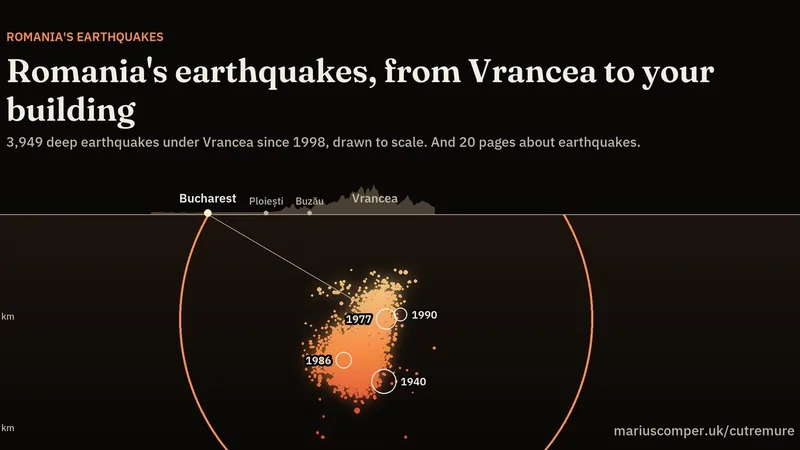
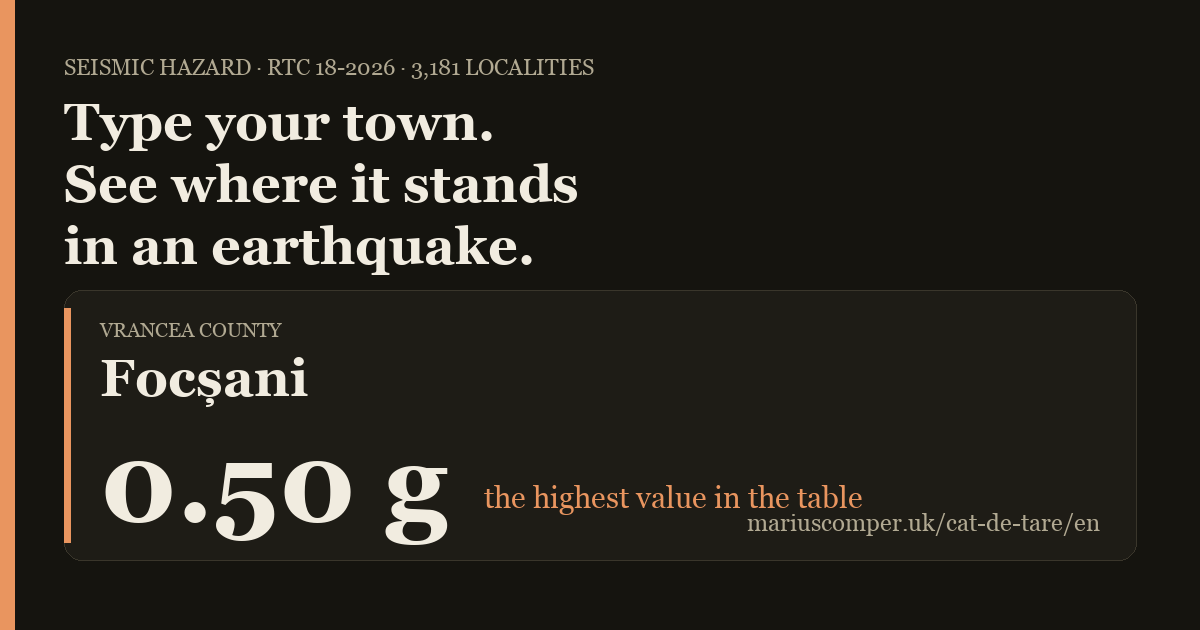
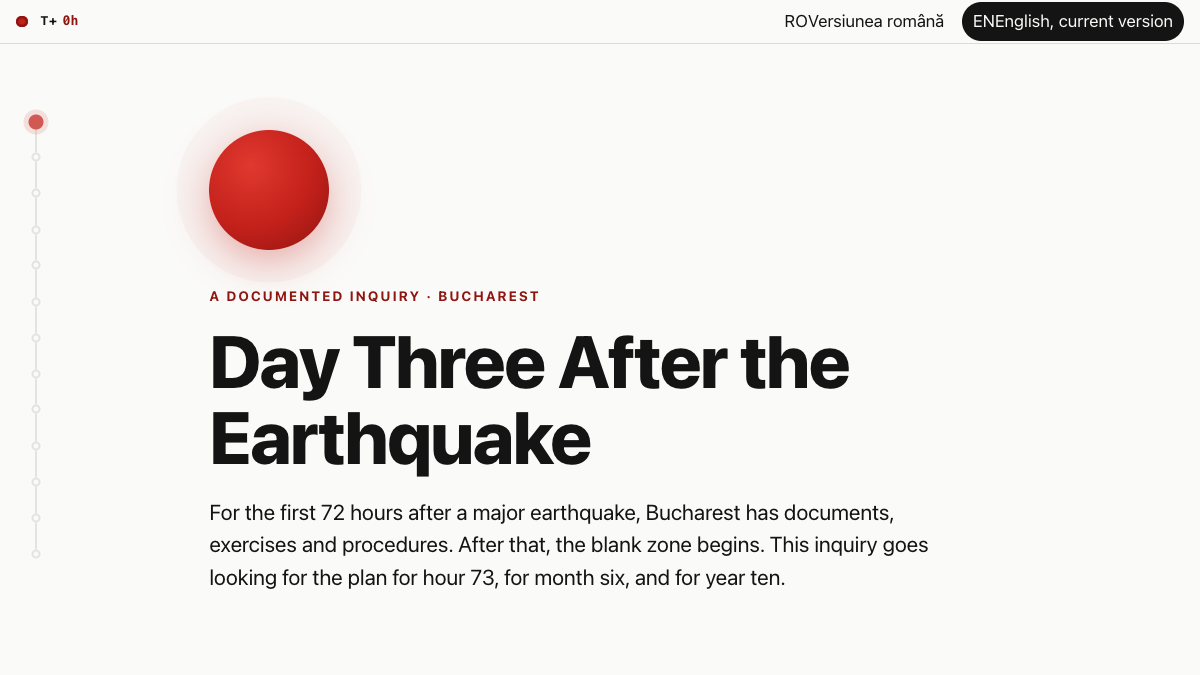
Romania's earthquakes: Vrancea, Bucharest, 1977 and your building

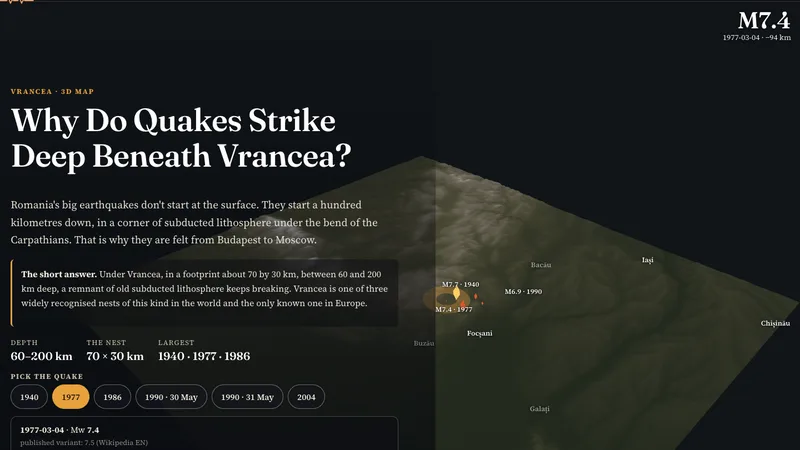
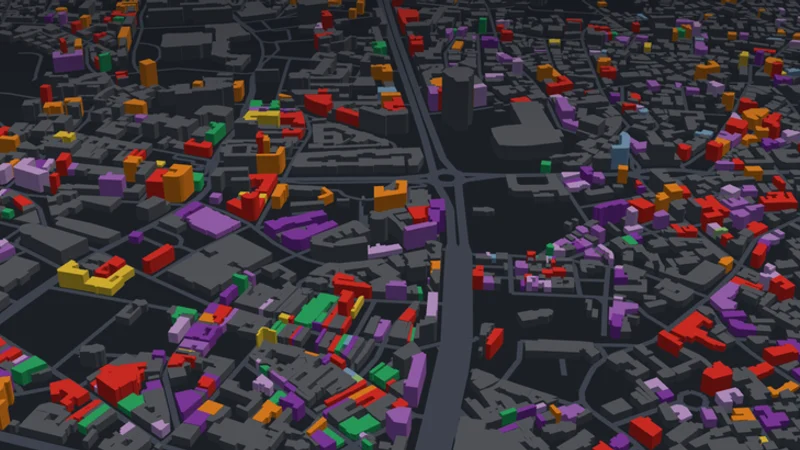
Every deep Vrancea earthquake EMSC has located since 1998, drawn to scale on a section to Bucharest, with rings for the large quakes of 1940, 1977, 1986 and 1990 and their waves. Below it, every page about earthquakes, from Bucharest's red-dot buildings and the 1977 earthquake to how many seconds you get before the strong wave, with short answers to the most searched questions.

Editions: RO EN

Nature & planetSimulations & models

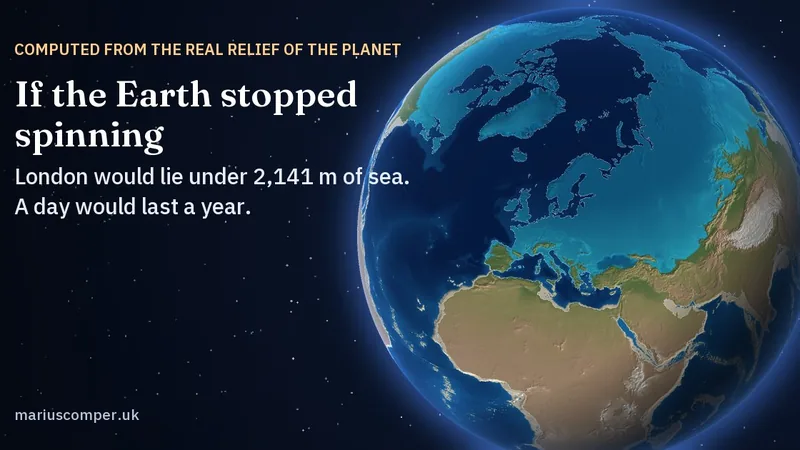
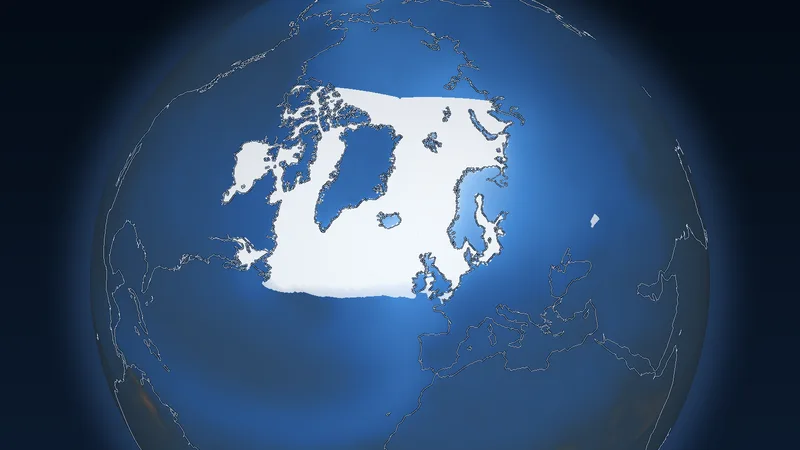
If the Earth stopped spinning, the oceans would run to the poles and most of Europe would go under the sea

Without the spin the seas would run to the poles: Siberia, Canada and most of Europe would go under, while the tropics gained land. Computed from the planet's real relief, with rock that flexes as the Earth's does, for any town. The famous map of a single equatorial continent appears only if the sea is made a sphere: three oceans would still cross the equator. And the Sun would rise in the west, once a year.

Editions: EN RO

Nature & planetSimulations & models

If the Atlantic current collapsed: what happens to Europe's winters, the sea ice and the rains

In a global climate model, fresh water added slowly to the North Atlantic made the current that warms Europe collapse. Year by year: March sea ice comes down into the English Channel, the sea on the American coast rises by about 80 cm, and the rains move south. The famous 2065 forecast, re-run and tested inside the model itself: close to the tipping point it hit, a century before it its forecasts spread over five centuries. And your own town, month by month.

Editions: EN RO

Anthropology & societyMaps & data atlases

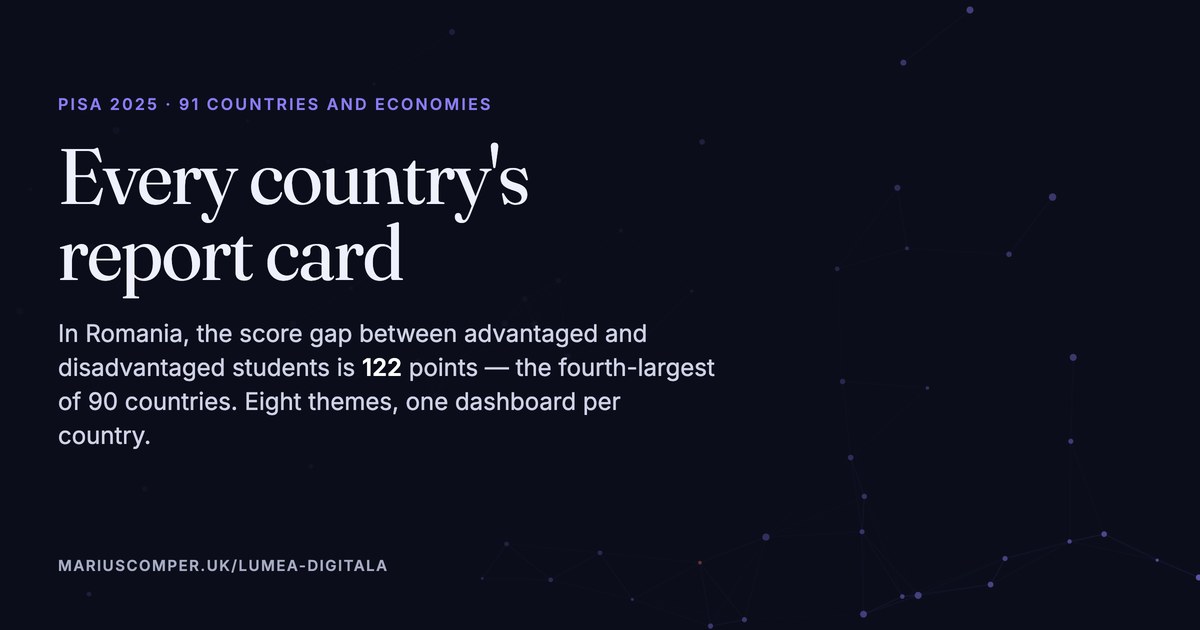
PISA 2025: every country's report card

PISA 2025, across eight themes — performance, socio-economic equity, gender, AI and digital, engagement, climate, family, environment — for 91 countries and economies. Romania has one of the largest socio-economic gaps among participating education systems (122 points), despite strong family support and above-average AI-literacy teaching. Pick any country and see its own dashboard.

Editions: RO EN

Physics & mathematicsSimulations & models

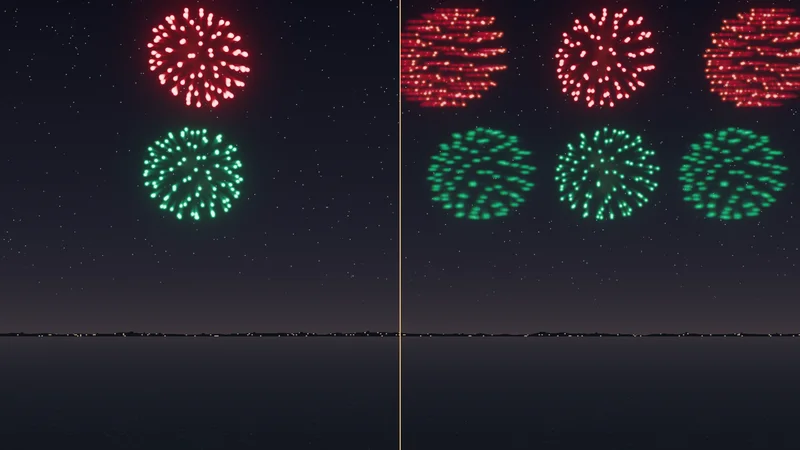
Firework colours: what makes red, green and blue, and why blue is the hardest

A live fireworks show over water, drawn from the published band tables of strontium, barium, copper and sodium. Put on diffraction glasses and every spark splits into its bands: two almost identical reds come apart, a blue burning too hot turns pale, a pinch of sodium turns red orange. Make your own shell, send it, and name the metal from its copies. In English, Romanian, Spanish and Chinese.

Editions: EN RO ES ZH

Security & geopoliticsSimulations & models

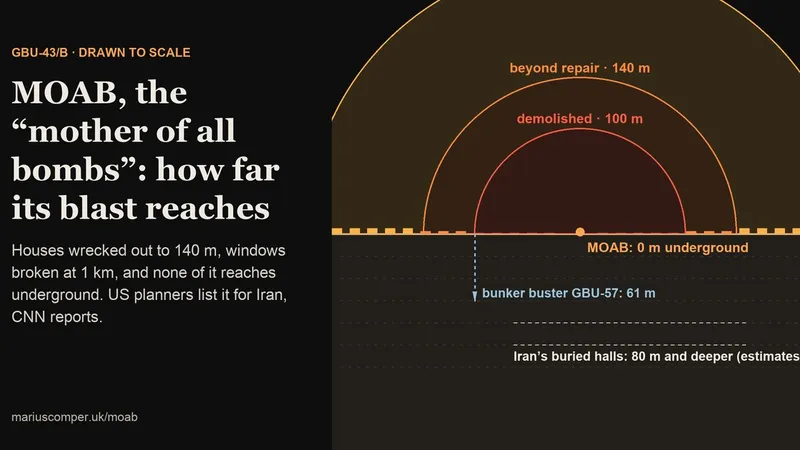
MOAB, the “mother of all bombs”: how far its blast reaches, and what it cannot reach

US war plans for Iran include the GBU-43/B, CNN reported on 15 October. It has been dropped in war once, in Afghanistan in 2017. It holds 8.5 tonnes of explosive, more than any other American non-nuclear bomb in service, and it bursts just above the ground. Here it is drawn to scale: the bomb, its blast, and the rock it cannot get into.

Editions: EN RO

Physics & mathematicsSimulations & models

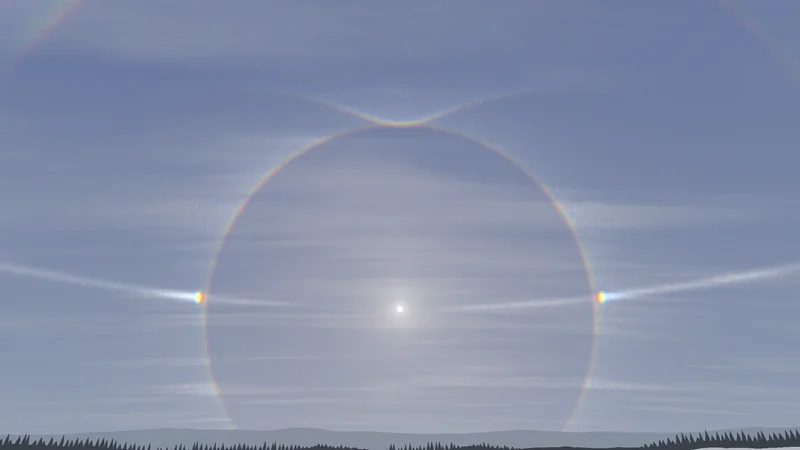
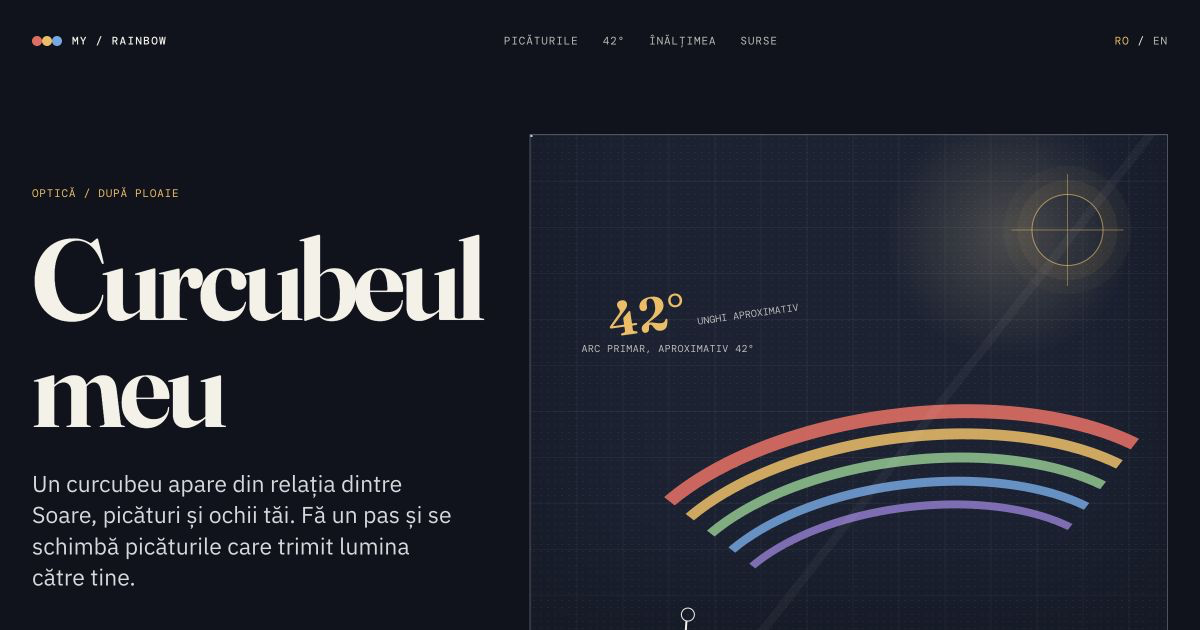
Halo around the Sun: why the ring is 22°, and what makes sundogs and the upside-down rainbow

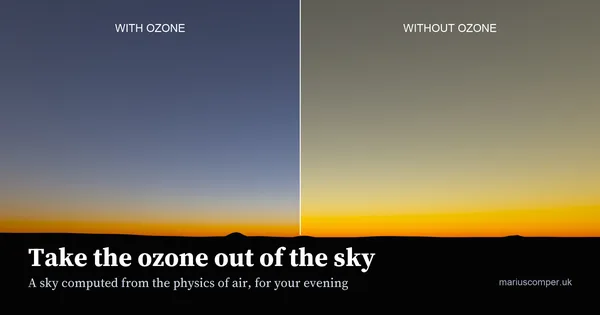
The ring around the Sun is always 22°, because every ice crystal that makes it is a six-sided prism. In a sky traced ray by ray, millions of rays a second, watch the ring, sundogs, the upside-down rainbow and the “fire rainbow” form from the plates and columns of ice you choose. Then pick your town to see on which days and hours each arc is possible there, and send its sky to someone.

Editions: EN RO ZH

Nature & planetMaps & data atlases

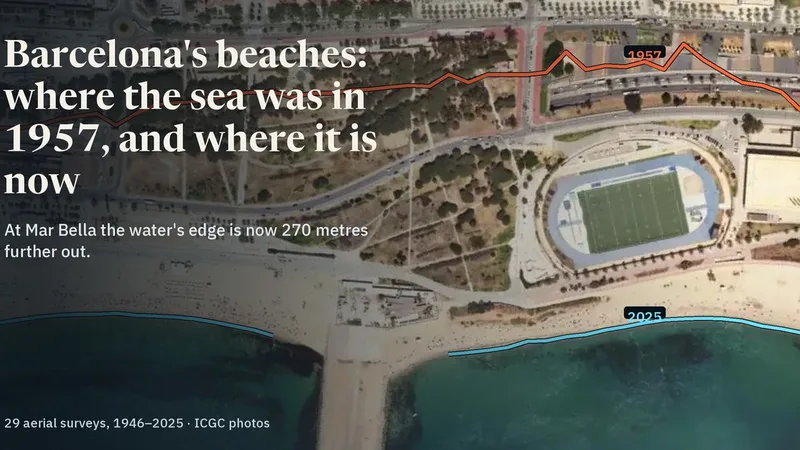
Barcelona's beaches: where the sea was in 1957, and where it is now

The water's edge on nine Barcelona beaches, measured every 20 metres on 29 aerial photos, 1946–2025. At Barceloneta the sea is where it was in 1957; at Mar Bella it is 270 metres further out. Across the nine beaches, the sand added in 2010 was gone within about a decade. The coast unrolled into one strip, year by year, and every beach with its own width. In Romanian, English, Spanish and Catalan.

Editions: RO EN CA ES

Film, music & artSimulations & models

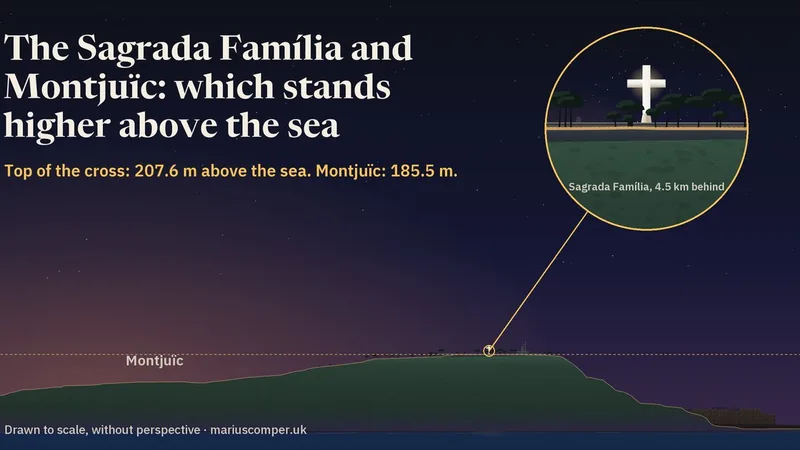
The Sagrada Família and Montjuïc: which stands higher above the sea

The Tower of Jesus Christ is 172.5 m tall from the floor, just under Montjuïc, as the basilica says Gaudí intended. Above sea level, the top of its cross stands at 207.6 m, 20–22 m above the hill’s highest ground. A drawing to scale, year by year from 1882, and the basilica in your family’s birth years. In Romanian, English, Spanish and Catalan.

Editions: RO EN CA ES

Nature & planetSimulations & models

Why does rain smell? The bubbles, the bacteria and the word petrichor

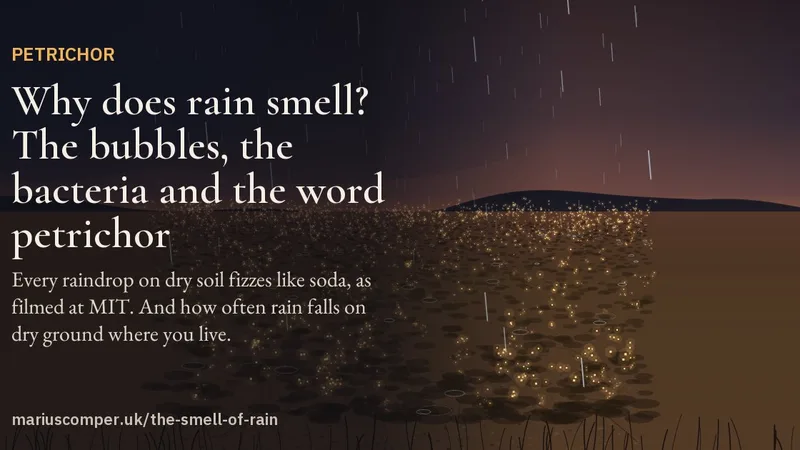
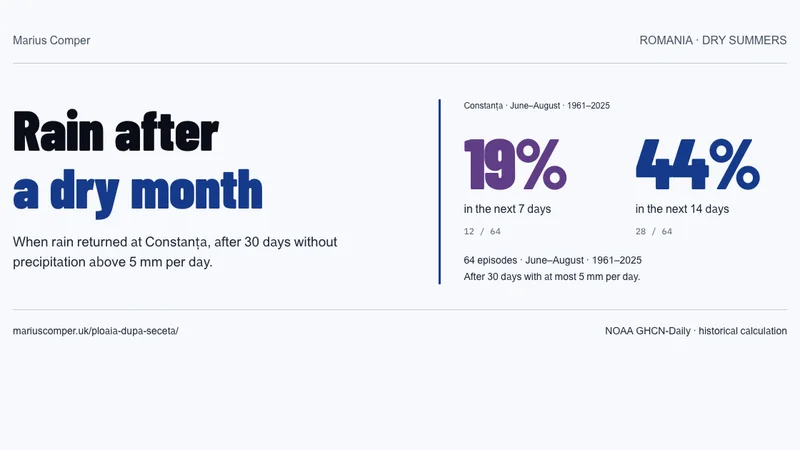
The first drops on dry ground fizz like soda: air from the soil bursts through the drops and throws a spray of tiny droplets into the air, as filmed at MIT. Try it on clay, sand and wet ground, learn where the earthy note comes from (geosmin, made by soil bacteria, which draws springtails) and how often rain falls on dry ground where you live. In English and Romanian.

Editions: EN RO

Government, money & public lifeMaps & data atlases

Bicing and the hill: why Barcelona’s shared bikes end up by the sea

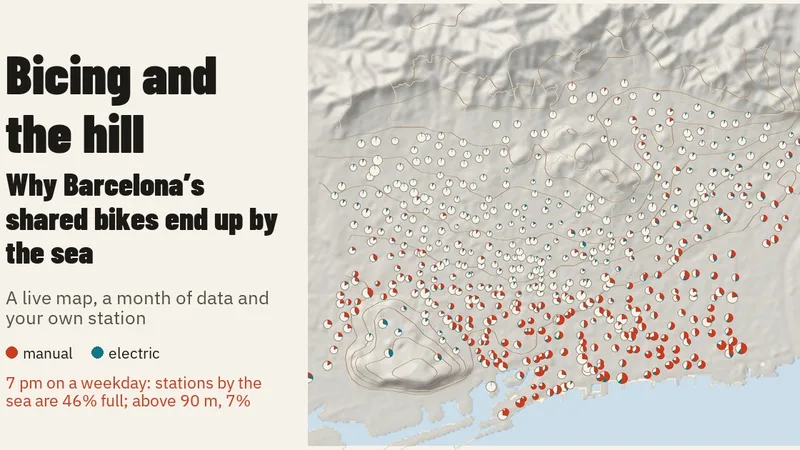
Barcelona climbs from the beach to Collserola, and Bicing bikes roll down. A live map of every station, turned with the sea at the bottom: on every day of September 2026 at 7 pm, stations below 20 metres were 5.5 to 14.1 times fuller than those above 90 metres. A five-station slope model, the day hour by hour, the test that separates the hill from the centre, and your own station. In Romanian, English, Spanish and Catalan.

Editions: RO EN CA ES

Mind & perceptionMaps & data atlases

Predicting the future, from bones cracked in fire to computers: how far ahead each method can see

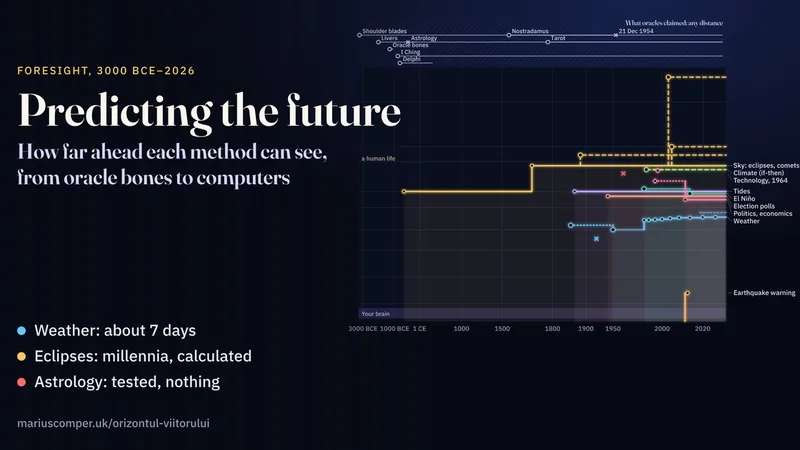
Every way people have tried to see the future, on one chart of 5,000 years: oracle bones, livers, Delphi, astrology, tarot, calculated eclipses, weather forecasts (4.4 days in 1986, about 7 now), polls, superforecasters and AI, each with its test. Plus a deck of 33 cards, a horoscope that tests you, and 75 RAND forecasts from 1964 checked one by one. In Romanian, English and Spanish.

Editions: RO EN ES

Anthropology & societyMaps & data atlases

How Japan rebuilds its homes, and what Europe could copy

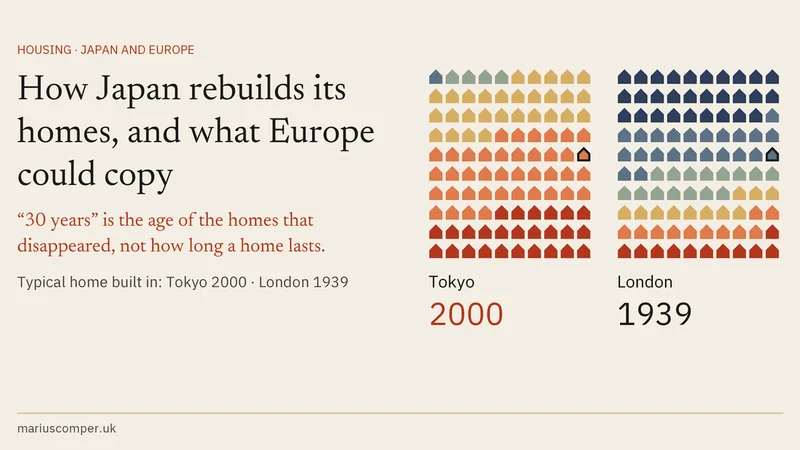
“30 years” is the age of the Japanese homes that disappeared, not their lifespan: half of Tokyo’s 1970s homes are still lived in. The age of homes in eight cities, why Japanese houses lose their value, the blocks that almost never get rebuilt and, step by step, what happens to tenants and owners if their building came down in Tokyo, London, Barcelona, Vienna, Berlin, Amsterdam, Bucharest or Cluj. In Romanian, English, Spanish and Catalan.

Editions: RO EN CA ES

Nature & planetArticles & explanations

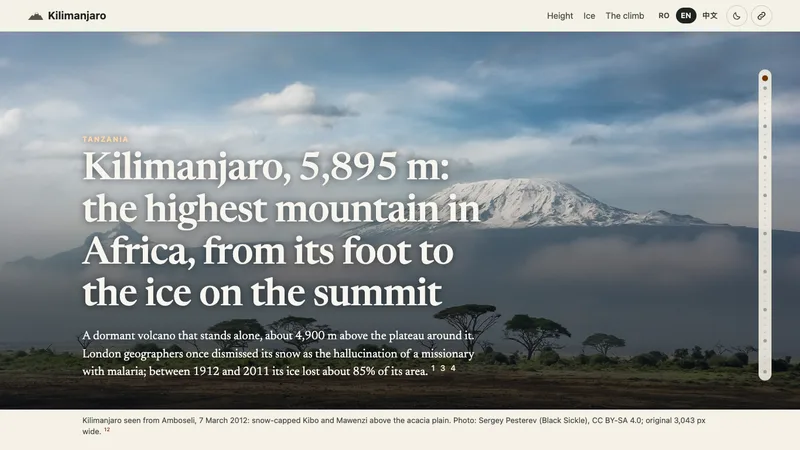
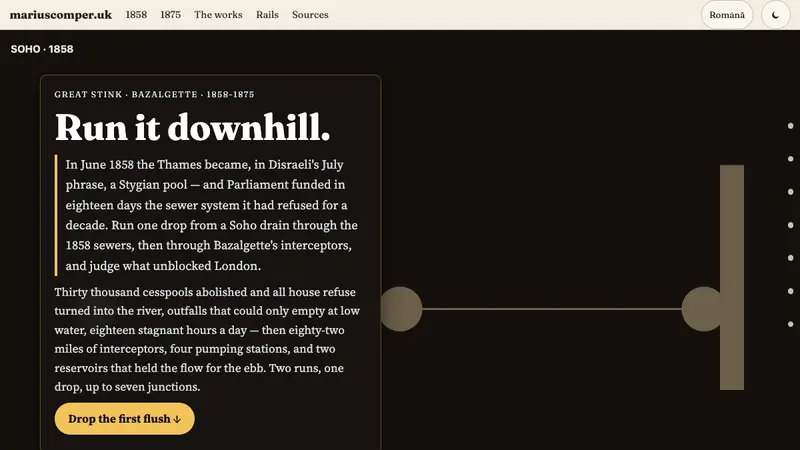
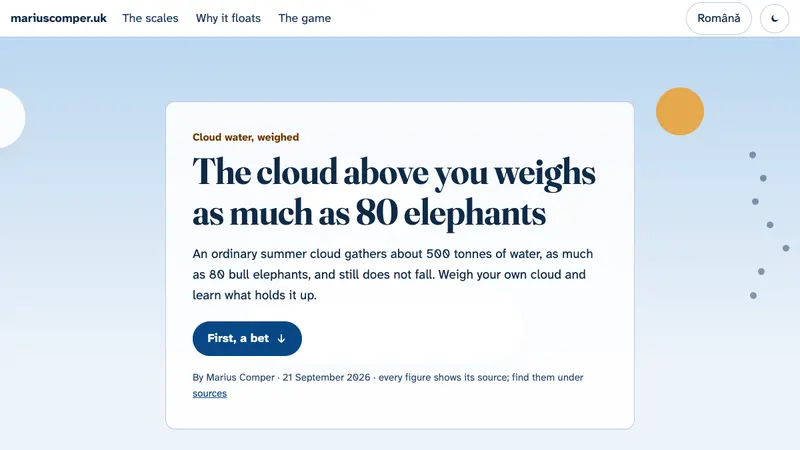
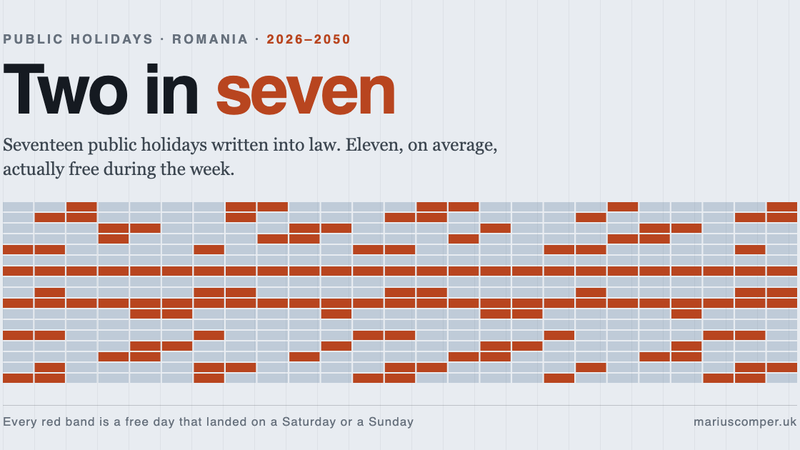
Twenty-Seven Seconds, Then Silence

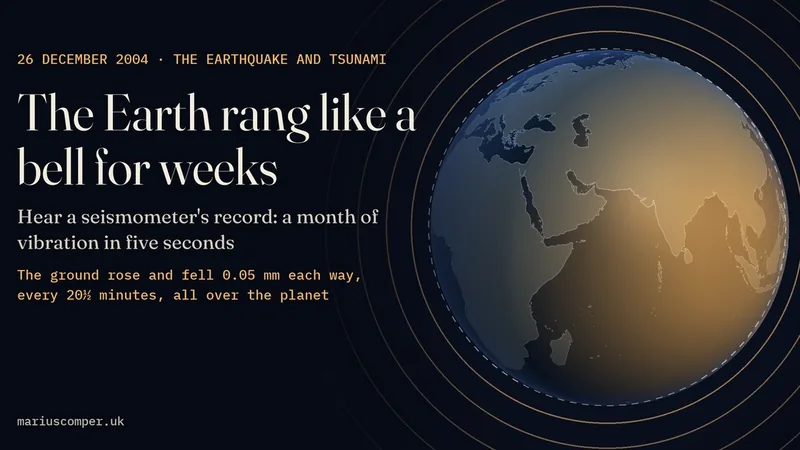
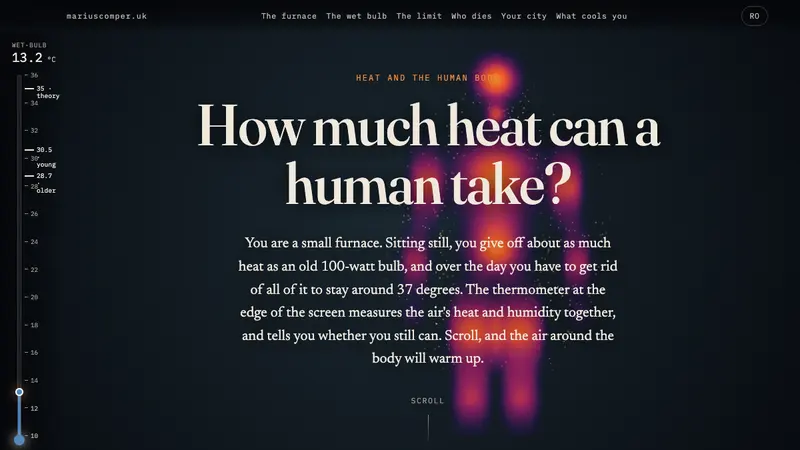
27 leap seconds kept the world's clocks aligned with Earth between 1972 and 2016. None since: the planet has entered a decade spinning faster, on average, than any other on direct record, and 5 July 2024 is the shortest day ever measured. On 15 October 2026 in Versailles, the CGPM adopted Resolution 5: UTC becomes continuous on 20 May 2027, when the maximum permitted |UT1−UTC| rises to 3,600 seconds; the current 0.9-second limit remains in force until then.

Editions: RO EN

Language & wordsArticles & explanations

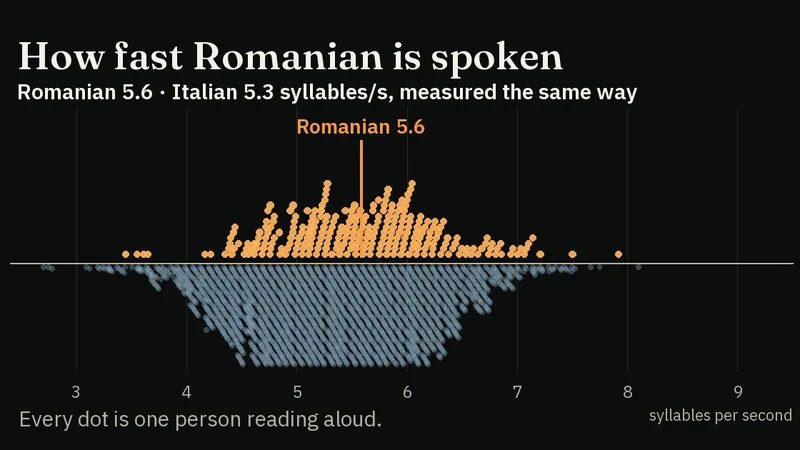
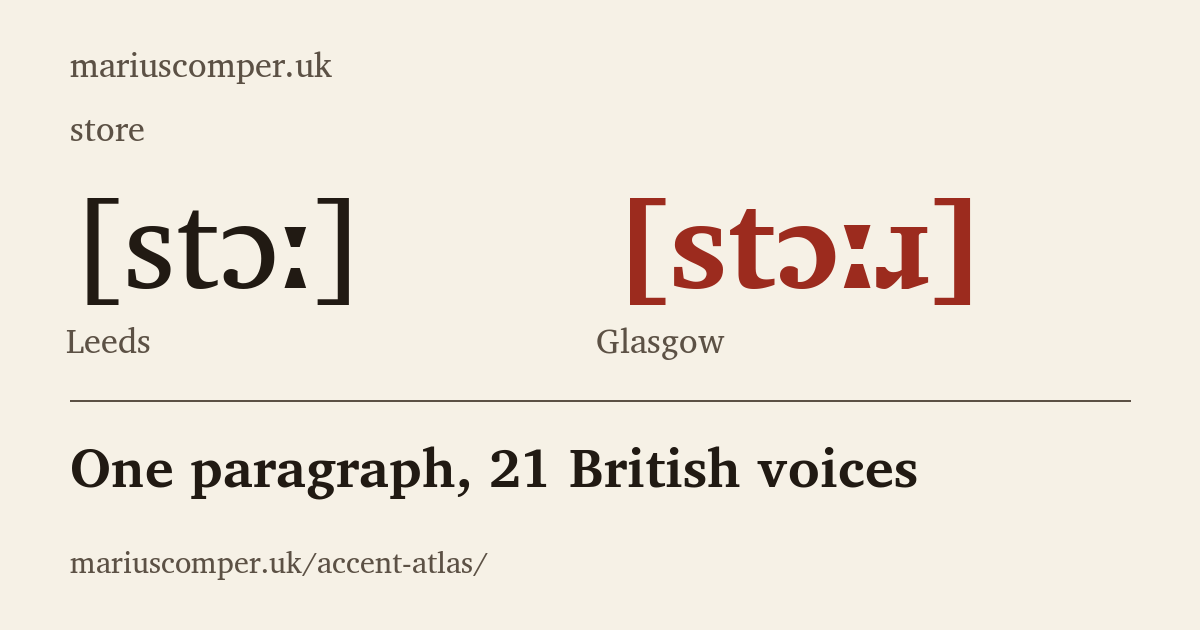
How fast Romanian is spoken: the measured pace of speech, in syllables and bits per second

Read Romanian runs at 5.6 syllables a second, measured on 265 speakers from real recordings — the same pace as Italian measured with the same ruler. Every speaker is one dot on a single line; three voices can be played, the parliamentary rung and the 2019 study's scale sit alongside without mixing, and any voice can be timed in the page at the end.

Editions: RO EN

Language & wordsMaps & data atlases

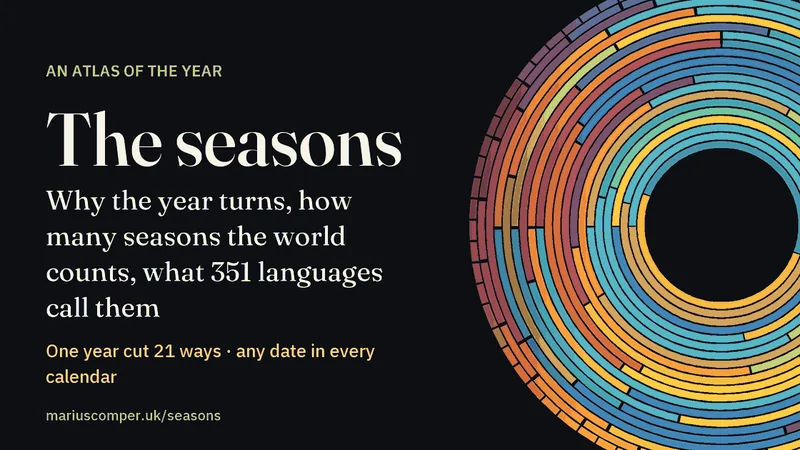
The seasons: why the year turns, how many seasons the world counts and what 351 languages call them

The sky gives the year four fixed points: two solstices and two equinoxes. People decided the rest: two seasons in Iceland’s old calendar, three in ancient Egypt, six in India, 24 solar terms in China and 72 in Japan’s old almanac. The page draws 21 calendars as rings of one year, shows why there are seasons at all, where the four words come from in 64 languages, and what the oldest text found says for eighteen stories about the turning year.

Editions: RO EN

HistoryMaps & data atlases

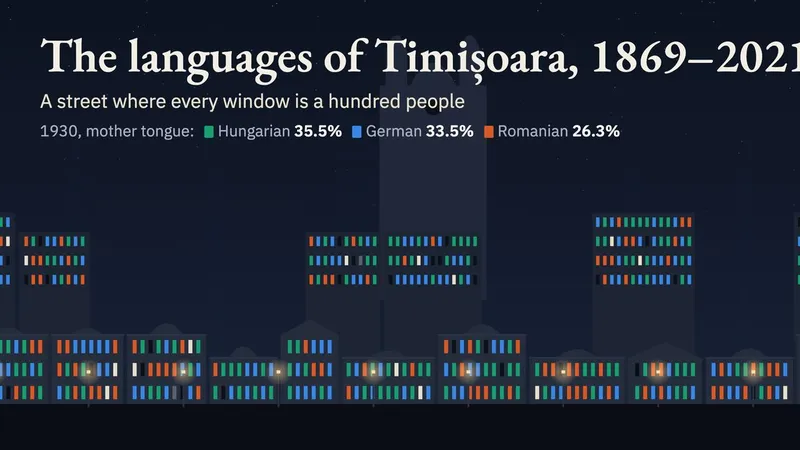
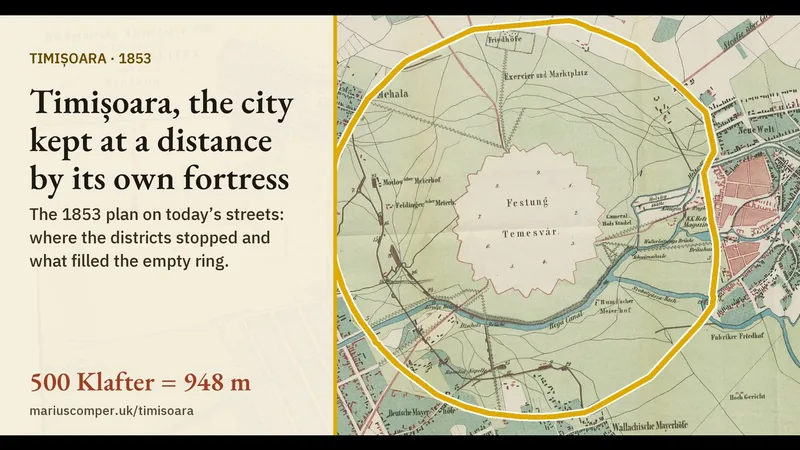
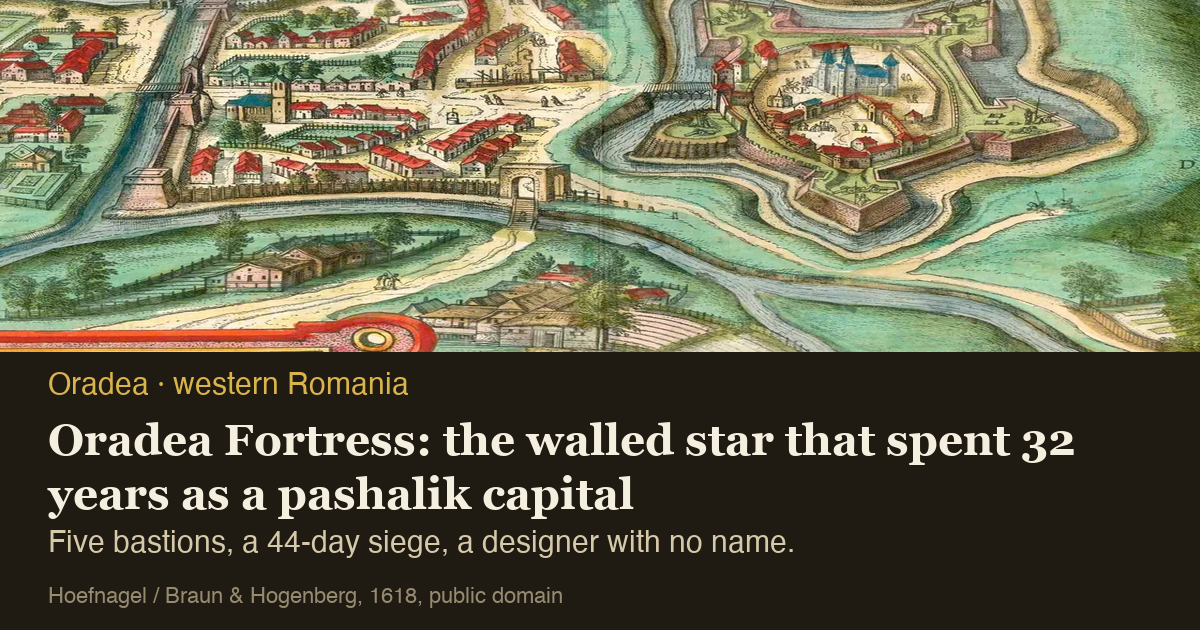
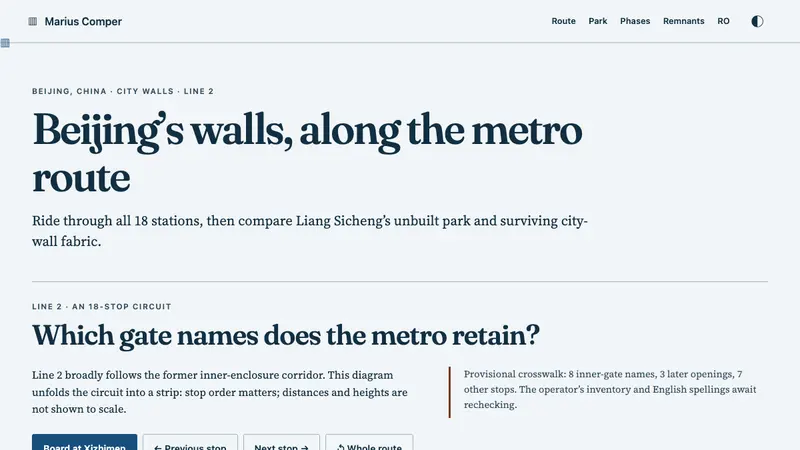
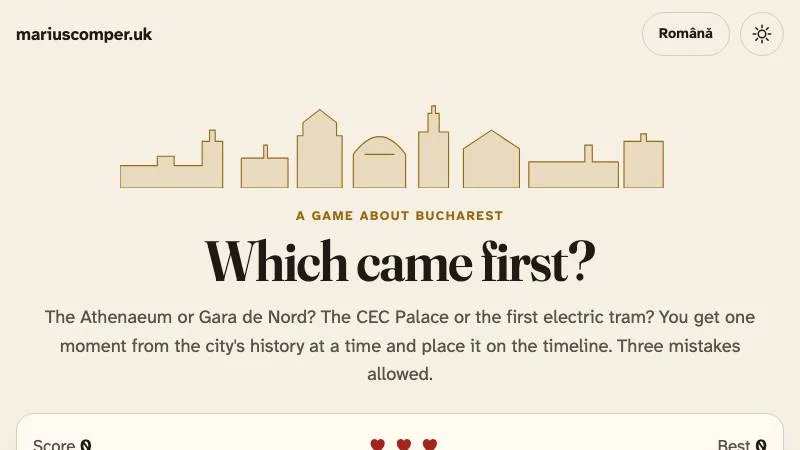
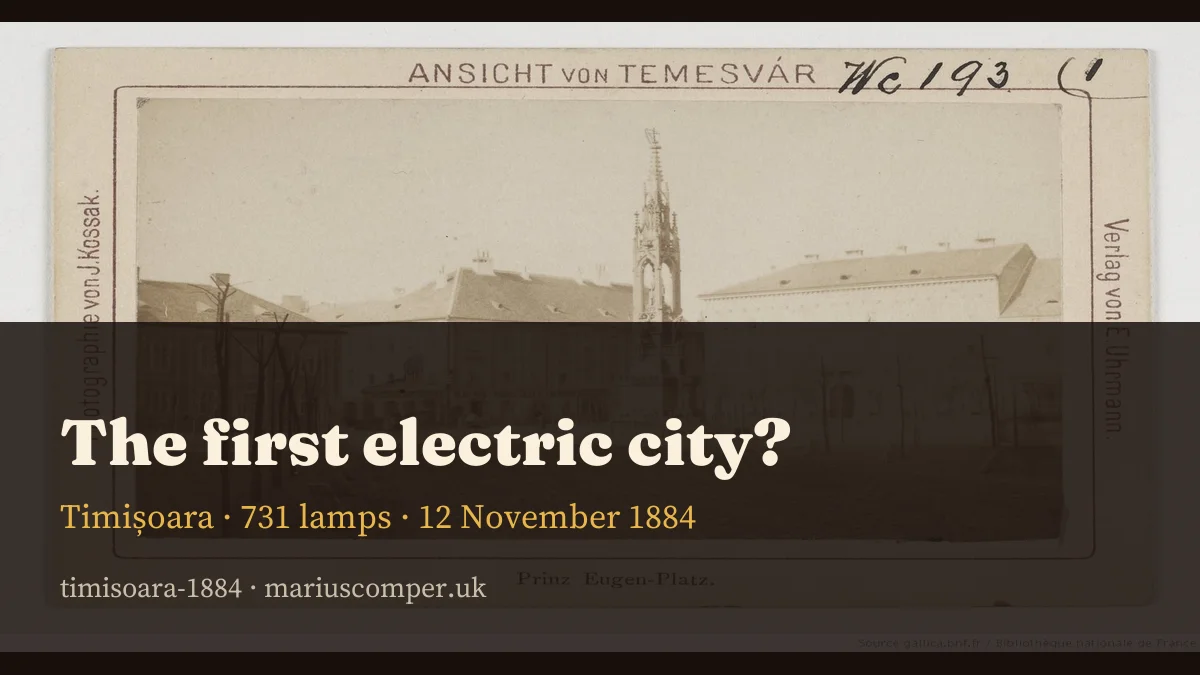
Timișoara, the city kept at a distance by its own fortress: the 500-Klafter circle on today’s map

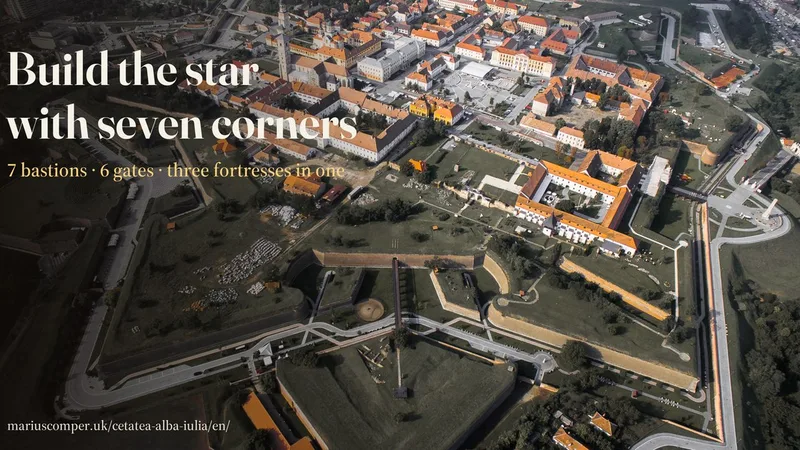
Until 1868 building was forbidden within 500 Klafter (948 m) of the fortifications of Timișoara, in western Romania. The city plan of 1853 and the star-shaped fortress of 1788, laid on today’s streets, show the circle: the suburbs of the time stop at it, the old parks round the centre lie inside it, and Fortress Boulevard still runs along its edge. For any street the page gives its distance from the wall and what was drawn there in 1853.

Editions: RO EN

HistorySimulations & models

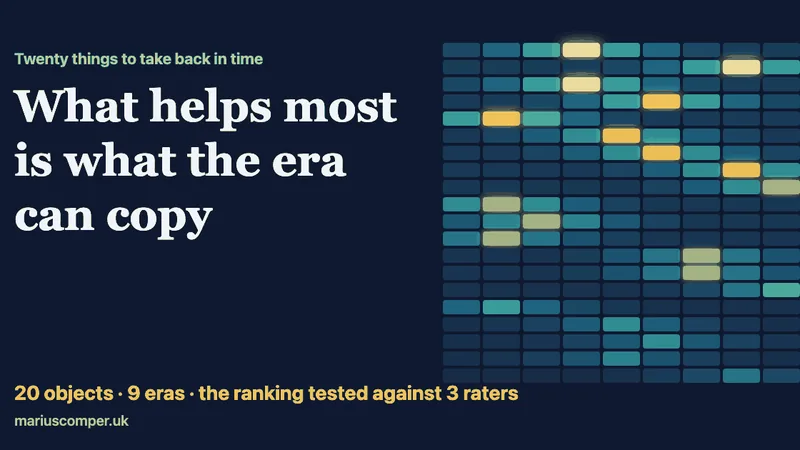
What would you take back in time? Twenty objects and the era where each does the most good

Pick an object, pick an era, watch the tunnel and get a score. Potatoes, rehydration salts and an alphabet stamp set come out on top; the lighter, the gold and the neodymium magnet at the bottom. The ranking follows whether the era can copy the object (ρ = 0.90); how fast it believes you has no link to it (ρ = −0.02). The scores are the author's judgements, checked against 5,000 random weightings and three raters who never saw them.

Editions: RO EN

HistoryMaps & data atlases

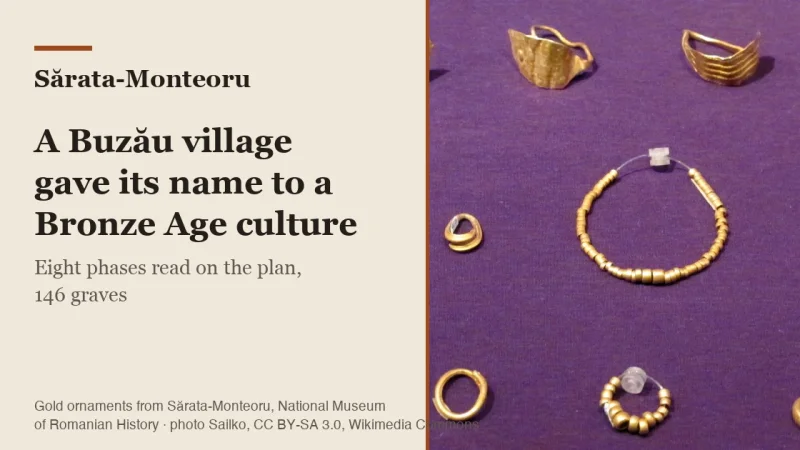
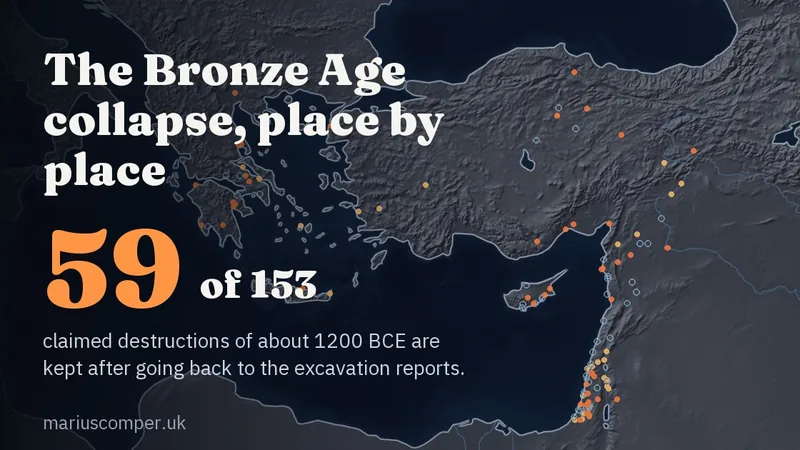
The Bronze Age collapse, place by place: 153 claimed destructions of about 1200 BCE, each with the clock that dated it

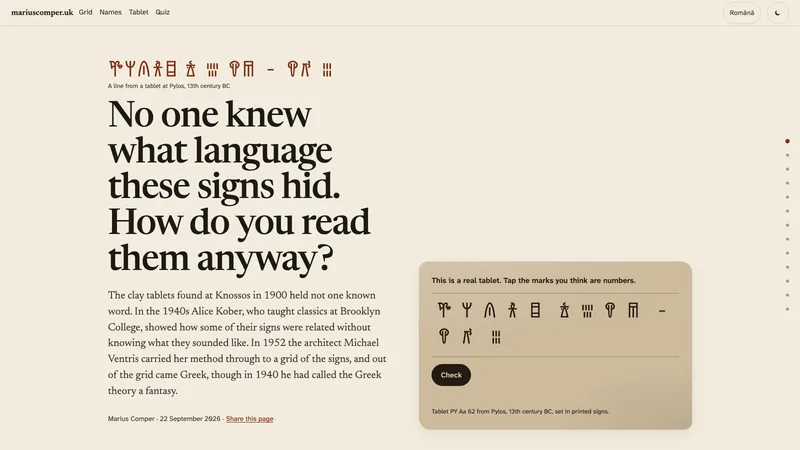
153 destructions are said to have happened at the end of the Bronze Age. Jesse Millek (2023) went back to the excavation reports and keeps 59. A relief map of the eastern Mediterranean shows all of them on a clock from 1300 to 1050 BCE and what dated each: pottery, a text, tree rings or radiocarbon. Only seven have a radiocarbon range for the destruction itself, 84 to 245 years wide; the page shows what they can and cannot say.

Editions: RO EN ES ZH

HistoryMaps & data atlases

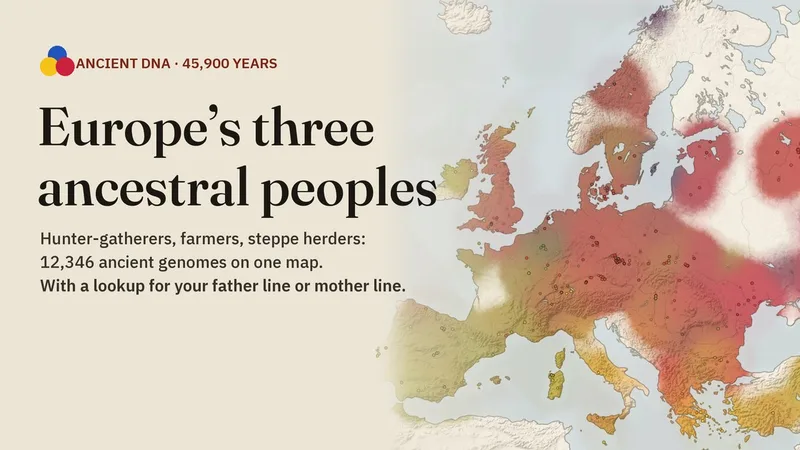
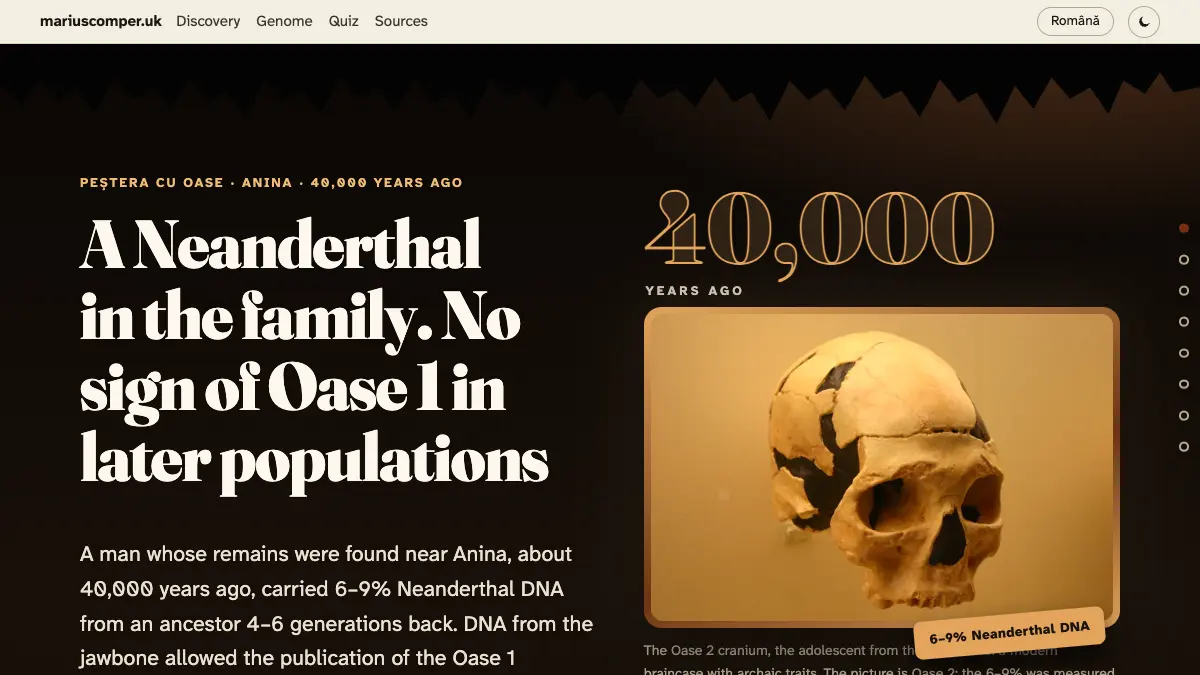
Europe’s three ancestral peoples: who they were, when they came, how much of each remains

Hunter-gatherers who were here after the Ice Age. Farmers who arrived from Anatolia about 8,500 years ago. Herders who came off the steppe about 5,000 years ago. Most people with European ancestors descend from all three. Each has its own colour on this map, shown where and when a skeleton’s DNA has been read: 12,346 people so far. With a lookup for your own father line or mother line.

Editions: RO EN

HistoryMaps & data atlases

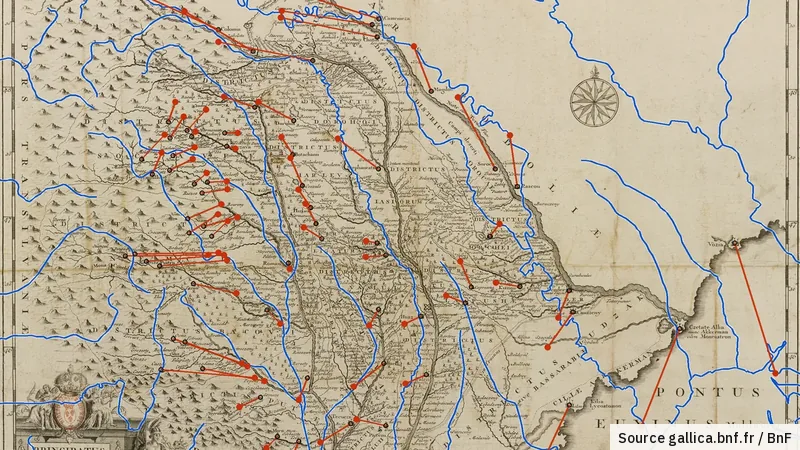
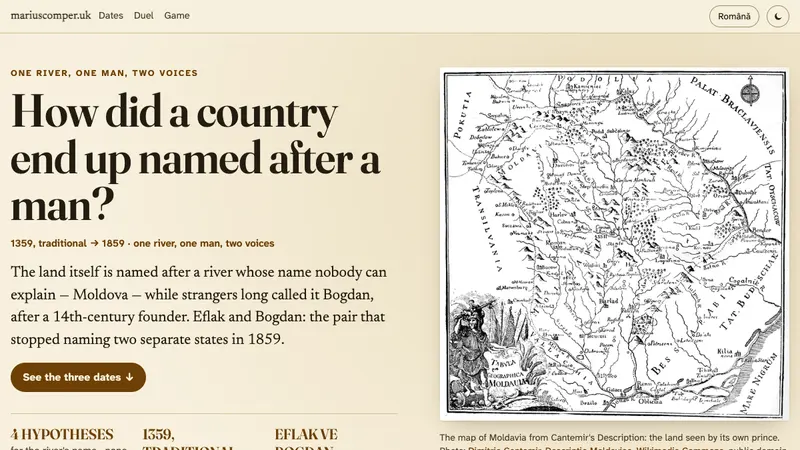
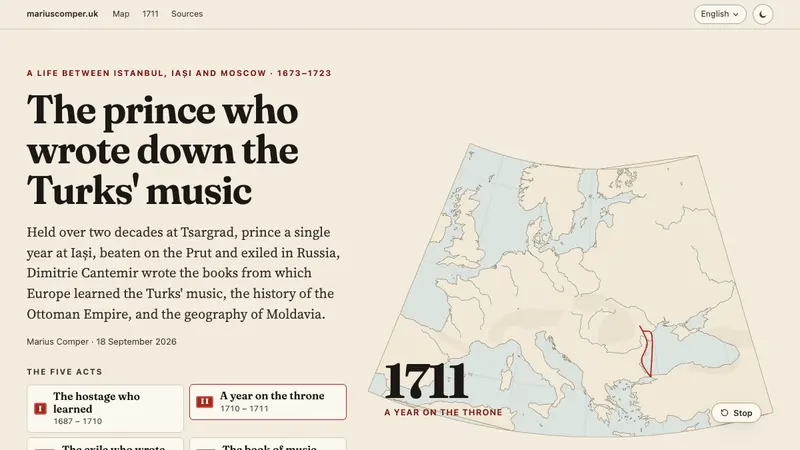
Cantemir’s map of Moldavia, measured place by place: is your town on it?

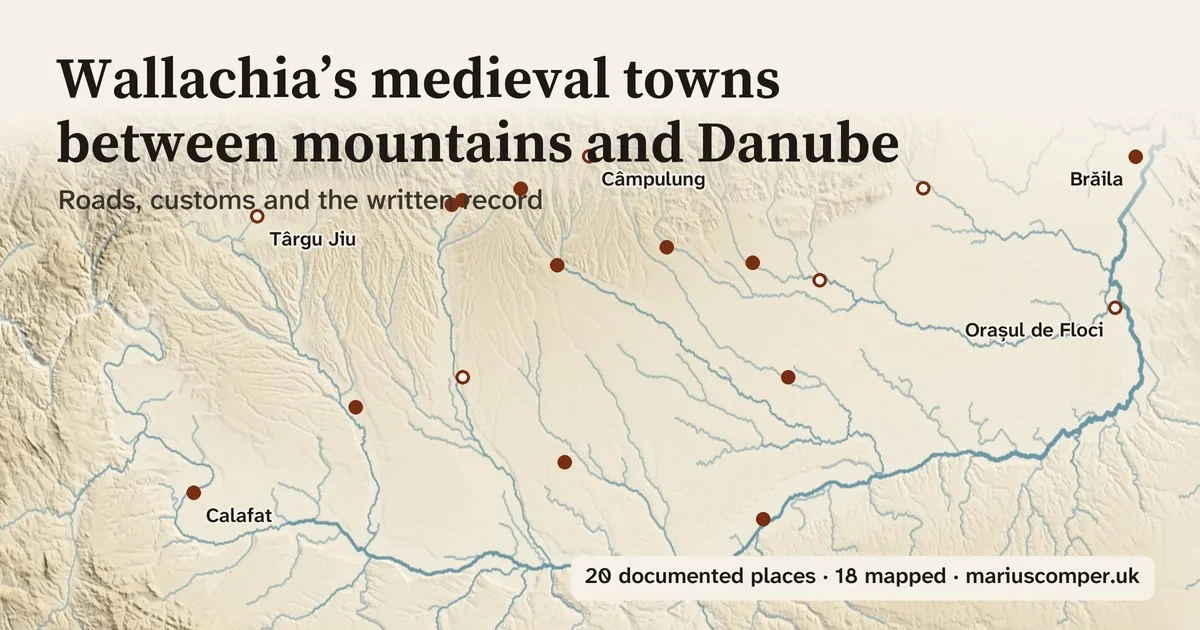
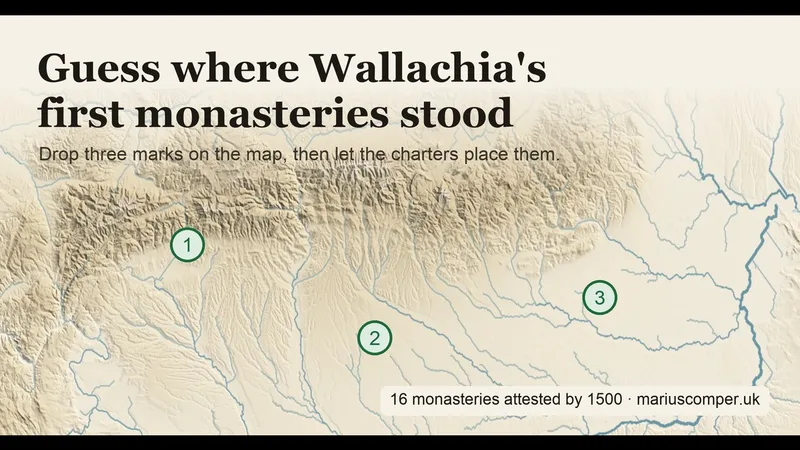
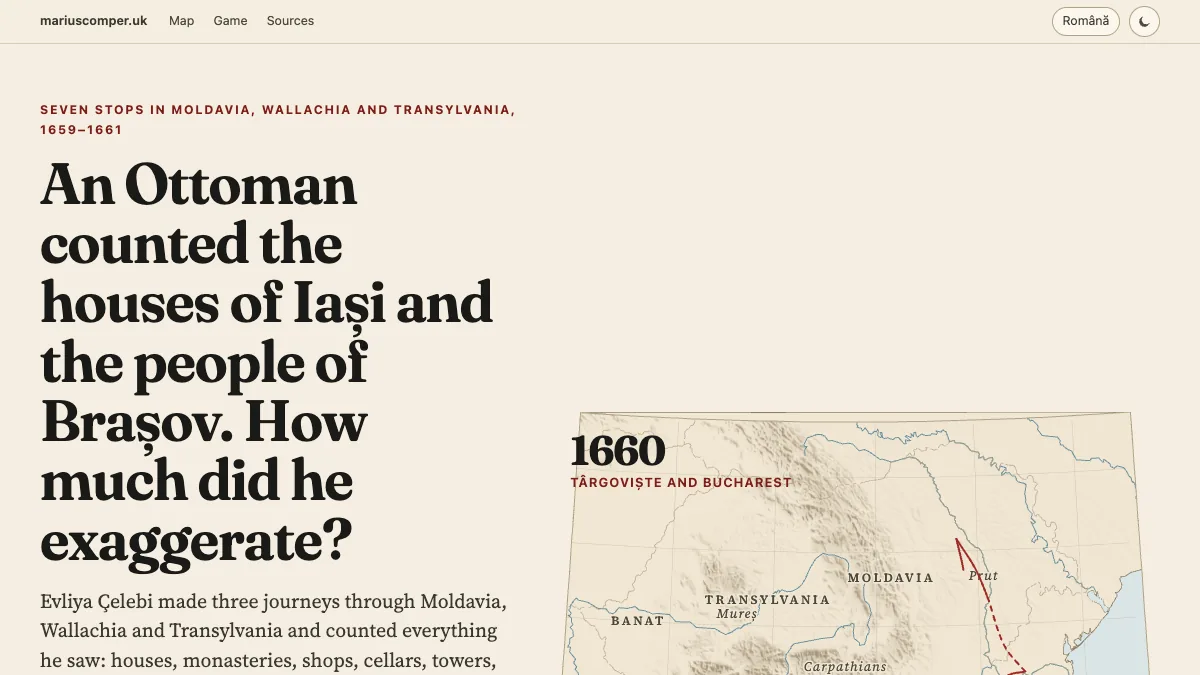
Dimitrie Cantemir, prince of Moldavia (a principality whose land is now in Romania, the Republic of Moldova and Ukraine), drew a map of his country in Russia after he had lost his throne. It names 785 towns, monasteries and villages. 269 have been identified and set here beside their true places: how far off each one is, which way, and what the too-wide shape of the country can and cannot be put down to.

Editions: RO EN

Language & wordsInvestigations & audits

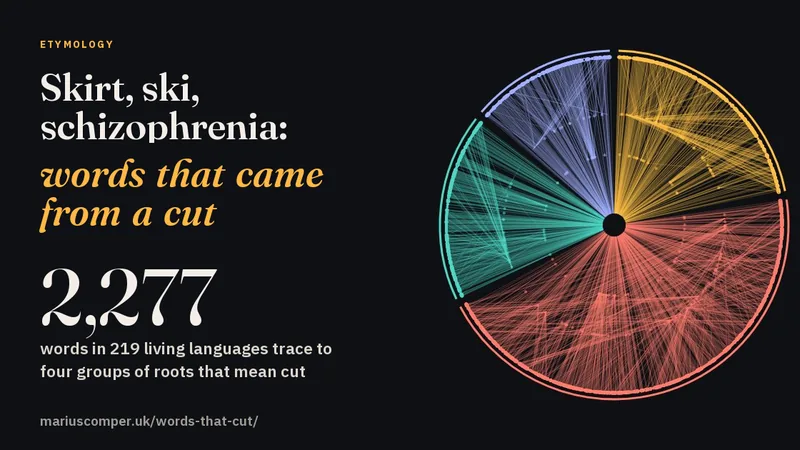
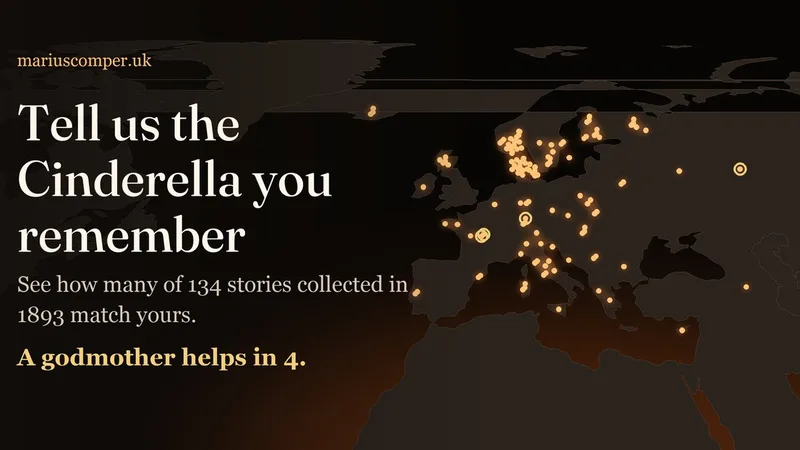
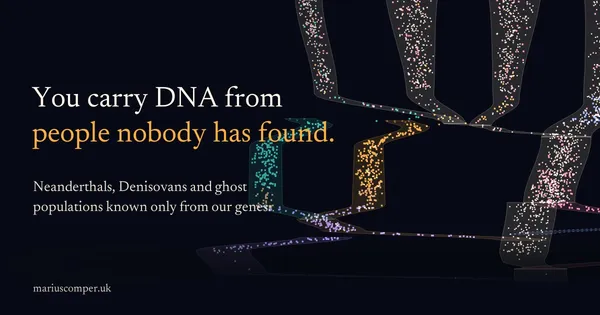
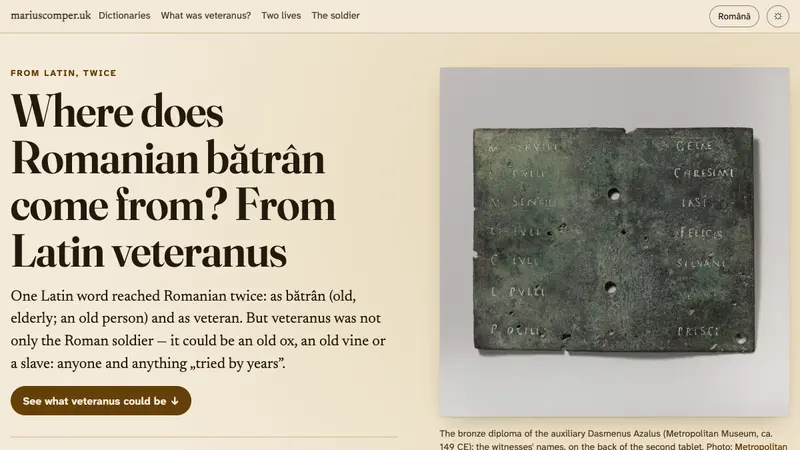
Skirt, ski, schizophrenia: 2,277 words from four groups of Proto-Indo-European roots that mean cut

A friend, Lucian Roșu, sent nineteen look-alike words and asked how many words today come from one old root. Counted on Wiktionary’s own family trees, about 2,277 words in 219 languages descend from, or were borrowed out of, roots that begin with sk- and mean to cut, split or scrape. Seven of his words trace to these roots, seven are impostors, five are open.

Editions: RO EN

HistoryInvestigations & audits

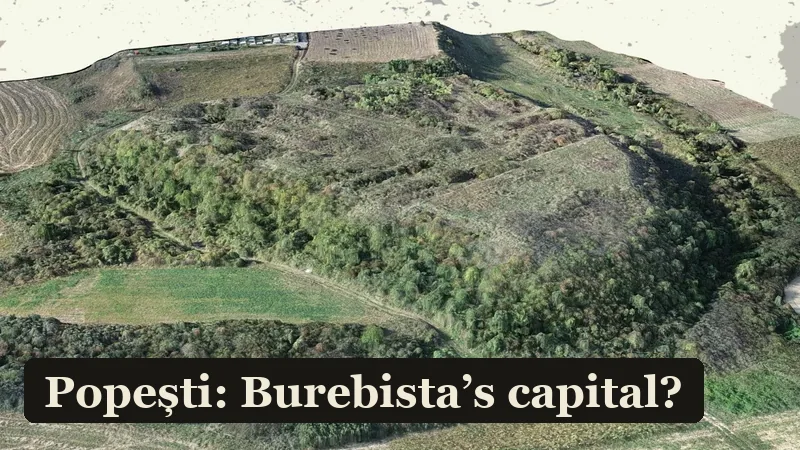
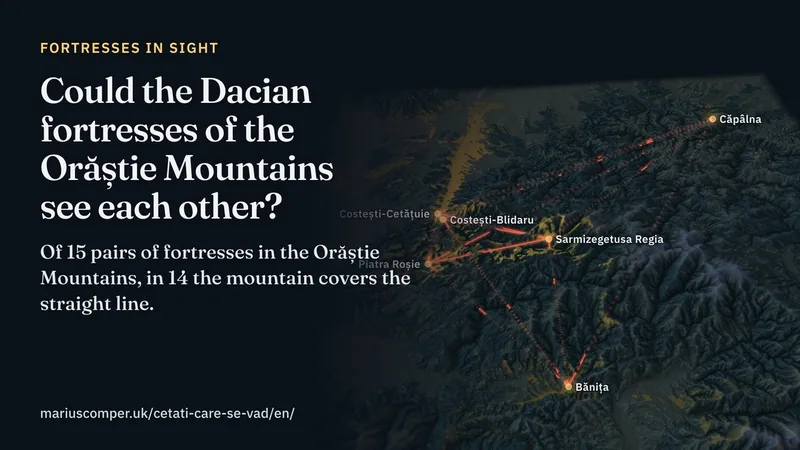
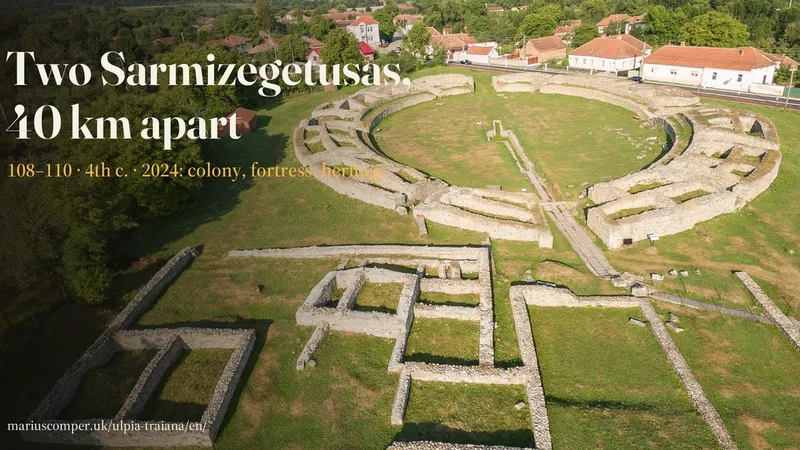
Could the Dacian fortresses of the Orăștie Mountains see each other? Computed on the real relief

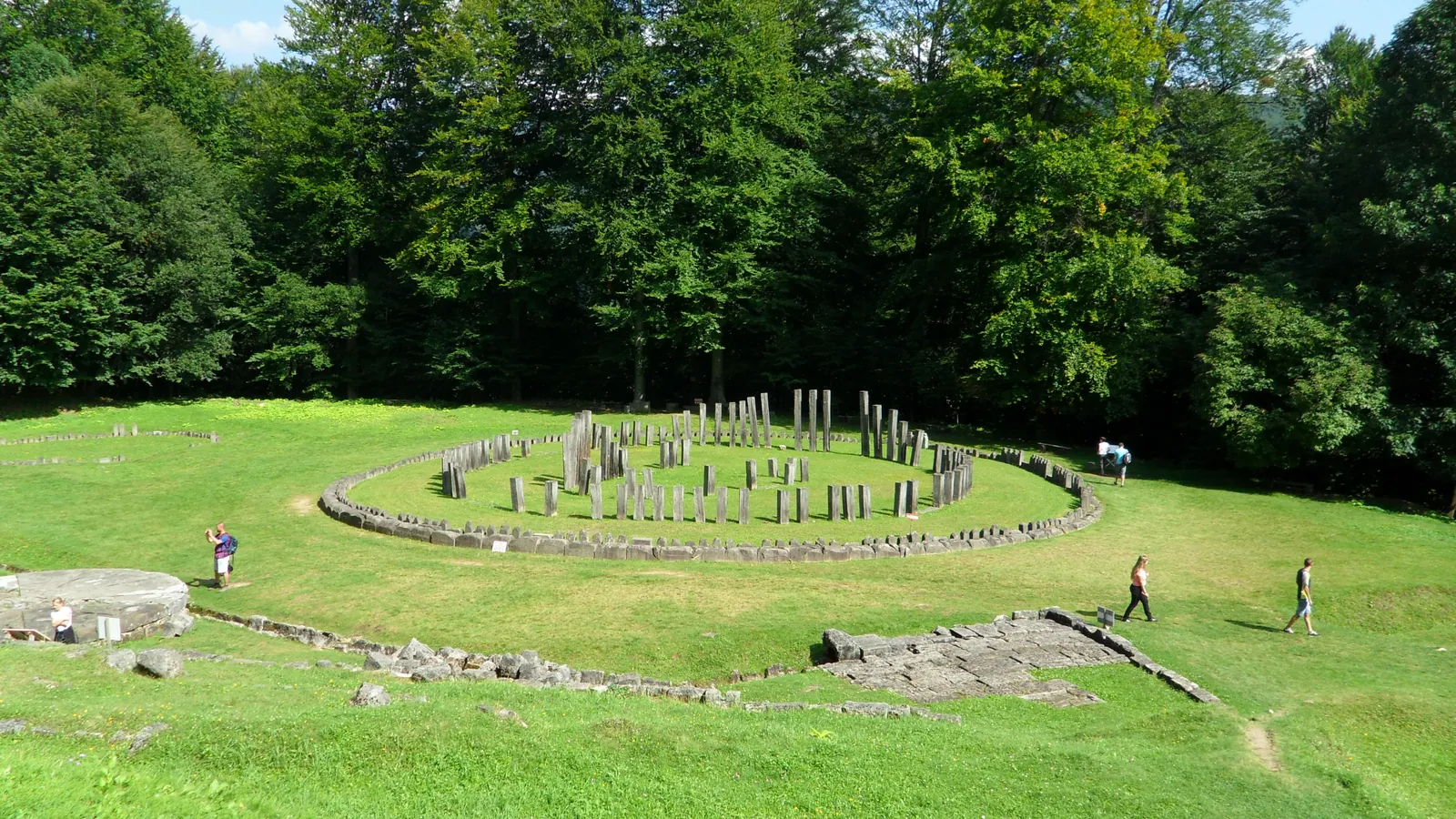
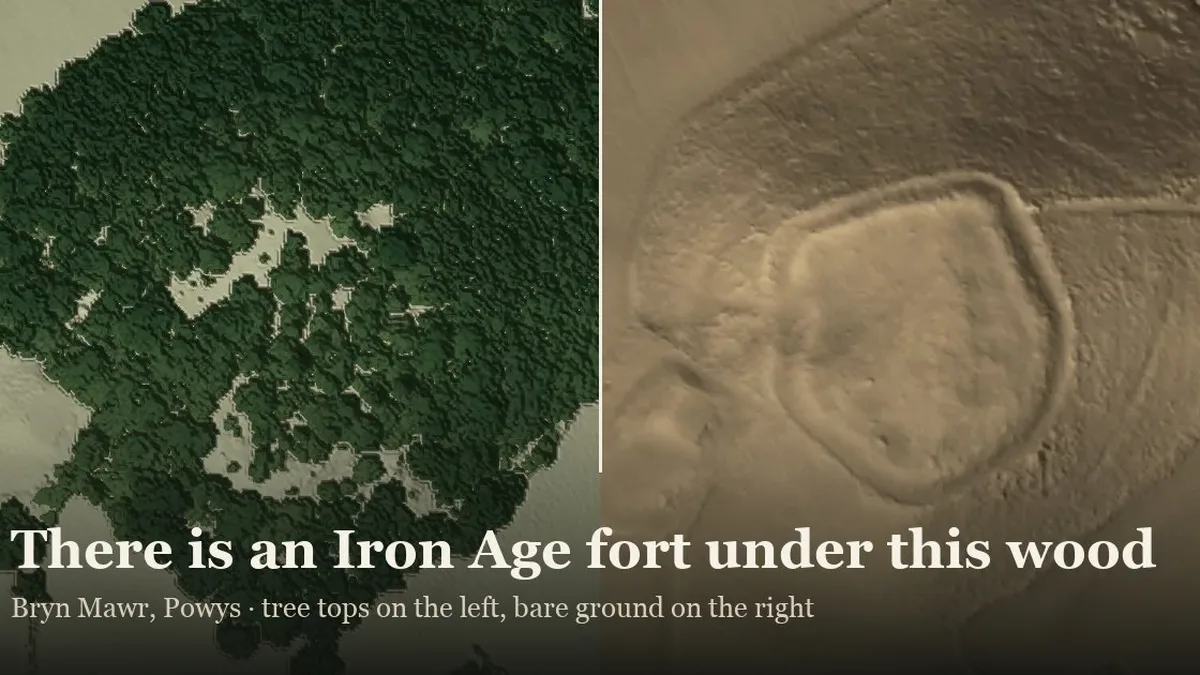
Of 15 pairs, one: Costești-Cetățuie and Blidaru, neighbours 1.6 km apart. In the other 14 the mountain rises at least 100 m above the straight line. From the capital, Sarmizegetusa Regia, none of the other five fortresses can be seen, even from a 12 m tower. A chain of posts in between remains possible; the positions known do not show one.

Editions: RO EN

Physics & mathematicsSimulations & models

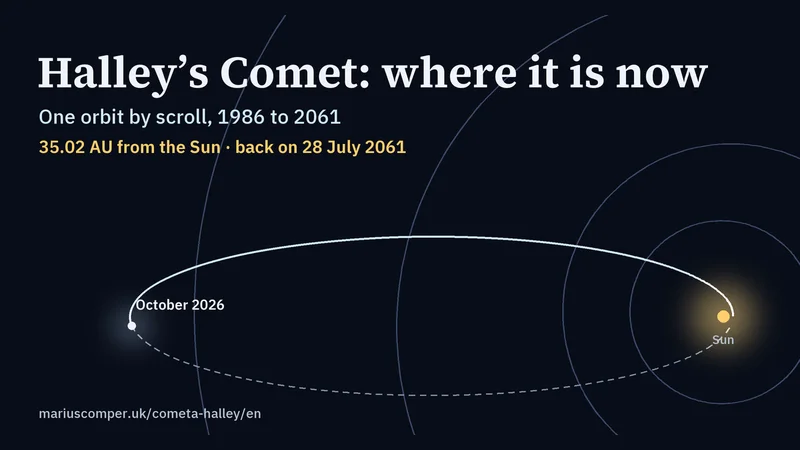
Halley’s Comet: where it is now, and its whole 75-year orbit from 1986 to 2061

Halley’s Comet passed the far point of its orbit on 8 December 2023 and is heading back to the Sun, which it rounds on 28 July 2061. The page follows the whole orbit by scroll, 1986 to 2061, on NASA JPL positions: of 27,563 days, the comet spends 78 closer to the Sun than Earth is and 35 years farther out than Neptune. With a year of birth it shows where the comet was then and how old you will be when it returns.

Editions: RO EN

Body & healthSimulations & models

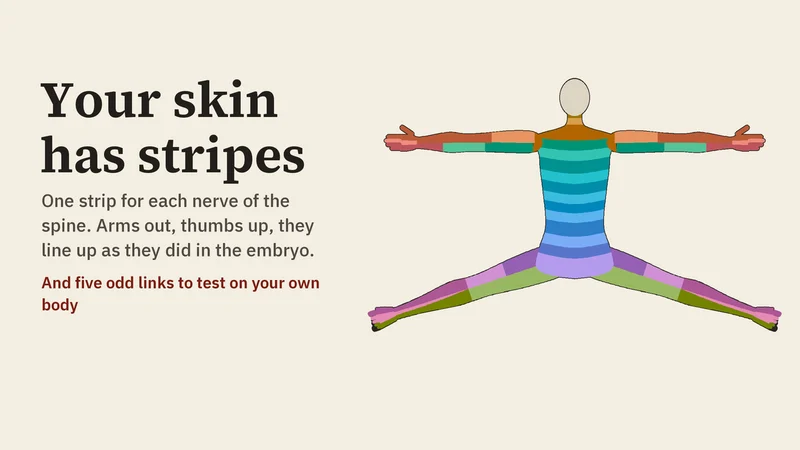
The stripes of your skin: dermatomes, the embryo that drew them, and where organs send their pain

Each strip of skin reports to one nerve of the spine. On an adult the strips look scrambled; with arms out and thumbs up they fall into order, as on a five-week embryo. The page shows that order on a figure that lifts its arms as you scroll, and uses it to explain why the diaphragm is felt at the tip of the shoulder, the heart in the arm and the appendix first at the navel.

Editions: RO EN

Mind & perceptionGames & tests

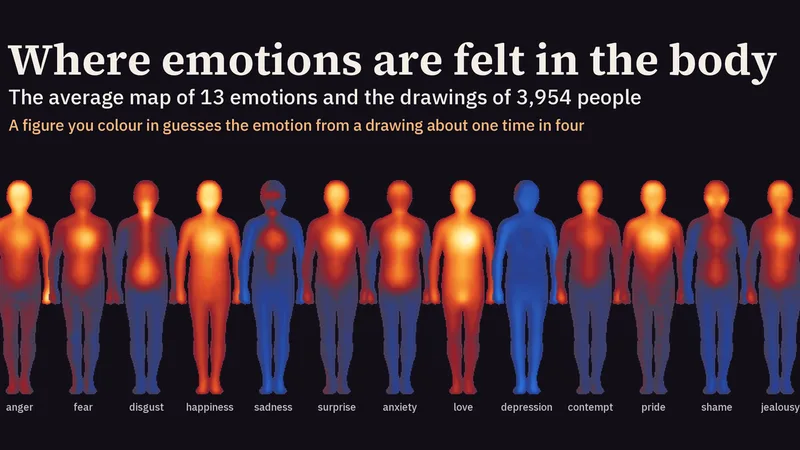
Where emotions are felt in the body: from one person's drawing, the emotion can be guessed one time in four

On average, anger is felt in the head and hands and love in the chest: that is the map made from the drawings of 3,954 people in 101 countries. Taken one by one, the drawings resemble each other little, and the emotion can be guessed from a single drawing for 24% of them. You colour in a figure and the page tries to guess which emotion you drew.

Editions: RO EN

Physics & mathematicsSimulations & models

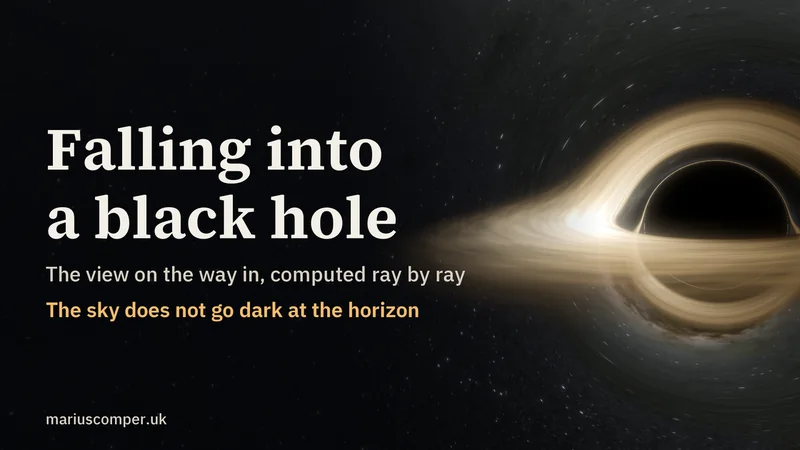
Falling into a black hole: what the sky looks like on the way in

A fall into a black hole seen through the faller’s own eyes. Each point of the picture is a ray of light followed through curved space with the equations of general relativity, over NASA’s map of 1.7 billion stars. At the horizon the black disc is 84° across and covers 13% of the sky; the rest is still stars. At Sagittarius A* the fall from the horizon to the centre takes 28 seconds.

Editions: RO EN

HistoryMaps & data atlases

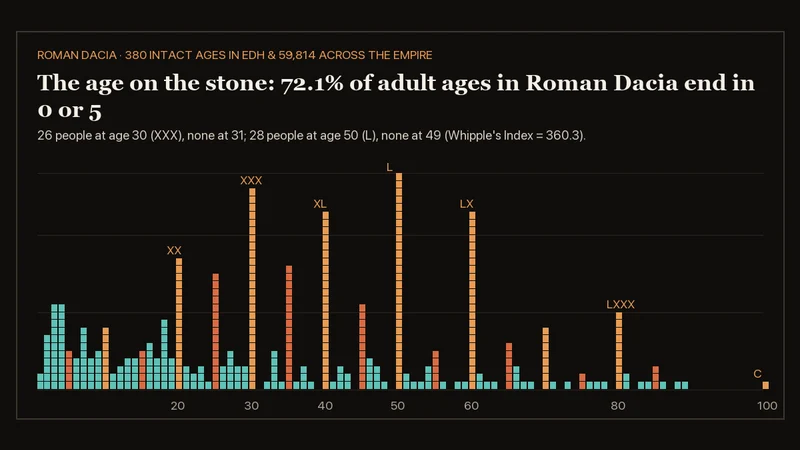
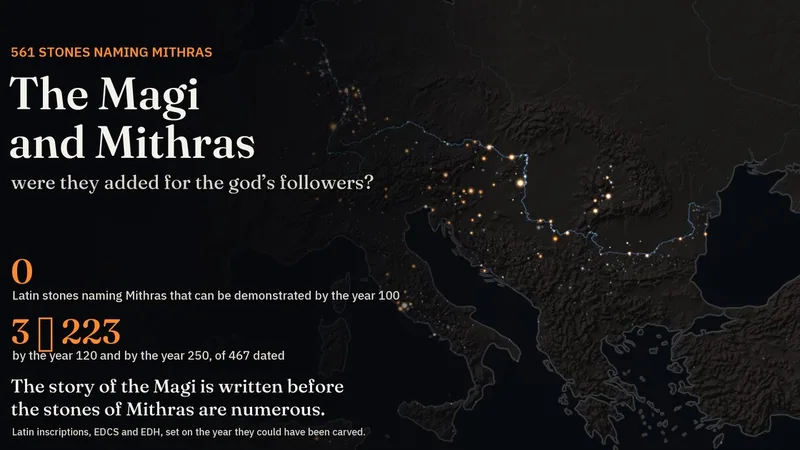
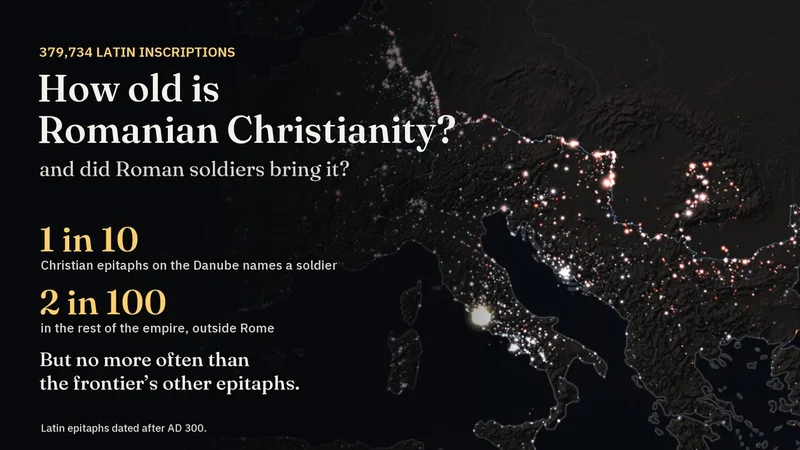
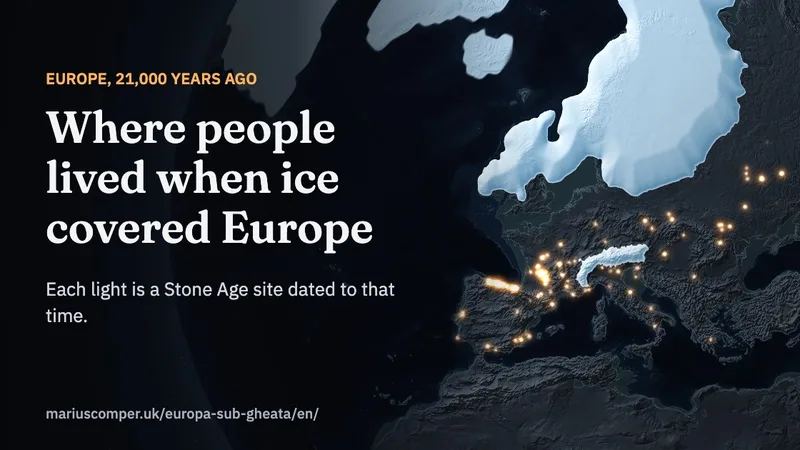
How old is Romanian Christianity? What 379,688 Latin inscriptions show

The Bulgars, the Poles and Kievan Rus have a year of baptism; the Romanians have words inherited from Latin and the idea that the faith came with Roman soldiers. The Latin inscriptions of the empire are lights on a map that runs from AD 100 to 700. On the Danube nearly all the Christian inscriptions date from after 300, and they name soldiers no more often than the frontier’s other inscriptions do.

Editions: RO EN

HistoryMaps & data atlases

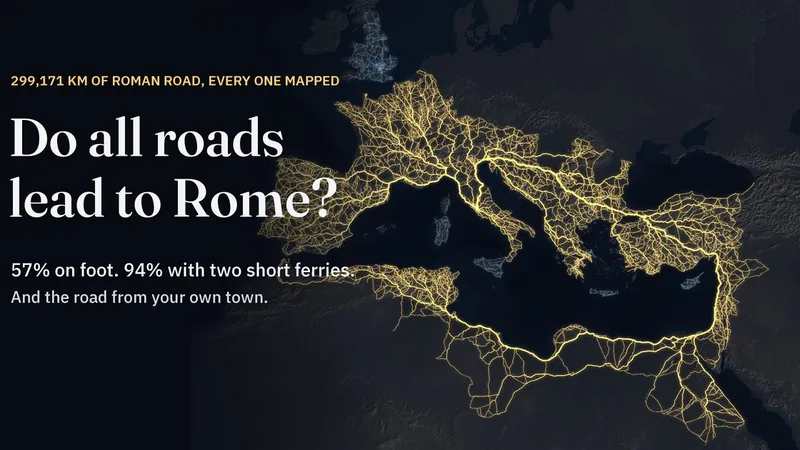
Do all roads lead to Rome? The proverb, tested on 299,171 km of Roman roads

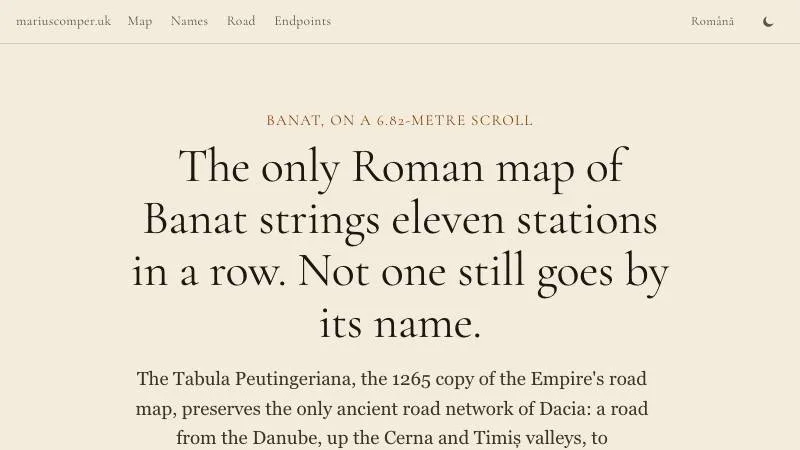
On Itiner-e, the 2025 map of Roman roads, 57% of the length can be walked to Rome, 37% hangs on two short ferries and 5.9% is on islands. But the same 94% lead to Byzantium too: roads run both ways, and the average kilometre of road is nearer to Byzantium (2,395 km) than to Rome (2,781 km). The distances the Romans wrote on the Peutinger map are compared with the measured roads, and for any town between Scotland and the Nile the map shows its road to Rome.

Editions: EN RO

HistoryMaps & data atlases

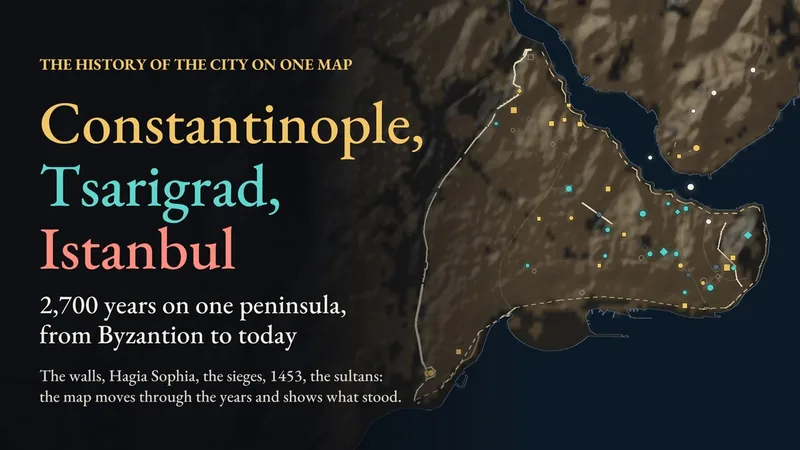
Constantinople, Tsarigrad, Istanbul: 2,700 years of history on one peninsula

The whole history of the city on a single map that runs from 660 BC to today: the Theodosian walls, Hagia Sophia, the sieges, 1204, 1453, the Ottoman capital and the Istanbul of 15.8 million people. The city's name changes in the corner of the map, in the script of whoever holds it. For any year the page says what the city was called, who ruled it, how many people it had and what was standing.

Editions: RO EN

Anthropology & societyMaps & data atlases

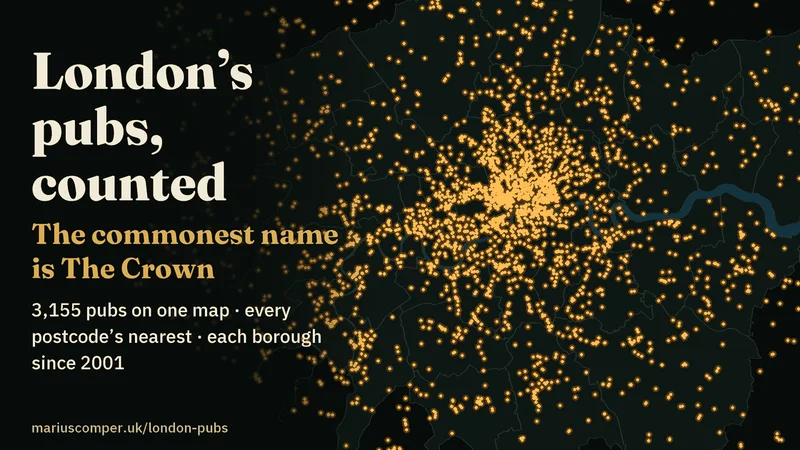
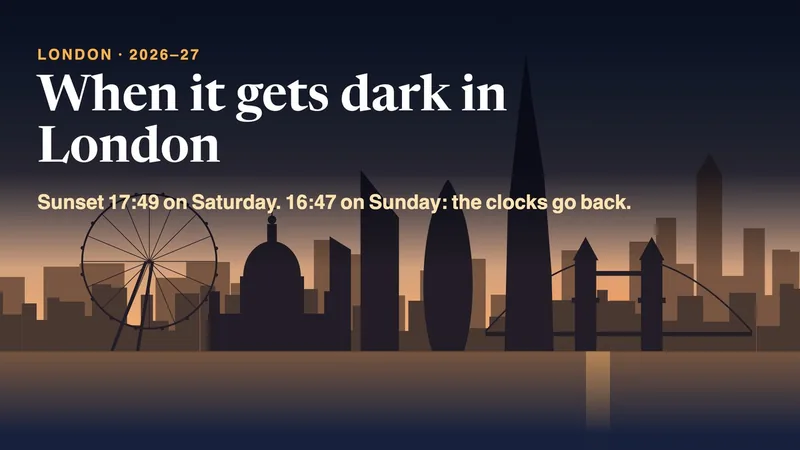
London’s pubs, counted: what they are called, how near they are, how many are left

London’s commonest pub name is The Crown, ahead of the Prince of Wales and the Red Lion: 31 of the 3,155 pubs mapped by OpenStreetMap’s volunteers. Half of the city’s postcodes have a mapped pub within 286 m in a straight line, and the official count of pubs and bars fell from 4,835 in 2001 to 3,525 in 2024, with Hackney the only borough that rose. A map of London drawn only from its pubs, with a result and a picture for each of 217 postcode districts.

Editions: EN RO

Anthropology & societyMaps & data atlases

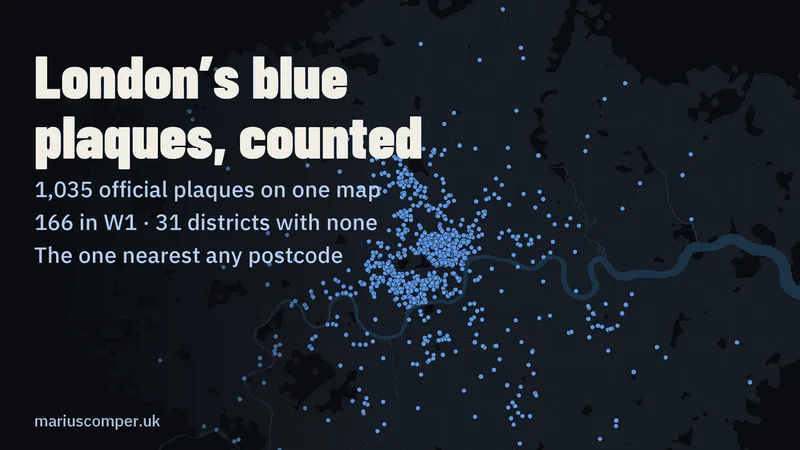
London’s blue plaques, counted: who gets one, and which districts have none

London’s official blue plaque scheme, run today by English Heritage, has 1,035 plaques: 166 are in W1, and 31 of the 120 London postal districts have none. 152 of the 1,010 plaques to a person honour a woman, and the median wait between death and plaque is 49 years. All 3,942 plaques on record, of every kind, on a map drawn from postcodes, with the plaque nearest any postcode and the words on it.

Editions: EN RO

HistoryMaps & data atlases

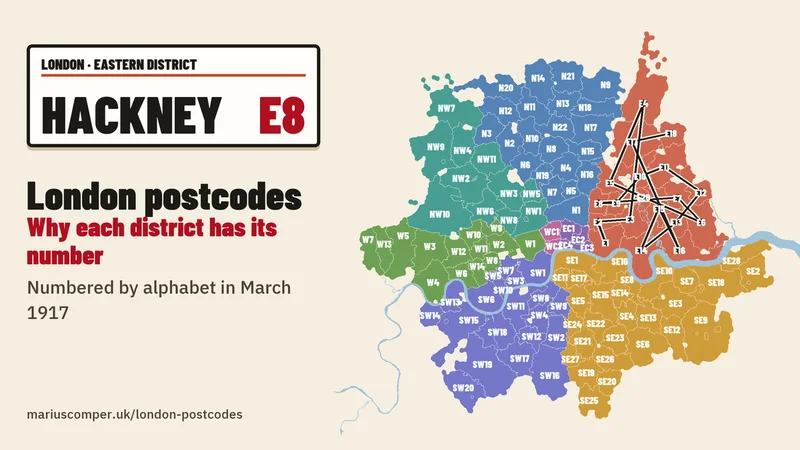
London postcodes: why each district has the number it has

London's postcode numbers are mostly alphabetical, not geographical: in 1917 the Post Office gave 1 to each district's main office and numbered the other delivery offices by name. The six central numbers cannot be checked alphabetically from the brochure, and four later additions stand outside the 1917 order. All 120 districts on a map, and the 5,655 lines of the 1917 street list.

Editions: EN RO

Language & wordsArticles & explanations

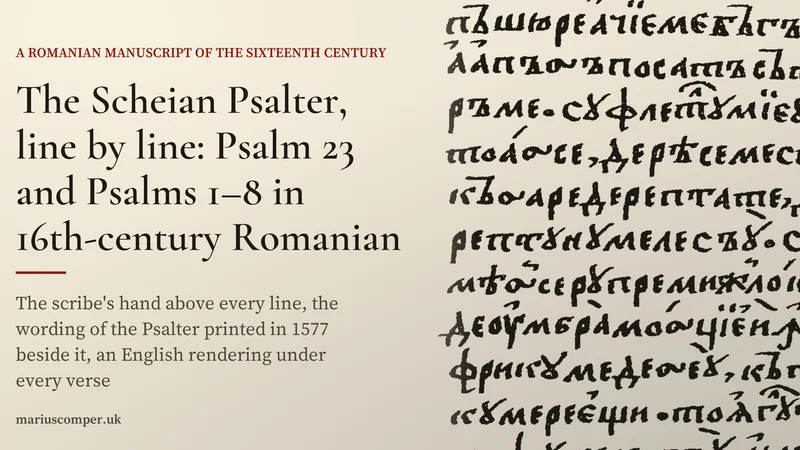
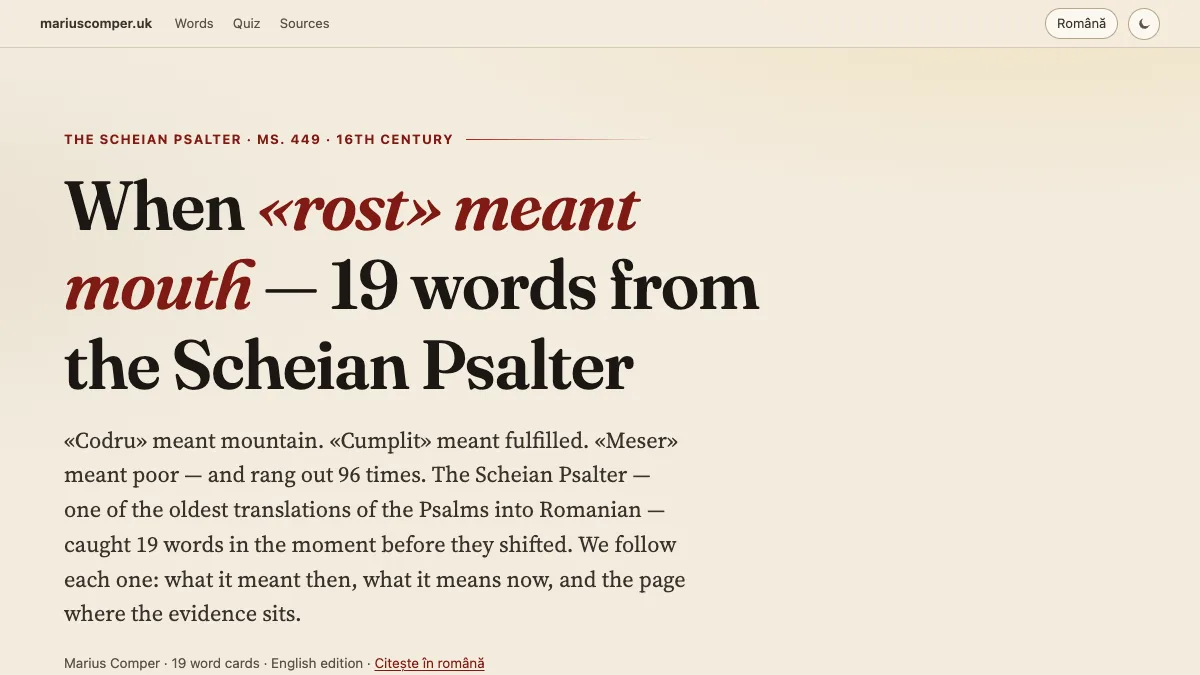
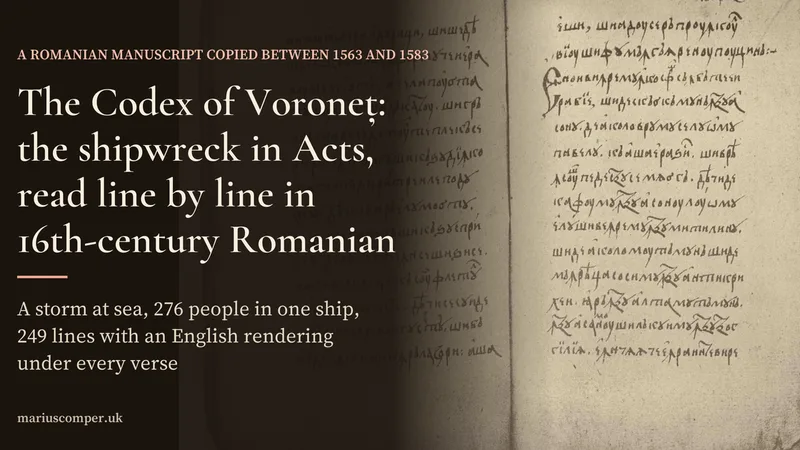
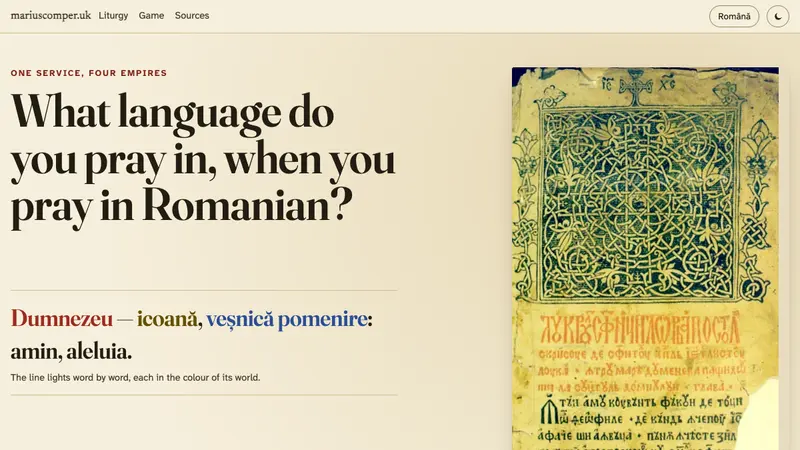
The Scheian Psalter, line by line: Psalm 23 and Psalms 1–8 in sixteenth-century Romanian

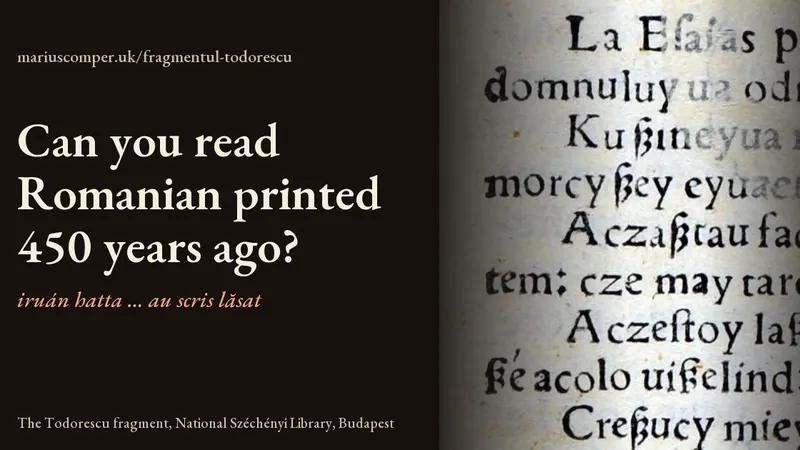
Psalm 23, “The Lord is my shepherd”, and Psalms 1–8 as they stand in the Scheian Psalter, a Romanian manuscript copied between 1573 and 1578, when Romanian was mostly written in Cyrillic letters: 345 lines with the scribe's hand above each, an English rendering of every verse and the wording of the Psalter printed in 1577 beside it. In Romanian and English.

Editions: RO EN

Nature & planetSimulations & models

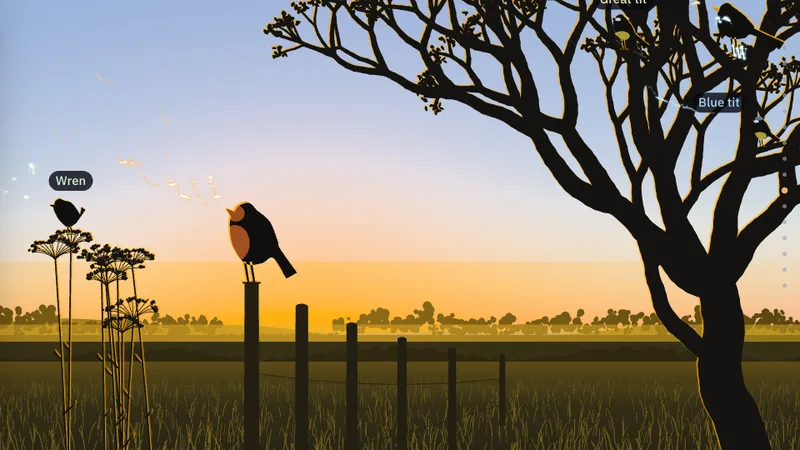
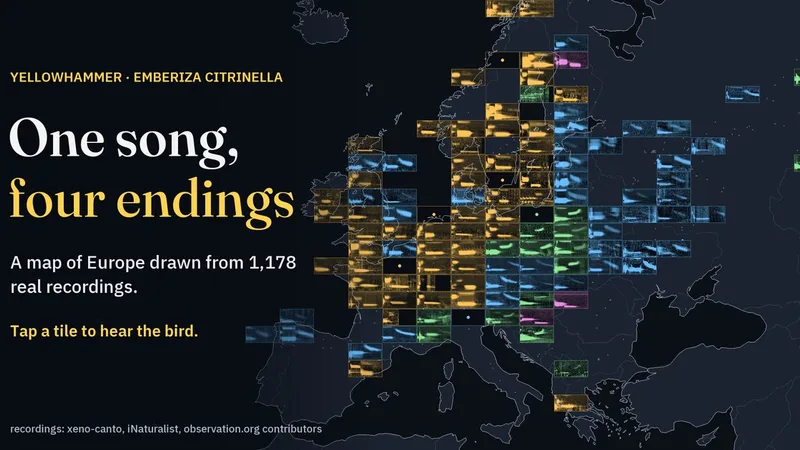
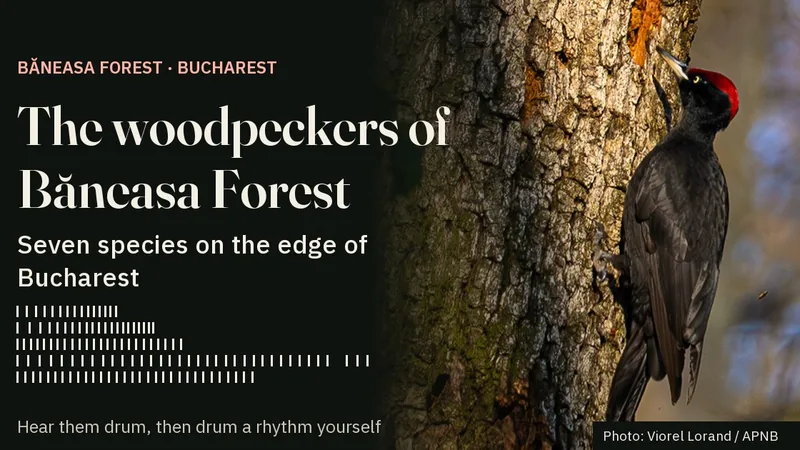
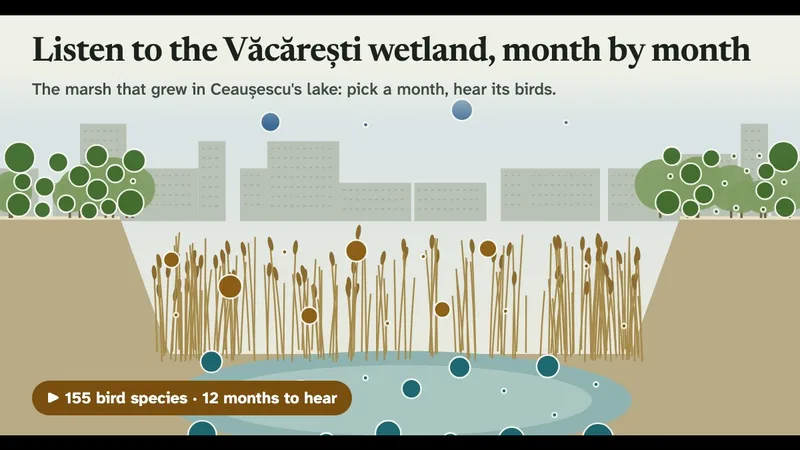
The woodpeckers of Băneasa Forest: seven species on the edge of Bucharest, each with its own sound

Seven of Romania’s ten woodpecker species have been found in Băneasa Forest, on the northern edge of Bucharest. Hear how each one sounds, with drum rolls measured strike by strike, and drum a rhythm of your own. With photographs taken in the forest in 2026 and a map of what has been built around it since 1990. In Romanian and English.

Editions: RO EN

Language & wordsMaps & data atlases

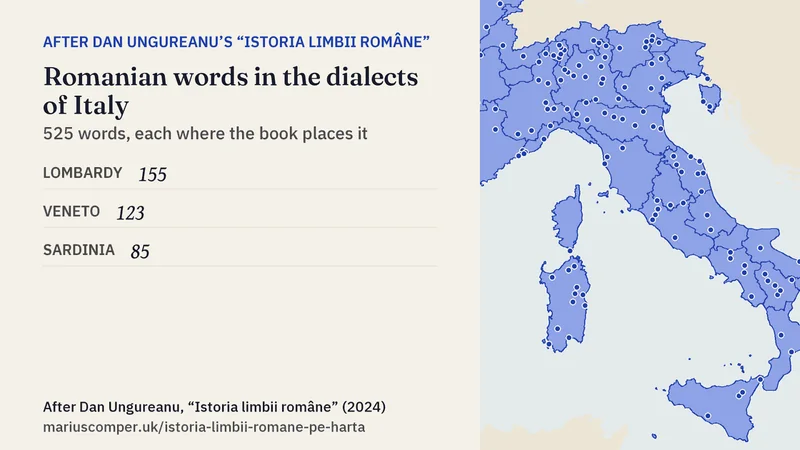
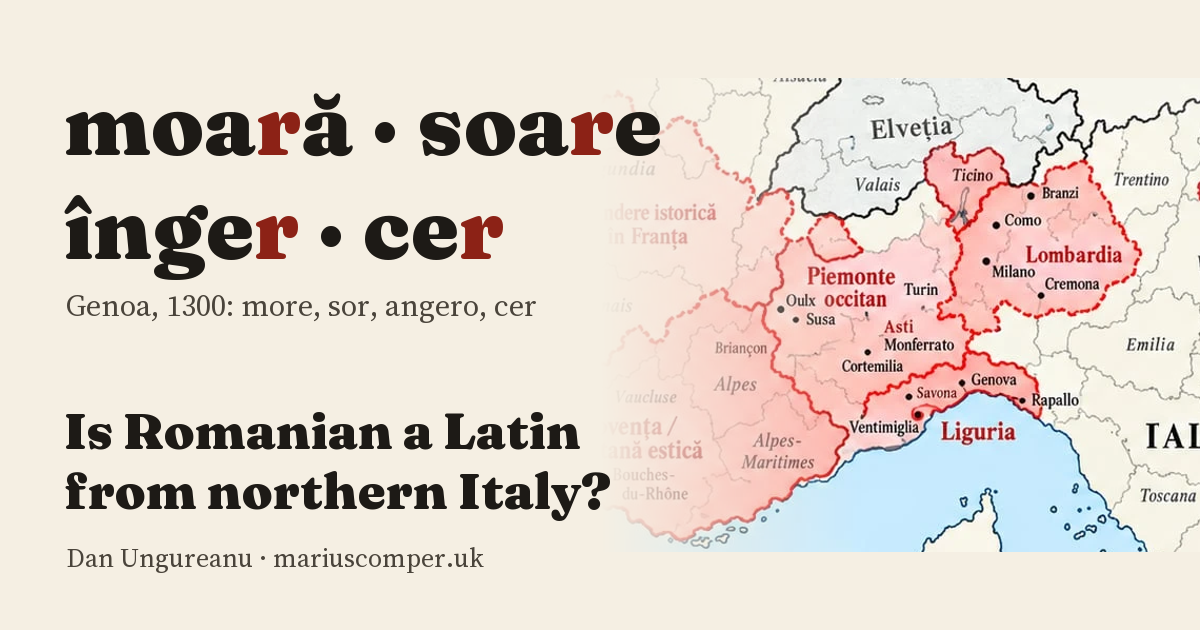
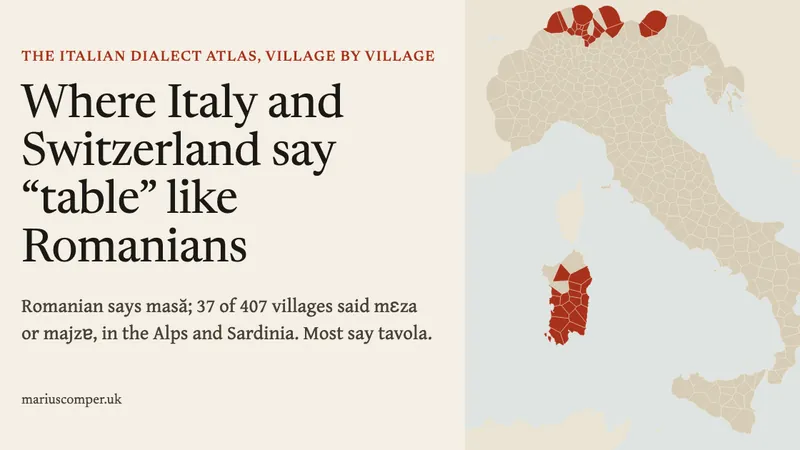
Romanian words in the dialects of Italy: a map of Dan Ungureanu’s “Istoria limbii române”

Dan Ungureanu argues that Romanian comes from north-western Italy. For 525 Romanian words, the map shows where the dialect forms his book sets beside them are found: among the regions of Italy, Lombardy has the most, then Veneto and Sardinia. With the linguistic atlas of Italy alongside and a check of what a word list can prove. In Romanian and English.

Editions: RO EN

HistorySimulations & models

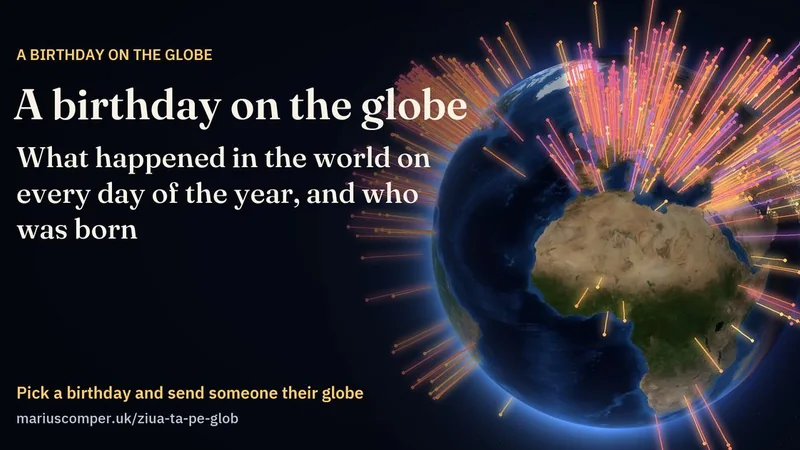
A birthday on the globe: what happened in the world on each of the year’s 366 days

A 3D globe for every day of the year: the events on Wikipedia’s day list, as rays of light on their places, and the people born then. With a birth year the page opens on your own day and shows, where records exist: the number-one song, the Moon and the star sign, the weather, an animal recorded that day, a rocket that left, every birthday since. With a name it becomes a link to send. In Romanian, English, Spanish and Chinese.

Editions: RO EN ES ZH

Language & wordsMaps & data atlases

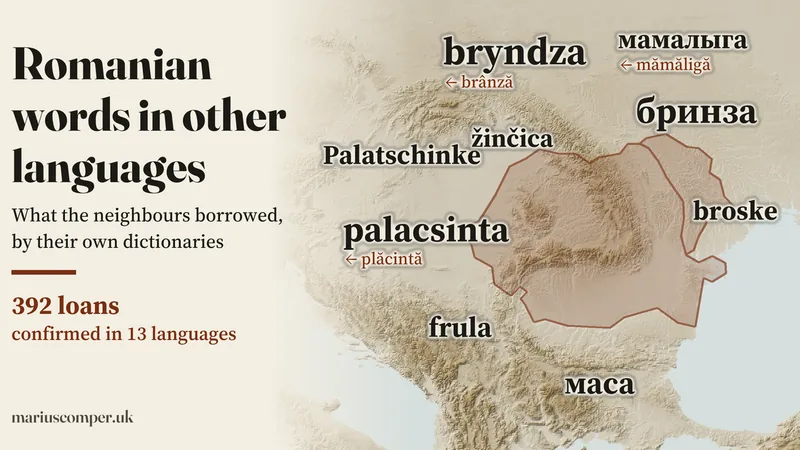
Romanian words in other languages: what the neighbours borrowed, according to their own dictionaries

Accounts of Romanian usually list what it borrowed. This is the reverse count: 738 words in 19 languages, looked up in the dictionaries and studies of the languages that use them. 392 are counted as loans from Romanian, in 13 languages, from Hungarian palacsinta to Polish bryndza and New York pastrami; for another 162 the dictionaries hesitate or contradict each other. Each word has a card with its source and that source's verdict.

Editions: RO EN

HistoryArticles & explanations

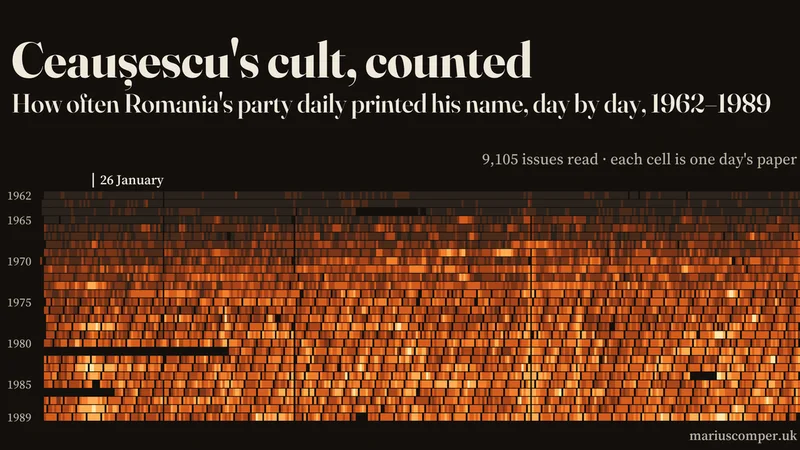
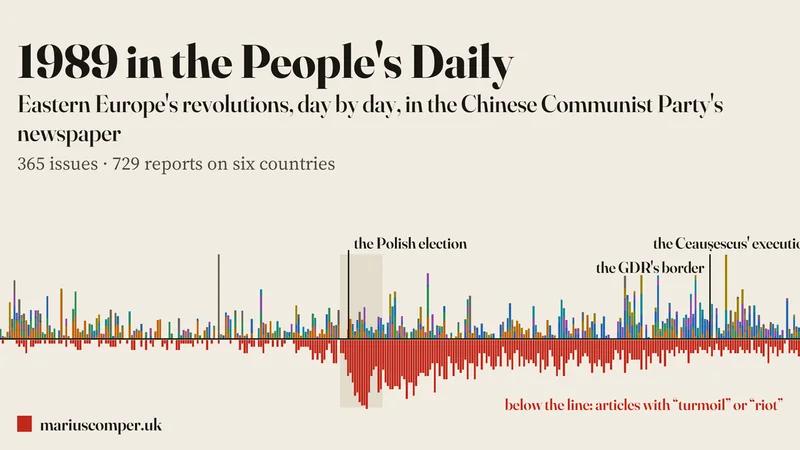
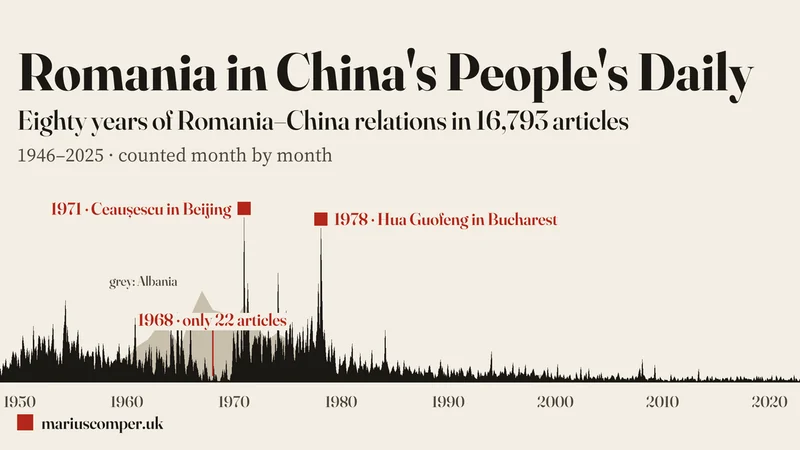
Ceaușescu's cult, counted: how often Romania's party daily printed his name, day by day, 1962–1989

All 9,105 issues of Scînteia, the daily of Romania's Communist Party, from 1962 to 1989 that survive in the Deva county library's scans, read by machine, word by word: Nicolae Ceaușescu's name appears 0.2 times per issue in 1962 and 69.5 times in 1989. “The most beloved son of the people” was, in January 1965, his predecessor Gheorghiu-Dej, and “the Genius of the Carpathians” was not found in the text of any issue of his years.

Editions: RO EN

Language & wordsMaps & data atlases

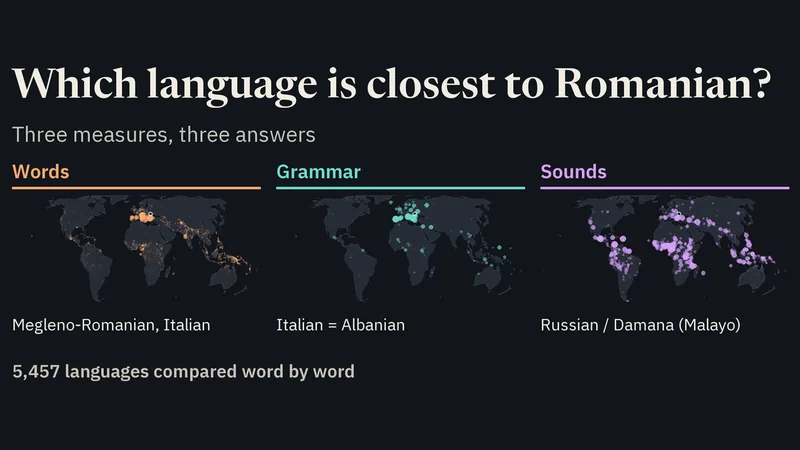
Which language is closest to Romanian? Three measures, three answers

Romanian, the Romance language of Romania and Moldova, compared with the world's languages on words, grammar and sounds, using open data. On words the nearest is Megleno-Romanian, then Italian; on grammar Italian and Albanian score the same; on sounds the list depends on how Romanian is described. Any language can be looked up. In Romanian, English and Chinese.

Editions: RO EN ZH

Anthropology & societyMaps & data atlases

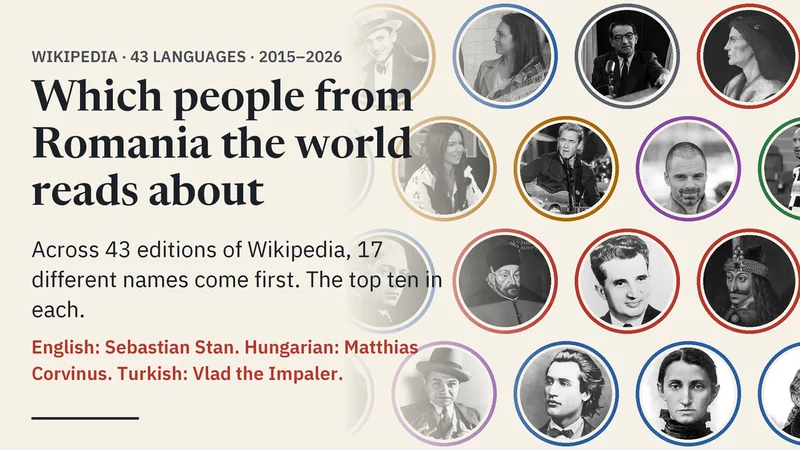
Which people from Romania the world reads about on Wikipedia: 43 languages, 2015–2026

The most-read article about a person from Romania changes from one Wikipedia edition to the next: Sebastian Stan in English, Matthias Corvinus in Hungarian, Vlad the Impaler in Turkish, the poet Eminescu in Romanian. A wall of 43 languages shows the face at the top of each, its top ten names and the months when a name surged. In Romanian, English and Chinese.

Editions: RO EN ZH

Language & wordsArticles & explanations

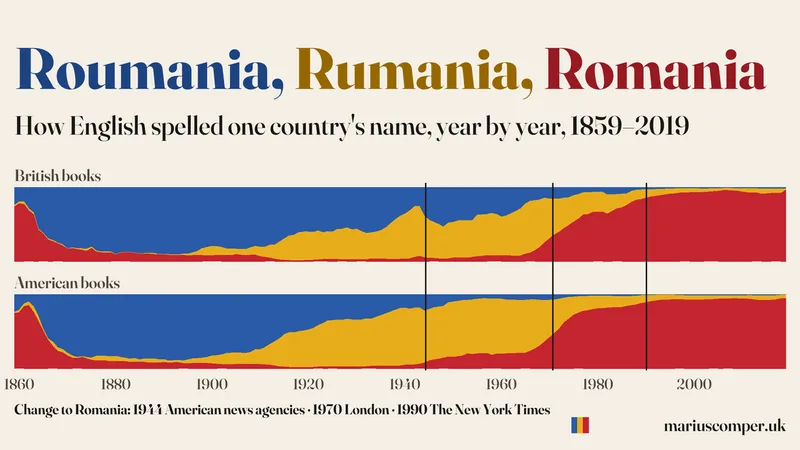
Roumania, Rumania, Romania: how English spelled one country's name, year by year

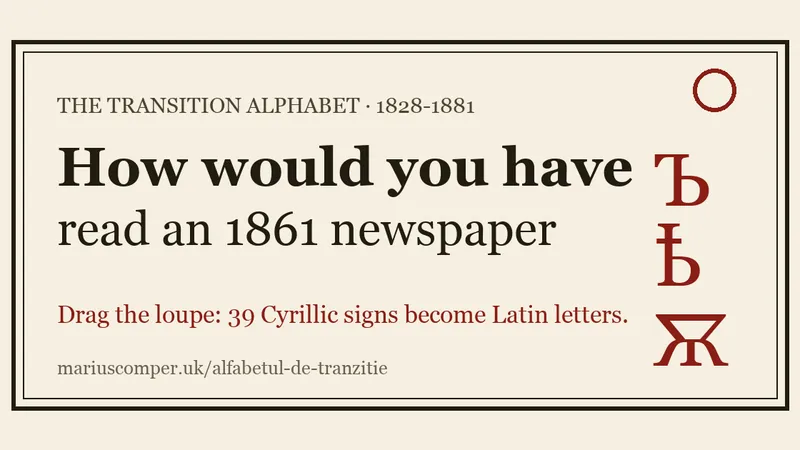
English has printed the name of Romania in three ways. The three spellings are counted year by year in British and American books, from 1859 to 2019, and in a sample of American newspapers, to 1963, beside the dated decisions of London, Washington and Bucharest. America's news agencies moved to Romania in April 1944; The New York Times printed Rumania in news headlines until 3 February 1990.

Editions: RO EN

Film, music & artMaps & data atlases

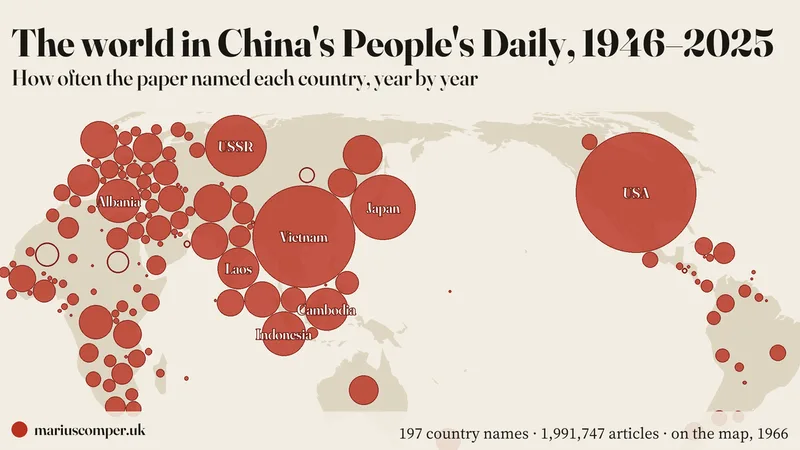
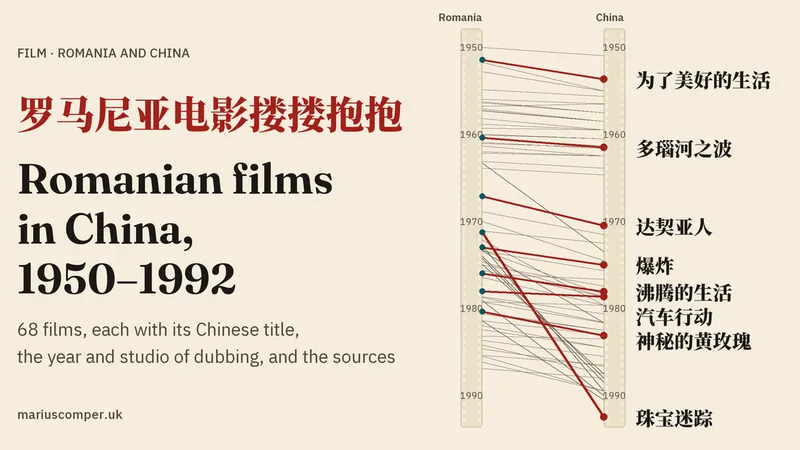
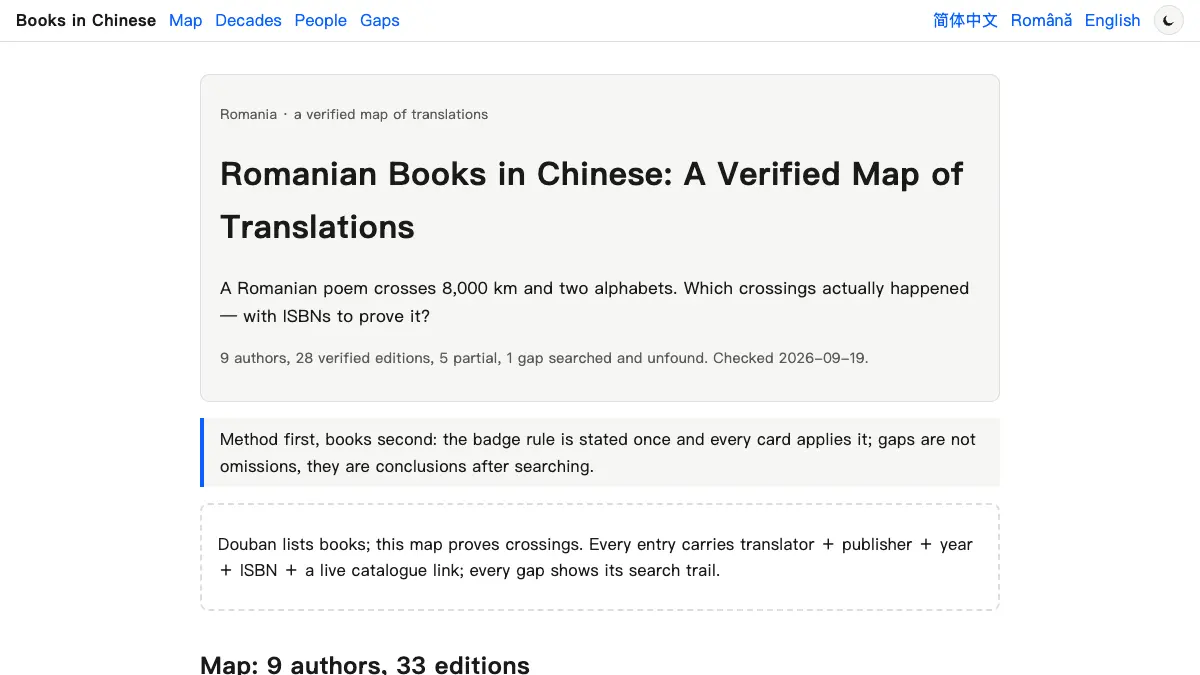
Romanian films in China, 1950–1992: 68 films and the titles China gave them

Between 1950 and 1992 at least 68 Romanian feature films were dubbed or shown in China. Each is listed with its Chinese and Romanian titles, the year it opened in Romania, the year and studio of its Chinese dubbing, and its sources. One 1955 spy film had six million admissions in China by 1958, according to the People's Daily. In Romanian, English and Chinese.

Editions: RO EN ZH

HistoryArticles & explanations

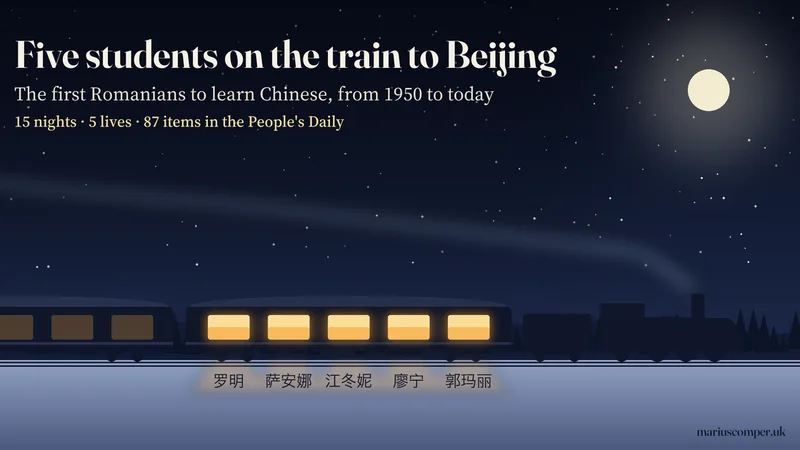
Five students on the train to Beijing: the first Romanians to learn Chinese, from 1950 to today

In November 1950 five Romanian school-leavers spent fifteen nights on trains from Bucharest to Beijing. None of them knew Chinese. One became an ambassador, one a trade counsellor, one a historian of China, one a translator of Chinese literature. The journey on a map and the five lives step by step, each step with its source. In Romanian, English and Chinese.

Editions: RO EN ZH

Language & wordsArticles & explanations

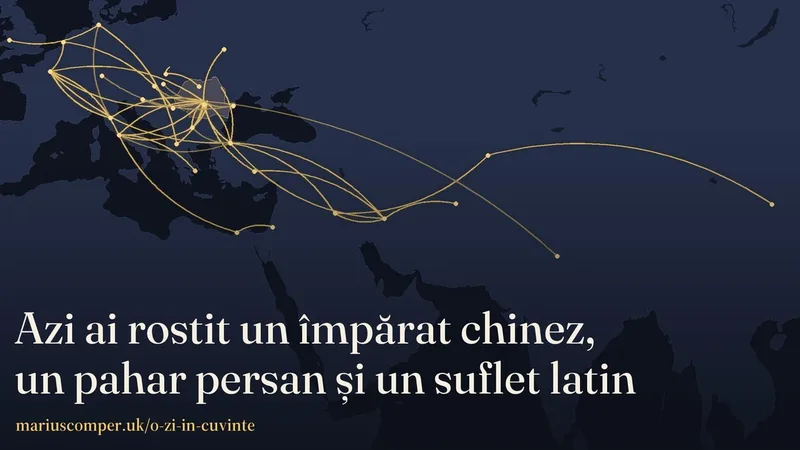
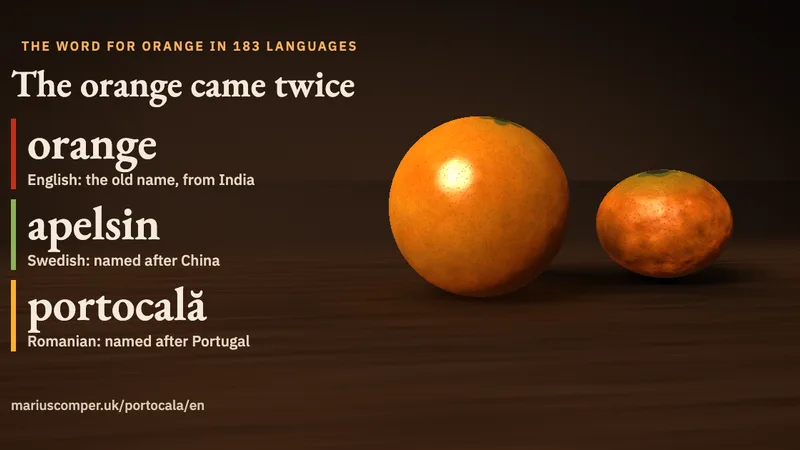
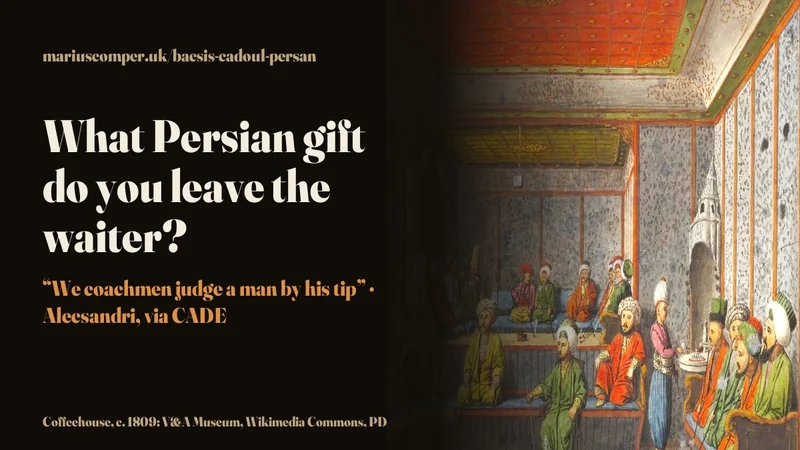
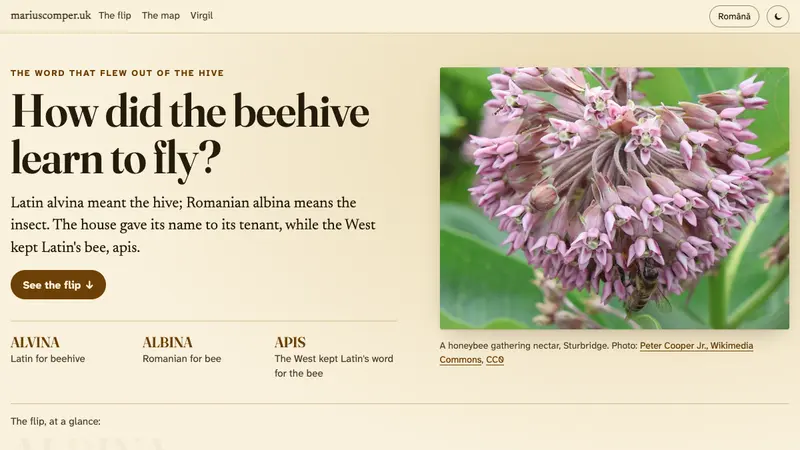
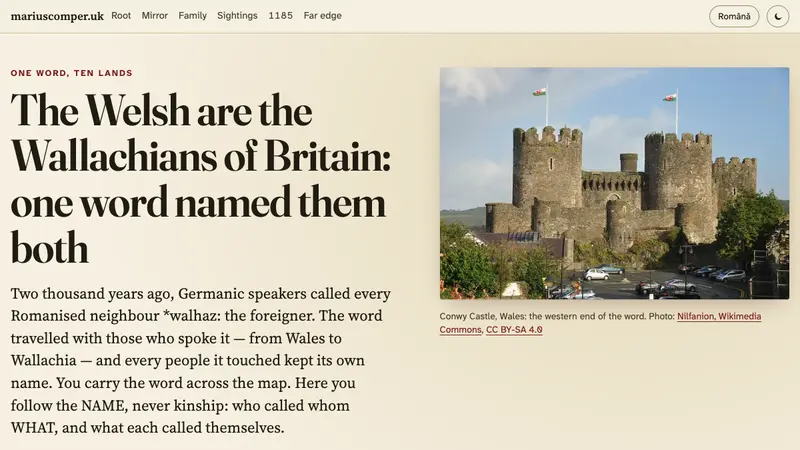
The Romanian word for “plate” comes from a title of China’s emperor

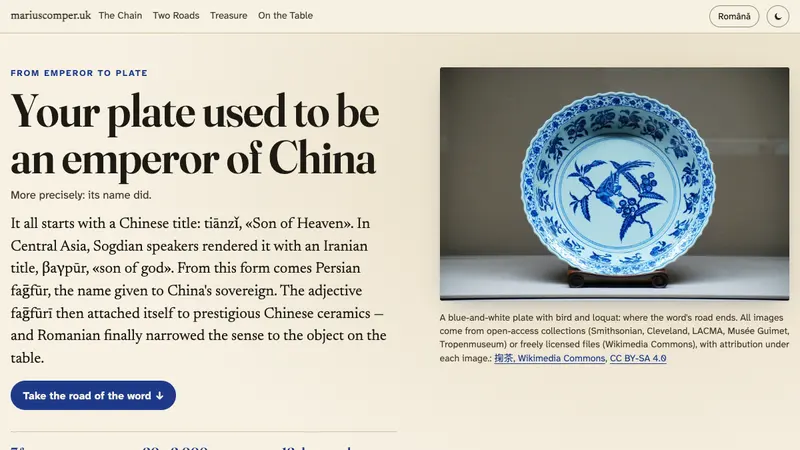
Where Romanian farfurie, “plate”, comes from: Ottoman farfuri, “porcelain”, and before it Persian faghfūr, the title given to the emperor of China. Turn a Ming dish to see the word’s seven forms, from 天子 to farfurie, each with its source. With the Chinese province that dictionaries invented, the map of the routes and the Topkapı collection.

Editions: RO EN ZH

HistoryGames & tests

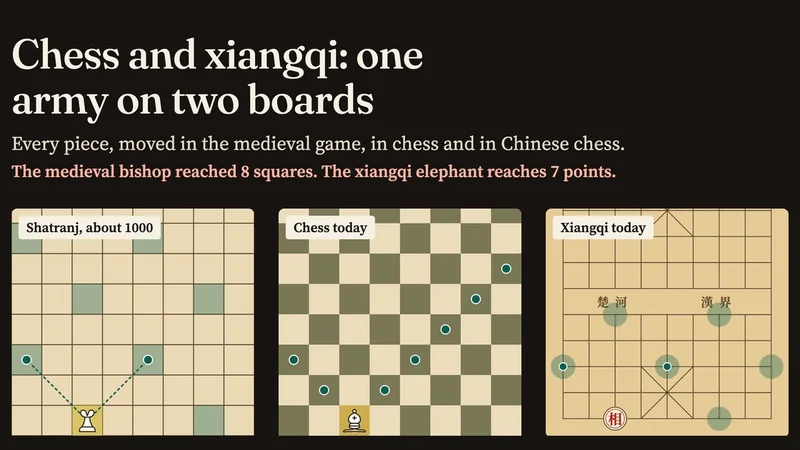
Chess and xiangqi (Chinese chess): one army on two boards, compared piece by piece

Chess and xiangqi set out the same army: chariot, horse, elephant, counsellor, king. Pick a piece and see its move on three boards: shatranj, the medieval game, chess today and xiangqi. The medieval bishop reached 8 of 64 squares; the xiangqi elephant reaches 7 of 90 points. With the names of the pieces in 31 languages and a ten-move quiz. In Romanian, English and Chinese.
Editions: RO EN ZH

HistorySimulations & models

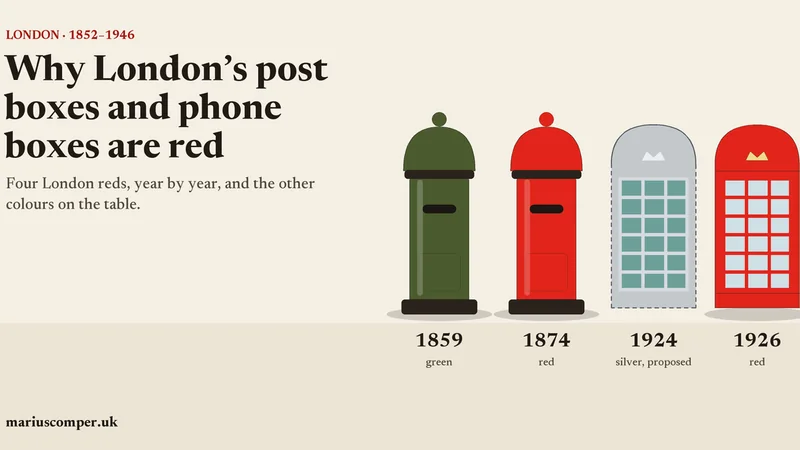
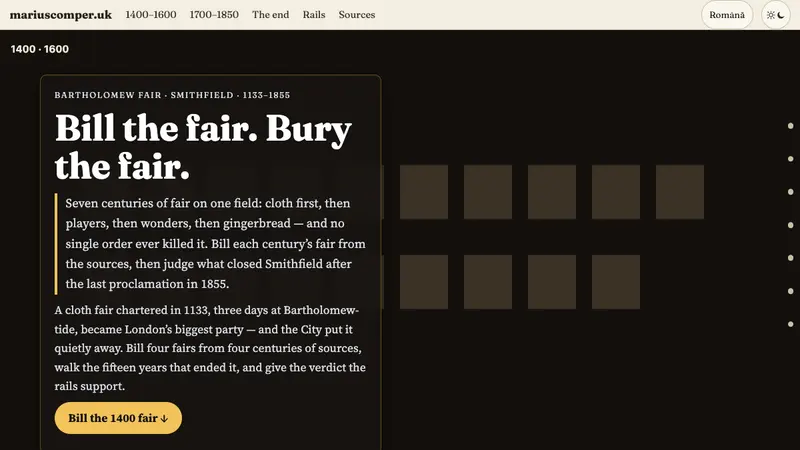
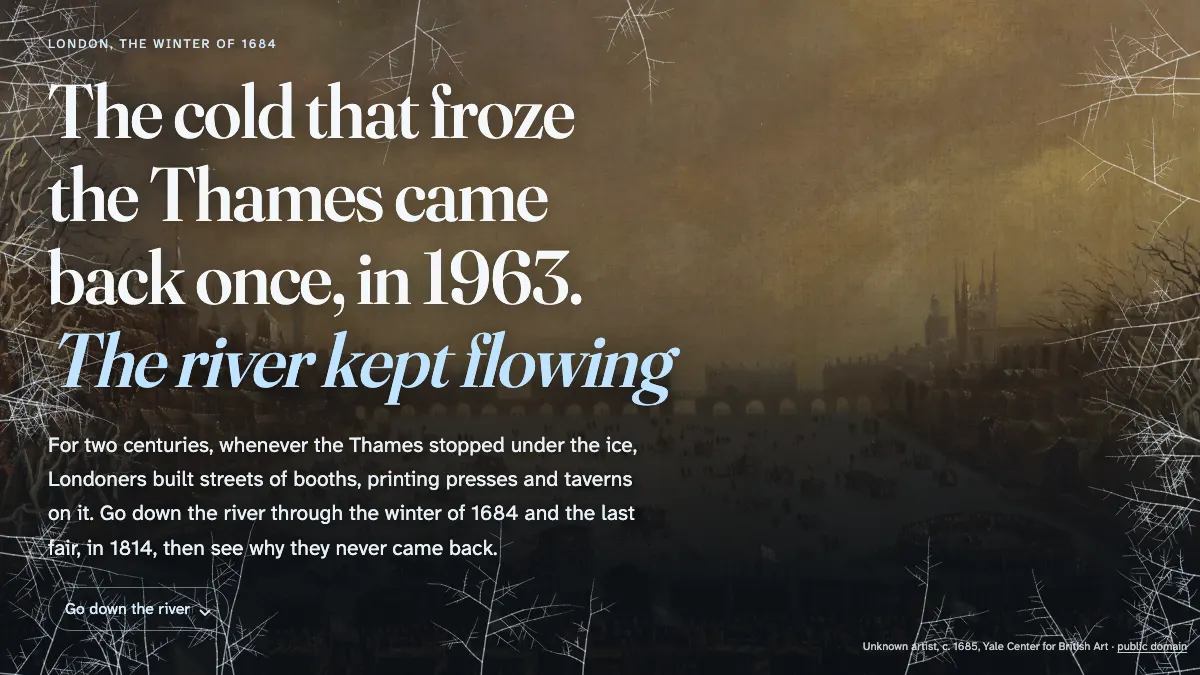
Why London’s post boxes and phone boxes are red

The British pillar box was red in Jersey in 1852, green from 1859 and red again from 1874, London first, and the phone box’s architect wanted it silver. This page follows four London objects, the post box, the phone box, the bus and the Underground logo, year by year from 1852 to 1946 through 18 entries from the record: what the Postal Museum, Historic England and BT Archives say at each change. On the way there is one question: what did Scott write in 1935 about red kiosks in the countryside?

Editions: RO EN

Nature & planetSimulations & models

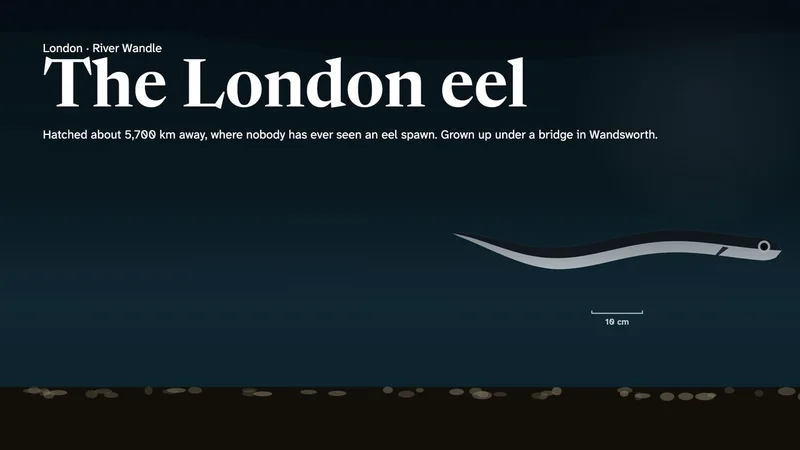
The life of a London eel: from the Sargasso Sea to the River Wandle, and back

There are eels in London's rivers, and every one of them hatched in the Atlantic, thousands of kilometres away, where nobody has ever seen an eel spawn. This page follows one such life, step by step: the transparent leaf adrift, the climb up the tidal Thames, the years in a London river, the body's change and the leaving. At Molesey Weir in 2025, the volunteers' traps caught, on average, one young eel for every four and a half days of trapping.

Editions: RO EN

Mind & perceptionSimulations & models

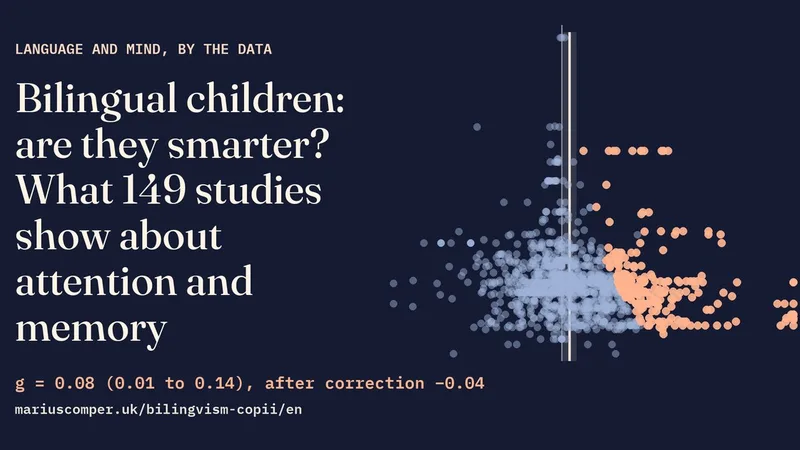
Bilingual children: are they smarter? What 149 studies show about attention and memory

All 1,194 results from 149 studies comparing children raised with two languages to children raised with one, one dot each. Pick the children's age and the kind of test and see the average: small, and after correcting for selective publication no clear evidence of an advantage remains. Plus six neighbouring claims about mother tongue, checked at the source.

Editions: RO EN

Nature & planetMaps & data atlases

Argentine ants accept strangers from thousands of kilometres away and fight rivals whose nests are 27 metres apart

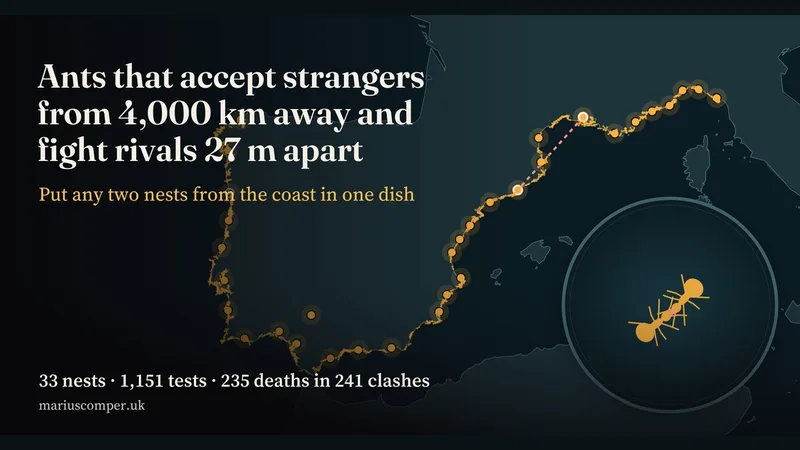
In 2000, 33 Argentine ant nests along the coast from Italy to the Atlantic were paired two at a time in a small vial. Ants of one supercolony never fought; between the two European supercolonies a worker died in 235 of 241 trials. Pick two nests on the map and see the result, then what was and was not tested.

Editions: RO EN CA ES

Nature & planetSimulations & models

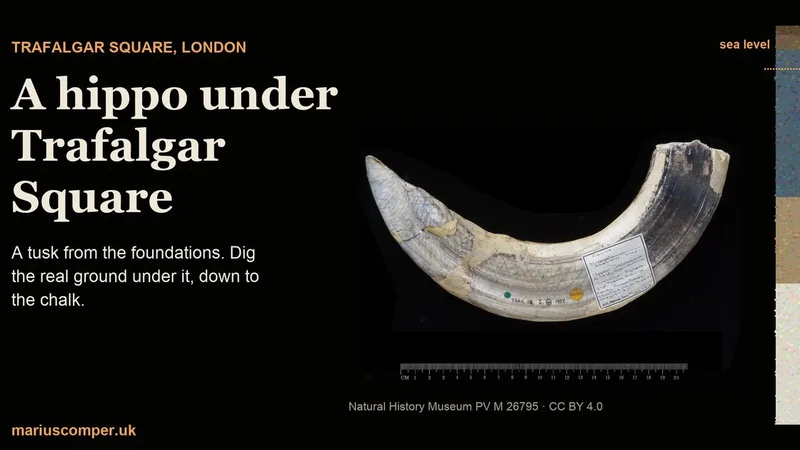
A hippo under Trafalgar Square

A hippo tusk from the foundations beside Trafalgar Square, about 125,000 years old, and the real log of the fountain well in front of the National Gallery. Dig with a spade through gravel, clay, sand and chalk, see sea level and the water that, by a Ministry of Works drawing of levels from 1844 to 1937, fell 63 m, then switch the ground from metres to years: at least 45 million years of rock are missing.

Editions: EN RO

Physics & mathematicsSimulations & models

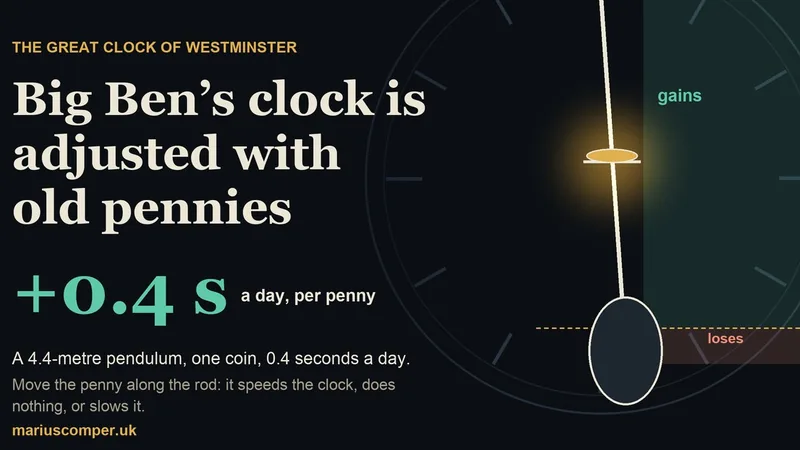
Big Ben’s clock is adjusted with old pennies: the Great Clock of Westminster, and what one coin does to its day

UK Parliament says one old penny on the Great Clock’s pendulum makes it gain 0.4 seconds a day. Slide the coin along the 4.4-metre rod to see where it speeds the clock, where it does nothing and where it slows it; then let the days run, hear the hour strike in a real recording and make a card of your tray.

Editions: EN RO

Nature & planetMaps & data atlases

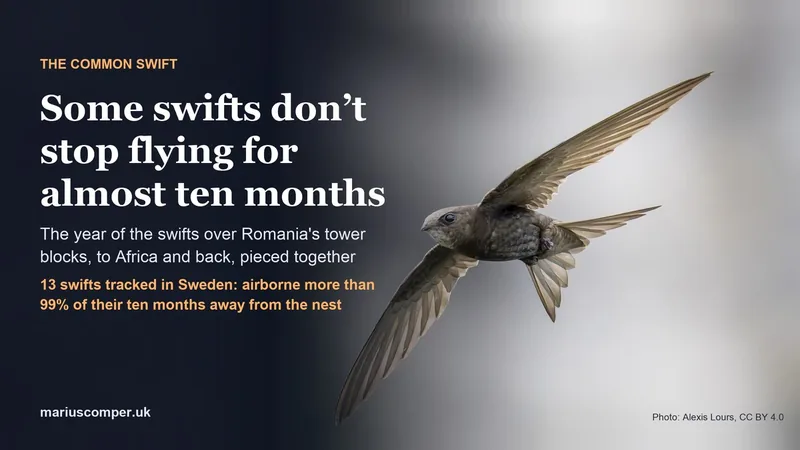
Common swifts: how long they stay airborne, where Romania's swifts winter, when they return

Thirteen swifts tracked with sensors in Sweden were airborne more than 99% of the ten months away from the nest. Follow a swift's year on a globe, see when swifts are seen in Romania and how to help them on your block; no Romanian swift is known to have been tracked with sensors, so the wintering place comes from birds tracked in Czechia and Italy.

Editions: RO EN

Anthropology & societyMaps & data atlases

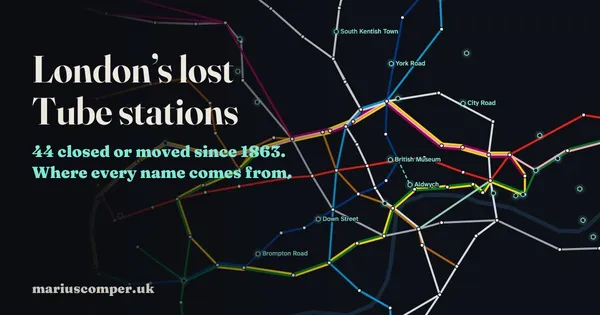
London's stations keep a diary: 434 Tube, DLR, Overground and Elizabeth line stations, every day since 2019

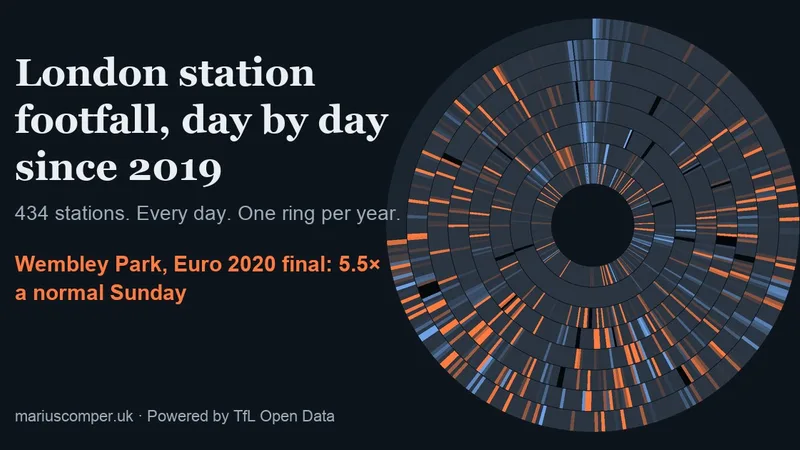
Daily tap counts at 434 London stations, January 2019 to September 2026, wound into rings: one ring per year, one slice per day. Southfields lights up for Wimbledon, Arsenal station follows the fixture list, Ladbroke Grove has no row on Carnival days, and on Christmas Day TfL counts zero Tube journeys. Pick your station and a date of your own.

Editions: RO EN

HistoryArticles & explanations

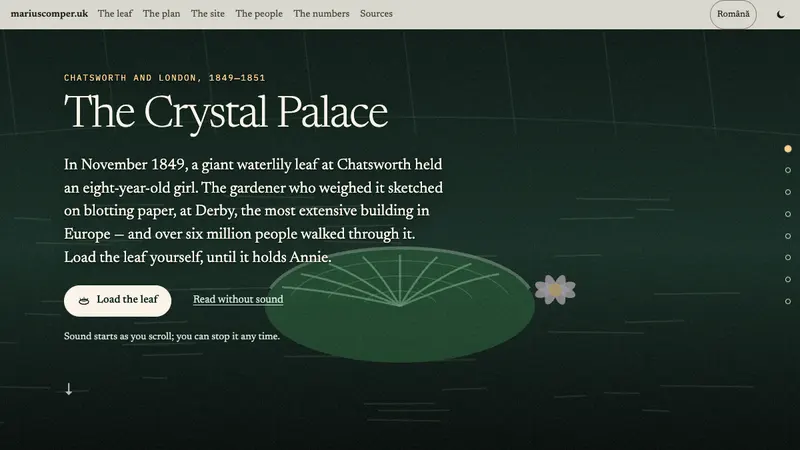
The Crystal Palace — the leaf that held a little girl and the glass house that held over six million people (London, 1851)

In November 1849, a giant waterlily leaf at Chatsworth held an eight-year-old girl. The gardener who weighed it sketched on blotting paper, at Derby, the most extensive building in Europe — and over six million people walked through it. Load the leaf yourself, until it holds Annie. In Romanian and English.

Editions: RO EN

Nature & planetMaps & data atlases

The strait that wasn't there: drain the sea out of Hormuz and the whole Gulf, back to the ice age

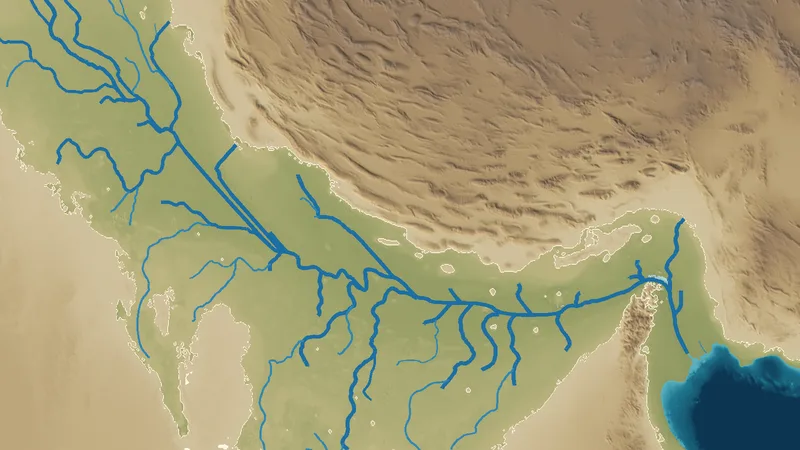
A relief map of the real Gulf seabed that you drain by scrolling: 20,000 years ago the whole Gulf was a river valley bigger than Great Britain. Then, on the same map, what people made of the strait: the oldest pearl, the kingdom of Hormuz, the “Pirate Coast” and the truces, slavery, oil, the lines drawn on the sea, the 1971 islands, the wars and the 2026 closure.

Editions: RO EN

Body & healthSimulations & models

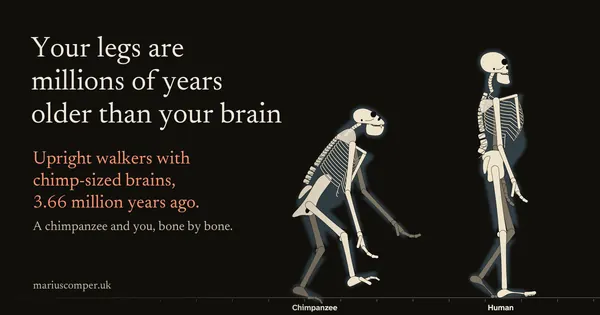
Your body next to a chimpanzee’s: what each difference is for, and why your legs are older than your brain

A walking skeleton changes from a chimpanzee to a human through three fossils: legs and feet change first, the brain last. Then, part by part: walking that costs you a quarter of a chimpanzee’s oxygen, the Achilles tendon, sweat glands, the throwing shoulder, the thumb, the face, birth, and the chin nobody can explain.

Editions: RO EN

Language & wordsArticles & explanations

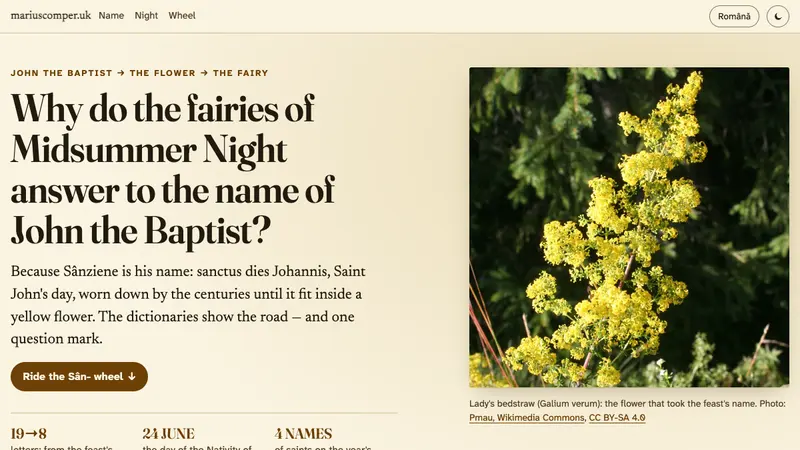
John's Fairies: why the June fairies answer to the Baptist's name

From SANCTUS DIES JOHANNIS, Saint John's day, to the Sânziene: the Sân- wheel with four saints (Sânziene, Sânpetru, Sântilie, Sâmedru), the three living senses — feast, flower, fairies — and the night of 23 June with bonfires, wreaths on water and the Drăgaica fair. With the etymology chain, the wheel-walk and quotes from DEX, MDA2, Șăineanu and Scriban.

Editions: RO EN

Language & wordsArticles & explanations

Rusalii: how roses came to name the Holy Ghost and the fairies

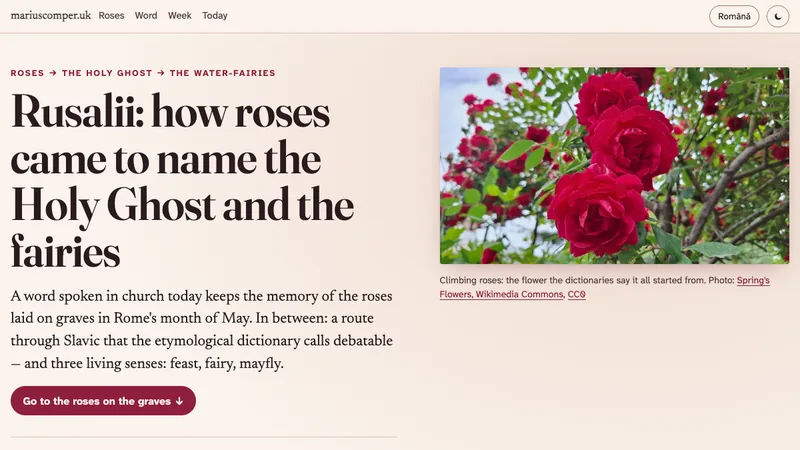
From ROSALIA, the Roman rose-feast on graves, to Rusalii: the debatable Slavic route, the three living senses — feast, fairy, mayfly — and the week between worlds, with the Saturday of the dead, walnut-branch Sunday, the healing călușari (UNESCO 2008) and the water rusalkas. With the ROSALIA→RUSALII etymology chain, the week-walk and quotes from DEX, DER, Șăineanu and Scriban.

Editions: RO EN

Language & wordsArticles & explanations

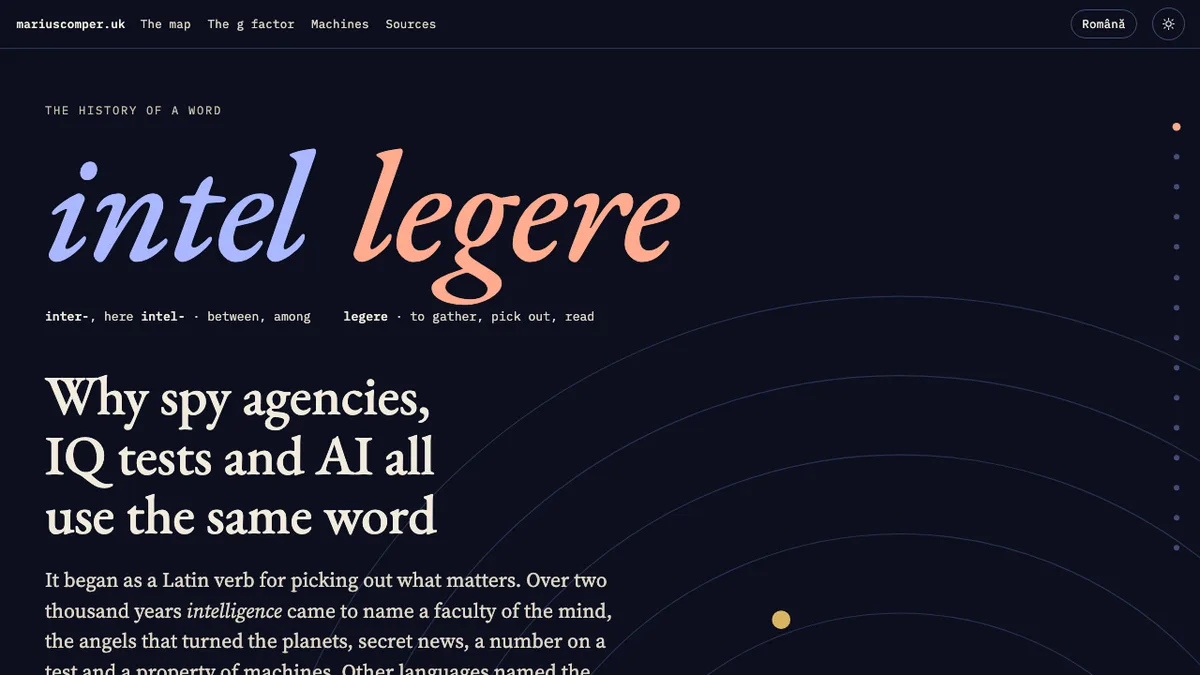
Why spy agencies, IQ tests and AI all use the same word

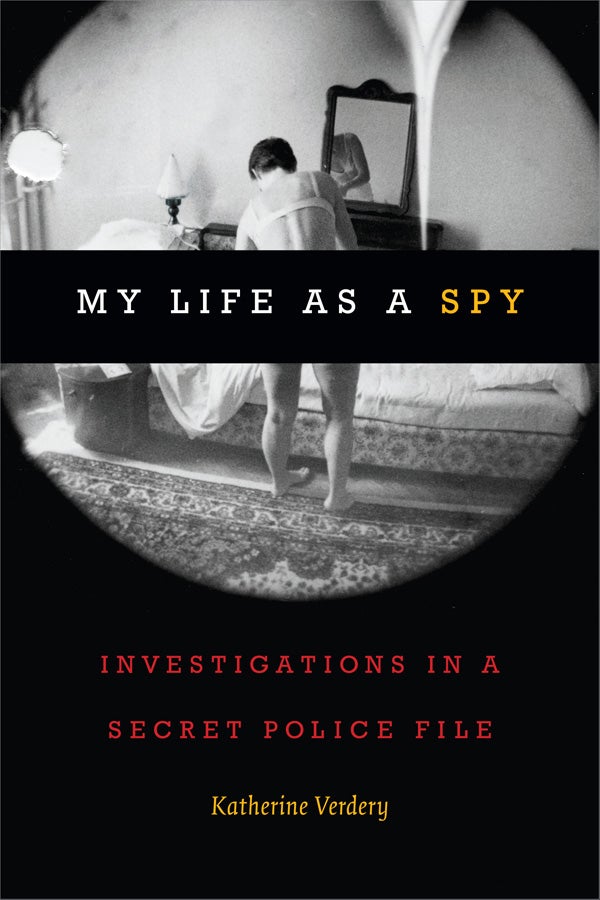
The history of the word intelligence: Latin intellegere, inherited in Romanian a înțelege and borrowed back from French; the angels that turned Dante's heavens; spies' secret news; Binet's tests, the g factor in Spearman's own table, eugenics and the Flynn effect; working memory, with a 2-back game; Turing's machines. And how other languages name the mind: waking, hearing, a camel's tether.

Editions: RO EN

Body & healthSimulations & models

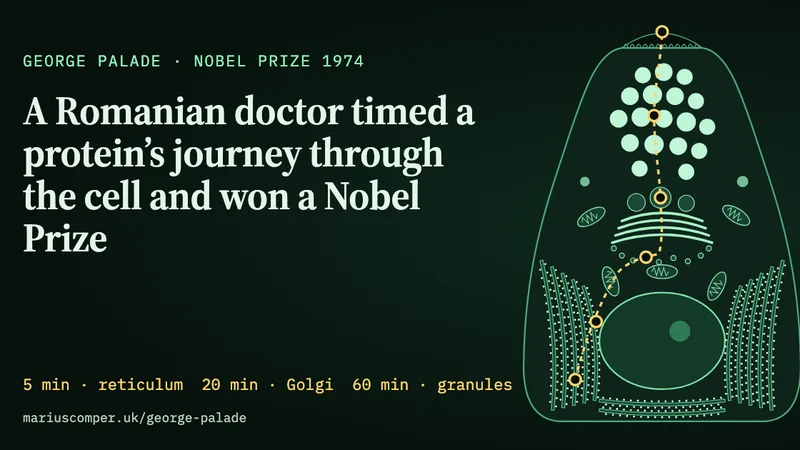
A Romanian doctor timed a protein's journey through the cell and won a Nobel Prize

In 1953 George Palade described the grains on the cell's membranes, the ribosomes, and with Lucien Caro and James Jamieson he measured how many minutes new proteins take from the ribosome to the granules. The name ribosome was proposed at a 1958 meeting, and the year he left for America depends on the source. The story, in nine chapters, with games.

Editions: RO EN

HistoryArticles & explanations

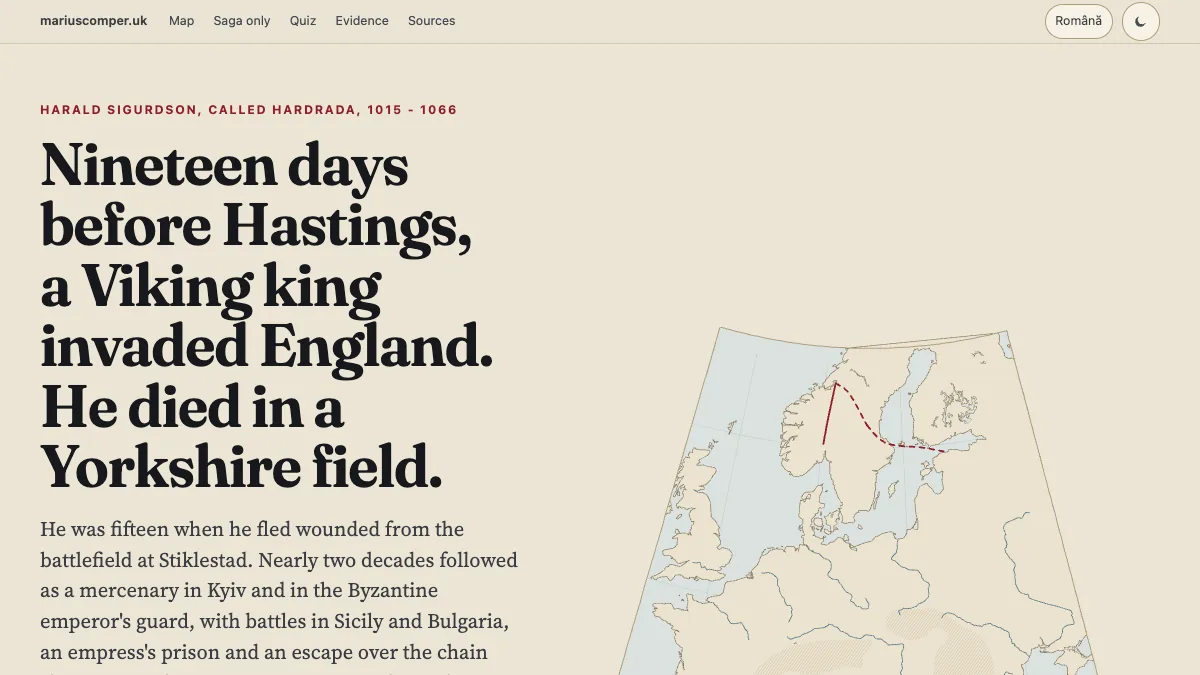
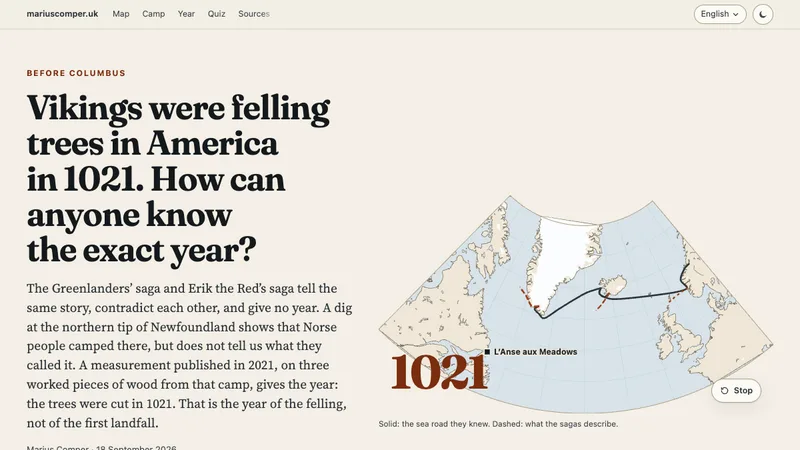
Vikings were felling trees in America in 1021. How can anyone know the exact year?

The Greenlanders' saga and Erik the Red's saga tell the same story, contradict each other, and give no year. A dig at the northern tip of Newfoundland shows that Norse people camped there, but does not tell us what they called it. A measurement published in 2021, on three worked pieces of wood from that camp, gives the year: the trees were cut in 1021.

Editions: RO EN

Body & healthSimulations & models

Three Hundred Thousand to One: The Two-Hundred-Micrometre Barrier That Stops the Stomach From Digesting Itself

A steep 300,000:1 hydronium ion gradient is sustained across the thickness of two sheets of paper via continuous chemical titration, while cellular restitution can begin within minutes and rapidly restore superficial continuity in some models; complete recovery ranges from tens of minutes to hours depending on the injury and model.

Editions: RO EN

Body & healthSimulations & models

Seven Hundred Newtons on the Molar: The Biomechanics of the Bite and Enamel's 100-Atmosphere Strength

Although the human jaw operates as a Class III lever with a mechanical disadvantage at the incisors (150–250 N), back at the second molar bite force surges to 700–900 N (70–90 kgf). Concentrated onto just a few square millimetres, contact stress exceeds 150–300 MPa (over 1,500 atmospheres — higher than the Mariana Trench), resisted without fracture by enamel's decussating prism architecture.

Editions: RO EN

Showing 24 of 1259

You don't have to know what you're looking for.

Culture & play · Explore

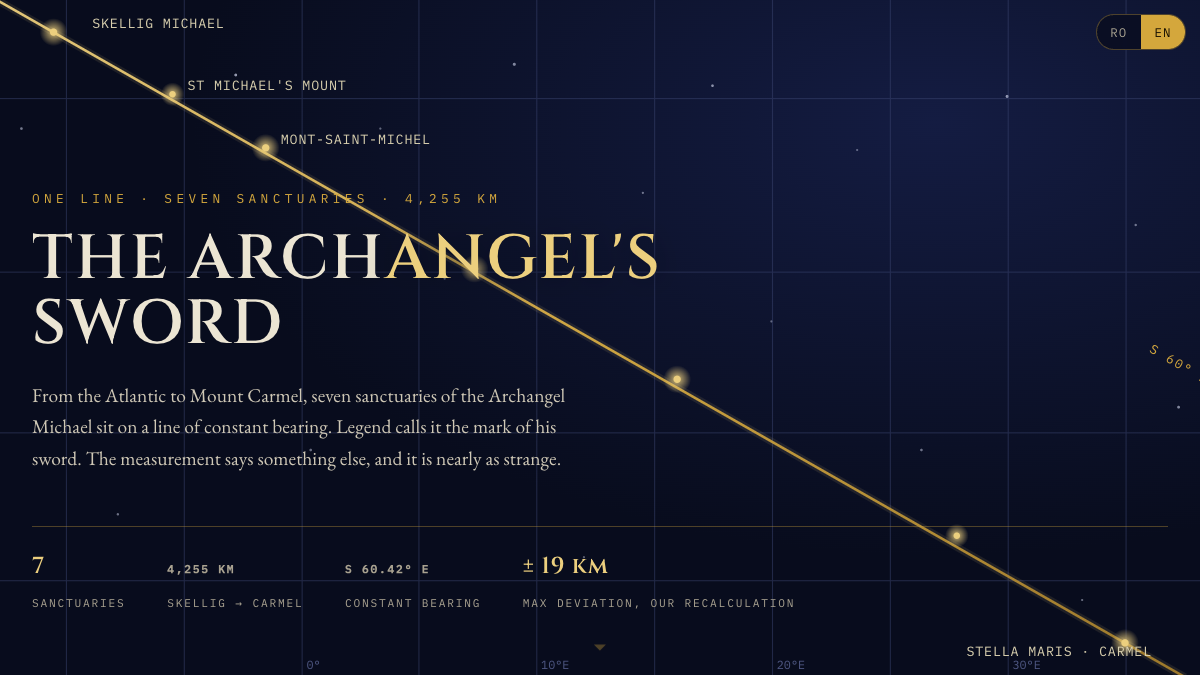
The Archangel's Sword

It lets you test a story through coordinates and deviations without reducing its mystery to a verdict.

Open project
Project preview